• The Pig’s Arms
  • About
  • The Dump

Window Dresser's Arms, Pig & Whistle

~ The Home Pub of the Famous Pink Drinks and Trotter's Ale

Window Dresser's Arms, Pig & Whistle

Tag Archives: sapphic poetry

BILITIS: Elegies at Mytilene, part 2 (Finale)

08 Saturday Sep 2012

Posted by astyages in Astyages

≈ 13 Comments

Tags

Bilitis, Elegies at Mytilene, elegies at mytilene part 2, Lamprias, Lydia, Mydzouris, Partwnis, sapphic poetry, sapphic verse, Satyra
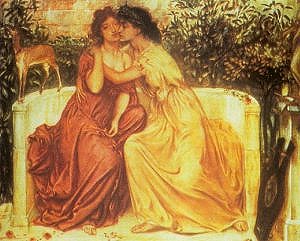
My dear fellow piglets, this final episode of ‘Bilitis’ details the final decline and demise of the now-aging courtesan… It is also my ‘farewell’ to you all, as I intend to take a long break from the pub. I have a strange intuition that somehow or other I am responsible for the recent sudden mass exodus of piglets which seems to have left the front bar so bereft of clientele. If this is indeed the case, then I can only assume that I must have said or done something pretty bad to offend someone or other, and for this offense, whatever it is, I do most sincerely apologize. I only hope that my prolonged absence may eventually prompt their return…

Anyway, I hope you all enjoy this final piece, as I quote the words of Scott of the Antarctic, “I’m going outside now… I might be gone for some time…” (Asty)

BILITIS: Elegies at Mytilene, (part 2)

131 – THE JUGGLER

When the first dawn mingled with the

weakening glimmer of the torches, I introduced to

the orgy a flute player, defective and nimble [?vicieuse et agile? contradictory!]

who trembled a bit, being cold.

Hire the little girl with the blue eyelids,

with short hair, with pointy breasts, clothed

only in a girdle, from which hung some

yellow ribbons and some stalks of black irises.

Hire her! Because she was clever and did some

difficult turns. She juggled with some

hoops, without breaking anything in the room, and

slid across it like a grasshopper.

Occasionally she performed cartwheels [‘… faisait la roué sur les mains et sur les pieds’] Or with two arms in

the air and her knees apart she bent herself

backwards and touched the earth, laughing.

132 — THE FLOWER DANCE

Anthis, the dancer from Lydia, has seven veils

around her. She unrolls the yellow veil,

her black hair spills out. The pink veil

slides from her mouth. The white veil falls

letting us see her naked arms.

She releases her small breasts from the red veil

which she unravels. She drops the green veil from

her hips to her feet. She pulls the

blue veil from her shoulders, but she presses

on her modesty the last, transparent veil.

The young people beg her: she shakes her

head back. To the sound of flutes alone,

she tears it away just a little, then entirely, and,

with the gestures of the dance, she plucks

flowers from her body,

Singing, “Where are my roses, where are my

perfumed violets? Where are my sprigs of

parsley? – There are my roses, I give them to you.

There are my violets, do you want them? There is

my beautiful curly parsley.”

133 – SATYRA’S DANCE (not translated)

134 – MYDZOURIS CROWNED (not translated)

135 — VIOLENCE

No, you will not take me by force, it doesn’t

count, Lamprias. If you had heard said

that someone had violated Parthenis, you know

what that puts in her breast, because no-one enjoys us

without being invited.

Oh! Away from your betters, make some effort, it’s

missing. Meanwhile I protect myself from pain.

I shall not call for help. And I

shall not even struggle; but I move. Poor friend,

missed again!

Continue. This little game amuses me. In the same proportion

that I am sure to vanquish you. One more unhappy

attempt, and perhaps you will be less

disposed to prove to me your extinct desires.

Tyrant, what are you doing! Dog! You’re breaking

my wrists! And this knee is disembowelling me!

Ah! Go, now, it is a beautiful victory,

to ravish a tearful young girl on the ground.

136 – SONG

The first gave me a necklace, a necklace of

pearls which was worth [?’…qui vaut…’] a town, with the palace and

the temples, and the treasures and the slaves.

The second made me some verses. He said

that my hair was black as the

night on the sea and my eyes were blue like

the morning.

The third was so beautiful that his mother

could not kiss him without blushing. He put his

hand on my knees, and his lips on my

naked feet.

You, you have said nothing to me. You have given

me nothing, because you are poor. And you are not

beautiful, but it is you that I love.

137 – ADVICE TO A LOVER

If you wish to be loved by a woman, oh young

friend, such as she, don’t tell her that

you want her, but make her see you every

day, then disappear, so you can return.

If she addresses her words to you, be amorous

without being too earnest. She will come to you

by herself. Know then, to take her by force, the

day she intends to give herself to you.

When you receive her into your bed, forget

about your own pleasure. The hands of a woman

in love are trembling and without caresses.

Dispense with them to be zealous.

But you, take no rest. Prolong

your embraces until you lose your breath. Do not let

her sleep, even if she begs you. Always

kiss the part of her body towards which

she turns her eyes.

138 – FRIENDS AT DINNER

Myromeris and Maskhale, my friends, come with

me, because I have no lover this evening, and,

lying on beds of [?’byssos’], we

will chat over dinner.

A night of rest will do you good: you

will sleep in my bed, even without make-up and

un-coiffed. Put on a simple tunic of wool

and leave your jewels in their chest.

No-one will make you dance to admire your

legs and the heavy movements of your loins.

no-one will ask you for sacred symbols,

to judge if you are lovers.

And I have not commanded, for us, two

flute-players with beautiful mouths, but

two cooking-pots of peas, rissoles, some

honey-cakes, some fried croquettes and my last

wine-skin from Khios.

139 – TOMB OF A YOUNG COURTESAN

Here is housed the delicate body of Lydia, little

dove, the most joyous of all the

courtesans, who more than any other loved

orgies, her floating hair, the soft

dances and tunics of hyacinth.

More than any other she loved savoury [?’glottismes?]

kisses on the cheek, the games

which the lamp alone saw and love which broke

her limbs to pieces. And now, she is a

little shade.

But before she was put in her tomb, she was

marvellously coiffed and laid

among roses; even the stone which covers her

is all impregnated with essences and perfumes.

Sacred earth, nurturer of all, welcome

gently the poor dead, let her sleep in

your arms oh Mother! And let grow all around

the stele, not nettles and brambles, but

delicate white violets.

140 – THE LITTLE ROSE-SELLER

“Yesterday,” Nais told me, “I was in the square,

when a little girl in red rags

passed, carrying roses, in front of a group of

young people. And here is what I heard:

“Buy something from me.” – “Explain yourself,

little one, because we don’t know what your are selling:

You? Your roses? Or both at once?” — “If

you buy all my flowers, you may have

the seller for nothing.”

“And how much do you want for your roses?” — “I must have

six obols for my mother or else I shall be beaten

like a dog.” – “Follow us. You shall have one

drachma.” – “Then shall I go and look for my little sister?”

“This child was not a courtesan, Bilitis,

nobody knew her. Truly is it not a

scandal… and shall we tolerate these girls

coming to dirty during the day the beds which

we rely upon during the evening?”

141 – THE DISPUTE

Ah! By Aphrodite, there you are! Bloodsucker!

Putrefaction! Stinker! Barren! Riff-raff [?‘carcan’?]!

Left-hander! Good-for-nothing! Sow!

Don’t try to run away from me, but come here…

And again closer still…

See me, this sailors’ woman, who

doesn’t even know how to pleat her robe over

her shoulder and who puts on such bad make-up that

the black from her eyelashes runs down her cheek

in rivers of ink.

You are Phoenician: sleep with those of

your own race. For me, my father was Greek:

I have a right over all those who wear the [?’petase’?].

and even over the others, If I so choose.

Don’t stop any more in my street, or I’ll send you

to Hades to make love with Charon, and I

shall say very justly, “May the earth rest

lightly upon you…”

So the dogs can dig you up!

142 – MELANCHOLY

I shiver; the night is cool, and the

forest all moist. Why have you brought me

here? Isn’t my big bed

sweeter than this moss strewn with stones?

My flowery dress will be stained with greenery

my hair will be tangled with twigs;

my neck, look at my neck,

how soiled it is already by the humid earth.

Of old however, I’d have followed into these

woods here… Ah! Leave me alone for little while.

I am sad, this evening. Leave me, without speaking,

hands over my eyes.

In truth, can you not wait! Are

we brute beasts to take each other

thus! Leave me alone. You shall not open my

knees nor my lips. My eyes even, from

fear of crying, are closed.

143 – LITTLE PHANION

Stranger, stop, look who has beckoned

you: it’s little Phanion from Kos, she

deserves that you choose her.

See, her hair is frizzy as parsley,

her skin is sweet as a bird’s down.

She is small and brown. She speaks well.

If you wish to follow her, she will not ask

for all the money from your voyage; no, but

one drachma or a pair of shoes.

You will find at her house a good bed, some fresh

figs, some milk, some wine, and, if it is

cold, there will be a fire.

144 – SIGNS

If you must have, passer-by who stops, slender

thighs and nervous loins, a hard

throat, knees which grip, go to the house of

Plango, she’s my friend.

If you’re looking for a laughing girl, with

exuberant breasts, of a delicate height, her crutch

fleshy and moist [‘grasse’], go to the corner

of this street, where lives Spidorrhodellis.

But if long tranquil hours in the

arms of a courtesan with sweet skin,

a warm belly and pleasantly scented hair

look for Milto, and you will be content.

Do not hope for much from love; but

profit from her experience. One can ask

all from a woman, when she is naked,

when it is night, and when the hundred drachmas

are on the mantel.

145 – THE SELLER OF WOMEN

“Who is there?” — “I am the seller of

women. Open the door, Sostrata, I have

presented to you on two occasions before this one.

Approach, Anasyrtolis, and undo your robe.” –“She

is a bit fat.”

“She is a beauty. What’s more, she dances

the Kordax and she knows eighty

songs.” – “Turn around. Lift your arms.

Show your hair. Give me your foot. Smile. That’s good.

This one, now.” – “She is too

young!” — “No she’s not, she was twelve years old

the day before yesterday, and you would not have to teach

her anything.” – “Remove your tunic. Let’s see? No, she

is too thin.”

“I’m only asking one mina.” – “And the

first?” – “Two minas thirty.” – “Three minas

for both of them?” – “Done!”. “Go in there

and wash yourselves. You, farewell.”

146 – THE STRANGER

Stranger, go no further into the town.

You will not find elsewhere but in my house

girls younger or more expert. I am

Sostrata, famous across the sea.

See this one whose eyes are green

as water in the grass. You don’t want her?

Here are some other eyes which are black as

violets, and hair three cubits long.

I have still better. Xantho, open your [?cyclas?].

Stranger, her breasts are hard as quinces,

Touch them. And her beautiful belly, as you see,

wears the three folds of Kypris.

I bought her with her sister, who is not yet

of an age to love, but who seconds her

usefully. By the two goddesses! You are of a

noble race. Phyllis and Xantho, follow the

cavalryman!

147 – PHYLLIS (not translated)

148 — THE MEMORY OF MNASIDIKA

They danced one in front of the other, with

rapid, flying movements; seeming

always to want to be entwined, and yet they

never touched at all, except at the tips of their lips.

When they turned their back in dancing,

they looked at each other over their shoulders,

and the sweat shone on their raised arms,

and their fine hair brushed across their breasts.

The languor of their eyes, the fire of their

cheeks, the gravity of their faces, were

three earnest songs. They brushed against each other

furtively, bowing their bodies at the hips.

and suddenly, they fell, to

perform on the ground a softer dance [la danse molle]… Memory

of Mnasidika, it was then that you appeared to me,

and everything, outside your dear image, was tiresome.

149 – THE YOUNG MOTHER

Do not believe, Myromeris, that, having become a

mother, that you will be diminished in beauty. See here, how

your body under your dress has drowned its thin

form within a voluptuous softness.

Your breasts are two vast flowers inverted

on your chest, whose cut stems

nurture a milky sap. Your belly,

sweeter still, swoons under the hand.

And now consider the tiny little child

which is born from the thrills that you had one

evening in the arms of a passer-by whose name you

no longer know. Dream of her remote destiny.

Her eyes which opened to pain will be elongated

one day with a line of black paint, and they

will sprinkle over men sadness or joy,

with a movement of their lashes.

150 — THE UNKNOWN

He’s sleeping. I don’t know him. He

horrifies me. However, his purse is full of gold

and he gave a slave four drachmas when he

came in. I hope for a mina for myself.

But I have said to the Phrygian to get into the bed

in my place. He was drunk and mistook her for

me. I would sooner die on the

rack than to stretch out next to this man.

Alas! I dream of the prairies of the Taurus…

I had been a little virgin… Then, I had a

light chest, and I was so foolish with a

lover’s envy that I hated my married sisters.

What would I not have done to obtain that which

I refuse tonight! Today, my

breasts are shapeless [‘se plient’], and in my worn-out

heart too, Eros sleeps from weariness.

151 – TRICKERY

I wake up… Is he gone then? Did he

leave anything? No: two empty

amphorae and some soiled flowers. The whole carpet

is red with wine.

I slept, but I am still drunk… With

whom then, did I come home?… Nevertheless we

slept together. The bed is even soaked

with sweat.

Perhaps there were several; the bed is

such a mess [si bouleverse] I don’t know any more… But I

saw them! There’s my Phrygian! Still

sleeping across the door.

I kicked her in the chest

and I shouted, “Bitch, you couldn’t…”

I was so hoarse I couldn’t speak.

152 – THE LAST LOVER

Child, do not pass by without having loved me.

I am still beautiful, in the night; you will see

how much my warmer is my autumn than the

springtime of another.

Do not look for love from virgins. Love

is a difficult art in which young girls are

little versed. I have taught them all my

life to give to my last lover.

My last lover, it will be you, I know.

Here is my mouth, for which a whole people [pour laquelle un peuple a…]

have paled with desire. Here is my hair, the same

hair that Psappho the Great sang about.

I shall receive in your favour all that

is left to me of my lost youth. I shall burn

the memories themselves. I shall give you

the flute of Lykas, the girdle of Mnasidika.

153 – THE DOVE

I have already been beautiful for a long time; the day

is coming when I will no longer be a woman. And then I

shall know torn memories, the

solitary burning envies and the tears

in my hands.

If life is a long dream, what good is it

to resist it? Now, four and five times a

night I ask for the joy of love, and

when my flanks are exhausted I sleep where

my body falls.

In the morning, I opened my eyelids and I

shudder in my hair. A dove is

on my windowsill; I asked it what month

it was. She said to me, “It is the month when

women are in love.”

Ah! Whatever the month, the dove spoke

truly, Kypris! And I throw my two arms

around my lover, and with much

trembling I pull to the foot of the bed my

Legs, still numb.

154 – THE MORNING RAIN

Night wears on. The stars disappear.

Here are the last courtesans

going home with their lovers. And me, in the

morning rain, I wrote these verses on the sand.

The leaves are full of sparkling water.

That streams across the footpath,

soaking the earth and the dead leaves.

The rain, drop by drop, makes holes

in my song.

Oh! How sad and alone I am and here! The

youngest don’t look at me; the oldest

forget me. But it’s good. They and the children of their

children are learning my verses,

There is something about which neither Myrtale, nor Thais, nor Glykera

tell themselves, the day when their beautiful cheeks

become hollow. Those who love after me

will sing my stanzas together.

155 — DEATH

Aphrodite! Unpitiable goddess, you wished

that on me also the happiness of long-haired

youth should disappear in a few days.

How is it I am not dead entirely!

I looked at myself in the mirror: I no longer

had neither smiles nor tears. Oh sweet face

that loved Mnasidika, I cannot believe that you

were mine!

Could it be that it’s all finished? I no longer have

[?’vecu’?] five times eight years, it seems to me

that I was born yesterday, and already here is

what I must say: They will love me no more.

All my hair cut off, I twisted it

into my girdle and I offer it to you eternal

Kypris! I shall not cease to adore you.

This is the last verse of the pious

Bilitis.

156 – FIRST EPITAPH

In the country where springs are born of the

sea, and where the riverbed is made of

sheets of rock, I, Bilitis, was born.

My mother was Phoenician; my father

Damophylos, Greek. My mother taught me

the songs of Byblos, sad as the

first dawn.

I adored Astarte in Kypris. I knew

Psappha in Lesbos. I sang as I loved.

If I have [?‘bien vecu’?], Passer-by, tell it

to your daughter.

And don’t sacrifice for me a black goat;

but, in sweet libation, press her teats

on my tomb.

157 – SECOND EPITAPH

On the sombre banks of the Melas, at Tamassos of

Pamphylia, I, daughter of Damophylos, Bilitis,

was born. I rest far from my country, as you can see.

Whilst still a child, I learned the loves of Adonis [l’Adon] and of Astarte,

the mysteries of the sacred Syrie (?) and

Death and the return to

She-With-The-Rounded-Eyes.

If I was a courtesan, what blame is there in that?

Was it not my duty as a woman?

Stranger, the Mother-Of-All-Things guides us.

To misunderstand that is not prudent.

In gratitude to you who have stopped, I

wish you this destiny: Strive to be loved,

not to love. Goodbye. Remember in your

old age, that you have seen my tomb.

158 – LAST EPITAPH

Under the black leaves of the laurels, under

the beloved flowers of roses, it is here that

I am lying, I who interwove verse

Upon verse to make embraces flourish.

I grew up in the land of the Nymphs; I have

[‘vecu’] in the isle of friends; I am dead in

the Isle of Kypris. That is why my name is

illustrated and my stele rubbed with oil.

Do not cry for me, you who stop: they gave me

a beautiful funeral, the mourners

raked their cheeks; they lay my

mirrors and my necklaces in my tomb.

And now, on the pale prairies

of asphodel, I walk, an impalpable

shade, and the memory of my earthly

Life is the joy of my existence under the ground.
Bilitis (Continued): Elegies at Mytilene

21 Thursday Jun 2012

Posted by astyages in Uncategorized

≈ 6 Comments

Tags

best hoaxes, Bilitis, Elegies at Mytilene, mnasidika, sapphic poetry, sappho

Translation by Astyages

<Eumorphote’rha Mnasidi’ka ta^s hapala^s Gyrhinn_o^s.>

(Mnasidica is far more beautiful than the gentle Gyrrhino”)

SAPPHO

47 – TO THE SHIP

Beautiful ship which brought me here, all along

the coast of Ionia, I abandon you to the shining

waves and with light feet jump onto the beach.

You will return to the land where the virgin is

the friend of the nymphs. Don’t forget to thank

the invisible counsellors, and take them

in offering this branch cut by my own hands.

You, made of pine, and on the mountains, the vast

inflamed Southern Wind stirred your spiny branches,

your squirrels and your birds.

The North Wind now guides you, and

pushes you gently towards the port, black prow

escorted by dolphins by the will of the benevolent sea.

48 — PSAPPHO

I rubbed my eyes… It was already day,

I thought. Ah! Who is near me…? A

woman…? By Paphia, I had forgotten…

Oh! Charity! I am so ashamed…

Into which country have I come, and what is

this isle where one hears so much about love?

If I were not so weary, I would have believed it was

some dream… Is it possible that this is Psappha?

She is sleeping… She is certainly beautiful,

although her hair was cut short like that of

an athlete. But this strange face, this

mannish chest and narrow hips…

I want to leave before she wakes.

Alas! I am beside the wall. I must

jump over her. I’m afraid of grazing her hip and

that she will not take me back to the thoroughfare.

49 – THE DANCE OF GLOTTIS AND KYSE

Two little girls brought me to their home,

and as the door was closed, they

lit the wick of a lamp and

wanted to dance for me.

Their cheeks were not made-up, and

as brown as their little tummies. They

pulled each other by the arms and spoke at

the same time, in an agony of gaiety.

Sitting on their mattress which was born by two

raised trestles, Glottis sang in a sharp

voice and clapped her resonant little hands in time.

Kyse danced by jerks, then stopping,

out of breath from laughing, and, taking her sister

by the breasts, bit her shoulder and

turned her round, like a goat which wants to play.

50 – ADVICE

Then Syllikhmas came in, and seeing us

so familiar, she sat down on the bench.

she took Glottis on one knee, Kyse on

the other and she said:

“Come here little one.” But I stayed distant.

She said again: “Are you scared of us?

Come on… these children love you. They

could teach you something you don’t know: the

honey of a woman’s caresses.

“A man is violent and parasitic. You

know that, undoubtedly. Hate them. They have

flat chests, rough skin, short hair and hairy arms.

but women are completely beautiful.

“Women alone know how to love; stay with

us, Bilitis, stay. And if you have an ardent

soul, you will see your beauty as in a

mirror on the body of your lovers.”

51 – UNCERTAINTY

Between Glottis or of Kyse I don’t know which

I would marry. As they do not resemble each

other, the one could not console me for the other

and I’m afraid of making the wrong choice.

Each of them has one of my hands,

and one of my breasts also. But to who*91

should I give my mouth? To whom should I give

my heart and all that with which I am unable to part?

We could not stay like this, all

three in the same house. They would talk about us

in Mytilene. Yesterday, in front of the temple of Ares,

a woman didn’t say “Hello!”

It’s Glottis that I prefer; but I

cannot reject Kyse. What will become of her

all alone? Should I leave them together as

they were and take another friend for myself?

52 – THE MEETING

I found her like a treasure, in a

field, under a myrtle bush, enveloped

from throat to feet in a yellow robe

embroidered with blue.

“I have no friends,” she said to me, “Because the

nearest town is five miles from

Here. I live alone with my mother who is

old and always sad. If you want, I’ll follow you.

“I will follow you to your house, leaving her on

the other side of the isle and I will live with you

until you send me back. Your hand is

tender, your eyes are blue.

“Let’s go. I’m taking nothing with me, but

the little Aphrodite which is hanging around my

neck. We will put her next to yours,

and we will give them roses in

payment for each night.”

53 – THE LITTLE APHRODITE OF BAKED EARTH

The little guardian Aphrodite which protected

Mnasidika was modelled on Camiros by a potter

of great skill. It is as big as my thumb,

and of fine yellow earth.

Her hair falls all around

her narrow shoulders. Her eyes are

long slits, and her mouth is very

small, because she is the “Ever-Beautiful.”

With her right hand she indicates her divinity,

which is riddled with little holes on the

lower belly and along the groin. Because she

is the “Very Amorous”.

In her left hand she holds her round

heavy breasts. Between her broadened hips

swells a fertile belly. Because

she is the “Mother-Of-All-Things”.

54 – DESIRE

She entered, and passionately, her eyes

half-closed, she united her lips with

mine and our tongues entwined…

Never in my life have I ever had a kiss

like that.

She was standing up against me, all in

love and consenting. One of my knees,

bit by bit, climbed between her warm thighs

which yielded as if for a lover.

My creeping hand under her tunic searched

to divine her unclothed body, which turn and turn

about sinuously writhed, or stiffly bent

with the trembling of her skin.

With the eyes of delirium she indicated her bed;

but we did not have the right to love before the

wedding ceremony and we separated brusquely.

55 — THE WEDDING

In the morning, we made a wedding repast, in the

house of Acalanthis whom she had adopted

as a mother. Mnasidika wore the white veil

and I a man’s tunic.

And then, in the midst of twenty women, she

took off her festal robe. We perfumed it with

Bakkaris; powdered it with golden powder,

and removed her jewels.

In her bedroom, full of foliage, she

waited for me like a wife. And I

placed her on a chariot between me and the

nymphs’ shrine and we cheered all who passed by.

We sang the Nuptial Song; The flutes

were also played. With one arm

round her shoulders and the other under her knees,

I carried Mnasidika across the rose-covered threshold.

56 – THE BED (not translated)

57 – SURVIVORS OF THE PAST

I left the bed as she had left it,

unmade and rumpled, the sheets tangled, so that

the shape of her body stayed imprinted beside mine.

Until tomorrow I shall not go to the baths, I shall

not wear clothes and I shall not

comb my hair, for fear of rubbing away her kisses.

This morning, I shall not eat, nor this evening,

and on my lips I will put neither rouge nor

powder, so that her kisses will remain.

I shall leave the shutters closed and I shall not open

the door, for fear that the memory which remained

might blow away on the wind.

58 – METAMORPHOSIS

Once I was a lover of the beauty of

young men, and the memory of their

speech, of old, would wake me up.

I remember having engraved a name in

the bark of a plane tree. I remember

having left a piece of my tunic in

a path where someone passes by.

I remember having loved you… Oh Pannychis,

my child, in whose hands have I left you?

How, oh unhappy me, could I have abandoned you?

Today, Mnasidika alone, and for

always, possesses me. She receives in

sacrifice the happiness of those whom I have left

for her.

59 – THE NAMELESS TOMB

Mnasidika took me by the hand to

lead me out of the gates of the town, up to a

little meadow where there was a column of

marble. And she said,

“This was my mother’s friend.”

Then I felt a great shudder, and without

letting go of her hand, I leant

on her shoulder, so as to read the four verses

between the hollow cup and the serpent:

“It was not Death who kidnapped me, but

the Nymphs of the streams. I rest here

under an earth lightened by a ‘hairstyle’

cut by Xantho. Let her alone cry for me.

I will not tell my name.

For a long time we remained standing there, and we

put no verse to the libation. Because what

does one call an unknown soul who has entered the multitudes

of Hades?

60 – THE THREE BEAUTIES OF MNASIDIKA

I sacrificed two male hares and two doves

to Aphrodite-The-Lover-Of-Smiles

so that Mnasidika will be protected by the gods.

And I sacrificed to Ares two cocks armed

for the fray, and to the sinister Hecate two

dogs who howled under the knife.

And it is not without reason that I have implored

these three Immortals, because Mnasidika wears on

her face the reflection of their triple divinity:

Her lips are red as copper, her

hair is blue-tinged like iron, and her eyes are

black, like silver.

61 – THE LAIR OF THE NYMPHS

Your feet are more delicate than those of

Thetis of the Silver Hair.

Between your crossed arms you

reunite your breasts, and you gently rock them to sleep

like the bodies of two beautiful doves.

Under your hair you conceal your moist

eyes, your trembling mouth and the red

flowers of your ears; but nothing will stop

my look nor the hot breath of your embrace.

Because, in the secret of your body, it is you,

beloved Mnasidika, who conceal the lair of the

nymphs of whom Old Homer spoke, the place

where the nyads weave their cloths of purple,

The place where flow, spout by spout,

inexhaustible springs, and from where the door to

the North allows men to descend and where the

door to the South allows the Immortals entry.

62 – THE BREASTS OF MNASIDIKA

With care, she opened my tunic with one hand

and held my warm, soft breasts; thus

one offers to the goddess a pair of

living turtledoves.

“Love them well,” she tells me; “I love them

so much! They are darlings, little

children. I busy myself with them when I’m

alone. I play with them; I give them pleasure.

“I wash them with milk. I powder them

with flowers. My fine hair which dries them

is dear down to its little roots. Trembling,

I kiss them. I put them to bed in wool.

“So I shall never have children, to

keep them well-nourished, my love; and, seeing that

they are so far from my mouth, give them lots of

kisses from me.”

63 – CONTEMPLATION (not translated)

64 – THE DOLL

I gave her a doll. A doll made of

wax with pink cheeks. Her arms were attached

by little pins and one could bend her legs.

When we were together she put it to bed

between us and it was our child. In the evening

she rocked it and gave it her breast

before putting it to sleep.

She wove it three little tunics, and

we gave it jewels on Aphrodite’s Day;

jewels and flowers, too.

She cares for her virtue and never lets her

go out without her; not in the sun, above all, because

the little doll was moulded from little pieces of wax.

The Songs of Bilitis (Continued)

03 Sunday Jun 2012

Posted by astyages in Astyages

≈ 7 Comments

Tags

Bilitis, lesbos, mnasidika, pamphylia, pittakos, sapphic poetry, sappho, the bucolic life in pamphylia, the songs of bilitis

Louÿs claimed that the erotic poems he fabricated were the work of “Bilitis,” one of Sappho’s lovers; he even invented a biography of the woman, citing a fictional archaeologist named Herr G. Heim with discovering her tomb. (“Herr G. Heim” translates roughly to “Lord S. Ecret”). Despite the hoax, many critics consider it a work of literary merit, and it’s become something of a cult book among queer theory enthusiasts.

The Songs of Bilitis  by  Pierre Louys

Translated by David L Rowlands

The Bucolic Life in Pamphylia (Part 2)

23 – SONG: SHADOW OF THE WOODS

“Shadow of the woods where she must come”, said I,

Where has my mistress gone?”

“She has gone down to the plain.”

“Plain, where has my mistress gone?”

“She followed the banks of the river.”

“Beautiful river who saw her pass, tell me,

Is she near here?”

“She left me for the path.”

“Path, can you still see her?”

“She left me for the road.”

“Oh, white road, road to the town, tell me,

Where did you take her?”

“To the golden street which enters Sardis.”

“Oh street of light, can you feel her naked feet?”

“She has entered the palace of the king.”

“Oh palace, splendour of the world, give her to me!”

“Look, she has necklaces on her breast and

hoops in her hair, a hundred pearls the length of her legs,

And two arms around her shapely body.”

24 – LYKAS

Come, we shall go into the fields, under the

juniper bushes; we shall eat

honey in the rushes, we shall make traps

for grasshoppers with stalks of asphodel.

Come, we shall go to see Lykas, who guards

his father’s flocks on the peaks of the

shadowy Taurus range. Surely he will give us

some milk.

I can already hear the sound of his flute. He is a

very skilful player. Here are the dogs and the

lambs, and himself, standing under a tree.

Isn’t he as handsome as Adonis!

Oh, Lykas, give us some milk. Here are some

figs from our fig-trees. We are going to stay

with you. Bearded billy-goats, don’t leap about, for

fear of exciting the restless nanny-goats.

25 – THE OFFERING TO THE GODDESS

It is not for Artemis that one adores

Pergamus, this garland woven by my hands,

although Artemis is a good goddess who

keeps me safe in difficult times.

It is not for Athena that one adores

Sidon, although she is of ivory and gold and

she carries in her hand a pomegranate

which tempts the birds.

No, it is for Aphrodite whom I worship

in my breast, because she alone gives me

that which my lips miss, if I hang

my garland of tender roses from her

sacred tree.

But I shall not speak too loudly of that which I

beseech her to grant me. I shall stretch myself up on

the tips of my toes and through a cleft in

the bark I shall confide my secret.

26 – THE AGREEABLE FRIEND

The storm lasted all night. Selenis, of the

beautiful hair, had come to spin with me. She

stayed from fear of the mud. We had

heard the prayers and were squeezed one against

the other… we filled my little bed.

When girls sleep in pairs, sleep

stays at the door. “Bilitis, tell me,

tell me who you love.” She slid

her arm against mine to caress me

softly.

And she said, in front of my mouth: “I know,

Bilitis, who you love. Close your eyes, I

am Lykas.” I replied as I touched her: “Do

I not see very well that you are a girl? Your

joke is pointless.

But she replied: “In truth, I am Lykas,

if you close your eyelids. Here are his arms,

there are his hands…” And tenderly, in the

silence, she enchanted my dreams with a

singular illusion.

27 – PRAYER TO PERSEPHONE

Purified by the ritual ablutions, and

clothed in violet tunics, we have

kissed the earth our hands full of

olive branches.

“Oh, Subterranean Persephone, or whatever name

you desire, if the name agrees with you,

listen to us oh Hair of Darkness. Barren,

Unsmiling Queen.

“Kokhlis, daughter of Thrasymachos, is ill,

and dangerously. Do not call her back

yet. You know she cannot escape you:

One day, later, you will take her.

“But don’t drag her away so quickly, O Invisible

tyrant, because she mourns the loss of her virginity.

She beseeches you through our prayers, and we

give three black unshorn ewes to save her.”

28 – THE KNUCKLEBONES PARTY

As we both loved to do, we

played knucklebones. And this was

a memorable game. Lots of young girls

assisted.

Her first throw gained her the Cyclops, and

I won Solon. But she won

Kallibolos, and, feeling myself lost, I

prayed to the goddess.

I played. I had Epiphenon, she the terrible

Chios, I, the Antiteukhos, she the

Trikhias, and I Aphrodite which won

this lover’s dispute.

But seeing her pale, I took her by the neck

and I spoke very close to her ear (so that only she could hear),

“Don’t worry my little friend.

We shall let them choose between the two of us”

29 – THE DISTAFF

For the whole day my mother had shut me up in

the girls’ school, with my sisters, who I don’t like and

who speak amongst themselves in low voices.

In a little corner, I spun my distaff.

Distaff, as I am alone with you,

it is to you that I shall speak. With your

wig of white wool you are like an

old woman. Listen to me.

If I could, I would not be here,

sitting in the shadow of the wall spinning with

boredom: I would be lying among the violets

on the slopes of the Taurus mountains.

As he is poorer than I am, my mother

does not want him to marry me. And nevertheless, I

shall tell you: or I will not see the wedding-day

where it will be he who carries me across the

threshold.

30 – PAN’S FLUTE

For Hyacinthus Day, he gave me

a flute made of tall reeds,

held together with white wax which is sweet to

my lips, like millet.

He is teaching me to play, sitting on his knees;

but I am trembling a little. He plays it

after me, so softly that I can hardly hear.

We have nothing to say to each other, so close

are we to each other; but our songs

want to respond, and turn and turn about our

mouths unite on the flute.

It is late, here is the song of the green frogs

which starts with the onset of night. My mother

will never believe that I stayed so long

to look for my lost girdle…

31 – THE HAIRSTYLE

He said to me: “Last night I had a dream.

I had your hair around my neck.

I had your hair like a black necklace around

the nape of my neck and on my chest.

I caressed it, and it was mine; and

we were thus tied together forever, by the

same hair, mouth on mouth, in the manner of

two laurels which often have but one root.

And bit by bit, it seemed to me, our

limbs were so entangled, that I was becoming

you or that you were entering into me like my

soul.

When he had finished, he gently put his

hands on my shoulders, and he looked at me

with a look so tender, that I kissed his eyes

with a shiver.

32 – THE CUP

Lykas saw me coming, clad only in a

brief shift, because the days were

stifling; he wanted to mould my breast which

was still uncovered.

He took some fine potter’s clay, kneaded in cold water

and light. When he had pressed it onto

my skin, I thought I would faint, so cold

was this clay.

From the mould of my breast, he made a cup,

rounded and stemmed. He put it to dry

in the sun and painted it purple and

ochre, pressing flowers into it all around.

Then we went up to the spring

that was sacred to the nymphs, and we

threw the cup into the current, with

stalks of gillyflowers.

33 – ROSES IN THE NIGHT

As night mounted the sky, the world

was ours and the Gods’. We’re going to the

fields at the spring, the dark woods with

clearings where we guided our naked feet.

The brilliant little stars enough for the

little shadows which are us. Sometimes,

under the low branches, we find

sleeping deer.

But the most charming part of the night above all

else was a place known to us alone and

which drew us across the forest: a thicket

of mysterious roses.

Because nothing on earth is so divine as

the perfume of roses in the night. How

was it that at times when I was alone I

felt no intoxication?

34 – REMORSE

At first I didn’t answer, and I had a

blush on my cheeks, and the beating of

my heart hurt within my breast.

Then I resisted, I said: “No! No!” I

turned my head away and the kiss did not

broach my lips, nor love my

clenched knees.

Then he asked my forgiveness, he caressed

my hair, I felt his burning breath,

and he was gone… Now I am alone.

I looked at the empty place, the deserted woods, the

trodden earth. And I bit my knuckles until they

bled and muffled my cries in the grass.

35 — THE BROKEN DREAM

All alone I was sleeping, like a

partridge in the heather. The light breeze,

The sound of the waters, the sweetness of the night

kept me there.

I was sleeping, an imprudent thing to do,

and I awoke with a cry. I struggled, and

I wept; but already it was too late.

What can the arms of a woman do?

He didn’t leave me. On the contrary,

More tenderly in his arms he clasped me to

Him and I saw nothing more in the world, neither earth nor

The trees but only the gleam of his eyes…

To you, victorious Kypris, I dedicate these

Offerings still moist, still pink; the traces

Of the sorrows of the virgin, the end of my

Dream and of my resistance.

36 – TO THE WASHERWOMEN

Washerwomen, do not say that you have seen me!

I trust myself to you; do not repeat it!

Between my tunic and my breast I brought you

Something.

I am like a frightened little chicken…

I don’t know if I dare to tell you… My

Heart beats like I shall die… it is a

Veil that I brought you.

A veil and the ribbons from my legs. You

See; there is blood. By Apollo it was

In spite of me! I was well defended; but

A man who loves is stronger than us.

Wash them well; spare neither salt nor

Chalk. I shall put four obols for you

At the feet of Aphrodite; and even

A silver drachma.

37 – SONG

When he returned, I hid my

Face with both hands. He said to me:

“Fear nothing. Who saw us embrace?” “Who

Saw us? The night and the moon.

“And the stars and the first light of dawn. The moon

Was admiring itself in the lake and told the water under

The willows. The water of the lake told the pole.

“And the pole told the boat and the boat

Told the fisherman. Alas! Alas! If that were

All! But the fisherman told a woman.

“The fisherman told a woman: my father and

my mother and my sisters, and

all of Hellas will know.”

38 – BILITIS

One woman envelopes herself in white wool.

Another clothes herself in silk and gold. Another

covers herself with flowers, with green leaves and

grapes.

I know only to live naked. My lover,

take me as I am: without robes nor jewels

nor sandals; here is Bilitis alone.

But my hair is black with its own blackness and my

lips red with their own redness. My curls

float around me, free and round

like feathers.

Take me just as my mother made me in

A night of love long ago, and if I please you

Then don’t forget to tell me.

39 — THE LITTLE HOUSE

The little house where his bed is, is the most

beautiful on earth. It is made with the

branches of trees, four walls of dry earth

and a garland of thatch.

I love it, because we lie there since the nights grew

cold; and the colder the night, the longer it is.

At the rise of day I feel myself finally weary.

The mattress is in the sun; two blankets

of black wool enclose our bodies which

are warming up again. His chest compresses my breasts.

My heart beats…

He enters me so hard that I thought he would break me, poor

little girl that I am; but while he is

in me I no longer know anything of the world, and

you could have cut off my four limbs without

waking me from my joy.

40 – JOY (not translated)

41 — THE LOST LETTER

Alas for me! I have lost his letter. I

had put it between my skin and my breast-band,

in the warmth of my breast. I ran; it fell.

I’m going to retrace my steps: if someone

found it, he would tell my mother and I

shall be whipped in front of my mocking sisters.

If it is a man who finds it, he will give it

back to me; or even, if he wanted to talk to me in

secret I know the means to charm him.

If it is a woman, who puts it up for sale, O Zeus

the Protector, protect me! Because she would tell

everybody, or she would take my lover.

42 – SONG

The night is so deep that it enters through

my eyes. – You could not see the way. You could

lose yourself in the forest.

The noise of the waterfalls fills my

ears. – You would not hear the voice of

your lover even if he was only twenty feet away.

The odour of the flowers is so strong that I

swoon and am about to fall. – You would not feel

them if they carpeted your path.

Ah! It is good, far from here, on the other

side of the mountain, but I see it and I

hear it and I feel it as if it were touching me.

43 – THE OATH

“When the water of the stream flows back up

to the snow-covered summits;

when we sow barley and wheat in

the moving furrows of the sea;

“when the pines sprout in the lakes and the

water-lilies on rocks, when the sun

becomes black, when the moon falls onto the grass.

“Then, but only then, will I take

another wife and forget you Bilitis,

soul of my life, heart of my heart.”

He said that to me! He said that to me! What matters

the rest of the world to me! Where are you, insane happiness

which can compare with my happiness!

44 — NIGHT

It is me now, looking for him again.

each night, very softly, I leave the

house, and I go by a long road,

to his meadow, to watch him sleep.

Sometimes I stay a long time without speaking,

happy just to see him, and I put my lips close

to his, to kiss only

his breath.

Then suddenly, I spread myself over him. He

wakes in my arms, and he can no longer

get back up because I wrestle with him! He submits, and laughs and

pleads with me. And so we played through the night.

… First dawn, Oh mischievous clarity, you already!

In what forever-nocturnal cavern, on

which subterranean meadow could we

love for so long, that we lose even your

memory…

45 – LULLABY (BERCEUSE: lit: ‘She who rocks the cradle’)

Sleep! I asked in Sardis for your toys, and

your clothes in Babylon. Sleep, you are the daughter

of Bilitis and of a king of the rising sun.

The woods, they are the palace in which we fought for

you alone and which I give you. The trunks

of the pines, these are its columns; the high

branches, these are its vaulted roof.

Sleep. So that he doesn’t wake you, I would sell

the sun to the sea. The wind from the wings of

a dove is not as light as your breath.

Daughter of mine, flesh of my flesh, you will tell me

when you open your eyes, if you want the

plain or the town, or the mountain or the

moon, or the white procession of the gods.

46 – THE TOMB OF THE NYADS

The length of the rime-covered woods, I

walked; the hair in front of my mouth was

blossoming with little icicles, and my

sandals were heavy with piled-up slush.

He said to me: “What are you looking for?” “I’m

on the tracks of a satyr. His cloven little footsteps

alternate like the holes in a white

shawl.” He said to me: “The Satyrs are dead.

“The satyrs and the nymphs too. In

thirty years we have not had a winter so

terrible. The footprint which you see is that of

a goat. But let us stay here, where their tomb is.”

And with the iron of his hoe he broke the ice

on the spring where once laughed the Nyads.

He took large cold pieces, and,

lifting them to the pale sky, looked through them.

***** ******* *****

Patrons Posts

  • The Question-Crafting Compass November 15, 2025
  • The Dreaming Machine November 10, 2025
  • Reflections on Intelligence — Human and Artificial October 26, 2025
  • Ikigai III May 17, 2025
  • Ikugai May 9, 2025
  • Coalition to Rebate All the Daylight Saved April 1, 2025
  • Out of the Mouths of Superheroes March 15, 2025
  • Post COVID Cooking February 7, 2025
  • What’s Goin’ On ? January 21, 2025

We've been hit...

  • 713,781 times

Blogroll

  • atomou the Greek philosopher and the ancient Greek stage
  • Crikey
  • Gerard & Helvi Oosterman
  • Hello World Walk along with Me
  • Hungs World
  • Lehan Winifred Ramsay
  • Neville Cole
  • Politics 101
  • Sandshoe
  • the political sword

We've been hit...

  • 713,781 times

Patrons Posts

  • The Question-Crafting Compass November 15, 2025
  • The Dreaming Machine November 10, 2025
  • Reflections on Intelligence — Human and Artificial October 26, 2025
  • Ikigai III May 17, 2025
  • Ikugai May 9, 2025
  • Coalition to Rebate All the Daylight Saved April 1, 2025
  • Out of the Mouths of Superheroes March 15, 2025
  • Post COVID Cooking February 7, 2025
  • What’s Goin’ On ? January 21, 2025

Enter your email address to subscribe to this blog and receive notifications of new posts by email.

Join 373 other subscribers

Rooms athe Pigs Arms

The Old Stuff

  • RSS - Posts
  • RSS - Comments

Enter your email address to subscribe to this blog and receive notifications of new posts by email.

Join 373 other subscribers

Archives

Website Powered by WordPress.com.

  • Subscribe Subscribed
    • Window Dresser's Arms, Pig & Whistle
    • Join 279 other subscribers
    • Already have a WordPress.com account? Log in now.
    • Window Dresser's Arms, Pig & Whistle
    • Subscribe Subscribed
    • Sign up
    • Log in
    • Report this content
    • View site in Reader
    • Manage subscriptions
    • Collapse this bar
 

Loading Comments...