• The Pig’s Arms
  • About
  • The Dump

Window Dresser's Arms, Pig & Whistle

~ The Home Pub of the Famous Pink Drinks and Trotter's Ale

Window Dresser's Arms, Pig & Whistle

Monthly Archives: September 2009

Rising from the Ashes

15 Tuesday Sep 2009

Posted by Voice in Ladies Lounge

≈ 24 Comments

By Madeleine Love

Hoop Petticoats

Hoop Petticoats

My father in law gave me some bulbs about 15 years ago not long after we bought our house at Marysville. The bulbs were called “hoop petticoats”. They promised bright yellow flowers – a favourite colour – full of happiness, and I eagerly planted them.

They didn’t flower. A year or so later my father in law asked me if they’d flowered. No. He said they’d never flowered for him either. Thanks for the dud bulbs Dad! But I had no call for complaint because he’d also given some to my sister in law and they’d flowered for her. Oh well.

Year after year the bulbs failed to flower but I never removed them because that was where they lived now.

We had a fire at Marysville. The house burned down. Except for the fact that there is more demolished bare earth at Marysville than anything else, the Spring is looking lovely. All the little bulbs that lived safe underground have popped up, and with no houses, fences or trees, Marysville looks like a pretty little sea of daffodils, jonquils and early cheers.

And strangely I noticed a new set of flowers at our house… flowers I’d never seen before… We have a little sea of bright yellow hoop petticoats gracing the front lawn.

There’s something special about this. I’m thinking latent beauty. It surrounds us, waiting to emerge at the right moment. So much waits hidden for the right moment. So much love has come forth at Marysville. Qualities one would never have seen nor shared were it not for the right moment.

Cyrus. Appendix 1: Gyges

13 Sunday Sep 2009

Posted by Voice in Cyrus the Great: Chronicles

≈ 14 Comments

By Theseustoo

Long, long ago, in the ancient land of Lydia, there was once a king named Candaules, descended from Alcaeus the son of Heracles, whom the Greeks knew by the name of Myrsilus. The first king of this dynasty was Agron, son of Ninus, grandson of Belus, and great-grandson of Alcaeus; Candaules, son of Myrsus, was destined to be the last. The kings who had reigned before Agron were descendants of Lydus, son of Atys, from whom the people of the land, previously known as the Meonians, took the name of Lydians.
The Heraclides, descendants of Heracles and the slave-girl of Jardanus, had been entrusted by these princes with the management of affairs and eventually obtained the kingdom because of an oracle. Their rule endured for twenty-two generations of men, a space of five hundred and five years; during the whole of which period, from Agron to Candaules, the crown descended in a direct line from father to son.
Now, strange as it may seem, especially in an age where most royal marriages were often largely political arrangements, Candaules was actually head-over-heels in love with his own wife; in fact, he was so besotted by her that he thought she was the most beautiful woman in the whole world. Perhaps from a desire to have someone else witness his good fortune in having such a beautiful wife he conceived a desire to share his wife’s beauty with a friend. This peculiar fancy would have strange and far-reaching consequences.

Candaules King Of Lydia Shews His Wife By Stealth To Gyges One Of His Ministers As She Goes To Bed, a painting by William Etty.

Candaules King of Lydia Shews his Wife to Gyges

In Candaules’ household guard there was a certain captain by the name of Gyges, the son of Dascylus, who was greatly favoured by the king. Candaules habitually entrusted all of his most important affairs to this man. To Gyges also, Candaules incessantly extolled the beauty of his wife. One day, when he had been elaborately describing the beauty of his queen, Candaules fancied he saw a sceptical look in Gyges’ eye and said,
“I see you do not believe what I tell you of my lady’s loveliness; but come now, since men’s ears are less credulous than their eyes, let us contrive some means whereby you may see her naked.”
Now, among the Lydians it is considered a great disgrace, even among men, to be seen naked. Gyges was shocked at the very thought of what his king was suggesting; he exclaimed,
“What you are saying is most unwise, master! You want me to behold my mistress naked? Do you think that a woman puts off her modesty with her clothes? Our fathers in ancient times distinguished right and wrong plainly enough and it is wisdom on our part, to submit to being taught by them. There is an old saying, ‘Let each look only on his own’. I’ll freely admit that your wife is the fairest of all woman-kind… Only I beg you, please do not ask me to do wickedly.”
Thus Gyges tried to decline the king’s proposal, trembling visibly at the thought of some dreadful evil which might befall him as a result, should he agree to the king’s wishes.
But the king was insistent; he replied,
“Courage, friend; I’m not trying to test your loyalty to me; and you need not fear that your mistress will do some mischief to you. I will arrange things so that she shall not even know that you have looked upon her. You must hide behind the open door of the chamber in which we sleep. When I enter to go to bed she will follow me. Near the entrance there is a chair on which she will lay her clothes one by one as she takes them off. You will thus be able to peruse her person at your leisure. Then, when she is moving from the chair toward the bed and her back is turned, you will be able to slip out before she sees you.”
Though they may seem like mere whims, the desires expressed by kings are not idle words but commands; feeling trapped, Gyges could only acquiesce. Reluctantly he agreed to carry out the king’s plan, hoping that everything would turn out just as Candaules had planned and that no harm would come of it.
Before he retired for the evening Candaules led Gyges to his hiding-place. At his usual bedtime, the king retired to his bed-chamber and he was followed a minute or so later, by his queen. Unaware that she was being watched, the queen casually undressed. Slipping off her garments one by one, she folded them and laid them on the chair, just as Candaules had said she would, while Gyges watched from behind the door, hardly daring to breathe. Finally the queen turned her back and moved toward the bed as Gyges seized his chance and stealthily slipped out through the door.
However, unbeknown to Gyges, the queen had seen him leave out of the corner of her eye, but, instantly divining what had happened, she decided that she would have her revenge upon the husband who had so shamed her… and so she made not the least sign that she had seen anything amiss.
In the morning, as soon as the sun rose, the queen chose her loyalest and most faithful companions from among her retinue and prepared them all for what she now planned to do. She had often had cause to summon Gyges to confer with him for some purpose or other, so when she summoned him into her presence that morning he obeyed unquestioningly, suspecting nothing out of the ordinary. But when she addressed him he was even more shocked than he had been at the thought of the previous night’s events.
“Take your choice, Gyges, of the two courses which are open to you. Either you must slay Candaules, and thereby become my lord, and gain the Lydian throne, or you must die this moment in his place. Thus you will never again behold what is not lawful for you, even at the command of your master! Either he must perish by whose counsel this thing was done, or you, who saw me naked, and so broke our customary laws, must die.”
Upon hearing these words, Gyges stood for awhile in mute astonishment. When he had recovered his wits sufficiently to speak he implored the queen not to force him to make so harsh a choice. But the queen was adamant. Realizing that he implored in vain, and that he must either kill or be killed, he chose life for himself, and replied to his queen with this question:
“If it must be so, and you compel me against my will to put my lord to death, come; let me hear how you will have me set on him.”
“Let him die,” she answered, “in the same room where he disgraced me and showed me naked to you… when he is asleep.”
When night fell, the queen led him into the royal bed-chamber, placed a dagger in his hand, and hid him behind the door just as he had done the previous night. When the king entered, Gyges waited until he was sure the king had fallen asleep, then silently crept towards the bed and struck him through the heart with his dagger.
As the famous poet, Archilochus the Parian, who lived about the same time, mentioned in a poem written in iambic trimeter verse, this was how the wife and kingdom of Candaules passed into the possession of Gyges and how the succession passed from the dynasty of the Heraclides to the Mermnadae.
The people of Lydia, however, were enraged at the slaughter of their king and flew to arms against the usurper; but after an uncomfortable civil struggle between the people and the followers of Gyges and the queen, they eventually allowed themselves to be persuaded that if the oracle at Delphi should confirm Gyges as king, then king he should remain; otherwise he would relinquish the throne to the Heraclides. The oracle, when consulted, decided in his favour and Gyges became king of Lydia. The Pythoness, however, added that, in the fifth generation after Gyges, vengeance would come for the Heraclides; but neither the Lydians nor their princes took much notice of this prophecy until it was fulfilled.

*** ***** ***

Cyrus. 7: Croesus and the Oracles (Part 1)

12 Saturday Sep 2009

Posted by Voice in Cyrus the Great: Chronicles

≈ 9 Comments

By Theseustoo

[Editor’s note: Short of reading time but I have picked out some nice pictures with the aid of a few key words.]

Oracle

Oracle

Since the most ancient times the sovereignty of Lydia had belonged to the Heraclides; the dynasty which had been founded centuries ago by the god-like Heracles, whom the poets all say was the earthly son of the All-father; Almighty Zeus himself. However, the Lydian crown eventually passed out of their hands and through sheer chance it fell into the hands of the Mermnadae; the Lydian-born family of Croesus which had originally been founded by Gyges; Croesus’ own fifth ancestor.

This man had been the captain of the guard of the final king of the Heraclides dynasty, whose name was Candaules. This king had been so proud of his wife’s beauty that he had wished to confirm his belief that she was the most beautiful of all women. To this end he had persuaded Gyges to hide behind his wife’s chamber door before she retired, and spy on her as she undressed for bed. Unfortunately, however, he had been seen by the queen, who, in her desire for revenge, had eventually goaded him into murdering her husband, the king.

Lydia

Lydia: Click to see incredible Green eyes!

Thus Gyges usurped Candaules’ throne and stole his wife; putting an end to the Heraclides dynasty and removing the descendants of Heracles from power forever. The incident which had so outraged his queen, however, was in no way Gyges’ fault. In truth it was providence itself, rather than any base or ignoble ambition, which had prompted his action; and although at first there was a huge public outcry against the regicide, eventually the decision of the Delphic Oracle had vindicated him and the people of Lydia were persuaded finally to accept him as their monarch. Thus after several generations of Greek rule under the Heraclides, the throne of Lydia was finally returned to Lydian hands.

Mermaidae

Mermaidae

Croesus, son of Alyattes, was the fifth Mermnadae King of Lydia; succeeding to his father’s throne at the age of thirty-five. Now, ever since Gyges had freed the Lydians from the Greek yoke, the Mermnadae kings of Lydia had wondered how they might revenge themselves for the indignities they had suffered during Lydia’s prolonged period of subjection to Greek occupation and rule. However, it would not be until the reign of the legendary and fabulously wealthy, King Croesus, that Lydia at last had the opportunity to do something about it. As often happens, revenge and ambition went hand in hand for Croesus; and as he grew in wealth and experience, so too grew both his desire for revenge and his ability to accomplish it; as a result, he developed imperial ambitions.

Turning his armies first against the Greek cities in Ionia and Aeolia, Croesus attacked Ephesus. When he laid siege to the city, the Ephesians made an offering of the whole city to their goddess, Artemis by stretching a rope from the town wall to her temple, a good seven furlongs distant from the ancient city. Unwilling to incur the wrath of the Ephesians’ dreaded and bloodthirsty goddess, Artemis; Croesus was thus obliged to spare the lives of the city’s inhabitants.

After this he made war on every Ionian and Aeolian state one after the other, on any pretext he could find or invent, regardless of how flimsy the excuse. Thus he eventually made himself master of all the Greek cities in Asia west of the River Halys, forcing them to become his vassals and tributaries until his interest in war and conquest waned after the tragic death of his son and heir, Atys, whom he mourned for two full years.

Persian

Persian

Eventually however, the news which had spread through the region like wildfire, of Cyrus’ meteoric rise to power in Persia, would drag the monarch out of mourning and return his wandering attention once again to the land of the living as Persia very suddenly began to expand the boundaries of her own empire, to eventually become the only force in Asia with both the numbers and the leadership to represent a threat to the Lydians. Lydia’s recently conquered and newly subjugated empire was now at its zenith; her warriors had a well-earned a reputation for being the best and bravest in all Asia at that time; as the power of the Assyrians had been effectively nullified generations earlier by the Median revolt.

When Cyrus’ rose to power, he soon conquered all of the smaller states around Media and Persia, which had hitherto been tributaries of Babylon and her Assyrian rulers. Asia was thus now effectively divided into two regions: the western region, consisting of all the Ionian and Aeolian cities to the west of the River Halys, now ruled by the fabulously wealthy Croesus; and the eastern region, which was now ruled by the upstart Cyrus of Persia who had overthrown the Medes who had hitherto ruled Asia ever since it was first conquered by Astyages’ father and Cyrus’ own great-grand-father, the bellicose Cyaxares.

Assyrian

Assyrian

It was Cyaxares who had finally driven out the horde of Scythian invaders whose incursion into Media had caused a twenty-eight year interruption in their on-going revolutionary war with the Assyrians. Eventually the cunning of Cyaxares had prevailed; he had all of the Scythian leaders murdered at a treacherous feast; after which the rest of the invaders were chased right out of Asia. The Assyrians too, were then finally defeated and forced to flee from their capital city, Nineveh, until that too was taken by the Medes.

The remainder of the Assyrian nobility then fled to Babylon where they established a government in exile in what was now their final remaining stronghold, behind her high and famously impenetrable blue-glazed walls.

*** ***** ***

Different Travels.

10 Thursday Sep 2009

Posted by gerard oosterman in Travels

≈ 15 Comments

Moscow Metro

At the arrival at Moscow airport we were met by our Russian guide and went through customs with some strange requests. We had to declare all our money and jewellery, including our watch and were given a receipt of both money and jewellery. We had to be able to show receipts of any money spent during our stay and also show the jewellery again before departure. We were told that one could get good money for any western type of clothes, especially western jeans etc. We were at the middle of Russia’s perestroika period and the freeing up was already having its effect whereby I did not get asked for any items of clothing and in fact so many young people wearing the same sort of fashion as in the west. Shops were almost nonexistent though. We were taken to a market place where women were queuing up and selling clothing or perhaps trading them for other items. I bought some apples that cost about five times as much as in Australia. We had a couple of Australian girls loaded up with enormous bags that everyone took turns with hauling to and from buses and trains. They told me they wanted mainly to go ‘shopping’. Shopping in Russia!

I loved everything about those two weeks. I know Stalin was not the most benevolent leader but has anyone experienced the Moscow subways? The hotel we stayed in had been used for foreign journalists during the Moscow Olympics in 1980 and we all had a room each with television that would show a screen that flickered somewhat. It was an enormous hotel with lifts and many floors. Underneath was a post office that sold stamps if they bothered opening up which they did most times after 1pm, but was usually delayed till 2.30pm. Each floor employed a lady at the end of the corridor who would just sit on a chair and watch televisions that would miraculously work. They watched comedy and much laughter would well across the corridor which gave the hotel a certain ambience and an air of easy going bonhomie. It seemed that Russia in transit with perestroika in full flight did still have ‘full employment’, especially of ladies that would just sit on a chair and watch television. Of course, that did not stay once western style capitalism became established. Watching from my window at the Moscow street scene below, I noticed men busy stirring things in a drum which was burning something. This they did all day, just standing around a smouldering drum.

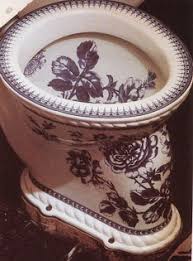
lovely toilet.

My bathroom had of course all the necessities including a toilet that was erratic in its flushing habits. I suspect that water was in short supply and flushing could not be achieved when the cistern did not fill with water. From the sound of rushing water into the cistern I worked out the times when water was ‘on’ and saved this water for only the essential part of ablutions. Another architectural oddity was that the toilet’s waste pipe did not have an S bend; it just had a terracotta pipe going straight down but at an angle so absurd that one had to sit sideways, so that you could close the bathroom door and not be with knees pushing against the door.  All in all, it gave me a good example how things can be different and this is what I mainly look for when elsewhere, a total difference.

My fellow travellers apart from the Moscow Library union man were doing the typical tourist thing of forever comparing how things were in Australia, and that by and large, Australia was far freer and superior and better in this and better in that. It started to grate me severely and I rebuked a couple when it came to having dinner at a restaurant connected to this Hotel. There were the usual complaints about how in Australia we cooked this and that, and had bigger steaks and what not else. There was a wedding going on and our food was the same as the wedding party which I thought was not only delicious but also genuinely Russian fare.  There was borscht and piroshky and the wedding table was having such a good time that the moaning of my fellow travellers again about the food just made the bucket run over and I made the remark about the awfulness of dribbling meat pies and those brown streaked vegemite pieces of toast to our Russian guide. The horror of Australian food fortunately does not get a run in overseas restaurants except perhaps in some below pavement and well hidden dives in London’s Kangaroo court.

We went to see, of all composers, the folk opera/ballet of Porgy and Bess by George Gershwin at The Bolshoi Theatre. It was an unforgettable experience and the encores and applause went on forever. Nothing casual of the theatre goers though, everyone dressed up and obviously out for a good night. Our travel guide had dressed up for the occasion in a splendidly looking dress with golden little applications to hems and collar. Her name of Natasha was all in style as well.

Patrick White.

There were sometimes fellow Russian students amongst us who were interested in Australian literature and to my surprise were much better informed than my Aussie travellers were in Russian writers. Of course they were also students; even so, I felt that the average Russian student had a keen interest in things away from materialism. Of course that long suffering society steeped for centuries in so much tragedy and misfortune with leaders imposing their murderous campaigns over and over again, could hardly be expected to contemplate the dribble of average weekly earnings or the state of cricket. While the Russian students knew Patrick White and even the recent P.Carey, they had not heard of Boris Pasternak and even Alexander Solzhenitsyn.

Cyrus. Chapter 6: The Persians Revolt (Part 2)

08 Tuesday Sep 2009

Posted by Voice in Cyrus the Great: Chronicles

≈ 7 Comments

The Median Empire

Before Picture: The Median Empire

By Theseustoo

When the defeat of the Median armies was reported to the astonished Astyages it struck him like a bolt from the blue; it seemed as if the Medes had all spontaneously decided that they had suffered too much at Astyages’ hands and had thus all simultaneously decided to join the Persian revolt.
Astyages was not unaware of their suffering; far from it; indeed he derived a great deal of personal pleasure from inflicting it; but he was very surprised that they had revolted; he had thought that they had been well and truly cowed into total submission to his god-given kingly authority; and that their spirits had been so completely broken to his will that they had not the courage to revolt. But even more surprising than this was the fact that his spies had not discovered the plot and reported it to him before now.
“What? My whole army turned tail and fled?” Astyages yelled incredulously as he heard the tale of the total rout of all his armies. No! It couldn’t be, he thought desperately to himself, it was impossible. How could his spies not have known there was something wrong? Were they ignorant of the plot, he wondered, or were they perhaps complicit in it?
He made a mental note to have all of his current spies executed and replaced. If they were ignorant of the plot, he thought, it must mean that they had been deliberately kept ignorant; and that in turn implied that his current spies must all be well known to everyone as such and thus useless as spies; those who had planned this revolt had easily avoided them. They should have known; the king thought to himself darkly; he should have been warned…
And what if they had known about the plot and had not reported it, he asked himself. That would mean they were complicit in it, and disloyal to their king; treasonous indeed. No, they were probably ignorant, he decided, or this terrified spy would not be here now, cowering in front of his master in fear for his very life, due to the nature of what he had just reported. This man knew only too well that messengers who were unfortunate enough to be the bearers of especially bad tidings were sometimes sacrificed in order to prevent the news from spreading panic among the populace and thus adding more chaos to the disaster. Yet he had brought the message in spite of the obvious danger to himself, the king realized; so Astyages decided to let this spy live; but only this one…
But Astyages was not about to give what remained of his city’s population any time to panic; decisive action, he knew, was the only thing which could possibly save his kingdom now… if anything could! As for this slave; if he killed him, he knew it would look as if he were trying to cover up bad news and may actually start a panic inadvertently. Yes, he thought, of all his spies, this one could keep his life, he decided; for the time being at least…
“Well it will give Cyrus no joy!” the king declared bitterly as, turning to the captain of his guards, he issued his orders,
“Call the Assembly; every available man still capable of using a weapon in this city is to arm himself with whatever he can and assemble to fight the Persians!”
As the guard captain nodded and left immediately to obey his king, Astyages next addressed the guards who were on duty on either side of the door and posted at regular intervals around the throne-room; and as he left the room he casually instructed them, “Guards; arrest these Magi and have them impaled in front of the city gates immediately!”
Perhaps for the first time in their about-to-be truncated lives the three Magi advisors were utterly speechless as the guards moved forward as one to surround the king’s former advisors, then seized them and dragged them, screaming inarticulate protests and kicking their legs in a desperate but futile attempt to resist; as, between them, the guards virtually carried the doomed astrologers to their unforeseen, untimely and most excruciating end.

*** ***** ***

Persian and Median infantry

The regular Persian and Median infantry: From the Circle of Ancient Iranian Studies website

Spurred on by Astyages’ own personal bodyguards, who now whipped them mercilessly into the fray; the people of Agbatana, now comprised mostly of old men and young boys armed with picks, hoes, mattocks, axes and other pieces of farming or kitchen equipment or perhaps an occasional piece of antique armour or weaponry; now put up only a little more resistance than had the Median armies to Cyrus’ forces. Meanwhile the women cowered in the city’s Temples, tying themselves to the altars with fragile wreaths of flowers; thus dedicating themselves as suppliants to their gods: Should their city be invaded and conquered, their conqueror must refrain from harming them or risk breaking one of the most ancient and sacred of all laws; the law of sanctuary; and thus risk incurring the wrath of the gods.
Yet despite their extremity and their terror of Astyages’ guards, many still deserted to the Persians as soon as they found an opportunity. The Persians, for their part, together with those Medians who had already deserted, encouraged their fellow-Medes not to fight but instead to throw down their weapons. Most of those who could obey their relatives within the ‘enemy’s’ ranks did as they were bid and surrendered; and they were immediately welcomed very warmly into the Persian ranks.
Those few Medes who still stubbornly resisted the Persian army, including most of Astyages’ own personal guard; and those few peasants who had not managed to avoid being forced to fight, were swiftly and utterly defeated. Although more blood was spilled on both sides in this battle than there had been in the first parody of a battle, the Medes were again defeated, utterly and absolutely. Finally realizing the pointlessness of opposing such overwhelming odds, even the remnant of the King’s bodyguard eventually capitulated, as Artembares finally held aloft a white rag tied to the end of a spear to indicate their submission.
Astyages was captured alive and at once enslaved; and as the blacksmith hammered the rivets into the iron chains which now imprisoned his hands and feet, he looked up to see Harpagus, his servant and Commander in Chief of all his armies, standing in front of him. Astyages was astonished when he saw that his minister was not enchained, but was walking freely among the enemy, who all hailed him as a hero as he passed. When Harpagus saw Astyages and the astonished expression on his face, he could not conceal his delight. In bantering tones, completely devoid of respect, the former servant now rudely addressed his former king, “Well then Astyages, how does it feel to be a slave?”
The defeated tyrant looked his tormentor in the eyes as he demanded bitterly, “Why do you claim the achievements of Cyrus as your own?”
“Because it was my letter which made him revolt; and so I am entitled to the credit for the whole enterprise” Harpagus replied smugly.
Astyages laughed even more bitterly when he heard this; then, with something resembling pity in his voice, he said, “In that case you are both the silliest and the most unjust of men: the silliest because when it was in your power to put the crown on your own head, you placed it on the head of another; the most unjust, because, on account of that supper you have brought slavery on the Medes, who were not to blame for it.”
Harpagus gasped in astonishment as Astyages continued, “…If you must put the crown on another’s head, rather than keep it for yourself, justice requires that a Mede, rather than a Persian, should have it. Now, however, the Medes are made slaves instead of lords, and the slaves moreover of those who, till recently, were their subjects. For a hundred and twenty-eight years Media has ruled all Asia east of the River Halys and now you hand her dominion over to the Persians!”

*** ***** ***

Pigs fly on Father’s day in Bowral.

07 Monday Sep 2009

Posted by gerard oosterman in The Public Bar

≈ 30 Comments

Pigs can fly indeed

By Helvi Oosterman

Pigs  Fly on Father’s  Day in Bowral

Father’s and Mother’s days are a good excuse to go out to lunch;  presents are forbidden unless they come in a shape of nice bottle of Shiraz for Gez and a bunch of flowers for me.

We had made arrangements to meet in Bowral as it is roughly halfway for us in Brayton and the family members in Sydney. We must have synchronized our travelling time well , as we all arrived  at the agreed time, spot on at mid day.  Son loves his beer and could not resist swapping the usual Shiraz for beer as the mini gift for his dad, and what better beer for  the Pig’s Arms customer than the aptly named one: Pigs Fly!

I don’t know where he found it but I’m not inventing anything here;  It does exist and it’s made by Bowral Beer Company and is advertised as Bradman Brew. I just found out that it got a silver medal at this year’s Food Festival in Sydney.

I could not help but sharing this with you, if only to prove that there is only six degrees of separation between just about anything; Pig Arms, Pigs Fly Beer, Bowral, Bradman, a bottle of Shiraz and the place where my son bought it, Burrawang!

The Liberal’s everyman.

07 Monday Sep 2009

Posted by gerard oosterman in Politics in the Pig's Arms

≈ 12 Comments

Joe (Peter Griffin) Hockey

Joe (Peter Griffin) Hockey

By Warrigal Mirriyuula.

As more and more politicians choose television celebrity to boost their electoral standing we’ve seen Anna Bligh cook and our Deputy Prime Minister take on a bunch of 5th class kids in a battle of intellectual wits; but did you know that another Australian politician is seeking hollywood fame? That’s right, “Jokin” Joe Hockey, the Liberal’s everyman, rightly conceding that he’ll never be PM, is currently in talks with the FOX network and the creator of popular animated series “Family Guy”, Seth MacFarlane.

MacFarlane is said to be over the moon at the “fit” between the character of Peter Griffin and Jokin’ Joe’s personable style. “We don’t need training, we don’t need method! He’s got the role down pat from the get go!” an ecstatic MacFarlane told reporters.

Though privately concerned that the new role may be a bit of a stretch for the first time actor, Jokin’ Joe’s says his experience in the parliament should stand him in good stead. “I’m quite used to delivering someone else’s lines” the jocose giant quipped, before roaring away in his BMW while he tossed back to assembled journalists, “Here’s lookin’ up your bi-election.”

After leaving the show at the end of the current season Peter Griffin will be taking up a public relations and communications management position for the George Bush Presidential Library.

Father O’Way Comes Home.

05 Saturday Sep 2009

Posted by gerard oosterman in Mark

≈ 21 Comments

Tags

Father O'Way

O'Way Returns.

O’Way Returns.

By: Hung One on.

God, Jesus H. Christ, long distance plane travel is boring, but I’m coming, home, yes,  coming, ho, ho, ho, hmmm, yes coming, ohh, ahh, oh yes [Stop, cut, Voice here, Look Sandy please don’t divert off the story with this silly innuendo about sexual experiences, okay? Otherwise none of my friends will visit this website, do you understand me?] [Okay, okay, I’ll stick to the story, sheez, I’m starting to get square bracket phobia] Anyway I’m headed home back to the Window Dressers Arms Pig and Whistle, a Trotters, my mates, can’t wait. Belinda left a few days earlier after a phone call from Glenda, her big sister, “Belinda, get home, Merv wants us to clean up the pub and anyway I’m sure you’ve had enough of him”

I enter the bar and am in heaven. Astyages is in the corner in his wheelchair due to his broken leg, “Sandy” he roars “You old bastard, Merv a pint for the good Father, put it on Emmjay’s tab”. “Thank you my dear poet, how the devil are you?” “Yes good Father although there are strange things afoot here in the shire, oops, sorry, wrong story, no everything’s fine Sandy. Now is that right that England won the last test by 200 runs? Sorry, what was that Sandy?” Okay, okay. Astyages and Jayell are in fits of laughter over their triumph.

Gez and Helvi come over and slap me on the back nearly knocking out my false teeth that I borrowed from Emmjay in London. “Good to see you old man, how’s the world?” “Stuffed Gez” I reply “No Trotters Ale and the Aussies lost the Ashes”. “Angela’s Ashes Sandy? I’ll loan you my copy, pipes in Helvi. “Different set of Ashes Helvi, thanks anyway” I retort.

Gez been won over (for a duck)

Gez been won over (for a duck)

Merv approaches “Sandy, you dickhead, what happened at the Oval? Thought you was goin’ to streak? Save the game and all that.” Slight problem with timing, I mean I didn’t know that a Test could be over before five days, five days of tedium I might add. “Got busy Merv” I meekly replied, “Oh well, shit happen Sandy, wedges?” says Merv as he proffers some wedges. Hmmm, granny’s wedges, I’ve a penchant for wedges, especially vegemite and herring flavour, “Bewdy Merv” I splutter as I cram in a gob full.

Poms in victory

Poms in victory

“Hey Sandy” Merv prompts “That Bish bloke, comes around here sometimes looking for you, mate, what actually is his name?” The Bish, oh no, not the Bish, looking for me, isn’t he on holidays? “The Bishop”? I inquire, “Yeah, The Bishop?” Merv presses “Bishop” I say, “Yeah, that’s right Sandy, the Bishop” Merv looks puzzled, “Bishop” I reply, “Pardon?” [Stop, cut it right there, Voice here again, for fuck sake Merv, you single digit IQ  knuckle dragging Neanderthal, Sandy’s trying to tell you that the Bishop’s name is Bishop, you tool, an amoeba has more brains than you] “Bishop Bishop” The bar roars with laughter. Bishop Bishop how terrible is that. Warrigal, who has been sitting patiently and is spitting out spurts of beer “Yeah I met a copper once by the name of Constable, Constable Constable”. Well the bar is alight now. Tears are rolling down cheeks and hands are delving into pockets for tissues. Algernon, who has been laughing so hard his face has turned red “Hey what about that guy in Catch 22, Major Major” The bar cracks up with laughter. Tutu, Glenda and Helvi decide to adjourn to the ladies lounge. “Sergeant Sergeant” “Judge Judge” “Richard Dick!” Ah yes the Trotters Ale is working a treat, no antidote needed here, these are my people, and to quote Steely Dan, I’m home at last, home at last….

Cyrus. Chapter 6. Part 1.

04 Friday Sep 2009

Posted by Therese Trouserzoff in Cyrus the Great: Chronicles

≈ 22 Comments

Nabonidus Chronicle - A hard copy of the story

Nabonidus Chronicle - A hard copy of the story

By Theseustoo

CHAPTER 6:  The Persians Revolt

Astyages was conferring with his astrologers in his throne room. On a large table the Magi had spread extensive charts of the heavens, which their tribe had painstakingly compiled over the course of many centuries. Explaining their analyses, they pointed out the meanings of the aspects between the various planets on these charts as they expounded their prognostications to their king. Currently an opposition to the planet Ares, the god of War, they felt, indicated a threat to the national security.
Suddenly the door burst open and a man whom Astyages instantly recognized as one of his spies, now dressed in a herald’s uniform, hurriedly entered the room, flanked by two guards. The spy threw himself to his knees at Astyages’ feet and touched the floor with his forehead in ritual abasement. The king was furious at the interruption,
“How dare you interrupt our conference?” the monarch demanded of the intruder; “If your reason is not a good one, your life will be forfeit!”
The spy trembled with fear; but he was undeterred and responded instantly, “The Persians are in revolt Majesty; I have come as quickly as I could to warn you; Cyrus is raising an army…”
“What’s this?” Astyages was incredulous, “In revolt you say? Very well; you may keep your head. Now, you may take a message to Cyrus for me; he is to come at once to attend me here in Agbatana!”
“At once Sire!” The spy replied, and then swiftly bowed deeply, turned and left, to return immediately to Persia with the King’s message. When he had gone, Astyages turned round to address his servant.
“Harpagus! Tell the tribal princes to assemble their armies! And have my army assemble too; you will be Commander in Chief of this expedition; take the armies and slaughter these Persian rebels.” Then, with an evil glint in his eye, he added, “Show them no mercy!”
“At once Sire!” his servant replied. Harpagus could not conceal his delight; but he didn’t have to; the king, he knew, would undoubtedly interpret his visible pleasure simply as happiness at his promotion to the position of Commander in Chief of all the Median armies; and the chance to lead this most important expedition against Persia

*** ***** ***
The message from Astyages was not unexpected; indeed Cyrus was well prepared for this ultimatum even before the herald delivered it. His response was instantaneous and very brief:
“Tell Astyages that I shall appear in his presence sooner than he will like!” he declared. Then, as soon as the spy had left the room, he turned to the captain of his guards, “Guard! Call the Assembly! To arms!”

*** ***** ***

A Persian nobleman

A Persian nobleman

The ‘battle’ went just as Harpagus and the Princes of the Tribes had planned, much to the astonishment of Artabarzanes, the captain of the king’s own regiment. As the commanding officer of the king’s regiment he was one of very few of the Median king’s officers who had been kept ignorant of the princes’ plot. Even his own subordinate officers had known of the plan, he very soon realised, when they too deserted to the Persians. But these, he knew, were all good men, whose loyalty, not only to their country, but, he would have sworn, also their personal loyalty to himself as their commander, he would never have questioned… Yet they had kept this plot entirely secret from him. Of course; in retrospect, he realized that they really had no choice; his integrity was too well-known for the conspirators to risk being caught by attempting to subvert him.
As he watched the Median armies either feign fear and flee, or else desert en masse to their enemy, he knew he should be outraged at this betrayal, of himself as well as their country. Yet somehow, after the event, he found he could not bring himself to blame them; for he too thought of Astyages as a tyrant. Nonetheless he still felt just as bound to protect his king as he had always been by his sense of duty, as well as by his own personal sense of honour.
From earliest childhood he had been taught, like all noble Median men, that their loyalty was due first to the King, then to the people of Media and then to their own families. Yet, as he now witnessed the rout which was happening all around him, it occurred to him, even in the midst of battle, that most Medians were loyal to their families first, then to the people of Media, and only then to their king.
For what seemed like an age but which in reality was only a few minutes, Artabarzanes and his regiment bravely resisted the overwhelming Persian forces, armed with Assyrian bows and bronze-tipped arrows as well as long, bronze-tipped spears and short, wickedly-pointed daggers, also of sharpened bronze; and protected by their light wickerwork shields. The Persians, for their part, did their best to keep this small pocket of serious resistance busy without doing them any real damage, until they were finally ordered to lay down their arms by their own Commander in Chief, Harpagus, who soon arrived at the head of a large Median contingent, which had just been reinforced by a battalion of Persian troops.
When Artabarzanes and his men finally saw that Astyages’ forces had openly deserted to the Persians or else had feigned terror at the size of the Persian horde and fled, they quickly obeyed. Since further resistance was clearly futile, even Artabarzanes finally decided that discretion was the better part of valour and capitulated.
Though defeated, he felt that at least he had dishonoured neither himself, nor his position. But Artabarzanes knew that Harpagus too was a man of honour; and when he discovered that the purpose of the rebellion was to install a legitimate heir on the throne of Media, and not merely to advance the ambitions of either Harpagus or the tribal princes, he found that when given the choice, he could only support the new cause.

*

veni,vidi.

veni,vidi.

** ***** ***

Whoring in Fremantle and lamingtons.

03 Thursday Sep 2009

Posted by gerard oosterman in The Public Bar, Travels

≈ 34 Comments

Johan Van Oldenbarneveldt

As hinted earlier, the first Australian Port of Call, Fremantle on a February Sunday, 1956 was somewhat of a surreal experience. I am not sure what the Italian Luigis or Greek Stavrosses thought about it all. Despite my fifteen years of age or because of it, I needed to see and meet new people, our first Australians to be precise. After the whole ship donned Sunday best with coats and ties, pre-pressed and creased pants and frocks, the twelve hundred passengers could not get off the boat quick enough.

We all sauntered ‘en masse’ over a large steel bridge spanning acres of industrial rail-lines and rubble, walking for quite some distance when we finally found our way to Fremantle’s first row of houses. Perhaps because of the intense heat and distance we already encountered some passengers who were on the way back to the ship. One Dutchman who we knew from onboard proudly practised his English and said “kept left in Australia” to us, in a strong guttural accent, eyes sparkling. We of course still walked on the right hand side, but not him. He would definitely succeed in Australia! Our eight of us persevered but somewhat uncomfortable in the simmering heat and in all our finery.

Not a soul to be seen. Was this a practise run for a Neville Shute’s film set of ‘on the beach’? This might be the best way to describe what confronted our family walking through the deserted and weather board peppered street scapes, even though the ‘on the beach’ was not written till 1957 with its theme of an Australian town awaiting death from an atomic bomb.  Perhaps the feeling of a town without people being visible often acts as a catalyst for many a book or painting. Did Neville Shute visit Fremantle on a Sunday prior to writing his best seller, I wonder?  Apart from Neville Shute’s book and film with Ava Gardner, another example of the strange feeling of this typical Australian town on a Sunday, might well be in contemplating a painting by Jeffrey Smart. Of course at that time, those artists were totally unknown in Fremantle and no amount of clairvoyance of its people could have been responsible for the feeling of emptiness in those streets.

In fact, there were people there, with here and there a steady radio drone coming from within the cream painted weatherboards. Years later when I learned how to spot signs of life within those curtained and venetian blinded off houses, a cricket score then often betrayed life, even though the desire to be unseen and to remain private was strongly adhered to.

Bustling Fremantle 1956.

My dad and kids bravely walked on determined to finally say something to someone, preferably a real Australian. We walked up a hill with on top some kind of monument and even the so longed for palm tree finally in sight. Diagonally across from the monument and palm park we spotted a shop with doors open. We made a surge towards this shop, thirsty for any quenching liquid and first contact. We entered the shop and expectations of an introduction and possible handshake were foremost in dad’s mind.

A handshake was always done back home and as common as donning a hat to a passerby, or standing up for a lady in the bus or tram. Surely, anyone could sense that we were belonging to the just landed. The shopkeeper seemed totally unaware of our presence and did not even look around from where she was stacking a shelf with her back to us. The situation was not helped when the younger kids started to fidget and the thirst and promised quench was getting more urgent. We had no option though and surely with the noise and restlessness she would finally have to acknowledge us. Was she deaf or mute, possibly blind?

It was none of that, it was just that in that part of the world, customer service was still not to be given under any circumstance, a mere leftover from the days that it was common for people to disrespect authority and not to be seen grovelling to the gov’nr. A fair crack of the whip is all they could hope for and this shopkeeper and her ancestors had been taught and also learnt that the customer was now the person to be kept subservient and waiting. The shopkeeper was the Guv with the whip. Of course, my dad had no inkling at that time of those delicate cultural nuances brought out and exposed in those minutes of waiting for a response from this shopkeeper.

Lamington shop. ( Amsterdam)

Yes love? Finally a response, but ‘yes love’, did he hear right? A question from female shopkeeper calling someone a’ love’, what was this now about? Dad and family went through war and hunger, changing and moving to other city, had a large family, took a boat to the end of the universe with a marriage and fine wife intact and so strong, and now, finally when on first walkabout in Australia and on a first meeting with an Australian and after a long and hot walk, he was called ‘love’ by a strange woman? This was too much to take in, he quickly pointed at some brown cakes sprinkled with some white flaky stuff, and two large bottles of a luridly coloured soft drink or lemonade. We all bolted as fast as we could. ‘Love’ indeed. It must have been a brothel. Those very first cakes were about twenty years later identified as ‘lamingtons’.

It was a slow walk back to the ship. There was a lot to think about and to digest. The lamingtons were eaten in silence and the soft drink shared amongst the eight of us. I remember being vaguely aware of my friends comments back home about Australia being closed up on a Sunday. I started to feel apprehensive as well as tired and mulled over the shop woman and her strange reluctance to serve us. It was way beyond my depth to accept the day as a rewarding experience in meeting our first friendly and welcoming Australian.  I missed my friends.

← Older posts
Newer posts →

Patrons Posts

  • The Question-Crafting Compass November 15, 2025
  • The Dreaming Machine November 10, 2025
  • Reflections on Intelligence — Human and Artificial October 26, 2025
  • Ikigai III May 17, 2025
  • Ikugai May 9, 2025
  • Coalition to Rebate All the Daylight Saved April 1, 2025
  • Out of the Mouths of Superheroes March 15, 2025
  • Post COVID Cooking February 7, 2025
  • What’s Goin’ On ? January 21, 2025

We've been hit...

  • 752,780 times

Blogroll

  • atomou the Greek philosopher and the ancient Greek stage
  • Crikey
  • Gerard & Helvi Oosterman
  • Hello World Walk along with Me
  • Hungs World
  • Lehan Winifred Ramsay
  • Neville Cole
  • Politics 101
  • Sandshoe
  • the political sword

We've been hit...

  • 752,780 times

Patrons Posts

  • The Question-Crafting Compass November 15, 2025
  • The Dreaming Machine November 10, 2025
  • Reflections on Intelligence — Human and Artificial October 26, 2025
  • Ikigai III May 17, 2025
  • Ikugai May 9, 2025
  • Coalition to Rebate All the Daylight Saved April 1, 2025
  • Out of the Mouths of Superheroes March 15, 2025
  • Post COVID Cooking February 7, 2025
  • What’s Goin’ On ? January 21, 2025

Enter your email address to subscribe to this blog and receive notifications of new posts by email.

Join 374 other subscribers

Rooms athe Pigs Arms

The Old Stuff

  • RSS - Posts
  • RSS - Comments

Enter your email address to subscribe to this blog and receive notifications of new posts by email.

Join 374 other subscribers

Archives

Website Powered by WordPress.com.

  • Subscribe Subscribed
    • Window Dresser's Arms, Pig & Whistle
    • Join 280 other subscribers
    • Already have a WordPress.com account? Log in now.
    • Window Dresser's Arms, Pig & Whistle
    • Subscribe Subscribed
    • Sign up
    • Log in
    • Report this content
    • View site in Reader
    • Manage subscriptions
    • Collapse this bar
 

Loading Comments...