
Tags
Aboriginal, alcoholism, Anzac, Geoffrey Gurrumul Yunupingu, Herne Bay, inebriate, Korea, Korean War, Land Grant, Orange, Pink Floyd, Sydney, Wiragjuri
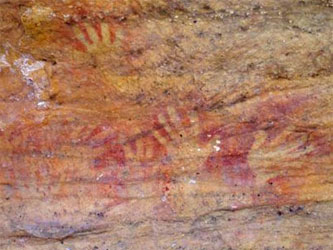
(A story; some fiction, some not. Tom and the many mothers are still everywhere.)
Tom, who was black and a returned soldier from the Korean War, used to live with his mother in Orange. He never did get into a decent working live and his request for a land grant was knocked back, as were all other requests from aboriginals in those post Korean War days. Tom could not even get a beer in a pub at that time. He fought as good if not better than most in Korea. He was fearless and when shot in the leg he hobbled on regardless for the next couple of days. Someone finally got him into a hospital. It left him with a gammy leg, a permanent limp.
When he applied for the soldier land grant he was told by the clerk,” bugger off,” “not for you Abos, mate.” Some of his white mates were given the VC’s for less fighting than some of those black ones. Even though Tom could not get into the pub, he managed to get into the grog quite well. He never figured out the one about the land grant refusal, somehow always thought he was part of the land before white men. It did not make much sense, but then again, so much did not make sense. Black fellas got killed in the war more than Australians, yet they were never rewarded for bravery. They weren’t even citizens. That’s why Tom also did not get a pension. He never understood the problem, no matter how often he asked himself or others.
His mum kept telling him “keep your nose clean, stay away from grog.” He only kept the first part but loved those brooding dark long- necks. Over time they rewarded him more than anything, even though it was of short duration. Each bottle set up the need for the next one. Tom drifted off to Sydney, camping along Salt Pan Creek at Herne Bay. He used to do short spurts of work, became an itinerant rabbito. In the evening he joined his mob on the creek, stewed up the left- over rabbits with pumpkins. The grog was also part of his mob. Many were returned soldiers but never shared in the spirit of Anzac, not a single medal. There was just this wrong kind of spirit; better than nothing at times.
Tom just idled along but somehow never got the thing about the returned soldier’s Land Grant out of his head. He would have liked to have been able to raise horses on the couple of hundred acres that so many white soldiers got after the return from Korea. Not being a citizen was a puzzle that never got solved, especially not when his days became more and more endured in an alcoholic daze. He used to pinch his arm, “yes, I am a person and am alive”, “how come I am not a citizen.” “What’s a citizen?” Apparently, anyone but a black fella.
He went back to Orange and lived with his mother who put up with his now deeply entrenched need for grog. He would be charged over and over again with drunken behaviour, disorderly behaviour, pissing up against the rosemary at the Town’s returned soldier’s memorial with the bronze inscribed names of so many brave but white souls. White souls, the lot of them, and all dead but still regarded true citizens. All their wives and mothers were receiving pensions.
Tom’s mother was just scraping by with the help of uncles and aunties and assorted relatives, all without pensions. “We are from the Wiradjuri people; we lived here well before any white man.” “Your grandmother use to grow seeds around here and we were the first gardeners,” she told Tom.
The coppers got fed up with Tom. It was too much. The Order was read out by the Magistrate; “Pursuant to Section of the Act, I am satisfied that Tom is an Inebriate within the meaning of the 1912 Act and hereby Order the Inebriate to be placed in a licensed institute for the remainder of his life”, or, till he is deemed cured. The chief constable with a grin on his face led Tom downstairs to his fate. Tom mused on the stairs down; am I now a citizen?
Tom was taken to the inebriate section of the mental hospital in Orange where he spent the rest of his life. He wasn’t even told of his mother’s death. In 1968 he finally became an Australian citizen and had his pension regularly paid out to the Institute. Tom did not get better nor did he ever find out why he was not a citizen before 1968. Over thirty percent of the inmates were aboriginals. Tom died in 1974.
Keywords: Orange, Korean War, Aboriginal, Korea, Sydney, Herne Bay, Anzac, Land Grant, alcoholism, Wiragjuri, inebriate
 Window Dresser's Arms, Pig & Whistle
Hey, Gez, beautifully written.
LikeLike
Thanks Big M. but It doesn’t beat a beautiful person.
LikeLike
Yeah, a nancy boy with a handbag says so
LikeLike
And we got you the ton
LikeLike
He’s had a few lately.
LikeLike
Gez’s posts usually attract a ton of praise!
LikeLike
I must bid adieu. Ambrose Raving is spouting delusional nonsense. I’ll just don my cape and be off.
Bye.
LikeLike
The most sensible thing you have said old boy
LikeLike
Pass.
LikeLike
Oh my, it’s been a busy day. And then there was the rugby. France could have won. Or, as J G put it, somewhere, “they could have been contenders”….Marlon Brando…I think.
I’ve come to late to make a comment, but I take issue with this from G. O’D:
The Europeans totally fuck everything. Sheep, cattle and pigs root the soil.
I Think the “sheep shagging” , was something that youse developed all by yourselves 😉
LikeLike
Are you sure? Have you done any research on that or are you making it up?
LikeLike
Well, when I’m not sure, I preface it with, think 🙂
Another good ploy, is to use IMHO. It saves a lot of argument.
A cyber pub: somewhere.
A motley crew: an argumentative few,
Took to writing and arguments flew.
But the best of it was,
That the next day in Oz.
These matters they often eschew.
Julian
LikeLike
It is 100% a true lie non core promise for sure maybe.
LikeLike
Perhaps the issue is getting lost. Here might be the real answer to the problems of a culture.
Geoffrey Gurrumul Yunupingu – Wiyathul
LikeLike
Beautiful song Gerard
LikeLike
Yes, Geoffrey sings it well too.
LikeLike
What are you doing today?
LikeLike
Preparing garden for p[avers..
LikeLike
Well get back to it man 🙂
LikeLike
That’s why I am not near the computer. I keep getting my hands mucky.
LikeLike
Yes, it is nice. -How good is your singing Gordon?
LikeLike
Not good any more Gerard. Was a good singer when I was younger.
LikeLike
OK, let’s hear it on the P/Arms.
LikeLike
LikeLike
I couldn’t get any sound out of it HOO GOD?
LikeLike
Works fine on my PC
LikeLike
By the way it is a link to the page that contains the mp3
Here’s the direct link for dummies,
[audio src="https://pigsarms.files.wordpress.com/2010/06/mark-white-utopia.mp3" /]
LikeLike
I got the clip up and a line travelled along. But nothing. My laptop won’t process 20 yro IBM software 😉
LikeLike
Do you mean that your laptop doesn’t play mp3’s? If so get rid of it.
LikeLike
Vee-ell;
did you turn the pseakers on? That is often a problem when no sound is produced..
LikeLike
I am not sure why. Maybe it’s an old RealPlayer format and doesn’t like Google Chrome.
I might go back to Firefox. The spell check in Chrome is hopeless.
LikeLike
Problem Exists Between Chair And Keyboard
LikeLike
You sound so much better than you look. Worked fine on my computer by the way. Had a touch of Lola to it too I thought. Very nice, pleasing to ear. Well done.
LikeLike
Don’t worry Viv, I tell all my blind residents that I’m handsome
LikeLike
Twas a long time ago and very rudimentary
LikeLike
You got more? You are kidding. Let’s hear them too. I wish I could write like you can sing.
LikeLike
Nice sensitive voice. Have you done any more?
LikeLike
Yes, but not many. I will try and find some.
LikeLike
Honore de Balzac:
“Il y a deux histoires: l’histoire officielle, menteuse, puis l’histoire secrete, ou sont les veritables causes des evenements,”
May I translate the above in ‘my’ English:
“there are two histories: the official, disembling one, and the secret one, where the true causes of events are to be found”.
Corrections most humbly accepted.
LikeLike
Look Voice:
You seem to be tripping over many pieces and articles not just mine. The ABC Drum is often dripping with your chagrin, no matter what the article, but always under your many pseudos. I chose my own words in my own name. I owe up to my words.
Who cares about facts, they have a habit of moving as well? Who cares about 1976 or 1945? The essence is what it is about.
I could just as easily have written about sausages and sauerkraut, or about Paris in Summer. In the nick of time at age of sixty seven I started writing words. I make up, write facts, write fiction, fabricate, lie, tell some truths and use whatever I can find in between my head and the end of my typing fingers to tell stories or articles, all for your amusement, absorption or rejection. Don’t read my words if you dislike what I write. They are my words, not yours. From the latest reckoning I have written well over a hundred contributions. With an average of 500 words, you have got just about a book-full of words. They are free words and I am most obliged to all you piglets for your patience in reading those words.. That’s good enough payment for me.
LikeLike
Facts don’t have a habit of moving. I for one care about facts, and so do a lot of other people. Presumably that’s why you make them up. Why bother otherwise?
I understand what you mean about essence. It’s similar to what I call World View. When you have to make up facts to match your view, something isn’t right.
Stephen Colbert has put forward the same idea as you about essence. He calls it truthiness, which he defines as “Truthiness is a “truth” that a person claims to know intuitively “from the gut” or that it “feels right” without regard to evidence, logic, intellectual examination, or facts”. When he strated talking about truthiness he said “Now I’m sure some of the ‘word police’, the ‘wordinistas’ over at Webster’s are gonna say, ‘Hey, that’s not a word’. Well, anybody who knows me knows I’m no fan of dictionaries or reference books. They’re elitist. Constantly telling us what is or isn’t true. Or what did or didn’t happen.”
Of course, Stephen Colbert is a satirist.
LikeLike
C’mon on Voice, stick it up i’m. They don’t like cold steel up ’em. Oh and by the way what pseudos?
LikeLike
Well I still think what Gerard wrote was of interest. Everyone has gone a bit off-topic but Gerard remains the king of discussion.
Voice, it is totally unhelpful just saying ‘if you can’t be bothered to fact check the rest, why should I.’ There is a disagreement and evidence presented yet you choose to not to contribute to the evidence. It may boil down to interpretation. The reality versus the legal fact, for instance.
LikeLike
And you Vivienne made my day.
LikeLike
xxx ooo xxx ooo
LikeLike
Viv, Is this disease free porn?
LikeLike
We see here, amongst our own little group, the kind of tetchiness that if writ large looks like the kind of slanging you see on the news every night. We’re all guilty. We are all of us internally flawed to one degree or another and there’s no right or wrong, just consequences. One of the saddest of which is a kind of intellectual siege mentality. I’m right so the other guy must be wrong. This is very old fashioned thinking, almost medieval.
What if all these ideas, all these cultures, all these people are “right” in some sense? That would seem to make us all also “wrong” in some sense, wouldn’t it?
Its all just ideas turned into a way of being we can be comfortable with, happy about, live with.
I guess the trick is to see yourself as “the other”, exercise a little empathy, try to really understand how and why they think that way, to seek out the utility in the ideas and lifeways of others, but mostly, primarily accept them for who they are, who they think they are, not who you think they might be, what you think they represent.
Its difficult, getting over yourself. I’ve never managed it.
LikeLike
That’s my view. I was brought up to consider the kind of casual racism involved in constant carping negativity about a country with a different culture to that from which you originated to be extremely bad manners and a sign of small mindedness and lack of intelligence.
LikeLike
The odd joke, serious criticism, or wry observation; fair enough.
LikeLike
Voice, did your parents really say that to you and instil that in you ?
LikeLike
Voice, if you believe what you are saying here, then why the constant carping and negativity from you?
LikeLike
Yes Vivienne. We lived in a number of different countries and I’d never dream of carrying on like that.
Sigh, Helvi. Constant carping and negativity? Perhaps you have a problem distinguishing between a disagreement about issues and a personal quarrel. I have been pretty critical of a lot of what gerard says. Perhaps you could characterise objecting to carping negativity as carping negativity, but it’s a pretty thin argument really. Then again, I also have a particular dislike of unfacts.
LikeLike
No, Voice, I have no problem understanding what your constant carping is about; I’m often shocked by it both here and on the Drum.
As i said before ,maybe you don’t even know what you are doing, and that makes me feel sorry for you.
But if you know what you are doing, then I feel sorry for the victims of your hate and carping.
And as for Gerard, he’s big enough boy to defend himself. He argues the issues, you get personal, there is a big difference…
LikeLike
You’re entitled to put your case Helvi, and good luck with it. I would have thought it’s pretty unconvincing to paint yourself as a victim of someone while personally attacking them, but who knows.
LikeLike
Well Voice how about practising what you preach. You are full of contradictions. You talk about facts yet you do not present them. You are carping and negative.
LikeLike
Viv, isn’t that a bit, ‘yesterday’?
Can’t we just move on.
I haven’t followed your discussion. And I don’t intend to backtrack. However, that comment is just a personal attack, devoid of anything to argue about.
We’re all a bit negative sometimes. And lefties whole the world record in carping.
Next topic??
LikeLike
“I haven’t followed your discussion”, next!
LikeLike
HOLD!
LikeLike
Perhaps you should have followed it. Voice started it !!!
LikeLike
Er … Hi to you too, Vivienne. How’s the weather been over there on the Vic border? When you were gone a few days I thought you might have been fishing.
LikeLike
Weather up and down like a yo-yo – cool, then hot, then wet and windy. Thanks for asking.
LikeLike
Voice, I’m no- one’s victim, least of yours, please let go of your delusions.
You expressed on UL wanting to try your hand on writing, my advice to you, please try and develop a sense of humour and if you want to get into creative writing, please do not do text books for primary schools.
LikeLike
I, for one, have to put the Aboriginal issues, problems, treatment, into a Too Hard Basket…
Whatever one says, one is seen as racist…or politically incorrect.
They have been treated badly in the past, now many say we are treating them too well, giving them too much money…
If we could find a way to keep all children, also the Aboriginal kids in schools as long as possible, give everybody a good education, we’ll be there or at least we’ll be heading for a right direction.
How we can achieve this in those remote communities , I don’t know. Maybe busing the kids into boarding schools in larger communities…They stay there during the week and weekends at home.
Something like this was done with Saami children in remote sparsely populated areas in Northern Finland.
LikeLike
Helvi, I think the thing is to not be afraid to just say the right thing. The only people who would snarl or sneer back at you are the Bolt types and to them I would just say you don’t know what you are talking about (he certainly does not anyway). Life in those remote communities just seems hopeless and I must say I don’t understand why they want to stay so miserable and disconnected – there is no employment available, they are not doing anything – it is the one thing I just do not get/understand. In some cases where education is available they won’t go to school despite a bus coming to pick them up – it is just so sad. But I’ve seen Costa on the tv working in a remote community and it is thriving, kids love school (the location was not inland, near the coast, somewhere, I forget exactly). BUT, there are many areas where Aboriginal communities are thriving and things are good – we just don’t see much of it in the media. If we saw (and I mean everyone) better images/stories in the media – I think a positive attitude would tend to become catching. If scum like Bolt could change and use their influence for good we’d all be better off.
LikeLike
I’m far more optimistic than most of you it seems. Since the arrival of the convict ships and ‘settling’ the land only 220 odd years have passed. Since the country became Australia only 110 years have passed. There have been huge awful stuff ups and there has been improvement.There have been steps forward, backward and then forward again. I look at the big picture and I see the pockets of nastiness shrinking.
LikeLike
Viv, I have always liked the ordinary Aussies, good people, always ready to help and not judgemental…
Of late the Abbott’s relentless negativity has chipped away some of that that good feeling. I read a long article in the Australian yesterday:’ Abbott ready to rule’, and felt like vomiting…
Then I read something that Paul Keating had to say, and I felt better 🙂
LikeLike
There are 200 countries in the world. They are all racist. It is part of the tribal culture that exists on the planet. The Europeans think they have the answer to everything when their own backyards are very dirty. The Americans take part in every war that will bring them oil while Africans starve and South Americans disappear to be murdered at the hands of the police.
The plight of the Australian Aborigine is a hopeless cause. Modern day Englishman meets communistic, eco-friendly, established culture indigenous inhabitant. However the locals don’t have the technology. This means guns versus spears. Guess who wins.
The Europeans totally fuck everything. Sheep, cattle and pigs root the soil. Feral animals that will decimate local animal and plant population are released to wild so we can be like the old country. We have to sit round being culturally sensitive to all other cultures except our own. If you put that forward you are a racist or bigot, no, I’m just a local. Please tell me the Dutch don’t hate the Flemish, or the Poms the French, get over you high horse, we are all the same. We have all discriminated in some way or rather. Like Jesus said, let he who has not sinned cast the first stone, and I’m an atheist.
LikeLike
Gordon,
So True, but it sounds so hopeless that it risks utter despair and for nothingness to then dominate. I wrote words that made (up) a story of a culture that seems to have been at the wrong side of the stick. I am not sure the Dutch hate the Flemish. I never heard about that one. Then again, I never heard the one of the boy with his finger in the dijk either.
LikeLike
Gerard,
You may not have heard that particular one but please don’t dismiss European racism. The indigenous cause is hopeless because of the gap between the cultures. They are much more advanced than us. I’m an honorary member of the local Nunga tribe and they are embarrassed about being, black Aboriginals. The pity is they had it right Cook et.al fucked it up.
LikeLike
Fair suck of the saveloy Hung. It doesn’t sound much like cricket to me.
LikeLike
The Dutch don’t hate the Flemish. They despise them. The Flemish think the Dutch are arrogant and stingy.
LikeLike
Goodness only knows where the Flemish got that idea from.
LikeLike
Voice, I lived three years in Holland and spent quite a bit of time in Belgium, I never noticed any of this ‘hate and despising’ in either country.
The older Dutch, who had suffered because of the war, might not have loved the Germans, but there was no ill-will between the younger Germans or Dutch.
LikeLike
Sorry Helvi but I think that is rather naive
LikeLike
Sorry Gordon, I was there, i did not google it 🙂
I suppose if you keen to find hate and despising, you might find it everywhere.
I believe in getting on with people, and if they don’t like me, I walk away, if that’s naivety, then I’m pleased to be called naive. 🙂
LikeLike
Helvi, you know that I have great respect for both you and Gerard however pretending something is not their is not a great way to live. These prejudices do occur everywhere. The thing that saves me is I hate everyone equally however I judge the individual on their deeds not the colour of their skin or their intellect
LikeLike
Gordon, as I said if you are looking for the trouble, you’ll find it, and if I don’t agree with your and Voice’s opinions here, it does not really matter….it’s a big world out there full of people ,some nice, some nasty…some somewhere in- between…we all make our choices..
Live and let live.
LikeLike
I lived in Holland twice, once for 3 days and the other time for 2 days. Everyone was always delightful. I also had a Dutch boyfriend on and off for 5 years. He migrated with his parents when he was a young boy. I worked with a woman who also migrated from Holland as a young girl. What struck me was how Aussie she was and how good and honest she was in everything (we were friends outside work and good pals). For what that’s worth !
LikeLike
So true Viv , good, kind ,honest people are the same all over the world, we can find soul mates, friends across the borders…gorrrd she/he is just like me we shout when we fall in love with someone, be they Aussie, Finn or an Eskimo.
LikeLike
Where did I dismiss European racism? I thought I tried pointing that out.
On a different tack. Did you know Orange (NSW) was named after Prince of Orange who became King Orange of The Netherlands?
(From Wiki)
Originally known as Blackman’s Swamp ‘Orange’ was so named by Surveyor-General Thomas Mitchell in honour of the Prince of Orange, who later became the King of Holland.
‘Orange’, is an accidental anomaly because it has no connection with citrus
LikeLike
Gerard,
Please don’t play games. The Europeans, of which you are one, are highly discriminatory. The Flemish and the Walloon’s of your old country are examples of this. It would be like saying an Australian doesn’t know about sledging New Zealanders.
LikeLike
What you say about racism is true, Gordon, it does occur in virtually all human cultures and societies (though not necessarily in all individuals) BUT since the mapping of the human genome has proven conclusively that ALL the so-called ‘races’ are in fact related, this amounts to a ‘family squabble’; an effing BIG family squabble, but a family squabble nonetheless!
IF (and it IS a HUGE ‘IF’!) we can learn to live together and cooperate, then maybe, (JUST maybe!) the human family MIGHT have a snowflake’s chance in hell of surviving past the end of this century; if not, then we will go on playing the same tired old ‘King of the Castle’ games we’ve played ever since we came out of the caves and this, in turn, will render absolutely impossible the kind of global cooperation which is absolutely VITAL if we are to have that snowflake’s chance of survival!
There IS some hope: The course of human history has moved from ‘imperialism’, which emphasises human competition and ‘survival of the strongest’, to ‘democracy’ with its own (often forgotten) emphasis on cooperation. However, this tendency towards cooperation is itself in great danger of slipping backwards (historically speaking) into new forms of imperialism as a result of the greed of SOME individuals (this, BTW, is NOT ‘human nature’; there is NO SUCH THING… only human cultures, the basic attitudes of which are taught in the process of socialisation!). The popularity of the ‘Occupy’ movements now happening across the globe is an indication that the majority of the people would like to share things a bit more equally and that our system for the distribution of wealth ought to be made much more equitable. Of course, unless governments, globally, take up the baton such social movements offer and run with it, we won’t have a snowflake’s chance in hell…
The question then, is: “Will we support the movement towards greater equity, or will we just join the greedy bastards in trying to grab as much as possible for ourselves in the vain hope that money and material possessions will somehow improve our chances of surviving the climate change we KNOW is happening?” (Which it won’t, you know…)
It’s time we recognised that, underneath all the apparent differences within and between the various nations and cultures of the world, there is ONLY ONE RACE: the HUMAN race! It remains to be seen whether this race (actually ‘species’ is a better word) will turn out to be just another failed evolutionary experiment and go the way of the dinosaurs… Will our self-assumed ‘intelligence’ turn out to be nothing but ‘arrogant stupidity’ (which Atomou, I’m sure would recognise as ‘hubris’) and end up in our own demise?
🙂
LikeLike
Ok David, to take you on more seriously. I believe in Maslow. Maslow said we need food shelter and water. Nothing has changed. When the hungry bring down the rich it will be based on Maslow. Capitalism, communism etc. has come to an end. We are living in it’s tail. One day a group of humans will arrive at your door to eat you. Be prepared. Have sauce available. Hopefully all of us piglets will be dead by then so we won’t have to pass on a serve of your ribs. The world cannot cooperate on one single item. We as a planet are totally insignificant in universal terms. Therefore we are a totally insignificant planet that cannot make its mind up about anything. This will lead to the Vogon Destructor Fleet that will eliminate Earth for a super highway[ Thanks Douglas Adams].
LikeLike
Gordon,
I’m pretty sure I am Australian with a European heritage like some/most of us..
LikeLike
Yes Gerard me too. I was born here to an English father and an Australian mother whose grandfather was Irish.
LikeLike
The reason the world as a whole has not hitherto been able to cooperate on a single item, Hung, is because we have been culturally indoctrinated to see people from different places as ‘The Other’; not as ‘Ourselves’… Now we are just beginning to learn that there is only ‘Us’ and no ‘Them’… The sooner we learn this lesson, the sooner we’ll be able and even willing to cooperate. Will you be one of the first to learn this lesson, or one of the last?
The scenario you paint is all to likely and it scares the shit out of me… that’s why I’m doing all I can to get this message across, even in the face of overwhelming resistance; even if the effort ultimately proves to be futile, I’m determined to go down fighting for a future for the species; giving in to selfishness just seals our doom. Maslow, for all the importance of his ‘Hierarchy of needs’ is only part of the story!
😉
LikeLike
“Now we are just beginning to learn that there is only ‘Us’ and no ‘Them’”
Ain’t that just like a Pom! No, just couldn’t resist the bad joke. OK, not one of my best.
Of course there’s an Us and a Them. And of course there isn’t. It depends on the level on which you’re operating. Human nature; same. But expressed or suppressed in different ways within different cultures.
LikeLike
Pink Floyd – Us and Them
LikeLike
Of course, Vivienne, they are just stereotypes that the Dutch and Flemish have of each other. I’m sure that most of them get on perfectly well together and take it all with a pinch of salt, much the same as Aussie/NZ stereotypes.
For real racism in Europe, look to the wars.
LikeLike
I can’t remember whether it was Ward 9 or Ward 11 they put the DT sufferers in, but it was a bad place. They were the only wards that were secured; home to those that would harm others or harm themselves.
I remember one pathetic patient who was addicted to sucking petrol. He’d escape the ward, somehow, and find the first car with an unlocked petrol cap. he’d take his shirt off and push it down into the tank. The shirt would act as a wick and he’d happily sit there until he was apprehended sucking on the petrol in the shirt.
To get to the grotesque; as a result of his addiction he had lost most of his lips, his tongue and teeth, and the end of his nose was a dried and shriveled stump. His facial skin was a kind of dried platey patchwork of crusty red.
My mother used to dread working those wards, not because of any danger, but rather the flattening affect of dealing with people so far off the bell curve they couldn’t even hear the ringing.
That having been said, one of my most treasured memories of Bloomfield is of an old boy who used to come and watch us play soccer. The fields were inside the Bloomfield grounds. The place was like a small village within its boundaries, had shops, a pool, a theatre, all manner of facilities. Anyway I don’t know what this old boy suffered from, mum did tell me but I can’t remember, but he was cognitively challenged at some level, couldn’t speak or move properly, yet he would awkwardly run up and down the sideline, urging us on, and in the unlikely event of our side scoring a goal, we weren’t very good, he’d go into paroxysms of jumping and shouting. It was out shirts he liked, according to mum. He didn’t barrack for any other teams.
At the end of the game he would strut, or what passed for strutting with him, his arms folded across his puffed out chest, babbling to himself and us with a huge smile on his face.
I really liked him being there for our games.
LikeLike
Warrigal.
Your mother had a hard job.
In my original story I mentioned Bloomfield but decided to leave it out just in case of any litigation. You just never know.
I can well imagine the petrol soaked shirt. In those days, the link between the inside and outside of car’s petrol tanks was easy. It’s different now, if not impossible.
LikeLike
I’ve just remembered dad’s nick name for the old soccer fan. he used to call him “The Right Honourable Sir William Wobbly-Boot”
LikeLike
He used to share our oranges at half time. No one ever begrudged him being around because he was always happy.
LikeLike
On the tram to work in Amsterdam many years ago, there was a passenger who was an obvious Down Syndrome sufferer. Without fail he always cheered up the entire tram, had most of us in stitches. He would start by going around sharing a bag of salty licorice. No one refused.
LikeLike
It’s a story, fiction, illustrating how badly Australian Aboriginals were treated.
At least the Saami people in Finland have had a chance of a good education and are now doing other things besides breeding Reindeer.
LikeLike
Voice:
I was right to predict you would be first of the block to find fault with this piece. Perhaps you could point out the overwhelming benevolence of Australia towards the indigenous Australians post the Korean war?
In 1967, after ten years of campaigning, a referendum was held to change the Australian Constitution. Two negative references to Aboriginal Australians were removed, giving the Commonwealth the power to legislate for them as a group. This change was seen by many as a recognition of Aboriginal people as full Australian citizens.
The referendum campaign effectively focused public attention on the fact that Aboriginal and Torres Strait Islander Australians were second class citizens with all sorts of limitations – legislative and social – on their lives. This decade-long campaign to change the Constitution came to symbolise the broader struggle for justice being fought during these years. Activists presented the case for a Commonwealth government which would be prepared to take responsibility for Indigenous citizens wherever they lived, for the first time.
http://www.indigenousrights.net.au/section.asp?sID=5
LikeLike
Look, gerard, I can’t find anything in this article that indicates that you have any interest in Aboriginal Australians, and still less that you have any knowledge.
Finding something negative and linking it with the word Australia is your schtick and you’re far too old to change now. You could at least try to lift your game though. I keep telling you, I don’t HAVE to find fault. It’s just sitting there, screaming up at me from the page.
I haven’t followed the link. If it claims, as you did, that Aboriginal Australians didn’t become Australian citizens until 1968 “In 1968 he finally became an Australian citizen ” , it’s wrong. You can’t believe everything you read on the web, even if it confirms your prejudices.
Aboriginal Australians became Australian citizens in 1949, at the same time as non-Aboriginal Australians.
The two references to them in the Constitution weren’t originally negative, they reflected the reality of difference. But many Aboriginal Australians came to view them as negative. The 1967 referendum to remove them was successful because the majority of Australians thought that this was what Aboriginal Australians wanted, and they wished the best for them.
One of the changes was to delete the bolded part of the following extract from the Constitution:
“The people of any race, other than the aboriginal race in any State, for whom it is deemed necessary to make special laws.”
This gave the Commonwealth parliament power to make race specific legislation for Aboriginal Australians living in a State as well as for those living in a federal Territory. The other change was to include Aboriginals in the census, which hadn’t been done before for political reasons between the States and had originally been a pragmatic recognition of the separation between Aboriginal and other Australians, but had become very out of date.
I don’t think I should have to give you a lesson about this. I feel that if you’re writing something that you present as a fact, it should be a fact. If your World View consistently leads you to get the facts wrong, you could consider changing it … but like 99% of the population over the age of twenty-five, that’s highly unlikely.
LikeLike
Voice:
You have got your observations and opinions from the www,.aus.gov. info web, I got mine from the many www.
indigenous.websides.
You will get the most glorious opinions of the treatment of aboriginal returned soldiers from the Returned Soldiers League web-sides as well. I tried to see those issues from the aboriginal side of things rather than from our perspective. I would imagine you could point out to Amnesty International and the UNHCR they have their facts wrong as well.
I toured outback Australia perhaps more than most of you and visited many aboriginal communities. You admit you did not follow the link I provided. Why not?
You wrote:The two references to them in the Constitution weren’t originally negative, they reflected the reality of difference. But many Aboriginal Australians came to view them as negative.Unquote. That’s important, don’t you think! Here is something to perhaps look at.http://www.creativespirits.info/aboriginalculture/history/anzac-day-digger-march.html
It’s not a bad thing to have the conversation, is it?
LikeLike
This what Michael Dodson had to say in 1993 regarding citizenship: Prior to the attainment of citizenship for Aboriginal people in 1967 that principle was pretty thin on the ground. To give a sample of the many examples, that meant that we could generally not obtain a passport, we could not travel between imposed states borders (regardless of where the borders for our country lay), we did not have access to society’s basic institutions, we could not purchase alcohol, and we could not participate in the political life of the country. We were not even counted in the census of the people of this country.
I think he covers it well. His speech is at http://www.hreoc.gov.au/about/media/speeches/social_justice/citizenship.html
LikeLike
Whether or not Aboriginal Australians became citizens in the 1967 referendum isn’t a matter of opinion, it’s a matter of fact that they didn’t.
There is no Aboriginal side about that. There is a group of people who honestly believe it, some of whom are Aboriginal and some of whom are not, some of whom accept it uncritically because it matches their prejudices and others because they are just in the habit of accepting facts uncritically unless they are presented by nominated bad guys.
Aboriginal returned servicemen were discriminated against shamefully. There have been other major incidences of negative discrimination as well. Also, major incidences of positive discrimination.
I didn’t admit that I didn’t follow the link you provided any more than I am admitting now that I am just about to have lunch. I informed you. It’s none of your business why I didn’t follow the link, and none of your business why I am just about to have lunch. But for the record, I didn’t follow it because it wasn’t relevant to my topic, which was your consistent use of un-facts and tediously and unremittingly negative article template.
LikeLike
Regardless of what the 1967 referendum actually resulted in, I find it hard to believe that anyone believes that all Aboriginal people were full citizens of the country prior to that. Seemed to me to be more like a selective citizenship at best. Perkins travelled the country with his bus-load of likeminded people – they visited towns where if you were Aboriginal you were not allowed into the public swimming pool by law. Some kind of citizenship!
LikeLike
Here is some more on citizenship: Another aspect of the assimilation policy was the lack of right to citizenship. The Indigenous peoples of Australia were not recognised as citizens under the constitution until a referendum in 1967. Before the 1940s, Aboriginal people could not become citizens, but after the Second World War they could be counted as citizens if they applied for a certificate. By having a certificate, however, they had to give up all ties with theIndigenous community, including their families. In New South Wales it was known as an ‘exemption’ certificate; it exempted someone from being a person of Aboriginal descent. To be able to vote, to be able to move around with no restrictions, to be able to buy alcohol; basically to be able to make any sort of decision about their lives, Aboriginal people had to deny their heritage and their families. The government saw citizenship as a lure to make Aboriginal people assimilate. They promoted the certificates as a good thing and encouraged those who were ‘civilised’ enough to apply for them. Understandably these exemption certificates were looked upon with contempt by the majority of Aboriginal people who compared them to dog licences. 14 000 eligible Aboriginal people lived in New South Wales at the time, only 1500 certificates were ever issued.
LikeLike
Vivienne, you seem to have found another source of incorrect information. If you find out what the 1967 referendum was about, it is nothing to do with Aboriginals getting Australian citizenship.
You can probably find the actual referendum online. It might indeed be unhelpful of me not to find it for you, but, I’m kind of doing other things.
I’d never dispute that there has been serious racial discrimination against Aboriginals.
I’m just pissed off by the constant negativity of gerard’s articles and the constant inclusion of nonsense ‘facts’. It seems in this particular case gerard’s unfact is based in popular mythology though.
LikeLike
But that is the point Voice – give up your special information. Of course the actual referendum said absolutely nothing about citizenship. We know that for shit’s sake. It was how the whole thing was interpreted. If you get to be counted in the census and are no longer non-existent officially then it tends to follow that because you now count you get recognised as existing and therefore have rights, including being born in Australia and thus being a citizen.
The information I have provided is correct or do you deny the bit about applying to get a special permit to be a citizen.
LikeLike
What I deny is the bit that says “The Indigenous peoples of Australia were not recognised as citizens under the constitution until a referendum in 1967. ”
I’ll take a stab at the rest if you like but I’m no expert.
I agree with “”Before the 1940s, Aboriginal people could not become citizens” because there were no Australian citizens until 1949. It is however misleading because it gives the impression that the Aboriginal people were a special case in that respect.
As for “, but after the Second World War they could be counted as citizens if they applied for a certificate.” I’m not sure what that means. If it means they could be counted in the sense of included in the census, I haven’t got a clue. It’s interesting if it’s true.
As for “If you get to be counted in the census and are no longer non-existent officially then it tends to follow that because you now count you get recognised as existing and therefore have rights, including being born in Australia and thus being a citizen.” That’s a clever argument but not a cogent one. It’s most obvious problem is that it relies on what is essentially a pun on the word ‘count’, which has more than one meaning. It also makes the assumption that not being counted in the census meant they were non-existent officially which is obviously absurd, because if they were non-existent officially how could they have been mentioned in the Constitution?
But apart from that, I think that exclusion from the census was long overdue to be fixed.
But, as I said at the start of this long comment, the Australian citizenship part is what I take issue with.
LikeLike
Clearly you should do some more thorough research. I use books as well as the internet.
LikeLike
The truth’s even sadder than you suspect,Vivienne, or than you’re letting on anyway. The number of things that I don’t know is infinite, and if you open any one of those books you’ll probably find several on the first page.
LikeLike
This is a disappointing story to me because IMO if you can’t be bothered getting important facts correct about a serious topic like discrimination against Aboriginals then you shouldn’t address it at all.
Obtaining citizenship is the most glaring factual error, but if you can’t be bothered to fact check the rest, why should I.
LikeLike
Because you at good at it? 🙂
LikeLike