
Tags
canine behaviuor, Canine intelligence, dog behaviour, dog intelligence, maltese terrier, miniature poodle
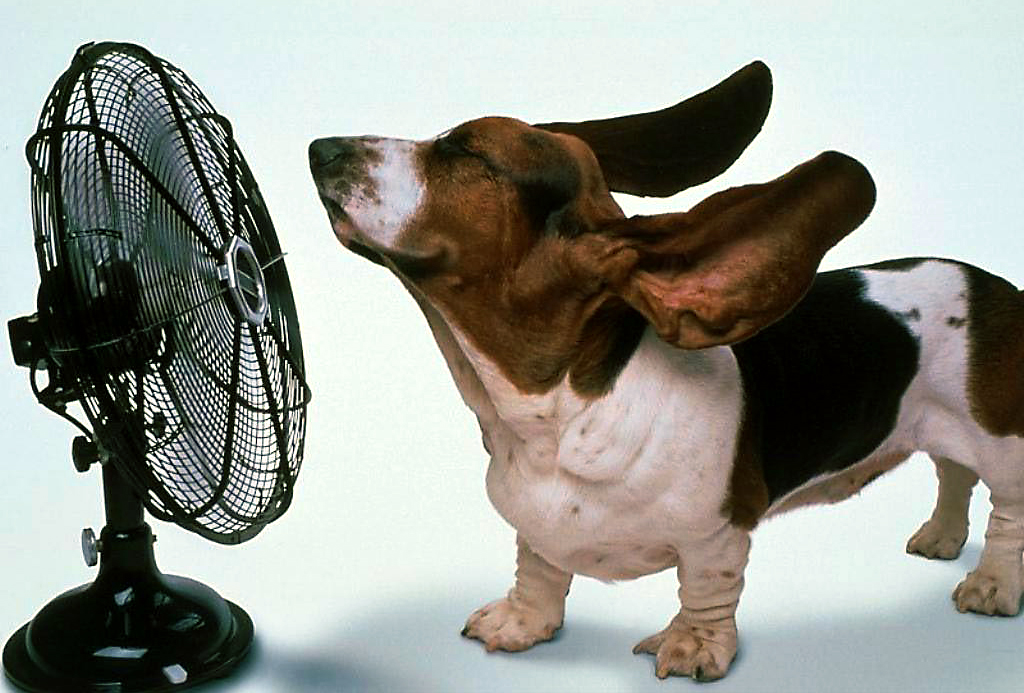
Bassett Plays it Cool
Story and Digital Mischief by Warrigal Mirriyuula
Over the past few weeks we’ve been dogsitting the nephew’s little black Moodle, a cross between a Miniature Poodle and a Maltese Terrier. They call her “Lolly”, a sweet enough name, and she is about the size of a licorice twist.
She’s still a pup at only eighteen months old but she’s a lot of fun, particularly when we play “crazy puppy”. This starts with me getting down on the floor on all fours and looking at her with an excited expression on my face. She “reads” my expression and will come to a position just in front of me, also down in the prone position, tail wagging, tongue out panting. She knows what’s coming; she knows my intention. We’re about to play “crazy puppy”, her favourite game.
At the cry “crazy puppy” she takes off at full speed, running around the perimeter of the room.
Our living area is a large open plan space incorporating the kitchen, dining area, lounge and TV area and the piano space with the stair well in the middle. It’s big for a little dog and she’ll skitter on the timber floors and drift onto the carpets. Better traction sees her reach full speed before nipping under a chair, turning on a sixpence and shooting out the way she came, going “round the outside” again.
To keep her going you just stand on the track and as she passes cry “crazy puppy” once more. She does this thing with her backside, like a half flip with twist, changes direction and shoots off again. It really is enormous fun and she loves it. She can keep going for quite some time.
She knows her toys descriptors too, and can fetch her tyre, her doll, her ball. Interestingly she also knows “stick” and when asked will go out onto the balcony and fetch back a stick, usually small and with not much girth; she’s only a tiny thing; and will bring it back in and chew it for a while. Unfortunately she doesn’t return the detritus to the balcony when she’s finished, but she does show a good deal of interest in the dustpan and brush when one of us goes to clean her mess up. She also likes reducing tissues to shredded paper and on one occasion reduced an entire toilet roll to pieces not much bigger than a few millimetres across. Fabulous commitment to the job!
Down at the park she likes to play all the regular games; fetch and tricks like roll over, shake hands and bark on demand. She shows good socialisation and plays nice with the other pups, particularly “Dougie”, a twelve month old Beagle/Spaniel cross. They tumble and run, growl and bark, like a couple of madmen on a spree. He’s all ears, paws and tongue and gets so excited he can hardly stay upright while she, being all agility and spirit, jumps him and tugs at him, all the time bearing her tiny little fangs for effect.
Having been trained and habituated to food rewards, she comes when you call, will reluctantly sit or occasionally drop. This last only when she can see the food reward; because of course while we train them, they too often train us.
It’s been a real delight having her and we were sad to see her go when the nephew and niece came round the other day to pick her up.
Though she’s only a pup and will never be bigger than a handful she still displays so many of the essential characteristics of “dogness” that we associate with the species, no matter the breed, no matter the size.
One of the areas in which she displays this essential “dogness” is that she understands my intention to communicate and can parse the “language” of that communication, whether it is a gesture, a word or even just a look. What’s more, recent studies have shown that she could probably do it better than our closest genetic relatives, the chimps and bonobos. These primates are good at understanding expression and will follow the gaze of other chimps, and experimenters, but they tend to fall down on gestures like pointing or conveying desired action by hand and arm gesture. Anybody that’s ever been to a sheep dog trial will have seen for themselves that interpreting the shepherds complex of calls, whistles and gestures is the working dog’s stock in trade.
We expect these dogs to understand us, to understand our intentions; but is there any scientific basis for our expectations?
Yes there is.
You’d think that it would have been studied sooner but recently there’s been a spate of research putting the whole matter on a more scientific basis
Brian Hare at the Max Planck Institute tested a group of dogs and chimps and found that while chimps and dogs performed roughly equally well at many tasks that involved interpretation of facial expression, gaze direction and simple “find the food” tasks, they signally failed to correctly interpret intention when it came to co-operation such as when the experimenter or even another chimp indicated the position of hidden food for them. The primates just didn’t get it but the dogs did. Put in psychological terms the dogs correctly inferred the experimenter’s mental state.
While chimps may fail to infer others’ mental states when cooperating, domestic dogs do quite well at such tasks. If you point to hidden food, dogs often grasp what you are trying to tell them. Puppies even do it without prior training, indicating that it is an innate ability, not simply one they acquire through contact with their owners.
What accounts for this piece of convergent evolution between humans and domestic dogs is nothing other than the process of domestication — the breeding of dogs to tolerate, rather than fear, human company.
According to Hare, domesticated dogs’ ability to solve social problems may have emerged once the brain systems mediating fear were altered — and the same thing may have occurred in human evolution. Chimps, he says, are constrained in solving cooperative problems by their impulse to fear more dominant individuals and behave aggressively toward more subordinate ones. Like parliamentarians, for instance.
“Taken together,” Hare writes, “the results on chimpanzee cooperation and their use of social cues support the hypothesis that evolution in human social problem solving, much like that of dog social problem solving, occurred after changes in our species’ social emotions lifted social constraints.”
Apparently, like us, all the dogs had to fear was fear itself.
Dogs pick up not only on the words we say but also on our intent to communicate with them, according to a report published online in the journal “Current Biology”
The findings might help to explain why so many people treat their dogs like their children; dogs’ receptivity to human communication is surprisingly similar to the receptivity of very young children, the researchers say.
“Increasing evidence supports the notion that humans and dogs share some social skills, with dogs’ social-cognitive functioning resembling that of a 6-month to 2-year-old child in many respects,” said József Topál of the Hungarian Academy of Sciences. “The utilization of ostensive cues is one of these features: dogs, as well as human infants, are sensitive to cues that signal communicative intent.”
Those cues include verbal addressing and eye contact, he explained. Whether or not dogs rely on similar pathways in the brain for processing those cues isn’t yet clear.
Topál’s team presented dogs with video recordings of a person turning toward one of two identical plastic pots while an eye tracker captured information on the dogs’ reactions. In one condition, the person first looked straight at the dog, addressing it in a high-pitched voice with “Hi dog!” In the second condition, the person gave only a low-pitched “Hi dog” while avoiding eye contact.
The data show that the dogs were more likely to follow along and look at the pot when the person first expressed an intention to communicate.
“Our findings reveal that dogs are receptive to human communication in a manner that was previously attributed only to human infants,” Topál said.
As is often the case in research, the results will undoubtedly confirm what many dog owners and trainers already know, the researchers say. Notably, however, it is the first study to use eye-tracking techniques to study dogs’ social skills.
“By following the eye movements of dogs, we are able to get a firsthand look at how their minds are actually working,” Topál said. “We think that the use of this new eye-tracking technology has many potential surprises in store.”
So just how smart is the pooch snoring on his mat?
Although you wouldn’t want Mongrel to balance your cheque book, it turns out he can count.
He can also understand more than 150 words and intentionally deceive other dogs and people to get treats, according to psychologist and leading canine researcher Stanley Coren, PhD, of the University of British Columbia.
He’s the author of more than a half-dozen popular books on dogs and dog behavior, has reviewed numerous studies to conclude that dogs have the ability to solve complex problems and are more like humans and other higher primates than previously thought.
“We all want insight into how our furry companions think, and we want to understand the silly, quirky and apparently irrational behaviours that Lassie or Rover demonstrate,” Coren said in an interview. “Their stunning flashes of brilliance and creativity are reminders that they may not be Einsteins but are sure closer to humans than we thought.”
According to several behavioural measures, Coren says dogs’ mental abilities are close to a human child age 2 to 2.5 years.
The intelligence of various types of dogs does differ and the dog’s breed determines some of these differences, Coren says. “There are three types of dog intelligence: instinctive (what the dog is bred to do), adaptive (how well the dog learns from its environment to solve problems) and working and obedience (the equivalent of ‘school learning’).”
Data from 208 dog obedience judges from the United States and Canada showed the differences in working and obedience intelligence of dog breeds, according to Coren. “Border collies are number one; poodles are second, followed by German shepherds. Fourth on the list is golden retrievers; fifth, dobermans; sixth, Shetland sheepdogs; and finally, Labrador retrievers,” said Coren.
As for language, the average dog can learn 165 words, including signals, and the “super dogs” (those in the top 20 percent of dog intelligence) can learn 250 words, Coren says. “The upper limit of dogs’ ability to learn language is partly based on a study of a border collie named Rico who showed knowledge of 200 spoken words and demonstrated ‘fast-track learning,’ which scientists believed to be found only in humans and language learning apes,” Coren said.
Dogs can also count up to four or five, said Coren. And they have a basic understanding of arithmetic and will notice errors in simple computations, such as 1+1=1 or 1+1=3.
Four studies he examined looked at how dogs solve spatial problems by modelling human or other dogs’ behaviour using a barrier type problem. Through observation, Coren said, dogs can learn the location of valued items (treats), better routes in the environment (the fastest way to a favourite chair), how to operate mechanisms (such as latches and simple machines) and the meaning of words and symbolic concepts (sometimes by simply listening to people speak and watching their actions).
During play, dogs are capable of deliberately trying to deceive other dogs and people in order to get rewards, said Coren. “And they are nearly as successful in deceiving humans as humans are in deceiving dogs.”
So there you are. All that and deceit too.
But I don’t think any of these investigators have met the dog in this clip.
 Window Dresser's Arms, Pig & Whistle
Just another point here. This deceiving business: it’s all part of our imbuedness.
I am not sure whether, those with it more highly honed should be lauded, or discredited. In war it’s an asset. But, in civilian life we are always taught to be honest?
And if you meet a pretty girl and blurt out, “I’m broke and depressed”; well what’s gonna happen?
LikeLike
Well, I’ve spent TWO days (after reading your article) trying to teach one of my Cavs how to make coffee. It doesn’t seem to be on their 165 word list.
We have two Cavs, and one is definitely brighter than the other. They are a great source of fun and good company. Exasperating at times, since they have have their idiosyncrasies.
The brightest dog we have had is this Blenheim*, the next was Farley, the golden Labrador, who used to get a bone at the butcher’s in town. I’ve written before; how he used to get the bus home . We lived at the top of a hill and the bus conductor/driver got to know him. He would wait at the stop with the locals, who also got to know him of course
BTW, my other Cav, a ruby, knows more words than Wayne Swan.
*Some trivia: Charles I kept a spaniel named Rogue while residing at Carisbrooke Castle**; however, it is with Charles II that this breed is closely associated and it was said of him that “His Majesty was seldom seen without his little dogs”. There is a myth that he even issued an edict that no spaniels of this type could be denied entry to any public place.
Pasted in from Wikipiggya 😉
**My old stomping ground.
LikeLike
Waz, thank you for another thoughtful and interesting piece. A few questions:
Do you think that people are inherently dog people or cat people ?
We have a Border Collie – Lucky. She is a rescued, formerly abused farm dog. At her new farm, she proved to be half useful with sheep. She’d half round them up, lose interest and head for the dam or for a roll in a dead animal’s carcase. My late father in law – then in his 70s used to get really annoyed by her – and she was picky about with which of the other dogs she would work. In short – lovable, but effing useless. She did a stint at our suburban backyard – and dug holes that could swallow a Volkswagen. So I think she is the exception to the bright Border Collie rule.
Where do Jack Russells come on the smart spectrum ? We had one called Bonnie. She was really clever. The Emmlets taught her to ride a skateboard (and to tow them when they were on that vehicle). She could leap from a standing start into my arms, then stand on my shoulders while I walked around – she was saying “Pieces of Eight, pieces of eight”. The last bit was a small fib.
Sadly, she was a bit close to the wolf end of the dog spectrum and bit most of our family at some stage. If she didn’t feel like a pat just now, she fuckin didn’t feel like a pat just now ! We lived next to a big golf course. She racked up six or eight large rats, uncountable mice and sadly three of four very pregnant blue tongue lizards. One day poor Bonnie gutsed down her own raw lamb neck dinner AND Lucky’s, packed her gut with bone splinters, couldn’t clear it and when the vet quoted $4,000 worth of surgery and no guarantee that the internal damage could be fully repaired, I took the hard decision. That was ten years ago. It still makes me and Emmlet 1 sad.
LikeLike
I don’t think it’s possible for a person like me to probatively answer your question regarding dog people and cat people.
But I did like this piece.
http://www.sciencedaily.com/releases/2010/11/101127105348.htm
LikeLike
Emmjay, we have had cats and dogs, but I have to say that I’m definitely a dog person, I find dogs more responsive, more sociable, they show their affection…cats are aloof, they don’t seem to need you…
When Gez and Milo are getting ready for a walk, Milo runs inside and hurries me up, I get the feeling that he prefers us both to be out there, If I’m sad he gets a bit restless and wants to shake me out of it…if I laugh, he too looks happier.
Most of our friends are ‘dog people’, only one couple seem to like both of them equally, they don’t have children…
LikeLike
Our Dana thinks its human, though we constantly remind her that shes a dog. Well more like a cat-dog.
LikeLike
Nice to see you back on form again Warrigal… however, I’m not sure that I agree with the main thrust of your argument: if dogs understand gestures where chimps can’t, it is perhaps largely because dogs have had a symbiotic realtionship with humanity for at least the last 40,000 years; perhaps longer. This means they have had much more time to familiarise themselves with the culture of the humans enough to understand that gesturing is indeed a form of communication, where this very concept may not have occurred to chimps yet… What ‘language’ chimps DO have consisting of a few specific grunts with particular meaning for particular items or commands; their familiarity with the concept of ‘language’ itself, though undoubtedly there, is still very primitive; although trained chimps have done remarkably well on tests with other forms of communication, eg. using symbols to indicate words…ie. ‘reading’… and I have yet to hear of dogs making much progress in that area.
Dogs, indisputably, have grown as an adjunct to and an extension of humankind, but though together with a human it makes a team which is often ‘greater than the sum of its parts’, yet by themselves they are still somehow ‘less’ than human… their ability to learn, even smart dogs like Lolly, is limited… it is not conceivable that dogs could ever carry out a written conversation, yet this is already true of some chimps.
You see, Warrigal, it’s not merely the concept of ‘language’ that separates humanity from the animals, as there are other species which exhibit degrees of ‘linguistic ability’… who knows what meanings may be conveyed in whalesong for instance… Rather it is the ability – which goes far beyond simple linguistic ability – to engage in abstract thought; for which linguistic ability is a logical prerequisite… and abstract thought is virtually epitomised by the act of reading.
I therefore submit that, IMHO, chimps and other great apes are still far more like us than dogs… who merely understand us a little better as the result of a much longer and more intimate association.
Recent association between apes and humans however suggests that this position could relatively easily be reversed…
😉
LikeLike
Perhaps humans are closer to chimps than dogs are. All that nervous dithering about, decade after decade. That huge UN hall with hundreds all jumping around and up, deciding about Syria and waiting for some feed to be thrown at them, glancing at each other, making funny noises with some baring their teeth, grimacing, gesticulating wildly.
Our Jack Russell ” Milo” is keeping a close eye on it all and sometimes sighs.
LikeLike
“Perhaps humans are closer to chimps than dogs are. ”
An excellent way of putting it, Gerard!~
🙂
LikeLike
What an earnest response T.
I have to admit that the headline was somewhat provacative in its generality.
The main thrust of Hare’s work revolves around notions of the difference between dogs and chimps in co-operative settings. Dogs are better at inferring the mental state of other dogs and humans, and more correctly respond to the intention to communicate, and communication, in these settings. In this way Hare says that dogs are more like us, social co-operative problem solvers, than chimps. Chimps social hierarchy and its expression in chimp culture sees chimps constrained in solving cooperative problems by their impulse to fear more dominant individuals and behave aggressively toward more subordinate ones, making co-operation difficult if not impossible.
He and others have suggested that this difference is the result of domestication of the dog, while chimps live a “wild” life. Further, Hare says that the process of selecting wolf cubs that show little fear of man, and then rearing those cubs to adulthood and reproduction leads to morphological changes in the brain of the resulting “dog pups” that seems to moderate the fear circuits in the brain, and provide pathways for solving cognitive problems in co-operative situations; like herding and guarding, pointing and play.
Hare says this is innate in dogs and displayed by pups just a few weeks old.
I don’t think Hare or any of the others really think that dogs are overall more like us than chimps except in the ways as investigated.
If you’re iterested heres the original paper.
email.eva.mpg.de/~tomas/pdf/Hare_Tomasello05.pdf
LikeLike
My ‘earnestness’ was itself ‘tongue-in-cheek’ Warrigal… I was just so glad to see you back again that I felt I should engage you in what is, after all, the nearest thing to an opportunity for a decent debate that this front bar has seen for several months…
🙂
LikeLike
PS: In some respects Hare’s argument resembles my own; at least to the extent that he too locates the difference between ‘levels of similarity’ in the length of the relationship between dogs and humans, though he expresses this in terms of ‘domestication’ (a process which has had an even more profound effect on humans than on dogs!)
I wonder, however, what he might have to say about the level of ‘cooperation’ achieved by Frodo the gorilla in creating a virtual ‘army’ and then using this army to first decimate the local population of Canopus monkeys and then to attack and kill or drive off the non-warlike members of his own group (ie. the ‘uncooperative’ ones… See ‘Aesthetics of Violence’, by DL Rowlands: Chapter 5.) There may be some interesting philosophical ramifications for the reality or otherwise of ‘cooperation’ within military establishments.
🙂
LikeLike
Asty, I think you make some interesting points too. But about your last para, my experience in the workplace suggests that close association even with apes wearing clothes suggests otherwise. Some people I encounter at work give hominids a bad name.
LikeLike
You are undoubtedly correct in your observation, Emmjay… However, this quote springs to mind as (more or less) appropriate: “A monkey in silk is a monkey no less…”
🙂
LikeLike
Even in black and white, the differences in so many endless hues probably makes up for being colour blind.
“and behave aggressively toward more subordinate ones. Like parliamentarians, for instance.” That is surely a bit of poetic license. Mind you, if you look closely at a King Charles Cavelier Spaniel for a few minutes and then look at a blank wall, you can clearly see a Christopher Pine emerging with a hint of Alexander Downer thrown in.
LikeLike
perhaps more like a poodle, G?
LikeLike
Classic, Gez ! I remember an old Nicholson cartoon when there was a Howard Downer leadership challenge and Nicholson drew Howard as a pit bull covered in stitches and Downer was a miniature poodle 🙂 There was an added joke where the crowd of onlookers walked past a Labor event on political philosophy -preferring instead to go to the dog fighting.
LikeLike
I loved the moment when Lolly would be skittering across the wood, loosing traction in the back end and just as she might have lost it and gone for a tumble, she gets onto the carpet and drifts like some hoon in a Tupperwared Fast 4, before straightening out and taking off at full speed across the carpet.
So simple, so funny to watch.
LikeLike
This in response to you Viv. I must have hit the wrong button.
LikeLike
It is funny. Lola will do the entire rounds about 5 times and then stop.
LikeLike
Waz, a friend of ours has a miniature Dachshund that is an expert at out-of-control slides on a polished floor – under the same circumstances. Hilarious, boundless energy. And the softest velvet head / ears in Christendom.
LikeLike
When I was about 11 we had a sausage/heeler cross called Fred. His alter was called “Mongrello” Hound of Hell and we broke a few rules together in our day. My father thought him a rather pointless dog; he wouldn’t heel and you couldn’t BBQ him.
All balls, he was boss of the dogs round our way, and took to the role of enforcer to my alpha with a little too much gusto. If anyone; family, friends, strangers, no matter; put there hands on me or even made a move towards me, he would go off. He could manage to look quite fierce, though a little challenged for height. It took me some time to desensitise him and get him to accept that every approach wasn’t necessarilly an attack on his alpha.
There was one very bad habit he had that I was never able to change. He chased cattle trucks, of which several a day would clatter round our corner. He chased one too many.
The driver was in tears as he handed the dog over the fence to my father. So was I.
Fred’s ears too were extremely soft, like satin and velvet, but the heeler genes got the rest of him and he heeled that cattle truck, that’s for sure.
LikeLike
The best children and the best pets are usually your own.
LikeLike
Hi , i have a 30 kg Shar-pei who when he wants to , can go through a Cat flap on the back door at about 20 kph. When he is lazy, he stands in front of it and hits his paw against it to get it swinging and waits for me to open the screen door. If not fed by 6.30 pm , he comes looking for me and just pesters me till i say ” Tucker Time ” and then runs around waiting for me to get off the computer or what ever i was doing. He has me well trained.
LikeLike
I don’t know where or when; almost certainly the net; but I think I’ve seen your shar pei and his ghostly companion before.
The question though, is; does his rattling of the cat flap constitute deceit on the dog’s part? That is to say he knows he can get through and you know he can get through , but every now and then he has to confirm that you care enough to let him through, confirming his importance to you in your role as his alpha.
I like Shar Pei dogs. A size 8 pup in a size 12 skin that they eventually grow into. Did you know that the Shar Pei genome is one of the four basal genomes after the common wolf ancester? This means that they are direct descendents of the first clades of domesticated dog. It’s only been recently confirmed that domestication of the dog occurred in what is now China some time before 35,000 YA.
LikeLike
Hi Roger. We have a ten year old Shar Pei. Kali – goddess of destruction. Chocolate coloured, sort of like a cross between a wart-hog and a wombat. She has a most delightful nature, is very social with other dogs, takes no shit from anybody – graciously and is totally devoted. She weighs 24 kilos and when she’s at full speed sh could derail a train. Fortunately this is rare 🙂
LikeLike
Pets are like other people’s children. You love them when the visit but you love them even more when they go home!
LikeLike
No, well-trained pets and reasonably well behaving children of other people are lovable, for me to love pets and/ or children they don’t have to be mine.
Many children these days are sadly spoilt by too many material things and they have a sense of entitlement. Some people also do not train their dogs, it’s twice now that big dogs, not on the lead, have attacked Milo…
We avoid a coffee lounge that allows big dogs roam in where the outside tables are,
LikeLike
I’ve never owned a dog. I’ve had dog friends. One of my best friends ever was Scruff. Scruff was the German Shepherd who belonged to a neighbour and there’s a story.
The science of dogs interests me. I wrote a letter to the University of Queensland some many years ago that I had made the observation dogs see in colour, which was result I noticed a Border Collie particularly, in a group of Borders playing with solid coloured (no patterns) plastic balls, seemed to be exercising colour preference, favouring one colour. I susequently asked the local vet what I had asked everybody I could who knew dogs, how do dogs see, do they see colour. The vet told me black and white. I was surprised. I asked how did he know that. He hesitated. Now he thought about it, he didn’t know how he knew that. No, he didn’t recall a text book. No, He didn’t recall the subject coming up at Vet School. So I wrote the letter. One thing led to another, I do not have the letter anymore, I moved house and have no idea if I received a reply. Walking past telly circa 2002/3, about ten years later, I happened by chance to notice the programme was about dogs seeing in colour, which research had taken ten years, right down to investigaing the eye itself. I so often wonder I do.
LikeLike
Everybody I had asked told me black and white. I went around asking because once many years before someone told me dogs see in black and white and I had thought that seemed extremely strange..
LikeLike
Click to access JKBlackshawCh7b.pdf
Dogs don’t really see in colour, though they are capable of seeing colours outside the greyscale. If you’re interested this should cover it.
There are significant vision differences between breeds though, and particularly between the so called sight hounds and those that rely on smell.
LikeLike
Hi Warrigal, yes thank you, I am interested to have the paper. It describes what I know from the television programme. It bears out that dogs see in colour.
The dog does not see what eg we see vis-a-vis ‘colour’ if that is the measure by which perhaps you are suggesting they do not see ‘colour’. The reds and oranges are missing, yes, I recall that and the material about peripheral vision and skull shape/size. It had excellent video with it that programme and I wonder if I could identify it and generate some attention to it being shown again.
No doubt there is advance on this research going on as we speak. 🙂
LikeLike
Milo is too clever for my liking, we were forced to use German when planning our walking trips, only to find out pretty soon that he knew what ‘spazieren’ means and rushed to the door to open it…
Using sign language , putting my hand on my neck when referring to chicken necks, doesn’t work anymore either, he walks arrogantly to the micro oven and looks me intensely as if to say : c’mon old chook, get them out of freezer, I’m hungry…
LikeLike
Don’t forget that Milo is also used to working out what you’re doing just by watching you.
You could be talking one of the lost dialects from Outer Sihiddia, (my father knew where that was but I’ve never been able to find it on a map. It’s apparently a dreadful place to which badly behaved boys are sent), but it won’t matter if you’re still doing all the thngs you do when you plan a walk, or spazieren if you must.
He knows what’s happening because he can see you making all the usual plans.
Lolly liked chicken necks too. Might be a small dog thing. Shonderson was 38k and eschewed the consumption of chicken, raw or cooked, but often travelled with his favourite beef bone. It took him a few months to reduce it to slobber and a few remaining slivers of shattered bone.
I still miss Shonderson. He was a great dog. Smart as a whip. (And of course the model for our friend Mongrel.)
LikeLike
Of course I know that Milo does not ‘speak’ any language, his only language is barking at birds, but funnily not at all birds. He is watching us, have we showered, what are we wearing and of course the shoes are the real affirmation that we are going for a walk…he knows we are not going out bare-footed…
Because he’s terrible good looking he gets almost too much attention, when people see him they start smiling, many of them have a Jack Russell story to tell…
We have had many different types of dogs, but he’s been the most interesting…
LikeLike
Good research, Warrigal. I’m sure that you’re aware of the Australian researcher who claims that humans didn’t just domesticate dogs, that dogs helped to domesticate humans. I’m constantly astounded at the words and gestures that dogs will interpret. We’re sure that Fergus even knows the time. Dinner, for him, is 4:30 to 5:30, so around four he will don his dinner jacket…sorry, no, he’ll come and sit really close to the humans, just in case we can’t tell the time.
Like Milo he can pick the word ‘walk’ out of any conversation and become agitated, ready for action. He can also tell that humans with backpacks are very unlikely to be taking dogs for a walk, as is Big M in long trousers.
There was a great programme on the ABC recently which looked at the intelligence of chooks and cows, evidently our forebears targeted these animals to farm because of their intelligence, ability to be herded by humans, and their ability to look after their own herd, defend against predators, and so on. Of course, dogs are particularly good at helping with these tasks, however, our Fergus constantly eyes off our chooks. I doubt he’s looking for predators!
LikeLike
This morning my pet* moved from the couch to the front entrance floor.
*I won’t mention the ‘c’ word.
LikeLike
Sudden transmigratory impulse, Voice.
LikeLike
Lola does that racing around the room at high speed – just for the heck of it. Our living area is similar to yours.
LikeLike