There is nothing like a nice piece of Wagyu Sirloin for those with enough equity in real estate or a chunk of Rio-Tinto. ( at 174.95 Pounds per kilo.)
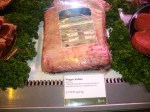
Bon appetit

Jayell sauntering about

29 Saturday Aug 2009
Posted in Julian London
There is nothing like a nice piece of Wagyu Sirloin for those with enough equity in real estate or a chunk of Rio-Tinto. ( at 174.95 Pounds per kilo.)
Bon appetit
Jayell sauntering about
28 Friday Aug 2009
Posted in Helvi Oosterman, Ladies Lounge, Travels

continental brekkie
Vegemite or not… by Helvi Oosterman
Leaving your mother country, you’ll leave behind mother’s home cooking and most times also Speciality foods of your nation. In my case it was the flat Finnish rye bread, which I hadn’t encountered anywhere else on my travels. The Estonian black bread became a reasonable substitute in Australia.
Some countries of course have food to die for ; their recipes have crossed the borders and we all enjoy our spaghetti Bolognese , our Danish pastries, Russian beef stroganoff and Swedish meatballs. That’s the easy bit, but what happens when visiting or moving into a foreign land, and you are offered those countries’ less known or some of their more peculiar tid bits.
First trip to Amsterdam and you are given your first raw herring with raw onions. How’s that for a new culinary experience. Not as good as roll mops out of the jar, but not bad either ; I could learn to love this. Greek olives or dolmades are easy to like, but what about the funny drink Ouzo, that could be problematic. Sweet and sour pork, Mongolian lamb don’t need getting used to but please, don’t ask me to tackle bird’s nest soup or hundred year old eggs, ever, never..
English roast dinner even with the peculiar Yorkshire pudding goes down well, but a pea soup with a pie floating in it, a floater, they call it…good for piglets at pigs Arms maybe..? Haggis, now that’s something that only the starving amongst us dares to touch.

Dutch herring eater.
New Zealanders wrap their fish in banana leaves and bury it in sand over hot coals to cook and this of course can taste fantastic, depending on type of fish and the cooking time. Kiwi friends of ours did this once; they buried their catch in the Balmain back yard…sadly the Snapper tasted like compost and smelled like burning rubber.
Getting used to Aussie food was not so hard; it was a matter of learning to like bland or plain food; the chops and the three veg. Sometimes the greens came out of tin, especially if you were eating in a road side milk bar, on your way to Brisbane. Sister in law, having been a waitress, had had her share of difficult customers, therefore she in her turn turned ‘difficile’ when dining out. Are the mushrooms fresh, she queried. Straight out of the tin, was the Taree cafe owner’s answer.
Husband had been in Australia many a year before I came, but he had never managed to even taste Vegemite. For me it was love at first sight , I have to have it at least twice a week.Our kids couldn’t be without it either; when living in Holland, we had to do with Marmite…no match to Vegemite. The jars were cute though, ideal for my dried herbs.
28 Friday Aug 2009
Posted in Julian London
In repose
Compliments from Jules.
A reflective Julian.
28 Friday Aug 2009
Posted in Ladies Lounge, Politics in the Pig's Arms

Siloing the unwelcome
By Madeleine Love by-line.
Siloing
Siloing; sounds like liloing.
Last thing I wrote was about a GM virus with wires… since then so much has happened… here’s one thing…
The Department of Innovation, Industry, Science and Research was developing a new strategy for ‘Enabling Technologies’, being biotechnology and nanotechnology. Gene Ethics was informed about stakeholder consultations for the strategy, and submissions were invited.
MADGE found out about it through Gene Ethics. MADGE was ‘Mothers against genetic engineering’ and then MADGE became ‘Mothers are Demystifying Genetic Engineering’. We’ve just finished demystifying and we’re about to re-morph.
The deadline for consultation and submission was so close that it was instantly assumed to be a bogus consultation. Many public stakeholder organisations, such as the Public Health Association of Australia knew nothing of it.
MADGE asked for three seats at the consultation in Melbourne and got two. We learnt there were two Melbourne meetings. At this consultation there was MADGE, Gene Ethics, Friends of the Earth, the Victorian Trades Hall Council, Safe Work Australia, Nanosafe Australia, and someone from Monash regulatory studies who had reviewed all the regulatory bodies that might have to do something with nanotechnology (about 17 of them).
First question… Who is at the other consultation and why are we at this one? Because it was quite clear that the people who were at this meeting were those who would prefer a precautionary approach. They wouldn’t say who was at the other meeting, but we knew that it would be industry.
We asked that the minutes from this meeting be written and published on the web. Everyone at the meeting agreed to this. We asked that the minutes of the industry meeting be placed on the web, and the Department of Innovation said they would ask the attendees at the other meeting. We asked for the Department of Innovation to recommend that the minutes of the other meeting be placed on the web. The Department of Innovation would not answer this request (literally – head down writing and refusing to meet eye contact).
This is called ‘siloing’ – they silo interest groups and prevent them from exchanging information and coming to sensible decisions together. There were to be two meetings in Sydney, and one in Bris, Can, Ade and Perth. After the Sydney meeting we learnt that they had been silo’d. Silo’d to the extent that the Department of Innovation organized for Greenpeace in Perth to attend the Sydney consultation by teleconference, rather than attend the Perth meeting.
So will the groups at the Industry meeting be similarly frustrated for not meeting the groups who may oppose their magnificent products? Were they offered more than tea, coffee, biscuits and GM lollies?
27 Thursday Aug 2009
Posted in The Public Bar

There were quite a few English ‘ten pound’ single men migrants saying their permanent farewells with parents on the quay. I remember,” Goodbye Jack, don’t forget to write to your sister. Cheerio son. Let us know how you are going, won’t you? Yes mum, see you then. Keep well boy,” and with these words of parting they too set sail for Australia.
After a couple of days, the sun came out and weather was getting Mediterranean with passengers settled. I was most impressed with the food and menus that we were asked to choose from. Can you imagine, getting to choose between boiled or fried eggs, beef or pork, mashed or boiled spuds, carrots or spinach, tea or coffee?
After a few days, arriving first in Genoa then Naples and finally Messina in Sicily, where I then witnessed the goodbyes of all goodbyes. Not only to Mama, Papa, sorelli and brothers, uncles and aunties, the barber, grandparents, villages and brotherhoods, but also forever and ever with the unrelieved and spine tingling goodbyes that haunt those harbours still. With great heaving, wailings, endless sobbing, and despair soaked up in acres of their best hankies. These were the goodbyes at their best and saddest and so final.
Those were the farewells of no return.
As the ship of Johan.V.Oldenbarnevelt finally pulled away from Messina’s moorings and thick ropes, huge cries would rise again; reach across the widening gap of water. One old man, and papa to dear son Luigi departing, the best cobbler of the village, so unrelentingly steeped in grief and sobbing, lost his dentures in the water as well as son (going far away,) no doubt to be found that same week by a keen archaeologist of that ancient harbour.
The Dutch way of departing was a bit in between, more practical matters would be discussed. Have you got enough underwear for the six weeks? Don’t forget the cod liver oil. We heard the vegetables are not fresh. Yes, we are doing this for the children, and yes, we heard there are bathrooms in some of the houses in Sydney. The weather is much warmer there and palm trees too. Stop sniffling and fidgeting Gerard!

Next day on board, those sad Sicilians were still hanging over the sides of the boat. Doe eyed and cast towards the shores that had disappeared and gone forever with’ famille en casa con la tavola’. While the young poms were strolling towards the bars that would open up in international waters away from coast and provide tax free alcohol relief. A little orchestra would soon strike up a cheery waltz, such as the much favourite; It’s on the isle of Capri where I met you………Was it Dean Martin?http://www.youtube.com/watch?v=bOVbB_rEar8
It would be another two weeks before an ’Oh sole mio’ would be tried. Tables would be set up for card games and Tombola. After a couple of days, the red rimmed eyes of the Southern Italians would revert to black again and friendships were being made quickly.
The English bachelors were less forthcoming and seemed more at ease pondering uncertain futures by themselves, perhaps with a glass or two of beer.
25 Tuesday Aug 2009
Posted in Cyrus the Great: Chronicles
CYRUS
By
Theseustoo/Astyages
(Continued)

Early the next morning the slave informed Cyrus that the tribes had assembled in the large, open square in the centre of the city which, when the city of Persepolis was first built, had been set aside specifically for that purpose. Neither the Medes nor the Persians had real marketplaces in any of their cities, because they thought it more honourable to bargain with each other in private, rather than haggling over goods and, as they some-times phrased it, ‘forswearing themselves openly in a public place like the Greeks’. Cyrus took up his position on the speaker’s dais at one end of the square and, holding his arms aloft as a signal for silence, he addressed the huge crowd:
“My fellow Persians, I have here orders from our King, Astyages…” He held up a sheet of papyrus so that the whole crowd could see it, “In it he appoints me to be your general. Since this is the case, I command you all now, each man, to go and fetch his reaping-hook; I have a task for you…”
Had anyone in the crowd challenged him to read the scroll, it would have read just exactly as Cyrus had indicated, but although he’d prepared himself for just such a challenge, as it turned out there was no need to have done so, for it never came.
Indeed, as it happened the crowd were not even the least little bit surprised by this turn of events. Ever since Persia was conquered by Cyrus’ own great-grandfather, Phraortes, the Median kings, as overlords, had used the Persian nobility to govern the Persian people for them; being content to extract a large annual tribute in the form of gold, silver and purple, as well as various kinds of cattle, grains and other comestibles, together with an annual levy of troops to help support the Median armies. As long as the Persians kept paying the tribute and sending the levies, there had been no need for the Medes to occupy Persia; and the Persians had made sure always to meet their obligations in order to avoid just such an eventuality.
Furthermore, because Persians had always deemed lying to be the most despicable of all human failings; and because innocence walks hand-in-hand with gullibility, rarely did they ever even suspect that one of their own people might stoop to anything quite as dishonourable as deception. Thus when it was put to them that Cyrus, the popular and intelligent son of the noble Cambyses, should be appointed as their master, it did not raise even the shadow of a suspicion amongst the assembled tribes that this was anything but the truth.
Thus, when Cyrus claimed that he had been appointed to be their leader by Astyages, far from being surprised, most of them were even quite pleased at the news, for it struck them as a wise appointment. After all, not only was Cyrus a highly talented man, but also Astyages’ grandson; thus the Persians all felt that the appointment was perfectly natural; indeed, the wisest heads among them had almost expected something like this to happen anyway, sooner or later, so no-one even bothered to think about questioning the veracity of Cyrus’ story.

Obediently, as soon as they were given their orders, they all dispersed, to return early the next morning, as they had been asked, each man returning carrying with him a scythe or a sickle, just as their new lord had commanded. The following morning, when everyone had finally returned Cyrus then led them to a huge tract of scrubland, between about eighteen and twenty furlongs on each side, and completely covered with black thorn bushes.
Cyrus addressed the crowd once more:
“Now, I want you to clear this whole area of these thorn bushes… this task must be completed by sunset! Tomorrow, when this field has been cleared, everyone is to take a bath and come to me again in the gardens of my father’s palace!”
The crowd immediately moved to obey Cyrus’ orders; but it was extremely arduous work and they constantly pricked themselves. Soon their hands and forearms were all covered with painful and bloody scratches from all the needle-sharp black thorns, as the men cut down the large black bushes while the women collected them together and piled them into a huge heap in one corner of the area Cyrus had roped off.
In spite of their numbers, they had to work fast to clear the area before sunset as Cyrus had instructed, but everyone pitched in and eventually they succeeded, just as the final blood-red sliver of the setting sun slipped below the horizon, and the dark of the evening quickly closed in upon them.
Finally, totally exhausted and blackened from top to toe with grime from the bushes, mixed with the sweat from their own bodies; and bloodied in many places from the countless scratches which now criss-crossed their unprotected arms and legs as they trudged wearily home through the quickly-gathering gloom; wondering as they went what their new master would want them to do tomorrow.
*** ***** ***
Early the next morning the slave informed Cyrus that the tribes had assembled in the large, open square in the centre of the city which, when the city of Persepolis was first built, had been set aside specifically for that purpose. Neither the Medes nor the Persians had real marketplaces in any of their cities, because they thought it more honourable to bargain with each other in private, rather than haggling over goods and, as they some-times phrased it, ‘forswearing themselves openly in a public place like the Greeks’. Cyrus took up his position on the speaker’s dais at one end of the square and, holding his arms aloft as a signal for silence, he addressed the huge crowd:
“My fellow Persians, I have here orders from our King, Astyages…” He held up a sheet of papyrus so that the whole crowd could see it, “In it he appoints me to be your general. Since this is the case, I command you all now, each man, to go and fetch his reaping-hook; I have a task for you…”
Had anyone in the crowd challenged him to read the scroll, it would have read just exactly as Cyrus had indicated, but although he’d prepared himself for just such a challenge, as it turned out there was no need to have done so, for it never came.
Indeed, as it happened the crowd were not even the least little bit surprised by this turn of events. Ever since Persia was conquered by Cyrus’ own great-grandfather, Phraortes, the Median kings, as overlords, had used the Persian nobility to govern the Persian people for them; being content to extract a large annual tribute in the form of gold, silver and purple, as well as various kinds of cattle, grains and other comestibles, together with an annual levy of troops to help support the Median armies. As long as the Persians kept paying the tribute and sending the levies, there had been no need for the Medes to occupy Persia; and the Persians had made sure always to meet their obligations in order to avoid just such an eventuality.
Furthermore, because Persians had always deemed lying to be the most despicable of all human failings; and because innocence walks hand-in-hand with gullibility, rarely did they ever even suspect that one of their own people might stoop to anything quite as dishonourable as deception. Thus when it was put to them that Cyrus, the popular and intelligent son of the noble Cambyses, should be appointed as their master, it did not raise even the shadow of a suspicion amongst the assembled tribes that this was anything but the truth.
Thus, when Cyrus claimed that he had been appointed to be their leader by Astyages, far from being surprised, most of them were even quite pleased at the news, for it struck them as a wise appointment. After all, not only was Cyrus a highly talented man, but also Astyages’ grandson; thus the Persians all felt that the appointment was perfectly natural; indeed, the wisest heads among them had almost expected something like this to happen anyway, sooner or later, so no-one even bothered to think about questioning the veracity of Cyrus’ story.
Obediently, as soon as they were given their orders, they all dispersed, to return early the next morning, as they had been asked, each man returning carrying with him a scythe or a sickle, just as their new lord had commanded. The following morning, when everyone had finally returned Cyrus then led them to a huge tract of scrubland, between about eighteen and twenty furlongs on each side, and completely covered with black thorn bushes.
Cyrus addressed the crowd once more:
“Now, I want you to clear this whole area of these thorn bushes… this task must be completed by sunset! Tomorrow, when this field has been cleared, everyone is to take a bath and come to me again in the gardens of my father’s palace!”
The crowd immediately moved to obey Cyrus’ orders; but it was extremely arduous work and they constantly pricked themselves. Soon their hands and forearms were all covered with painful and bloody scratches from all the needle-sharp black thorns, as the men cut down the large black bushes while the women collected them together and piled them into a huge heap in one corner of the area Cyrus had roped off.
In spite of their numbers, they had to work fast to clear the area before sunset as Cyrus had instructed, but everyone pitched in and eventually they succeeded, just as the final blood-red sliver of the setting sun slipped below the horizon, and the dark of the evening quickly closed in upon them.
Finally, totally exhausted and blackened from top to toe with grime from the bushes, mixed with the sweat from their own bodies; and bloodied in many places from the countless scratches which now criss-crossed their unprotected arms and legs as they trudged wearily home through the quickly-gathering gloom; wondering as they went what their new master would want them to do tomorrow.
*** ***** ***
23 Sunday Aug 2009
Posted in The Other Side of the Carpark, The Public Bar
By oosterman

Dinner in the Nissan hut.
After a most enjoyable 5 weeks on board The Johan Van Oldenbarnevelt since leaving Rotterdam, I finally disembarked at the Sydney’s Circular quay side back in 1956. My first milk shake at the Spiro’s milk bar in George Street and a look at St Mary’s cathedral is what I still remember. However, more etched into my mind is what followed then.
It was sometime in the afternoon when those destined for Scheyville migrant camp were asked to assemble at the quay side. Our luggage would follow the bus in trucks. Of course, no one knew where that camp was situated. Somewhere in Sydney is what we were told. The bus was thus loaded with lots of shut jaw clamped migrants. We would finally face the reality of what our parents had undertaken. Some of them we befriended during the boat trip over, including a family of Dutch Indonesian born. They were content to be just in a warmer place regardless of anything else!
I was just happy to look out of the bus window and more than curious what Australia and the sub-tropics were all about. I noticed first of all a kind of architectural chaos with many advertising hoardings and scrambles of signs vying for attention. This was (and still is) Parramatta Rd in full glory.
Being February and hot, I noticed after about ‘n hour’s drive or so, that the bus stopped and driver got out but we were staying put. It took some time and after lots of sweating that the driver got back in and we continued. It was well after arrival, a few days later, that we heard that the driver had got a ‘couple’ from the Locomotive Hotel at Homebush. I believe this pub is now a Pizza Franchise.

Nissan hut migrant camp.
Our arrival at Scheyville was surprising. My mother first thought that those Nissan Huts were for the push bikes. I was more circumspect as I noticed beds with mattresses and, when I opened a drawer it had crusts of bread in it. The afternoon heat and the long drive did not lessen my or my brothers enthusiasm for exploring the surroundings. The camp was surrounded by water as heavy monsoonal rains had fallen nonstop the previous few days. In no time were our shoes muddy. My dad in his Dutch mind set could not accept at once the extraordinary changes overwhelming him. The mud on shoes was so foreign and frightening… It was all happening too fast and he could simply not absorb this slip in order and neatness. He gave us a good smack.
Me and my brothers took it all in our stride and had our youth to back up any strangeness. In fact, it was this foreignness that excited us most. Fancy, on the next day excursion finding trees with orange coloured fruit on them. We climbed the fence and pinched some but they were unripe so we chucked them feeling like millionaires.
My parents had a job adjusting to the Nissan huts, the general squalor with meals eaten in communal areas on timber benches. The camp seemed to be managed by Australians but the workers such as cooks, cleaning and kitchen staff were refugees from Poland, Hungary and Russia. In those communal eating areas, huge steel tins of chunky melon and pineapple jam were on wooden tables with pre-sliced white bread. Plates were laden with steaming slices of lamb and rich gravy, endless supplies of peas and carrots. Second helpings as well.
Australia was the ‘promised ‘land” after all.
21 Friday Aug 2009
Posted in Cyrus the Great: Chronicles
CYRUS
By
Theseustoo/Astyages
(Continued)

Cyrus was no more surprised at the gift of a hare, when one of Harpagus’ most trusted servants had presented him with it, It was a sharp, clear morning and a light, crisp, early frost crunched underfoot; announcing to the world that summer was over and autumn had begun. A perfect morning for the hunt, thought Harpagus, as he and a servant strode briskly across the plain in search of game; a bronze-tipped arrow already nocked on the bowstring and ready to shoot from his powerful Assyrian recurved bow.
Suddenly a huge hare broke the cover of the heather which had been hiding it until Harpagus and his servant had approached too close for comfort. The endangered animal had finally decided to risk swapping the rapidly-dwindling security of its hiding place for the speed of its hind legs as its means of survival. Bursting from the dense heather just a few paces in front of Harpagus, the terrified animal raced off across the hillside away from him and his servant as fast as its huge hind legs could propel it.
But fast though he was, there was to be no salvation for this hare; the instant the animal had broken cover Harpagus had smoothly but swiftly raised his bow, aimed, intuitively allowing for windage and the speed of the animal as it sped away from him, and let fly his unerring bronze-tipped arrow all in a single graceful, fluid motion which reflected constant practice and many years’ experience.
The missile swiftly found its mark and the unfortunate animal instantly jumped straight up into the air; then fell and, after a few reflex twitches of its huge hind legs, lay still; the arrow had pierced its heart. The servant had quickly followed Harpagus’ arrow and as he retrieved his master’s quarry, he held it up triumphantly by its huge hind legs, enthusiastically admiring the felled beast, “Look at the size of this one Lord! It will make a wonderful stew for our supper!”
Harpagus laughed briefly and said, “No… I’m sorry, my friend! This one is not for the pot! I have a special purpose for this hare. It is a present for Cyrus of Persia.”
As he was speaking, Harpagus took a small razor-sharp skinning-knife from his belt and cut open the rabbit’s paunch, but instead of gutting and skinning the animal he took a small roll of parchment from inside his tunic and inserted it under the animal’s skin. Then, taking a sewing needle and thread from a small wallet he kept inside his tunic, he very carefully sewed up the animal and then smoothed down its fur to hide the stitches. Satisfied that his handiwork was now invisible, he finally gave the animal back to his servant.
“Now…” Harpagus said to his slave in a very quiet voice, although there was no-one to be seen for miles around them on this heath-covered hillside, “You are my most trusted servant; this is a special message for Cyrus; you are to give him this hare and tell him that he must paunch the animal himself; but he is to make sure he is quite alone when he does so. Is that clear?”
“Yes Lord.” The slave replied as he took the animal from his master and instantly set off at a fast trot toward the King’s Highway, which would take him directly to Persepolis, the Persian capital.

*** ***** ***
During the ten years Cyrus had spent in Persia, he had grown to manhood. Handsome, tall and straight, he was well muscled with broad shoulders and strong arms, a narrow waist and powerful thighs and calves. His size, strength and courage, as well as his habitual fairness in all of his dealings with people, not to mention the wealth and nobility of his parents’ social position had all combined to make him the most popular and admired of all the Persian aristocracy.
Indeed, it was clear to everyone who knew him that Cyrus was a man who was evidently destined to wield a great deal of influence, no matter what he should choose to do with his life. But although his father, Cambyses, had tried more than once to persuade Cyrus against a military career, and to steer him into the family business which had made his own clan so wealthy and powerful, Cyrus found that he could not maintain any genuine enthusiasm for business; though he showed a natural talent in so many areas, all he really loved to do was ride and hunt. He found it difficult to choose any one particular business speciality; accountancy was too dry and commerce seemed dishonest to him; but as his twenty-first birthday rapidly approached he knew that he would have to decide very soon; his father, Cambyses, would expect him soon to choose a profession which would help his family’s business, the business which had managed to maintain and even to increase its wealth, in spite (although some people said because) of the tax demanded annually by Astyages.
*** ***** ***
than the guards at the station-posts along the road had been when the same servant had explained its purpose to them. It was common practice, not only among the Medes, but throughout all Asia, for servants to present their masters with just such a gift whenever they needed to ask permission for something; or when they planned to submit a lawsuit and hoped to persuade their lord to give their case a fair hearing. Such small gifts were not bribes however; but merely tokens of respect.

In any case, Cyrus had received gifts from Harpagus each and every year on his birthday and on the anniversary of what he thought of as a kind of ‘rebirth’; the day he’d finally discovered his true identity. Cyrus had heard the whole story of what had happened to Harpagus’ son, and had come to think of these gifts as tokens of Harpagus’ atonement. It seemed to Cyrus that instead of blaming Cyrus for his son’s grisly demise, as a lesser man might, Harpagus had seen events for what they were; and had recognized that the real cause of all his misfortunes was ultimately his own fault, in agreeing to do Astyages’ bidding in the first place; albeit through a third party. Now it seemed to Cyrus that he was trying very hard to do everything he could to atone for his grievous error.
Yet, as it happened, that third party had turned out to be Mitradates, who had then saved his life, so Cyrus knew that he also had much to thank Harpagus for; had it not been for Harpagus’ reluctance to deal with the infanticide himself, Cyrus would surely never have survived even his first night in this world. So this gift from Harpagus came as no surprise to him. But Cyrus was quite surprised however, when, as this servant of Harpagus presented him with the huge animal, he suddenly leaned forwards and whispered to him that he must paunch the beast himself rather than having the kitchen staff perform this messy chore; and that he was to make sure that he was quite alone when he did so.
Intrigued by the man’s secrecy, and most curious about its reason, Cyrus merely nodded silently and gave the servant a small purse of coins for his trouble, then he immediately took the hare to his private quarters where he cut it open to find the note which Harpagus had written to him. He read:
“Son of Cambyses, the gods assuredly watch over you, or never would you have passed through your many wonderful adventures. Now is the time when you may avenge yourself upon Astyages, your would-be murderer. Remember he ordered your death; you owe it to the gods and to me that you are still alive. I think you are not ignorant of what he did to you; nor of what I suffered at his hands because I gave you to the cowherd, and did not put you to death.
Listen to me now, and obey my words, and all the empire of Astyages shall be yours. Raise the standard of revolt in Persia, and then march straight on Media. Whether Astyages appoints me to command his forces against you, or whether he appoints any of the other princes of the Medes, all will go as you could wish. They will be the first to fall away from him and, joining your side, they will exert themselves to overturn his power. Be sure that on our part all is ready; so do your part, and do it speedily.”
Cyrus sipped thoughtfully at a goblet of wine as he deeply pondered the contents of the note. After a few minutes he took a small sheet of papyrus, a goose-quill pen and a small bottle of ink from a large chest at the foot of his bed; and began to write. When he had finished, he clapped his hands together loudly and a servant immediately appeared from the shadows with a polite bow.
“Call an Assembly of the Tribes! I want to speak to them immediately!” Cyrus ordered him urgently.
Without a word the servant bowed deeply and then quickly turned and left to obey his master’s command. It would take some time for the tribes to assemble; but if he sent riders to each of their territories immediately he could have them all here by the following morning.
*** ***** ***
18 Tuesday Aug 2009
Posted in Gerard Oosterman
The tubbing started with the eldest and then worked itself down to the youngest, all in the same water. The water had to be reasonably hot for it to last for the five of us. This meant that for the eldest brother Frank it would have been too hot which meant jumping around outside the tub and testing with toe till it was safe to go in without scalding. I was next, usually by then the water was getting perfect in temperature and I would linger as much as possible.Of course mother would not tolerate that as the next three still had to have their tubbing. Adrian, the youngest had the worst of worlds, a water temperature close to being cold and a layer of scum from the previous job lots. Not much use being the Benjamin here!

tubbing 2009
Whatever the history of Oosterman bathing, it is my opinion that the claim by the Van Dijks having their own bathroom in Aussie-land was what finally decided my parents to go to the Australian Embassy to apply for Emigration to Australia. There was going to be an information evening with film and questions and answers type of thing. The event was very nice, informative and the colour film was a knock over if not knock- out as well. The unforgettable freedom of the delivery of the newspaper, thrown from a driving car, all rolled up and smack bang in front of the occupier of a glorious sun kissed house under biscuit coloured roof tiled pergolas, who in morning coat and smiling broadly picked up the paper from front verdant lawn, with one hand and a wave to the deliverer of good tidings with the other hand. A friendly toot on the horn from the 1952 Holden in answer, made it all just perfect.
The house that received the thrown news-paper was bathing in Southern Hemispheric sunlight and a dazzling halo of white painted fence at the front almost replicated the toothy smile of the man in morning coat picking up the Sydney Morning Herald paper. The next bit of film was a slight repeat. This time it was the postman delivering the good tidings, leaping over similar white painted picket fences, friendly chat with a female house owner this time, before his next leap. I remember worrying a little about all this chucking and leaping. Was it a cultural habit in Australia to do things by driving, chucking and leaping so much? Anyway, I decided to do as much practise jumping and running as possible, certainly wanted to make a good impression in case we would be accepted as possible immigrants.
The move to Australia was looked upon with some consternation by my school friends. Why Australia? The opinion uttered by some of my parent’s friends was in the order, that they heard “it is a boring country, no life, ” everything is shut on Sunday”. “There are no cafes where you can get together for a glass of beer”.
Not very helpful comments, hardly made it any easier dealing with a permanent separation from all those friends and family members, uncles, aunties. It installed some trepidation and up till this day, some fifty years later, I must admit there was more than a tinge of truth in what they were telling me at the time. I don’t think I will ever lose the memory of arriving in Australia’s Fremantle WA on a Sunday back in 1956.
To be continued.
17 Monday Aug 2009
Posted in Cyrus the Great: Chronicles

CYRUS By Theseustoo/Astyages (Continued) CHAPTER 5:
The Plot.
One by one; and silently; using the cover of the darkness provided by a new moon and the middle of the night; princes from five of the six tribes which comprised the Median nation slipped like shadows through the silent streets of Agbatana to the house of Harpagus, just outside the city walls. Each man among them was extremely careful to make sure they were neither seen nor followed by any of the king’s guards, who patrolled the streets and the city’s perimeter every night to ensure that crimes were kept to a minimum. They knew that if they were spotted they would certainly arouse the guards’ suspicions; anyone out and about at this late hour was breaking the curfew and could only be up to no good. If they should be caught, they knew that even their exalted status as princes among their own tribes would not save them. To be caught by the king’s guards would mean interrogation by Astyages’ expert torturers; and as soon as their sinister purpose was discovered, as it inevitably would be, they knew that they would most certainly be sentenced to a most cruel and painful death.
One by one the silent shadows slipped through the open back door of Harpagus’ house; usually this door was used only by servants or tradesmen. Harpagus had left it unbarred to avoid even the remote possibility that a knock on the door might be overheard by any of his servants. One by one the five Princes of the Busae, the Paretacenae, the Struchates, the Arizanti, and the Budii arrived. They were all appalled at the rapidly-increasing harshness of Astyages’ rule; for what had been done to Harpagus, almost ten years ago now, was far from the only atrocity the tyrant had committed on his subjects; merely one of the worst. Of the six tribes which comprised the nation of Media, only one tribe was not represented in this small and very select group; the Magi. As the king’s advisors and administrators they of all people must be kept ignorant of the plot. In warm but hushed tones, and with the shutters closed to hide the light of the single oil-lamp they used to find their way into the kitchen, Harpagus welcomed them, one by one, as they arrived. Their need for caution was still just as urgent, even inside Harpagus’ own household, because the spies of Astyages were everywhere; and although the servants had all retired for the night hours ago, they must be careful not to awaken them in case their clandestine conference should be discovered. If one of them should be a spy and inform the king, their coup would be finished even before it started. Once inside the kitchen, however, they could speak a little more freely as this part of the house was at the opposite end of the building from the servants’ sleeping quarters, although they still used only the one dim lamp and closed the shutters on the windows. When the last of the five princes had finally arrived, Harpagus addressed them in a voice which revealed the intensity of his passion, in spite of its quietness. “You all know why I have called this meeting: Our king, Astyages, has become a tyrant; his actions are so capricious and so abominable that they can no longer be tolerated.” Tabalus, the Prince of the Busae was the first to answer: “That is true, Harpagus; and we all know well enough what he’s done to you.
Indeed there is not a man here who has not suffered grievously at his hands.” Here the prince sighed heavily, “But we cannot hope to overthrow him by ourselves; any attempt at revolt would be seen even by our own people as treachery; motivated by our own ambitions… They would never support it!” Artaphernes, the Prince of the Paretacenae concurred: “The Prince of the Busae is right; our own people would never support such an act…” Hystaspes, the Prince of the Arizanti interrupted him, “Unless we can persuade them that we intend to put a legitimate successor on his throne…” Ah, now we’re getting somewhere, thought Artabazos, the Prince of the Struchates, quickly catching Hystaspes’ drift he realized that the people may easily be persuaded to support such a plan as this.

They all knew that apart from his only daughter Mandane, Astyages had only one other legitimate successor; his grandson in Persia, Cyrus. And, he thought, Cyrus was very popular among both the Persians and the Medes. However, he knew that the support of the people on its own was not quite enough. Pensively he added, “And even then we’ll need help from outside of Media; the king’s army alone is large enough to counter our opposition unless we find outside help!” But Harpagus had already anticipated these problems; in answer to Artabazos’ objections he smoothly interjected, “True; and that is precisely why I think we must enlist the aid of Cyrus of Persia, the son of Cambyses and Astyages’ daughter, Mandane… If we can persuade the Persians to revolt with Cyrus at their head, the tribes may be persuaded to follow our lead…” The tribal princes considered this for a few moments; it seemed like a sound enough proposition… Cyrus, after all, was Astyages’ own grandson and thus perfect for their plans; a legitimate and, equally importantly, a male heir… Almost certainly the armies of all the tribes would support this cause rather than risk any of Media’s individual tribes becoming too powerful and dominating the rest of them; especially as the alternatively involved the even more distasteful prospect of Media being ruled by a woman should Mandane ascend the throne after her father’s demise. A woman on the throne might be wooed and won; and along with her the throne, but the fates alone knew who might thus become their king… This was also, the princes all agreed, one more excellent reason for not merely accepting the status quo, for the king had no sons; and unless something happened to change the situation, they knew that Mandane would indeed inherit her father’s kingdom. It was unthinkable that a nation of warriors such as the Medes, should ever be ruled by a mere woman; a member of the weaker sex; such a blasphemy could only weaken the kingdom. Mazares, Prince of the Budii asked, “But will he support our cause? After all, Astyages is his own blood…” But Harpagus had been thinking about this for a long, long time. More than ten years had passed since Astyages had invited him to that macabre supper; and the thought of one day having his revenge had not left his mind for an instant during all that time. In response to Mazares’ question he said, “That is precisely why I have been cultivating Cyrus’ friendship by sending him gifts every year… on his birthday and also on the anniversary of the discovery of his true identity… Both dates will remind him that Astyages tried to have him killed. I am now confident that he sees me as a friend and an ally.
And Astyages has committed so many atrocities against so many people that he has long ago forgotten the evil he did to me and my family! The fool has just appointed me general of his army! Whether he chooses me or one of you as Commander in Chief, victory will fall to us like a ripe plum!” “Very well, Harpagus;” the Prince of the Struchates said softly, “But how can we get word of our plans to Cyrus? The king’s guards are at every staging post along the road; and their suspicions would surely be aroused if one of us were to try to contact him!” “Aye!” Echoed the Prince of the Arizanti, “We must keep it to ourselves; it must remain absolutely secret until the trap is ready to spring… we dare not risk being discovered…” “You need not concern yourself on that account,” the cunning Harpagus reassured them instantly, “I have planned for that also…” *** ***** ***
 Window Dresser's Arms, Pig & Whistle
