• The Pig’s Arms
  • About
  • The Dump

Window Dresser's Arms, Pig & Whistle

~ The Home Pub of the Famous Pink Drinks and Trotter's Ale

Window Dresser's Arms, Pig & Whistle

Category Archives: Cyrus the Great: Chronicles

Cyrus: A Persian Classic Cocktail

Cyrus: Chapter 16 Part 1

24 Wednesday Feb 2010

Posted by Therese Trouserzoff in Cyrus the Great: Chronicles

≈ 18 Comments

CYRUS

by

Theseustoo

Chapter 16 Part 1A:

Cyrus had of course occupied Croesus’ palace in the captured city of Sardis, but as he did not wish to cause the holy man any further distress he allowed Croesus to keep his own personal apartments.

But it was from the throne room of Croesus’ palace that Cyrus administered his new province; and it was in this throne room where he received two heralds; one from Ionia and another from Aeolia. The people of these Greek provinces, which had previously been tributaries to Croesus, had heard of the fall of Sardis and had sent these two messengers to try to forestall any desire for vengeance which Cyrus’ may feel tempted to exact for their earlier blunt refusal to join him and rebel against Croesus. Coldly, Cyrus addressed them both,

“So, you have been sent from Aeolia and Ionia to request alliances with me now that I have conquered your master, Croesus. Yet you refused to revolt against him when I offered you the same kind of liberation the Milesians now enjoy. And now that Sardis is conquered and Croesus is my servant, you come to offer me the same terms of fealty you used to have under him. Here is my answer:

There was a certain piper, who was walking one day by the seaside, when he espied some fish; so he began to pipe to them, imagining they would come out to dance for him upon the land. But as he found at last that his hope was vain, he took a net, and enclosing a great draught of fishes, drew them ashore. Then the fish began to leap and dance; but the piper said, ‘Cease your dancing now, as you did not choose to come and dance when I piped to you.’ Now go!”

The terrified ambassadors exchanged fearful glances and, still bowing and scraping, they backed out of the throne room 

***   *****   ***


Chapter 16 Part 1B:

The marketplace of Laconia, the bustling capital city of the Spartan province of Lacedaemonia, though it was always busy, was not usually quite so hectic. Spartans despised the whole process of marketing; buying and selling, they felt was demeaning and quite beneath a Spartan warrior. War was men’s business; marketing was for women and slaves. Thus, as a matter of course, this task was usually delegated to Helots, the Spartan slave class which was composed of defeated and captured enemies; or, more accurately, those of their defeated and captured enemies whose relatives and friends could not raise sufficient capital to pay their ransom.

But today even the Helots were surprised by the large number of Spartan warriors who were present. They had come because they’d heard ambassadors had been sent from the Greek countries of Aeolia and Ionia in Asia, and that they were intending to address the populace on an important matter regarding the fall of Sardis. They already knew, of course, of the fall of Sardis; and Spartan spies had reported Cyrus’ interview with the Ionian and Aeolian heralds who had been sent to Persia as suppliants.

It was unusual, thought Pythermus, for a suppliant to make his address in such a mundane situation as a marketplace, but unlike other Greek gods, the Spartan god of war, Ares, would accept no suppliants. In order to solicit the help of Sparta’s superb mercenaries it was necessary to directly address the men who would be required to fight and die in one’s cause. Strange though it may seem, although the Spartans earned their gold by fighting other countries’ wars for them, Sparta was often much more reluctant to go to war than those who desired the benefit of their martial skills.

Perhaps this was partly because they knew that as a result of their fearsome reputation, in any conflict they would inevitably be placed where the fighting would be most fierce, and the most dangerous; and even though they sought ‘euthanatos’, a ‘beautiful death’, yet no man actually wants to die; not even a Spartan.

However, Croesus’ downfall had upset the centuries-long stability the Heraclides had brought to that region; although Croesus was not of that dynasty, but rather of the one which had replaced it, which had put a ‘true’ Lydian on the throne for the first time in centuries. But Croesus’ own dynasty, the Mermnadae, had maintained cordial relations with what were now traditional allies, the Greeks; for eventually the dynastic change wrought by Croesus’ fifth ancestor, Gyges, had been ratified by the Delphic oracle, in spite of its outrageous nature. Thus even Gyges’ murdering his king had not caused any serious or lasting rift between the people of Lydia and those of Greece, and this was most particularly true of their Asian Greek neighbours in Aeolia and Ionia.

As a result of the unusual presence of the greater part of Laconia’s warrior class, the marketplace in Laconia on this particular morning was uncommonly full, despite the bitter winter cold and the effeminate nature of the market-place.

Even Lacrines, who was currently considered by his peers to be one of the most famous of Lacedaemonian noblemen and a genuinely heroic warrior, had deigned to visit the market for this event. Something important, he knew, was happening here and his instincts told him that it would pay Sparta to understand the situation well before allowing Lacedaemonia to commit herself to any particular course of action; regardless of any sympathy they may have for the Asian Greeks’ predicament.

The Aeolians and Ionians had chosen a spokesman by the name of Pythermus. To help focus the crowd’s attention on himself he had donned a purple robe, the colour of which was so bright and beautiful that all who caught a glimpse of it felt an immediate desire to crowd closer to its wearer so they could feast their eyes on the gorgeous garment and hear what its wearer had to say. Quite evidently he was a man of substance; for very few could afford the luxury of the exorbitantly expensive dye which was made with great difficulty from the sea-snails which naked divers risked their very lives to obtain.

Once the crowd had gathered round him, Pythermus held up his arms for silence and began to speak, “Men of Lacedaemonia! Spartans all! Hear me!” he began, “I have come at the bidding of the Ionians and Aeolians to ask for your aid! As you know, Cyrus the Persian has taken Sardis and made the Lydians his subjects. Their king, Croesus, is now his slave. Cyrus has refused our offer of allegiance and is even now threatening the Greek cities in Ionia and Aeolia!”

Lacrines understood very well what this meant; if the Greek cities in Aeolia and Ionia fell to the rising power of Persia, would the Persians be satisfied? Or would they continue to push on through Thrace and Thessaly to invade the Peloponnese? He pushed his way roughly to the front of the huge mob. Taking his place beside Pythermus, he addressed the crowd,

“Fellow Spartans!” he cried, “Pythermus is right! If Ionia and Aeolia fall, Cyrus will grow greedy for the rest of Hellas! Therefore I ask you to help defend these Hellenic countries and in doing so, defend yourselves and all Hellas against the barbarian invaders!”

One of the men in the crowd shouted his response,

“With what men Lacrines…? Half of our forces have been enslaved by the Tegeans after the unexpected defeat we suffered at their hands! Of the other half many are nursing grievous wounds. Better we wait until Cyrus attacks us here and in the meantime build up our forces as best we can! Our men will fight harder to defend their own homes than those of Asian Greeks!”

At this the crowd erupted with shouts of ‘Aye!’ and ‘He’s right!’ It was true; Lacrines knew only too well that Lacedaemonian forces had been considerably reduced by their recent and bloody conflict with Argos over the disputed territory of Tegea. After the disastrous pitched battle in which three hundred Lacedaemonians were killed, they had fought another, major battle and were astonished when they were soundly beaten.

Not only was such a complete defeat of a Spartan army virtually unheard of, but also it was not what they felt they had been led to expect. The oracle of Delphi had promised Sparta that the god would, “…give the Lacedaemonians to dance with heavy footfall in Tegea.”

The Spartans had interpreted this as meaning that they would be granted a great victory; but instead they had been defeated and to add humiliation to defeat, far too many had been enslaved by the Argives. The ‘heavy footfall’ mentioned by the oracle had evidently referred to the clumsy shuffling of their now-enslaved feet, weighed down as they were with heavy fetters and chains of iron as they now toiled in the Tegean fields for their new masters, the Argives.

“Fellow Spartans,” Lacrines said after Pythermus had finished, “you have all heard what Pythermus has said… And we already knew the fate of Sardis, for it fell even as we were preparing to send troops to help our good friend and benefactor, Croesus.” At this mention of Croesus’ name there were nods and murmurs of assent from the crowd, none of whom had forgotten his generosity to them in the past. Lacrines continued,

“There can be no doubt as to Cyrus’ ambitions!” he continued, “Sooner or later we must face him… But since we have heard the voice of dissent, let us put the issue to the vote… Those who say ‘aye’, raise your right hands!” Lacrines raised his own right hand as he said this, but very few among the crowd raised theirs in response.

Disappointed, he turned sadly to Pythermus and his fellow ambassadors as the crowd gradually began to disperse. With the vote cast and the decision made as to their chosen course of action there was no longer any need for them in this Helot-infested marketplace.

Lacrines heaved a heavy sigh, “I’m sorry my friends,” he said sympathetically, “…it looks like the ‘nays’ have it… But I will do what I can… I shall bring a penteconter to the coast of Asia to keep an eye on Cyrus and the Greek cities there; and if the Spartans have any reputation at all for valour perhaps we may at least persuade Cyrus to postpone his plans for Ionia and Aeolia… In the meantime you must do all you can to fortify your cities.”

***   *****   ***

Cyrus: Chapter 15, part 6

10 Wednesday Feb 2010

Posted by Therese Trouserzoff in Cyrus the Great: Chronicles

≈ 23 Comments

Theatre at Delphi

Cyrus

by

Theseustoo

Usually only a single herald was sent with enquiries for the oracle at Delphi. However, in this particular instance Croesus wisely sent two; each to guard the other, in case either the Pythoness or perhaps even the god himself should decide to avenge themselves for what Croesus realized might very well be taken as an impertinent question. Neither gods nor their priestesses, Croesus knew, took kindly to impertinence. Croesus was not afraid for himself, however, indeed he was perfectly willing to suffer whatever punishment the gods may decide to inflict on him, but he felt it would be unjust if their anger were to be vented on these innocent messengers.

Another unusual aspect to this particular expedition was the absence of any of the usual gifts of gold, silver or purple which traditionally accompanied such an enquiry. Although Croesus had reminded his heralds that Lydia had just been granted permanent exemption from all fees by the Pythoness herself, they nevertheless still felt nervous; especially when they considered the nature of the question they were now obliged to put to the most powerful oracle in the world. Thus it was two extremely nervous Lydian heralds who arrived all too soon at the sacred shrine of the oracle.

The Pythoness had been gracious enough to grant them an audience immediately. Her imposing presence terrified the two trembling heralds as, with her white arms wreathed in living snakes and her eyes flashing with the internal fires of infinite knowledge and infinite wisdom, the demi-goddess descended the thirteen marble steps which rose to the dais from which she habitually consulted the gods of the abyss which yawned beneath her; and from which they spoke to humanity, directly through her.

The vocal utterings with which, in an entranced state, the Pythoness transmitted the will of the gods of the abyss were totally incomprehensible to mere mortals, however. First, they were translated and the words recorded by a priestess and then filed in the Tablet House, after a copy of the original had been made to give to inquirers. It took many years of education to learn how to interpret this godly language; many more years of arduous studying and meditation before any candidate could even hope to be considered as eligible for one of the few exalted positions of Student of the Oracle; and many, many more years of study, meditation and also waiting patiently until the incumbent Pythoness dies before one of these rarest of mortal individuals was chosen as her replacement. Thus, regardless of who the incumbent was, the Pythoness was always a most formidable and highly imposing person.

The Pythoness was not presently entranced however and, with an effortless grace she descended from her sacred raised dais towards the two trembling messengers, to whom her manner seemed haughty and severe; as indeed, they would have expected from a goddess.

The unusually intelligent consciousness in her eyes; the way they seemed to look not at, but through people, as if she saw not only their outer personal appearance, but also inside them to the very depths of their souls, added to the mystique which adorned the Pythoness like glamour itself; a magical aura which emanated from her very person. The Pythoness knew the effect her highly cultivated and refined manners and appearance had on people; indeed she always carefully stage-managed her interviews to achieve exactly that effect; although she was sometimes a little surprised at the extent to which some of her visitors were affected by it.

Nevertheless, this glamour was a very useful tool, and the Pythoness, after a lifetime of training, used it with great skill. In the current circumstances, this too, only added to the fear the Pythoness’ imposing presence was generating in the hearts of Croesus’ quaking messengers as she waited in silence in front of, and a few steps above them, for their question. Nervously, the bolder of the two heralds looked up into those intense emerald-green eyes and, with as much courage as he could summon up, said in a quavering voice,

“Our master, Croesus of Lydia, wishes to enquire if you are not ashamed of having encouraged him to begin a war with Persia of which these were the first-fruits?”

As he spoke he took the shackles with which Croesus had been bound from a large leather wallet he carried slung over his shoulder, and tossed them at the Pythoness’ feet. Then, with a kind courage of which only the powerless are capable, he continued bravely, “…and if it is the Greek gods’ habit to be ungrateful?”

The dark look the Pythoness now gave him withered the fearful messenger who now cringed and cowered before her, afraid for his very life. But the words which came from her mouth next astonished him; as did the tone in which they were uttered, for it was not harsh or angry and recriminating, but kind and gentle and not at all what he had expected:

“It is not possible” the Pythoness began softly, “even for a god to escape the decree of destiny…”

Where the messengers had been expecting anger at the impertinence of their question, there was only understanding; and a gentle explanation as, seeing the puzzled expressions which now replaced the immediately relieved expressions which had briefly appeared on their altogether astonished faces, the Pythoness continued her explanation:

“Croesus has been punished” she said, “for the sin of his fifth ancestor, Gyges, who, when he was one of the body-guard of the Heraclides, joined in a woman’s fraud and, slaying his master Candaules, wrongfully seized the throne.”

The heralds were familiar with the story; indeed it was the foundation story of their own, until very recently, independent nation of Lydia; Gyges, their first truly Lydian king, had been persuaded by Candaules’ wife to kill her husband, the last king of the Greek Heraclides dynasty. This was her revenge on her husband, Candaules, who had outraged his wife and queen when he had secretly displayed her naked body to Gyges as a result of Candaules’ own excessive admiration for her beauty. That explains, the heralds now thought to themselves, why such an indisputably holy man as their master, Croesus, had suffered such a reversal of fortune; as the now unusually un-entranced and remarkably garrulous Pythoness continued,

“Apollo was anxious that Sardis should not fall in the lifetime of Croesus, but be delayed to his son’s time; he could not, however, persuade the Fates. All they were willing to allow he took and gave to Croesus. Let Croesus know that Apollo delayed the taking of Sardis for three full years, and that he is thus a prisoner three years later than was his destiny. Moreover it was Apollo who saved him from the fire. Nor has Croesus any right to complain about the oracular answers he received. For when the god told him that if he attacked the Persians he would destroy a mighty empire, he ought, if he had been wise, to have sent again and inquired which empire was meant, that of Cyrus or his own.” At this point the Pythoness’ voice darkened several shades, “But if he neither understood what was said, nor took the trouble to seek further enlightenment, he has only himself to blame for the result.”

The messengers, now immensely relieved that their lives were no longer in any apparent danger, quietly nodded their understanding of the Pythoness’ explanation. The one who had spoken earlier was about to enquire about the meaning of the mule in her prophecy but she apparently divined what he was about to say, for she interrupted him, silencing him with a single raised finger as soon as he opened his mouth, and gave him the answer to his question before it was even asked:

“Besides,” she said as the herald gaped like an astonished goldfish, “he misunderstood the last answer which was given him about the mule. Cyrus was that mule! For the parents of Cyrus were of different races; and of different conditions.  His mother was a Median princess; the daughter of King Astyages; and his father a Persian and a mere subject, who, though so far beneath her in all respects, had married his royal mistress.”

When the messengers returned to Sardis to report the Pythoness’ answer to Croesus, their one-time king accepted it with a quiet and resigned patience which several centuries later, the Greeks would come to call ‘stoicism’. Addressing Apollo, the god of prophecy, who had saved him from the fire, Croesus poured a libation in his honour; as the one-time king now sighed a brief prayer of repentance,

“Alas! Now I can see clearly all that I could not see before; the fault is my own and not the god’s…”

***   *****   ***

Cyrus had, of course, occupied Croesus’ palace in the newly-captured city of Sardis, but as he truly did not wish to cause this holy man any further distress he allowed Croesus to keep his own personal apartments.

But it was from the throne room of Croesus’ palace that Cyrus administered his new province; and it was in this throne room where he now received two Greek heralds; one from Ionia and another from Aeolia.

The people of these Asian-Greek provinces, both of which had previously been tributaries to Croesus, had just heard of the fall of Sardis and had sent these messengers to try and forestall any desire for vengeance which Cyrus’ may feel tempted to exercise for their earlier blunt refusal to join him in his rebellion against Croesus. They had started by offering him an alliance on the same terms as they had held under Croesus…

Coldly, Cyrus addressed them both,

“So, you have been sent from Aeolia and Ionia to request alliances with me now that I have conquered your master, Croesus. Yet you refused to revolt against him even when I offered you the same kind of liberation the Milesians now enjoy. And now that Sardis is conquered and Croesus is my servant, you come to offer me the same terms of fealty you used to have under him. Here is my answer:

There was a certain piper, who was walking one day by the seaside when he espied some fish; so he began to pipe to them, imagining that they would come out to dance for him upon the land. But as he found at last that his hope was in vain, he took a net, and enclosing a great draught of fishes, drew them ashore. Then the fish began to leap and dance; but the piper said, ‘Cease your dancing now, as you did not choose to come and dance when I piped to you.’ Now go!”

The terrified ambassadors exchanged fearful glances and then, bowing and scraping obsequiously and repeatedly they hurriedly backed out of the throne room.

***   *****   ***

Cyrus, Chapter 15 part 5

17 Sunday Jan 2010

Posted by Therese Trouserzoff in Cyrus the Great: Chronicles

≈ 21 Comments

Croesus on the Bonfire

by Theseustoo

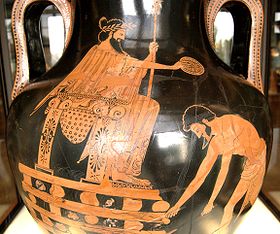
Cyrus ordered a huge bonfire to be built, on top of which fourteen Lydian captives were bound and laid; one for each day of the siege. Croesus too, was led to the pyre in chains and laid on it. The half-dozen guards who had been posted at regular intervals around the huge bonfire then lit its base with the flaming torches they carried, as Cyrus watched the flames begin to bite into the lower levels of the bonfire; but instead of cries for mercy, there arose from Croesus what sounded almost like a prayer… Yet Cyrus could not quite recognize the name his erstwhile adversary now invoked.

“Ah, Solon, Solon, Solon!” Croesus lamented bitterly from the top of the huge pyre, “How right you were! No-one can be called happy while they yet live!”

Cyrus was intrigued; his curiosity suddenly quenched any desire he may have had for revenge on this king, who by reputation was a very holy man, and renowned for his justice and wisdom. Cyrus could not help himself; he had to know who it was that this holy man was now invoking in his extremity. Shouting up at the now silent Croesus, he asked,

“What’s that you say, Croesus? Who are you calling on?”

“One whom I would give much to see converse with every monarch!” Croesus responded, very sadly, “Many years ago, an Athenian called Solon came to see my court and all its splendour and made light of it; and now everything he said to me then has fallen out exactly as he foretold, although it was nothing that concerned me especially, but applies to all mankind alike; most of all to those who think themselves happy.”

“By the gods!” Cyrus exclaimed, when he heard this sad tale, “Nothing that men do is secure! Here is a man who has in his lifetime been as favoured of the gods as have I… and I’m burning him alive! Guards! Put that fire out and bring Croesus down to me…”

The guards instantly ran to obey their king but they had not been expecting this order and although there was a large stream close to the bonfire, by the time they had formed a bucket brigade the fire already had too strong a hold on the huge wooden pile. It soon became clear that their efforts to extinguish it were in vain.

“Your majesty,” said one of the guards to Cyrus, “it is impossible to quench the fire! It has too strong a hold already!”

As the flames began to climb rapidly towards the sacrificial offerings laid out on top of the pyre, Cyrus was suddenly appalled to think that he might be the cause of this man’s death. Yet there was nothing he could do to save him. Suddenly, Croesus’ voice again arose from the top of the bonfire, in another, most earnest and heartfelt prayer:

“Apollo!” he intoned loudly, addressing the sun’s disc as it sank slowly towards the western horizon, “If ever you have received from my hands any acceptable gift, I implore you to come to my aid, and save me from this terrible death.”

Before this the sky had been cloudless and of the clearest blue, yet now, very suddenly, darkening storm-clouds swiftly gathered directly over the bonfire and a huge rainstorm burst overhead. Such a torrential rain then poured down upon them that the bonfire was quickly extinguished. The shower however, lasted no longer than was necessary for the fire to be quenched and then stopped just as suddenly as it started; the clouds now completely dissipated.

Cyrus’ astonished guards helped Croesus down from the pyre and escorted him to sit next to Cyrus. Since it was clear to everyone that the gods themselves had quenched the bonfire, Cyrus also freed the other fourteen men whom he had been just about to sacrifice to them, since they evidently did not require the gift. But, Cyrus thought to himself, he had certainly tested Croesus’ reputation as a holy man; and he had indeed discovered it to be well deserved. Turning to Croesus as the guards seated the captive monarch next to him, Cyrus was impelled to ask him,

“Croesus, now I am certain that you are a good man, and favoured by the gods! But tell me, who was it that persuaded you to lead an army into my country, and so become my foe when you could have continued to rule your kingdom as my friend?”

“What I did, oh king,” Croesus replied sadly, “was to your advantage and to my own loss. If there be blame, it rests with the god of the Greeks, who encouraged me to begin the war.” Here he paused and uttered a heavy sigh; but Cyrus’ gentle gaze silently encouraged him to continue, “No-one is so foolish as to prefer war, in which, instead of sons burying their fathers, fathers bury their sons, to peace. But the gods willed it so…”

Cyrus appeared to be lost in thought for some time and Croesus took the opportunity to look around him and assess the situation. A few moments later he cleared his throat to politely interrupt Cyrus’ contemplation. Once he had Cyrus’ attention, he said, “May I now tell you, oh king, what I have in my mind, or is silence best?” he asked.

“Croesus,” Cyrus said, his now kindly intentions towards his captive reflected in the gentleness of his tone, “you may speak freely; you need fear no further evil at my hands.”

Indeed Cyrus now felt terribly sad that things had come to such a pass as this. Had things been different he was sure that he and Croesus would have been the best of friends. To his surprise, however, Croesus was pointing at Cyrus’ men, who were busily looting the captured city and carrying off all manner of valuables, as he asked, “Then tell me, my king, what it is that those men over there are doing so busily…”

Startled by the unexpected nature of this question, Cyrus regarded the looters closely for a moment or two and then, painfully aware that he was stating the obvious, said, “They are plundering your city and carrying off your riches…” he could not help but sound a little embarrassed.

“Not my city, nor my riches.” Croesus said softly, ignoring Cyrus embarrassment, “They are not mine any more. It is your wealth which they are pillaging.”

Cyrus was amazed, “I hadn’t thought of it like that!” he said, “What do you suggest I do about it?”

“Now that the gods have made me your slave, oh Cyrus, it seems to me that it is my part, if I see anything to your advantage, to show it to you.”

Cyrus nodded his encouragement to the captive king and Croesus quietly continued, “Your subjects, the Persians, are a poor people with a proud spirit… If you let them pillage and possess themselves of great wealth, I will tell you what you may expect at their hands. The man who gets the most will rebel against you.”

Cyrus was startled for he could plainly see the truth of what Croesus was saying, as, making soothing motions with his hands, Croesus continued:

“Now then, if my words please you, do this, oh king: Place some of your bodyguards at each of the city gates; and let them take the booty from the soldiers as they leave the town; tell them that they are doing so because the tithes to the gods are due. Thus you will escape the hatred they would feel if their plunder were taken away from them by force; and they, seeing that what is proposed is just, will do it willingly.”

Cyrus was as impressed by the genuine concern Croesus was showing for his welfare as he was by the subtle wisdom of Croesus’ plan. Wishing to reward such loyal behaviour, he said earnestly, “Croesus, I see now that you are resolved to show yourself a virtuous prince both in word and deed: therefore you may ask me for whatever you want as a gift at this moment.”

Croesus was silent for a few moments; the only thing he really wanted was his kingdom returned to him in the same condition it was in before he had ever heard of Cyrus. He doubted that Cyrus’ generosity would extend quite so far even if it were possible; and, he thought to himself, there’s no point in wishing for what you know you can’t have. After thinking for a few moments, he replied, holding up his chains before him:

“My lord, allow me to send these fetters to the god of the Greeks, whom I once honoured above all others, to ask him if it is his habit to deceive his benefactors. That will be the highest favour you can confer on me.”

“This I readily grant you,” Cyrus said magnanimously, then he added, without reservation, “and also whatever else you may ask for; at any time.”

***   *****   ***

Cyrus: Chapter 15, part 3

06 Wednesday Jan 2010

Posted by Therese Trouserzoff in Cyrus the Great: Chronicles

≈ 13 Comments

.... came up in a search for Artaphernes, but is labelled Alaric. Cool anyway, huh ?

By Theseustoo.

Two generals, Mazares and Artaphernes, the Prince of the Paretacenae, were becoming concerned with what was now beginning to look like very slow progress in their siege of Sardis. Recently their spies had reported that Croesus had sent for his allies; this merely confirmed what he had already calculated would be Croesus’ logical next move. Realising that their own provisions would not be enough to outlast a lengthy winter siege; and anticipating that Croesus’ allies would arrive in force with the spring, the staff officers had decided to meet with Cyrus to discuss what could be done to resolve the impasse.

“Your Majesty,” Harpagus asserted insistently, “we must do something soon; we cannot afford a lengthy siege… Croesus only has to wait until his allies arrive in the spring and we will be forced to retreat… we have already been sitting here outside these walls for thirteen days…”

Referring to a map on the table, Cyrus responded:

“I know Harpagus…” he said with a heavy sigh, “but these walls seem impregnable. The only place where there are no walls is to the rear of the city, here…” he pointed to the map, “where it faces Mount Tmolus; and there is such a sheer precipice there that Croesus doesn’t even need to guard it!”

Cyrus’ voice sounded the way he had begun to feel; bleak, verging on hopeless; he was unusually bereft of ideas and several long moments passed by in uncomfortable silence. Seeing the frustration on his officers’ faces at their own equal incapacity, he could only sympathize with them. Indeed their frustration was really just a reflection of his own. Suddenly, more for the sake of lifting his officers’ flagging morale than because of anything he truly felt, Cyrus smiled optimistically and said, “Have the heralds ride around the camp with the following proclamation: They are to prepare to assault the city once more! I will reward the first man who mounts these walls.”

It was a possibility, thought Harpagus, though a desperate one. But if nothing else it gave the officers a straw to grasp at; and who knows? Perhaps it may even work, he thought. Harpagus also realised that for the sake of the other officers’ confidence in their king, he must not look even the least bit doubtful at Cyrus’ chosen course of action, but must support it unhesitatingly and without question.

“At once, your majesty!” He said obediently, with a sharp salute to his king. Then he and the other officers marched off to obey the king’s orders; the tiny spark of optimism which Cyrus’ plan had kindled in them clinging fiercely to life with this tiniest breath of oxygen. Cyrus’ reputation for generosity was such that even these most hardened of warriors realized that a promised reward from Cyrus would set a man up in grand style for the rest of his life; a man might willingly risk his life for such a reward. This, thought Harpagus, beginning to feel a little more optimistic himself, might well be enough to make his men brave enough to surmount even these high and reputedly impregnable walls; in spite of the constant presence of Croesus’ very highly trained guards and lethally accurate archers, who constantly rained showers of arrows on anyone who came within bowshot.

***   *****   ***

The latest Persian assault was far more enthusiastic than any previous attempt, but again it failed. In spite of the cries of encouragement from their officers and even in spite of Cyrus’ promise of a lavish reward for the first man to mount the walls, the men were easily repulsed by the lethal missile fire of Croesus’ archers even before they could place their ladders against the walls; driven back by dense showers of arrows which fell on them like a monsoon rain.

Despite their shields and all their training, dozens of men were killed and dozens more were grievously wounded by the Lydians’ lethal arrows as they approached the walls once more. Then still more were killed and even more wounded when they were forced to turn their backs and run; a most ignominious retreat. It quickly became clear that such an approach was futile; the officers mercifully called the retreat very quickly, rather than risk losing too many more personnel in what was very obviously a futile assault.

***   *****   ***

Cyrus called his generals together once again to discuss their most recent failed assault on the walls and although the generals Artaphernes and Mazares both arrived promptly, Harpagus, must unusually, was inexplicably late. This was, Cyrus thought, most unlike Harpagus. However, he did not have much time to worry about it before he was obliged to concentrate on what was being said to him, as Mazares was speaking to him, “It’s impossible even to get near the walls, my lord! The archers on top of the walls rain down arrows on our heads the moment we try any approach…”

“Hmmmm…“ Cyrus mused as he consulted his maps once more. He knew all too well that he could not afford to let his generals’ morale flag as this could put the whole expedition at serious risk. Something, he knew, must be done to give them hope.

“Mazares,” he said, with determined optimism, “If the gods will it, we will find a way!”

Yet although he stared intensely at the maps on the table in front of him, he knew that it would make no difference whatsoever; he would find no weaknesses there which were not there on any of the thousand and one times he’d already searched these maps; with equally little success. Suddenly the door of the War Room was opened by the guards and Harpagus strode purposefully into the room; followed by a somewhat bewildered young spearman.

“Your majesty,” Harpagus began breathlessly, too excited to even excuse himself or apologize for his lateness, “This man, Hyroeades, claims he has spotted a weakness in the city’s defences!”

“Well then, Hyroeades,” Cyrus said, closely examining the bewildered soldier, “…if this weakness indeed leads to the capture of the city, the reward will be yours!”

Emboldened by this encouragement from his king, the young spearman spoke up eagerly, “Your majesty, the cliffs only look sheer! I saw a man drop his helmet and run down the cliff to get it! He had no trouble getting down the cliff… or up it either! And I remember the path he took!”

Cyrus was overjoyed, “The gods must be with us Harpagus!” he said, “This is just what we need. We shall climb the cliffs during the night; and attack at first light! But remember, Croesus must be taken alive, even if he offers resistance! I wish to test his reputation as a holy man!”

“Yes Lord!” Harpagus responded enthusiastically. As an afterthought he added, “When Croesus’ allies hear that we are safely within Sardis’ impregnable walls, they probably won’t even bother to come; it will be too late already; and our position here in Sardis far too strong!”

***   *****   ***

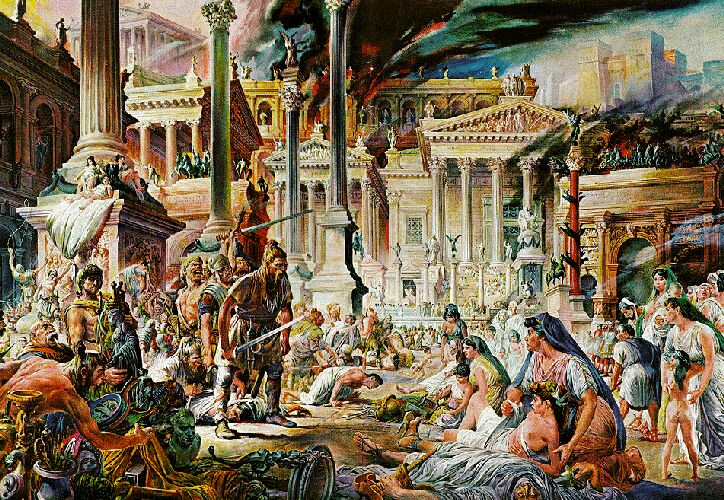
Under cover of darkness Cyrus sent a detachment, led by Harpagus and guided by Hyroeades, to circle around the city to the base of the cliffs below Sardis, opposite Mt Tmolus, where Hyroeades had spotted the secret path. With their feet muffled by rags they had climbed up the cliff in the pre-dawn gloom and gathered silently just below the summit, where they found no guards; and oh, so silently, they had entered the city. Communicating with hand-signals the detachment silently slipped through the shadows to suddenly emerge behind startled guards who hardly had time to wonder what was happening before their throats were slit and their bodies dragged into the deepest shadows.

Once the guards were taken care of, Hyroeades had the honour of opening the city gates, where he waved a burning branch which he had taken from one of the guards’ braziers, as a signal to Cyrus, who was waiting with another force to rush immediately through the gates, just as Croesus’ men began to emerge from their barracks, only to find their city had been captured while they slept. Some of these soldiers tried to resist but it was futile; the enemy was already within the walls and their sacred city was taken.

Croesus was absolutely devastated by the shock; he was found wandering the halls of his palace in a daze of despair. Recognizing his utter defeat, and realizing his own folly, he no longer cared to live and offered no resistance. Just as one of Cyrus’ men was about to separate his head from his neck, not yet realising who this dazed captive was, a gangly young lad of perhaps sixteen years, suddenly yelled at him, “Man, do not kill Croesus!”

At this Croesus suddenly looked up in pained surprise; his second son had spoken for the first time in his entire, hitherto mute existence. In this too, the oracle had been correct after all… If only he’d been clever enough, the former king thought to himself, to understand the clues he had been given.

He realized now that the Fates had evidently not wanted him to understand the prophecy; so, resigned to his fate, the now-deposed king refrained from punishing himself for his own ignorance and inability; in any case to do so would be futile and would serve no purpose whatsoever. For now, he knew he must learn to adapt to his new situation; and this must begin with an acceptance of his fate; to die, if Cyrus should demand his life as a punishment for his impetuous invasion of Pteria, or perhaps to live, should the Great King choose it, as Cyrus’ slave. Without offering any resistance he allowed himself and his son to be taken away and enchained, to be brought before their new king so that he could decide what should be done with them.

***   *****   ***

CYRUS Ch 15 pt 2

20 Sunday Dec 2009

Posted by Therese Trouserzoff in Cyrus the Great: Chronicles

≈ 15 Comments

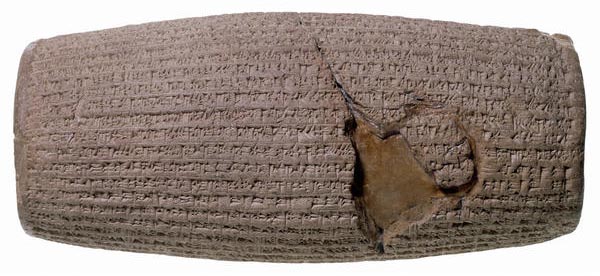
"I am Cyrus, King of the World" - Marduk victory speech

Theseustoo

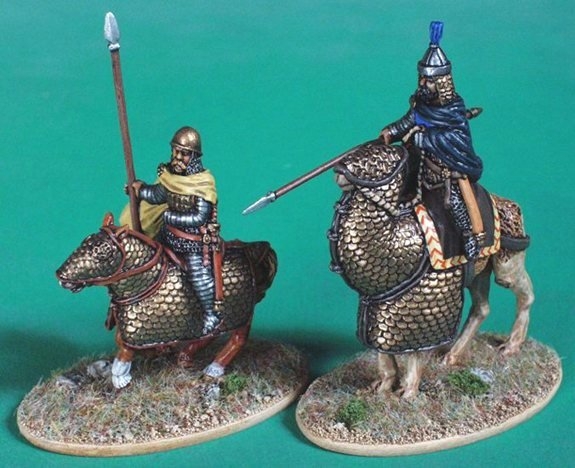
As Harpagus predicted, the battle opened with a cavalry charge from Croesus’ heavy lancers. But Cyrus had seized the initiative and moved first, thus forcing the Lydian lancers to move before they were quite ready and this upset their timing; thus their battle-line was fairly ragged even at the start of their charge, so it was unable to gain the momentum a massed charge really needs for maximum impact. Then, as the two armies closed together at the gallop, the Lydians were thrown into confusion as the horses neared the enemy and caught sight of the camels. As these ugly beasts now charged towards them, many of Croesus’ cavalrymen were thrown to the ground by their horses as they panicked and reared in their frenzied attempts to escape. As soon as the Lydian cavalrymen were thus thrown to the ground they were swiftly dispatched by Persian spearmen, who followed the camels very closely.

Confusion increased to absolute chaos as the armies drew close enough for the horses to smell these alien and terrifyingly ugly quadrupeds which were even now bearing down on them. Even those Lydian horses which had not thrown off their riders turned round and galloped away as fast as they could the moment they caught sight or smell of Cyrus’ camels, heedless of both their riders’ commands and their whips as they wielded them furiously in their futile efforts to restrain their steeds. The wisest of the horsemen among them gave their mounts their head and just hung on for dear life, until their mounts ran out of breath.

However the best of Croesus’ cavalrymen instantly understood what was happening and quickly leaped off their horses before they too were thrown, and engaged with the Persians on foot. But it was too late; on foot they had lost all impetus and the riders on Cyrus’ camels bore heavily down on them with their long, bronze-tipped lances; and, since most of their comrades had either been thrown from their horses and killed, or else had given their steeds their head and fled, they were far too few; all semblance of battle formation had been lost in an instant and they were easily slaughtered. Harpagus’ stratagem had been very effective, completely neutralizing the impact of Croesus’ cavalry charge; and when the rest of Croesus’ forces saw the slaughter that was now being done to the fleeing remnants of the scattered cavalry, they immediately fled back to the safety of Sardis’ high city walls, while the Persian host encircled the town well beyond bowshot, and prepared themselves to lay siege to the city.

*** ***** ***

Croesus took off his heavily-mailed leather gauntlets and threw them onto the table as he strode into the war-room with Sandanis and his other officers in tow. The gates of Sardis had been firmly barred behind them and archers had been stationed at the walls to keep the enemy at a distance. Croesus looked tired and weary as he spoke to his officers: “Sandanis, we must send more heralds to all of our allies; especially to the Spartans; they are to inform them that we are already besieged; and that they are not to wait for spring, as we had planned, but to come immediately!”

“At once Lord!” Sandanis responded immediately, as he gestured briefly towards a herald, who, having already heard and memorized the king’s message, immediately ran off to obey him. Sandanis was worried to see a hint of desperation had appeared in his king’s manner; his second encounter with these Persians had taken its toll on his nerves. Even so, thought Sandanis, his actions were sound; after the terrible defeat of his cavalry, there was nothing for it but to retreat within the city’s impregnable walls and sit out the siege until help could arrive.

“How long do you think we can hold out?” the king now demanded. “Your majesty,” Sandanis responded reassuringly, “we’ve plenty of supplies; enough to last several years. As long as we keep the walls well manned by guards and archers, we can hold out almost indefinitely…” Croesus looked only slightly relieved, although he seemed satisfied enough with his general’s response. Though he had been severely shaken by the ferocity of the Persians, he was most certainly not beaten yet! As soon as his allies arrived he was determined to have his revenge on these Persian barbarians.

*** ***** ***

The Lydian herald soon arrived in Laconia, the capital city of the Spartan state of Lacedaemonia, to find the Spartans grieving sorely for the loss of three hundred of their best warriors in a recent dispute with Argos over the territory of Thyrea, whose ownership they both claimed. Even so the Archon greeted him warmly, although he didn’t quite know what to make of this unexpected visit:

“This is indeed a surprise, herald!” The Archon said, “We had not thought to hear from you again until we go to meet your master in Sardis in spring…”

As he spoke, the Archon could not help noticing that the herald seemed to be having a hard time keeping tears from his eyes as he answered, “Alas my lord, the gods did not will it so; our city of Sardis is already besieged by Cyrus; my master bids you to honour our alliance and come at once!”

“And the siege?” the Archon demanded, needing to know more details of Croesus’ situation before he would commit his troops to an ocean voyage, especially at this stormy time of year, “Is Sardis likely to hold out long enough for us to relieve her?”

“Yes lord!” The herald replied stoutly, “Our walls are strong and high and the city is well-supplied…”

The Archon thought deeply for several moments before he spoke again, “We are at present engaged in a dispute with Argos over Thyrea; the mourning you see is for three hundred of our best warriors, who have died already in the dispute.” Now, the herald thought to himself, he finally understood the reason for all the weeping and lamentation which he had observed on his arrival, as he looked around at the huge crowd of mourners, who had now ceased their wailing while they waited to hear whatever news this Lydian had brought with him.

When he saw the extent of the Spartans’ grief however, he couldn’t help but wonder if the Lacedaemonians would even be able to help. He need not have worried on that score, however. The Spartans felt that a man was only as good as his word; if Lacedaemonia had made an agreement to help Lydia, then whatever the cost to her in either men or materials she would honour it; all the more so as Sparta was indebted to Croesus for many kindnesses.

When the Archon saw and understood the distressed look which had appeared on the Lydian’s face, he continued, “We are obliged to avenge their deaths, yet we will not dishonour our treaty with Croesus; tell your master that as much of our forces as can be spared will be assembled at once; we will sail for Sardis as soon as the ships can be provisioned.”

“Thank you, my lord Archon.” The herald replied gratefully, nodding his thanks. However, privately he could not help but wonder whether the Spartans would in fact be able to send enough men to turn the tide of this war against the Persians. Having just lost three hundred of their finest warriors in their dispute with the Argives over Tegea, they would, he thought, undoubtedly lose many more men avenging their deaths. Who, he asked himself, could possibly know how many troops Lacedaemonia would be able to send to Lydia after they had revenged themselves on the Argives?

Even so, the herald thought to himself with grim resignation, a little help is better than none. Negotiations now being at an end, he gave the Archon a farewell salute and said, “I shall return immediately and let Croesus know that help is on the way…”

*** ***** ***

Cyrus: Chapter 15, part 1 The Seige of Sardis

09 Wednesday Dec 2009

Posted by Therese Trouserzoff in Cyrus the Great: Chronicles

≈ 21 Comments

by Theseustoo

Impatient with the limitation on his speed that having to stay with the infantry and baggage train had imposed on him, Cyrus had boldly pushed ahead. Thus he was the first to arrive at the city gates of Sardis at the head of his cavalry; even before the rest of the army. Cyrus left the column at a distance he deemed safe from any archers on the city walls who may be tempted to take pot-shots at them, then, holding aloft a lance, to which he had attached a piece of white cloth to serve as a flag of truce in his right hand and a wickerwork shield in his left, he cautiously approached the city gates. With his wickerwork shield held in front of him and keeping and extremely sharp eye out for possible missile fire, Cyrus hailed the guards that he knew would be on duty in the gate-house to man the now heavily-barred gates, which had been closed the instant the dust from Cyrus’ expedition had been seen rising in huge brown clouds above the horizon.

Soon a Lydian guard appeared on the wall above the gate; although he was armed from head to toe, his hands were empty as he waited for Cyrus to state his purpose. In tones which would undoubtedly be clearly heard well inside the city walls Cyrus declaimed: “Ho there! Inside the city! Tell your master, Croesus, son of Alyattes, that Cyrus, son of Cambyses, King of Persia and Media, has come to finish what Croesus started! If he does not wish to come out to fight, let him skulk inside his city, and hide behind its walls like a coward, we will then lay siege to the city and deprive you of all the goods that you normally receive through these gates; until you either surrender or starve!”

As the guard disappeared once more from the top of the wall to give his message to Croesus, Cyrus returned to the column where Harpagus awaited his instructions. “Let us fall back far enough to allow him time to come out of the city and draw up his battle-lines.” Cyrus said; then he added, “These Lydians are brave men; in all Asia there are none braver; they will not surrender without a fight!”

Appreciating the appropriateness and the candour of his king’s personal assessment of the enemy, Harpagus saluted him, striking his gauntleted right fist across his mailed leather cuirass. “Yes Lord!” he responded firmly, as he turned and, giving a brief hand-signal, wheeled his column about and withdrew far enough to allow Croesus to draw up his lines of battle without any fear of interference. While the Lydians were occupied with this, the Persian infantry section began to appear on the horizon; followed closely by the baggage train.

***      *****      ***

Croesus had assembled his generals to discuss how they might best approach this new situation with which they were confronted. As soon as he entered the war-room, Sandanis spoke, “Sire, I’ve sounded the assembly; all the mercenaries who live in or near the city have been recalled; they await your command.”

Croesus nodded his approval of Sandanis’ actions; smiling at the other generals he said confidently, “He is very bold this Cyrus! But we Lydians still have the best cavalry in all Asia! What forces does Cyrus have with him?”

“Mostly infantrymen,” Sandanis responded, “with only a small detachment of cavalry… he is too rash Lord; it seems he has attacked us impetuously; although we have very few infantry without the support of our allies, yet our cavalry are easily a match for him now!”

“Very well,” Croesus said thoughtfully, “…the enemy have courteously withdrawn to allow us to draw up our battle-lines; we shall oblige this young man and teach him not to be so impetuous! As for battle-lines, we shall put our cavalry in front with our infantry behind them; the shock of a cavalry charge from my lancers will break up their formation and make the infantry’s job much easier; the Persians won’t know what’s hit them.”

***      *****      ***

Harpagus had watched Croesus form his battle ranks and had immediately observed the strength of Croesus’ cavalry; which consisted mainly of heavy lancers; and which formed his front rank. Obviously, he thought, Croesus intends to use them as shock troops to charge our front line, hoping to scatter it and thus break through to the rear of our ranks; where he realized grimly, they would easily be able to do incalculable damage. Although he was reluctant to admit it, Croesus’ battle-lines worried him; he knew that in the face of such a charge, even the most experienced spearmen could break ranks and flee. Harpagus knew all too well that if this happened the battle could easily turn into a complete rout and all would be lost.

The general trotted up to Cyrus just as he was giving his final instructions to his officers, “My lord,” he said gravely, as his king finished speaking, “the enemies’ strength lies in their cavalry; our infantry-men cannot match them; neither can our cavalry, which number less than half of theirs. But I know how we can make their cavalry useless to them…”

“Indeed Harpagus?” the King enquired eagerly. Cyrus had agreed grimly with his general’s assessment of the enemy’s plans; convinced by what he had seen himself of how they were beginning to line up in their battle formation; he too had been worried by the strength of the Lydians’ heavy cavalry, “What do you think we should do?” he asked frankly.

Harpagus replied with surprising confidence, a grim smile, and a twinkle in his eye: “Have half the cavalry dismount; unpack the camels from the baggage train and then have the cavalrymen mount these as their steeds; we will put them in front, with our infantry close behind, with the rest of our cavalry protecting their flanks and to hunt down enemy deserters; horses have a natural dread of camels; they cannot stand the sight or the smell of them. Thus the enemy cavalry will be uncontrollable and spread confusion among the enemies’ ranks, leaving their cavalrymen easy targets for the spears of our infantry and the rest of our cavalry.”

“Very well; do it! Quickly!” Cyrus ordered, immediately and intuitively recognizing a sound plan. A few minutes later, as Harpagus had suggested, Cyrus and half of his cavalry had mounted their new steeds. Fortunately Cyrus’ cavalrymen were just as familiar with these beasts of burden as they were with their own horses; so they had no trouble adapting to their new mounts as they now quickly rode up to take their place in Cyrus’ front line. When this was done, Cyrus turned once more to give his final instructions to Harpagus, “Show them no mercy; but make sure that Croesus is taken alive even if he resists when he is captured!”

“Yes Lord;” Harpagus said obediently, then, nodding his head in the direction of the enemy’s ranks, he said, “It seems the enemy is almost ready…” “Then sound the charge before they have a chance to seize the initiative!” He ordered. Harpagus saluted as he instantly replied, “At once Sire!” Then turning to his trumpeter to relay his King’s command, he said firmly, “Trumpeter, sound the advance!”

***      *****      ***

Cyrus: Chapter 14: A Prodigy Indeed

28 Saturday Nov 2009

Posted by Therese Trouserzoff in Cyrus the Great: Chronicles

≈ 6 Comments

Phil Manzanera (sorry, couldn't find Mazares)

One of Croesus’ servants had run to tell the king about a prodigy which was happening right here in the centre of Sardis; indeed it was happening quite literally right under the king’s very nose, yet Croesus found he could hardly believe his eyes as he stared down into the public square from a second-floor balcony in one of his private apartments.

“Well… a prodigy indeed!” he drawled thoughtfully as he tossed the servant a gold coin to dismiss him. He turned to Sandanis and continued, “I would not have believed it if, had I not seen it with my own eyes! The whole city is swarming with snakes… and you say those horses actually left their pastures to come down into town to eat them? Aren’t horses usually terrified of snakes?”

“Yes your majesty” Sandanis replied, equally intrigued by this inexplicable and bizarre phenomenon; “Although, these are not poisonous, but harmless grass snakes…” he continued as he regarded the square below them once more. After a few more moments he finally observed, “Even so, I have never seen anything like it! What do you suppose it could mean?”

Fascinated, they continued to watch as the mercenaries’ horses continued to feed on the reptiles. Only the previous day these horses had been put out on the hills to graze, but this morning they had followed a swarm of snakes which had invaded the city in huge hordes, where the horses then began to feed on the serpents with a most voracious appetite.

Both Sandanis and Croesus, born into the aristocracy, had been horsemen all their lives; yet they were both astounded. This was a most unusual taste for horses to develop; though they were both educated men, neither had ever even heard of such a phenomenon. They could only conclude that it was the result of divine intervention. Surely, Croesus thought to himself, there must be some profound meaning behind these strange events; although he could make nothing at all out of them himself.

“Sandanis,” Croesus replied, pensively, to his general who was equally astounded and equally at a loss for words, “I have absolutely no idea; I’ve never seen anything like it either.” He thought for several moments and then ordered, “Send an inquiry to the soothsayers of Telmessus; they are the best I know at interpreting prodigies. If anyone can enlighten us as to the meaning of this one, they can.”

“I shall send a messenger at once Sire!” Sandanis said with alacrity, as he bowed and took his leave to obey the king’s orders. Telmessus was at least three days’ steady marching from Sardis, but a messenger on horseback could have a reply from them in less than half that time; soon they would have the solution to the enigma.

*** ***** ***

While Croesus retreated to Sardis, his enemy, Cyrus, had occupied Sinope, whose citizens were very relieved to see their Median and Persian allies chase the Lydian invaders out of their territory. The Syrians had feasted Cyrus and his men generously, treating them as heroes. In the meantime Cyrus took advantage of Croesus’ retreat not only to book and bury his dead, but also to rest his troops in shifts and to appoint a large detachment of troops under the command of General Mazares, Prince of the Budii, to take command of the garrison here.

Mazares was one of the five Princes of the Tribes who had been involved in the original plot which had culminated in Cyrus’ revolt from Astyages; his appointment to this post was his reward, for the courageous Mazares had taken more than his fair share of risk by organizing their very first fateful meeting. Harpagus was charged with overseeing the repairs to the city and with addressing their immediate needs for improved security, while Mazares organised a large cohort of troops to permanently garrison the city.

“Well Harpagus?” Cyrus now demanded as he faced his general over a large, chart-strewn table in the large chamber which they had chosen to use as a war-room, “Is the city secure?”

Harpagus had set his men immediately to strengthen any weak points he found in the city’s defences; most especially those which they themselves had just taken advantage of in recapturing the city. He immediately repaired the superficial damage which had been done to the city walls during its two recent battles; as well as the more serious damage which had been caused by generations of neglect. He also posted guards at regular intervals along the city’s walls and also in the high towers which framed the city’s gatehouse, rotated in four-hour shifts around the clock; this would give them plenty of warning of any surprise attack; he thought, or indeed, of any other approach by the enemy.

“Yes your majesty.” Harpagus replied, quite satisfied with the progress of his men’s work. ”The people will not revolt… they do not care for Lydians…” he added with a grin.

Indeed, Lydia’s sudden attack on Sinope was seen by all of the region’s inhabitants as the most despicable treachery. Although the Pterians had held no formal treaties of alliance with Lydia, they had nonetheless traded with her peacefully for centuries previously; as they had always done with all the countries with which she shared her borders; as indeed had all of Cappadocia. It was what had made them all rich. Inevitably such abominable treachery was rewarded with a universal and intensely-felt hatred from the citizens of Pteria for their conquerors; and that hatred remained undiminished even now that the enemy had been forced to relinquish their hold on their city.

This was just as Cyrus anticipated; now he thought silently to himself, he would make very good use of that sentiment. “And Croesus has fled with his army back to Sardis?” he demanded. The general nodded. This news had come as a great relief for Cyrus; it meant that at least the Lydians would not attack again for some time; perhaps not until the spring, he thought; maybe they would be content to sit the winter out behind Sardis’ walls and gather her allies.

“Yes sire!” Harpagus said with evident pleasure, “My spies tell me he now plans to winter there and attack again in the spring; he has even dismissed his mercenaries, who formed the backbone of his army! He assumes that we will winter here and strengthen our position before striking again.”

When he heard this Cyrus suddenly saw an opportunity to avoid a lengthy and possibly futile winter siege; he looked his general levelly in the eyes as, in an icy voice, he said, “Then we will strike now! Sardis will be ours before the winter sets in! Assemble the army! We march on Sardis immediately!”

“Yes your majesty!” Harpagus replied with a smart salute, snapping immediately to attention, “At once your majesty!”

Then he quickly turned to a trumpeter who waited dutifully nearby for instructions, and gave the order: ”Trumpeter, sound the Assembly!” The trumpeter instantly nodded once and then ran out of the building to sound the Assembly in the courtyard.

Instantly soldiers came running from every direction to form ranks in the square. Within a few minutes, while Cyrus and Harpagus went to find their steeds in the nearby livery stable, the whole army had swiftly formed ranks outside the city gates; with the cavalry at their head. Though they were a king and a general, cavalrymen and private soldiers rushed right past them in their haste to form ranks on parade, with little more acknowledgement of their rank than a cursory nod, in order to hastily arm themselves, put saddles on and mount their horses and form ranks in the courtyard with their comrades. Cyrus and Harpagus did not hurry, but strolled over to the livery stable, where grooms had already saddled their mounts, taking their time to give stragglers every chance to take their place in the regimental column. The king and his general then mounted their own horses and took their customary positions with the cavalry at the head of the column.

With a brassy fanfare from the trumpets, and the fifes and drums striking up a merry marching tune, the regiment of cavalry cantered smartly out of the city gates. They were closely followed by a massive column of infantry, comprised of archers and spearmen, both of which were also armed with long, bronze daggers as well as their primary weapons, the long, bronze-pointed spear. Marching at the double, they were only slightly slower than the cavalry. Finally, following the infantry at a fast walking pace was a gigantic baggage-train or caravan, consisting of several hundred heavily-laden camels, carrying all the supplies and equipment Cyrus felt he would need in order to besiege Sardis; the Sinopeans having generously resupplied him with a large contingent of troops and all the equipment he had required.

*** ***** ***

Croesus’ messenger bowed deeply as, with both hands, he received the small papyrus scroll on which the Sooth-sayers of Telmessus had written their response to Croesus’ enquiry regarding the prodigy which had been observed in Sardis. As he handed the messenger the scroll, by way of giving the herald a précis of the longer analysis contained in the scroll, the soothsayer said in a dark voice, “Croesus must look for an army of foreign invaders in his country; and when they come they will subdue the native inhabitants; since the snake is a child of the earth and the horse is both a warrior and a foreigner.”

Hearing this, the messenger was aghast; he turned and fled out of the Temple of the Soothsayers as fast as his well-trained legs could carry him, careless for the first time in his adult life of his bearing and dignity, and with but one thought occupying his entire being: Sardis was going to be invaded! The soothsayer’s message clearly indicated that Cyrus was not going to be content to winter in Sinope as Croesus had assumed; instead, he would besiege Sardis immediately. He must get back to Sardis in time to warn his king: Lydia was about to be attacked.

*** ***** ***

Cyrus: Chapter 13, part 2

20 Friday Nov 2009

Posted by Therese Trouserzoff in Cyrus the Great: Chronicles

≈ 11 Comments

Cyrus

By theseustoo

Chapter 13, part 2:

*** ***** ***

Such a tremendous battle as that fought between the forces of Cyrus the Persian and Croesus of Lydia, was never fought again in that region before or since. The slaughter on both sides was so great that neither side had a clear idea of who was winning or who was losing. The battleground was a single seething mass of bloody chaos; an incomprehensible and inconceivable jumble of torn and bleeding flesh; a huge confused mass of heaving bodies, constantly stabbing and hacking; spraying blood from a million wounds; and all the time pushing, as hard as possible, forward into the main body of the enemy; ignoring even the cries of agony and the torn and bleeding bodies of the desperately wounded and dying, as they stumbled over falling comrades and severed body-parts in their eagerness to damage the enemy.

The dreadful chaos of this terrifying visual confusion was further intensified to an unimaginable pitch by the dreadful cacophony of battle-noises; the insistent, remorselessly up-tempo and insistently pounding beat of the drums provided a temporal background for the insanely bright and jolly tunes of the flutes and the ear-splitting, brassy fanfares blasted out by the trumpets which were used to transmit the orders of the commanders on either side to their troops; and above all this, providing a grisly descant to this hideous tumult, arose the blood-curdling screams and agonised moans of the dead and dying…

Then there were the smells; the awful stench of the ankle-deep, recently-spilled blood and entrails combined with the dreadful aroma of fear; and the awful stench of death itself; was enough to make even the most experienced of butchers vomit. Indeed, many of those present were so over-whelmed by the hellish and horrifying reality of the carnage that many lost control of their stomachs and vomited, while others lost control of their bladders and their bowels as terror took command of their bodies, adding even more filth to the battlefield and more foulness to the already indescribably abominable stench. Thus physically compromised, a man became easy prey for the enemy.

Only those who could effectively ignore this insanity; this absolute chaos which attacked every sense and which was happening all around them; and still retain control of their bodily functions; only those who could ignore the constant physical danger to their own lives by ignoring even their own terror as men on either side were hacked to pieces or skewered on bronze-tipped spears or pierced by arrows, as they lost control of themselves and froze, making them easy targets; and as friend and foe fell dead all around them; only those who could ignore all this and still press ahead; only such men as these survived.

So hot and bloody was the conflict; and so great was the number of the slain on both sides that when night fell, the battle was still undecided, as both sides were forced by the encroaching darkness to withdraw.

*** ***** ***

As soon as they were safely within the walls of Sinope Croesus met with his generals and officers to discuss their next move. The day’s battle had caught the Lydians by surprise; they had not been prepared for either the size of the enemy host, or their ferocity. Most of the officers who had been present in the day’s battle had feared that if they pressed their attack they risked a terrible defeat; yet no man there wanted to earn himself a reputation for defeatism or cowardice by being the first one to suggest a retreat.

This had been equally true on both sides; with the result that both sides had stood their ground in the face of withering fire from enemy missiles and the crushing press of ranked spearmen; this process had continued all day as neither side had been willing to give even an inch of ground; until nightfall had mercifully made further fighting impossible.

The day’s action had resulted in a serious thinning of the ranks on both sides. Indeed, by sunset both sides had lost almost a third of their forces. The officers felt their position here in Sinope was now apparently untenable and thought Croesus should pull his army back to Sardis, whose walls were impregnable and which had enough supplies laid in to outlast even a lengthy siege; yet no-one among them wanted to be the one to suggest it.

Knowing the respect which the king held for him, Croesus’ officers chose Sandanis to speak for them to their king about their concerns. Croesus was not unaware of the situation, but his expression was dark and moody; and most difficult to interpret. Tentatively, Sandanis started to speak: “My Lord,” he said, “these Persians fight like demons; though the battle is still undecided we have already lost almost a third of our army.” Croesus stared at him blankly, as Sandanis continued, “Even with the favour of the gods, prudence does not go amiss; I fear we cannot hold Cappadocia without great losses…”

Croesus ignored the implicit reproach from this, his most trusted general. Indeed, in giving Croesus the benefit of his own assessment of the situation, Sandanis had in fact only confirmed what Croesus already knew; what he should have known before; that even with the favour of the very gods themselves, the material means to one’s ends must not be ignored. “Indeed!” Croesus replied, “The Persians outnumber us considerably; though they have lost as many men as we… But Cyrus has not repeated his attack; he must be licking his wounds…”

The monarch thought for a moment as he gazed first into Sandanis’ eyes and then into the eyes of every man present, gauging the extent of their feeling and the strength of their unity; each man steadily returned his gaze unflinchingly. All day these men had been in the thick of the battle; countless times they had rallied their flagging men; again and again they had attacked the enemy. No-one, the king realized, could truthfully accuse them of cowardice. Instantly assessing their mood; Croesus smoothly continued: “However as you say, prudence never goes amiss; we’ll take advantage of Cyrus’ inactivity to fall back to Sardis. The year is waning; winter will soon be here. We shall wait until spring and then attack again; in the meantime we shall send for our allies in Egypt and Lacedaemonia.”

Sandanis felt greatly relieved at the king’s wisdom; gravely nodding his agreement, he said, “Sire, Babylon is also bound to us by treaty; I think it would be wise to send for help from King Labynetus too; that should give us the numbers we will need to defeat these Persian dogs…”

For the first time Croesus realised his folly in trusting so completely in the prophecies of the oracles without ensuring first that he had the physical forces needed to make them a reality. He had been thinking along much the same lines as Sandanis, whom he now realized had been very thoughtful in not voicing his reproach openly, knowing that Croesus would reproach himself anyway at this unforeseen turn of events.

In any case, Sandanis is quite right, Croesus thought, we can certainly use Labynetus’ help; and he was sure that the current Assyrian king of Babylon would most certainly take advantage of any opportunity which presented itself to him to revenge himself on the Medes, who in ancient times had been his ancestors’ subjects. Furthermore, Croesus also knew that Labynetus would never be able to resist the chance, whilst punishing the Medes and Persians, to recover some of their ancient homelands; a chance to rebuild the Assyrian Empire.

“My own thoughts entirely;” Croesus said, “…instruct the generals that we shall assemble all our allies in Sardis at the beginning of spring.” One of the junior officers present voiced his concern about the proposed retreat, “But if we fall back to Sardis, Lord, might not Cyrus follow us there and lay siege to the city?”

Croesus was prepared for his question; indeed he had already considered this possibility. Even if Cyrus did exactly what the young officer was suggesting, he’d already decided that it wouldn’t matter too much; Sardis was well-supplied and her walls were impregnable; all we have to do, Croesus thought, is to sit out the siege until our allies arrive in the spring. But he did not think that Cyrus would do this. Cyrus, he realized now, was a good commander and an intelligent man; surely he would realize that besieging Sardis would be futile, and doing so during the winter would be very hard on both his men and their equipment.

“No, I don’t think so,” he said to the young officer with a shrug, “after a battle as closely-fought as this one he will stay in Cappadocia to bury his dead and tend to the wounded. Of course, he’ll try to strengthen his position there as much as he can; but when we attack again in spring with all our allies, we will have superior numbers and victory shall be ours!”

“Very well, your majesty;” Sandanis said, bowing his head obediently, “all shall be done as you command.”

*** ***** ***

The retreat was a very straightforward matter because, as Croesus had expected, Cyrus was indeed busy attending to his dead and wounded. Of all his battles this had been the bloodiest so far. But when he saw the Lydians retreat, he had little choice but to secure Sinope first rather than follow them. After so many had been killed, they must be laid to rest with all the proper rituals, for the sake of morale. Only after the dead had received all the proper rituals and were properly cremated and their souls thus released into the heavens to return to Ea and Enlil, would his troops consent to seeking their revenge for their fallen comrades.

As the Lydian army re-entered Sardis, Croesus was very relieved to see that indeed Cyrus had not followed them with the intention of besieging the Lydian capital. No, he thought to himself; this is not the right time of year to begin a siege; he’d been correct; Cyrus would sit out the winter in Sinope. He’ll strengthen his position there until the spring thaw; of that Croesus was now certain; and only then would he think about attacking Sardis. The king turned to his general and said, “Sandanis, you may disband the mercenaries; we will have no further need of them until the spring. They may return to their homes for the winter but they must reassemble with the rest of our allies when they arrive in spring.”

Realising that his monarch was taking this measure as a means to conserve financial resources which he knew would be needed to fund the next stage in Lydia’s war against this upstart new Persian Empire, Sandanis was satisfied that his master’s judgement once again showed its usual wisdom. He finally decided that the failed expedition to Cappadocia had been merely an aberration; after all, it had not really been a defeat for Croesus; for the enemy had been bloodied just as much as had the Lydians; but it had been, he thought, a severe lesson for the Son of Heaven.

“Very well, your majesty!” he said, saluting crisply as he spurred his horse and rode off to relay the king’s instructions to the mercenary captain.

*** ***** ***

Cyrus Chapter 13 Part 1 – A Surprise for Croesus

08 Sunday Nov 2009

Posted by Therese Trouserzoff in Cyrus the Great: Chronicles

≈ 35 Comments

halys_gulsehir

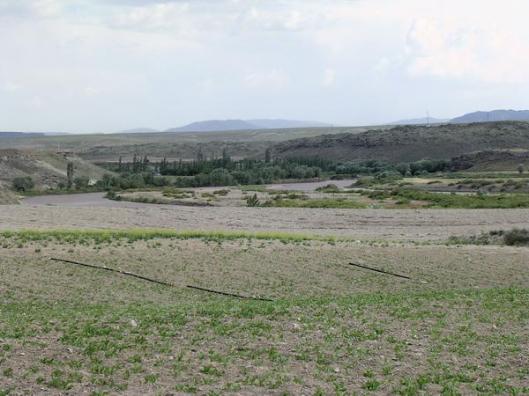
The river Halys at Guleshir - when Croesus crossed the river it meant war with Cyrus


By Theseustoo

Sandanis looked troubled as, seated on his horse in the centre of the front rank of Croesus’ massed forces, he surveyed the enemy’s ranks. Cyrus had arrived the previous evening under cover of the new moon; and had occupied the same position above the city, to observe it prior to attacking, as Croesus himself had done only a few days earlier. This however, did not surprise Harpagus in the least; for the low hill was the only piece of high ground in the broad and otherwise level plain which surrounded the small coastal city of Sinope on the landward side.

But the incredible speed with which he had mustered his forces and arrived even before winter had properly set in, had surprised both him and Croesus, neither of whom had been expecting to have to face Cyrus until the following spring, when their allies would be there to support them. As soon as the huge dust-cloud which indicated the position of Cyrus’ army was spotted Croesus immediately responded with a show of force by having his army parade in battle formation between Cyrus’ army and the city, demonstrating his willingness, if not his readiness, to defend his newly-seized Syrian territory.

The Persian horde, however, was also much bigger than Sandanis had imagined it would be; the momentum this revolution against Median suzerainty had gained was quite staggering, he thought. His spies had reported to him that Cyrus had given all of the cities he’d passed through an opportunity to levy a troop of volunteers to join his ranks and swell the size of his Persian army or else face subjection and enslavement. Many of these were the previously Median-dominated states and had joyfully welcomed Cyrus, seeing in him their liberator from the cruelty and oppression of the tyrant Astyages. Seeing now a potential threat rising from Lydia, such states had joined him willingly; and even eagerly; and had quickly supplied Cyrus with all the men, equipment and supplies he had requested for this expedition.

The few city-states who chose to resist the Persian horde soon realized the futility of their actions when they found themselves besieged by Cyrus’ vastly overwhelming forces. Faced with such overwhelming odds, even those city-states who resisted him; mostly those who were still tributaries to the Assyrians in Babylon; very soon capitulated. Individually they were just far too small to do more than put up token resistance anyway; and Cyrus had moved so swiftly against them that they had no time to coordinate their efforts. Those cities which still obstinately persisted in their resistance were quickly and thoroughly defeated; then their walls were torn down and reduced to rubble; and their inhabitants reduced to slavery.

Sandanis had not counted on this surprising willingness of the other states to join Cyrus’ cause; and he was especially surprised by the almost complete lack of resistance to his imperial claims and ambitions. Croesus’ advisors had also informed him that there was a prophecy which concerned Cyrus in an obscure century-old Hebrew text, the Book of Isaiah, which they said, named Cyrus as the Anointed One. In the light of recent events, however, he thought this could safely be ignored; Croesus, he firmly believed, was the true ‘Anointed One’; the true ‘Son of Heaven’…

But it troubled Sandanis somewhat that so many states had so willingly joined Cyrus’ cause. This Cyrus it seemed, was at the very least a man of charisma; and apparently very popular among his own people, as well as the people of many other nations. This spoke well of Cyrus’ character, he thought, grimly realising that it would make him a formidable enemy too. His master, Croesus, he now realized, was just about to commit himself irrevocably to an extremely bold and very dangerous course of action.

Was it possible that it had been a mistake to pick a fight with this fledgling Persian Empire in the first place? He could not help but wonder; and yet, thought Sandanis, at this point we could still retreat to Sardis without having to face Cyrus; although he realized that it would represent an embarrassing loss of face for Croesus to so easily relinquish a recently captured city. Even so, the general thought, at this moment it could still be done without any other serious losses; and they could always return in spring with their allies. With this in mind Sandanis turned to Croesus,

“Your majesty,” Sandanis said gravely, “before we commit ourselves irrevocably to this war, it is my duty to remind you that you are about to make war against men who wear leather trousers; who have all their other garments of leather; who do not feed on what they like, but on whatever they can get from a soil that is sterile and unkindly; who do not indulge in wine, but drink only water; who possess no figs nor anything else that is good to eat…”

Croesus appeared not to understand what Sandanis was getting at; he regarded his general quizzically; did he really think Croesus was such a coward as to retreat so easily at the first sight of the enemy? The puzzled frown with which Croesus now sternly regarded his general silently demanded further elucidation from the now embarrassed Sandanis, who coughed, a little nervously, and then continued quickly,

“So, if you conquer them, what can you get from them, seeing that they have nothing at all? But if they conquer you, consider how many precious things you will lose: and if they once get a taste of our pleasant things, they will keep such a hold of them that we shall never be able to make them loosen their grasp. For my part, I thank the gods that they have not put it into the hearts of the Persians to invade Lydia…”

Croesus was used to circumspection in his general; and he knew that Sandanis was not normally one to question his king. However, it is true, Croesus thought as he regarded the Persian host on the hill, that Cyrus’ army is much larger than either of us anticipated; and they have somehow managed to march them here much sooner than we expected; but he had never seen Sandanis quite so reluctant to fight.

Croesus knew from long experience that his general was anything but a coward; indeed, had he not been so confident of the gods’ goodwill himself, even he might have considered a cautious retreat to be the better course of action; at least until the spring, when their forces would be augmented by their allies. But now he knew for certain, he told himself, that the gods are on our side; and this is perhaps simply the first test he faced on his path to demi-godhood; after all, heroic feats, he reasoned, were always demanded of demi-gods.

And, he thought to himself to steady his nerves a little, that elusive goddess Fortune, though often fickle, usually favours the brave! In any case he was determined not to turn tail and flee like a whipped dog or a cringing coward, just because an unknown and hitherto untested enemy had suddenly put on an unexpected turn of speed. Yet he also knew that to allow himself to look weak by retreating, before even putting the enemy’s army to the test, could also be to invite disaster by starting to sow the seeds of a suspicion of cowardice among his own men; he must engage the enemy, he thought grimly.

“Thank you for your concern, Sandanis,” Croesus coolly replied, “but I assure you it is quite unnecessary; the gods are on our side in this battle; the oracle at Delphi said my kingdom will last forever; we cannot lose! As soon as we have won here we shall march on Media and Persia.”

Then, turning to address his other officers and the rest of the host in general, he grimly declaimed, in his loudest voice: “Now, gentlemen, you all have your orders; let each man do his own part nobly and you will all be rewarded with positions of honour in my new domain.” Then, turning to the trumpeter at his elbow, he ordered, “Trumpeter, sound the advance!”

*** *****   ***

Cyrus Chapter 12 Cyrus to the Rescue

28 Wednesday Oct 2009

Posted by Therese Trouserzoff in Cyrus the Great: Chronicles

≈ 28 Comments

....." Croesus has taken Sinope"

....."Croesus has taken Sinope"

By Theseustoo / Astyages

“So…” Cyrus said thoughtfully when the messenger had finished his report, “Croesus has taken Sinope and enslaved the region of Pteria in Cappadocia!” Harpagus nodded grimly but remained silent, though equally pensive; his own spy net-work had already verified the report’s accuracy.

Although both men were staring intently at the world map which was spread out before them on the tabletop, neither of them really needed to look at it in order to find either the region or the city. Indeed both had been world-famous long before Croesus had ever decided to attack them. Several centuries of peaceful trade, which had come to characterize the whole region, and which had been facilitated by the dominance of the Assyrian Empire, had made Cappadocia, and especially Pteria, both very wealthy and very famous.

And even when the Medes finally overthrew their Assyrian overlords, rather than interfere with the running of a country which had hitherto always been a voluntarily tributary nation, the Median kings simply adopted the same policies as their predecessors; allowing them the same terms of fealty as they had under the Assyrians. As a result, this region was permitted an unusually high degree of local autonomy. Their ‘conquerors’ had been quite content to accept only tribute in coin and kind from this region; exempting Pteria from the usual annual levy of troops for the army of the Great King, whoever that happened to be at the time.

Similarly the Median kings had wisely decided to adopt the bureaucratic system Hammurabi had established centuries ago, and which had been copied by the Assyrians. Although the Magi were a Median tribe, as a result of their centuries-long interest in gathering knowledge, they were first adopted as a bureaucracy by the Sumerian; then by the clever policy of intermarrying with, first the Sumerians, then the Assyrians and finally the Medes, the Magi ensured the preservation not only of their tribe but also its immense store of knowledge; and the political influence this gave them; theirs was thus an extremely rich cultural heritage.

This administrative bureaucracy and the network of the King’s Highways had facilitated Assyria’s ultimate subjection, domination and exploitation of immense tracts of territory and the variously assorted cultures which had become the Assyrian Empire. When Media rebelled she simply carried on using the Magi to run her administration. Thus the manner in which the province of Pteria had been administered had remained almost completely unchanged even after many dynastic changes.

For these reasons there had never been any need to send more than a small military force to garrison and oversee the region; and these had become soft through their habitual life of near-indolence. So many countries had depended on this region for their trade that the Syrians, as their neighbours the Lydians called the Pterians, felt they need not fear attack from any nation, for fear of angering all her other trading partners and thus inviting a military catastrophe.

Thus, before Croesus’ sudden invasion, this region had been a veritable oasis of peace in a harsh and extremely violent world. So, for many generations, there had been little need for her men to develop warlike tendencies. Thus a local branch of the imperial tax office and a rather small garrison of local troops was all there was in Pteria to represent the authority of what was now the Persian Empire.

Pteria’s importance to the Empire as a source of revenue was not lost on either Cyrus or his general, Harpagus, who both immediately realized that unless something was done to remedy this situation the loss of this region would severely restrict Cyrus’ imperial revenues. Harpagus now voiced his concern,

“We cannot allow him to gain too firm a hold there…” he said firmly, “He could dominate all the landward trade-routes from Pteria, and thus he’d control a large proportion of our revenue.”

Cyrus looked up from the map and gazed levelly into the eyes of the man who had saved his life and gained him an empire; and who had, since then, become his most valuable and trusted advisor; he said, “Harpagus, assemble the army at once; we’ll march for Sinope immediately! We’ll raise levies of extra troops in the countries we pass through on the way; voluntarily if they choose; by force if they don’t!”

With a respectful bow, Harpagus left the hall to obey his king’s orders, as Cyrus turned to a second messenger who was patiently awaiting his turn to speak, “Now, you…” Cyrus demanded, “What news do you have from Ionia and Aeolia? Will they accept my offer of alliance? Are they prepared to revolt against Croesus of Lydia?”

“My lord,” the messenger answered a little hesitantly, “they both refuse; they remain loyal to Croesus…”

“Stubborn Greeks!” Cyrus exclaimed, frustrated. Yet he was unable to hide his admiration for their loyalty, in spite of his frustration. But as he continued his tone became far more menacing, though it remained tinged with sadness, as Cyrus vowed, “Well! We’ll teach them that stubbornness is not always a virtue!”


***   *****   ***


← Older posts
Newer posts →

Patrons Posts

  • The Question-Crafting Compass November 15, 2025
  • The Dreaming Machine November 10, 2025
  • Reflections on Intelligence — Human and Artificial October 26, 2025
  • Ikigai III May 17, 2025
  • Ikugai May 9, 2025
  • Coalition to Rebate All the Daylight Saved April 1, 2025
  • Out of the Mouths of Superheroes March 15, 2025
  • Post COVID Cooking February 7, 2025
  • What’s Goin’ On ? January 21, 2025

We've been hit...

  • 719,946 times

Blogroll

  • atomou the Greek philosopher and the ancient Greek stage
  • Crikey
  • Gerard & Helvi Oosterman
  • Hello World Walk along with Me
  • Hungs World
  • Lehan Winifred Ramsay
  • Neville Cole
  • Politics 101
  • Sandshoe
  • the political sword

We've been hit...

  • 719,946 times

Patrons Posts

  • The Question-Crafting Compass November 15, 2025
  • The Dreaming Machine November 10, 2025
  • Reflections on Intelligence — Human and Artificial October 26, 2025
  • Ikigai III May 17, 2025
  • Ikugai May 9, 2025
  • Coalition to Rebate All the Daylight Saved April 1, 2025
  • Out of the Mouths of Superheroes March 15, 2025
  • Post COVID Cooking February 7, 2025
  • What’s Goin’ On ? January 21, 2025

Enter your email address to subscribe to this blog and receive notifications of new posts by email.

Join 374 other subscribers

Rooms athe Pigs Arms

The Old Stuff

  • RSS - Posts
  • RSS - Comments

Enter your email address to subscribe to this blog and receive notifications of new posts by email.

Join 374 other subscribers

Archives

Website Powered by WordPress.com.

  • Subscribe Subscribed
    • Window Dresser's Arms, Pig & Whistle
    • Join 280 other subscribers
    • Already have a WordPress.com account? Log in now.
    • Window Dresser's Arms, Pig & Whistle
    • Subscribe Subscribed
    • Sign up
    • Log in
    • Report this content
    • View site in Reader
    • Manage subscriptions
    • Collapse this bar
 

Loading Comments...