• The Pig’s Arms
  • About
  • The Dump

Window Dresser's Arms, Pig & Whistle

~ The Home Pub of the Famous Pink Drinks and Trotter's Ale

Window Dresser's Arms, Pig & Whistle

Category Archives: Astyages

Hell Hospital: Episode 8

09 Sunday May 2010

Posted by Therese Trouserzoff in Hell Hospital

≈ 57 Comments

By theseustoo

Loreen just ‘happened’ to be waiting for Swannee as he came off duty for his lunch-break; a creature of habit, he always sat at the same table. She sat down opposite him just as he seated himself and he thought it would be impolite to reject her company by moving to another table; Swannee was nothing if not a gentleman.

He smiled politely at Loreen and hoped she wasn’t going to make ‘small talk’… he wasn’t much good at small talk. Quickly he filled his mouth strategically with a piece of steak large enough to choke a saltwater crocodile and set to work chewing on it, looking all around the room as he did so in order to avoid having to look, and perhaps appear to stare, at Loreen or her remarkable cleavage, which she seemed to be perpetually inclined to display to its best advantage by leaning forward at just the right angle… But in any case, he thought to himself, why bother with hamburger here when there’s fillet steak at home. He knew the girls liked to tease him because of his unlikely reputation for marital fidelity; yet they always found he was easily able to resist all their teasing, no matter how provocative; if he even deigned to notice it at all.

While he was looking around the busy canteen, however, he failed to notice the small gelatin capsule that Loreen dropped into his black coffee, or even that she added sugar and stirred it for him.

Loreen then waited patiently as Swannee chewed his steak and eggs with chips and salad; stopping only occasionally to take a swig of coffee. As he finished his meal he realized three things, firstly that he no longer had any excuse to avoid talking to Loreen; secondly that he no longer wished to avoid looking at her cleavage and thirdly that the latter no longer reminded him of camping holidays in the hills with the cricket team. Another realization was a certain stirring in his loins and an irresistible urge… Loreen saw the look of unadulterated lust on Swannee’s face and merely smiled provocatively, leaning forward as far as she could, and said, “Hellooooooo… tiger!”

Ignoring his apple pie and ice-cream desert Swannee lunged forward at the delectable strumpet he now saw in front of his fevered eyes; he grabbed Loreen’s hand and dragged her away from the prying eyes of the rest of the canteen’s customers and through the kitchen, right past the astonished chefs and kitchen-hands, and into the large pantry at the rear of the kitchen, slamming the door shut behind them as he impaled her against the pantry wall…

*****    *******    *****

Harry the ambulance-man pushed Catherine, on a gurney, into the staff canteen, but there was no sign of her husband there at all, although strange noises seemed to be coming from the direction of the kitchen. Never one for standing on protocol, Catherine hopped down off the gurney and hobbled towards the kitchen, in spite of Harry’s protests.

“Don’t worry Harry; I’ve been through this often enough before; I’ll know when it’s gonna pop!” Dubiously Harry let her go, but followed closely.

Strange noises, Catherine discovered, were indeed coming from the direction of the pantry at the rear of the kitchen… it almost sounded as if someone were in labor inside the pantry… curiosity kept her going now as she tentatively opened the pantry door, but the sight that met her eyes stopped her in her tracks.

It took her quite a long moment to assimilate the sight of her husband’s rear elevation, naked from the waist down apart from his socks, pounding into some tart whose fishnet-stockinged legs were still wrapped around his own legs and thrusting insistently. When the moment of assimilation had finally allowed her brain to comprehend what was actually happening she acted immediately, intuitively and instinctively:

Before she had settled down with Swannee, Catherine had toured Europe with Billy Smart’s Circus as the main attraction in a knife-throwing act. Her act’s novelty was that whilst dressed as a ‘knife-thower’s assistant’, she would turn the tables on the ‘knife thrower’, who was really just her assistant, and use him for a target, while he spun on the revolving backboard. The acts novelty combined with Catherine’s matrushka-doll figure and anthracite eyes to make the act immensely popular throughout Europe, especially in the Carpathians; until she eventually found the rapid turnover of assistants more than a little off-putting and decided to quit showbiz to marry Swannee, who appeared in her life whilst on a European vacation.

Inside the pantry door, on Catherine’s left, were several wooden blocks of the kind which contain a selection of very long, very sharp and very pointy chef’s knives. Swiftly grasping a knife from each block in either hand Catherine dexterously threw both knives into Swannee’s back; he jerked severely and grunted while his newfound sexual partner moaned in ecstasy each time as four more times Catherine’s expert marksmanship planted four more pairs of knives in her adulterous husband’s back!

How could he do this to her?! And to the cricket team?! After all these years and all these children together, he has to go and throw it all away for the sake of a quickie in the closet with some harlot?! As the final pair of knives sunk deep into her errant husband’s kidneys, and as he slowly collapsed backwards off his erstwhile paramour, into the arms of ‘La Belle Dame Sans Merci’, Catherine let out a terrifyingly blood-curdling scream as a huge contraction suddenly hit her. The baby’s head had not only instantly engaged, but had already forced its way out of her vagina to hang there dangling, visibly to Harry from the rear through the obligatory gap in her hospital robe, between her legs.

Thinking quickly, Harry grabbed a couple of serviettes from a shelf and laid them on a large silver platter… then he waited with his hands held underneath the baby’s head, ready to catch it when Catherine could no longer resist the urge to give it the final push it needed. After this he cut the cord with another sharp kitchen knife and tied off both ends with pieces of string which the chef used for tying up roasts. Just at this point the doctors arrived along with several nurses. One of the doctors administered a hypodermic sedative to Catherine, who was still screaming and clearly quite beside herself as Harry presented her with her new child on a silver platter; until, finally sedated, she allowed herself to slump into the nurse’s arms and let them take her away to a secure ward, where the police would be waiting to interview her as soon as she came round.

As luck would have it, Loreen found a convenient air-vent which she knew led outside the hospital building and took advantage of all the commotion, while everyone’s attention was focused on Catherine, to disappear; nobody had had a clear view of her face and the medicos had finally arrived to take care of the unfortunate Swannee; there was absolutely no reason, she told herself, why she needed to involve herself in this unfortunate affair whatsoever. She determined that she would be both shocked and stunned when she heard the news tomorrow morning when she arrived for work…

*****     *******     *****

The Tale of the Happy Buddha

09 Friday Apr 2010

Posted by Therese Trouserzoff in Astyages

≈ 9 Comments

The Tale of the Happy Buddha:

By

Theseustoo

(This story was written in response to a post by ‘Silent’, a poster on the Unleashed website; Silent was hesitantly suggesting that some Buddhists can be atheists too. Here is my response; I do hope Buddhists will understand my humorous retelling of this story, and that they will not be offended by my little tale)

Silent, your position on Buddhism puts you in the more intellectual Buddhist category. Here’s a little story, and believe it or not it’s true (more or less!):

When Buddha, after many years of sitting and meditating under the Bodhi tree, finally achieved Supreme and Ultimate Enlightenment, his followers all kept pestering him, “Master, master, please, PLEASE tell us… Just exactly what IS this Supreme and Ultimate Enlightenment?” Buddha just laughed at their folly and their laziness, “Go and find out for yourselves!” he told them.

But his followers then thought their master didn’t love them any more and started to cry… Eventually, after much more persuasion and many, many more tears, Buddha felt compassion for them and finally he relented and said, “Okay, look, what I’ll do is this: We’ll form a church, the Sangha, we’ll call it; and in it I’ll give you all a whole lot of rituals and chants and prayers and meditations; all designed to eventually bring you all to Supreme and Ultimate Enlightenment… provided you do everything I say and don’t get any of it wrong!”

“Thank you Master! Oh! Thank you Master!” the followers all cried, and started to shower the Buddha with all kinds of gifts… Day after day they brought their master lots of delicious foods including all manner of cakes and lollies. Many of them even gave him money; even though they were all very, very poor… They were so happy now they had a church which gave them a path to Supreme and Ultimate Enlightenment!

But after a while, as a result of all that extra tucker, the Buddha found that whereas he’d always been a fairly lean sort of bloke, he’d grown remarkably fat as a result of all the extra food. So to get a bit of exercise, he walked off, laughing… all the way to the bank! Then he decided he needed a holiday, so he travelled to China, where the people admired this jolly fat man and his sense of humour so much that they called him the ‘Happy Buddha’.

Cyrus: Chapter 16, part 3

01 Thursday Apr 2010

Posted by Therese Trouserzoff in Cyrus the Great: Chronicles

≈ 11 Comments

Cyrus

by

Theseustoo

Chapter 16, part 3 (I think!)

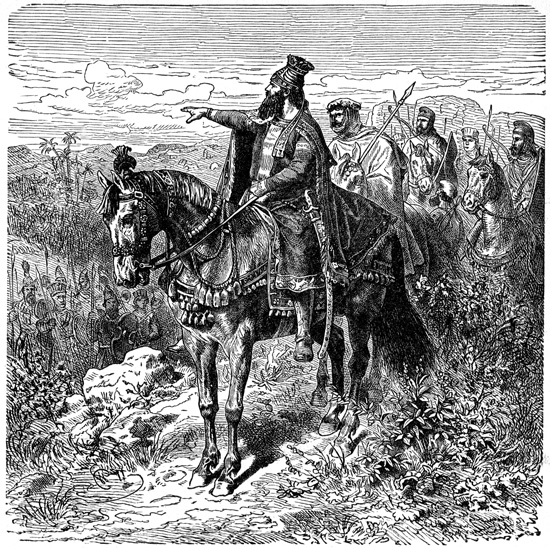
Cyrus and Croesus strode purposefully across the palace courtyard towards their horses, which had already been saddled and were waiting for them together with Harpagus and an honour-guard of fifty of his very best cavalrymen. Cyrus gave his final instructions for the care of Lydia and its capital to the young general to whom it had been entrusted, who kept pace with them as they walked:

“Tabalus, I’ve sent the army back to Agbatana; I’m leaving you here in charge of Sardis. Croesus will come with me to Agbatana. Ionia and Aeolia can wait a while; I have bigger fish to fry… I must take Babylon; if I don’t the Assyrians may strike at our rear. After Babylon I’ll take Bactria and the Sacae and then… Egypt! I’ve instructed Pactyas to collect Croesus’ treasure and follow me to Media. I know… I know… He’s a Lydian, but from all accounts he’s an honest man and I want to show the Lydians that I mean to treat them fairly; they are an honourable people. Be firm with them, Tabalus… as firm as you need to be… but be fair!”

“Yes Lord! I will.” Tabalus said. Then, as his king reached his horse, he added, “but I still think it’s dangerous to trust a Lydian with so much…”

The youthful Prince of the Busae was voicing exactly the concern Cyrus had been expecting from him. Indulgently the monarch smiled; then he gripped Tabalus’ shoulder with his right hand and, shaking it gently, said, “Tabalus, you worry like an old woman! Sometimes it is necessary to take a chance and trust people… If we can rely on Pactyas’ honesty we’ll gain a great deal; if not, we’ll find out who the traitors are…”

Tabalus was only slightly reassured, but although he still felt nervous at least he no longer felt that he needed to worry too much about these newly-conquered Lydians rebelling against their new overlord. In fact, he now felt that his king was virtually inviting a rebellion to start during his absence in much the same manner that one ignores a boil as it erupts and grows and only when the time is right and not before, one lances it. Cyrus’ wisdom was transcendent, Tabalus thought, astounded at his king’s sagacity, as he replied with a sharp salute, “Yes your majesty! Farewell your majesty! May the gods go with you!”

Cyrus nodded his thanks for the officer’s blessing as he and Croesus mounted their steeds and, joining Harpagus at the head of the cavalry column, cantered smartly out of the city gates.

***   *****   ***

Only a few days later Tabalus found himself experiencing something like ‘deja-vu’ as he escorted the Lydian, Pactyas, across the same courtyard towards a baggage train which was waiting along with its guard for its leader.

Although the surviving Lydians had been allowed to keep their own property, all of the wealth they had possessed in the form of precious metals such as copper, bronze, brass and iron had been collected together as a tribute to their conqueror and was now about to be taken away by Pactyas to Agbatana, which Cyrus had been using as his own capital ever since he had defeated Astyages.

“I’ve provided you with an escort of twenty armed guards;” Tabalus was saying to the Lydian, “they’ll see you safely to Agbatana.”

Privately he wished that he could spare more than a mere twenty guards for this particular detail; there were several hundred talents of precious metals in the five huge wagons, each drawn by a team of a dozen oxen, which comprised the baggage-train. But Cyrus had sent most of the army back ahead of him to Agbatana, and twenty men were all that Tabalus could spare.

He consoled himself with the thought that no-one in his right mind would dare to hijack this caravan; one does not rob the Son of Heaven with impunity. And at least he’d made sure the guards were all either Medes or Persians; and that their loyalty to their king was beyond question.

“Thank you Tabalus!” Pactyas replied smoothly. But as he added, “Very thoughtful of you; fare you well until I return…” Tabalus could not help but feel that the Lydian was being disingenuous. Had Pactyas emphasized the word ‘return’, just a little? And if so, was he attempting to lull Tabalus into a false sense of security with this subtle emphasis, that he would, after all, return? Was that mockery he could see in the Lydian’s eyes he wondered; or was it merely his own imagination?

With mounting trepidation Tabalus watched as the far too cheerful Pactyas nonchalantly mounted the lead wagon and led it out through the city gates. As the baggage-train pulled away from the city, with its load of miscellaneous metal items rattling and creaking; and the oxen bellowing their protests at the enormous load they had to shift, Tabalus could not help but wonder how he could manage to be quite so cheerful with such a burdensome responsibility.

***   *****   ***

The baggage train had only travelled a few dozen stades when, due to the mountainous nature of the whole region, they were obliged to travel through a narrow defile between the two sides of a very steep and darkly-wooded valley. The guards, however, were alert to the presence of danger as they marched along. Two guards, well-armed with bows, swords and spears, were seated on a high bench at the front of each wagon; one driving, holding the leather traces which were used to steer the beasts that pulled the massive load, and a long bullwhip to encourage them to greater efforts as and when required. Another guard marched along on either side of the rear axles of each wagon; their eyes constantly scanning the dense forest which covered the high ridges above them on either side for the slightest sign of an enemy.

They saw nothing; for the ambushers had planned well; they did not attack immediately they saw the wagon-train but remained well hidden until they’d allowed the whole wagon train pass by below them, while they patiently waited for exactly the right moment. Only when the last wagon’s rear wheels finally passed their secret marker; a large stone which they had carefully placed beside the road prior to the baggage-train’s arrival; did they finally attack.

But as soon as the last wagon’s rear wheels passed this marker, with exquisite marksmanship, the ambushers first shot the guards and drivers of the rear wagon and then proceeded up the whole column wagon by wagon, as, silently, the dead and dying guards fell unnoticed into the dust. The noise of the oxen bellowing and tramping along, the creaking of the great axles turning and the huge, heavily-laden wagons constantly groaning with even the slightest bump or deviation in the deeply-rutted track, as their contents, much of which was comprised of gardening tools and kitchenware, constantly rattled with every jolt and creak, effectively hiding whatever small, surprised gasps or moans may have escaped their lips as the guards fell dying or dead in the dust.

The noises of the wagons and beasts also covered the small noises made by the archers as, advancing in a broad row behind their quarry, they ran up behind the column and, at their captain’s signal, with great discipline, let fly not singly, or as individuals, but in volleys of arrows; each man having his own predetermined target. At each of the five wagons there were only four targets; and there were fifty raiders; although only twenty ran behind the wagons while the others still hid along the ridges on either side right above them, just in case anything went wrong.

Nothing did; for the team had rehearsed their ambush several times until everyone knew exactly what to do and exactly what was expected of them. Wagon by wagon, their crews were all slaughtered in turn. At each wagon the crew all died in the same instant, each fatally pierced by five bronze-tipped Lydian arrows. Before any of the guards had time to warn the others, they were all dead and lying in the dust, bristling like pin-cushions with the Lydian arrows with which they had been silently slain.

During the whole attack, which in all had taken less than two minutes, Pactyas had remained perfectly calm in his position in the leading wagon; simply maintaining the wagon-train’s slow but steady pace. But, when he saw that the last of the Persian guards; those in his own wagon; had all fallen and realized that the arrows had finally stopped flying, he halted his wagon; and the oxen in all of the other wagons instinctively followed suit. Pactyas then cheerfully descended from the lead wagon to greet the ambushing archers as they now greeted him with their cries of victory and jubilation. He had personally hand-picked these men for their speed and accuracy with the bow as well as their discipline and stealth, as the thirty men still on the ridges now came openly running down the sides of the gorge to meet their leader.

“Well done men!” He exclaimed, congratulating them all enthusiastically. “Now fall in beside the baggage-train; the fishing village of Priene is not far from here; the people there have no love for Cyrus! With their ships and the wealth we have captured they’ll help us to hire mercenaries; many Prienians will also join our cause; and Phocaea will help us too, I’m sure! Cyrus will not hold Sardis for long!”

***   *****   ***

A Baha’i New Year

22 Monday Mar 2010

Posted by Therese Trouserzoff in Astyages

≈ 19 Comments

by
Theseustoo

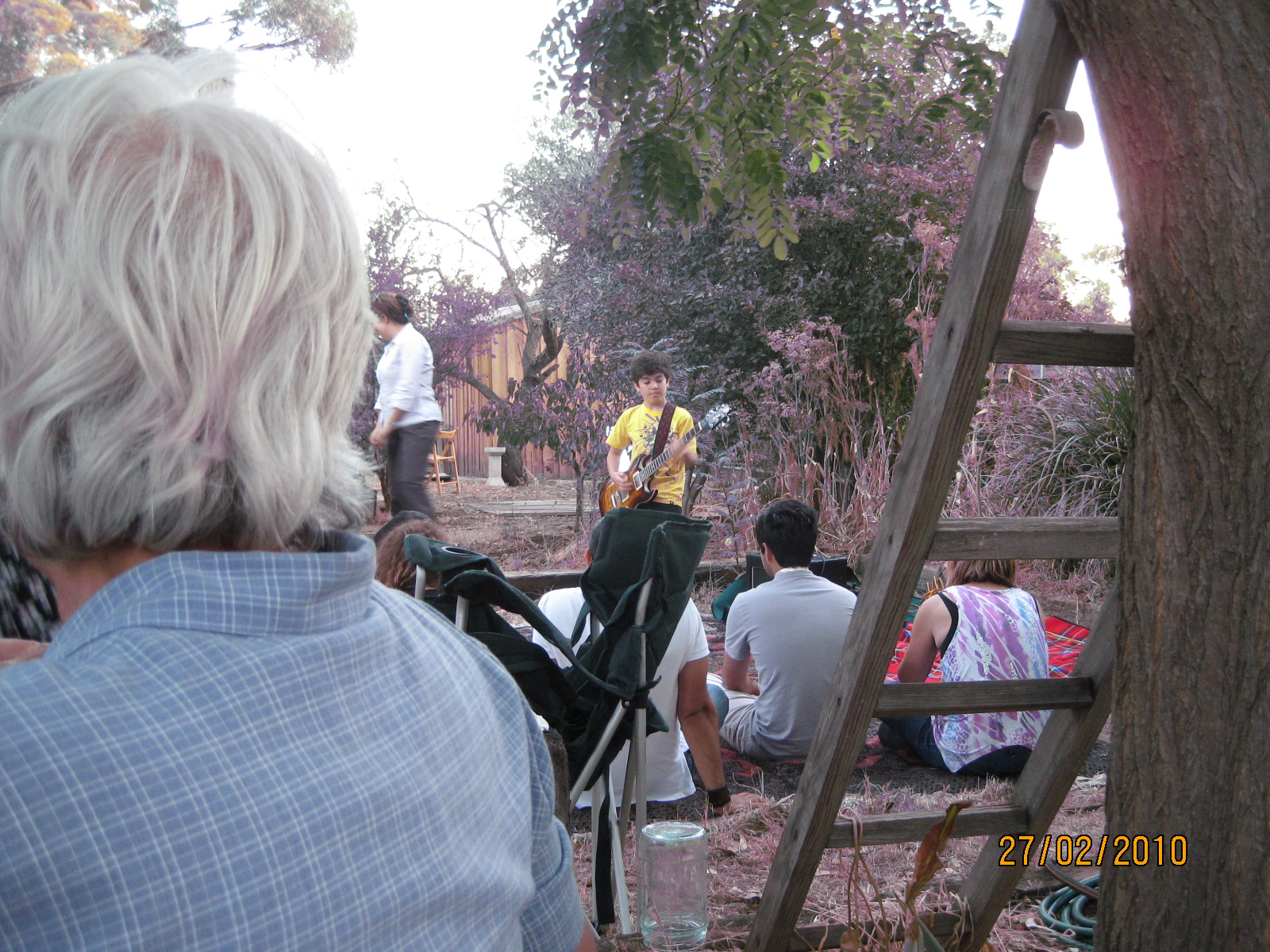
My young musician friend rocks the party… I also played a few songs to amuse the assembled throng.

It was a hot Sat’dee arvo, but the kids had a ball playing in the pool!

A happy Baha’i New Year to all piglets!

A couple of weeks ago I was privileged to attend a party in celebration of the Baha’i ‘intercalary days’. These are the ‘leftover’ days at the end of the Baha’i calendar and are celebrated much the same as we celebrate the New Year, but with little, or no alcohol… The celebration was a real family event, and all the kids had a ball playing in the pool while the adults sat around eating all the wonderful food which was provided by the hosts and some of the guests; chatting and generally enjoying each others company and a pleasantly warm afternoon. These are genuinely very friendly people and I had some very pleasant conversations with people I’d never even met before.

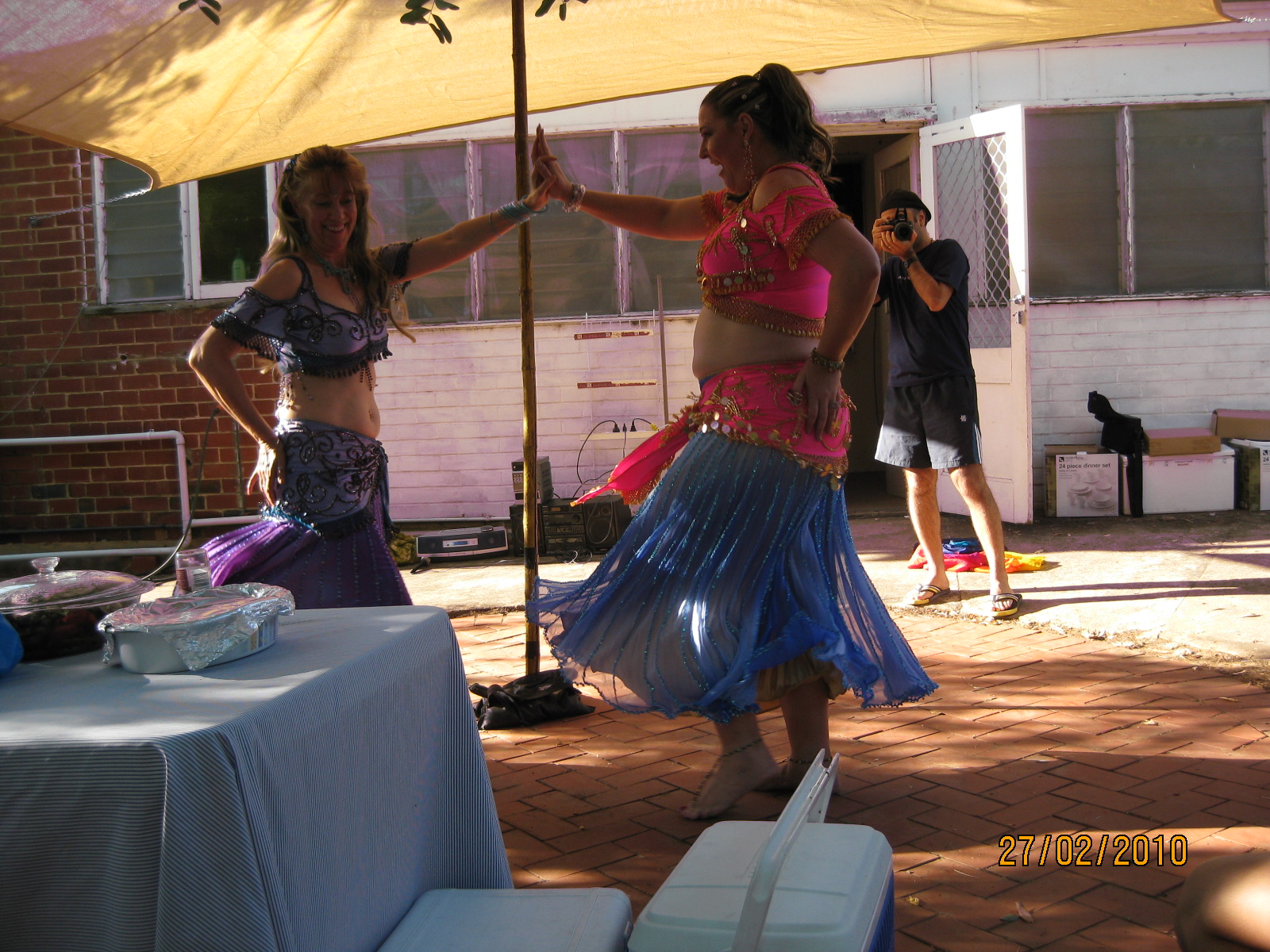
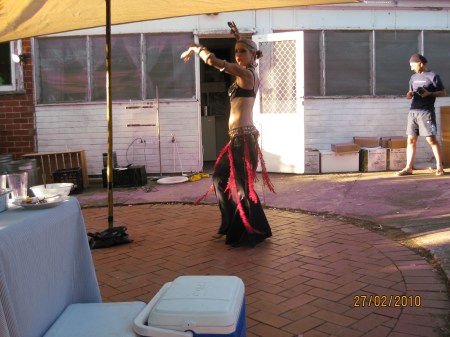
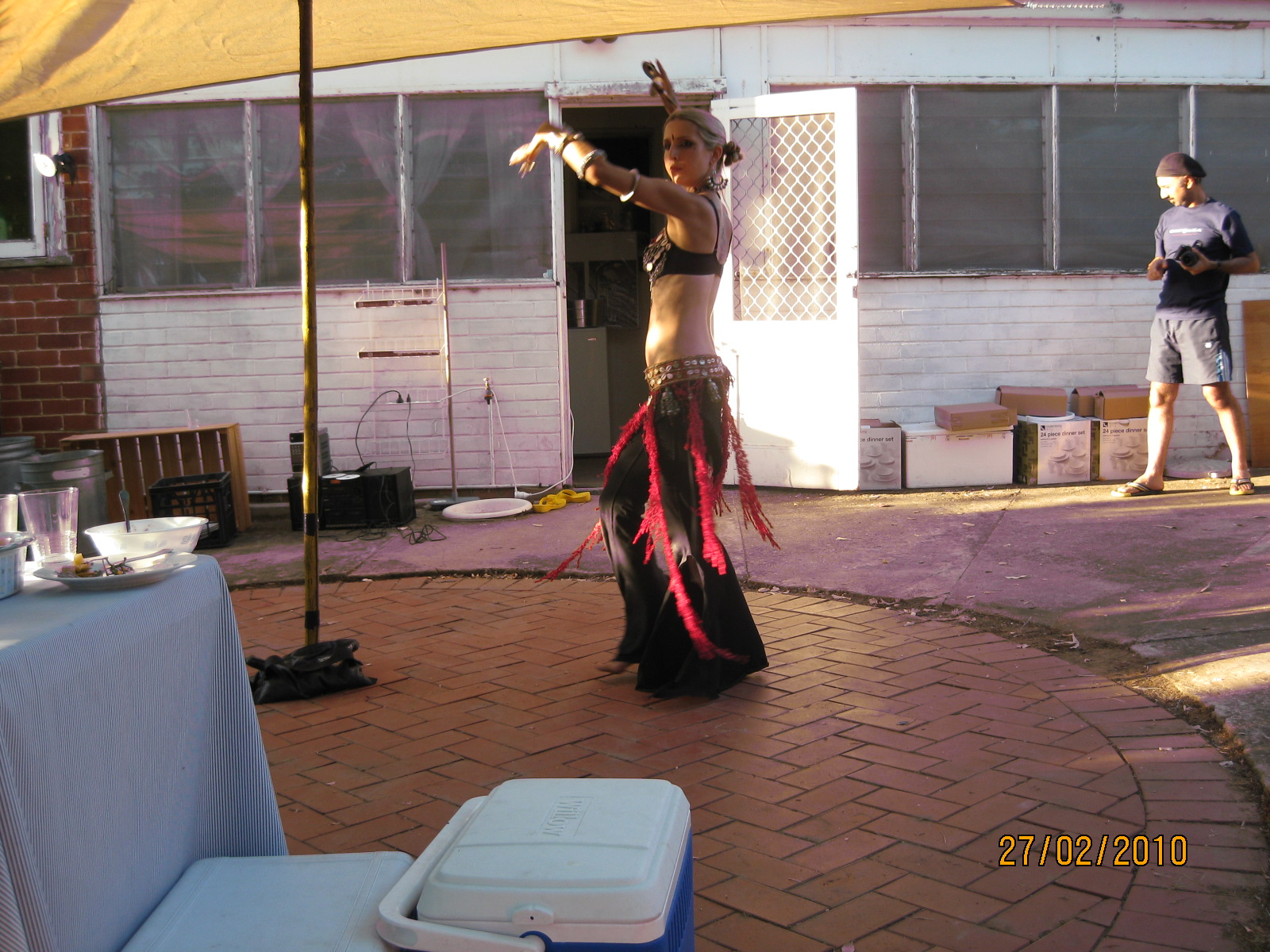
The party’s entertainment began with the dancers in the pictures, whose names I sadly omitted to ask (Jeez, I’d never make a journalist! I must try to do better next time!). This was  followed by my young musician friend, whose name I have difficulty remembering because I have difficulty pronouncing it! After this I played a few songs myself and finally, after dark, we ate corn on the cob, Persian style: roasted over a bonfire in the garden then dipped in saltwater, before gifts were given prior to everyone going home.

Now there was a significant difference in the gift giving… all gifts were provided by the host, Farhad, who made sure nobody went home without one! I scored a nice new soldering iron!

After the intercalary days, the first month of the Baha’i year is their month for fasting; this is essentially the Baha’i version of Ramadan, and a reminder of their Islamic origin. I can’t say too much about it except that eating and drinking are taboo during daylight hours for this month, although their are allowances made for age and infirmity, and pregnant women are also not obliged to fast.

All in all, a good time was had by all and I must say that Baha’i parties are undoubtedly the most peaceful ones I’ve ever attended!

These girls really know how to 'shake it'!

The party really got underway when the dancers turned up!

This dancer’s claim to fame is playing a fairy called ‘Columbine’ in the Aussie TV series, “The Fairies”.
Love the outfit too!
I could watch this girl dance for hours!

Cyrus: Chapter 16, Part 2

08 Monday Mar 2010

Posted by Therese Trouserzoff in Cyrus the Great: Chronicles

≈ 21 Comments

Cyrus addresses Lacrines

Cyrus

by

Theseustoo

Chapter 16, Part 2

Of all the Greek city-states, Boeotia alone thought to send ambassadors to the court of Cyrus to attempt to negotiate a peaceful treaty with him, which would allow trade to continue peacefully, as it always had between Boeotia and the newly-captured country of Lydia. Cyrus had accepted the embassy in friendship and in good faith. He personally thought it was a pity Aeolia and Ionia had not rebelled against Croesus as he had earlier demanded of them; for in truth he felt that trade with these nations was infinitely preferable to war with them.

Miletus had more than willingly accepted a treaty on the same terms exactly as those Cyrus had demanded of Aeolia and Ionia and now enjoyed increased trade and wealth as a result. He really had no intention of carrying out his threats; he had just wanted to make the Greeks sweat for a while before he finally granted them the alliances they sought, with perhaps a slightly increased rate of tribute; but Cyrus was always willing to negotiate.

And of course, now that Cyrus had conquered Sardis and her neighbouring Asian Greek cities, this gave him access to their trade routes, which would now allow Cyrus’ Medes and Persians to import an endless variety of Greek goods, such as wine, olive oil, and many other famous delicacies. It was with this in mind that Cyrus turned to the ambassador and asked, “I hear that Boeotia is famous for its eels… are they really as delicious as they say?”

The question was indeed innocent enough, for Cyrus did not realize that although it was indeed true that Boeotian eels were a very tasty delicacy, they were also used locally as a metaphor for a certain part of the male anatomy; and thus the eating of them was frequently used as a metaphor for certain sexual practices of which Cyrus was completely unaware.

The ambassador however, realizing that Cyrus was quite evidently ignorant of his accidental double-entendre, tactfully said nothing, contenting himself merely with exchanging a meaningful glance with his fellow Boeotians who both smiled stiffly as they tried hard to restrain their nervous amusement, while their ambassador replied, even more nervously,

“Hehehe… er… Yes your majesty; I can honestly say…“

Just at that moment, however, he was saved from further embarrassment by a sudden loud disturbance in the throne-room’s ante-chamber. The imposing figure of a tall and well-muscled Spartan suddenly burst into Cyrus’ throne-room, ignoring the still-protesting Lydian guards as they followed him in from the ante-chamber; still trying vainly to prevent the intruder from interrupting their king’s meeting. Cyrus noticed immediately that both guards, to their credit he thought, now sported serious black eyes; and through the open doors he also noticed their broken spears; this man was evidently not one to be trifled with.

The household guards, who stood on duty in this and all of his official chambers; posted at regular intervals around their walls; instantly moved forward and presented arms, thereby surrounding the intruder with a ring of spear-points; holding him at bay while they awaited further orders from their king. The intruder’s aging and well-worn scarlet cloak was thrown back over both his shoulders as he held up both of his hands to show that he was unarmed. Cyrus immediately recognized that although he carried no arms; he was obviously a very determined man with a very specific purpose. Since he had come unarmed he was obviously no assassin. The least he could do, Cyrus thought, was to listen to what this bold fellow had to say. With a gesture he ordered the guards to return to their posts as Lacrines started to speak:

“Cyrus, my name is Lacrines” the Spartan said grimly, “I am sent by the Lacedaemonians to give you this warning: Sparta prohibits you from turning your imperial ambitions on any Greek cities,” here he paused briefly for maximum effect before continuing emphatically “whether on the Peloponnese or here in Asia; Ionia and Aeolia must not be molested!”

Cyrus was astonished by the man’s rudeness. This man, he thought, must be afraid of nothing in the world if he could speak like that to him, the king of what had now become the greatest empire the world had ever known. Yet such a bold and deliberate display of bravado intrigued Cyrus; arousing his curiosity more than his anger. He turned to the Boeotian ambassador with whom he had just been speaking before Lacrines had so rudely interrupted them:

“Who are these Lacedaemonians?” he asked, “And what is their number that they dare to send me such a notice?”

The ambassador was immensely relieved that he was no longer required to give his personal opinion on the gourmet qualities of Boeotian eels, metaphorical or otherwise. Where he had been verging on hysteria just a moment before, now the ambassador’s face took on an almost unnatural gravity, as he soberly answered Cyrus’ query:

“Lord, the Lacedaemonians are the very toughest of all the Spartans; and the Spartans are by far the bravest and most valorous warriors in all Hellas. And though their numbers do not exceed ten thousand, it is said that the only walls their cities require are the spears of their young men!”

Cyrus raised his eyebrows in surprise. He had not been expecting their numbers to be quite so low; less than ten thousand men! And yet the ambassador had said their cities needed no walls, only the spears of their young men; these must be fierce warriors indeed. But Cyrus was determined not to allow himself to appear intimidated by anyone; not even this Lacedaemonian! He took a few steps forward, to stand directly in front of the intruding Spartan as, looking him levelly in the eye, the king said:

“I have never yet been afraid of any men who have a set place in the middle of their city where they come together to cheat each other and forswear themselves… If I live, the Spartans shall have troubles enough of their own to talk about, without concerning themselves with the Ionians.”

Though he was angered by the unfortunate reference to what he knew were common practices in virtually all Greek marketplaces, Lacrines restrained himself; refusing to allow his attention to be diverted from his mission by rising to the bait. Nevertheless he instantly recognized this manner of straight-talking from a fellow warrior who clearly would not be cowed; attempting to push him would do no good. Lacrines immediately realized that Cyrus was not going to be scared or intimidated into postponing whatever plans he had for the Asian Greek cities.

If Cyrus decided to postpone the attack, Lacrines realized it would not be out of fear of Sparta, but perhaps he might do so out of respect for her. Cyrus had not even indicated what his plans were; perhaps he didn’t even have any, Lacrines realized, feeling suddenly a little foolish; in which case, he decided, there was nothing at all to be gained by demanding what they were; and in any case, to do so now would seem weak. His ultimatum delivered; there was nothing more for him to do here. Of course, Lacrines thought to himself as he turned on his heels and left, Cyrus has to maintain a cool front; only time will tell whether or not my mission here has been successful.

***   *****   ***

Cyrus: Chapter 16 Part 1

24 Wednesday Feb 2010

Posted by Therese Trouserzoff in Cyrus the Great: Chronicles

≈ 18 Comments

CYRUS

by

Theseustoo

Chapter 16 Part 1A:

Cyrus had of course occupied Croesus’ palace in the captured city of Sardis, but as he did not wish to cause the holy man any further distress he allowed Croesus to keep his own personal apartments.

But it was from the throne room of Croesus’ palace that Cyrus administered his new province; and it was in this throne room where he received two heralds; one from Ionia and another from Aeolia. The people of these Greek provinces, which had previously been tributaries to Croesus, had heard of the fall of Sardis and had sent these two messengers to try to forestall any desire for vengeance which Cyrus’ may feel tempted to exact for their earlier blunt refusal to join him and rebel against Croesus. Coldly, Cyrus addressed them both,

“So, you have been sent from Aeolia and Ionia to request alliances with me now that I have conquered your master, Croesus. Yet you refused to revolt against him when I offered you the same kind of liberation the Milesians now enjoy. And now that Sardis is conquered and Croesus is my servant, you come to offer me the same terms of fealty you used to have under him. Here is my answer:

There was a certain piper, who was walking one day by the seaside, when he espied some fish; so he began to pipe to them, imagining they would come out to dance for him upon the land. But as he found at last that his hope was vain, he took a net, and enclosing a great draught of fishes, drew them ashore. Then the fish began to leap and dance; but the piper said, ‘Cease your dancing now, as you did not choose to come and dance when I piped to you.’ Now go!”

The terrified ambassadors exchanged fearful glances and, still bowing and scraping, they backed out of the throne room 

***   *****   ***


Chapter 16 Part 1B:

The marketplace of Laconia, the bustling capital city of the Spartan province of Lacedaemonia, though it was always busy, was not usually quite so hectic. Spartans despised the whole process of marketing; buying and selling, they felt was demeaning and quite beneath a Spartan warrior. War was men’s business; marketing was for women and slaves. Thus, as a matter of course, this task was usually delegated to Helots, the Spartan slave class which was composed of defeated and captured enemies; or, more accurately, those of their defeated and captured enemies whose relatives and friends could not raise sufficient capital to pay their ransom.

But today even the Helots were surprised by the large number of Spartan warriors who were present. They had come because they’d heard ambassadors had been sent from the Greek countries of Aeolia and Ionia in Asia, and that they were intending to address the populace on an important matter regarding the fall of Sardis. They already knew, of course, of the fall of Sardis; and Spartan spies had reported Cyrus’ interview with the Ionian and Aeolian heralds who had been sent to Persia as suppliants.

It was unusual, thought Pythermus, for a suppliant to make his address in such a mundane situation as a marketplace, but unlike other Greek gods, the Spartan god of war, Ares, would accept no suppliants. In order to solicit the help of Sparta’s superb mercenaries it was necessary to directly address the men who would be required to fight and die in one’s cause. Strange though it may seem, although the Spartans earned their gold by fighting other countries’ wars for them, Sparta was often much more reluctant to go to war than those who desired the benefit of their martial skills.

Perhaps this was partly because they knew that as a result of their fearsome reputation, in any conflict they would inevitably be placed where the fighting would be most fierce, and the most dangerous; and even though they sought ‘euthanatos’, a ‘beautiful death’, yet no man actually wants to die; not even a Spartan.

However, Croesus’ downfall had upset the centuries-long stability the Heraclides had brought to that region; although Croesus was not of that dynasty, but rather of the one which had replaced it, which had put a ‘true’ Lydian on the throne for the first time in centuries. But Croesus’ own dynasty, the Mermnadae, had maintained cordial relations with what were now traditional allies, the Greeks; for eventually the dynastic change wrought by Croesus’ fifth ancestor, Gyges, had been ratified by the Delphic oracle, in spite of its outrageous nature. Thus even Gyges’ murdering his king had not caused any serious or lasting rift between the people of Lydia and those of Greece, and this was most particularly true of their Asian Greek neighbours in Aeolia and Ionia.

As a result of the unusual presence of the greater part of Laconia’s warrior class, the marketplace in Laconia on this particular morning was uncommonly full, despite the bitter winter cold and the effeminate nature of the market-place.

Even Lacrines, who was currently considered by his peers to be one of the most famous of Lacedaemonian noblemen and a genuinely heroic warrior, had deigned to visit the market for this event. Something important, he knew, was happening here and his instincts told him that it would pay Sparta to understand the situation well before allowing Lacedaemonia to commit herself to any particular course of action; regardless of any sympathy they may have for the Asian Greeks’ predicament.

The Aeolians and Ionians had chosen a spokesman by the name of Pythermus. To help focus the crowd’s attention on himself he had donned a purple robe, the colour of which was so bright and beautiful that all who caught a glimpse of it felt an immediate desire to crowd closer to its wearer so they could feast their eyes on the gorgeous garment and hear what its wearer had to say. Quite evidently he was a man of substance; for very few could afford the luxury of the exorbitantly expensive dye which was made with great difficulty from the sea-snails which naked divers risked their very lives to obtain.

Once the crowd had gathered round him, Pythermus held up his arms for silence and began to speak, “Men of Lacedaemonia! Spartans all! Hear me!” he began, “I have come at the bidding of the Ionians and Aeolians to ask for your aid! As you know, Cyrus the Persian has taken Sardis and made the Lydians his subjects. Their king, Croesus, is now his slave. Cyrus has refused our offer of allegiance and is even now threatening the Greek cities in Ionia and Aeolia!”

Lacrines understood very well what this meant; if the Greek cities in Aeolia and Ionia fell to the rising power of Persia, would the Persians be satisfied? Or would they continue to push on through Thrace and Thessaly to invade the Peloponnese? He pushed his way roughly to the front of the huge mob. Taking his place beside Pythermus, he addressed the crowd,

“Fellow Spartans!” he cried, “Pythermus is right! If Ionia and Aeolia fall, Cyrus will grow greedy for the rest of Hellas! Therefore I ask you to help defend these Hellenic countries and in doing so, defend yourselves and all Hellas against the barbarian invaders!”

One of the men in the crowd shouted his response,

“With what men Lacrines…? Half of our forces have been enslaved by the Tegeans after the unexpected defeat we suffered at their hands! Of the other half many are nursing grievous wounds. Better we wait until Cyrus attacks us here and in the meantime build up our forces as best we can! Our men will fight harder to defend their own homes than those of Asian Greeks!”

At this the crowd erupted with shouts of ‘Aye!’ and ‘He’s right!’ It was true; Lacrines knew only too well that Lacedaemonian forces had been considerably reduced by their recent and bloody conflict with Argos over the disputed territory of Tegea. After the disastrous pitched battle in which three hundred Lacedaemonians were killed, they had fought another, major battle and were astonished when they were soundly beaten.

Not only was such a complete defeat of a Spartan army virtually unheard of, but also it was not what they felt they had been led to expect. The oracle of Delphi had promised Sparta that the god would, “…give the Lacedaemonians to dance with heavy footfall in Tegea.”

The Spartans had interpreted this as meaning that they would be granted a great victory; but instead they had been defeated and to add humiliation to defeat, far too many had been enslaved by the Argives. The ‘heavy footfall’ mentioned by the oracle had evidently referred to the clumsy shuffling of their now-enslaved feet, weighed down as they were with heavy fetters and chains of iron as they now toiled in the Tegean fields for their new masters, the Argives.

“Fellow Spartans,” Lacrines said after Pythermus had finished, “you have all heard what Pythermus has said… And we already knew the fate of Sardis, for it fell even as we were preparing to send troops to help our good friend and benefactor, Croesus.” At this mention of Croesus’ name there were nods and murmurs of assent from the crowd, none of whom had forgotten his generosity to them in the past. Lacrines continued,

“There can be no doubt as to Cyrus’ ambitions!” he continued, “Sooner or later we must face him… But since we have heard the voice of dissent, let us put the issue to the vote… Those who say ‘aye’, raise your right hands!” Lacrines raised his own right hand as he said this, but very few among the crowd raised theirs in response.

Disappointed, he turned sadly to Pythermus and his fellow ambassadors as the crowd gradually began to disperse. With the vote cast and the decision made as to their chosen course of action there was no longer any need for them in this Helot-infested marketplace.

Lacrines heaved a heavy sigh, “I’m sorry my friends,” he said sympathetically, “…it looks like the ‘nays’ have it… But I will do what I can… I shall bring a penteconter to the coast of Asia to keep an eye on Cyrus and the Greek cities there; and if the Spartans have any reputation at all for valour perhaps we may at least persuade Cyrus to postpone his plans for Ionia and Aeolia… In the meantime you must do all you can to fortify your cities.”

***   *****   ***

Hell Hospital: Episode 7 – Christmas (Part 2)

12 Friday Feb 2010

Posted by Therese Trouserzoff in Hell Hospital

≈ 32 Comments

By theseustoo

There are moments of spiritual certainty bordering on epiphany, in which, acting on compassion and from the most noble movements of the heart, one senses that whatever one can do to help a particular individual, group or cause, that it is most certainly the right thing to do, regardless of the outcome, or the cost. Paula’s generous impetuosity with the air-conditioner, aided and abetted by George, the Greek janitor, was just such a moment. As little Emily gleefully enjoyed the sight of a pretty snowstorm in her ward, Paula knew without a shadow of a doubt she had done the right thing… whatever happened next, it was worth it to see the smile on Emily’s face!

But once the ‘fault’ with the air-conditioners had been found and fixed there was still all that snow to deal with. All the children in the ward had to be kept warm with heated blankets as temperatures gradually returned to normal and the snow was cleared away by a team of cleaners, who eventually agreed to do the extra work for a 50% increase to their usual Christmas penalty rates. However, by the time the negotiations had finished, in spite of their best efforts, the snow could not be cleared away before much, if not most of it had melted; and the resulting water, as is its wont, flowed downhill…

The Children’s Ward was on the first floor, just above the reception area. The receptionist, a remarkably diminutive yet cheerful girl with the unlikely name of Candy, first noticed it when a drop or two of water landed on a sheet of paper she was printing out, smudging the ink; wiping it only made the smudge worse; she would have to reprint it, she thought.

Then it occurred to her to look up to where the water was coming from; the ceiling was all wet and water was dripping from it quite rapidly now… Suddenly the plasterboard of the ceiling, simultaneously soaked, weighted down and structurally weakened by the water from Paula’s snowstorm, gave way and allowed a deluge of water to drench Candy, the printer, photocopier, filing cabinet and the reception’s computer station, which now seriously malfunctioned, emitting dangerous electric sparks, as the water continued on its way to the basement, where it finally ended up as a pool of water a few inches deep in the morgue after compromising the morgue’s lighting and refrigeration…

***** ******* *****

When Loreen had seen Paula and George walking off arm in arm, she thought at first that perhaps Paula now fancied the janitor and had given up on Swannee. For a brief moment she was jealous of what she imagined was Paula’s new conquest, but then realized that this was something different… she’d overheard them talking about George’s grand-daughter and dolls or something; Paula was obviously trying to scam the janitor for his help in some scheme or other. She wondered briefly what it was all about, but then realized that without Paula’s presence there was no competition; she had done her homework and knew that Swannee would be coming off duty for his lunch break in less than ten minutes’ time; the field was clear… and since the packet of Viagra which she’d ordered from the internet had arrived in that morning’s post, she was ready for him! The Viagra would overcome this or any man’s indifference, she thought lecherously as she plotted her seduction.

***** ******* *****

Catherine Swan would have made an excellent girl-scout; she was always prepared. After giving birth to ten children, she knew the whole routing inside and out and had had her ‘hospital bag’ prepared since the eighth month of her pregnancy. No longer fooled by any false contraction, she instantly recognized the real thing when it happened. She instantly instructed the eldest boy to phone the hospital for an ambulance and the eldest girl to fetch lots of towels from the bathroom as her waters broke even as she was giving her eldest son his instructions. Of course, the baby would have to come now, wouldn’t it? Now, while Swannee, her husband was at work, doing all the overtime he could to feed the cricket team… Such a good man, she thought as the second-eldest boy dragged her bulging suitcase out to the front door and the doorbell rang just as the lad arrived, in time to open the door for the ambulance man, who turned out to be an old friend of sorts; one of St Helvi’s longest-serving ambos, he had been privileged to drive Catherine to the hospital for the delivery of at least half of the cricket team, including her first.

“G’day, Mrs Swan! Nice to see you again… How many will this be?”

“G’day Harry… nice to see you again too… how’s the wife? This’ll be the eleventh!”

“Good Lord!” Harry exclaimed, “They know what causes that now, you know!”

“Oh! You are awful!” Catherine joked as she clambered into the ambulance and son number two pushed her suitcase in after her.

“John,” she said to the eldest boy, “you look after the kids while I’m away won’t you? You know what to do? Daddy should be off-shift in about four hours’ time… There’s plenty of food in the fridge…”

John merely nodded; he’d been through this all before… more than once!

As the ambulance started to drive away, Catherine suddenly turned to Harry, who rode with her in the back of the ambulance, and said, “I wonder if I might have a chance to see Swannee on the way to the delivery room…” as the staff canteen where he worked was right next door to the maternity ward; “I need to remind him to get plenty of disposable nappies on his way home.”

“No worries missus! Long as you think you’ve got enough time before the bub arrives, we can make a quick stop at the caff…”

***** ******* *****

Cyrus: Chapter 15, part 6

10 Wednesday Feb 2010

Posted by Therese Trouserzoff in Cyrus the Great: Chronicles

≈ 23 Comments

Theatre at Delphi

Cyrus

by

Theseustoo

Usually only a single herald was sent with enquiries for the oracle at Delphi. However, in this particular instance Croesus wisely sent two; each to guard the other, in case either the Pythoness or perhaps even the god himself should decide to avenge themselves for what Croesus realized might very well be taken as an impertinent question. Neither gods nor their priestesses, Croesus knew, took kindly to impertinence. Croesus was not afraid for himself, however, indeed he was perfectly willing to suffer whatever punishment the gods may decide to inflict on him, but he felt it would be unjust if their anger were to be vented on these innocent messengers.

Another unusual aspect to this particular expedition was the absence of any of the usual gifts of gold, silver or purple which traditionally accompanied such an enquiry. Although Croesus had reminded his heralds that Lydia had just been granted permanent exemption from all fees by the Pythoness herself, they nevertheless still felt nervous; especially when they considered the nature of the question they were now obliged to put to the most powerful oracle in the world. Thus it was two extremely nervous Lydian heralds who arrived all too soon at the sacred shrine of the oracle.

The Pythoness had been gracious enough to grant them an audience immediately. Her imposing presence terrified the two trembling heralds as, with her white arms wreathed in living snakes and her eyes flashing with the internal fires of infinite knowledge and infinite wisdom, the demi-goddess descended the thirteen marble steps which rose to the dais from which she habitually consulted the gods of the abyss which yawned beneath her; and from which they spoke to humanity, directly through her.

The vocal utterings with which, in an entranced state, the Pythoness transmitted the will of the gods of the abyss were totally incomprehensible to mere mortals, however. First, they were translated and the words recorded by a priestess and then filed in the Tablet House, after a copy of the original had been made to give to inquirers. It took many years of education to learn how to interpret this godly language; many more years of arduous studying and meditation before any candidate could even hope to be considered as eligible for one of the few exalted positions of Student of the Oracle; and many, many more years of study, meditation and also waiting patiently until the incumbent Pythoness dies before one of these rarest of mortal individuals was chosen as her replacement. Thus, regardless of who the incumbent was, the Pythoness was always a most formidable and highly imposing person.

The Pythoness was not presently entranced however and, with an effortless grace she descended from her sacred raised dais towards the two trembling messengers, to whom her manner seemed haughty and severe; as indeed, they would have expected from a goddess.

The unusually intelligent consciousness in her eyes; the way they seemed to look not at, but through people, as if she saw not only their outer personal appearance, but also inside them to the very depths of their souls, added to the mystique which adorned the Pythoness like glamour itself; a magical aura which emanated from her very person. The Pythoness knew the effect her highly cultivated and refined manners and appearance had on people; indeed she always carefully stage-managed her interviews to achieve exactly that effect; although she was sometimes a little surprised at the extent to which some of her visitors were affected by it.

Nevertheless, this glamour was a very useful tool, and the Pythoness, after a lifetime of training, used it with great skill. In the current circumstances, this too, only added to the fear the Pythoness’ imposing presence was generating in the hearts of Croesus’ quaking messengers as she waited in silence in front of, and a few steps above them, for their question. Nervously, the bolder of the two heralds looked up into those intense emerald-green eyes and, with as much courage as he could summon up, said in a quavering voice,

“Our master, Croesus of Lydia, wishes to enquire if you are not ashamed of having encouraged him to begin a war with Persia of which these were the first-fruits?”

As he spoke he took the shackles with which Croesus had been bound from a large leather wallet he carried slung over his shoulder, and tossed them at the Pythoness’ feet. Then, with a kind courage of which only the powerless are capable, he continued bravely, “…and if it is the Greek gods’ habit to be ungrateful?”

The dark look the Pythoness now gave him withered the fearful messenger who now cringed and cowered before her, afraid for his very life. But the words which came from her mouth next astonished him; as did the tone in which they were uttered, for it was not harsh or angry and recriminating, but kind and gentle and not at all what he had expected:

“It is not possible” the Pythoness began softly, “even for a god to escape the decree of destiny…”

Where the messengers had been expecting anger at the impertinence of their question, there was only understanding; and a gentle explanation as, seeing the puzzled expressions which now replaced the immediately relieved expressions which had briefly appeared on their altogether astonished faces, the Pythoness continued her explanation:

“Croesus has been punished” she said, “for the sin of his fifth ancestor, Gyges, who, when he was one of the body-guard of the Heraclides, joined in a woman’s fraud and, slaying his master Candaules, wrongfully seized the throne.”

The heralds were familiar with the story; indeed it was the foundation story of their own, until very recently, independent nation of Lydia; Gyges, their first truly Lydian king, had been persuaded by Candaules’ wife to kill her husband, the last king of the Greek Heraclides dynasty. This was her revenge on her husband, Candaules, who had outraged his wife and queen when he had secretly displayed her naked body to Gyges as a result of Candaules’ own excessive admiration for her beauty. That explains, the heralds now thought to themselves, why such an indisputably holy man as their master, Croesus, had suffered such a reversal of fortune; as the now unusually un-entranced and remarkably garrulous Pythoness continued,

“Apollo was anxious that Sardis should not fall in the lifetime of Croesus, but be delayed to his son’s time; he could not, however, persuade the Fates. All they were willing to allow he took and gave to Croesus. Let Croesus know that Apollo delayed the taking of Sardis for three full years, and that he is thus a prisoner three years later than was his destiny. Moreover it was Apollo who saved him from the fire. Nor has Croesus any right to complain about the oracular answers he received. For when the god told him that if he attacked the Persians he would destroy a mighty empire, he ought, if he had been wise, to have sent again and inquired which empire was meant, that of Cyrus or his own.” At this point the Pythoness’ voice darkened several shades, “But if he neither understood what was said, nor took the trouble to seek further enlightenment, he has only himself to blame for the result.”

The messengers, now immensely relieved that their lives were no longer in any apparent danger, quietly nodded their understanding of the Pythoness’ explanation. The one who had spoken earlier was about to enquire about the meaning of the mule in her prophecy but she apparently divined what he was about to say, for she interrupted him, silencing him with a single raised finger as soon as he opened his mouth, and gave him the answer to his question before it was even asked:

“Besides,” she said as the herald gaped like an astonished goldfish, “he misunderstood the last answer which was given him about the mule. Cyrus was that mule! For the parents of Cyrus were of different races; and of different conditions.  His mother was a Median princess; the daughter of King Astyages; and his father a Persian and a mere subject, who, though so far beneath her in all respects, had married his royal mistress.”

When the messengers returned to Sardis to report the Pythoness’ answer to Croesus, their one-time king accepted it with a quiet and resigned patience which several centuries later, the Greeks would come to call ‘stoicism’. Addressing Apollo, the god of prophecy, who had saved him from the fire, Croesus poured a libation in his honour; as the one-time king now sighed a brief prayer of repentance,

“Alas! Now I can see clearly all that I could not see before; the fault is my own and not the god’s…”

***   *****   ***

Cyrus had, of course, occupied Croesus’ palace in the newly-captured city of Sardis, but as he truly did not wish to cause this holy man any further distress he allowed Croesus to keep his own personal apartments.

But it was from the throne room of Croesus’ palace that Cyrus administered his new province; and it was in this throne room where he now received two Greek heralds; one from Ionia and another from Aeolia.

The people of these Asian-Greek provinces, both of which had previously been tributaries to Croesus, had just heard of the fall of Sardis and had sent these messengers to try and forestall any desire for vengeance which Cyrus’ may feel tempted to exercise for their earlier blunt refusal to join him in his rebellion against Croesus. They had started by offering him an alliance on the same terms as they had held under Croesus…

Coldly, Cyrus addressed them both,

“So, you have been sent from Aeolia and Ionia to request alliances with me now that I have conquered your master, Croesus. Yet you refused to revolt against him even when I offered you the same kind of liberation the Milesians now enjoy. And now that Sardis is conquered and Croesus is my servant, you come to offer me the same terms of fealty you used to have under him. Here is my answer:

There was a certain piper, who was walking one day by the seaside when he espied some fish; so he began to pipe to them, imagining that they would come out to dance for him upon the land. But as he found at last that his hope was in vain, he took a net, and enclosing a great draught of fishes, drew them ashore. Then the fish began to leap and dance; but the piper said, ‘Cease your dancing now, as you did not choose to come and dance when I piped to you.’ Now go!”

The terrified ambassadors exchanged fearful glances and then, bowing and scraping obsequiously and repeatedly they hurriedly backed out of the throne room.

***   *****   ***

Cyrus, Chapter 15 part 5

17 Sunday Jan 2010

Posted by Therese Trouserzoff in Cyrus the Great: Chronicles

≈ 21 Comments

Croesus on the Bonfire

by Theseustoo

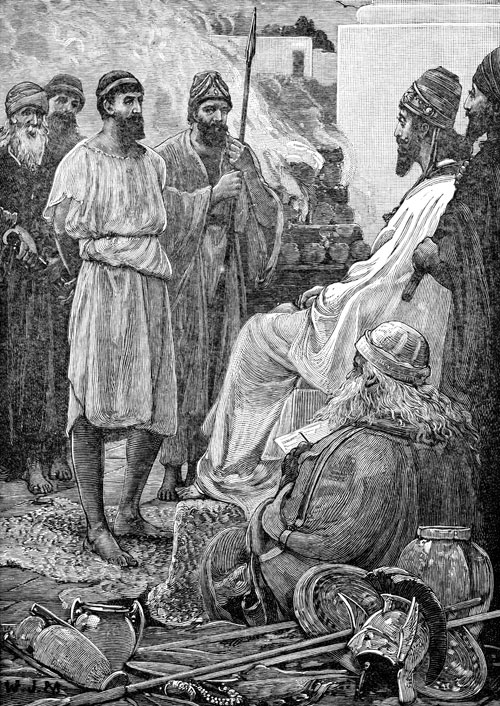
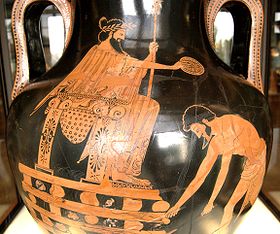
Cyrus ordered a huge bonfire to be built, on top of which fourteen Lydian captives were bound and laid; one for each day of the siege. Croesus too, was led to the pyre in chains and laid on it. The half-dozen guards who had been posted at regular intervals around the huge bonfire then lit its base with the flaming torches they carried, as Cyrus watched the flames begin to bite into the lower levels of the bonfire; but instead of cries for mercy, there arose from Croesus what sounded almost like a prayer… Yet Cyrus could not quite recognize the name his erstwhile adversary now invoked.

“Ah, Solon, Solon, Solon!” Croesus lamented bitterly from the top of the huge pyre, “How right you were! No-one can be called happy while they yet live!”

Cyrus was intrigued; his curiosity suddenly quenched any desire he may have had for revenge on this king, who by reputation was a very holy man, and renowned for his justice and wisdom. Cyrus could not help himself; he had to know who it was that this holy man was now invoking in his extremity. Shouting up at the now silent Croesus, he asked,

“What’s that you say, Croesus? Who are you calling on?”

“One whom I would give much to see converse with every monarch!” Croesus responded, very sadly, “Many years ago, an Athenian called Solon came to see my court and all its splendour and made light of it; and now everything he said to me then has fallen out exactly as he foretold, although it was nothing that concerned me especially, but applies to all mankind alike; most of all to those who think themselves happy.”

“By the gods!” Cyrus exclaimed, when he heard this sad tale, “Nothing that men do is secure! Here is a man who has in his lifetime been as favoured of the gods as have I… and I’m burning him alive! Guards! Put that fire out and bring Croesus down to me…”

The guards instantly ran to obey their king but they had not been expecting this order and although there was a large stream close to the bonfire, by the time they had formed a bucket brigade the fire already had too strong a hold on the huge wooden pile. It soon became clear that their efforts to extinguish it were in vain.

“Your majesty,” said one of the guards to Cyrus, “it is impossible to quench the fire! It has too strong a hold already!”

As the flames began to climb rapidly towards the sacrificial offerings laid out on top of the pyre, Cyrus was suddenly appalled to think that he might be the cause of this man’s death. Yet there was nothing he could do to save him. Suddenly, Croesus’ voice again arose from the top of the bonfire, in another, most earnest and heartfelt prayer:

“Apollo!” he intoned loudly, addressing the sun’s disc as it sank slowly towards the western horizon, “If ever you have received from my hands any acceptable gift, I implore you to come to my aid, and save me from this terrible death.”

Before this the sky had been cloudless and of the clearest blue, yet now, very suddenly, darkening storm-clouds swiftly gathered directly over the bonfire and a huge rainstorm burst overhead. Such a torrential rain then poured down upon them that the bonfire was quickly extinguished. The shower however, lasted no longer than was necessary for the fire to be quenched and then stopped just as suddenly as it started; the clouds now completely dissipated.

Cyrus’ astonished guards helped Croesus down from the pyre and escorted him to sit next to Cyrus. Since it was clear to everyone that the gods themselves had quenched the bonfire, Cyrus also freed the other fourteen men whom he had been just about to sacrifice to them, since they evidently did not require the gift. But, Cyrus thought to himself, he had certainly tested Croesus’ reputation as a holy man; and he had indeed discovered it to be well deserved. Turning to Croesus as the guards seated the captive monarch next to him, Cyrus was impelled to ask him,

“Croesus, now I am certain that you are a good man, and favoured by the gods! But tell me, who was it that persuaded you to lead an army into my country, and so become my foe when you could have continued to rule your kingdom as my friend?”

“What I did, oh king,” Croesus replied sadly, “was to your advantage and to my own loss. If there be blame, it rests with the god of the Greeks, who encouraged me to begin the war.” Here he paused and uttered a heavy sigh; but Cyrus’ gentle gaze silently encouraged him to continue, “No-one is so foolish as to prefer war, in which, instead of sons burying their fathers, fathers bury their sons, to peace. But the gods willed it so…”

Cyrus appeared to be lost in thought for some time and Croesus took the opportunity to look around him and assess the situation. A few moments later he cleared his throat to politely interrupt Cyrus’ contemplation. Once he had Cyrus’ attention, he said, “May I now tell you, oh king, what I have in my mind, or is silence best?” he asked.

“Croesus,” Cyrus said, his now kindly intentions towards his captive reflected in the gentleness of his tone, “you may speak freely; you need fear no further evil at my hands.”

Indeed Cyrus now felt terribly sad that things had come to such a pass as this. Had things been different he was sure that he and Croesus would have been the best of friends. To his surprise, however, Croesus was pointing at Cyrus’ men, who were busily looting the captured city and carrying off all manner of valuables, as he asked, “Then tell me, my king, what it is that those men over there are doing so busily…”

Startled by the unexpected nature of this question, Cyrus regarded the looters closely for a moment or two and then, painfully aware that he was stating the obvious, said, “They are plundering your city and carrying off your riches…” he could not help but sound a little embarrassed.

“Not my city, nor my riches.” Croesus said softly, ignoring Cyrus embarrassment, “They are not mine any more. It is your wealth which they are pillaging.”

Cyrus was amazed, “I hadn’t thought of it like that!” he said, “What do you suggest I do about it?”

“Now that the gods have made me your slave, oh Cyrus, it seems to me that it is my part, if I see anything to your advantage, to show it to you.”

Cyrus nodded his encouragement to the captive king and Croesus quietly continued, “Your subjects, the Persians, are a poor people with a proud spirit… If you let them pillage and possess themselves of great wealth, I will tell you what you may expect at their hands. The man who gets the most will rebel against you.”

Cyrus was startled for he could plainly see the truth of what Croesus was saying, as, making soothing motions with his hands, Croesus continued:

“Now then, if my words please you, do this, oh king: Place some of your bodyguards at each of the city gates; and let them take the booty from the soldiers as they leave the town; tell them that they are doing so because the tithes to the gods are due. Thus you will escape the hatred they would feel if their plunder were taken away from them by force; and they, seeing that what is proposed is just, will do it willingly.”

Cyrus was as impressed by the genuine concern Croesus was showing for his welfare as he was by the subtle wisdom of Croesus’ plan. Wishing to reward such loyal behaviour, he said earnestly, “Croesus, I see now that you are resolved to show yourself a virtuous prince both in word and deed: therefore you may ask me for whatever you want as a gift at this moment.”

Croesus was silent for a few moments; the only thing he really wanted was his kingdom returned to him in the same condition it was in before he had ever heard of Cyrus. He doubted that Cyrus’ generosity would extend quite so far even if it were possible; and, he thought to himself, there’s no point in wishing for what you know you can’t have. After thinking for a few moments, he replied, holding up his chains before him:

“My lord, allow me to send these fetters to the god of the Greeks, whom I once honoured above all others, to ask him if it is his habit to deceive his benefactors. That will be the highest favour you can confer on me.”

“This I readily grant you,” Cyrus said magnanimously, then he added, without reservation, “and also whatever else you may ask for; at any time.”

***   *****   ***

Cyrus: Chapter 15, part 3

06 Wednesday Jan 2010

Posted by Therese Trouserzoff in Cyrus the Great: Chronicles

≈ 13 Comments

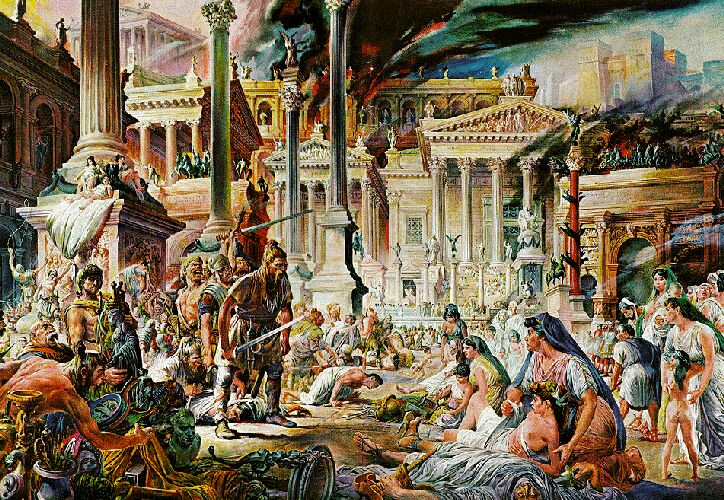
.... came up in a search for Artaphernes, but is labelled Alaric. Cool anyway, huh ?

By Theseustoo.

Two generals, Mazares and Artaphernes, the Prince of the Paretacenae, were becoming concerned with what was now beginning to look like very slow progress in their siege of Sardis. Recently their spies had reported that Croesus had sent for his allies; this merely confirmed what he had already calculated would be Croesus’ logical next move. Realising that their own provisions would not be enough to outlast a lengthy winter siege; and anticipating that Croesus’ allies would arrive in force with the spring, the staff officers had decided to meet with Cyrus to discuss what could be done to resolve the impasse.

“Your Majesty,” Harpagus asserted insistently, “we must do something soon; we cannot afford a lengthy siege… Croesus only has to wait until his allies arrive in the spring and we will be forced to retreat… we have already been sitting here outside these walls for thirteen days…”

Referring to a map on the table, Cyrus responded:

“I know Harpagus…” he said with a heavy sigh, “but these walls seem impregnable. The only place where there are no walls is to the rear of the city, here…” he pointed to the map, “where it faces Mount Tmolus; and there is such a sheer precipice there that Croesus doesn’t even need to guard it!”

Cyrus’ voice sounded the way he had begun to feel; bleak, verging on hopeless; he was unusually bereft of ideas and several long moments passed by in uncomfortable silence. Seeing the frustration on his officers’ faces at their own equal incapacity, he could only sympathize with them. Indeed their frustration was really just a reflection of his own. Suddenly, more for the sake of lifting his officers’ flagging morale than because of anything he truly felt, Cyrus smiled optimistically and said, “Have the heralds ride around the camp with the following proclamation: They are to prepare to assault the city once more! I will reward the first man who mounts these walls.”

It was a possibility, thought Harpagus, though a desperate one. But if nothing else it gave the officers a straw to grasp at; and who knows? Perhaps it may even work, he thought. Harpagus also realised that for the sake of the other officers’ confidence in their king, he must not look even the least bit doubtful at Cyrus’ chosen course of action, but must support it unhesitatingly and without question.

“At once, your majesty!” He said obediently, with a sharp salute to his king. Then he and the other officers marched off to obey the king’s orders; the tiny spark of optimism which Cyrus’ plan had kindled in them clinging fiercely to life with this tiniest breath of oxygen. Cyrus’ reputation for generosity was such that even these most hardened of warriors realized that a promised reward from Cyrus would set a man up in grand style for the rest of his life; a man might willingly risk his life for such a reward. This, thought Harpagus, beginning to feel a little more optimistic himself, might well be enough to make his men brave enough to surmount even these high and reputedly impregnable walls; in spite of the constant presence of Croesus’ very highly trained guards and lethally accurate archers, who constantly rained showers of arrows on anyone who came within bowshot.

***   *****   ***

The latest Persian assault was far more enthusiastic than any previous attempt, but again it failed. In spite of the cries of encouragement from their officers and even in spite of Cyrus’ promise of a lavish reward for the first man to mount the walls, the men were easily repulsed by the lethal missile fire of Croesus’ archers even before they could place their ladders against the walls; driven back by dense showers of arrows which fell on them like a monsoon rain.

Despite their shields and all their training, dozens of men were killed and dozens more were grievously wounded by the Lydians’ lethal arrows as they approached the walls once more. Then still more were killed and even more wounded when they were forced to turn their backs and run; a most ignominious retreat. It quickly became clear that such an approach was futile; the officers mercifully called the retreat very quickly, rather than risk losing too many more personnel in what was very obviously a futile assault.

***   *****   ***

Cyrus called his generals together once again to discuss their most recent failed assault on the walls and although the generals Artaphernes and Mazares both arrived promptly, Harpagus, must unusually, was inexplicably late. This was, Cyrus thought, most unlike Harpagus. However, he did not have much time to worry about it before he was obliged to concentrate on what was being said to him, as Mazares was speaking to him, “It’s impossible even to get near the walls, my lord! The archers on top of the walls rain down arrows on our heads the moment we try any approach…”

“Hmmmm…“ Cyrus mused as he consulted his maps once more. He knew all too well that he could not afford to let his generals’ morale flag as this could put the whole expedition at serious risk. Something, he knew, must be done to give them hope.

“Mazares,” he said, with determined optimism, “If the gods will it, we will find a way!”

Yet although he stared intensely at the maps on the table in front of him, he knew that it would make no difference whatsoever; he would find no weaknesses there which were not there on any of the thousand and one times he’d already searched these maps; with equally little success. Suddenly the door of the War Room was opened by the guards and Harpagus strode purposefully into the room; followed by a somewhat bewildered young spearman.

“Your majesty,” Harpagus began breathlessly, too excited to even excuse himself or apologize for his lateness, “This man, Hyroeades, claims he has spotted a weakness in the city’s defences!”

“Well then, Hyroeades,” Cyrus said, closely examining the bewildered soldier, “…if this weakness indeed leads to the capture of the city, the reward will be yours!”

Emboldened by this encouragement from his king, the young spearman spoke up eagerly, “Your majesty, the cliffs only look sheer! I saw a man drop his helmet and run down the cliff to get it! He had no trouble getting down the cliff… or up it either! And I remember the path he took!”

Cyrus was overjoyed, “The gods must be with us Harpagus!” he said, “This is just what we need. We shall climb the cliffs during the night; and attack at first light! But remember, Croesus must be taken alive, even if he offers resistance! I wish to test his reputation as a holy man!”

“Yes Lord!” Harpagus responded enthusiastically. As an afterthought he added, “When Croesus’ allies hear that we are safely within Sardis’ impregnable walls, they probably won’t even bother to come; it will be too late already; and our position here in Sardis far too strong!”

***   *****   ***

Under cover of darkness Cyrus sent a detachment, led by Harpagus and guided by Hyroeades, to circle around the city to the base of the cliffs below Sardis, opposite Mt Tmolus, where Hyroeades had spotted the secret path. With their feet muffled by rags they had climbed up the cliff in the pre-dawn gloom and gathered silently just below the summit, where they found no guards; and oh, so silently, they had entered the city. Communicating with hand-signals the detachment silently slipped through the shadows to suddenly emerge behind startled guards who hardly had time to wonder what was happening before their throats were slit and their bodies dragged into the deepest shadows.

Once the guards were taken care of, Hyroeades had the honour of opening the city gates, where he waved a burning branch which he had taken from one of the guards’ braziers, as a signal to Cyrus, who was waiting with another force to rush immediately through the gates, just as Croesus’ men began to emerge from their barracks, only to find their city had been captured while they slept. Some of these soldiers tried to resist but it was futile; the enemy was already within the walls and their sacred city was taken.

Croesus was absolutely devastated by the shock; he was found wandering the halls of his palace in a daze of despair. Recognizing his utter defeat, and realizing his own folly, he no longer cared to live and offered no resistance. Just as one of Cyrus’ men was about to separate his head from his neck, not yet realising who this dazed captive was, a gangly young lad of perhaps sixteen years, suddenly yelled at him, “Man, do not kill Croesus!”

At this Croesus suddenly looked up in pained surprise; his second son had spoken for the first time in his entire, hitherto mute existence. In this too, the oracle had been correct after all… If only he’d been clever enough, the former king thought to himself, to understand the clues he had been given.

He realized now that the Fates had evidently not wanted him to understand the prophecy; so, resigned to his fate, the now-deposed king refrained from punishing himself for his own ignorance and inability; in any case to do so would be futile and would serve no purpose whatsoever. For now, he knew he must learn to adapt to his new situation; and this must begin with an acceptance of his fate; to die, if Cyrus should demand his life as a punishment for his impetuous invasion of Pteria, or perhaps to live, should the Great King choose it, as Cyrus’ slave. Without offering any resistance he allowed himself and his son to be taken away and enchained, to be brought before their new king so that he could decide what should be done with them.

***   *****   ***

← Older posts
Newer posts →

Patrons Posts

  • The Question-Crafting Compass November 15, 2025
  • The Dreaming Machine November 10, 2025
  • Reflections on Intelligence — Human and Artificial October 26, 2025
  • Ikigai III May 17, 2025
  • Ikugai May 9, 2025
  • Coalition to Rebate All the Daylight Saved April 1, 2025
  • Out of the Mouths of Superheroes March 15, 2025
  • Post COVID Cooking February 7, 2025
  • What’s Goin’ On ? January 21, 2025

We've been hit...

  • 735,096 times

Blogroll

  • atomou the Greek philosopher and the ancient Greek stage
  • Crikey
  • Gerard & Helvi Oosterman
  • Hello World Walk along with Me
  • Hungs World
  • Lehan Winifred Ramsay
  • Neville Cole
  • Politics 101
  • Sandshoe
  • the political sword

We've been hit...

  • 735,096 times

Patrons Posts

  • The Question-Crafting Compass November 15, 2025
  • The Dreaming Machine November 10, 2025
  • Reflections on Intelligence — Human and Artificial October 26, 2025
  • Ikigai III May 17, 2025
  • Ikugai May 9, 2025
  • Coalition to Rebate All the Daylight Saved April 1, 2025
  • Out of the Mouths of Superheroes March 15, 2025
  • Post COVID Cooking February 7, 2025
  • What’s Goin’ On ? January 21, 2025

Enter your email address to subscribe to this blog and receive notifications of new posts by email.

Join 374 other subscribers

Rooms athe Pigs Arms

The Old Stuff

  • RSS - Posts
  • RSS - Comments

Enter your email address to subscribe to this blog and receive notifications of new posts by email.

Join 374 other subscribers

Archives

Website Powered by WordPress.com.

  • Subscribe Subscribed
    • Window Dresser's Arms, Pig & Whistle
    • Join 280 other subscribers
    • Already have a WordPress.com account? Log in now.
    • Window Dresser's Arms, Pig & Whistle
    • Subscribe Subscribed
    • Sign up
    • Log in
    • Report this content
    • View site in Reader
    • Manage subscriptions
    • Collapse this bar
 

Loading Comments...