• The Pig’s Arms
  • About
  • The Dump

Window Dresser's Arms, Pig & Whistle

~ The Home Pub of the Famous Pink Drinks and Trotter's Ale

Window Dresser's Arms, Pig & Whistle

Category Archives: Gregor Stronach

An A to Z of my Favourite Noises

25 Friday Jun 2010

Posted by Therese Trouserzoff in Gregor Stronach

≈ 8 Comments

Tags

Foam, Goblins, Noises, Vuvuzuela

.... don't even ask .....

by Gregor Stronach

I like noises. It’s one of the reasons I am petrified of going deaf. The other reason I’m scared of going deaf is because I am, actually, going deaf. But that’s a sob story for another day. Today, I choose to Celebrate my Hearingness, with the complete A to Z of my favourite noises.

A is for aliens. They love to make noises, usually while standing on the roof of my home. My partner seems to think for some crazy reason that it’s actually just the plumbing making the weird noises, but I know better.

B is for Burping. I love the sound of a good, solid belch, particularly if it is one of mine. A sonorous blast from the belly after a good meal or a long swig of cold beer on a hot day is a true sound of happiness.

C is for clapping, for the following reason: I have always been fascinated by the concept of clapping. Who was it that decided that the polite way of showing one’s appreciation for something is to bang one’s hands together?

D is for Dynamite – I love the sound of a rollicking good explosion, the bigger the better. When I was a little kid, someone set off a huge bomb in a commercial laundromat three blocks from my house. The blast shook me out of bed, and it was one of the most interesting nights of my childhood.

E is for electricity. I like the buzzing noise it makes just before it really hurts you. Having been electrocuted on a number of occasions, I can reliably inform you that while the noise gets more and more interesting the longer you’re connected to the power supply, the sensation becomes less pleasant at an exponentially greater rate.

F is for Foam, the kind used for shaving. It makes such an excellent sound on its way out of the can that I have been known to try to use an entire container of it for a single shave. I ended up building a tower of foam on my head to see what I would look like. Predictably enough, I looked like a soft-serve ice cream. It served me right.

G is for Goblins. They sound like little kids full of helium and sugar… oh wait, that’s what they are. Never mind.

H is for Helplines. I like to call them and ask for help. Like when I locked myself out of my apartment, and rang a laundry detergent helpline for assistance. The lady’s advice – to ‘rub a little on the lock and wait ten minutes before putting it in the wash’ was next to useless, but interesting nonetheless.

I is for Ice, tinkling against the edge of a large glass containing scotch and soda water, from which I sip on a sunny afternoon as I watch the world go by. When I grow up, I’m going to be an alcoholic.

J is for James Morrison. He’s a trumpet player. I find that playing his records at a staggering volume is useful for subduing and evicting unwanted house guests.

K is for Kiss. It’s a wonderful sound, except if it’s coming from an elderly relative. Or if it’s the kiss of death. Then it’s probably not so good.

L is for Language. The part of language that I love is the first time I hear something said in a language that I am learning, and I understand it without having to translate it into English in my head.

M is for Mastication. When I hear someone chewing food, it makes me so happy that I feel like putting their eyes out with a fork.

N is for Nnnngggg, which is the sound most people make when they hit themselves somewhere sensitive with something blunt. I heard a great one the other day when a workmate slammed himself in the balls with a golf club. It was Good Stuff.

O is for Oration. Hearing a good speaker make a wonderful speech is one of life’s highlights. Hearing the US President make a tit of himself every time he opens his mouth is another.

P is for Pablo, my cat – she makes the best noises ever. When she’s hunting, she goes ‘meh meh meh’ just before she pounces. It’s cool – much cooler than you.

Q is for Questions – I love them, love being asked them and love answering them with a question of my own. People get infuriated by this practice of mine, but to them I say, “do I look like I give a fuck?”

R is for Rain, on a tin roof. As a child, I played in a cubby house made of asbestos sheeting with a pressed tin roof, and when it rained outside the noise was deafening, but I stayed dry. It was such a momentous feeling of safety and warmth that the sound, to this day, brings me comfort.

S is for singing. I like most kinds of singing, but especially the genre perpetuated by tramps and hoboes when they’ve had a couple too many swigs of cough medicine and they think, for a brief moment before they pass out, that they’re in the top twelve on American Idol.

T is for Tantrum. If there’s anything funnier than a little kid losing the plot, I’m yet to hear it. My personal favourite is the supermarket tantrum, which generally involves junk food, one harassed mother with a teetering shopping cart and a child on the floor screaming blue murder. It’s one of nature’s classic sounds.

U is for ululation. Look it up – I had to.

V is for Vaseline – or, more accurately, the sound a satisfyingly large blob of Vaseline makes when it hits a hard surface from a reasonable height.

ed…. no, V is for Vuvuzuela…… enough said….

W is for Wind. Pundits claim to have heard it speak, sing and even – famously – cry “Mary.” For the most part, though, it has a tendency to howl, particularly around my motorcycle helmet during repeated attempts to approach the speed of sound.

X is for something other than a xylophone. Bugger. I nearly made it all the way to the end.

Y is for Yellow – contrary to popular belief, yellow is not just a colour, it is also a sound. Synesthetes claim to be able to hear colours, as did I after one memorable episode with a strange chemical compound on a lazy Sunday afternoon.

Z is for Zoo. I have a friend who lives near the zoo, and on quiet Spring nights, if you lean out the window, you can hear the lions fuck. They sound so happy…

I trust that this satisfies your urge (or lack thereof) to know what my favourite sounds are. Next week, I’ll write something a little more accessible. I promise.

This piece was first published at http://www.rumandmonkey.com
ps – Gregor ALWAYS promises a proper piece next week……. πŸ™‚

Seven Golden Rules for the Writing of Satire

08 Tuesday Jun 2010

Posted by Therese Trouserzoff in Gregor Stronach

≈ 27 Comments

Tags

humor, male nurse, rules, satire

..... oh, I thought you said satyr

By Gregor Stronach

My name is Gregor Stronach, and I am a satirist. It’s not a full time occupation – I doubt that anyone, aside from George Carlin and perhaps George Bush, is making a living out of full time satire in the world today.

But that doesn’t mean that you, gentle reader, should baulk at the idea of becoming a satirist yourself. I’ve decided to help you in this endeavour, should the mood ever take you and your desire to make fun of other people from behind a shield of smug conceit overwhelm what is otherwise a personality based on good taste and pleasant humour.

For the ease of remembrance, I will divide this lesson into seven easy sections – rules to live by, should you become a satirist, or just simply rules by which you can see the ‘magic’ of the satirist explained.

1. Making fun of individual people. This is perhaps the easiest of all satire, and is usually the least rewarding, unless done very, very well. There are two ways of approaching this, and the method through which it is achieved depends on the nature of the person you’re attacking – I mean, lampooning. Should the person upon whom you have decided to heap your scorn be quite clearly a total buffoon, ie Michael Jackson, George Bush (Sr or Jr, it matters not for the purposes of the exercise) or a woeful sportsperson such as Eddie ‘The Eagle’ Edwards, the methodology is simple. Merely quote them, or describe their exploits, and wonder to your readers in phrases such as “How on earth am I supposed to sleep at night?”, or “It’s little wonder children are afraid of birthday clowns.”

The harder targets are the smarter ones, people such as Colin Powell, Margaret Thatcher or The Pope. In cases like this, it’s often best to descend into puerile or infantile ramblings: “Colin Powell likes to eat his own snot!!!” or “The Pope tried to touch me. In a special place.”

2. Making fun of groups of people. This is slightly more difficult than making fun of a smart person, and there are several pitfalls to be avoided. First of all, before you rush out and begin making gags based on racial stereotypes, make sure you can claim some sort of connection to the group you’re talking about, however tangential that connection might be. The only people who can get up on stage, or put pen to paper and talk about how all Italians are like the Sopranos, or how all Asian folks know Kung Fu but can’t drive, are members of those communities. For a middle class white man, such as myself, to make those remarks, it’s racism. But if you’re a member of a minority, it ceases to be racism, and becomes ‘holding up a mirror to the world’, or ‘telling it like it is. In the ‘hood. Yo.’ Important stuff indeed.

3. Lampooning Politics. It’s easy to do so from a right wing position, and beyond difficult from anywhere left of moderate. PJ O’Rourke, lifelong Republican and one of the greatest living satirists has it easy. Making a gag that has a reader laughing guiltily, blushing furiously and thinking quietly to themselves ‘if my pseudo-intellectual friends catch me laughing about the plight of the Haitian people, I’ll never sip chardonnay with them again’ is very easy. But approaching the same problem (using Haiti as an example again) from the leftist view, it verges on the impossible to complete the task without resorting to iconoclastic ramblings. Of course, you’ll need to add the occasional ‘but it’s OK, because I gave Reuben, my guide, every penny I earned for writing this story’ feel good phrase thrown in for good measure. It’s funny, because we all know that there isn’t a leftist on the planet who likes paying for anything, let alone the $25 they generally get paid per article in their limp little newsletters. Plus, leftists tend to be dope fiends or drunks, and as a rule they have no money.

4. The Facts. How you treat the ‘facts’ of any matter is vitally important, and there’s a scale that needs to be memorised. When dealing with ‘facts’, it’s obviously best to have your facts 100% correct. Next best, surprisingly, is to have them 100% wrong, in case you ever get called on what you’ve written, and need to fall back on the satirist’s best retort: ‘It’s satire, you moron, and I didn’t mean a word of it’. Any mix of facts, right and wrong, means disaster. You’re better off claiming that George Bush has personally drowned better than 160 kittens in the White House swimming pool than suggesting he’s responsible for thousands of innocent Iraqi citizens losing their lives through his attempts to ‘liberate’ them. The former example is ludicrous, and bound to raise a wry chuckle at the very least. The latter smacks of effort and earnestness – two things to be avoided at all costs. The satirist should always appear aloof and sophisticated, saving angry rants for polite dinner conversation and ensuring that the reader feels included in the writer’s air of callous conceit.

5. Making fun of a tragic event. This is a tricky one, but there’s a rule of thumb that I have developed that makes the art of lampooning bad news, without fear of overtly offending large slabs of the population. A satirist should skate close to the edge, but never, ever cross the line into truly tasteless humour.

So when assessing a calamitous event to see whether it is fit to be lampooned, one must simply look to the last word in the title of that event. Anything that ends in ‘Tragedy’ is verboten, such as ‘The Diana Spencer Tragedy’. Anything that ends with ‘Disaster’ is fair game, for example ‘The Challenger Disaster’. Anything that ends with ‘Bombing’ or ‘Attack’ should be left alone for at least three months, before testing the waters with a few genteel, sombre jokes. ‘Killings’ should never be touched, but ‘Slayings’ or ‘Shootings’ are generally ripe for the satirists attention within a week of the final burial. Naturally, ‘Scandal’ should be leapt upon within seconds and devoured like ice cream on a scalding hot day, except for anything that ends in ‘-gate’, in which case the satire should best be left to the mainstream press and their hamfisted attempts to ‘expose the truth’.

6. Religion. It’s the modern satirist’s minefield, so beware – the laughs could land you some serious karmic retribution, in jail, on the wrong end of a Holy War or an eternity in a fiery afterlife, depending on who you manage to annoy. It’s best, when attempting religious satire, to go all out on your own ‘people’ first, paving the way for some bone-crushingly insensitive comments concerning other people’s beliefs. A few religions are quite tolerant of satire – the Moonees know how silly they are, the Amish will never, ever hit you, no matter what you do and Catholics have shown uncharacteristic kindness towards Mel Gibson’s latest satirical efforts, so they have clearly stopped caring. Middle Eastern religions are generally easy going, except for a fringe element that is notoriously intolerant of ridicule – unless you covet the notion of waking up one morning strapped to a bomb, it’s best to steer clear altogether. Avoid conflict with the Scientologists too – they, along with the Jehovah’s Witnesses and Mormons, will subscribe you to every mailing list known to man, and will visit you, at home, at six in the morning, every day for the rest of your life. Leave satirising the Jewish people to the Jews – no one does it better, and you’ll just end up looking foolish. Of course, for those that have tried and failed and are feeling down upon themselves, you could always look to the pseudo-spiritual teachings of cult leader Anthony Robbins. Even though the idea of ‘Awakening the Giant Within’ actually sounds pretty painful, I’m assured by Anthony himself that whatever doesn’t kill us makes us stronger.

7. Yourself. The most important weapon in the arsenal of the satirist is a rifle made entirely of self-deprecation. The knack is to beat the reader – and, more importantly, the object of your satire – to the punch. “Mother Theresa was an old whore with no morals! But I have a small dick – how funny is that?’ is a shining example. Be prepared to debase yourself on a million levels, and in the instance of satirising yourself, comical overstatement is paramount. Not only will it provide your audience with an instant sense of relief should you inadvertently offend them, but it’s also a relatively cheap form of therapy. You can also use this arena to admit your ‘sins’ before the eyes of God, safe from the long arm of the law – after all, it’s satire, isn’t it? None of it, no matter how truthful, will stand up in court.

I trust that this document will assist you in your efforts to bring your own warped view of the world into the public arena. (I should note that during the typing of that sentence, my scrotum was attacked and, apparently, punctured by my pet kitten. It’s this sort of emotional availability that separates the wheat from the satirical chaff.) I am available for private tuition in the art of satire, should you feel that these lessons aren’t enough. The fees are steep, but remember – the mark of a good satirist is someone who knows where to start. The mark of a brilliant satirist is someone who knows when to stop. Β Β  So I’ll stop. Now.

First published by http://www.Rumandmonkey.com

Insert Pussy Joke Here

19 Wednesday May 2010

Posted by Therese Trouserzoff in Gregor Stronach

≈ 16 Comments

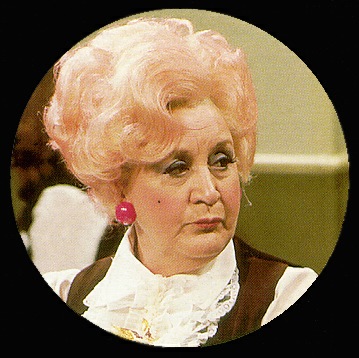
Mrs Slocum - Are You Being Served ?

by Gregor Stronach

I recently turned 31. It didn’t hurt nearly as much as I thought it would, mainly because I figured out that in three years I will have lived longer than Jesus. That’s quite an achievement, I think.

But birthdays being what they are, I received gifts. I got some cool things this birthday – books, DVDs, food and cake, but by far the best bit of my birthday was this: I was adopted by a cat.

Her name is Pablo Escobar, and she’s a violent little plaything. Pablo arrived in my life when we went to the pound to rescue her. Seeing as though the cat was a gift from Renee, I think perhaps that there was an ulterior motive behind the gift. I fear that she has presented me with this cat to figure out whether or not my new-found age has brought with it a corresponding increase in personal responsibility.

Pablo, it seems, might be like the caged canaries carried by coal miners in years gone by to detect noxious gasses. When the canaries were discovered dead, it was time for the miners to get out into the fresh air. I’m guessing that if Pablo is discovered dead, Renee will realise that I am, indeed, hopelessly and irredeemably irresponsible.

But owning a cat has taught me a few things, which I’d like to share with you now.

Cat shit stinks. The only thing that will stop cat shit from stinking up a tiny apartment is an operation to remove my adenoids. I’m not entirely sure which particular chemical compound it is in cat shit that gives it it’s own unique scent, but it’s a pervasive little bugger, getting into the curtains and carpet. I was lucky – Pablo came housetrained, which means she only ever shits in the house.

Every part of me is now a target. The tiniest twitch is enough to get Pablo excited beyond belief, meaning that trivial actions that used to be performed on the couch, like smoking a cigarette or scratching myself in that ‘special’ place, now need to be done behind locked doors – preferably at least two of them.

Watch where you walk. Walking through any doorway in the house means taking an enormous risk. You can rest assured that there’ll be a small furry bullet, armed to the teeth with claws and… teeth, I guess… ready to attach itself to your lower limbs in a primal frenzy of pain and death. I have taken to wearing trout-fishing waders around the house. These oversized rubber pants offer the perfect protection from Pablo’s insistent gnawing and clawing. They have the added benefit of being silent, which means that I can occasionally get up from the couch without being set upon. As a downside, they’re rather hot and unwieldy, being difficult to remove in a hurry. I can, however, pee in them and no one but me would ever know, save for a faint sloshing sound as I walk.

Cats complain. In fact, cats complain more than little kids. But they complain about really weird stuff. Pablo complains about her food, which is the best stuff money can buy. Her bowl will be loaded with 30 grams of chickeny or beefy goodness, but she’ll sit there and stare at it, yowling mournfully, leaving it untouched. Then, when she thinks I’m not looking, she’ll eat a cockroach or lick her own butt. I don’t get it – surely 60 cents worth of chicken meat tastes better than bugs or cat rectum.

Cats love to sleep. Sadly, it’s mostly in really inconvenient places, such as my lap when I need to pee, or on my face when I need to breathe. Somehow, in the two weeks that Pablo has been living at my place, we’ve managed to get our sleep patterns diametrically opposed to each other. When it’s bedtime for me, it’s playtime for Pablo, which means that whenever my toes poke out from the end of my quilt, they get eaten. Aside from a low-grade perpetual fear that I will, eventually, run out of toes and never play soccer again, it means that I’m not getting enough sleep. Which is why it galls me so much when I see Pablo asleep in the middle of the afternoon. I’ve taken to waking her up whenever I can, in the vague hope that she’ll sleep through the night. It’s a hopeless cause, though – cats mostly come out at night… mostly.

Cats can be spiteful. I hate to anthropomorphise, I really do, but cats have long memories. I accidentally trod on Pablo’s tail just a couple of hours after she came home with us, but she seemed fine with that at the time. It was only yesterday, two full weeks since the incident, that payback arrived in the form of a hairball on my favourite seat. She looked so smug when I sat on it, and even more smug when it took me fifteen minutes to realise that something below the seat of my pants was badly awry. I’ve presented her with the dry cleaning bill, but so far she’s refusing to pay it. I think I’m going to need to call my lawyer.

Cats love to plot. Occasionally, you’ll catch a cat plotting – it’ll look for all intents and purposes like it’s asleep, but one eye will lazily open half a millimetre and that frightening hunter’s glint will shine through. When I see Pablo like this, I am sure I can hear her thoughts: “As soon as you’re asleep, I’m going to eat your eyes. They’re soft, like jubes.” The trick is, of course, to stay one step ahead. That’s why I’ve poked out my eyes already, and hidden them. I’d tell you where, but I caught Pablo using my computer this morning…

You’ll be pleased to know that Pablo and I are working out our issues – of course, I’m happy to let Pablo think that she’s the boss of the house, when I know clearly that I’m in charge. Of course, she’s no doubt thinking precisely the same thing about me.

Gregor Stronach has yet to discover the joys of de-worming.Β  This was first published at http://www.rumandmonkey.com

Art

11 Tuesday May 2010

Posted by Therese Trouserzoff in Gregor Stronach

≈ 28 Comments

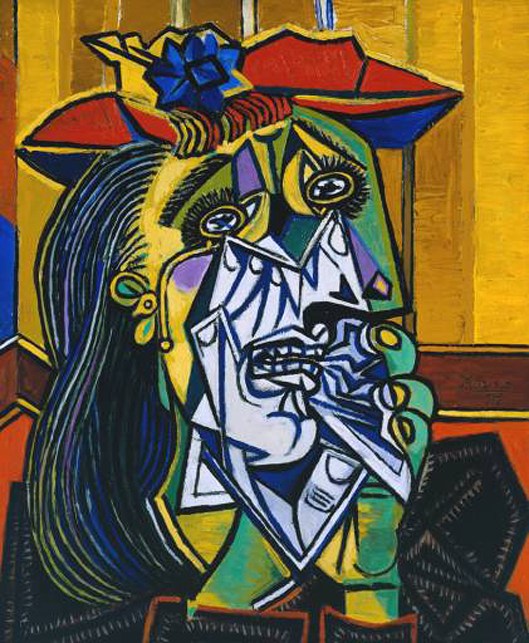
Picasso's Weeping Woman - 1937

A tickle by Gregor Stronach

I’ll be frank about this… I’m not an art lover. Sure, I can appreciate a nice photograph from time to time – especially if it’s of me, and even more so if I’m doing something really cool and dangerous, like riding a motorcycle or picking my nose.

But when it comes to understanding art, I’m hopeless. So in an attempt to get my head around it, I’ve been thinking about it more and more – how does it work? Why do people spend their entire lives beavering away like morons and drones on a single canvas that they’ll probably cut to pieces in a drunken rage at four in the morning in the middle of winter because they’ve broken up with their partner and she’s taken the cat and moved interstate and she was the only one who understood me and I don’t think I can keep living without her. Or something…

So let’s work through this together, shall we? Let’s explore the world of β€˜art’ and see if we can’t piece together the greatest puzzle of them all… what the fuck is art? And, more importantly, what the fuck has it got to do with me?

I can answer the first question right away: If you see an object, and you don’t know what it is or why it’s there, it’s probably art. But the second question… that’s the clincher, and it’s a question that anyone who has ever been subjected to art should ask themselves.

Painting.

I’ll admit to having loved it as a child, but painting these days leaves me cold. I struggle to apply a single block of colour to a household wall, let alone forge any meaningful, or even discernible, images in a mish-mash of flesh tones and bright primary pigments upon a canvas stretched as tightly as my nerves.

So I’m at a loss to understand even the basics of it. Sure, if the artist is going for that whole hyper-realism thing, then it’s easy to figure out what they’re saying with their work: β€œI have too much time on my hands and I’m too fucking cheap to buy a camera…”

But when it comes to abstract stuff – you know, those crazed impressionists or expressionists or whatever the hell they were calling themselves… I just don’t get it. I’ve had someone try to explain it to me in the past. β€œLook at the intensity of the brush strokes in this work,” they said. It was a large canvas, and I’m not sure which of the brush strokes they were specifically referring to, but having been left behind – hopelessly left behind, at that – within the first 20 seconds of the lesson, I let my mind wander.

As my eyes happened upon a rather portly gentleman who was β€˜admiring’ a painting a few feet away, I decided that by imitating him – adopting his poses and mannerisms – I might at least look like I was appreciating the paintings in the proper way. Thus, after ten minutes of almost imperceptible frowning and some fairly serious beard-stroking, my teacher proclaimed β€œThat’s it! You really look like you’re understanding this! Excellent! Let’s move on to the really abstract stuff now…” I nearly died.

I did get to see one thing that amazed me, though – a painting called Blue Poles, by some jerk with the amusing name of Pollock. Apparently the Australian National Gallery forked out the GDP of Kenya for this painting, and as far as I could tell, it looks like some madman has thrown paint on a canvas, attached a ridiculous price tag and waited for an over-zealous public servant with the keys to the treasury and severe myopia to wander in and buy it. It sums up the world of painting for me – overpriced, and overburdened by sympathetic souls. If ever people were making millions doing something that I can look at and say, β€œJesus, even I can do that…” it’s painting.

But it’s not just the fact that Pollock’s Blue Poles leaves me none the wiser about art – the idea of a government shelling out millions of dollars for paint splashed randomly on a canvas makes me shudder like a shitting dog.

Sculpture

It was my dad who told me the secret to good sculpture – many years ago, I told him that I wanted to carve myself a large elephant, but that I needed his help. His advice was invaluable…he told me that if I wanted to carve an elephant, I should get myself a lump of concrete, making sure that the concrete is slightly larger than the elephant I want to create. Then, I was to get myself a hammer and chisel, assess the block of stone, and then simply knock off the bits that didn’t look like an elephant.

He’s lucky I didn’t start knocking off all the bits of him that did look like an elephant. That task I left to my mother. Hence, my dad is still a β€˜work in progress’.

But I digress… I can see the benefit of some sculpture. It can be, and frequently is, quite rude. Some of the most famous sculptures of all time are pretty much just giant marble naked guys, or large marble women with ample, dimpled buttocks and vacant expressions on their faces. It’s interesting – given the oeuvre of the predominant artists of the day, we now expect that most art containing largish women or men with tiny penises will arrive in the form of sculpted marble.

These days, with the penchant of artists to use hyper-skinny crack-whore models, it would make better economic sense to use marble now – after all, there’s a lot less of the model to carve, keeping the raw material costs at a reasonable level. But no – they burnt money carving fat chicks out of beautiful stone 300 years ago, and these days they prefer to photograph the skinny ones. Sometimes humans confuse me.

Photography

Now this one I can nearly understand – except that most of the photography exhibitions I’ve ever been to have been catastrophically boring. Yes, I have a working knowledge of taking pictures – no journalist worth his salt doesn’t know how to take a half-decent photo from time to time – but when it comes to photography as β€˜art’ rather than photography as β€˜work’, I’m stumped.

Having been to see quite a few galleries whose walls were lined with photos, I can say this – if I see one more β€œsingle tree in an otherwise empty field with storm clouds gathered ominously behind it” photo, I’ll find the photographer and give him a Canon Colonoscopy. With the number of digital cameras being sold every day around the world, I reckon it’s a fair bet that there isn’t a single thing on the planet that hasn’t been photographed.

And so we’re left with another branch of photography that I truly despise – photos that rely on the inherent incongruent nature of their subjects. The whole β€˜Oh look! It’s a woman wearing an octopus as hair!” or β€œCheck it out! It’s an old man taking a shit in the middle of a freeway!” is more annoying than confronting, more patronising than educational, and ultimately entirely fruitless. Surely we have better things to do with our time than dress people in seafood or watch old people crap. If I’d wanted to do either of those things, I’d go back to work in a nursing home.

Film

I’m absolutely sure that whoever it was that decided to market filmmaking as an art form was attempting an early form of eugenics. β€œLet’s gather all of the world’s insufferable wankers into one place – with a bit of luck, the building they’re in will collapse and we can all be happy…”

I’ve met a few filmmakers in my time. Hell, I’ve been a filmmaker. It’s fucked. How people can make a living out of it, I don’t know – anything that’s utterly unenjoyable as a hobby has simply got to be the worst job in the world.

See, filmmaking is a horrifyingly vampiric art form. Once a movie is made, it’s there forever. Artists, prior to film, used to produce several versions of the same piece, each time improving upon it. Quite the reverse is the case with film – remakes are invariably shit, and sequels (and to an even greater extent, prequels) are universally banal and awful.

If it were up to me, I think that filmmakers should be licensed, like dogs. There would be a fairly strenuous initial period of testing and retesting, and anyone who falls back on the excuse that their film is β€˜a metaphor’ should immediately be banned from ever making one again. Films are not metaphors. Films are a series of still pictures shown in rapid succession to give the impression of movement. Yes, they tell stories. Sometimes those stories are even entertaining. But most of the time they’re just self-indulgent whining about appallingly boring subjects.

Except when they’re blowing up entire buildings – that’s pretty cool.

Digital Art

It’s a fact of life that when a new technology or medium is invented, someone somewhere will look at it and think to themselves β€œwow… I can make some serious art with that.” In that sense, most artists are akin to the more prolific stoners in society – you know the type. They can be heard uttering phrases like β€œThat television would make an excellent bong” from the depths of the couch, the morning after the welfare cheque has cleared.

And that’s why, all of a sudden, there’s been an explosion of electronic art. A number of reasonably intelligent nerdlings discovered that computers can be used to alter photographs, and the world was beset by Digital Art.

These electron jockeys, like all β€˜New Artists’, consider themselves to be cutting edge – at the forefront of the collective psyche, producing tantalising works of art that end up on T-Shirts, or as Desktops. In terms of audience reach, they’re probably on the right track – but it’s highly unlikely that critical acclaim is around the corner.

You see, the invention of the internet has drastically reduced one famous artist’s prediction of fifteen minutes of fame to somewhere between two and three minutes – in essence, the lifespan of a digital artist at the top of his game could quite easily be slotted into the space between the sport and the weather on the nightly news.

Performance Art

There’s a special place in Hell reserved for all performance artists. I will spare you the brutally obvious diatribe on the topic of mimes… it’s so fucking fashionable to hate them these days that they’re in danger of becoming popular again with the avant garde, and we could yet see a revival. But that’s nothing a large, deep hole and a sign reading β€˜Free Mime Food’ won’t fix.

The performance arts I particularly loathe are the ones where people intentionally hurt themselves to make a point – protest art, like protest music, is usually extremely tedious, insufferable for any onlooker and, for the most part, a colossal waste of everyone’s time. I cannot see a single redeeming feature in any activity that sets out to fix any of the world’s numerous ills, and usually ends with the sounds of sirens and the scampering footsteps of frightened co-conspirators as they flee into the night.

The problem with performance art is that, in these modern times, it has to be extreme to be noticed. Life was easier for artists in the 1960s – all they needed to do was take their clothes off and they’d be famous. But if Yoko Ono’s caterwauling and public nudity were thought-provoking and daring back then, today they’re limitlessly passΓ© – performance artists have evolved.

The best example I know of is a chap called Mike Parr, who insists on inflicting prodigious amounts of pain on himself to make β€˜statements’ about β€˜issues’, thus forming β€˜art’ that makes people β€˜think’. Having seen him do his thing – I watched him having his face stitched up and then wire himself up to a potent source of electricity, inviting people to visit his website and press a button that would deliver a shock to his already brutalised form – I have to say that I applaud the man’s stamina. But that’s about it.

I’m sorry to say that it’s my dim opinion that this man, and anyone like him, is a 24-carat gold-plated fool. I refuse to be impressed by people hurting themselves to make a point. I can see no difference between them and people like Steve O and the lads from Jackass… except at least the guys from Jackass aren’t pretending to save the world.

Writing

All writers are fools. It’s a simple, inalienable fact. I know, because I am one. We sit down and pen missives on whatever topic strikes us (if we’re lucky) or whatever we’re told to write (if we work for someone else), and all that matters is making sure that each piece, or chapter, has a beginning, a middle and an end.

It’s actually debatable, in my opinion, that writing is not an art – it’s more of a craft. Although to me, the word β€˜craft’ brings to mind small tubs of paste, ice cream sticks, tiny tubes of glitter with lids that won’t come off and a box of 64 brightly coloured Derwent pencils, the more popular colours being immediately apparent because the pencil is only half as long as its less-potent neighbour. Plus, the ends of the popular colours are chewed more.

But it’s not hard to string words together – everyone can do it in some form or another. Even the basics, like learning to ask for a bagel or asking someone where the toilets are in a pub are a form of wordsmithing – the only difference being that some of us possess the manual dexterity to type the words as fast as we can think them, and thus the published sentences appear a tad more coherent.

I dislike most writers. But, like all writers, I like my own work. I like to think that I write more for myself than for others – and for that reason, I can generally be assured that if I feel like making myself laugh, I can simply re-read some of the moronic things I’ve written over the years.

It’s the beauty of being a simpleton – repetitive things can often be amusing.

Wrapping Up

And so, you now know how I feel about art. I know that some of you will be shocked, and others outraged – but I can assure you that I have, by no means, set out to offend. Except filmmakers – you can all go to hell.

But everyone else should not be upset by what I’ve written – if imitation is indeed the sincerest form of flattery, a spite born of envy must surely run a close second.

This article was first published at http://www.rumanmonkey.com

Five Things I Learned in a Week

27 Tuesday Apr 2010

Posted by Therese Trouserzoff in Gregor Stronach

≈ 43 Comments

By Gregor Stronach
One – It’s the advertisements that make TV really stupid.

I love television – it’s the world’s greatest form of entertainment for deadbeats and stoners and the perennially drug-fucked amongst us who can’t be bothered using their useless arms to hold up a newspaper or book because they’re a) too stupid, b) too stoned or c) their arms keep growing into long, waving strands of kelp. (I must remember to take the blue pills first, and then the red ones. Mama.)

But watching TV brings with it certain responsibilities, and one of those responsibilities is that we must, in order for the networks to continue to provide us with free movement and colour every day, pay attention to advertisements.

Like the one where the guy ambushes a lonely housewife, follows her home and goes through the dirty laundry – on order to show her how good his laundry detergent is. Honestly!

The way I see it, the guy’s either he’s a psychopath (probable), a paid actor pretending to be a panty-sniffing stalker (more probable) or the TV audience is too inured to the banality of the situation to realise that he’s not really an expert on stains… he’s just pretending.

It makes me wonder – why don’t we ever see people’s underpants on these commercials. Imagine it, if you will…

[Scene one – the laundry]

Stain Expert: “Look at those stains! They’re terrible! What have you been eating?”

[the housewife looks horribly embarrassed]

Stain Expert: “Here’s how to fix the problem, you filthy beast. Mix a little of our product with water to make a paste, put a little on the stain, and use the rest of it to clean your arse!”

Problem solved.

Two – Anyone who votes is clearly an idiot

What is with the people of the developed world? I’ve watched in staggering disbelief as both Australia (my home) and the US (where all the stuff that makes my home the way it is comes from) vote in conservative governments that seem hell-bent on blowing up as much of Iraq as they can within the next four years. It’s like watching two kids in a sandpit, armed with claymore mines and chewing on detonator caps.

What was Florida thinking? Surely the raft of hurricanes that threatened to move all of the retirees offshore (presumably to find their assets) was enough of a warning from God Himself that the state had better think twice before putting Bush back into the Whitehouse.

Here in Australia, we have had to endure the simpering, giggling return of the world’s least-attractive Prime Minister (and that list includes Helen Clark, Ariel Sharon and – of course – Margaret Thatcher). Worse still, he got in with a landslide.

It means, in a nutshell, that the voting public appears to be happy with conservative, right-leaning governments. Governments with a penchant for destroying other countries in the name of peace. Governments who demand that their electoral processes not be interfered with, unless it’s them doing the interfering.

Governments run by men with phallocentric agendas and no idea of how to plan further than a couple of months in advance, to whom every new development is a surprise (a challenge to be overcome), and to whom the ideals of compassion, fairness and equality are as foreign as Poodle Chow Mein.

It saddens me to see this developing the way that it has – a global swing to the right in developed nations means a lot to me.

Sure, I’ll be more afraid at night because of global security concerns. Sure, the rich will get their tax cuts while the poor drop through the safety nets.

Sure, the fetid stench of corruption will continue to blow through the halls of power.

But it’s all good news for me – it’s much easier to make fun of those guys than it is to make fun of the left.

Three – Staying up all night is bad for you.

Saturday was a lost day this week. This could have something to do with Friday night. Actually, it has everything to do with Friday night. While the going out part of Friday nights is almost always fun (with the notable exception of that extra-special Friday night trip to the 24-hour dentist to have a broken tooth removed), the staying up until dawn can have serious side effects.

This week, those included a sudden urge to watch TV (see point one) and a most unfortunate incident with my housemate, Pablo Escobar (with whom some of you may already be familiar… if not, I suggest a quick leaf through some of my earlier ravings. She’s in there somewhere. Anyway – more about her in point four).

The upshot of staying up all night is that the next day everyone who took part in the marathon effort of ‘seeing the break of day’ ends up looking, and for the most part behaving, like an extra from Shaun of the Dead. Indeed, it took a hefty blow to the back of the head with a cricket bat to get me to understand that it was time to sleep.

I miss being able to stay awake for three or four days at a time. I used to be able to do it, but as my body approaches its 32nd year on the planet, I have begun to realise that all is not as it once was.

I choose to blame the government.

Four – A vomiting cat is not a friendly cat.

Ahh, my dear, sweet Pablo. She’s still a little angel of death, living safe and sound in my apartment. It was her birthday a little while ago – she turned one. I know, I know… how the time has flown.

This week, we discovered that she has an allergy to kangaroo meat.

I should probably explain that kangaroos, while they are the national emblem of Australia, are a pest in plague proportions in the bush. They are also made of an extremely tasty meat, one which I happen to love.

Pablo loves the taste of it too – however, it makes her sick. She gets like a geysers at both ends when she eats roo meat, which makes for interesting evening’s entertainment, as we play games like ‘Find out what’s causing that terrible smell’, and ‘Oh God No Don’t Vomit In My Lap Oh Shit Oh Shit Oh Shit Get Off Me’. While they’re both great games that represent hours of fun for the family, they make Pablo a little unhappy. They also make me a little nauseous. But that’s OK – it’s good training for when I eventually become a parent, and have to deal with small children that are incapable of going more than three hours without soiling their trousers. Or, should I miss out on having kids, it’ll prepare me for old age. Either way, it’s all good.

Five – The war is coming too close to home.

I had a great weekend – a weekend blessedly free of the distractions of the internet and it’s evils, excesses and humourless statistics.

I logged in this morning, to be greeted with the news that an online friend had perished at the hands of ‘the enemy’ in Iraq.

He was a good guy – quick-witted, intelligent and funny when the right moment arose. He also agreed with me a lot in the discussions we had… make of that what you will.

But Pete won’t be sharing his mind with the world anymore. He was killed in the Babil Provence of Iraq as a result of enemy action. Consolations, such as the fact that he was there because he wanted to be, and that he died doing what he loved, don’t make me feel much better. And even though he wasn’t close enough to me to make me cry myself to sleep over the loss, it still burns that someone whose input into my life I truly enjoyed is now gone.

Cpl. Peter J. (Jav03) Giannopoulos, – thank you, and goodbye.

First published at http://www.rumandmonkey.com/articles/237

This Page Used to Be Blank

12 Monday Apr 2010

Posted by Therese Trouserzoff in Gregor Stronach

≈ 14 Comments

Previously Blank Page (A4)

By Gregor Stronach

This page used to be blank. It’s not hard to believe – all pages are blank at some stage of their existence. Some pages are doomed to stay blank forever, but it’s not my place to judge them for their decisions. If they wish to remain blank, who am I to impose writing upon them?

But this page isn’t blank. Not anymore. This page is slowly being filled with words, like the ears of a lover are oft poured full of whispered niceties, insistent urgings and warm feelings… as the words appear, they are gifts, like the touch of a lover’s fingers on bare skin on a warm summers night, as a breeze flows through the open window and the room is filled with the scent of fresh limes and sound of soft murmurs… The communication of the writer and the page – two lovers, whispering in the dark.

The words, of course, are dowries, promises of commitment – replete with wrapping and bows, they remain. What’s said cannot be unsaid. What’s written must remain written. Not even god could come up with β€˜ctrl-z’ – nor should a writer ever dream or dare to delete. The words should just come from whence they are bidden… flow from the mind to the fingers, to arrive and dress the page for polite company, resplendent in Sunday’s finest.

I’ll take a sip of my beer – the last of the fresh lime is gone, bobbing quietly within the bottle, as the dawn of summer’s insatiable heat arrives through my open windows. This page used to be blank, you know… but it’s becoming less and less so.

It’s a task, you see – a calling. A talent is a gift from the universe – it must be used. We should never become slaves to our abilities, but nor should we ever turn our backs upon them. Like drugs, danger and angry drunks, our ever-present aptitudes should be embraced and faced head on.

My task is simple. To change the world I live in, one word at a time. And that’s why this page used to blank, but now it’s not. I choose to write. I choose to place my hands upon the keyboard and massage my message upon the page, kneading phraseology and tempting my vocabulary – plumb it’s depths to see what fantastic creatures emerge from its inky depths.

The words should lilt – the prose become poetry, the pentameter spastic rather than iambic, but the message remains the same. Like an earnest stage actor in costume, the paper now wears the idea – grateful for the chance to be a part of the change that lies within the turbulent air. One word at a time… and the happiness of creation becomes infectious. Viral – each sentence a contagion of joy.

To create such works fills me with a tangible, visceral sense of excitement – a falling joy. Vertiginous, my mind full of the butterflies that normally reside in my stomach. To write without thinking – to walk a tightrope with no net. To put words upon the page.

These words are mine to share with you – and yours to share with me. This moment, you may not remember in two days, but I will. I’ve given you the best gift that I can. I’ve crafted something from nothing – the laws that govern our universe say that this is impossible, but I beg to differ.

Gaze upon an empty page. Compare its stark, universal whiteness. Run your fingers across its skin, and let your fingertips revel not in its emptiness, but its potential.

Go. Now. Find a page and make it yours. Write, scribble, draw, paint, fold – create. Share with me the pleasure I get from this simple exercise. And when you’re done, hold your creation in your hands, and imagine the people with whom you can share it. Imagine their joy at receiving your gift of creation. Envisage the smiles, the caresses, the kisses… and think to yourself…

This page used to be blank.

This piece was written in one sitting, stream of consciousness, with no editing, no deleting, no changing it at all.Β  Whatever I typed stayed on the page, as is.Β  It was first published at http://www.rumandmonkey.com/articles/304

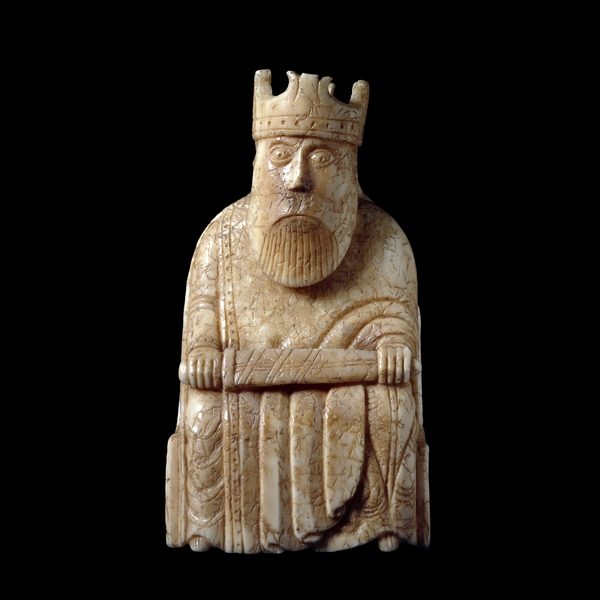
The Politics of Chess

25 Thursday Mar 2010

Posted by Therese Trouserzoff in Gregor Stronach

≈ 15 Comments

The Pig’s Arms Welcomes Gregor Stronach

It’s a funny game, chess. Like a Mandelbrot set, there’s more to it than meets the eye – the more you look at a chess as a game, the more it really gets into your soul.

I remember being taught to play when I was a child, by my dear father, and I thank him for providing me with such profound knowledge at such an early age.
But these days, I’m older and wiser. I’ve spent time and effort thinking about chess, and the manner in which it mirrors the outside world – a world where we can move in more than two dimensions, but where the rules of the chess board still, fundamentally, apply.

Let us explore this theory in words. Let me expound upon and thump the tub about the way I see the insufferable sadness of the human condition mirrored, errily accurately, atop the black and white surface of the world of chess.

The World.
The world is, essentially, black and white. Right and wrong. Truth or lie. Do or die. For the pieces that reside in the world of chess experience this stark dichotomy on a daily basis. Their world, such as it is, allows for only restricted movement. They have no real freedoms at all. Worse still, as with the real world, the white pieces have the pick of the action, always allowed to move first, in essence always dictating the moves of the black pieces.

Of course, there are times when the black pieces will move to such a position that the white pieces feel that they have no choice but to react, but we all know that it’s an inherited racism, preconditioned into all white pieces, that force the reaction. It’s fear – the boardgame equivalent of crossing the street when the white pieces see the black pieces approaching them at 2am with burglary and other assorted mayhems on their mind. Or so we think… the reality is that the black pieces are simply on their way to the shop to buy milk, and are happily minding their own business.

The Pieces.
Each of the players in life’s little game has their role, as in real life. From the menial, toilet-bowl washers through to the β€œdo nothing but sit around and look magnificent” top tier of life, all facets of class system are there. As in life, the pieces are more or less defined by what they do. β€œYou’re a doctor? Awesome… settle a bet – is this a boil or a mozzie bite?” – likewise each piece on a chess board is effectively hamstrung, their career chosen at birth and with little chance of respite from the gruelling daily grind…

We shall examine them – one by one – and hopefully gain an insight into each of the little tiny personalities that inhabit the ranks and files of life.

The Pawn.
It’s a damning indictment on the state of the world when you consider this fact: The most populous piece on the board is also the weakest. Like the serfs and peons of eras gone by, the fact that there are 16 of the so-called β€˜little people’ on the world at the beginning of any match should supply some glimmer of hope – the most precious gift in the world – to the pawns. But they are not the sum of their parts. Repressed and homogenous, they simply exist to do the dirty work, and to die quietly with as much dignity as they can muster.

The lefty inside me wants to marshall them together, and have a quiet meeting at some out of the way square on the board.

β€œListen… guys… seriously. Think this through. There are 16 of you here. 16! You can take anyone on the board on your own, so consider this. What if you all grouped together? Formed a union – a Coalition of the Little… you could rise up, seize the means of destruction and rule the board, making it a charming Utopia in which every piece is of equal value. Yes, even the black ones… It’ll be awesome!”

But we all know, deep in our hearts, that while I paint a picture of supreme clarity and truth, it will never, ever happen. Revolutions of any kind are generally doomed to failure one way or another.

And all it will take is for one pawn to reach the final rank at the opposite end of the board, elevate himself to Queen or King, and we’re back where we started. It’s a crying shame.

The Rook.
Ahhh… the safety and security of bricks and mortar are the lesson to be learned here. How solid and dependable are the rooks? They occupy and guard the outer edges of the world, keeping the other players safe from invading paws of curious kittens and insurgencies of spilt beverages. But how high is the price of such security?

I’ll tell you – it’s a terrible toll. Severely restricted movement, and a mindset programmed to think in unbending lines. Compare this to the United States, where the price of freedom is restrictions beyond their wildest nightmares – a government hellbent on tying down its own people to protect them from themselves, and others.

Thus, the Rooks are the US Government of the chess world. Bulky, cumbersome and programmed to defend and destroy, or die trying.

The Knight.
By immediate comparison comes the Knight, a piece with a wonderfully British outlook atop the chequered arena. It’s movements appear eratic, but are – in fact – carefully thought out in advance, taking into account the dual notions of sense of purpose and unpredictability. They like to give the impression that they might, if pushed, be a rogue state. Their wild nature is characterised by the brumby-like physical representation, which in itself speaks volumes.

But… and there’s always a but… on their own, they are all but useless. Any successful hostile action requires the recipient of violence to be backed, literally, into a corner with all avenues of escape cut off.

And then in rides the cavalry, to take the glory and claim the victory as their own. It’s typical, if you ask me… the horsey set always likes to think of itself as punching well above its social weight. When they’re not prancing about the board of life, you’ll find the Knights playing polo and drinking champagne.

The Bishop.
Imagine a life where you are confined in your thinking to a single shade. Black or white, once you are placed in your initial position, that’s it – you may not ever occupy a square of the other shade. You must only believe in the one thing, forever more, until you are killed or the war is won.

It’s a damning indictment upon life off-board – where religious views are expounded upon at length, but rarely scrutinised and never challenged. As with any belief that is set in stone, it invariably ends in tears – it’s okay to have convictions and a strong set of moral values, but without wriggle room, it’s easy to end up trapped. If you cannot see the other side of an argument, you are doomed to lose.

The other telling point about the Bishops is that they do not move in a straight line – not in the classical sense. They’re sneaky, often arriving unexpectedly from the far side of the world to wreak violence and brutality upon those least expecting it. All of this from a man of the cloth? It’s wrong… but it’s the way of the world.

The Queen.
The Queen is the most honestly representative piece on the board, in terms of power, gender politics and potential capabilities. As a female, the Queen is the sole representative of women. As in the real world, women are horrendously under-represented in the upper echelons of power. This is, of course, coupled with the obvious glass ceiling – the Queen can never become the King, as the King never dies. Add to that the constant threat that one of the pawns may indeed reach the far rank of the board, and suddenly the Queen has another contender for the favours of the King. It’s horrible… and an eerily accurate reflection of the real world.

This is tempered by another fine example of art imitating life. Despite the horrifying inequities faced by the Queen every day, she is quite clearly the most powerful piece in the world – and deservedly so. The iconic image of a strong woman with immense dynamism and efficacy is one that justifiably succeeds, transcending the hardship that women face to become, literally, the monarch of all they survey.

The King.
Bloated, corpulent and lazy, the King is a figurehead – a lumbering dinosaur whose only relevance to the world at large is to simply be. Without him, all is lost – but his presence serves only to provide purpose to the lives of others, who must live and die to protect him.

On many levels, I’m sure the other pieces have grown to hate the King. The King is little more than a chubby dictator – his whims to be observed, his life sacrosanct.

His slothfulness and propensity for avarice have clearly made him far too hefty to move too far too quickly – so that while he enjoys the same privileges of freedom of direction as the Queen, she will leave him far behind should the shit really hit the fan.

And to be frank, were I the Queen, I’d leave him behind too. If he can’t get his act together enough to be able to move fast should the need arise, he deserves to die. Let his lackeys from the church and stable look after him – the Queen will be seeking safe passage to Lichtenstein within the hour.

In conclusion.
It’s obvious to even the most casual observer that chess is indeed a game – one that has its roots in the violence of conquest and its complexities founded in the notion of human interaction. But at the end of the day it is – just like the life and universe it mirrors – just a game. It’s unbalanced and bigoted, often violent and strangely bleak… and that’s the way we seem to like it.

I give this game four and a half stars out of five.

Β 

Β 

This piece was first noticed en passant in http://www.rumandmonkey.com/articles/313Β 
Β 
Newer posts →

Patrons Posts

  • The Question-Crafting Compass November 15, 2025
  • The Dreaming Machine November 10, 2025
  • Reflections on Intelligence β€” Human and Artificial October 26, 2025
  • Ikigai III May 17, 2025
  • Ikugai May 9, 2025
  • Coalition to Rebate All the Daylight Saved April 1, 2025
  • Out of the Mouths of Superheroes March 15, 2025
  • Post COVID Cooking February 7, 2025
  • What’s Goin’ On ? January 21, 2025

We've been hit...

  • 713,950 times

Blogroll

  • atomou the Greek philosopher and the ancient Greek stage
  • Crikey
  • Gerard & Helvi Oosterman
  • Hello World Walk along with Me
  • Hungs World
  • Lehan Winifred Ramsay
  • Neville Cole
  • Politics 101
  • Sandshoe
  • the political sword

We've been hit...

  • 713,950 times

Patrons Posts

  • The Question-Crafting Compass November 15, 2025
  • The Dreaming Machine November 10, 2025
  • Reflections on Intelligence β€” Human and Artificial October 26, 2025
  • Ikigai III May 17, 2025
  • Ikugai May 9, 2025
  • Coalition to Rebate All the Daylight Saved April 1, 2025
  • Out of the Mouths of Superheroes March 15, 2025
  • Post COVID Cooking February 7, 2025
  • What’s Goin’ On ? January 21, 2025

Enter your email address to subscribe to this blog and receive notifications of new posts by email.

Join 373 other subscribers

Rooms athe Pigs Arms

The Old Stuff

  • RSS - Posts
  • RSS - Comments

Enter your email address to subscribe to this blog and receive notifications of new posts by email.

Join 373 other subscribers

Archives

Website Powered by WordPress.com.

  • Subscribe Subscribed
    • Window Dresser's Arms, Pig & Whistle
    • Join 279 other subscribers
    • Already have a WordPress.com account? Log in now.
    • Window Dresser's Arms, Pig & Whistle
    • Subscribe Subscribed
    • Sign up
    • Log in
    • Report this content
    • View site in Reader
    • Manage subscriptions
    • Collapse this bar
 

Loading Comments...