• The Pig’s Arms
  • About
  • The Dump

Window Dresser's Arms, Pig & Whistle

~ The Home Pub of the Famous Pink Drinks and Trotter's Ale

Window Dresser's Arms, Pig & Whistle

Category Archives: Sandshoe

Wilson: An Adventure in Culture

13 Thursday Dec 2012

Posted by Therese Trouserzoff in Sandshoe

≈ 61 Comments

Tags

Ngaruawahia, Pohutakawa, Tawhaki, Tiki

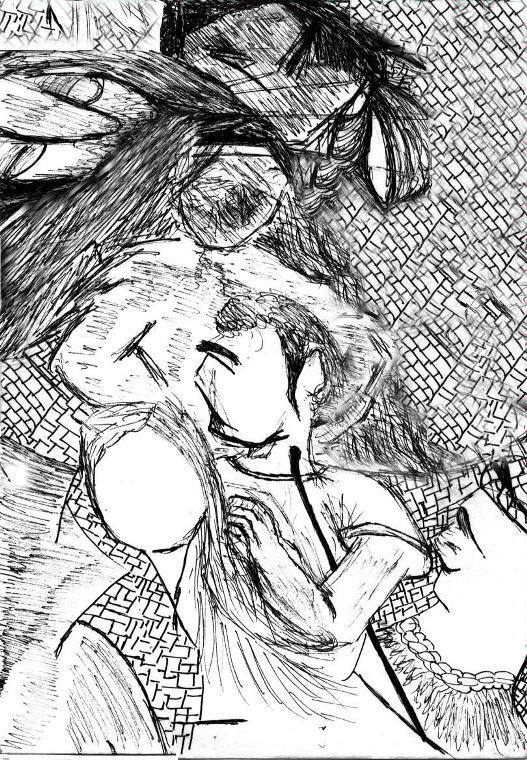
shoe Identitytimefilterframereduced

Story and Illustration by Sandshoe

Tiki is a revered Polynesian symbol of the beginning of time, evidence of a genesis; recognisable in jade, bone, ironstone and green plastic.

Living in Takau Street in Auckland I walked the slope of the hill into the city to buy mussels for steaming and bananas, yams and taro. The culture new and heady had the background song of the Polynesian congregations in local churches and at Christmas time the nativity. The vaporous steam and the delicious smells of the cooking later lead me to buy bamboo steamers that would throw a lid off as the shell of the mussels burst open and revealed their succulence. There in Takau Street, in the bungalow in a distinctive row of them on stilts, I became aware one week-end day of an assembly of Polynesian men laughing and jostling between them a squealing pig up the steep climb alongside the side division fence of corrugated iron. I assumed one of them sliced the pig’s throat open.

Much later when I learn Ruth Park had lived in Takau Street, it assumes a folkloric quality for me as if I had walked on hallowed ground.

Walking anywhere, I looked for the Pohutekawa tree and mixed it with the Feijoa because of the red blossoms. I think I will never see once I learned of the legend of the Pohutekawa Tree a more important tree in its impact, its story, in my consciousness of cultural difference, the importance of access to story telling and a nation’s symbols, legends, a people’s heritage.  It is replete with stories in Maori culture, as many possibly as one for each of the magnificent fiery red blossoms it flourishes in full flower. The pohutakawa was the first tree I knew in New Zealand in that it grew ancient and giant like in the front yard of the home which was my family home there with my then-husband and our children. My favourite image of the pohutakawa tree is from children’s books in which the roots of the tree allowed Tawhaki, the warrior, access to the land from a subterranean reality, an under-world.

I eventually became alone in an emotional sense in a culture that grew on me by a kind of osmosis of understanding, a hunger to understand, to recognise the symbols. Searching for the musical notes, the sounds, I read in the city library from a reference book about early Maori flutes and amazed at the variety of sizes and configuration in detailed plates of drawings.

Turning to the culture of the Europeans I read in a local council library a first hand account of the end of the Maori Wars written by a land agent established by the British Government. It surprised me for its empathy and most that I mastered the placename and remain captivated by it, Ngaruawahia, designated home of the Maori King established to meet the spokespersons for the British Queen Victoria.

I stumble in the local library on the story of Governor King at Norfolk Island who was ordered by the British Government to capture two Maoris and return with them to Norfolk Island to garner the secrets of flax growing and processing. The Governor hearing the plaintive song one sang in the evenings came to recognise grieving. To simplify; he had the men dine with him, created the rudiments of a Maori-English dictionary and returned them, against the orders of the British Government, to the location from where he had stolen the men. Claimed is that when a British boat returned to the location, local people ran to meet it shouting “Kingi”.

When I returned to visit New Zealand in recent time I embarked on a pilgrimage to the library. I am sure it is a worthy library. For my part, I could no longer recognise it, large, impersonal and nobody was recognisable, or immediately able to identify an “old book based on a University generated thesis or by a lecturer, about Governor King”. Pity nevertheless I could not find the text in the time available to me and short of resources. The story I read would make an excellent film, whatever basis for it might be established through detailed research.

Do I imagine it was claimed the author was discredited in his time or scoffed at but anyway, I settled in a library chair with a collection of short stories for old time’s sake.

When I lived in New Zealand, I was desperately hungry when I discovered their power, for short stories by New Zealand authors. Frank Sargeson emerges wry and friendly. I imagine him down to earth and perfectly accessible to an inner circle. Janet Frame who I had not heard of and I cannot understand why sweeps me off my feet with her short story, You Are Now Entering The Human Heart, about a teacher who drapes a snake around her shoulders. Frame published it in America first, I am sure I read that and it exemplifies for me living an existence that feels estranged in one’s native country. Driven by that understanding, I consider I would like to have the poem I wrote, The Horse, published in the Dari language and distributed in Afghanistan and Pakistan. I believe it would be instantly appreciated, understood, find its admirers, be taken into the human heart in the Islamic culture of the region.

Lit by the torch of discovery so many writers in their culture in New Zealand told stories of elements I had begun to sense as migrant, nevertheless as an outsider and but felt isolated with, I consumed Dan Davin, Stead, Morrissey, Patricia Grace, the Maori writer Witi Ihimaera and on it went, in an immersion in the first class writers that have sprung out of the dynamic environment, the fascination that is the colour, smell, sights and sounds of Aotearoa, The Land of the Long White Cloud. The cloud is a persistent and recurrent configuration that evidences itself as a characteristic roll like a bed roll, like a chastity roll, like a round Japanese pillow to rest the neck on if only it were possible. It has to be seen to be understood for its power as a symbol of the country we know more commonly as New Zealand.

Land and sky, tree and mountain, cloud and formation in misty and re-formative shaping that is easily perceived and naturally incorporated into the soul are everything in the story telling.

When I worked subsequently for a juncture at the offices of the New Zealand Herald as a copy holder I was one of the staff employed to read The New Zealand Listener on contract. Here was access to the copy of some of the greatest of the contemporary short story writers published in New Zealand. I thrilled to the quality of what I was holding at first hand.

One of the regular political columnists to the Listener presented copy as a veritable rant of passionate declaration. She threw fact and raw opinion together with what looked like an ultimate faith in the editorial resources at her disposal. Thus I learned her column was what was left after the reduction of her copy, in my opinion brilliantly, by the editorial staff assisted by the Readers Department; sometimes from as many as 5 intensely and minutely hand written pages to 2. The published segments were lifted directly out of the text nevertheless with the barest alteration. I was privy to the emotion behind the scenes, the pulse of an environment at the heart of contemporary culture.

My marriage had meanwhile irrevocably broken down.

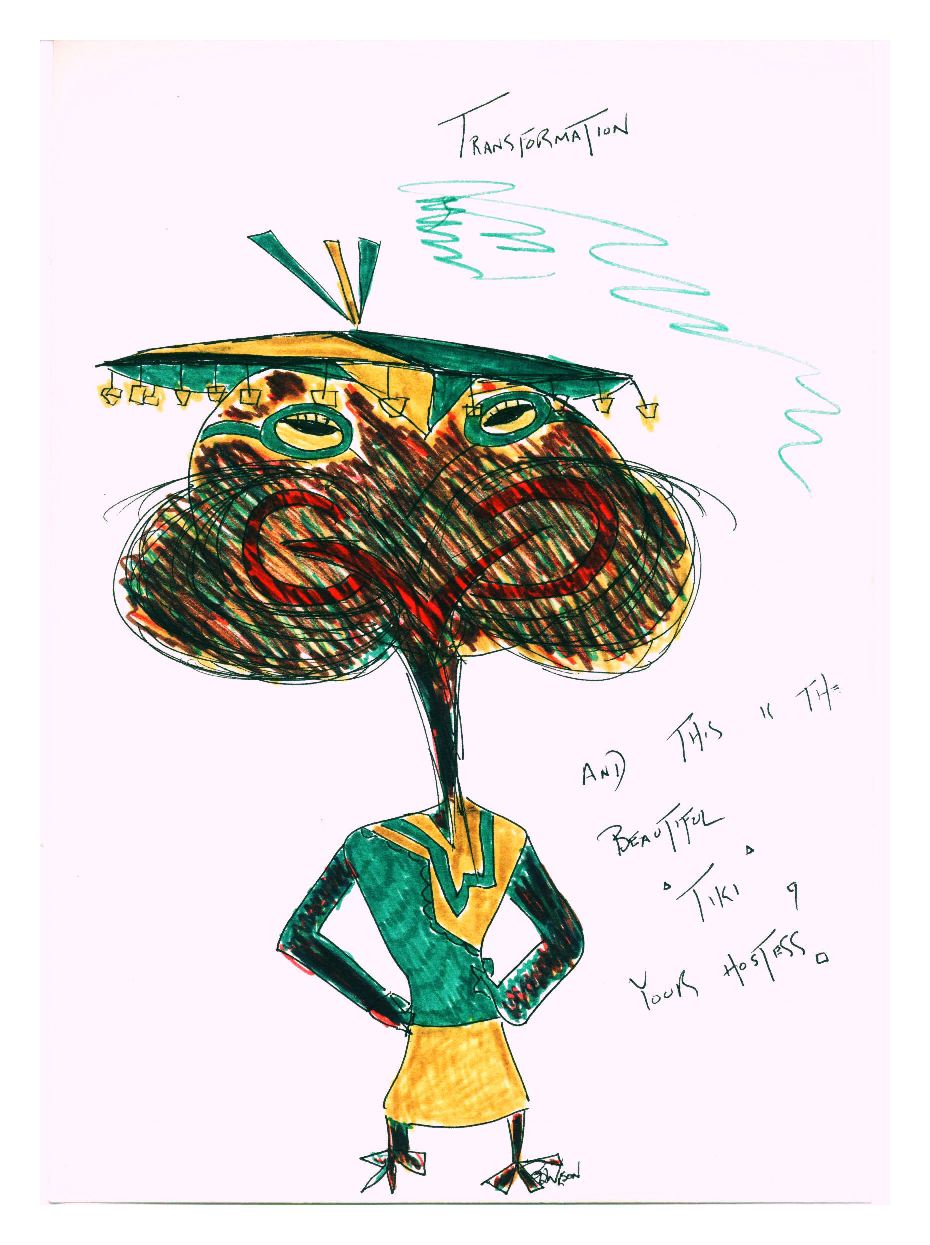
It was very much later I privately lampooned (in the doodle published here) myself in a hostesses uniform, hostess of myself, searching for identity. The allusion is to the attention to detail and money spent on the design of uniforms, which came to my attention in relationship with a one-time clothing manufacturer and designer who was brought to New Zealand by the government to assist establish the clothing industry in the 1950s, the industry it became, which was leading edge. One of his claims about his (spectacular) career was he had in one year designed the Air New Zealand hostess uniforms. I tried my hand at designing my own.

‘W’ is, of course, the initial of my surname. It is homage to a former lover who depicted himself in a cartoon thinking – at a job interview – “I wonder what Wilson is doing”.

I was caught up in another culture and travelling one of the hardest roads, almost too lonely to travel home alone.

Mr Leydon

06 Thursday Dec 2012

Posted by Therese Trouserzoff in Sandshoe

≈ 12 Comments

Tags

Christina Binning Wilson, lift, lift and separate

shoe elevator machinery 2

1920s Lifting Gear

An Uplifting Story by Sandshoe

“You alright this morning, mate?”

He explained.

“We’ll get someone to look after it. Won’t be long”

“How long would that be? Long, the time I mean? How long?”

He remembered he opted for supposing it would be looked after. The answer to his question how long was a retreat of crackling vowels and consonants jumbled in an echo of archaic concrete and metal pipes humming a low tone through the speaker phone in the basement. Even the intercom was a hangover of twenty years.

Not even a pack of cards to play Patience. A gust of sighed air that frightened him for its despair disappeared into the bright light.

He considered the light above him in its exposed recess. When this happened the last time, the week before, the lift had shuddered to its stop and the light went out. He was really frightened then, banging with his right fist on the black for a door he had walked towards with his other arm extended in front of his body, the tips of his fingers stretched until they scraped abruptly on its surface.

Ironic he considered ‘lift’ was the heading on the memo on his desk, yes, inclusive of the carefully dug out (scratched on and doodled) single inverted commas glaring at him yesterday morning when he arrived for work. He didn’t follow up after the short exchange with maintenance. He was late. The bus broke down at the outskirts of the park. Breathing the steady moment as he called overcoming stress, he walked but unsure of the time it might take to negotiate the race barricades dragged across the side streets. He had feigned indifference at the foot of the step of the bus to the exhortations of a feral passerby he should get a life.

How can we tell where and for what reason an incident might lodge in the brain and restore itself in a broken shard he thought. He recalled yesterday again, rounding the corner into the stairwell at the back of his building, the man approaching him from the other side of the rubbish bin and motioning with two upheld fingers, a v-shape towards his lips, his right eyebrow arched.

Not that it was his building. He detested these intrusions of thought. They flickered in intransigent patterns, entirely irrelevant. He shook his head. He walked into the lift that day without thinking about what he was doing yet had vowed to not ride it. Punching the bundy he derided you could say he forgot.

Sound seemed to come even from the opposite direction to the noises that swallowed the retreating voice when maintenance told him wouldn’t be long. He imagined that he supposed.

He shifted his weight and wondered how long had he been standing in the position he assumed. Habit meant he executed a turn as he always did after walking into the lift and pressing the floor button he wanted. He ended facing the door in a stance of readiness to exit. The optimism of that repeated movement seemed foolish.

Habit meant he lifted as well the wrist he always lifted to check the time on his wrist watch. The cuff of his shirt lay perfectly flat where his watch would usually be revealed each morning as the lift ascended to his floor. He didn’t have his watch. He saw in a moment the pin that secured the band on the ceramic tiles of the ground floor men’s rest room. The allergy cream he worried would stain his shirt only smeared a light trace of an oily substance on the cuff seam. He stared at the fabric, making purpose that was useful out of lifting his wrist. Realisation was haunting him he had not considered the pin belonged to his own watch band. He tapped at the sleeve realising his error, re-viewed the shine on the end of the pin against the rough grouting. Panic rolled in a wave from the tip of his toes through his stomach to his throat.

Where the watch might be took precedence over thinking about how long he had been waiting. His eyes watered. Out of a swirl of red colouration and shallow breaths he felt defenceless. He recalled the camera and looked up to the flickering expulsion of red light overhead. Security might not be esconsed in his office, drinking the mug of coffee so large he wondered the man could walk a straight line, least year after year walk the crooked walk keeping him resolutely grabbing at vulnerable juniors. He protected the man by doing nothing. It was out of fear of his own secrets.

In the meeting in the afternoon, Jon interrupted Dave with a flourish of his hand and the retort he didn’t think it was a good thing they lost the account. Dave had snapped it doesn’t matter.

“Of course it matters!” he said aloud, “It bloody matters.”

He returned to the buttons and pushed the alarm. He was having a panic attack, quietly perhaps but nevertheless. He had forgotten the alarm.

If his mother were alive she would call the garment his friend in the new office was wearing a cardie and discuss with him how attractive he had thought him in the pink stretch top flattering the below knee grey skirt. His eyes across the room moved from the match of the sensible slim line flat shoes and simple white-blonde shoulder length wig. He saw close later he had beautiful blue eyes.

How he got the job was easy. He recounted he got sick of the daytime soapies and laughed his endearing guffaw. End of day he got to the stage he had to tape episodes to get the housework done before his ex-wife came home. Started with a girl he went out with. He corrected himself. Woman.

“Twiddled my thumbs at first,” he said, “because her sitting in front of the box episode after episode bored me.”

He sat on the floor of the lift. He sat by shuffling backwards and leaning, sliding his shoulder blades in contact with the wall down its length until his behind touched the floor. Motionless, he squatted with his head bent back, rigid until the desire to sit took over. He stretched one aching leg forward and then the other in a gesture of defeat and collapsed, limp, his head lolling forwards.

“Mr. Leydon?”

The intercom spluttered into a crackle of pattering, scattering sounds like a dozen mice scratching at the glass cage in the research laboratory downstairs. When he worked in the laboratory he took the sweeping reach of broad and comforting stairs with the carved rail firmly in his grasp.

“Mr Leydon? Nobody’s in yet. I can’t get maintenance. I do know the electrician is sick today. Rumour had it he was going to watch the race from home instead of here. Mr Leydon, I’m sorry.”

He raised his head slowly, staying alive he considered and wiped his face with the back of one hand, then with its palm and the other hand, careful, avoiding the stiff cuffs of his sleeves by elevating his forearm. He felt like a cat.

“Mr Leydon?”

The Professor (Who Lived In an Ivory Tower He Built Himself)

14 Wednesday Nov 2012

Posted by Therese Trouserzoff in Sandshoe

≈ 20 Comments

Tags

ivory tower, professor

Illustration and Story By Sandshoe

A conceit of mine was once to establish great fame and riches on the strength of an iconic tale about a University professor with a rich inner life and loose grip on reality, obsessing with a search for a truth. As I doodled and coloured, he developed his anima and I acknowledge he lives in my head. Regardless I wondered how fond I could grow of an owner builder who chooses ivory for a grand design…

Once upon a time there was a professor of philosophy who lived in an ivory tower that he built himself, to keep himself warm in winter, cool in summer, dry when it rained, to stop the wind from blowing away his papers, the snow from melting in puddles around his feet. The professor’s mother, Abdhalla Rajhas, was a professor on some other once upon a time and his father, Katersha Rahjas-Heppleblume, was the son of the famous Castethene and Roga Heppleblume (the latter not so famous, but considered a very loyal and polite person). And as you can see they were a smart lot and it is no wonder the professor was smart too.

It was a beautiful ivory tower of course and The Tourists came to see it from miles around.

There was only one thing the professor would not let ANYBODY do. NOBODY was allowed to touch the professor’s ivory tower. NOBODY BUT NOBODY and the professor painted signs to tell EVERYBODY exactly that.

NOBODY BUT NOBODY is to touch my ivory tower he painted, again and again and again…and again. And put the signs outside, clustered like flowers in a flowerbed. Some real estate agents mistaking the signs for “For Sale” notices from a distance, being real estate agents did not hesitate to read them properly in their haste to be first up the path and were never heard of again…but were the only apparent casualties suspect of meeting disappearance by their own hands, goodness me. The signs were easy to read. They might just as well have read “Stand Clear”. The professor told the milko it was nice of her to suggest “Piss Off” would save paint and pondered over his cereal with dairy that morning. He converted to soy.

One day the professor built a fence around the edge of his property, to keep the agents out, the tourists on the verge. The professor found it necessary to adopt a disguise to collect his newspapers in the morning. People wanted the professor to stand beside his front gate and pose for photographs. Local dignitaries wanted to shake the professor’s hand-they said “because of your contributions” – which was reference the professor did not understand because he owned the tower, lock, stock and every barrel of vino.

The telephone rang a lot. Reporters from as far away as other once upon a times talked about ‘public accountability’ (among other things) which embarrassed the professor because he was a very shy and private person, someone called Bill said he always wanted to meet ‘a real nut’ (which made the professor feel quite angry when he thought about it), and pertinently every charity in the land wanted the professor to either give money or ask other people for it.

It was not before long the professor was thin (whereas he was fat), withdrew from his teaching duties at the nearby Institute of Philosophical Conundrums (which left some of the less gifted students in quandaries) and decided to pull up stakes. Where to go? What to do?

The professor (although not really a professor anymore) sold his ivory tower (for an undisclosed sum), packed his toothbrush (with other useful things like the left over plastic carrier for a carton of milk), settled his final soy milk and newspaper accounts, and went bush. No-one was more surprised than the professor’s mother. Poor Abdhalla naturally wondered where she’d gone wrong. Was it because her son was an only child born to parents of mixed beliefs who divorced in their son’s formative years yet with nary a concern for consulting the I Ching?  Not that Professor Rahjas was all that poor speaking candidly about the relativities of the universe. And again speaking relatively single children in her once upon a time prospered (relatively ie measured alongside everything else given salient truth there is more of everything there ever will be).

He met a soul mate. The professor had all along dreamed of truest love, seen this enact out in fond imaginings, mooned through the window of his ivory tower when the sky clear, the stars out and bright, the moon at its finest silver. He wrote a proposal his lover come away with him to anywhere in a once upon a time they could find to call their own, signed it ‘Your neck is like an ivory tower’ and attributed it: Song of Solomon 7:4.

And the undisclosed sum of money from the sale of the professor’s ivory tower easily set the couple up in a mud brick home the professor really did build himself, to keep himself and his lover warm in winter, cool in summer, dry when it rained, to stop the wind from blowing away their papers, the snow from melting in puddles around their feet.

They lived happily ever after.

The Castle: Episode 4 – Lessons

29 Monday Oct 2012

Posted by Therese Trouserzoff in Sandshoe

≈ 13 Comments

Tags

squats, The Castle

Blowin’ in the Wind

Story and Illustration by Sandshoe

Black walked in swaggering. He was cooked. A day at the beach represented ‘what people do’.

“Went to the beach.” He was as self conscious as a flag and pulled away from around his neck the striped towel he wore as he would an ill fitting evening scarf.

Where she had stopped half way towards the interior room and glanced behind her when she heard Black about to come in, she was motionless.

“You got badly burnt,” she said.

Black recoiled and sneered. He made a noise of disapproval.

“You are badly burnt.”

Black sat down on an upended crate installed inside the door of the front living room to furnish it with a one-seater. He sprawled against the exposed framework of the wooden wall. He lolled his head. He raised his head, screwed his eyes almost shut, eyeballing her. He declared her wrong.

“Alright,” she said, “you’ll know about it tomorrow.”

She felt confused, but didn’t show it.

“I don’t burn. I can’t.” Black’s head fell forward. He feigned sleep.

She recovered her aplomb.

“All right,” she said and returned her attention to the walk across the bare boards of the room. Everywhere in The Castle’s interior was bare. She called back easily as she disappeared through the door into a baffle of sunlight accommodating a mezzanine floor above her.

“Must be the Red Indian in you.”

A tense expulsion of vented breath split the air. She heard Black scrape the upturned crate so it fell over when he stood.

She wasn’t frightened by Black’s impetuous movements. They were full of grace. The exclamation made her turn around and walk back into the front room to hear what Black was suggesting. He was leaning forward in front of the small mirror hung on a wall post. His legs creased forward, his knees bent the better to see his face full on and side to side, he swung his face wide to the view of the mirror’s reflection. “I am,” he mused. He turned to her, defenceless. “I never knew I could burn. I thought I couldn’t.”

Black sauntered immediately behind her as they both turned and headed towards the doorway into the interior room, the heart of the renovation furnished with bench seats either side of a wooden table. She skirted the table to access her room on the other side of the table, before she lay down to sleep through the rest of this afternoon’s heat threw the cushions onto the floor off her single divan bed, ready for evening loungers. Black ran up the ladder to the enclosed mezzanine that made a loft over the fireplace. He sang in the private consideration of space he shared with Suse.

Mismatched and partnered individuals meet and find a way to live together in squats. There is only one antidote for homelessness, housing and The Castle was an adventure, their roof overhead, a haven, sleeping place and – like a found object of the greatest value – companionship. None of the residents were keen to leave regardless while the meaning here was – so – different from the rhythms of the city streets and their neighbours. The resonance of the property was theirs and eccentric. The place was home everything aside. There was a lifestyle challenge. Parties were irresistible. The music was good. One length of power cord trailed through the entrance door past the end of the cement driveway and the levelled ground of the build site next door ran a stereo and boiled an electric kettle. The owner fallen from rank and who knows what directories through financial calamity had fled some time previous to the squatters’ occupancies and the power account lapsed.

This is where writing you depend on instinct to communicate an authentic claim to know something, perhaps a character very well, but story certainly. You need to know the story. An expansive sleight of hand to indicate direction or occasion – generate opinion – garners belief in it. You’ve got to give a little.

The Busker walks noisily in through the front door and espouses to himself he made some money. As he proceeds, he takes a packet of chocolate biscuits out of an army bivouac bag he slings through the doorway into his room. It is his ritual he stand in the doorway and rustle the cellophane paper of the packet of chocolate biscuits he buys any day coins are thrown by passers-by into his guitar case. Other residents straggle in. The Busker in his room tells of his fortune like a town crier. Evening would close in soon. The squatters will view the darkening gully tree tops through the window of the Busker’s bedroom. They drape as their mood and comfort takes them across the Busker’s double bed, sit  cross legged on his floor, cram alongside massive stereo speakers on a table. They guffaw, shout to nobody, enjoin, tell stories, recount memorable incidents without concern over the volume of the music. Some will keep a clear head. They will leave to turn in earlier than die-hard others. The heat of this night will intensify.

PAST EPISODES, READERS

Episode 1 – November 2010 – is here  https://pigsarms.com.au/2010/11/22/the-castle-episode-one-the-florist/

Episode 2 – April 2011 – is here  https://pigsarms.com.au/2011/04/02/the-castle-episode-2-wooden-%E2%80%93-it-%E2%80%93-be-%E2%80%93-nice-%E2%80%93-to-%E2%80%93-get-%E2%80%93-on-%E2%80%93-with-%E2%80%93-your-%E2%80%93-neighbours/

Episode 3 – February last – is here  https://pigsarms.com.au/2012/02/16/the-castle-episode-3-fruhlingsrauschen/

The P?pli Kids

26 Friday Oct 2012

Posted by Therese Trouserzoff in Sandshoe

≈ 8 Comments

Tags

P?pli Kids, street art

Report by Sandshoe

I’ve not heard of The P?pli Kids before and picked up this up from Facebook. From the wall of a community activist in Cairns. Rumour seems to have it the Kids are in Townsville. I say rumour because rumour seems hip.

Myself, honestly, I’m trying to work out just where they do fit in, spring from. I just watched this vision and it blows me away for its creativity and the insight it gives so what’s the go with cans of paint and explosive dance mixes, getting together and inhabiting spaces in the street.

Walking around alleys and behind the facades of grey cement and cream sandstone, red brick and cement mortar joined-up buildings, you know there is rarely anybody going to be there in the first place in these dirty corners of industrial waste and urban land some of us walk around to see and which comes first…the paint cans or the waste. It is all waste until it is used. It is all abandoned until reclaimed, ordered in some way, lit, made visible, painted, inhabited, displayed.

What you need and what you want

09 Wednesday May 2012

Posted by Therese Trouserzoff in Poets Corner, Sandshoe

≈ 18 Comments

Tags

Poem, uneducated indifference

On my way (unsigned)

Poem and Graphic by Sandshoe

What you need and what you want

(A Personal Poem to uneducated indifference)

…To be spoken as a rhyming riddle…


What you need and what you want

might be two different things

yes the hidden brilliance mocks me

no the moon hangs and threatens


without

there is a fool

waiting to entertain

the jesters wanting nothing.


   CBWilson ’94 ©


…the toggle, brown beret, blue slouch hat

29 Sunday Apr 2012

Posted by Therese Trouserzoff in Sandshoe

≈ 9 Comments

Tags

ANZAC Day, boy soldiers, Gordonvale

Story by Sandshoe

I am deeply moved by the dedication of the Japanese teacher filmed in the documentary ‘Inside Hana’s Suitcase’, who wrote a letter to the Holocaust Museum asking for a loan item for a class project. Hana’s suitcase was sent from Auschwitz, off the top of a display of innumerable suitcases supplied to children in the Holocaust of Hitler’s Germany.

The school children with the help of the teacher create a museum in their classroom beginning with what they find is in the suitcase. They assemble a history of Hana as far as it can be.

It is a story of motivation, co-operation, process and construction.

I decide I want to contribute to the story, of war and research the experience of someone who may have no-one else to honour their story.

My personal inspiration to accomplish this resolve begins with detail my father recorded in a document he sent to me 30 years ago. In a list of genealogical notations (#1 – #15) intended to be read alongside a family tree of his paternal lineage, he scribed as follows:

(#5) on death of father, John (and William) were admitted to the Caledonian Orphanage maintained by regiment: Both became long-service army bandsmen, John as drummer, for 21 years, in 92nd Regiment Gordon Highlanders in Aberdeen, was personal signal drummer to Lord Roberts on active service in Middle East, married an Aberdeen girl, had no children, adopted a boy, son of a sergeant in the regiment: served as verger in Anglican Church in King Street, Aberdeen

(#6) became clarinetist, served 22 years, in Grenadier Guards Band: married, no issue

(#5) and (#6) inclusive refer to my paternal great-grandfather’s siblings, his brothers John and William Wilson.

I felt I knew Great-grandfather George Wilson, retired sea captain and Harbour Master of Dundee, passably well, innocent of my naivety thought I had the measure of the man from stories told me by my father who travelled by train to spend school holidays in Dundee with his Wilson grandparents c.1909-c.1918. My father recounted that home in Aberdeen he spent every moment he could on the wharves, looking out, yearning to run away to sea. His grandfather  was (#3) ‘when his father died too old for admission to regimental orphanage; went to London as a draper’s apprentice; briefly, then went to sea; served many years in sail as first mate with captain’s certificate; went ashore to college and qualified to command in steam’.

To potentially represent him there were on face value 9 children inclusive of two sets of twins and their families in turn.

I embarked on researching why, when their father died, my g-grandparent’s brothers (#5) John and (#6) William were placed in an orphanage.

Had their mother contracted and died of smallpox as their father (#1) did according to my father’s notation ‘at Castle Hill barracks, Edinburgh circa 1856 while regiment was preparing to embark for Crimea’?

I found record of the death from smallpox in June, 1856 of the boys’ father, 37 years old, married, Private John Wilson of 92nd Foot (the 92nd Regiment of Foot, the Gordon Highlanders). His burial site is the Canongate graveyard at Edinburgh Castle.

My great-grandfather’s brother John was 2 years old at the time of the death of their father. The birth of John is the first evidence I have of his mother whose name I know from my father’s notation of (#2), Isabella Birse.

I meanwhile fail to find record of the birth of the younger brother William who is either unborn or no older than 15 months at the time of the death of his father in 1856.

I turn my attention to researching ‘the Caledonian Orphanage’, the ‘Caledonian Asylum’, ‘the Royal Caledonian School’, the ‘Cally’ as it is called. A view of the census records of the inmates shows children are listed as Scholars. I may find them yet, but my initial gut response to this public record is that these were the lost boys and they were stolen for indoctrination into military service.

Inmates were aged between 7 and 14.

My second thought immerses me in anxious reflection on the welfare of Isabella, the boys’ mother. Did she ever see the children again? I feel her suddenly close, the mother of my father’s beloved grandfather, even though she was born in 1819. Maybe she dies a childless mother. I am overcome with distraught anxiety, search for her in a frenzy.

I find her, the widow, Isabella Wilson nee Birse, living in her later years in the family home in Dundee of her first born son, George, my father’s grandfather, the residence where my father subsequently visited his grandparents from Aberdeen in his school holidays. I find John, her second son, married, living with his wife and an adopted son, a short walk away, which is after his discharge from his regiment, regardless 21 years military service and separation from his mother as a young child. I note John’s signature is ‘Informant’ on Isabella’s death record. The place of death is a hospice close to the address of his brother George and his own residence.

Still I cannot imagine what the years were like for Isabella after the death of her husband John with the responsibility of the two children, John and William who were babies, her oldest child apprenticed in London. I don’t know if Isabella saw the youngest, William ever again after he was admitted entrance to the ‘Cally’, or even for how long after the death of her husband she was able to maintain the charge of the children and could meet the responsibility.

For now as it is not yet researched, we can believe only because my father provided information that is proving to be remarkably accurate, William like his brother John had a distinguished career as a military musician. Was it as event filled? How did these soldiers fare? What did they survive? I send to the Gordon Highlanders Museum in Aberdeen for information about John, When John joined the 92nd, he was promptly sent overseas and the regiment was away for years.  He was in Afghanistan and India and South Africa: was awarded the Afghan Star which was recognition of the famed march to Kandahar, and the Afghanistan War Medal with 3 clasps – Charasia, Kabul and Kandahar. When he left military service John was only a man in his 30s.

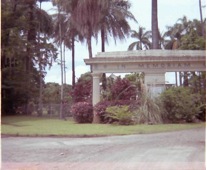
Mulgrave Sugar Mill, Gordonvale, QLD. Photo by Sandshoe

It is the 25th day of April, Anzac`Day. I write thinking on my own experience of war that I know of at first hand, contemporary wars of media and guided attack missiles, how will I finish this essay. With a flourish or a whimper. I turn desultory pages in my mind, the boys of the family marching in front of me out of my mother’s family about one of whom it is known he lied about his age to get accepted into military service in the First World War and he was wounded. He was wounded again (I think again). I remember him as a loving and gentle gentleman. My sister all those years ago won the prize for an essay that was the annual competition, What Anzac Day Means to Me. My older brother I learn from a Trove search had won in his year the same essay competition. I think I relearn that. I think I wanted to win the same essay competition. We marched. I marched, young and soon without them, fearful because I was younger by far and my siblings had left our country town in the Far North of Queensland to follow dreams, higher education, to make their way. One thing leads to another. The heat of the sun exemplifies Anzac Day, the raucous retort of the 21-gun salute, my white dress, blue beret, the badge of a Pathfinder, the later years of a Brownie and a Girl Guide of the Scouting Association, the toggle, the brown beret, blue slouch hat.

I am opposed to children being sent to war at a distance, disengaged from their families, not only because of the inhumanity of the gesture but because the effect is generational. The psychology of forebearance of loss is a learned response. It translates to emotional loss, physically violent loss, the loss of possessions, home and family. It tolerates significant onslaught on dignity, raises the pain threshold beyond potential endurance. Coming to understand I am from a military family in the sense everything I have learned as a child from my father is an acculturation in militarism and discipline, I propose it is the death of my antecedent, John Wilson in Edinburgh Castle 156 years ago that has lent me every appearance of the courage I have been told I exhibit, which is tolerance of grief and dislocation whereas change is requisite.

When we laud the traditional concept of courage, equally, by inference holding up for social example a soldier particularly because he has successfully applied for enlistment regardless under-age we might be best advised to recognize a problem of the administration of the law. For successive years the debate raged in the House of Commons, result of a continuously thwarted attempt to introduce an Amendment of s. 76 of Army Act as follows; I quote from Hansard (HC Deb 17 April 1928 vol 216 cc97-113]:

§ “In Section seventy-six of the Army Act (which relates to the limit of original enlistment), after the word ‘person,’ where that word first occurs, there shall be inserted the words ‘of not less than eighteen years of age,’ and after the word ‘may,’ where that word first occurs, there shall be inserted the words ‘upon production of his birth certificate.'”

Mr. DUNNICO

I beg to move, “That the Clause be read a Second time.”

The substance of the Clause, if not its actual terms, has been moved now for several years. Hitherto the Government have refused to concede the request contained in it, and if to-night there is nothing original in the Clause or in the speeches supporting it, I hope there will be something original in the Government’s reply, and that it will be affirmative rather than negative. The request in the Clause is a very sane, sensible and reasonable one and, on grounds of principle or expediency, there is no real answer to the case. We are simply asking that the procedure governing entrance into the Army shall be brought into line with that governing entrance into any business house or bank, the teaching profession, the Civil Service, the Inns of Court and all professions. I have never been accused of being unduly biased on the side of the defence forces of the country, but I recognise that, under existing conditions, a defence force is necessary and, in view of that, I see no reason why the calling of a soldier should not be as honourable as any other professions. Yet, if the answer of the Minister last year to this request is to be taken seriously, he hardly accepts that view. He gave two reasons for refusing this request. The first was that it was necessary to take recruits under 18 to maintain the band. That is rather a paltry excuse for embarking on so serious a procedure. The other reason he gave was that, if a birth certificate were demanded from the new recruit, it would hinder recruiting. I admit there may be occasions where its production might give certain private domestic information which the applicant would prefer to keep private. That argument, if it be an argument at all, would apply not only to the Army but to every other calling and profession.

I ask the Minister of War whether he would be in favour of exempting applicants for the Civil Service, the teaching profession, the Inns of Court, or a business house from producing their birth certificates, because, if there be an argument against the production of birth certificates on enlistment, there is a far greater argument for exempting those entering the Civil Service from producing their birth certificates than there is for exempting those entering the Army under 18 from doing so. In the first place, the entrant to the Civil Service or a profession has a certain degree of freedom. If he dislikes it, he can retire from it, but the boy under 18 who joins the Army has mortgaged his liberty and freedom for many years ahead and has really affected his whole future life. (HC Deb 17 April 1928 vol 216 cc97-

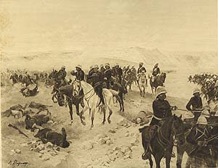
Kandahar, 1879 by Henry Dupray

http://www.military-art.com/mall/more.php?ProdID=5462

92nd Highlanders at the Battle of Kandahar by Richard Caton Woodville

http://www.military-art.com/mall/more.php?ProdID=5462

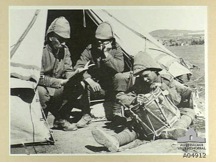
The English drummer boy’s letter (1901).

http://cas.awm.gov.au/photograph/A04912

William Barclay Binning

26 Thursday Apr 2012

Posted by Therese Trouserzoff in Sandshoe

≈ 13 Comments

Tags

William Barclay Binning, WWI Poetry


Contributed by Sandshoe (Christina Binning Wilson).

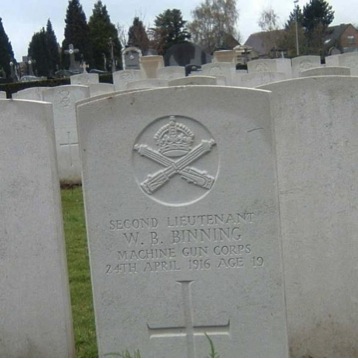
My late father, George Wilson, was 11 years of age when his cousin, Willie, was killed in France. The First World War Poetry Digital Archive contains a comprehensive project detailing the memory of William and can be accessed at the link below the image: if ever a diary project conveys an unavoidable sense of the waste of war the project presented does. In memory of William Barclay Binning.

http://www.oucs.ox.ac.uk/ww1lit/gwa/document/9630/8675

 Acknowledgement: ‘This item is from The First World War Poetry Digital Archive, University of Oxford (www.oucs.ox.ac.uk/ww1lit); © [Beath High School/Contributed by Christine Plummer]’.

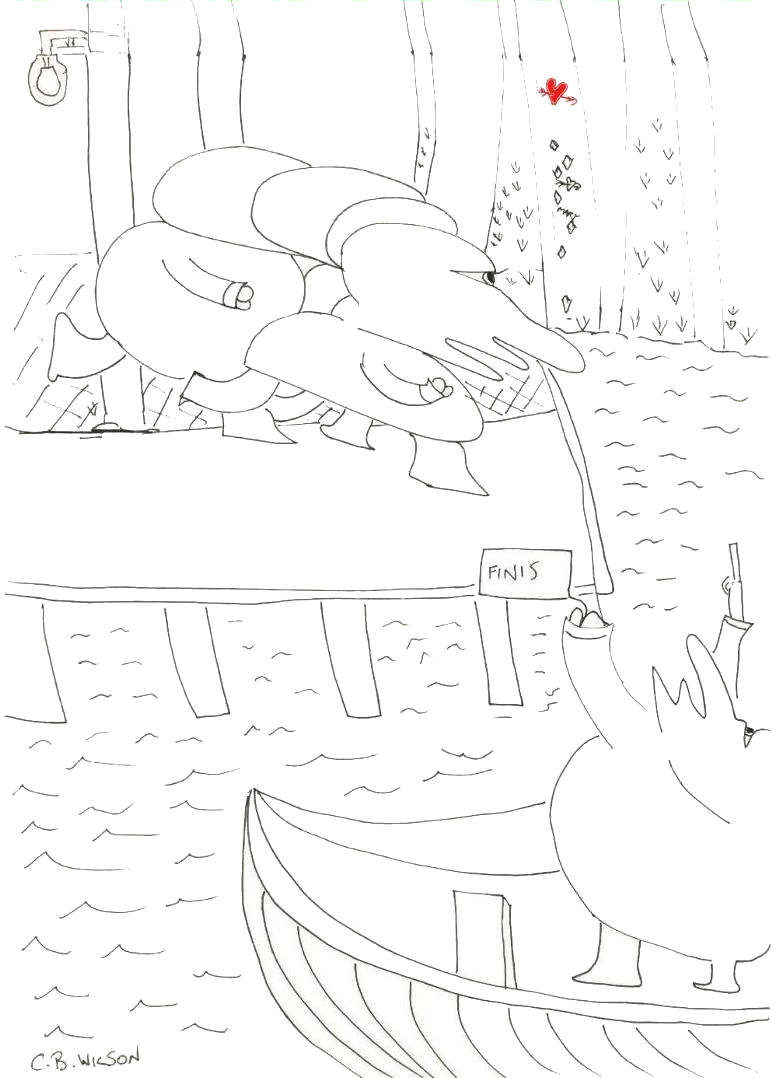
Finis

26 Sunday Feb 2012

Posted by Therese Trouserzoff in Sandshoe

≈ 16 Comments

Same thing, different wall hanging (NZ,1988...fine line pen, pencil, computagraphic).

Graphic by Sandshoe

The Castle: Episode 3 – Frühlingsrauschen

16 Thursday Feb 2012

Posted by Therese Trouserzoff in Sandshoe

≈ 29 Comments

Tags

Frühlingsrauschen, The Castle

Uptown: drawing in the dark behind the Diner.

Story and Illustration by Sandshoe

Readers who might have missed Episode 1 – November 2010 – may wish to catch it here https://pigsarms.com.au/2010/11/22/the-castle-episode-one-the-florist/

Similarly, Readers, Episode 2 – April last year – is here https://pigsarms.com.au/2011/04/02/the-castle-episode-2-wooden-%E2%80%93-it-%E2%80%93-be-%E2%80%93-nice-%E2%80%93-to-%E2%80%93-get-%E2%80%93-on-%E2%80%93-with-%E2%80%93-your-%E2%80%93-neighbours/


Suse opens her eyes.  She begins to speak again and there is no apparent lapse of reason or fault of logic between the sentence on which Suse succumbed to slumber and this next. Who is there to know other than her audience of one she had been mid-sentence and nodded off recounting to her interviewer the rules of the workplace Suse knows in its every corner and nook.  Her eyes beneath lank  eyelashes are a tranquil hazel flecked with the colours of the spectrum and all their shades including there is violet. Her lightly freckled face is pale representing more than any other aspect of her existence a life spent indoors. Nothing is prettier than Suse’s hair however dulled from an imaginable bounty of flecks of gold, bronze and titanium naturally curling and tousled about a casually inserted pair of hairpins. Suse is the princess in the tower who has come down for coffee, petite, pale, polite.

It is as her eyelids lift she speaks.

“No-one much who has not been there would understand we have rules,” she advises, “they are not allowed to kiss.”

Something in her demeanour advises as equally, informs, educates. Her mind is resolute with kind intention. It lacks no clarity in respect of kindness.

Her listener dares not shift her cramped position where she has sat almost breathless while her interviewee napped. She encourages description.

“The client cannot kiss you? How do you manage that? Surely..how…do you have problems enforcing that?”

The steaming coffee is a warmer Suse has embraced as if her small hands need to be thawed.

“No.” She declares her preparedness to communicate, steadfast, resolute, a reliable source of information in this instance of a real and barely imagined world between the two women seated at the table. She explains her clients are regulars because she has been working so long. She has been given privileges. They can be trusted. By and large, customers do heed the rules in the first instance.

“I feel sorry for them, why they are there, who they are, what they tell me, how they live. They say thank you.”

She waves one hand free of the coffee mug before replacing it.

“We don’t have much here at home but, you know, we are lucky we have this.”

Behind Suse, past where sunlight is playing at the tips of her hair the oak tree on the gullyside opposite the stark verandah off the empty coconut wood kitchen and a sun room has caught a gust of wind and translated it into song, through the rustling of its leaves. The brief trill followed by the o, so characteristic klok-klok-klok of the song of a tui has never ceased. A parlour piano can be heard starting up as if in the hidden distance behind the oak tree tinkling without the intervention of human hands. Sight unseen. It is of water beginning to flow and racing, of the tumble of cracking ice and snow melting, of branches breaking and being swept into the melee that the piano is singing.


Sandshoe

15/2/2012

← Older posts
Newer posts →

Patrons Posts

  • The Question-Crafting Compass November 15, 2025
  • The Dreaming Machine November 10, 2025
  • Reflections on Intelligence — Human and Artificial October 26, 2025
  • Ikigai III May 17, 2025
  • Ikugai May 9, 2025
  • Coalition to Rebate All the Daylight Saved April 1, 2025
  • Out of the Mouths of Superheroes March 15, 2025
  • Post COVID Cooking February 7, 2025
  • What’s Goin’ On ? January 21, 2025

We've been hit...

  • 734,490 times

Blogroll

  • atomou the Greek philosopher and the ancient Greek stage
  • Crikey
  • Gerard & Helvi Oosterman
  • Hello World Walk along with Me
  • Hungs World
  • Lehan Winifred Ramsay
  • Neville Cole
  • Politics 101
  • Sandshoe
  • the political sword

We've been hit...

  • 734,490 times

Patrons Posts

  • The Question-Crafting Compass November 15, 2025
  • The Dreaming Machine November 10, 2025
  • Reflections on Intelligence — Human and Artificial October 26, 2025
  • Ikigai III May 17, 2025
  • Ikugai May 9, 2025
  • Coalition to Rebate All the Daylight Saved April 1, 2025
  • Out of the Mouths of Superheroes March 15, 2025
  • Post COVID Cooking February 7, 2025
  • What’s Goin’ On ? January 21, 2025

Enter your email address to subscribe to this blog and receive notifications of new posts by email.

Join 374 other subscribers

Rooms athe Pigs Arms

The Old Stuff

  • RSS - Posts
  • RSS - Comments

Enter your email address to subscribe to this blog and receive notifications of new posts by email.

Join 374 other subscribers

Archives

Website Powered by WordPress.com.

  • Subscribe Subscribed
    • Window Dresser's Arms, Pig & Whistle
    • Join 280 other subscribers
    • Already have a WordPress.com account? Log in now.
    • Window Dresser's Arms, Pig & Whistle
    • Subscribe Subscribed
    • Sign up
    • Log in
    • Report this content
    • View site in Reader
    • Manage subscriptions
    • Collapse this bar
 

Loading Comments...