• The Pig’s Arms
  • About
  • The Dump

Window Dresser's Arms, Pig & Whistle

~ The Home Pub of the Famous Pink Drinks and Trotter's Ale

Window Dresser's Arms, Pig & Whistle

Category Archives: Susan Merrell

What Price National Pride ? The PNG solution

23 Tuesday Jul 2013

Posted by Therese Trouserzoff in Susan Merrell

≈ 36 Comments

Tags

asylum seekers, Kevin Rudd, Peter O'Nell, Susan Merrell

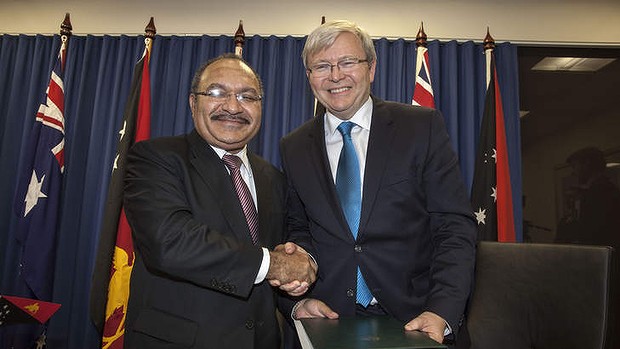
rw-letters-wd-20130721203815792240-620x349

By Susan Merrell

And he sold our reputation,
On the proceeds he will dine,
In a land of golden plenty…
Where just the dregs are mine.

(With apologies to) Idris Davies

The bilateral PNG solution to Australia’s refugee problem is wrong on so many levels but I am going to address just one:

…from the point of view of Papua New Guinea

It is already well recognised that the agreement is a cynical and expensive exercise at vote grabbing by the desperate leader of an ailing Labor Party whose wresting of power from Julia Gillard at the eleventh hour requires him to pull a rabbit out of a hat.

And does Rudd care about the consequences for anyone other than himself, first, – the Labor Party, second  – and Australia, third?  I doubt it.

There are more people to consider: like the refugees (who have many people advocating, quite rightly, for them including the UN).

Then there’s PNG. 

Here we have a nation battling to achieve modernity: struggling with the concept of democracy where pulling together over 800 discrete tribes into a nation is proving a challenge.  Here’s a nation that achieved independence only 37 short years ago  – some have mooted it was premature. Poverty is rife, as is governmental and institutional corruption.

The tortured transition to modernity combined with abject poverty and lack of government services has produced profound social problems, not least of which is violence against women.  Indeed PNG is a recognised producer of refugees – most of them women fleeing domestic violence.

Add to that law and order problems and a population that have embraced a form of punitive and retributive Christianity that sees homosexuality and adultery still on the statute books and a population generally intolerant of religious difference.

Under the circumstances, it is a society hardly likely to take kindly to the special privileges that will be afforded refugees through Australian money – a better life than they could ever hope for.  Can you blame them?

The main problem is not logistical, it’s ideological.

If you are going to say to the abused spouse that if he wishes to pursue Cinderella, he will be forced to marry the ugly sister – how must that make the sister feel?

PNGeans are not comfortable with the role of ugly sister, and neither they should be.

The whole idea of using the threat of living in PNG to deter refugees is repugnant.  PNG is a nation struggling to maintain national pride through all of their profound problems, not helped when even the ‘touchy, feely’ Green Senator Milne, insensitively stated that Rudd’s solution surpassed even Abbott’s in cruelty to refugees.

When international headlines have labelled PNG as ‘Hell’, a ‘shithole’ and other equally pejorative terms, how does PNG maintain a vestige of national pride?

The cartoonist, Larry Pickering postulated that:

The only cost to O’Neill is that his country will now be known as a worse hell-hole than the world’s worst hell-holes.

It’s a price far too high!

In a land of poverty and strife where just existing is often difficult, O’Neill has sold cheaply one of the few things that PNGeans have to embrace and hold dear – their pride.

Gary Juffa, a new breed of Member of Parliament who is fiercely patriotic and who sits on the middle benches (ie neither government nor opposition) wrote:

…Australia is sending them [refugees] to a nation that is a developing nation with many issues of its own to contend with…in the international landscape, PNG is painted as a horrible place, IT IS NOT! I am saddened that my home is being used to deter people, scaremongering as it were…I welcome those who need help but what if they do not want “OUR” help? No body wants a hostile guest…

Introducing: Papua New Guinea’s number 1 citizen and signatory to the agreement

Independence in PNG brought into prominence an echelon of society that is venal, corrupt – and ruthlessly so.  This stratum is the highest in the land. It is well understood in PNG that the only way to riches is through becoming a Member of Parliament where one can put one’s snout in the lucrative corruption trough.  It is why there were close to 3000 candidates contesting 111 seats in the last election.

At the very highest of this echelon is the man who, last week, sold the reputation of PNG for ‘cargo’ (a concept well entrenched in PNG tradition):  to achieve that which venal governments should easily have achieved long ago had they not stolen government funds:

He is Peter O’Neill, the Prime Minister of Papua New Guinea.

In the early ‘noughties’ O’Neill was embroiled and implicated in a corruption scandal that saw millions of dollars disappear from the coffers of the National Provident Fund.

Although he was named in the Commission of Inquiry (along with others,) no one was ever convicted of any offence – which is par for the course in PNG.  Corruption is a low-risk business.  O’Neill’s case did not even reach the courts but was dismissed through lack of evidence – evidence that was clearly extant during the Inquiry.

With half the annual budget regularly going missing to corruption, who knows how much of Rudd’s blood money will even reach its PNG target.  The Australian Prime Minister’s desperation is making O’Neill’s negotiations like shooting fish in a barrel.

The agreement promises that PNG will have more control over aid monies, for instance, something for which O’Neill has been agitating since his inception as Prime Minister.  That notwithstanding, the very reason that Australia stopped contributing aid to the general national budget was to give the politicians and public servants less control and thus to stop funds disappearing into well lined pockets.

A national disgrace

No nation can thrive without national pride.

Without national pride to cement civil society, Papua New Guinea’s problems are just poised to worsen.

When Kevin Rudd positioned PNG as the proverbial repulsive ugly sister, for the Prime Minister of Papua New Guinea to have, smilingly, agreed is nothing short of treason.

O’Neill should be in the business of nation building not nation (and soul) destroying.

Seven million Papua New Guineans are struggling to maintain their national pride against great social and economic odds. Take away pride and you take away the last vestiges of hope.  How dare this Prime Minister?

This Judas got his 30 pieces of silver.

Namah’s no more: The rise and fall of a would-be dictator.

07 Tuesday Aug 2012

Posted by Therese Trouserzoff in Politics in the Pig's Arms, Susan Merrell

≈ 14 Comments

Tags

Belden Namah, PNG Elections

Bye Bye

By Susan Merrell

It’s known as the ‘Land of the Unexpected’ – a character-defining phrase worn as a badge of honour by Papua New Guineans.

‘Expect the unexpected’ is the catch-cry of the PNG Tourism Authority – but he didn’t !

Belden Norman Namah had high expectations that a combination of unharnessed power, bullying, self-serving, rushed legislation that would nobble his political opponents and buckets of money ($AU15 million alone spent on his election campaign) would mean certain success in his quest to become the Prime Minister of what would be, after the June 2012 elections, the indisputably legal government of Papua New Guinea.  The expectations remain unfulfilled.

Political Ascendancy

When newly-elected MPs walked into the parliamentary chamber for the first time since the election last Friday (August 3), it had been almost a year to the day since Namah had led a political coup and become Deputy Prime Minister of Papua New Guinea in a legally-disputed government

A self-confessed “Multi-billion-dollar logger” who was not only Deputy Prime Minister but also Minister for Forestry  (after having held the portfolio in the previous government of Sir Michael Somare – tell me the irony hasn’t been lost) he had expended much cash and energy to bring about the coup.  He was widely touted as the possible saviour of PNG.  He promised PNG a new “young and vibrant” leadership.

PNG got far more than it had bargained for.

Ruthless and arrogant, not for Belden Namah the niceties of diplomacy. A military man, Namah takes no prisoners, leaves no bridge unburned.  His raw ambition was palpable and no one would stand in his way – his fortune guaranteed that – or so he thought as he bulldozed his way through the next twelve months.  Prepared to do whatever it took to hold onto power, he seemed unstoppable.

Namah’s errors of judgment and decency (and this list is not exhaustive)…

Namah’s lack of diplomacy extended to his coalition partners (government is always a coalition in PNG – the party system being weak.).  Public humiliation was a well-used weapon in his arsenal.  Within months, for example, on national radio, he called for the resignation of the Prime Minister to whom he was deputy. It was the first Prime Minister O’Neill had heard of Namah’s displeasure.  The rift was quickly patched up but it left scars.

To Don Polye, the former Deputy Prime Minister under the Somare regime, then a Minister in the O’Neill/Namah government, Namah gave the command in earshot of journalists at a National Executive Council (NEC) meeting to”…f**king shut up”, when Polye had the temerity to disagree with Namah.  In fact, it is widely reported that Namah would, without mincing words, remind the members of the NEC who it was that had put them there.

He was no less outrageous in how he dealt with the people of his electorate.

For while Namah eventually won his seat this election, he was initially trailing badly in some districts – before his final romp home on preferences. In his victory speech he acknowledged the districts that didn’t vote for him by telling them of his intention to represent, in parliament, only the districts that had voted for him – not the whole electorate.  Those that hadn’t could look forward to”…five years of suffering”  (five years is the parliamentary term).

Internationally, and during his tenure, the man had embarrassed the people of PNG and his government when a previous drunken, debauched episode at Sydney’s Star Casino made headlines in Australian newspapers.

It wasn’t confined to Australia either: tensions between Indonesia and PNG were manifest when a private jet flying Namah and a coterie of ‘hangers on’ was buzzed by Indonesian fighter jets.  It is widely suspected that it had something to do with large amounts of cash that was on board (literally millions) and an Indonesian fugitive suspected to have been on the flight.  No one has told the truth behind this incident – not Indonesia, not Namah.

Back home in Port Moresby, in May of this year, Namah violated the sanctity of the PNG courts in his vendetta against the Chief Justice (who had ruled the government formed after the coup as illegal – twice).  Namah stormed into the Supreme Court, interrupting the court while it was in session leading a contingent of soldiers and police.

From the back of the court Namah pointed at the Chief Justice and shouted: “Arrest him.  Arrest him”.

Namah’s henchmen hesitated, recognising the enormity of what they were about to do, giving Sir Salamo Injia, Chief Justice of Papua New Guinea a window of opportunity to leave via a side door and avoid the ignominy of being arrested in his own court.  This action was condemned both nationally and internationally.

But it was a timely onslaught as Sir Salamo Injia was scheduled to preside over a charge of Contempt of Court charge against Namah later that day.  He never did.

…proves his downfall

Under the circumstances, why Namah expected that the top job was going to be his for the taking is anyone’s guess.  But he did.

During the ‘horsetrading’ period after the elections, (between when seats have been declared and government is formed) when alliances and coalitions are moulded and where the stronger parties do the necessary to attract numbers, doubt had obviously crept in as Namah’s PNG Party took out a full-page advertisement in the national newspapers inviting newly-elected members to join the party.  Namah stated that he would be amenable to giving away the Prime Ministership – as if it were his to give.

It was desperation.

Namah’s previous coalition partner and former Prime Minister Peter O’Neill held prime position with his party winning most seats, (hence would be invited to form the government by the Governor-General). In fact O’Neill had three times more winning MPs than Namah whose party had fared particularly badly, including losing one of his deputies.

O’Neill’s coalition would not be entertaining Namah making it almost certain that Namah would not be in government at all.  O’Neill had the numbers approx. 80/10.

Yet Namah’s supporters held to the futile hope that he would produce an 11th hour upset – such a figure of legend had he become.

On Friday 3 August 2012, on the floor of the parliament, Namah’s rejection for Prime Minister of Papua New Guinea was manifest. The newly sworn in MPs voted 94-12 in favour of O’Neill as Papua New Guinea’s next Prime Minister.  Namah’s arrogance had not served him well. A pathetic figure, he sat amongst 11 other men in a field of 111 (that, happily, included two women on the government side).

In this I played my part

This writer has spent 9 months waging a media campaign against this man in the PNG social media pages and the blogosphere, I’m extremely pleased with the outcome for PNG and am proud of any small part I may have played in his downfall.

In the immediate aftermath, in the social media, I posted.

“On 1 August 2011, Belden Namah was Leader of PNGs Opposition. Almost a year to the day, 3 August 2012, he is, once again, Leader of the Opposition.
In the interim he’s spent probably upwards of 50 million kina on a political coup (only partially successful) and an election campaign that gave him back his seat and not much else.

In the interim he has decimated a political party who went into the elections with 25 sitting members which is now reduced to around nine.

This is probably the most spectacular failure I’ve ever witnessed. ”

“A failure well deserved”

Dictators I Have Known – (PNG since August 2011.)

02 Wednesday May 2012

Posted by Therese Trouserzoff in Susan Merrell

≈ 8 Comments

Tags

Belden Namah, dictator, PNG

Belden Namah - image borrowed from http://profile.typepad.com/nancysullivan

By Susan Merrell

Hallo again, to all patrons of the Pig’s Arms. 

I apologize for neglecting to do my part to keep the pub in material, whether informative, controversial, or just entertaining. 

As my excuse: I have lately employed my time with the politics of PNG – to say I’m embroiled would be an understatement.

Hereunder is an article I wrote a few months back on some of the current political happenings.  It was published in PNG. 

——————

Quick background for those who don’t follow PNG politics:

In August last year, with the Prime Minister and Grand Chief Sir Michael Somare having been critically ill in Singapore for many months, a parliamentary coup took place where over 50 members of the government went over to the opposition ranks, including the very powerful Speaker.

The then leader of the opposition, Belden Namah was the architect of the coup, using his wealth (he’s a multi-billion-dollar logger).  Rumour has it that he paid from 50,000 kina ($20,000) for the most-lowly MP – 5 million kina  ($2 million) for the Speaker. In PNG money (and often only money) buys loyalty and ‘horse trading’ is a feature of all elections.

BUT the coup was conducted under dubious legal conditions (a vote of no confidence was not an available alternative under the constitution so close to the elections.)

Peter O’Neill was installed as Prime Minister – from a different political party (there are dozens of political parties in PNG), nevertheless the real power resides with Namah who took on the role of Deputy Prime Minister.

At first the people lauded the new government as a welcome respite from the previous corrupt one and they were hailed as the saviours of PNG (notwithstanding that the faces were largely the same).

Yet, the legality of the coup was never fully accepted and a court challenge was mounted to establish their legitimacy, which the new government lost. The government chose to ignore the court and have since countered by trying to use their parliamentary numbers to nobble the judiciary.

Removing the Chief Justice, who is their strongest opponent, has almost become their raison d’être  

Meanwhile, the people were horrified that this government should wilfully ignore the precious constitution that they call the ‘Mama Lo’  (Mother law).  PNG is a constitutional democracy and the constitution is revered.

It was the start of the slippery slope from saviours to oppressor.

——————–

Well…actually… I don’t know any personally, but in my studies I have encountered many.  They have similar characteristics.  Their methods are eerily formulaic in their sameness.

WARNING: The people to whom they dictate rarely live ‘happily ever after.’

Belden Norman Namah is Deputy Prime Minister of Papua New Guinea, Minister for Forestry (a handy portfolio when your personal fortune is tied up with logging), Minister for Climate Control (ditto), Acting Minister for State Enterprises and Acting Minister for Defence.

Under the circumstances, there’s little wonder another commentator called him ‘Belden the Ubiquitous’  (Please forgive me if he’s returned any of his acting ministries to their rightful owners and I’ve missed it)

Namah is a Prime Ministerial ‘wannabe’; an ambition he informed me of personally because he is someone with whom I’m acquainted.

Late last year, he puffed out his fleshy chest and boomed:  “After December 8, I WILL BE THE PRIME MINISTER OF PAPUA NEW GUINEA.”  Nostradamus he aint.

Nevertheless, as a military man, I much admire Namah’s record in Bougainville – his sacrifice was beyond doubt. Yet, Adolf Hitler won the Iron Cross, First Class for bravery in the First World War and we all know what he went on to do, don’t we?

The word ‘military’ seems fatally attracted to the word ‘dictator’ –

Idi Amin, General Franco of Spain, Pinochet of Chile, Mussolini, Muammar Gadhafi, Suharto of Indonesia… I could go on, but I think you’ve got my point.

There are signs that the O’Neill/Namah government are going down the path to a dubious political future, in a push led largely by the ostentatiously wealthy Deputy Prime Minister.

Ominously, ostentatious wealth is a characteristic of many of the most heinous dictators. Idi Amin, for instance, who was often characterized as a buffoon.

Command of the army

Rationale:        ‘He who commands the army, controls the nation:’ is a well-known paradigm that I’m sure is taught in – ‘military intelligence 101’.  (Although I’ve always thought that ‘military intelligence’ was an oxymoron.)  It’s no mere coincidence that many dictators are military men.

Belden Norman Namah is a graduate of Australian Military College, Duntroon, rising to the rank of Captain in the PNGDF (or was that lieutenant? – Information surrounding his military service is a bit elastic.)

During the recent attempt at a military coup by the Somare faction on 26 January this year, Belden really showed them who had the upper hand.  In fact, so in need was the Prime Minister of Namah’s ‘iron fist’ that he made him Acting Defence Minister.

Guma Wau, the actual Minister for Defence is not happy at Namah usurping his role.  That’s too bad for Wau, who will be adequately taken care of soon by those charges of stockpiling illegal ammunition that was found at his home.  Pure serendipity?  The co-incidences of good fortune just keep piling up for Namah.

Quashing of opposition and the formulation of a ‘one party state’

Regimes.          Most sub-Saharan nations following independence, including Congo and Rwanda. Also the former Soviet Union and Liberia, where the ruling party managed to hold onto power for more than a century this way.

It seems to be yet more good fortune for O’Neill/Namah that they have no official opposition, save for two members. What motivated the wholesale defection of Somare supporters to this new government?

Altruism?  Ha!

Ben Reilly in his paper entitled Africanisation of the Pacific points out that being part of the state machine is the best (sometimes only) means of gaining wealth and accessing and exploiting resources in many Pacific nations – as such being on the winning side is everything – staying in power imperative – see below.

Suspend the Constitution

Example:         The military government of Suriname suspended the constitution on attaining power in 1980.  When in 1982 there was a push for return to civilian control the military government responded by murdering 15 people – journalists, lawyers and trade union leaders (see paragraph ‘Censorship’).

Namah is currently in the process of a push to defer elections.  His reasons seem well…reasonable (if you disregard the Royal visit furphy).  Ah yes, but the government will need to suspend the constitution to do this legally.  More serendipity?

Without a constitution, the executive and legislature has no checks or balances – the people of PNG are left exposed and vulnerable, dependent on governmental goodwill. History tells us dictators very rarely have any.

“No one is above the law,” said Namah.  With his legislative numbers, the law is what he wants it to be – and if not he can change it.  The Supreme Court’s role is to interpret the Constitution – but under these circumstances there won’t be one in use.

So far, the CJ has refused to let the executive suspend him, so rendering him redundant would be the next best thing. Bingo!

Nepotism and patronage

Example:         Many dictatorial regimes retained power by putting their cronies into well-paid, powerful positions.  Furthermore, they often mollified those who may have harboured dissension by patronage of a similar sort.  If that didn’t work they were often ‘fitted up’ (flashback to Guma Wau) or sometimes  just…disappeared.

Charles Litau, a PNG party apparatchik was made head of Telikom, recently.  Then there was Mrs. Maladina, wife of the eldest Maladina son who got the plum Brisbane diplomatic posting.  Other Maladina sons include Moses, Minister for Public Service in the Somare government and one of the August defectors who was given the Urban Planning portfolio in the new government. Then there’s Jimmy whose name is inextricably linked to that of Prime Minister, Peter O’Neill by an alleged fraud carried out on the National Provident Fund – still to be investigated by the recently appointed corruption ‘Sweep team’.  Is it politically expedient to keep this dynastic family happy?

Perhaps both were merely the best people for the job?

Ethnic Persecution

Ethnic persecution, while not confined to military dictatorships is nevertheless a feature of most of them. Uganda springs immediately to mind, as does Nazi Germany.

Of all the corruption cases in PNG that could be investigated, the balance has been weighted in favour of those implicating Somare or his ‘kitchen cabinet’.  First it was Arthur’s baby, the IPBC, then it was the tabling in parliament of the discredited Defence Inquiry. But by far the most questionable investigation has been against the East Sepiks who were the instigators of the Supreme Court Reference against the legitimacy of the current government.  Go figure.

The people of the East Sepik closely identify with Sir Michael Somare and ethnic persecution by association is written all over this investigation. There needs a wholesale suspension of disbelief not to suspect ulterior political motives.

Censorship

Example:         To give a single solitary example would be to downplay the importance of controlling information in dictatorial regimes.

Ben Micah, Chief of Staff, Prime Ministers Department last week sent out a press release warning against the dissemination of incorrect information or information that could destabilize the government (as if saying it in one breath, makes those two things the same.)

Apparently, the National Intelligence Office is monitoring your every utterance and PNGeans are tasked with being “vigilant” against dissenters and to report them.  The Nazis encouraged the same.

Well, Ben Micah, tell your bosses that the people of Papua New Guinea are watching them too.

It’s time to bring this ominous political trajectory to a halt.  It’s time to turn Belden the Ubiquitous into Belden the Irrelevant.  There’s a viper in your midst, PNG

POSTSCRIPT:  You may remember that Belden Namah featured on the front age of the Sydney Morning Herald a few weeks ago in relation to the Star Casino where he was named as the Minister from a foreign country who sexually harassed a male croupier while betting in the high-rollers room with $800,000.  I am proud to say that my fingerprints were all over that revelation.

Interestingly, the Gillard government was quick to recognise the new regime – not waiting for the outcome of the Supreme Court challenge.  A faux pas if ever there was one!

Moti’s Illegal Deportation

09 Tuesday Aug 2011

Posted by Therese Trouserzoff in Susan Merrell

≈ 5 Comments

Tags

Julian Moti, Susan Merrell

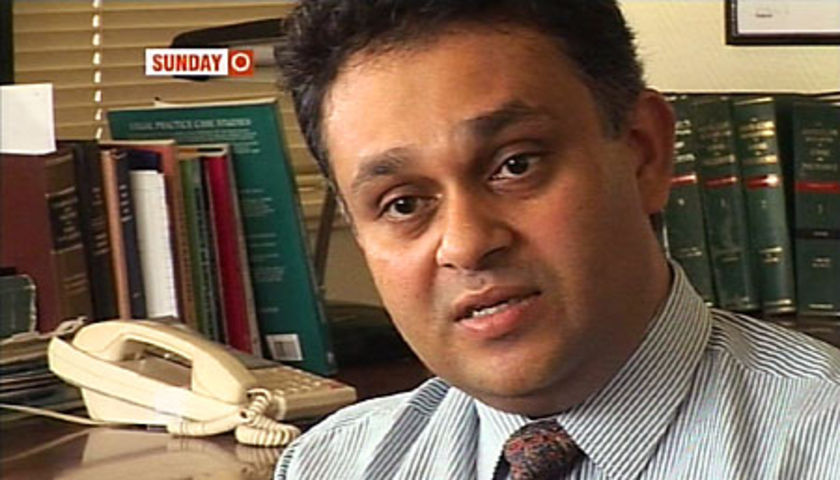
Julian Moti

Story by Susan Merrell

Aussies not aiding Solomon Islands to uphold the rule of law

Canberra: In Australia’s High Court last week, Justice Heydon, one of seven judges hearing the appeal of former Attorney General Julian Moti, conceded that although Moti’s 2007 illegal deportation from the Solomon Islands was a decision of the Solomon Islands’ government, Australia failed to fulfil its mandated role (under RAMSI).

“We [Australia] went to the Solomon Islands in order to restore the rule of law,” he said.

“What happened on 27 December [the illegal deportation] did not involve the Australian Government participating in a process of restoring the rule of law.”

Moti was in court appealing for a permanent stay of prosecution as redress for Australia’s alleged abuse of executive process – i.e. deportation, in contravention of a court restraining order that gave him 7 days to appeal.

Also in court both days observing proceedings was Solomon Islands High Commissioner BerakiJino.

The 2007 deportation led directly to Moti’s subsequent arrest in Brisbane and brought him wrongfully into the jurisdiction of the Australian courts.

Ian Barker QC for Moti, argued the Australian authorities ‘connived and colluded’ with the Solomon Islands government to effect what counsel described as an “abduction.”

Commonwealth Director of Public Prosecutions (CDPP) argued to the contrary that Australia was rightfully disinterested in the internal processes of another sovereign governmentand evidence was led includingofficial emails to Australian personnel in Honiara telling them to maintain the correct protocol and not become involved in the Solomon Islands deportation process.

However, there was competing evidence that these directives weren’t obeyed – including correspondence by AFP officers and other officials discussing and making arrangements for the departure of Moti via deportation.

Canberra’s wrongful involvement was further highlighted by a travel document emanating from the Australian High Commission, issued via instructions from the Australian capital.

It was issued without the request of Moti and was the document that facilitated the deportation.

The Justices questioned whether the Australian authorities could and should have denied supply of this document as they were aware of the illegality of the process it would serve.

CDPP argued that the Australian authorities, in issuing the document,were acting on legal advice from the Solomon Islands that the deportation was legal.

In response, Justice Heydon said the legal reasoning behind the advice was ‘laughable’ and furthermore that the Australian authorities had never accepted the veracity of that advice “for a moment.”

Justice Susan Kiefel, commented that given that the Australian authorities had the choice to deny issuance of the document, especially as they knew it was to carry out an illegal activity – that “…in that exercise of choice there may be the collusion.”

With the full bench of the High Court not calling for any evidence from the Commonwealth Director of Public Prosecutions (CDPP) on the second ground of appeal – the excessive payments to witnesses, making it likely that this ground will be thrown out – Moti’s case will be decided on Australia’s inappropriate’collusion’ in the unlawful deportation process.

The court reserved its judgment and a verdict is expected in the coming months.

Should the appeal be upheld, Moti will be granted the permanent stay of prosecution if not, the court case emanating from the 2006 charges of child-sex tourism from an alleged statutory rape in Vanuatu in 1997 will go ahead.

First published in the Solomon Star – Monday 8 August

Welcome to PNG. Her name is Theresa. She Murdered Her Husband.

19 Sunday Jun 2011

Posted by Therese Trouserzoff in Susan Merrell

≈ 11 Comments

Tags

PNG, violence against women

Medang, PNG.

Story and Pictures by Susan Merrell

Greetings from Papua New Guinea.

As Air Nuigini flight PX2 came in for landing at Jacksons Airport in PNG’s capital Port Moresby the PNG national resplendent in his colourful striped beanie sitting behind me let out an excited whoop.

“My country, my Papua New Guinea,” he said very loudly and rapturously

“Expect the unexpected, land of surprises,” he continued enthusiastically citing every tourist board slogan that he could remember in his advanced intoxicated state.

When the aircraft came to a halt on the tarmac, he stood.

“Welcome to Papua New Guinea,” he said to all and sundry, arms outstretched to the applause of a half-empty plane.

While I don’t quite share this man’s unbridled enthusiasm for the country, nevertheless I am somewhat intoxicated by it.

This is my third trip this year.

Those of you who have followed my writing and read my articles (thank you) will have noticed that more and more of my focus has been directed to the Pacific.  It started with my association with Sir Trevor Garland, the Honorary Consul-General of the Solomon Islands, through to the Julian Moti affair and beyond.

Much more than Australia, it has been the Pacific countries that have embraced me and my writing and I now find that I am published much more in the Pacific than in Australia.  My association with the Pacific has also enabled me to branch out into radio and television. I have contributed to radio in Solomon Islands, PNG, Vanuatu and Fiji and Television in PNG.

So here I am in Port Moresby again, in the foyer of the Crowne Plaza Hotel (which I call the Crowne prison because it’s too dangerous for a woman on her own to venture outside).  So what’s the fascination I hear you ask?

And you know, that’s a bloody good question.  The place is extremely dangerous, too dangerous even to catch a taxi.  In the capital cities it’s best that I have a bodyguard when I venture out, even in broad daylight – can you believe that?  Of course I do stand out like the proverbial ‘dog’s balls’ – white skin, blonde hair.  Here, I’m exotic – which is something I’ve always aspired to, but in PNG it’s not a good idea to look different or rich – and yes, in PNG I look rich too.  Extreme poverty is rife.

But for a journalist the politics and the issues here make the Australian socio-political landscape look like sliced white bread – all a bit bland.

PNG is a country that has been dragged screaming into modernity and only some of it. Over 80% of the country still subsists. Some of the more remote areas (and there are a lot of them) still have no electricity. There are precious few roads and most areas have to be accessed by air. The main highways, such as they are, are often impassable. Health care and education is very piecemeal indeed. Ironically, you really take your life in your hands going to a hospital in PNG. When the Prime Minister, Sir Michael Somare got sick and needed heart surgery, he went to Singapore. No one has ever accused the Grand Chief of being stupid – corrupt, yes, stupid, no.

Which brings us to the subject of corruption.  It’s rife in PNG at all levels. Greg Anderson, the head of the Chamber of Mines in Port Moresby likens it to a mafia with tentacles that reach out widely.

Corruption is a by-product of ‘the resources curse’ apparently, and PNG has been surviving on the proceeds of investment in its resources since independence in 1975.  Many people are becoming rich on the back of PNG resources – except the people of PNG – although the economy is doing well with PNG’s GDP about to double thanks to the $15 million PNG Liquified Natural Gas project headed by the multi national Exxon Mobil. And the government is managing the economy well with the country experiencing significant economic growth – delivery of services they aren’t so good at  – shame about the people still dying of preventable diseases in such a rich country.

It’s not so surprising that in this scenario crime is rife and law and order issues are significant. If the major contributing factor is poverty, the prevailing tribal mentality also contributes. Tribal fights break out with regular monotony at the drop of a hat.  Arms hacked off, people killed and this is at a market place in Port Moresby.

Ancient superstitions are still practiced – although now there are laws against them.  Not that long back, beyond the 1930s, some of the tribes were cannibals. Eating human flesh was usually a magical ritual. When in February of this year a man was caught eating his baby daughter alive, it was ‘sorcery’ that was blamed.  The baby died. Thank goodness it was just a girl. (That was an ironic comment in case anyone believes I was serious!)

Theresa

Attitudes to women here are disgusting.  Many consider a female has less value than a pig. A ‘bride price’ is paid for a wife and she’s a man’s possession and not a very prized one at that. Domestic violence is rife at 70% overall. In some areas it reaches to 100%. It’s accepted and has become normalised. Sexual violence towards all females is high with many women saying that they wouldn’t bother to report rape unless it was a gang rape. Rape is no big deal – not to the men anyway. Police are part of the problem, often perpetrators themselves. There are laws that protect women in PNG it’s just that no one takes notice of them.

When I was last in PNG I spent a day at Bomana prison interviewing 11 women murderers.

She murdered her husband - but not before he did this to her.

Of the thirty-eight inmates, thirty-six were in for murder. Yet, murder is not a female crime. But all of these women had been the victims of prolonged domestic violence before the worst of circumstances created murderers of them.

All had either killed their husbands or the other wives or girlfriends of the husband, hoping getting rid of their rivals would stop the man beating them–  (polygamy and promiscuity is rife). All had the scars that proved their stories. When, in the telling,  their stories came to the part where they’d killed, especially if it was their husband, “what took you so long?” was my usual question. I suggest that many of these women would have been found innocent by way of justifiable homicide were they tried elsewhere and not in PNG.

The great irony and shame of all this is that PNG is, geo-physically, one of the most beautiful countries. With Port Moresby being just a three-hour flight from Sydney and less than an hour from Cairns, tourism ought to be flourishing.  Even the ‘Crowne Prison’ in the centre of grotty downtown Port Moresby is on a hill at the centre of a peninsular with the port on one side and the beach on the other – stunning.  Sunsets to die for.

You just need to look past the mean streets that are stained with bright red ‘Buai’ spittle (Betelnut – a national past time.)  The habit of chewing and spitting “buai’ is responsible for the spread of Tuberculosis which has had a few break-outs recently.  Apparently the spittle evaporates in the heat and rises and people breathe in the contaminated air.

On Tuesday, I’ll be going to Madang on the north coast to hear the judgment in a court case involving mining and the environment handed down. I could stay in Port Moresby and get the information second hand but Madang is so gob-smackingly beautiful that you’d have to be mad to miss any opportunity to spend time there.

So many stories, so many surprising contrasts. Papua New Guinea, expect the unexpected.  (Oh my God, I think I’m channelling my bright-beanied fellow air passenger).

Julia Gillard: Her Welsh political heritage.

09 Tuesday Nov 2010

Posted by Therese Trouserzoff in Politics in the Pig's Arms, Susan Merrell

≈ 25 Comments

Tags

Julia Gillard, politics, Welsh

Four Ten Pound POMs

By Susan Merrell

Although I’ve never met our Prime Minister Julia Gillard, her background is so similar to my own that I think of her as ‘our Julia’. It’s how she would have been known to those closest to her in the vernacular of South Wales from where both she and I hail and where, for a time, we lived seven miles apart before both our families migrated to Australia – mine two years after hers.

In the Australian vernacular we were ‘ten pound Poms’. But ‘Poms’ were the English and although used to refer to people from Britain generally, we Welsh knew we were different and that applied particularly to politics. For when England and Scotland voted Conservative last century, Wales never did.

The Welsh novelist and humorist Gwyn Thomas, who hailed from the Rhondda Valley in south Wales once explained to an interviewer that he was born with socialism running through his veins and that it would take the efforts of a whole blood bank to shift him to the right. As for Gwyn Thomas, so it was for many of us.

Although Ms. Gillard hardly had had the time to absorb the political context in Wales before her fifth birthday, her parents, nevertheless, were well versed and clearly imbued Ms. Gillard with this commonplace Welsh political outlook judging by her own rise through the ranks of the Australian Labor Party via the union movement.

In Wales, it was the issues of the coalfield that created the political mindset that has lingered even through shifting paradigms. Coal miners were some of the most exploited and oppressed of all workers even though the mine owners were the some of the richest men in the world (and yes, they were mostly all men).

Welsh miners became militant. Having nothing worth conserving, political conservatism was never a viable option. They organised and unionised to improve their sad lot. They embraced socialism and the Labour Party and they took the rest of Wales to the political left with them.

How ironic then that one of the first issues that Ms. Gillard faced as Prime Minister was the mining super profits tax.

For she was born in the shadow of the docks in Barry built by David Davies Llandinam who was one of the richest men in the world thanks to the ownership of South-Welsh coal mines. He built the docks in Barry to ensure a cost-effective and efficient passage for his coal, in preference to relying on the nearby Cardiff docks.  Davies’ super profits must have been huge!

But it’s not the entrepreneurial Davies – who had risen to his position of wealth from a very lowly beginning (his father was a sawyer) – that Ms. Gillard has identified as her Welsh hero, but one Aneurin (Nye) Bevan, who was one of the architects of Britain’s ‘Welfare State’.

It was our Nye that designed and implemented Britain’s National Health Scheme as part of the 1945 Labour government of Clement Atlee.

Bevan’s move to political prominence in Britain was very similar to Ms. Gillard’s, firstly through the union movement as an official of the very powerful South Wales Miners Federation and then latterly through the British Labour Party.

Yet Bevan often found himself at loggerheads with the unions later on his career, deracinating him from his own union roots as a miner. Did Ms. Gillard’s winding back of the ‘super profits tax’ similarly deracinate her from her natural constituency?

The major difference in the trajectory of both careers resides in the fact that Ms. Gillard was successful in wresting control of the party away from her predecessor and gaining the ultimate political power in Australia whereas Bevan never succeeded in Britain.

For Bevan alienated many in his party. He was authoritarian and difficult.  The press dubbed him the ‘Tito from Tonypandy’ (invoking the authoritarian leader of the then Yugoslavia, Marshall Tito, and Tonypandy where a miners’ strike provoked Winston Churchill, then home secretary, to controversially send in the army to quell it). Hugh Gaitskell, the politician who was the Labour Party’s preferred leader in a two-way tussle against Bevan nicknamed Bevan a ‘Cymric Hitler’.

So are there lessons for Ms. Gillard here?

With so many changes of leadership in our two major national political parties lately, there ought to be.

So, our Julia, heed the lessons well. The legacy of the militant Welsh miners is yours too.  Pob hwyl i chi (Good luck to you.)


Razzle Dazzle ‘Em – at the Pig’s Arms, Susan Merrell

13 Friday Aug 2010

Posted by Mark in Susan Merrell

≈ 5 Comments

Tags

Inquiry, Marcus Einfield, Moti, Susan Merrell

Am I?

By Susan Merrell

While you were watching this ……

As I write, Australia is in the thrall of ‘Utegate’. It’s another ‘Ah ha! Gotcha!’ moment of which we are being served a regular diet.

Malcolm Turnbull alleges that the Australian parliament has been misled by the lies of government ministers. This, we are told, is a most heinous crime. Yet, politicians lie to the Australian public all the time.  In my book, this is a greater crime than misleading parliament. Yet they do so with impunity. So what’s this fuss really about?

This question can also be asked of the Tony Stewart affair. His Ah ha! Gotcha! moment occurred when he (allegedly) bawled out a staffer in public then held her leg so she couldn’t leave (allegedly). There was also that other grumpy politician, Belinda Neal, who (allegedly) yelled at a staff member at the Iguana nightclub then (allegedly) lied about it.

I don’t know about you, but, in the main, I can’t see what all the kerfuffle’s about. Politicians are certainly behaving badly. And when they compound the felony by lying their actions can only be judged as ignoble – yes, and sometimes even criminal. Nevertheless, our preoccupation with such trivial matters is elevating them to a position that isn’t rightly theirs.

In doing so, are important issues being overlooked? Indeed, are we being served up a mountain of trivialities in order to distract us?  Are the Australian public being razzle-dazzled?

Remember Marcus Einfeld? His Ah ha! Gotcha! moment came over a $77 speeding fine that he tried to get out of by lying to the courts. No doubt he behaved badly. He also paid a high price with a rather long custodial term. (Is he still in jail?).

When Einfeld’s case was all over the news there was another story of far more importance being played out in the background. It was largely ignored, not being nearly as ‘sexy’.

The same year (2006) that Einfeld had been prosecuted for speeding he had also been appointed by the government of the Solomon Islands to head up a judicial inquiry into the April 2006 riots in Honiara. The riots occurred because of popular dissatisfaction with the results of a general election – especially the appointment of Snyder Rini as Prime Minister.

The inquiry was very unpopular with the then Howard government as it intended to raise issues of culpability and incompetence of not only the Solomon Islands’ authorities but also of the Regional Assistance Mission to the Solomon Islands (RAMSI) -a body that had been formulated by countries in the region and headed up by Australia as a peace-keeping mission during the ethnic tensions at the request of the then Solomon Islands government. The request for assistance had come from the Prime Minister immediately previous to Rini, Sir Allan Kemakeza.

In the aftermath of the riots, Manasseh Sogavare, a more acceptable choice to the people of the Solomon Islands, subsequently replaced Rini. However, he was not so acceptable to the Australian government having always been a strong critic of RAMSI.

What followed was an international incident of significant proportions that contained allegations of corruption amongst Solomon Islands politicians, charges of bullying and overstepping their authority against the Australian government and RAMSI, High Commissioners being declared as persona non grata, illegal raids on the offices of Prime Ministers – and that’s not the half of it.

During most of this time we, the Australian people, were following, with bated breath, the Marcus Einfeld $77 speeding fine saga.

Perfect timing sustains the conspiracy theory.  On July, 13, 2006, Sogavare appoints Marcus Einfeld as chairman of the committee of inquiry – August 10, a criminal investigation into Einfeld commences while in parliament Alexander Downer announces that he has “concerns” about the Solomon Islands inquiry.

Disgracing the chairman of a commission so unpopular with Canberra would certainly put a spoke in the wheel. Wouldn’t it? And it did.

Yet only one commentator picked up on this. (Patrick O’Connor writing for the World Socialist Web Site.) Not even Einfeld himself gave voice to highly probable political motivations. I can only guess why not

In a serendipitous bonus for Canberra, as well as the speeding Einfeld, the inquiry would also deliver up another large target.

Lawyer, Julian Moti, later appointed Attorney General under the same Solomon Islands Prime Minister who commissioned the inquiry, Manasseh Sogavare, largely formulated the inquiry’s terms of reference.

After his appointment, it took the Australian government no time at all to resurrect a largely dormant inquiry into an old (1997) sex charge against Moti allegedly committed in Vanuatu while he was resident there. The judiciary of Vanuatu dropped the charge in 1999.

The Moti affair, had further international ramifications when the Prime Minister of Papua New Guinea, Sir Michael Somare refused to hand over Moti to Australian authorities to answer the charges and helped him reach Honiara.  Once there Sogavare also refused to repatriate him to Australia.

During the stoush that followed, allegations flew about corruption, bribing of magistrates and the right of sovereign nations to conduct their own affairs without interference.

Pacific relations had hit an all time low.

Yet we cared little for this as we got caught up in the Einfeld perverting the course of justice charge and the Moti sex-tourism charges.  (Moti was subsequently extradited back to Australia to face the charges when the new Island government under the leadership of Dr. Derek Sikua felt it was prudent to do so. His case is pending in the Brisbane courts as I write)

So, in spite of any crimes Einfeld and Moti may have committed (and do remember – no charges against Moti have been proved), I can’t help feeling that both of them are the scapegoats served up to distract us from seriously important political matters.

So what’s the real story behind Utegate?  Are you starting to feel like a fool whose righteous indignation will be used as a weapon for an unknown agenda?  Me too.

Susan Merrell – first published on Open Forum  http://www.openforum.com.au/content/razzle-dazzleem on 26 June 2009

Thanks to News for the loan of the Pic.

Child-sex tourism legislation: either under-policed or abused.

31 Monday May 2010

Posted by Therese Trouserzoff in Susan Merrell

≈ 10 Comments

Julian Moti - photo abc.net.au

Fred Martens - photo by JAKE NOWAKOWSKI cairns.com.au

By Susan Merrell


Between the years 1994 when Australia’s child-sex tourism legislation was adopted and March 2009 when the latest charge under this legislation was laid there have been 30 arrests according to statistics provided by Childwise, Australia’s leading child protection agency.

Only 5 of these offences were committed in the Pacific.  So one every three years. Does this crime hardly ever occur in the Pacific?

Not according to Bernadette McMenamin AO, CEO of Childwise who thinks the explanation lies with the Australian Federal Police (AFP) who are falling down on the job.

Ms. McMenamin believes that most child-sex tourists are not being caught. She believes Police have become reactive instead of pro active, in fact the words she used were “incredibly lazy.”

“Police don’t even go into the bars where most offences are committed,” she said.  “Apparently their protocol doesn’t allow it.”

Yet the AFP’s website claims that: “The Australian Federal Police actively monitors and prosecutes child sex tourists.”

“The Australian government won’t even let Childwise do any preventative work in the Pacific,” said Ms. McMenamin. She doesn’t really know why.

Ms McMenamin was also disappointed with the paltry sums of government money that was given her organization – even when they were conducting national campaigns.

Child-sex tourism is a complex issue revolving around unequal power and poverty. There’s a large element of neo-colonialism. Child-sex tourists often exist in a dissociative state. “They’re different to us, so it’s OK.” The children are poor, they need the money. Poverty is also the explanation why witnesses to the crime are easily bought off.

The same paradigms exist in reverse. It’s also relatively easy to find someone who will make a false allegation of child-sex tourism if enough money is proffered. In the Pacific, throw enough money around (and it doesn’t need to be a lot) and you can get people to say what did happen didn’t, and what didn’t did.

Of the five people charged for child-sex tourism in the Pacific there’s only been one solid conviction. Of the other four, there’s been one acquittal and one withdrawal through lack of evidence.

Then there are the cases of Fred Martens and Julian Moti.

If Ms. McMenamin is correct in her belief that the AFP lack the will to prosecute child-sex cases generally then these two cases are glaring anomalies.

The  AFP tenaciously pursued Fred Martens and obtained a conviction. Martens’ family finally found the evidence that proved his innocence. This was evidence that the AFP had sworn under oath did not exist. Some of this evidence they had wilfully removed. By this time Martens had been in jail for around three years. Martens is suing for $45 million dollars. That’s going to prove an expensive stuff-up by the AFP on the public purse!

In the case of Moti, Tuesday 1 June, will be another chapter in his saga. It’s when the Commonwealth Director of Public Prosecutions (CDPP) will begin an appeal in the Brisbane Supreme Court against the decision of Justice Debra Mullins when she granted Moti a permanent stay of proceedings because the payment to witnesses brought the court into disrepute. (Interpretation: AFP bribed the witnesses for testimony)

So it seems the criminals buy off witnesses in child-sex cases to stop them testifying and the AFP do too but to secure testimony.  It makes it hard to tell the good guys from the bad, doesn’t it?

For Fred Martens also has irrefutable evidence that people were paid by the AFP to bear witness in his case.

It’s bribery, and it’s wrong. Justice Mullins saw that. Blind Freddy can. But the CDPP will expensively argue their case regardless.

Besides, the child-sex tourism laws were meant to function as a back-up for when paedophiles escaped prosecution in the jurisdiction where the crime was allegedly committed. Ms. McMenamin states that the Australian authorities certainly prefer that option, given the costs of a prosecution.

Not in the Moti case. They prosecuted even though the charges had already been heard by a Vanuatu court that found Moti had no case to answer.

For Martens, he was never allowed to go back to Papua New Guinea and face his accuser – he was willing to.  No expense has been spared pursuing these two men.

Why are these two cases so anomalous with the usual uninterested conduct of the AFP in child-sex tourism cases?

Politics motivated the prosecutions. And for that allegation there is overwhelming evidence that is much more than circumstantial. I’ve seen this evidence. It comes straight from official minutes of the AFP and has everything to do with Australia’s political agenda in the Pacific.

To explain a very complex issue in a few words: Moti as attorney general of the Solomon Islands was considered an impediment to Australia’s interests. In the case of Martens, Australia needed to justify –with a successful arrest – its proposed policing role in Papua New Guinea (which was eventually to falter under a PNG court ruling of the illegality of one of its terms.)

Even the family of Moti’s alleged victim – the very family that were having all their expenses paid in order that they be available to testify (and still are despite the December ruling) have stated to the press (The Age May 28) that although the AFP couched their encouragement to prosecute in terms of ‘justice’ in reality it became evident that their motives were political.

This is as much abuse of the alleged victim as is the alleged crime.

Child-sex tourism legislation is good legislation – if only someone would use it well and as intended.

First published at    Open Forum Sunday 30 / 5 / 2010

For Michael

30 Friday Apr 2010

Posted by Therese Trouserzoff in Susan Merrell

≈ 12 Comments

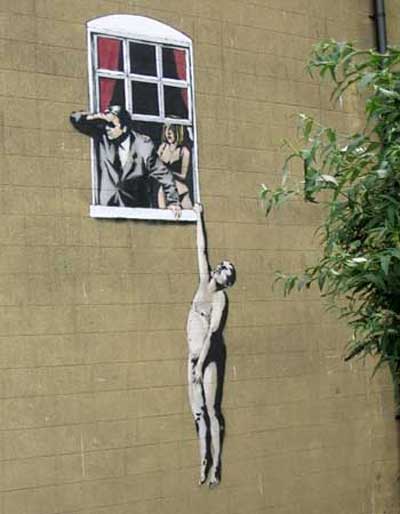
....... borrowed from Banksy

By Susan Merrell.

I was walking beside the harbour when I heard the news. It was a glorious day.  The sun was dancing on the water like a thousand diamonds. News like this ought to be banned on such a day – or maybe even any day.  The SMS text message delivered its knock out punch.  I wasn’t prepared.

The text read:

“This is Tanya.  Michael’s daughter.  After a long illness Michael passed away around midnight last night.”

It became dark as I uttered the denial.

“No!”

My son who was walking beside me took the phone from my hands. He read the message.

“Mum, who is he?”

Tanya left me her number to ring should I “want to talk”.  Who did she think I was?  How did she get my number?

Michael and I met when we were very young and had too many responsibilities.  It was a time when the weight of the world felt like it was on our young shoulders.  We both had marriages, mortgages and were bringing up young children.

The meeting took place at the primary school that both our children attended – at the annual wine-and-cheese, meet-the-parents’ night.  Or as Michael called it, the Chine and Wees night.  He was president of the school council, I was a new parent.  The attraction was instant and from our first kiss we had trouble keeping our hands off each other.

The attraction and the subsequent affair confused us.  We were both fully committed to our respective marriages.  In retrospect, I think it had a lot to do with the need to be totally irresponsible.  And we were.

We met at lunch times.  Sometimes I’d meet him off the train for a few minutes of a passionate embrace before we both went to our separate homes.  We’d leave suggestive messages for each other in the classified pages of the daily newspaper.  We made love everywhere.  It was in a Melbourne downpour that we made love in a phone box outside Flinders Street Station wrapped in my voluminous raincoat.

Michael always did things to make me happy. “I love it when you smile,” he’d say. Once finding ourselves drinking at the same pub as Ron Barassi, I said to Michael:

“I’ve always wanted to meet Barassi.”

“No problems,” he said, as he took me over and introduced me.

I didn’t know Michael knew Barassi.  Turned out he didn’t.

Michael was a voracious reader, devouring often more than five books a week.  He was not tertiary educated but as a result of his reading had a vocabulary far larger than he had ever heard spoken.  Consequently, his mispronunciations were legendary.  My favourite was when he’d tell me he was “enamoured” with me but would place the stress on the wrong syllable making the word sound like enna mored. But then he’d usually argue the toss that he was right and I was wrong.

Another peculiarity of Michael’s was that he was profoundly colour blind.  It wasn’t that he mistook one colour for another, he simply had no idea what most colours were – so he’d guess.

“I love you in green,” he once told me.

“I’m wearing pink,” I replied.

“Yes, but it’s greenish pink, isn’t it?” he countered.

He’d tell me I was beautiful.  I needed to hear that.  I adored him.

I don’t know how it ended, I don’t know that it ever did.  But I moved away, started a new life, a new marriage. We kept in contact for a while.  If I was down, I’d call him. He’d make me laugh.  He was so much larger than life.

Then more than a decade went past where we didn’t speak.  But Michael was never completely out of my thoughts.  It was I that sought him out again.  After all the time that had past, I still couldn’t leave him alone.

His first words, after a decade were: “Darling, are you still beautiful?” How can you help loving such a man?

But the years had not been kind to Michael.  He’d grabbed life by the throat and given it a good shake.  He’d played hard and life was biting back.  At a relatively young age he’d had a massive heart attack.  They had not expected him to live.  He’d never totally regained his health.

I remember thinking when I put down the phone how devastated I’d have been if I’d looked for him just to find him gone.  We kept in closer contact from then on.  Michael would often comment on my various articles and blogs.

Michael’s contribution to my life has been very private but very profound.  There’ll never be anyone like him.  From the time we met I was totally enna mored.

So tomorrow, I will sit at the back of the church at his funeral service.  I will be the cliché of the mourner that nobody knows.  I’m doing it for him.  He would have liked it.

Ditching Typhoid Mary for Five Days at the Fat Farm

18 Thursday Mar 2010

Posted by Therese Trouserzoff in Ladies Lounge, Susan Merrell

≈ 13 Comments

Green Acres

Story and Photograph By Susan Merrell

I live with a modern, male version of Typhoid Mary.

What’s more, it’s not only one disease that’s his problem – bugs are attracted to him like moths to a flame.  For instance, how and where had he caught the virus that had his temperature soaring while producing no other symptoms?  The doctor was flummoxed.  Being a suburban accountant the odds of picking up exotic diseases are negligible?  All was revealed during a documentary that my son was watching.  His father had Q Fever – a virus usually lurking at abattoirs. His father had visited one in a professional capacity to value the business for legal proceedings.  It was the first and only time he had visited an abattoir, but Q Fever had found him nevertheless.

Luckily he has the capacity for a quick recovery, a bit like Typhoid Mary who was a carrier but totally asymptomatic, the diseases rarely lay him too low.  However, the people with whom he shares his ailments are often not so lucky.

Having lived with this man now nigh on 25 years, I know his legendary power to infect all those who share intimacy with him – mostly me.  Quarantining has proved successful.  Just one sneeze and he’s banished to the spare bedroom.

Sometimes this is not possible, like when away on holidays.  Our last European trip was during the SARS epidemic.  Yep, he got it – and he passed it on.  In case you’re wondering, we both survived.  I told him there was every chance he wouldn’t survive the next disease he passed onto me.

Hindsight has proved this to be an idle threat because I’m just recovered from a nasty bout of flu, passed onto me by my loved one.  This hasn’t cost him his life – but it’s cost him.

It’s cost him the price of five days in a health retreat for me, for some rest and recuperation. There is absolutely no truth to the rumour that the visit was because of a need for weight loss. But, then again, there was no harm in killing two birds with one stone, was there?

So, no alcohol, no caffeine no fatty foods for five whole days – sounds like hell doesn’t it?  It was anything but.

It started with the overwhelming sense of tranquillity as I walked through the 12-foot-high front doors of this Hunter Valley retreat (NSW) into the two-storey foyer.  It was a portent of things to come.

It’s so luxurious: the private suites are spacious with spectacular views over the Hunter Valley and it’s grapevines (irony not lost), and bathrooms to die for.  In the evenings, when you’re at dinner, someone comes to turn down your bed and lights an oil burner with scented oils.

Just when you think it doesn’t get much better, there’s the spa where ‘treatments’ such as massages and facials are offered. Then there’s the food.  It’s so good that you’d never know it was of the healthy variety.  In my opinion it’s the best in the Valley even though the Hunter is renowned for its food and wine.

But it’s not all beer and skittles, so to speak.  This is a health retreat and throughout the day (non compulsory) activities are offered hourly from 6.30 in the morning until around 5 p.m.  For those who feel energetic and want to get fit or lose weight there are the strenuous kind, for the others there are more gentle pursuits – one day an hour of ‘boot camp’ was offered for instance with an alternative of ‘smile meditation.

Not being a wuss, I always picked the strenuous option.  It was confronting.  Believing myself to be pretty fit, I nonetheless found that in boxing, circuit training, walking, boot camp, spin class, tennis, volleyball et al, I was always the weakest link.

On the regular 4.5 kilometre morning walk, the only way I could keep up with the pack was to run like the clappers down the hills to give myself a head start for when everyone caught up with me on the flat or on the uphill miles.

Kangaroos grazing on the golf course would look at me quizzically as if to say, “why isn’t she with the others?” One morning I almost ran straight into one coming the other way.  We stopped and stared at each other both wondering who would blink first.  I did.  Those kangaroos are HUGE.

Then there was the 10 kilometre hike that was not half as strenuous for me as for our guide who walked with the fast walkers at first (read: everyone but me) and then had to wait for me to make sure I hadn’t got lost only then to have to run, again like the clappers, to catch up with the others.  He did this several times, not once complaining – bless him.

Being the weakest link at boot camp was a big disadvantage: We were given the job of getting out some ping-pong balls from the bottom of a six-foot tube without tilting the tube.  We were competing against another team.  The only way to do so was to float the balls to the top.  Water and buckets were provided at the other end of the field, so running was involved.  As the slowest runner, ( I hated just admitting that!) my task was to hold the tube upright.

But these people are dastardly.  After a few bucketfuls, the tube sprang a leak, then another one.  Yep, they’d drilled holes all the way up.  As the tube holder, I needed to stem the leaks.  My fingers stretched to 3 holes then I needed to deploy my tongue.  This involved turning my head to the side.  Due to the inaccuracy and haste of the runners more water was poured into my ear than into the tube.  I couldn’t protest – my tongue was otherwise occupied.

The situation worsened when others needed to be deployed to stem the leaks further up the tubes.  It was a hilarious.  While I’d like to say we won, we never.  Should I have opted for smile meditation? Well, no one ever lost weight practicing smile meditation, did they?

Just as the ignominy of always being the weakest link threatened to overwhelm me and put me off my dinner (I made that last bit up) I had a ‘light bulb’ moment.  It had taken me four days to realise that while I was beating myself up for being useless, the other useless ones were at stretch class.

They’d been engaged in deep-water running while I was pounding the pavements and walking up hills so steep that noses almost touched the tarmac. And moreover, most of the people indulging in the strenuous activities were younger than me, sometimes a lot younger.  That’s my excuse – it works for me.

I loved my five days at the fat farm.  The most enjoyable aspect was the complete absence of responsibility.  The worst was having to confront my own physical inadequacies and to realise an Olympic Medal is never going to be – but I reckon I could have outstared that kangaroo if my courage hadn’t failed me. Next time.

← Older posts

Patrons Posts

  • The Question-Crafting Compass November 15, 2025
  • The Dreaming Machine November 10, 2025
  • Reflections on Intelligence — Human and Artificial October 26, 2025
  • Ikigai III May 17, 2025
  • Ikugai May 9, 2025
  • Coalition to Rebate All the Daylight Saved April 1, 2025
  • Out of the Mouths of Superheroes March 15, 2025
  • Post COVID Cooking February 7, 2025
  • What’s Goin’ On ? January 21, 2025

We've been hit...

  • 713,779 times

Blogroll

  • atomou the Greek philosopher and the ancient Greek stage
  • Crikey
  • Gerard & Helvi Oosterman
  • Hello World Walk along with Me
  • Hungs World
  • Lehan Winifred Ramsay
  • Neville Cole
  • Politics 101
  • Sandshoe
  • the political sword

We've been hit...

  • 713,779 times

Patrons Posts

  • The Question-Crafting Compass November 15, 2025
  • The Dreaming Machine November 10, 2025
  • Reflections on Intelligence — Human and Artificial October 26, 2025
  • Ikigai III May 17, 2025
  • Ikugai May 9, 2025
  • Coalition to Rebate All the Daylight Saved April 1, 2025
  • Out of the Mouths of Superheroes March 15, 2025
  • Post COVID Cooking February 7, 2025
  • What’s Goin’ On ? January 21, 2025

Enter your email address to subscribe to this blog and receive notifications of new posts by email.

Join 373 other subscribers

Rooms athe Pigs Arms

The Old Stuff

  • RSS - Posts
  • RSS - Comments

Enter your email address to subscribe to this blog and receive notifications of new posts by email.

Join 373 other subscribers

Archives

Website Powered by WordPress.com.

  • Subscribe Subscribed
    • Window Dresser's Arms, Pig & Whistle
    • Join 279 other subscribers
    • Already have a WordPress.com account? Log in now.
    • Window Dresser's Arms, Pig & Whistle
    • Subscribe Subscribed
    • Sign up
    • Log in
    • Report this content
    • View site in Reader
    • Manage subscriptions
    • Collapse this bar
 

Loading Comments...