The sun was setting on one of those hot Sydney summer days that seemed to be both a beneficence and a bane. The heat, having awakened areas in the limbic system that tended toward sun worship, prompted many to spend the day lying around lazily soaking up the rays; lizards seeking the primal light. Not so much a sickie as a sunny.
Now that the sun was setting, that day long load of whole body heat had begun suggesting potential but unspecified action. The day was closing and soon night would fall. Friday night; and the humidity was just killing.
Bess had other things on her mind. After getting home from the scene in Glebe she had spent a few hours going through the dead man’s computer, notebooks and photo albums, developing a fairly good profile of him and his life. As she’d sorted through the materials she’d bundled together a few of the photos and printed pages she had singled out from the evidence collected at the terrace on Keegan Avenue. A lot of the files on the Macintosh she’d transferred to a floppy which she stuck between the leaves of the folder containing the photos and print outs.
She’d begun to see some threads running through the materials but she still had no idea how the dead man had known her, and the notes and working files she’d found on the Macintosh had proved that he knew her well, very well indeed. Or at least her profile up until now, the mid eighties.
Logically, the author, being now dead, could not have any possible knowledge of or experience with Bess after today’s date, (leaving aside that fact; the future, having not explicated itself, no-one could really say they knew what would happen, or more accurately what might happen, after today’s date.)
So the narrative of her later life must all have been conjecture, confection, conflation. The Hague sounded fascinating and it also suggested that she was going to get another promotion prior to that secondment; but it all seemed like a fantasy version, a movie of her life.
She was a News South Wales Police Inspector with a PhD in Forensic Psychiatry and Psychology. A senior specialist, she liked her job and was well thought of by the other cops around her. That much was established.
A great deal of the fictional Bess the writer had created was based in fact. She had been involved with the search for the missing boy as set out in the narrative written by the dead man. She had been selected for the Quantum Consciousness Project’ which she had thoroughly enjoyed and, what’s more, she believed that it had had a formative effect on her future; that it had, in fact, put the final polish to her mind before she set out on her career in the Force. But, and this was the first and last, the biggest “but”; Eric Hansen was not a twice dead enigma. He was actually Professor Eric Hansen and it had been Eric that had suggested the Police as a career for Bess.
She recalled sitting with him by the fire in his rooms, drinking tea and eating biscuits, (still an habitual comfort), just quietly talking. It was the winter of 1976. It had been cold and pelting rain all day. The wind was whipping the fig trees as the light drained from the sky outside. Down in the Professor’s rooms the world could be ending for all the effect it would have down there.
The room was warm and they were both a little drowsy. They’d had a stiff whiskey when they’d come in from the weather and they were both now relaxed, open.
Eric had asked Bess what she would be doing now. “Now” in this case being the future.
She’d told him of her fondness for puzzles and how ever since she was a little girl she’d loved working out whatever it was that everyone else was missing. This had led the conversation circuitously, or at least she had thought so at the time, to what she might do that would allow her to enjoy her love of puzzles in the cause of her career. He’d suggested Research Psychologist, Historian, Philologist, Philosopher, (“Yes Virginia, they do still exist.”); “or….,” he had shrugged casually, like this next suggestion wasn’t really to be taken seriously, “Investigator,” the same casual shrug, though this time as he turned to grip his tea cup, “Cop?”
He took a sip from his tea; letting the suggestion hang for a moment. A moment Bess hadn’t even realise had passed at the time. His eyes now closely focussed on Bess, “I could see you eating anything you set your mind to. You really are that good Bess.”
Bess, with her usual self deprecation, had scoffed at the idea. She might have been protesting too much; but a seed had been released, blowing in on a truant breeze, a breath from somewhere distant and definitely different, that found some rough purchase in a crack, a drift of dust.
At the time she’d not really taken any of Eric’s suggestions seriously and Eric didn’t seem committed to pushing any particular barrow for Bess’ future; and anyway, there was still a few months before any choice would need to be considered. Maybe not even then. “I might just take off.”, she had thought.
She had then, subconsciously at first, then merely unconsciously, begun to think of herself as an investigator. A professional solver of puzzles.
The little seed that could. And did. By the time they were all having end of course drinks during the first week of November Bess had made up her mind to take up a recruitment offer from The New South Wales Police Force. She was off to be a copper.
And now, tonight, armed with the photos and printouts and the floppy in her folder, that copper was off to be a student again. To sit, as she had so often in the past, with the man who had been a friend and teacher, her mentor during those early years of her Police career. She wanted to know how the dead man knew so much about her and more importantly, why had he chosen to name the most enigmatic character in his yarn after the Professor. She had a feeling that Eric would know, was maybe involved, could offer some insight, something. Anything.
She stuffed the materials into her backpack and slung it over her shoulder, unlocked the deadbolt on her front door and stepped into the corridor outside her flat. She looked back through the door as she took the key out of the interior lock and pushed it into the exterior slot. She liked her little flat at the top of Harrow Mansions with its views down over William Street through the buildings to Woolloomooloo Bay and the bridge in the distance.
The little flat on Clapton Place, Darlinghurst was home. It had belonged to her Great Great Aunt and came to Bess when that venerable old woman passed on. She’d been 102.
Bess cherished memories of visiting “MrsG”; as the whole family called her. A native of Arbroath, she had married a lowlander called Gilfilian; who, having conferred his patronymic initial, promptly up and died. He’d been a sailor and had only one thing of any consequence to leave his young widow; a flat, in Darlinghurst, in Sydney, all the way out in Australia.
There was nothing for it. Mrs G had packed two small portmanteaux and booked passage, steerage, to Australia; and the rest actually was history.
She was monumental, tectonic, and the deepest of wells. Sitting with her, drinking tea and eating wafer biscuits with chocolate cream, Bess had never felt as excited and full of anticipation. She had told wonderful stories, fantasies full of adventure, and Bess was always the central character in all of Mrs G’s stories. Bess the jet pilot, Bess the Archaeologist, Bess the Secret Agent. She’d loved it all.
Mrs G had filled the flat with art and other interesting things; knick-knacks, objets d’art, and a money box known as “The Penny Nigger”. Bess had loved loading the hand with a penny, (special pennies saved by Mrs G for just this purpose), and watching the “Nigger” pull the coin up to his mouth and swallow it. As a child she had played with the money box endlessly. It still stood on a shelf, now kept clean and shiny like a relic. Bess gave him a wink and said, “Back later. Look after the place for me.” He didn’t reply.
Bess closed and locked the door, turned, and made her way down the four flights to the vestibule. She noticed that there was a buff envelope sticking out from her letterbox. That hadn’t been there when she came in earlier.
She pulled it out, opened and read the single page inside.
“Dearest Bess,
Urgent that I see you tonight. We have much to discuss of very great importance.
Eric.”
“No kidding.” Bess thought to herself and just pushed the letter and envelope into the left rear pocket of her trousers and stepped outside. But there it was again. Eric was the strange attractor in this chaos. He had to be a part of this whole phantasm. A central part; but what was he playing at?
She hailed a cab on William Street just near JJJ. It was still very warm and humid. The sky was darkening to a bruised purple, cut through with shafts of golden sunshine. There were thunderheads forming like gathering gunpowder, and the wind was getting up. There was a Southerly Buster coming. Bess jumped in the front seat of the cab and told the driver she wanted the main Quad at Sydney University. As the cab pulled into the evening traffic the first fat drops of rain began to fall and thunder rolled in the sky.
It was absolutely bucketing down and the heavy low clouds were riven with lightning as Bess jumped from the cab and ran, her backpack over her head, into the eastern vestibule of the main quad accompanied by several loud, close, cracking peels of thunder.
The quad was deserted. Term didn’t start for a few weeks and the weather was keeping whoever was on campus indoors. Bess walked down the eastern cloister towards the Philosophy corner recalling lectures in The Oriental Studies Room; Alan Chalmers on The Philosophy of Science, John Burnheim on Demarchy and political alternatives. The early Seventies. It was a time of classic contest between the Marxists of General Philosophy and the Classicists of Traditional and Modern, and it had all came to nothing. Some years later the two sides agreed to disagree, kissed and made up. Marxism never became the better mouse trap and the classical model had been failing for decades. Funny days Bess thought.
As she made her way down the worn sandstone steps to the basement, Bess’ inner voice suddenly began to babble. “To be real, a thing must entail its own transcendence. A things reduction to its falsehoods makes it utilitarian. Hammers aren’t made of porcelain because the proposition, “a porcelain hammer has utility”, is false. Einstein wouldn’t try to drive a nail with a Bow “Flora”.
Bess had gotten used to these recent explosions of nonsense and figured her Auditory Ventral and Dorsal Streams where getting confused, entangled; causing the neurodata received at Broca’s area to generate nonsense; gobbledygook in, gobbledygook out..
The verbiage never really made sense but it somehow hovered just on the edge of meaning. She shook her head. Literally trying to shake the nonsense away. Thankfully she had never experienced these mini fugues when she had been speaking to other people.
Sometimes it manifested as a repeating phrase, such as this morning’s, “Reality is the set of all things we know to be the case; which is a subset of all things that are.” repeated again and again, for a minute or two as she made her tea. Each version having a slightly different pronunciation and word emphasis.
At first Bess had thought that these apparent discontinuities in logical thought and speech production could represent the beginnings of a more serious condition; perhaps a kind of neural compulsive tick; but it was never debilitating in any way and always disappeared should some matter of greater urgency engage her mind.
Perhaps it was a manifestation of Bess’ quietly held belief that there was always more going on than met the eye; that her life was somehow, sometimes, not really her own; that there was a subconscious part of her that lived an entirely different life to the mundane copperly life that Bess experienced day to day. She might mention it to Eric when she saw him. He always had good ideas about the seemingly absurd.
She arrived outside the heavy oak door of Eric’s rooms, dropped her backpack and pushed her dark tangled wet hair back from her forehead with both hands. She knocked quietly; two knocks, pause, third knock. It was their signal.
There was no response at first and Bess surmised that Eric must have his head in something and had not heard, so she knocked again, same pattern, but harder this time.
A voice she didn’t recognise, shouted out, as if from a distance, “Hang on. Be there in a second.”
There was a curious blue glow shining through the worn oversized keyhole. He must have been using an ultraviolet lamp for some reason. The glow dissipated and the door opened.
It was a young man with long wavy dark hair and startling black eyes that seemed to twinkle with gold and green and blue. He was dressed somewhat oddly; very pointy red snake skin boots, electric blue skinny jeans just managing to hold onto the top of his bum, cinched with a broad belt. He was wearing a washed out rock’n’roll T shirt; “The Magnetics”; with a colourful image of an old steam train with a human face wearing glasses chuffing out from the front of the shirt; “Death From Above” emblazoned across the trains bumper. The arms of the T shirt had been hacked off with scissors. Altogether his outfit seemed more suited to a rock guitarist than some serious minded student. Bess felt a little older, a little further out of the main stream.
He looked a little stunned, speechless, but he had a huge smile and Bess got the distinct notion that she knew this young man, or had, at least, seen him somewhere before; in a context that made the current half formed recollection important. He must have been in his twenties, thirty tops. Perhaps he wasn’t a guitarist at all, but rather one of the current crop of QC candidates.
“Bess! Bess, Bess. Come in, come in. We’ve been expecting you.” He bowed and graciously swung his thin arm low indicating that she was more than welcome.
“I was hoping to catch up with Eric. He sent me a note earlier today.” Bess stepped in past the theatricality of the young man.
As she turned back to him he was gazing intently on Bess, his smile relaxing a little and then reasserting itself as he took in quick observations of his guest.
“I’m to tell you that he just stepped out and will be back shortly.” He quickly closed the gap between them and offered his hand.
“I’m Philipe Apfelbaum, but my fiends call me Pip. You must call me Pip. I think we’re going to be famous friends.”
Bess smiled wryly. He was a good looking guy. “Such presumption, Pip Apfelbaum; and both Alpha and Omega. Are youthe beginning and the end of all this?
Pip looked worried for a moment, as though he didn’t get the question. “I’m sorry, I don’t…..” He didn’t want to seem a dunce at their first meeting.
“Pip, or “seed”. Apfelbaum is German for “appletree”; so beginning and end…..? Granted it wasn’t a very good joke; and as a play on words, its hard work, particularly after having it explained. Sorry Pip, its the pedant in me. Eric and I used to play word games all the time. It must be being back here.
“Sorry, I don’t speak German. My parents were post war immigrants. I grew up here. I mean, I knew Apfelbaum of course, but …” He seemed genuinely sorry for his lack of language skills. Another odd thing, Bess thought. But then things were always odd for Bess. Odd was the default setting on her life.
She looked more closely at the young man. If his parents were post war immigrants he should have been older, or so it occurred to Bess. He was spectacularly pale, almost white; making all his features; his eyes, lips, his ears; seem too full of colour. He was also spectacularly thin making his limbs seem too long. Yet he was graceful, not at all gangly. And he was very pretty, Bess thought.
Bess stepped through the front door of the decaying house. There was dust everywhere, over everything. It had collected in drifts in all the corners and lay thickly on the floor; but there was no sign of footprints, no indication at all that any other person had been here for quite some time.
The cornices; where what was left of the rusting pressed metal ceiling met the walls, were heavily cobwebbed. There were two rooms off the short hall at the front of the house. Bess shone the torch into the one on her right.
There was an old iron bedstead with a rotting striped kapok mattress and equally rotten bedding. There was a dressing table, its timbers split and the mirror foxed to the point that only a small area in the middle reflected back the torch beam; and a wardrobe, door fallen off, with some clothing decayed to a few shreds, still managing to hang from the wooden hangers. There was a washstand with a bowl and a cracked jug. There were no shoes or boots to be seen, which Bess thought a little odd. Hansen had been wearing shoes when he was found, but surely a farmer would have at least one pair of good strong boots.
She shone the torch into the other room. It was full of junk. Old implements, tools, furniture, boxes of old newspapers and magazines. Maybe Hansen had been a hoarder.
Bess moved through to the living room. More dilapidated furniture set the scene though Bess thought the overstuffed lounge and chairs had a rather homey feel; under the dust and decay. She shone her torch slowly around the room, starting down near the skirting and slowly moving up and around the walls. There was nothing that stood out as interesting, out of the ordinary.
As she continued to interrogate the room she saw a warped dust covered book sitting on a nest of three tables by one of the armchairs. She moved over to the chair, gave it a quick closer look and determined that, rotten and falling apart or not, it looked like you could sit in it without it collapsing, or disturbing anything that might later be important, and so she sat down. Standing her torch on its tail so that the beam, reflected off the ceiling, provided a low level of general illumination throughout the room; she dropped the Landcruiser keys and her phone on the table and picked up the book.
It was a badly decayed, moth and mouse eaten edition of Joseph Conrad’s short stories titled “Twixt Land and Sea.”, the remains of a silken book mark lodged a few pages into what was left of a story called “The Secret Sharer.”
Bess had read a few of Conrad’s novels and short stories; Heart of Darkness went without saying, but also The Rover, The Nigger of The Narcissus, and of course Nostromo and Lord Jim. She’d read a biography by a fellow called Gerkin; no that wasn’t right; Gurko, that was it.
The general thrust of that literary life-story was that Conrad’s works were nothing less than a prescient look into the near future. It had made much of the modernist psychology of his characters and their many and various responses to the situations Conrad faced them with. Bess remembered seeing a television program on much the same theme. It had centred on Conrad’s novel “The Secret Agent”, and made the claim that this work was indeed “the first truly modern novel”. Bess couldn’t remember anything else about the show or any of its other conclusions. She’d mentally added the novel to the long list of other works she’d get round to after retirement.
“Twixt Land and Sea”, It was an odd collection so far from that sea and the foam, and a following wind. Out of place, and out of time too, Bess thought.
She flipped back to look at the publishing information. The flipping of the pages, some fragmenting and falling apart as they flipped, produced a cloud of paper and other dust.
Bess dropped the book back onto the table trying to hold onto a giant sneeze gathering in the front of her face. It found her nose and she sneezed convulsively, three times. Her eyes teared up from the irritation of the dust and she dragged a little plastic envelope of tissues from one of her cargo pockets, wiped her eyes and blew her nose loudly, taking momentary satisfaction from the reverberant nasal raspberry in the quiet, hot house.
She took the book up again. It had been published in 1912. This was a first edition, but literary mavens wouldn’t be squabbling over this decaying treasure. There wasn’t enough of any of the pages to be able to properly read the book, but she turned back to the marked story, found its beginning and began to read from the first fully visible line of print.
“…. as if abandoned forever by some nomad tribe of fishermen now gone to the other end of the ocean; for there was no sign of human habitation as far as the eye could reach.”
The lines seemed strikingly apposite as Bess looked round the room, there being no sign of human habitation here either. Was the book an indication of Eric Hansen’s psyche, did it illuminate some heretofore unseen part of his character. She read on for a brief while before getting bored with interpolating the missing text. Putting the warped and decayed book down she thought she’d find a copy on the net. Gutenberg would have one.
Bess picked up her phone. There was one bar visible in the phone display, but it disappeared as she looked at it.
“Bugger, no 4G coverage..” She should have known. This was the back of Bourke. The NBN had a fancy ground station just out of Bourke and Bess had enjoyed fast download speeds in town, but out here she couldn’t even get a stable connection. It didn’t matter. She was feeling too restless and fidgety to read anyway. She looked at her watch; 10:37 and the seconds tick tocking toward midnight in the small LCD display.
As Bess tried to relax in the dusty chair her mind wandered back to Conrad.
The Pole had written in English, showing a command of the language absent from writers whose first language it was. Though he had never really mastered spoken English and kept a thick accent till his dying day. He was an orphan, an outsider, alien and alienated, even amongst those he considered his friends.
He had been a lifelong witness of the human condition, his conjectures and conclusions on that almost infinite subject being the meat and potatoes of his writing. Bess had always believed that Conrad’s real subject was himself; a perhaps unconscious lifelong quest to reconcile his origins, his life and his work with what seemed a difficult and demanding day to day existence.
Bess acknowledged the similarities between her own and Conrad’s circumstances.
She too was an orphan, also taken in by older and somewhat distant relatives. They’d been good to her, loved her in their way. They were generous and provided everything she could possibly need, particularly in the area of education, but she couldn’t say that she had ever fully loved them back.
It wasn’t their fault. It was as if that capacity for loving one’s family had somehow been truncated in her, or perhaps broken by the circumstances of her parent’s death. Or maybe she had put it by, against the day when her parents might return; a childish dream she had clung onto for many years after their loss; and how she might show how true to them she had stayed, how much she loved them still; for Bess had always harboured a niggling doubt about how well she had shown her parents the deep love she held for them.
Her memories of her parents and grandparents were now a precious collection of carefully curated memories; memento mori, a life long whispered warning of the transience of existence, the chaos of life and the limits on action in the real world.
There hadn’t been a funeral, there being no bodies to ritually burn or bury, only a long memorial service attended by a lot of people she didn’t know talking about her parents in a way that made them seem strangers to her. She did remember clinging to Nana throughout the service, but she didn’t cry.
Her Nana had thought that odd as she looked at the serious, intensely intelligent little girl, assuming that the whole thing must have been overwhelming to the nine year old. But Bess had begun to watch, to see what was beneath the obvious and everyday, finding refuge and release in seeing through to the patterns of things, how the world jostled and bumped, erupted and collapsed, gave and took away, just as with her parents.
They’d died suddenly in a fiery car crash when the vehicle they were returning home to Bess in had failed to take a corner, left the road, becoming airborne out over a deep defile before crashing head on into the opposite side, tumbling to the bottom of the ravine and bursting into flames. The intensity of that fire had reduced everything organic in the vehicle to undifferentiated ash, and leaving Bess, an only child, with no parents and no bodies to bury and grieve over.
The events of those days had never really sunk into Bess’ consciousness. They seemed to blur together as though she’d had only half an eye on the mundane while her mind tried for solace in abstractions and speculations about her parents missing bodies and a possible future return.
She remembered clearly the look on her maternal grandfather’s face when she had run to the door thinking the bell would be her parents. One look had told her all she needed to know. She was now alone, and it would always be that way.
She half remembered fleeting images of the packing and readying for the move to Nana and Papa’s house. They were gone now too.
They’d been a bit reluctant to allow Bess’ little blue Staffordshire bitch Eleanor to make the move with her. They weren’t dog people, but when it seemed that Bess’ little companion was the only thing holding her to the ground, they relented and Eleanor and Bess became inseparable in the ensuing years. Even Nana and Papa had come to love the little dog and one of Bess’ fondest memories was a just a picture in her mind of her Papa with Elli’s head in his lap while he read a book, one hand absently stroking Elli’s neck while she snored.
The memories were rolling in, swamping Bess as she sat in the derelict chair; her Dad teaching her to swim at the local baths, his huge smile and his arms stretched out to pull her up from the water; school speech nights with her Mum sitting proudly in the front row, winking at her as she received the prize for arithmetic; family gatherings; hockey matches with papa barracking from the side lines; learning to fall in Judo class with her instructor Mr. Baldock; her attempts to realise in paint the shapes and puzzles of her life; fire and change always central elements; friends from school and her adult life and their seemingly endless capacity to find meaning and fulfilment in their relationships with her, and she with them. But since the accident, always that sense of being alone. Not lonely, but always, alone.
She sniffed and realised she had been crying. Only a little and not for any sense of loss or hardship suffered, but because it was all so human, so ineluctably beautiful and sad all at the same time. It had made her who and what she was.
Bess pulled out the tissues again and wiped her eyes and blew her nose. “This is no way for me to meet my own secret sharer.” she thought, with not a little self deprecation,
Eric Hansen’s face appeared suddenly in Bess’ mind’s eye. The vision startling her with its clarity and intensity, and again, just as it had seemed down at the dock, there was that look of anticipation and just a soupçon of trepidation. Bess shivered as if hit by a blast of cold air, though the temperature in the house was probably still in the thirties.
She looked at her watch again. It was almost midnight. She’d lost over an hour in her revery.
But the complex of emotions that had accompanied that revery disintegrated as she realised there was something moving about in the kitchen, a soft rattling noise amongst the crockery, the sound of small things dislodged, falling…, her hand went to her gun, but she had come unarmed. She sat forward, prepared; but for what?
“Bess are you there?” a deep kindly voice.
Bess heart nearly jumped out of her shirt, and she saw a pale ultraviolet glow, just managing to mix with and then over power the dim light of the torch. It was emanating through the kitchen doorway.
Bess stood up in a rush and immediately went to the doorway and stepped through into the source of that light. She took two steps into the kitchen and stopped still, rooted to the spot.
What she saw next was both all too real and at once impossible.
There was a line. Or sort of line, she couldn’t be sure, that ran across the floor, up the walls, across the ceiling and down the other wall to join up with itself, taking in everything in the room. The line was like the outline of a geometric plane intersecting with the reality of the room. It glowed across the floor, outlining the furniture, moving slowly across the space.
Everything on Bess’ side of the advancing line was as she had seen it when first she had entered the kitchen, but on the other side of that ultraviolet line everything was different.
The kitchen was dissolving as if someone were working the kitchen in photoshop, decreasing it’s opacity. Emerging through that declining reality was the same kitchen, but now made new, or as new as it might once have been many years ago.
Walking through that new kitchen but somehow not yet quite part of the scene, as if dissolving in from an even more distant place, was Hansen, smiling and holding her in his gaze.
“I’ll be with you in just a moment” Hansen said. His words, though somewhat confused by phasing and flanging effects, were unusually reassuring to Bess, but not quite believable as she watched him growing in size, his feet finally contacting the floor and himself becoming fully immersed in the new kitchen.
The line passed through Bess with an electric tingle she barely noticed, so astounded was she by what she was seeing.
At last Hansen was there, standing on the other side of the fresh clean formica topped table. The refreshed chairs, their aluminium armatures gleaming and their vinyl covers gayly coloured, matching the renewal of the dresser with its smooth shiny varnish and leaded craquelure glass, the now matching plates neatly stacked, the glasses gleaming.
The man shook his head slowly, his face crumpling a little as he dropped his head slightly to the side. “Its so good to see you again. Let me look at you.” and he did, shaking his head again as if amazed too by what hewas seeing.
Bess finally found her voice. “Hansen…., Eric Hansen, Professor Eric Hansen?”
“Hello Bess. Its been a long time”
“More than twenty years.” Bess smiled broadly at this apparition of her friend and former mentor, but she was more than a little confused by all that was happening. “I couldn’t understand how your name kept cropping up. I thought it must have been another Hansen; just a coincidence; the pictures didn’t look a bit like you, and I didn’t know what was going to happen here. I certainly didn’t expect you in the flesh. You are flesh, aren’t you?”
He smiled at her sweetly and Bess was shot back to her days at University and her year on the Quantum Consciousness course. His kindly voice and his smile immediately familiar again. Bess understood, though she couldn’t have known how, that Eric, if Eric this was, this “science fiction Hansen” with Hansen’s face, Hansen’s tall stature and penetrating, kind eyes, was no threat, that he was here to help her through whatever this was going to be, as he had always helped her in the past.
Bess eyes pricked with tears. She almost cried again, she was so happy to see Eric once more.
“Yes I’m flesh, including the heart-ache and the thousand natural shocks that flesh is heir to. And I should apologise for interfering in your case. I did put a tinsy winsy block on the prepared materials. Just so you wouldn’t think the two other Hansens were me.”
“I should have known.” Bess said testily, “The stochastics didn’t stack up. Too improbable and too obvious at the same time.”
“Forget it. You couldn’t have made the connection while the block was in. That was the point.”
“I’m not really getting all this. Do I understand by that, that you can interfere with my consciousness “at a distance?”
“Entanglement working in the real world; but it was the first time, I’ve never interfered in your consciousness before. And now I’ve done it once and told you, I won’t ever be able to do it again. You’ve just become a little more than you were when you stepped through the front door.”
Suddenly there was a tumble in Bess’ mind; a chaotic, unjumbling tumble, a reorganisation of disparate, seemingly unrelated “stuff”, but now related, and leading to just one question.
“Is this about Mum and Dad?”
The excited question, uttered before she had even thought about asking anything, had come from deep inside her psyche. From that place where the little girl Bess had been bore the pain of her parents loss every day of her life.
“There you go again! That’s the Bess of old. Those intuitive leaps, the integration and synthesis of seemingly unconnected things. You really are the business Bess. Amazing!” Eric shook his head and smiled happily.
“Yes, we’ll be with them shortly, but first we’ve got to get you ready. Please sit.” he indicated the chair on Bess’ side of the table and smiled. Bess sat automatically, still trying to take in the fact that the Eric had said she would soon be with her parents.
A grim vision of flames and mangled metal tore through Bess mind, but she knew it wasn’t that. Her parents had somehow survived!
The little girl she had been, hanging on to an impossible hope, was to be completely vindicated, that forlorn hope rewarded at last. It was curious to realise this late in her life, in that very moment, that it had been that unconscious hope that had always sustained Bess through all the years of her singular adult life.
Her rational adult had always known that she would never see them again, they were dead; and yet the little girl equally knew that it was inevitable that they would be rejoined.
The continual resolution of that dynamic tension was no small part of the drive that had put Bess at the centre of some of the most complex and convoluted cases in the annals of NSW policing; that had led to her being chosen for The Hague and her other overseas secondments; why it was that when the body in the morgue disappeared, it was Bess that was recommended for the job, even though assigning a Super to that job looked like overkill. Or at least she had thought so prior to tonight’s sojourn here in the old “Hansen” house out the back of Bourke.
The racing, jumbled and tumbling emotions, recollections and ideas in Bess’ mind suddenly snapped to a new question.
“Wait!” Bess then paused, collecting her thoughts.
Hansen was getting a few things from his pockets; a small hinged tin and a Zippo. He put them on the table and gave Bess his complete attention.
“You said it was good to see me again. Its been more than twenty years. Just before I was off to The Hague. How can you have known that I’d be here tonight to see? And that entrance…Wow! That’s some party trick. I guess we’re not in Kansas anymore. You wouldn’t care to fill me in on that would you, Wizard Hansen?
“Pretty neat, I agree; but surprisingly simple once you get the knack of it; However, that’s not what this is all about.”
Eric Hansen smiled as if he’d expected all this. “Its always like this at first, but you will see, you will understand what’s going on, why you’re here and your part in all this.”
“What do you mean “at first”, and what’s this place got to do with me?”
“This place is an accident of cosmological topology and ontology. This is where the discordance generates according to an irregular but generally reliable timetable. The first people to recognise its existence were the local aboriginal peoples. This was a powerful place for them, a place of visions.” Hansen paused to let that sink in, then went on.
“The trick isn’t in this place, this is just the location of an exploitable resource, like gravity or electromagnetism. As for, “at first”, this is your first iteration. You’re plainly not up to speed with who and what you are, what you can do. Before this is over you and I are going to meet like this, the weird science kind of meeting, four times.”
“No the trick isn’t in this place. It’s getting you here on the fifteenth of February. That’s what all the unexplained dead bodies, disappearing footsteps and the other nonsense was about. The only real piece of information in the whole confection was the Geohash and the date. We knew that you’d work through the evidence, that you’d find it impossible to resolve, because it wasn’t designed to be resolved. You didn’t fail in that. In fact you succeeded. You would have to be here because “here, now” is the only auditable piece of evidence you had. Hansen paused, looking for the impact all this was having on Bess.
“But you are the body in the library, and old Eric Hansen. Biometrics confirmed that. Are you saying that you set that up just to ensnare me in the investigation?”
“That’s precisely what I’m saying and I’ve managed to pull the trick off a few times so far.” There was no pride in Hansen’s voice. He seemed more apologetic that he had been forced to deceive Bess with these false ensnaring clues. Hansen’s tone and kinesics suggested an almost ineffable quality of caring and focus on Bess, like a favourite uncle dealing with a distressed child. Which was exactly what Bess was feeling, Perhaps not distressed but certainly confused.
“You’ll forgive me if I take a moment to let all this fit together.”
“That’s what you do best, fit things together. Take all the time you want. We’ve got until about 5:30 before we have to leave.”
“Why 5:30?”
“High energy photonic density collapses the discordance. The door shuts.”
Bess pursed her lips and gave Hansen a look.
“You mean sunrise.” Bess said. “Please assume I know nothing about physics or cosmology, which I don’t really. It might be better if you treated me like a child. I don’t need to hear how or why things happen, just what will happen.”
This was becoming a bit overwhelming for Bess. What had been a simple if somewhat perverse investigation full of impossible imponderables had now reached the point where those imponderables had been explained away to nothing, and now, apparently, her entire existence was in play and she still had no clue just what it was that Eric was actually here for. She couldn’t even really be sure that this was Eric. She hadn’t seen him for over two decades and yet he somehow managed to look not only youthful, but younger than he had the last time she had seen him.
Putting that queer observation aside; the earlier promise of meeting her parents again had established and maintained a tremor, a trembling in Bess that she found both unsettling and almost impossibly exciting, but she still couldn’t work out what the point of it all was.
Hansen might have been reading her mind.
“You’re the point of it all. Everything, all of this is for you, about you. You see Bess,” there was that intimate, caring voice again, “just as I am not really the Hansen you thought you knew, you’re not really the Bess Stafford you think you are.”
“You are so much more and so very precious, and all of this has been about protecting you; that’s my job; and providing a place and time where you can become the best Bess you can be. You are about to discover the real you, whatever you think that may mean in this context. There’s no doubt about that, more real than I’ll ever be, or perhaps that should be “more realised”, and a time will come when all that you become will be able to return to the place where you were…,” Hansen paused, made a dismissive flicking gesture with his hands, “….born”, if that word even remotely describes the way you came into being.”
“So the whole QC course was what? Just another snare?”
“Oh no; the course is a genuine recruitment strategy. You won your place there just like the others. Only they didn’t turn out to be quite as spectacular as you. No the QC course is how we discover the ZPF individuals.”
“ZPF?”
“Zero Point Field. You’re a ZPF baby. We’ve managed to identify about thirty others like you since the course was instituted but none of them have what you have. The ZPF babies all carry at least one significant mutation that confers on them what might be called; by those that don’t enjoy these genetic upgrades; special abilities; super powers if you like. But we’ll get to that later when we’ve got a chance to relax and catch up.”
Relax and catch up; it sounded so simple and prosaic, like dropping round for a cup of tea and a biscuit; but the Zero Point Field? Bess only had a vague idea what that was. Something to do with quantum mechanics. Just what it might have to do with her would have to be added to the lengthening list of questions for later. That she would have to wait to be inducted into these mysteries also implied that there was something doing before that. Something big?
“So I have these “super powers” do I?”
“Super, superer, superest; you are Superintendent Bess Superest!” Hansen smiled at his wordplay. “The thing is Bess, you weren’t meant to know until next time; Iteration Two, your next…., life(?); but something unexpected has come up and we’ve had to swing into action. We’re not completely sure of the course of action but its clear that some course is going to have to be taken and you will be at the very centre of that action.”
This was now descending into bad science fiction and Bess thought to get things back to what she could understand, what was actually going on here.
Hansenwasreading her mind.
“Let me ask you a few questions Bess. I think your own answers may enlighten you.” Hansen looked at Bess waiting on her permission.
“OK”, though Bess was now becoming a little impatient. Hansen had provided a great deal of “intelligence” since his materialisation in the kitchen but hardly any of it could be manipulated into a coherent whole. She twitched on the chair and shuffled her feet.
“How many languages do you speak Bess? Ever counted them?”
Oh, I don’t know. Eight, maybe ten. I’ve never really needed to do an inventory.
‘That’s a lot of languages for an ordinary copper, don’t you think? But, would it surprise you that since you finished with university you have not just learnt but mastered twenty six languages. You speak twenty six languages just like a native born and raised in those tongues. How do you think you’ve achieved that?”
“Have you ever had a language lesson in Greek, for example; yet you speak Greek like a native Athenian, and not just a native now, you also speak Koine Greek. Pericles would be able to understand you.”
How did Hansen know that. Bess hadn’t needed to speak Greek for years, decades; before she had even met Eric.
“I had Greek neighbours in Glebe when I was at uni. The wife used to make me baclava and the husband kept a nanny-goat in his little back yard. He used to walk her like a dog. She was a hit with the kids from the local primary school up the road. They were always dropping round to feed her treats like apple and carrots.”
“He and his wife didn’t speak much English, but they were so sweet to me and I used to drop in most days after lectures. I guess I just learnt from them.”
“Yes, but how Bess? By osmosis?”
Hansen let that hang there between them as Bess began to wonder about her languages. Hansen pressed on.
“You play chess don’t you?”
“Yes. I suppose I used to play more often than I do these days; but yes, I play chess.”
“Can you remember ever losing a game?”
“How can I possibly be expected to remember every game of chess I’ve ever played?”
“Your chess game reflects the ability of your opponent, but you’ve never lost a game, not once since you were a child and your mother taught you to play; and if you played Garry Kasparov you’d beat him too. Its what you do, and as for remembering; you could remember every detail of every moment of your life if you put your mind to it. That’s also one of your abilities.”
The situation had now become completely unanchored from reality, at least any reality Bess had ever known. If it had been anyone else other than Hansen she’d have called “crap” and put an end to this. But then, maybe not. That entrance still had her completely bamboozled and she was now beginning to feel a little fearful. It wasn’t every day that you met an apparition of your old Uni mentor claiming to be some kind of godfather figure, not to mention a continuing intimate acquaintance of your dead parents with knowledge of your own true nature.
“And your smile Bess; have you ever wondered just why it is that people seem unable to look away, and why do you think that in all those interrogations of the good, the bad and the ugly, people seem to experience a kind of psychic meltdown when they try to lie to you? Remember the Serbian, Stankic? Ever wondered about that?”
Bess had to admit to herself that she hadn’t wondered about Stankic’ confession. It had been a harrowing enough experience just to get it from him. It had left Bess feeling sullied and somehow violated, not unlike Stankic’ victims.
Having extracted the confession, she had left it to others to tidy the transcript and shepherd it through the court process. Her court appearance as the Interviewing Officer had been read mostly from her personal notes. She’d had no stomach for actually remembering Stankic’ crimes as she had imagined them during the interrogation.
It did seem strange, now that she put her mind to it, but it had always been that way for her, right from the very beginning. As a small girl her parents had always praised her smile, saying it always made people happy.
She had consciously learned to deploy that smile to encourage the people around her to treat her with respect, to take her seriously, to like her. In all those years it had never once occurred to her that there might be something metaphysical about her smile.
It was absurd, but given what was happening here tonight Bess decided that she would have to take it all at face value. It wasn’t going to fit any pattern from her previous experience but she did believe that there must be a coherent pattern to all this. She just had to discern it. As Hansen had said, it was what she did.
Bess slumped a little in the kitchen chair. “Just tell me who and what I am, preferably in terms I can understand.” Bess smiled at Hansen.
“See, you’re doing it now!”
“I am aren’t I?” Bess said with a quiet uncertain awe in her voice.
When she’d smiled at Hansen she had glimpsed into him, seen his nature. She had seen the shapes and patterns of the man’s mind, had seen that he was a kind of construct, made up of parts, many, many parts; and all those parts served one purpose. That sole purpose was to look out for and look after Bess. She saw that Hansen’s reason for being was herself; but perhaps more interestingly, she had seen herself, again and again in situations she had no memory of. How could Hansen have memories of Bess she didn’t have herself?
“Are we some species of fallen angel?” It wasn’t a serious question, Bess had never really cottoned on to religion; but Hansen certainly wasn’t human in any currently acceptable interpretation of the word; and being able to spontaneously read the internal structure of a person’s personality, to see their character laid out as if schematised, to feel their emotions, see into their memory; well that was something else again.
“No we’re no angels. Certainly not. We aren’t that different from everyone else on the planet. We’re just a bit more…., what is it the kids say these days? We’re just a bit more “woke” than most.”
“No, you’re human and I’m human just like you, with all that entails. I have my quirks and oddnesses, my compulsions and addictions, my structural failings and personal faults, flaws and phobias, just like you. But just like you I can choose to rise above those flaws, I have my better angels to follow. I have free agency here in the material world.
I could, for instance, decide that I no longer wanted my association with you and your….,” that pause again, “….family.” Hansen looked at Bess, his face conveying the absurdity of any such decision on his part. “But I know that’s not who I am. I am as you see me. Thisis what Ido.”
Daughter of the most famous tree in Australian Universities – The Philosophers’ Tree – 2016
Story by Warrigal Mirriyuula
This wasn’t working out the way I’d thought it would. Time was running down the clock. I’d have to be out of here before about 11:45 at the latest; but the cops didn’t seem interested in processing any of us.
I looked around the cell. There were six drunks in various stages of embarrassment; sitting or slumped; someone had thrown up in the bucket the cops had tossed into the cell as an afterthought, someone else was inarticulately arguing with unseen rivals, arms swinging and the odd kick out of the leg. One just sleeping it off. Most were bruised and some bloodied, but the damage wasn’t serious and most were feeling little pain, being quite drunk and probably still charged with the dregs of the fight’s adrenalin rush.
We’d all been rounded up and thrown in the back of the van after a fight in the Drive Through Bottle-O at The Toxteth Hotel on Glebe Point Road. I had no clue what the fight was about and I wasn’t part of it at first. I’d been there to try and get my hands on a bottle of Absinthe for reasons that will become clear momentarily.
I’d just made my purchase and exited the bottle shop into the driveway. I was twisting the brown bag around the long neck of the bottle, not really paying much attention, when I found that I’d walked my way into the middle of a blue. More combatants rushed out of the back bar and in moments there were about 10 blokes all going for it. A couple of what I assumed to be untidy and belligerent significant others barracking and throwing the odd kick into the scrimmage.
I had to get away quickly, but before I could make my escape the cops arrived in force, smacked a few blokes a bit; y’know, to get them in line; snarled at the women and then pushed those of us that had been blocked from running off, me included, into the Paddy Wagon. That was a major problem; but at least I still had the Absinthe in the deep pocket of my overcoat. I had to hang onto that.
If I couldn’t get out of this and get about half that bottle of Absinthe into me before midnight I might just be forced to discover how hard it is to pass through The Discordance without chemical assistance. Either that, or I might just miss the biggest night of my life.
I sang out to the Custody Sergeant, trying to let him know I wasn’t part of the barney but he was too busy processing another bunch of drunks, this lot from The Ancient Briton; including a one legged bloke who was not only dead drunk, he was fighting mad, swinging his crutch at anybody foolish enough to find themselves within range; his anger finding inarticulate outlet in a series of throaty “arrghh”’s and the occasional “fungcung!” spat at anyone who made eye contact. He was wearing military medals on the greasy chest of his filthy jean jacket. He’s obviously thrown up on himself; the medals and the lower reaches of his long matted grey hair sticky with the stinking detritus of that effort.
He was a handful, but having stripped him of his crutch the cops were having a slightly easier time wrangling him into the drunk tank.
This was my opportunity. I spied the Absinthe sitting forgotten on the desk in the custody suite, no one was taking any notice of it. They’d be opening the cell door to get the one legged man in. That was my chance.
Two fairly burly constables had him by the shoulders, lifting and dragging him as he writhed and twisted. The old digger must have been made of sprung steel. He swung his good leg up against the grey metal of the door jam and pushed back with all he had. He and the two cops holding him collapsed to the ground while another two rushed in to assist; including the Custody Sergeant, who abandoned his paperwork to throw his arm into tidying up the melee.
Now!
The old boy was putting up a bit of a fight so I jumped the scrum in the cell doorway landing just in front of the desk. I grabbed the Absinthe by the long narrow neck of the bottle and immediately swung it at another young constable coming through the door. He ducked, loosing his footing and ended up face down on the floor. I hurdled him, stepping on his bum as he tried to get back up, and sprinted for the open door at the end of the short hallway that connected the Custody Suite with the front desk. The young copper who I’d threatened with the Absinthe had left the door open in his haste to assist in the furore going on in the custody suite. His mistake, my escape.
I burst into the foyer and made for the desk, deftly side stepping the female officer on desk duty, and vaulted over, a sure footed landing as I slipped the Absinthe into one of my long pockets; then, pushing the heavy glass doors two handed, I exploded onto Talfourd Street at a full run, rolling a citizen taking a late night stroll with his dog. He threw a few choice epithets after me as I ran for the corner. I quickly looked at my watch; it was 11:50. I had ten minutes.
I pulled the bottle of “Grande Absente” from my pocket thinking the brand entirely appropriate for my great escape; in a Franglish kind of way. I tore off the plastic seal, unscrewed the cap and glugged as I ran. This was going to get messy.
I turned into St John’s Road running as hard as I could, the super slug of Absinthe already making its way around my brain.
Turning into Glebe Point Road, my pace now picking up on the down hill slope, I found the light from cars, street lamps, shop windows beginning to shatter and split into fractal patterns of great beauty, but I had no time to appreciate that beauty or ponder its cause. I continued to push as hard as I could, keeping a backward eye on the corner, expecting at any moment for cops and cars, “blues and twos” going, to be after me.
Now the combination of α-Thujone and 140 proof alcohol was messing with my consciousness at some fundamental level and all I could do was keep running. My vision began to narrow as the wormwood took effect, the fractal light effect starting to compromise my vision, I was having trouble keeping pace and my gate was irregular. Still no cops in pursuit. I couldn’t work that out.
I’d had enough of the Absinthe. More and I might not make it. I slipped the bottle over a front fence, dropped my coat and ran on. At least now I’d look different to any pursuing police.
The run to the end of Glebe Point Road was a kaleidoscopic blur with occasional explosions of intense white light, though there was a memorable carom off a fence, onto the bonnet of a parked car, but I was feeling no pain, just a compelling urgency to run.
At University House I shot out onto the asphalt at Parramatta Road, narrowly missing being skittled by a bus hurtling down the kerbside lane; my brain only registering the threat as I skirted round the front of a Mini screeching to a halt in the next lane, completely freaking the small asian woman driving. She shouted at me in her shock, but it was Chinese, and I had no time to apologise.
Keep running! Don’t stop!
Through the main gate at Sydney University, I ran up the rise towards Fisher, diverting through the ground ivy under the fig trees and along the back of the library to the door at the bottom of the stacks fire stairs. It was unlocked as promised. I pulled the door open and fell inside. I was really feeling nauseous and uncoordinated now. It took two attempts to get upright.
Inside I looked up the fire well and wondered if I could take all those steps in my deteriorating condition. I pushed off and, after a few slips and a fall that badly barked my shin on the steel steps I finally made it to L6 with seconds to spare. I was damn near ready to collapse in a spreading green puddle of numb Absinthe oblivion. But not just yet.
Eric was waiting for me, a worried look on his face and a lit spliff glowing on his lips. He offered me the joint as I ran towards him, but I just grabbed his arm and dragged him toward the small but widening circle of ultraviolet light further up the open aisle. I was trying to get the word “Absinthe” out so he’d know I was prepared, but my mouth wasn’t working. He took a very quick look at his watch, his face momentarily worried by a look of concern for my state,. He must have smelt the Absinthe on my breath. It was now or never. We both jumped over the widening circle of pale bluish light and landing within it, simply disappeared from the timeline.
As was always the case, as soon as we’d cleared the circle it popped leaving nothing to show we’d ever been there except the faint, dissipating smell of weed.
I didn’t have time to wonder what the Glebe Police would make of my escape and disappearance, or enough time to wonder whether there was enough Absinthe in me; in fact there was no time at all, for anything.
Within The Discordance time is irrelevant, doesn’t really exist, so its very difficult to even describe what The Discordance is or what its effect is, until you’re out the other side. If you thought of your mind being pulverised and shredded, then carded like raw wool, then spun and knitted together again, and again, and again in increasingly complex patterns, until, with a similar pop, you appear dazed and confused on the other side; usually on your knees retching away the nausea induced by the Translation through The Discordance. The experience is not something you want to repeat often, and while smoking or ingesting THC helps with ameliorating the worst effects of the smearing of your consciousness, the lack of a Specific against that effect is a significant disincentive to Translation on a regular basis. If I’m caught short, as I was today, there are other compounds, both natural and synthetic, that will do the job. Perhaps not as well as weed, but at least the Translation won’t leave you a dribbling wreck. Absinthe is a good one, though it has to be distilled according to the original recipe, otherwise it won’t contain enough alcohol.
The Fisher Stacks Portal isn’t like most of the others. It only propagates every now and then when conditions are right. If it weren’t for the copper cladding on the building it wouldn’t propagate at all. It was an electromagnetic thing. I must ask Faraday about that the next time I see him.
Predictably, when we landed I was on my knees retching. Most of the unprocessed Absinthe and the remains of my last meal were now on the ground in a virulent green pool populated by vari-coloured “chunks”. What is it about carrots? I couldn’t even remember the last time I’d eaten carrots. I felt like minced meat and had trouble forming a coherent thought. So, same old, same old.
Eric helped me up and cleaned me off. He seemed OK; but then Eric always has the best weed.
“Come on,” he said, “we’ve got an appointment to keep.”
“Is she really going to be here this time?” I asked weakly. Feeling like a wrung out dish cloth, I needed some good news.
“I hope so.” Eric always had a way of making uncertainty sound both reassuring and exciting.
“What time is it here?” My mind, now clearing rapidly, I had begun to ask the relevant questions. It’s sobering how sobering Translation can be. Physically I was weak and trembling; mentally I was beginning to feel as sharp as a tack.
“Just gone seven in the evening. February 15, 2019.”
“Times the one thing I’ve never really adjusted to. I mean, I get it. It will always be sometime between 1860 and 2050 for me, and while I don’t understand the portals and The Discordance business, I do know it works, most of the time, but …, well…, time…; its supposed to keep “slipping slipping into the future…..”, not like some lucky dip, some dance to the music of time, a waltz here, a cha cha there. Yesterday today, tomorrow last week”
“You’ll get used to it in the end. We all do. Though it does take “time”.
Oh, ha ha, very funny! What are we going to do about the mess?”
Eric looked at the puddle of green muck seeping into the chip mulch. We’d popped through in the corner of the main quad where the old Jacaranda once stood. Only a short hop from Fisher L6 to the quad, if you don’t count the 33 years. The new Jacaranda clone was making the best of all the care and attention the gardeners were lavishing on it. Spindly now, in time it would grow and spread to once again provide shade for undergraduates and their tutors as they, together, teased out the hidden intricacies of existence.
Eric kicked some mulch over the vomit and trod it in. “Come on, there’s a few things we have to do first.”
We stepped over the low sandstone wall into the deep shadows of the cloister and made our way to the stairs in the Philosophy corner of the quad. There were no philosophy students about. Eric always seemed to know when it was clear to pop in.
Edmund Blackett’s beautiful neo-gothic quad has been completely renovated over the past few decades, both externally and internally. Gone are the rickety stair cases, the tiny offices and cubbies that had been built into and divided up the grand Victorian spaces, to provide much needed accommodation for the growing legion of lecturers, tutors, professors and their staff. Even the basement levels have been remediated to their late 19thcentury state. However there was one suite of basement rooms that hadn’t changed much since the early seventies. Those rooms notionally housed the Department of Quantum Consciousness.
That’s where we were going. To keep an appointment with a legend.
Well, she’s a legend to me anyway. I’d never thought that I would meet her. We inhabit different bubbles. She was almost mythical, a shadowy character of immense but hidden power, an alchemist able to look into people and transmute their everyday existence into something else entirely; and, here’s the kicker; given that this was her first iteration, she was completely clueless as to the real nature of her abilities. She did it all without knowing just what it was that she was doing and how.
When Eric had said that he needed me for this particular little operation and explained what we would have to do, I was beside myself with excitement. Not only would I be Translating through to different bubbles for the first time; that alone would have been exciting enough; but I was going to meet the one person in all of time that had the ability to spontaneously access the atemporal folded space continuum and thereby see it all, all at once. If only she knew what she had, could do……., but this was her first iteration.
Blake’s “Tyger” began intoning in my mind as we made our way down the long dimly lit corridor to Eric’s suite of rooms. For some reason my mind had booked Gough Whitlam to do the voice over. (I don’t know why it was Gough. I haven’t had the training the others have had. Apparently I’m “a natural” at this game; though none of it has ever come naturally to me.)
In my mind’s ear Gough’s tone had that smooth mordant, sardonicism that characterised his best speeches.
Tyger Tyger, burning bright, In the forests of the night; What immortal hand or eye, Could frame thy fearful symmetry?
In what distant deeps or skies, Burnt the fire of thine eyes? On what wings dare he aspire? What the hand, dare seize the fire?
And what shoulder, & what art, Could twist the sinews of thy heart? And when thy heart began to beat, What dread hand? & what dread feet?
What the hammer? what the chain, In what furnace was thy brain? What the anvil? what dread grasp, Dare its deadly terrors clasp!
When the stars threw down their spears And water’d heaven with their tears: Did he smile his work to see? Did he who made the Lamb make thee?
Tyger Tyger burning bright, In the forests of the night: What immortal hand or eye, Dare frame thy fearful symmetry.
“That’s ya lot comrade!” Gough’s gratuitous sign off echoed in my empty head as we went through the solid oak door and into Eric’s rooms. She was my Tyger and I was soon to look upon her fearful symmetry, feel the burn of her gaze.
“Here,” Eric said indicating a studded leather Queen Anne chair, “sit down and relax. Have a smoke, you need to calm yourself.”
I sat as Eric tossed me a small hinged tin; his “Junior Smoker”s Kit”, as he called it. The best weed in the western world. I opened the tin noting how shiny with use the corners were, and began to roll a fat joint from the mull in the “kit”. Eric was right. I was agitated, over excited. I needed to get my poo in a pile.
Eric stood on the Persian carpet in the middle of the room and lifted his hands to spot directly in front of his gaze. I love it when he does this.
He made a twist with his left hand and then grabbed the bolus of light that he had conjured there with his right; then he spread the light until it began to stress, change frequency. He flattened the smear of coloured light until it seemed a uniform ultrablue, then he unfolded it, carefully unpicking the edges and peeling back the folds until he had what he wanted.
“See.” Eric said, turning the light image towards me so I could see it too. “She’s just arrived at the house.”
I could see her as she got out of the Landcruiser and made her way over to the fallen down house. My heart skipped a beat, so I toked on the joint and held my breath while Eric closed the view and, as if trying to push away smoke, flapped his hands in the area that had held the vision of her.
“I’ve got to go and get her. I won’t be long.” Eric was looking around as though he had misplaced something. “Have you pocketed my Junior Smoker’s Kit?” I had, absently. I handed it back. “Wouldn’t do to turn up unprepared.”
Eric then fixed me with a hard look, as though he were trying to decide whether I should be read into the rest of the plot. He finally decided in the affirmative, or so I assumed.
“While I’m away getting her there’s a real possibility that she may turn up here. About 85% I’d say. She may be quite a bit younger so don’t be alarmed if….,” Eric shrugged, “…when you see her.” He gave me a happy “OK?” sort of smile. “If she does drop by, just tell her that I’ve stepped out for a few minutes. It’s of paramount importance that you don’t let on to her. Remember this is her first iteration. She still doesn’t know.”
“You mean that later there might be two of her? The one you’re going to get and the one that might just turn up?”
“That’s precisely what I’m saying. In fact before this is over its possible that we might be graced with many more of her. The probabilities are rising.” Eric nodded. “The more the merrier! She really is something else.”
I squirmed in the chair a bit. This was turning into a very interesting evening.
Eric came over and took the joint from my slack fingers. It was first class goods. He took a deep pull and held it for several seconds; then exhaled a thick cloud of stinking smoke. He returned the joint, then made a gesture with both hands, not dissimilar to a magician’s flourish, and simply disappeared with a pop of bright blue light. As he disappeared I thought I heard his voice, as if from a great distance, say, “Back soon.”
Geeze I wish I could do that.
——————————————————————————————————————
* The jacaranda was a historically significant specimen of Jacaranda mimosifolia tree planted in 1928 that stood in the south-eastern corner of the University of Sydney main quadrangle, and now describes its clone replanted in the same location. It’s now accompanied by an Illawarra Flame Tree in the South West corner of the Quad in honour of the Gadigal people on whose land the university stands.
For many years students have lived by the folklore that any undergraduate who fails to study before the tree’s first bloom appears will fail their exams.
The tree has also been the backdrop for thousands of graduation and wedding photos over its 88 year lifetime. (Including Emmjay, his former wife and both of the Emmlets – you too Waz and Sche ?)
In 2014 the University advised that the jacaranda was nearing the end of its natural life and hired a specialist jacaranda grower to take cuttings. Grafted onto the base of other jacarandas, the cuttings have produced two clones. This means that the University will be able to replace the jacaranda with genetically identical stock.
A Warrigal Mirriyuula masterpiece from the Pig-Tel stable of fine consumer products.
I was talkin’ t’ m’ mate Australia the other day. Oz was saying that he’s got a real problem at his house. He told me that some years ago, when he’d built the beaut new house on the hill, he got a real smooth green leather suite for the main room and for years it gave good service; but just recently it seems t’ have developed a problem.
Oz can’t quite work out what’s happened.
Now, Oz is a good bloke, not a Nobel Laureate, but he’s no fool; he works hard, looks after his family, loves his wife and kids, and he was real proud of his place and the way him and the family had set the joint up.
Then came this problem.
Oz looked real worried and I felt for the poor bastard. I mean, what can have gone so wrong to so banjax the place that apparently, as he told me, no-one wants to visit anymore.
“What’s wrong Oz?” I asked, gettin’ a bit concerned for a bloke who’s been a best mate since we were just tackers.
I tell ya Waz, I don’t know how, but there’s shit all over me green leather suite and I just can’t work out how it got there and how to get it off.
Now this was something I could get my teeth into. We had a leather suite at work and we had a similar problem a while back. I asked him had he tried Dubbin leather soap. Yeah, he’d done that. No good. What about professional cleaners. Maybe they could scrape the shit off and deodorise the suite. He said he’d tried a few times in the last few years but the problem just won’t go away.
“So have you determined where the shit is coming from.”
“It all seems to be coming from the one place but I can’t work out how it gets in. And there’s coal dust all through the shit, everywhere! The old place is a mess!”
“Look ya could try this.”
I hauled my bag up off the floor and pulled out a few different products that might help poor Oz get the shit of his green leather.
Oz seemed surprised that I had the bag with me, and even more surprised that the few simple products I had in the bag were going to be all he needed.
I always carry this bag with me. You’d be surprised how often you come across shit that you need to clean up.
So any way, I set the products up and started to instruct Oz on their use.
I told Oz the first thing he’d have to do was to have a real good think about the shit, work out just what the shit had been doing, and how it was managing to stick to the green leather for so long. I told him the first thing he should do is spray the whole area in the main room with some anti-static. I recommended the use of “Anti-Fas”. A product guaranteed to remove all RW static from any surface it is applied to. Its real simple Oz, the less RW static in the room, the less the shit will be able to stick. But that’s not all. Once you’ve sprayed the “Anti-Fas” you’re going to have to apply a little “Native Intelligence”. That’s what this cream is for. I showed Oz the tube. You rub it into your hands and it strengthens your grip and the resolve to get that shit moving. It’s made by a greek bloke called Diogenes, apparently been doing good work for yonks.
But the most important product is this acid. Once you’ve sprayed the “Anti-Fas, applied the “Native Intelligence”, you’re set to put the acid on the shit. But you’ve got to be real careful Oz. Sometimes when you put the acid on the shits they’ll gang together, creating a whole load of shit in one place that’s real hard to get rid of, but if you keep dripping the acid on those shits I reckon by about March at the earliest, but maybe not until May, your shit problem may well have disappeared.
Ya think so Waz? I dunno how long I can stand it. Gee I hope you’re right.
I gave him my bag full of anti-fouling products and off he went happy as a pig in sh…., no that’s not right, perhaps he was off like a chicken into hot po…., no that’s not right either. Well he left anyway; perhaps not convinced that my antifouling tutorial would do the job, but I could see him rubbing in a bit of the “Native Intelligence” as he walked across the carpark.
“Bugger! I forgot to give him the tin of “Good Will”. Ah well, no matter. Oz is a good bloke, filled up to pussy’s bow with good will. He’ll move that shit. In fact I’m thinking of a working bee round at his place. I reckon if we all pull together that shit’s got no-where to go but out on its stinking ear.
Bess finished reading the forty odd pages of text she’d printed from the work file found open on the desktop of a new Macintosh Computer sitting on an “L” shaped work bench that filled the centre of the room. She sucked her lips onto her teeth and made a smacking sort of sound, followed by a long “Hhhmmmmm…” as she spun slowly on the chair taking in the arrangement and content of the room.
Three of the walls were covered with floor to ceiling book cases assembled from recovered timber. They were full of an eclectic variety of fiction, history, science and philosophy. There were many literary novels and there was also a great deal of science fiction and some fantasy, though heavily biased to the literary end of those genres, as Bess took a cursory glance along the shelves.
Here and there, sitting between books, in front of books, pinned to the bookcase timbers, were postcards, bits and pieces of pottery, small ornaments in china or glass, cheap souvenirs, even some fine pieces of brass trench art, certificates, old school pennants; for hockey, Bess noticed; and there was a proliferation of Kookaburra iconography. He liked Kookaburras.
So the subject was well read, a bit of a Womble, and apparently had literary ambitions of his own; even if the subject matter of those current ambitions, hanging loosely from Bess’ hand, seemed bizarre and somewhat confronting.
The body of the young man had been taken away before Bess had arrived at the scene and the SOCO’s were now going through the rest of the house on Keegan Avenue in Glebe. She could hear them moving about at the back of the single story terrace.
They were talking quietly to one another as they worked; about ordinary things, mundane things, as though their professional task here was secondary to the social opportunity, as though it was everyday that they confronted the death of a perfectly healthy young man. Which of course, quite often, it was. Though generally speaking the subject was less well presented than in this case.
This body had apparently looked like it had just put its head down for a quick power nap before forging on with the writing now printed out and hanging from Bess’ hand. The file’s metadata showed that he had applied the last full stop and saved the file at 10:09AM this morning. Liver temperature said that he had died shortly thereafter, though the coroner had been reluctant to make even a suggestion as to what had caused the young man’s demise. He’d expired in the chair she was sitting in.
Bess stood up and folded the printed pages in half, pushed them into the back pocket of her trousers; she’d read the whole thing again later.
Bess had wondered why she’d been taken off her current work and told to, very quickly, fly across town and take part in the investigation of this suspicious death; though, at this stage it was the man’s life that seemed suspicious rather than his death.
“You’re gonna wanna see this Bess.” the Chief Super had said.
Now she knew why; but this was just the beginning, there was going to be more. Bess knew that too.
For now it was time to go and see what, if anything, had turned up in the rest of the house.
It was a simple single story terrace in a street of identical terrace houses sitting atop a sandstone cliff above Pyrmont Bridge Road. There was no street frontage. Keegan Avenue was just an eroded, broken bitumen pathway that provided access to the front of the houses, enclosed on the cliff side by a rusting shoulder height steel fence.
The young man had turned the front room, with its obscured view of the city skyline over Harold Park, into his work room. He slept in the second bedroom, and the back of the house included a lounge room, kitchen, small bathroom and a laundry which doubled as an entry vestibule. The sort of home an artisan tradesman and his family would have enjoyed in the late 19thcentury. A modest house of modest proportions, perfectly fitted to its current modest literary life.
Bess walked up the short hall, glancing into the bedroom where a forensic officer was taking photographs and bagging and tagging evidence that they might later rely on.
“Find anything? Bess asked casually.
“Yeah there’s a number of letters to and from various persons. They might be good background to his recent activities, give some insight into what might have happened here.” The SOCO turned in place and pointed to a collection of a dozen or more photo albums. “Lots of photos, but from a quick look, very few of him.”
“Hhmm, well, put them aside I’ll look at them all later. Nothing else?”
“Nothing out of the ordinary. Its a bedroom with all you’d expect in a bedroom, though he obviously had a thing for shoes.” the officer pointing to the bottom of an open wardrobe from which spilled multiple pairs of shoes in a spectacular variety of shapes, colours and uses.
Bess smiled inwardly. A proto-novelist with a shoe fetish. Add a few more cute conceits and you’ve got the beginnings of a novel. Though how it might develop she had no idea of at the moment.
Bess walked through into the small lounge room. There was a high end sound system powered by a professional looking Crown amplifier which pushed a pair of bulky Tannoy monitors. There was a direct drive turntable and a seemingly brand new CD player. There was a large collection of LP’s and some CD’s; a copy of Bobby Bland and BB King’s “Together Again” on the turntable.
“The thrill is certainly gone here.” Bess thought darkly. “So he valued his listening experience quite highly,” Bess thought to herself. “I wonder what else he listened to.”
She flipped though the LP’s. There was some rock and pop, but he apparently had a preference for 20thcentury composers. He liked the Brits. There was Walton, Williams and Britten, Elgar of course, interestingly Bax; but there was even more of the Europeans, Hindemith, Shostakovich, Sibelius, Ravel and many others including Berg and Stravinsky. Eclecticism once again.
There was some jazz, mostly great solo artists who played sax, trumpet or piano, Roland Kirk, Charlie Parker, Miles Davis of course, but also Oscar Peterson and Bill Evans trios, even one that Bess had herself. Bill Evans and Tony Bennett doing picks from the standard catalogue. Bess sang quietly as she looked through the rest of the albums.
“Just when the fun is starting, Comes the time for parting. Lets just be glad for what we had, and what’s to come…” Bess was going to catch up with this young man “Some Other Time.”
Bill Evans accompanying Tony Bennett on that singular album was often all Bess needed after a long day. A glass of Wolf Blass Colombard Cruchen Chardonnay and Tony singing just for Bess. So she had something in common with her unlucky subject, though the wine rack in the fire place had mostly reds, notably a Henschke 1976 “Hill of Grace”. “Top drop.” Bess thought.
There was no television but the walls were covered with art reproductions from dog eared post cards to full size prints, John Olsen’s “Five Bells” filling most of one wall. Bess had seen the original at the SH Ervin gallery in the rocks some years ago. It was an impressive piece.
A telephone sat atop a small sculpture made from zinc galvanised steel sheet held together with pop rivets. It was all odd twists, planes intersecting, a topological nightmare to cut. There was also a notepad and pen; the top page of the pad, while blank, showed the imprint of numbers and notes scribbled on the previous pages, and then torn off the pad.
“Can someone be sure to get the impressions off this note pad.” Bess asked the room.
“On my “to do” list.” a SOCO answered.
Blue-tacked to the wall just above the phone was a post card of Pope Paul VI. Someone had defaced the image with blue biro; a discrete but erect penis tentatively emerging from the pontiff’s cassock, and a thought bubble, “Goonders! I Fink I got a Stiffy!”
Childish certainly and probably nothing, but it was funny in an embarrassing way. An absurdist foil for the great art covering the rest of the room. Bess smirked a little and admitted she liked this young man, or would have, if things were different.
“Who found the body?” Bess asked no-one in particular.
“Woman next door. He was still warm. The Boss has just gone in there.” a SOCO replied without looking up from his work. He was carefully collecting ash from a small frog shaped ashtray with a rest forming part of the frog’s bottom lip. Bess noted that there were two rollies already safely ensconced in an evidence bag.
“Dope?” Bess asked as she fiddled with the printed pages in her back pocket.
“Yeah. Looks like it.”
“Hhhmmmm…..,” Bess consciously pulled her hand away from the pages. “I’m just off next door, if anyone needs me.” Bess walked out through the laundry vestibule and went next door.
As Bess swung open the neighbour’s back gate she noticed that the mailbox was stuffed with post. She grabbed the bundle of mail and walked inside.
The house was exactly like its neighbour except it was mirrored and Bess found the Senior Investigating Officer sitting with the neighbour in her lounge room. They both looked up as Bess came in.
“Please don’t let me disturb you. Just carry on. I’ll listen in if you don’t mind.”
The officer turned to the woman and made the introduction. “This is Inspector Bess Stafford. She’ll be providing some psychological assistance on this one. Bess, this is Wilhelmina Kinnane. She found the body.”
“Please, call me Billy.” The woman nodded a greeting and smiled absently as Bess handed her the post. “Bess, did you say? Bess Stafford?”
Bess nodded.
The woman gave Bess a closer look. She obviously didn’t understand why “psychological assistance” might be necessary; but more particularly, it seemed that the mention of Bess’ name had triggered something in her memory. She fidgeted with the mail.
“I think he may have mentioned you once or twice,” her tone suggesting this was an uncertain recollection but that there was definitely something about Bess’ name.
The SIO, an Inspector from the Glebe station, seemed surprised at that and looked from the neighbour to Bess and back again, hoping that something more illuminating might pass between them.
‘Hhmmm,” Bess responded, and said to the Glebe Inspector, ‘You didn’t see his computer then?.” The inspector shrugged a no. “So you have no idea why I’m here, do you, really?” The Inspector gave a more nuanced shrug no. Bess smiled softly at the Glebe Inspector and mouthed “I’ll fill you in later.”
She turned to the woman. “Regarding him knowing me; yes, he seems to have known me, or more accurately a version of me, a possible me; but I don’t know him from Adam. Curiouser and curiouser….” Bess shrugged elaborately and smiled at the woman, who smiled back, as if to say it was all a riddle, wrapped in a mystery, tucked inside an enigma.
Bess was thinking that “psychological assistance” as a job description was a bit vague, perhaps even obscurantist, but there was certainly something psychological going on.
While the SIO continued the interview, collecting the boilerplate answers that every investigation needs, Bess looked around the room. The hall door was open and Bess could see the hallway rainbow illuminated through what she assumed to be coloured glass in the front door. There were bookshelves running down the party wall of the hall.
Back in the lounge room there was an upright Ronisch piano, some Mozart on the stand and other music books and manuscripts stacked higgledy-piggledy across the top of the upright. It had intact candle holders fitted with white wax candles, burned about halfway down. A tall narrow bookcase sat next to the piano, groaning under the weight of what appeared to be the entire Oxford Reference Set and a collection of well thumbed paperbacks.
Along the wall, and on which Bess and the SIO sat, was an elaborate nineteenth century cane swooning divan with worn silk damask upholstery and cushions; “call me Billy” sat in the only other chair, fifties Scandinavian minimalism. In front of the closed fireplace sat an old AWA “Deep Image” black and white TV on a low table, a ragged looking tortoise shell cat asleep on top.
There were two professionally framed prints, both Pre-Raphaelites. One was the ever popular “Ofelia” by John Everett Millais; that Shakespearean heroin lying half submerged in the water, her red hair spread and drifting around her while her posey slipped from her loosening grip. Bess remembered a Fine Art lecture from her days at uni that had enumerated the flowers and their meanings. A mix of metaphors jumbled together, Millais had added additional blooms to those mentioned in Shakespeare’s text, creating a sort of semiotic density more suited to viewing than reading.
The other print was “Elegia di Madonna Fiametta” by Rosetti; Boccaccio’s heroine looking not unlike a younger version of the neighbour being interviewed; long red hair, noble nose and large widely-set blue-grey eyes, full lips. Bess tuned in to their conversation.
The mantle over the TV had a collection photos, one of which showed the dead man’s neighbour in cricket whites, padded and holding a bat. She was standing with a young man similarly attired, his trousers held up with a knotted tie.
“…..and he was quite bright, but he didn’t fit in at Sydney. I think it was the first time he’d ever really been free to think for himself. He is.., was, very self possessed and seemed to pursue his own curriculum which, increasingly, diverted from the curriculum he would be examined on. He tried first year twice and failed to complete on both occasions.”
“How did he support himself? Did he work?”
“He always seemed to get by but he was never flush. To be frank I’m not really sure what he did to earn a living but I know he often wrote advertising copy for print ads. Just print ads. He told me once that he’d got them all fooled at McCann Erickson. Half a dozen lines of semiotic hooks and unconscious memes and hey presto a cheque. He seemed to be always working the edge of something and rarely showed any interest in the core of a matter.”
“Could you elaborate on that?”
“Well, look I could be completely wrong about this but he seemed always to be in a sense, in hiding, but also…, “questing”. The woman had put an uncertain tone to the word as though she were unsure whether that was exactly the right way to describe her neighbours daily life. “He was a nibbler.., at things. If the taste was not to his liking, he moved on to something else He bought the house ten years ago; just before his second attempt at first year. In that time he’s only held one job, you know, a regular job, and that was in the public service. It lasted less than a year. He’s worked with pop bands, on films, TV, that sort of pop cultural stuff. I liked him. I liked him a lot. He was good company, a good friend. I’ll miss him….”
The neighbour’s recollections tailed off and she looked out the window. Bess noted the look of loss and confusion. She had been genuinely fond of her neighbour.
The Glebe Inspector looked over at Bess, and shrugged, his eyes asking whether or not Bess had any further questions. Bess nodded.
“Sorry to have to keep at this.” The woman blinked a few times, then gave them her attention. Bess continued, “Did he have many visitors, particularly in the last few days?”
“No,” the woman looked absently through her mail, “he never was all that much of a host. There was more activity when he first moved in. The occasional dinner party, sometimes just a group of people around to have a drink and talk.
I sometimes have friends over to play poker. He became a regular and popular player. He introduced his favourite form of the game to us, 5 Card Hi Lo Screw Your Buddy. Absolutely cut throat game. We all loved it, win or lose.”
“So no-one in the last few days, that you know of?”
“No, I’ve not seen anyone recently, and certainly no-one this morning. I’ve been in the back garden since just after breakfast, tidying up and wrangling my sweet peas back onto the trellis after the winds yesterday. I’d have seen anyone this morning. No one ever arrives at any of these houses by the front path.” This last sentence trailing off to a murmer.
The neighbour was looking at a piece of her mail, a look somewhere between concern and confusion.
“This one’s for you. It’s his writing.” She said, awkwardly handing Bess a standard, white, DL envelope, no window, inscribed with her name in a clear hand, no rank, just her name.
A shiver ran through Bess as she took the envelope and opened it. There was a single white, unlined page; in the centre of which, in the same plain hand, was written, “It wouldn’t have been any good.” Bess handed the page to the Glebe Inspector. He read the note, looked at Bess, turning the note so that the message was towards her, his head tilted slightly, his eyes wide with enquiry.
“I have absolutely no idea what it means.” she said quietly, her mind racing through possibilities, probabilities and getting nowhere. Her hand went to the folded printout in her back pocket. “I suppose he’s trying to tell me something, but not knowing what “it” is that wouldn’t “be any good”, I’m afraid I’m clueless.”
The neighbour had turned to look out the window again. The Glebe inspector looked at Bess and kicked his head to the side as if to say, “let’s get out of here.”
Bess pulled her lips back, nodded and let out a short nasal huff. They thanked Ms. Kinnane for her time and said they might be back if they needed more from her. Bess touched the woman gently on the shoulder. She turned from the window and Bess said, “I’m very sorry about your friend. Sudden death is hard to come to grips with. If you need to talk…” Bess gave the woman her card. Bess smiled softly at the woman again, which seemed to perk her up a bit; and then followed the Glebe Inspector out through the back of the house.
When they were out in the lane Bess asked if she might take the computer with her, as well as the photo albums and letters.
“Take whatever you need, just be sure to maintain the integrity of the chain of evidence.” He gave Bess a searching look. “What was on the computer?”
“It looks like the beginning of a novel about me, but its set thirty years from now, just before my retirement.” Bess said flatly.
“Really! How’s that?” Incredulity all over his face. “But you say you don’t know him. How the hell does he know you?”
“At the moment I have absolutely no idea. Maybe his notes and working files will turn up something. I started the day working on a forensic psychiatry report for the Chief Super and ended up here. You now know as much as I do. Look, this is your investigation and you’ll have to carry it. My part seems to be of another order of weirdness entirely. It may be nothing or it may be everything, but right now, I can’t say.”
Bess and the Glebe Inspector went back into Number 5 and he helped Bess gather up the photo albums, letters and the computer and put them in Bess’ car. It was going to be a long night.
Harry was in the shop holding the fort for Saturday morning while Porky did the deliveries in the little Anglia van. The Runt, in the passenger seat, paws up on the dash, was eagerly enjoying the adventure. Of course he never went further than the front gate while Porky dropped off the customers’ meat, anxiously circling and sniffing, awaiting Porky’s return and the resumption of the drive.
Back at Shields Lane, Algy’s head was feeling much better and his vision had cleared. He hadn’t had a headache for a few days and, although the stitches itched like the dickens, he felt he was well on the mend. Mongrel had been by his side all week and Algy had begun to feel like the dog was a real friend.
Having done his Saturday jobs and helped out at The Pantheon during the lunch trade, young George Cassimatty proudly pulled his Dad’s new Victa Rotomo out of the shed. It was brand new, all shiny green with a big silver “VICTA” on the red boomerang badge, and his dad had said he was only letting young George use it after he’d been taught all about its safe operation.
It was pretty easy really. You just turned the petrol on, pulled the choke out, put the knotted end of the rope in the hole, wound the rope around the crank wheel and pulled. Simple really, and the only bit George took away from the lesson, as he pushed the mower around to Mrs Bell’s house, was his father’s stern warning. “Keep your feet away from the back of it. This thing‘ll have your toes off in a trice.”
Hearing this Yaya had said the mower was the work of the devil and warned young George that taking the easy way was the beginning of a slippery slope. He should take the old push mower. It would make a man of him.
“Yaya, this is the future.” George’s father said, so very proud of his new mower, and so very proud of his son, “George is going to be that future, he’s got to learn some time.”
Yaya remained unimpressed and while mother and son worked out their differences in the usual Greek way, George had set off for Mrs. Bell’s house to cut her grass and maybe have some more of those lime iced butterfly cakes.
After a rushed greeting from Mrs. Bell, who had said that she had forgotten that young George was coming, George set to the task at hand, making sure he kept his feet well back.
He’d thought it a little odd that Mrs Bell hadn’t invited him in, but he hadn’t thought much more about it until he was raking up the grass clippings and barrowing them down to spread under the nectarine tree by the school fence. He stopped to wipe his brow and had looked back up to the house. He was surprised to see one of the lace curtains in the sleep-out suddenly pulled closed. The mystery had deepened a little when George, having finished, knocked on the back door. Maybe now Mrs. B would offer the lime iced butterfly cakes.
Instead she had stopped in the doorway, hurriedly thanked him and pressed a shilling into his hand. George had protested, saying he hadn’t done it for the money, but Mrs. Bell wouldn’t hear of it. If George didn’t want the shilling he should donate it to a worthy cause or put it in the plate on Sunday, but she was going to pay him for his work. Mrs. Bell was adamant that she was not a charity case.
George reluctantly accepted that donation was a good idea and left off trying to give the shilling back. His dad was always saying, “If you’ve a spare ‘bob’ or two in your pocket and can help somebody in need, do it.” But George would have preferred the butterfly cakes.
Perhaps sensing George’s disappointment, Mrs. Bell promised cakes and cordial next time. She just couldn’t manage it today. George thought she sounded a little disappointed too. She was a likeable old stick when all was said and done. George thanked Mrs. Bell and asked her to say g’day to Tinker for him, he’d be back in a few weeks.
As he was pushing the mower up the side of the house George would have sworn he heard Mrs Bell inside, talking with someone, another old lady it sounded like; and though he couldn’t make out what they were saying, it sounded urgent and intimate, the way George’s parents sometimes sounded when the house had gone quiet and they thought they were the only ones awake. George always found his parent’s murmuring reassuring at home, but here, today, in the bright Saturday sunshine, this just sounded mysterious.
Who did Mrs Bell have with her? And why had she not wanted George to see her?
By the time George got the mower home, cleaned off the matted grass, paying special attention to the white walls on the wheels, and was giving the machine a quick rub down with light mineral oil like his dad had said, the mystery was all but forgotten, evaporating away with the 2 stroke fumes and the smell of mashed grass. George had more pressing concerns. He and a mate were going yabbying down on Molong Creek.
It was a quiet afternoon at The Telegraph, just a few punters in. Clarrie was catching up on the news in The Sydney Morning Herald, its broad sheets spread out across the bar. The ABC was broadcasting the Sheffield Shield from Adelaide Oval, the Crow Eaters versus the Sandgropers. The smart money was on WA to win, but SA’s slow left armer, Johnny Wilson, looked dangerous. A casual game of darts started up and every now and then Clarrie had to pull the odd schooner for one of the patrons.
Beryl and Jenny were upstairs in the flat enjoying some mother and daughter time together, doing sewing repairs on the dining room linen and gossiping. Little Bill had taken off with Porky to the baths for his first swimming lesson.
When Porky had called to pick him up, young Bill proudly told his Mum he was going to swim in the Olympics and bring her home a gold medal. Beryl and Porky had to laugh at the little bloke’s earnest conviction. Little Bill didn’t like them laughing at him and, putting his tiny fists on his hips, said, “You see if I don’t!”
Porky, deciding that having a big dream wasn’t such a bad thing, got down on his haunches and said to Bill, “Well little mate, first you’re gonna have to float before ya can swim, so whaddaya say? Let’s get cracking.”
It was like any other Saturday on Bank Street. The morning had been busy with shoppers, the street parked out with farm utes, most with a dog in the back; and the locals’ sedans, a few of which also had dogs on the rear parcel shelf. Not real dogs of course, the nodding kind. Not much of a guard dog but certainly able to nod an affirmative to anybody following behind, though what they were affirming would forever remain a mystery.
Round at Terry Perks’ garage the big AMPOL tanker was pumping fresh fuel into the underground tanks. Terry’s Rottweiler Ronnie was making up to the driver, playing feint and hide round the trucks rear dual bogie, barking his silly head off. Just another Saturday.
As the sun reached over into the west Bank street cleared of cars, excepting the clusters round The Telegraph and The Freemasons, the occasional customer at Hang Seng’s. The day wained quietly, peacefully.
In a small country town there are few rules and regulations. Most everybody knows everybody else, who’s up who and who hasn’t paid, and its just courtesy to keep out of other people’s business.
There are homes, and institutions, businesses and services that are the machine of the town, the mechanism whereby the town supports itself and grows into the future and they represent what the people are, what they do and how they feel about life every day.
There are also a few places in every town that are different. They represent the hopes of the town and how the people feel about themselves, their families and friends and the future. These are special places, approached with a kind of reverence, or what passes for it in a country town.
These are the places where the entire town comes together to speak and act as one, to seek inclusion and identification, create consensus and the sense of belonging to a place; and it’s fair to say these places represent the heart and soul of the town.
Molong was no exception to this apparent rule. The town was proud of its churches and its faith, it supported its schools and hospital and while the council chamber was often in heated uproar, none the less the people believed in their local institutions.
But perhaps there is no more defining place, no more important venue for determining how a town looks to the future, than its sporting facilities and the membership of the community sporting clubs that use those facilities.
Even in the midst of drought water will be found for the cricket pitch, when wool and wheat prices are low and club coffers are empty, the town will still reach into its already depleted pockets.
So it was that after church on Sunday morning the focus in Molong turned to the Memorial Grounds for the continuing titanic battle between The Molong Cricket Club, known locally and without a hint of irony as the MCC, and their closest rivals in the local competition, The Bushrangers from Canowindra. Ben Hall would have been proud of the Canowindra team. They played like outlaws and were never more daring than during their attempts to bail up Molong.
The sides were pretty evenly matched and both teams saw their encounters as being outside the normal run of the competition, more like slanging and sledging matches really, and that always guaranteed a big turn out of locals.
Algy and Harry had used the Anglia van to transport the barbecue over to the oval and then got all the kids, who were always keen to be involved, collecting up the fallen wood from under the trees. By about 10:30 the sticks were crackling and the hot plate smoking as Harry did a bit of last minute butchery and enjoyed a weak shandy. Harry wasn’t a drinker.
The players were out on the field for the toss. Up went the Florin, glinting in the sun, arced over and fell to the ground. It was Molong’s call and they had elected to bat.
More people were gathering now, the early arrivers snatching the best shady spots and setting themselves up for a good day of cricket.
The Bushrangers got their field sorted as Algy and Chook took to the crease, padded and gloved. The Umpire gave the nod and the game commenced.
The pride of Canowindra’s quicks loped in for the first delivery of Molong’s innings. It had all the speed and intimidation he could put into it. The ball flew from his hand and he had trouble keeping his balance without falling flat on the pitch, his flailing recovery not distracting Porky though, even for a moment.
Porky’s eye never left the ball and in the fraction of a second it took to arrive, Porky had smoothly stepped forward, tipped onto the back foot and walloped a masterful pull shot away over behind deep square leg; it was all speed and air, away for a six. The clapping started even before the ball skidded onto the grass just the other side of the boundary rope.
It was the beginning of a great innings for Porky and, feeling a bit cocky, he acknowledged the crowd with a twist of his lofted bat. Even a couple of the Canowindra blokes in the outfield joined the applause.
At the non-striker’s end, Chook threw his head back and laughed, thinking Porky just a little full of himself. Looking over at the Molong supporters lounging in the shade round the pavilion, Chook pointed at Porky as if to say, “Did you see that?” and shaking his head, he wondered if he could do as well against his first delivery.
He soon had his chance to find out. Porky had blocked a short delivery away for a quick single.
Chook’s first shot, a low sweeper, lacked the athletic brilliance of Porky’s six but it had a certain homely shine on it and looked like it might go for four.
The ball was running away to the boundary at Deep Third Man, chased by two determined Canowindra fieldsmen. Mongrel jumped up from beside Algy and went after it too, like his life depended on it; The Runt, jumping out from under Harry’s empty deck chair, set off in hot pursuit. He couldn’t match Mongrel’s speed but he gave it his best.
The Canowindra fieldsman, running from Deep Cover, got to the ball first, diving for it as it neared the rope. He just managed to stop the four but couldn’t get up and return the ball before Porky and Chook had run three, getting Chook on the board.
There was some desultory applause from the crowd and Mongrel and The Runt joined in, directing some canine sledging, a quick mouthful of happy snappy barking, at the Canowindra fieldsman who’d stopped the ball. He turned and barked back at the dogs, sitting a surprised Mongrel on his bum, but setting The Runt off yapping and growling. The fieldsman laughed at the little dog and that just seemed to make it worse. Mongrel, perhaps enduring the dog equivalent of embarrassment, stood up and shook himself off.
He barked at the fieldsman’s back, just one bark, pitched somewhere between anger and uncertainty, before returning to the pavilion and Algy via the outfield, The Runt trotting beside him with the occasional growling look back.
As Porky’s and Chook’s opening partnership beat the bowlers and rolled inexorably over the Canowindra fieldsmen, the discussion round the keg under the trees turned to the story of the week, the dead bloke found out at MacGuire’s last Monday.
As will happen when these matters crop up in a small country town, the bush telegraph had somewhat embellished the tale and by the time discussion under the trees began in earnest it ranged from an outrageously overblown tale of neo Nazi’s dealing with one of their own, to a huge sheep duffing conspiracy that encompassed the entire Central West.
It was supposed that the neo Nazi theory was based, in some small part at least, on the simple fact that Gruber had become involved. It was completely implausible, “I mean, sure, Gruber’s German, but an abo Nazi…? Nahhhh!” It was just unbelievable and was peremptorily dismissed as the product of an over fertile imagination. Sheep duffing however was much more plausible, even likely; particularly with the rain green pastures filling up with spring lambs gambolling the days away. “They’re just there for the taking.”
Chook’s innings came to an end, caught behind for 36. There was no shame in that as Chook walked off and joined the rest of the team around the pavilion. The new batsman, Jimmy Hang Seng, joined Porky in the middle.
“Look out, its Foo Manchu!” sledged a Bushranger, but Jimmy just smiled and gave him the two finger salute. Within a few deliveries he had settled in and he and Porky continued slamming the Bushrangers.
Off field, discussions around the dead man had reached a kind of impasse with proponents of differing theories unable to proceed without further information. Two delegates from the main theoretical teams were chosen and they made their way over to Chook. They wanted the guts and Chook was the only one with the knowledge. The Express had a Front Page Special planned for Monday, so for the time being it had been gossip and confabulation. Only Chook had what they needed.
The two delegates surreptitiously gestured for Chook to join them around the side of the pavilion. These were matters best discussed under cover.
Chook joined them with a look of enquiry, “What’s up? You blokes look like a coupla B Grade film villains, lurking for no good purpose.”
“Yeah, well, this dead bloke.” It was one of the men who worked at the limestone quarry on the ridge at the back of the town. Not usually one to let on that he wasn’t fully clued in to everything that was going on about; his left eye, which had a flickering tick when he was stressed, confirmed the importance of their purpose today.
“What’s the guts Chook? “What’s it all about mate. I mean, we hear that this bloke’s dead and there’s somethin’ hooky about the thing, and what about the wives? Are they safe? I mean, Chook, it’s a public safety thing see?”
“Oorrr, calm down pally!” Chook had to smile at the two of them. They’d obviously blown the thing up and now Chook had to administer the pin to burst their bubble. “I can’t tell you anything. Its an ongoing enquiry; an’ anyway, if you can wait until t’morra The Express has got all that I could tell ya. But I will say this. The wives and daughters are perfectly safe. We’re all perfectly safe. The incident seems to have nothing to do with anything here in town.”
“Somebody said the stiff was an abo. That right…?
Chook snorted with irritation, then shook his head. “The Express, tomorrow. That’s all I can say, really.” He gave them his copper’s stern look. Somewhat taken aback they turned and ambled off, muttering to one another; the quarry worker looking back at Chook briefly, uncertainly.
Chook turned to rejoin the rest of the team lounging around the front of the pavilion. As he did so he spied someone sitting on a chair in the deep shade of the trees way over on the eastern side of the oval. Chook felt a twinge of uncomfortable unconscious curiosity and looked more closely. He couldn’t quite make out the person, or the scene, so deep was the shade. He tried to clear his vision, shading his eyes with his hand; and then he recognised who it was, and the easel, and the box of pens and brushes.
Chook just lost it again. It was Miss Hynde from The Pines, and while Chook had certainly spent the early part of the week unable to get her out of his mind, he had managed to keep the insistent memories of his brief visit last Monday evening to a minimum for the last couple of days; and now here she was again and Chook was just as discombobulated as he has been at their first meeting. He goosebumped remembering the gentle grip of her hand on his forearm as he had departed the glowing cottage. He saw again the two lithe statuettes and the screaming man in her shed, and the way she had smiled at him. Full of knowing. Deep down inside of himself he knew she knew who he was, probably better than he knew himself. Well, maybe not; but she knew something.
Chook walked a few awkward steps in Miss Hynde’s direction, then suddenly lowered and shook his head, turning back, and then turning back again to look over to the shade under the trees. A few of his mates were watching him. They could see that he was distracted, confused, maybe even distressed….
“You right Chook?” one asked in a tone that implied that whatever was going through Chook’s mind, it must be foolishness. Chook had a reputation as a rock, not easily displaced.
Chook snapped back to look at the bloke. “Yeah….., yeah I’m orright. I just…., look, yeah look….,I’ll be back in a bit. I just gotta go over ……, back soon….”
As the blokes looked at one another shrugging, Chook made off around the oval fence in the direction of Miss Hynde; each step increased his uncertainty as surely as each step found him more ridiculously happy. Chook had it in mind to tell Miss Hynde exactly what she did to him.
The Professor strode into the lecture theatre and dumped his armful of texts and papers onto the desk without ceremony. He set the lectern up with his notes and then quickly assumed a position in front of the desk, looking up at the students as they moved into the theatre, shuffling and sliding to their seats.
After waiting what seemed an appropriate length of time the Professor jumped his backside up onto the desktop, spread his arms wide and said quite loudly, “Right! Quieten down people. We’ve got a lot to get through today.”
The students took little notice. A lot of them were looking around the room for faces they recognised, taking note of the name tags each of them had pinned to themselves. This was the first time they had all been assembled in one theatre.
Now, even louder and sterner, “Quieten down…, people please, people, a little shush!”. There was no appreciable quietening and the Professor lowered and shook his head. It was always like this at the beginning of the year. He tried again.
“If you attend closely…,” he suddenly turned sharply, balled a sheet of paper and shied it at a particularly boisterous student, giving him a look of stern disapproval, before returning to his remarks with, “I can assure you that before you leave this course you may well be terminally confused, or maybe, just maybe you will have been sorely amazed, and possibly, just possibly, your existence changed forever!”
His audience, still finding their seats and getting themselves set up for the lecture, laughed at this hyperbole. Although these were all senior graduates from a diverse range of disciplines, they were freshers to this course and hadn’t had the chance to become familiar with the Professor’s sense of humour first hand.
They’d heard the legend when they’d accepted the offer of a position on this very selective course. The words used included mercurial, moody, and of course brilliant; but it was what former students and associates couldn’t put into words that made up the bulk of the Professor’s legend.
Comment on the Professor often started with, “I don’t know, but…”, usually with the head negotiating a rather complex series of turns looking like nothing so much as a physiological attempt to perform every semiotically meaningful head movement, all at the same time.
The physics wags claimed he had a certain “dark energy”, you couldn’t see it but you knew it was there none the less; but having never seen it, no-one could really say what it was that was the source of this energy. There was some agreement that just being around him had some sort of transformative affect on students. The best of them became becalmed in his presence, content to just absorb him, like a lizard in the warm light of summer sunshine; and even the least seemed to find ideas in themselves they would never have thought themselves capable of even harbouring, let alone expressing.
The Professor had come to Sydney University about five years before, having first been appointed an adjunct professor in the Philosophy department. He’d spent most of his time there conducting soirees under the Jacaranda tree in the corner of the main quad. Those students that stuck the course did well, though there was a high attrition rate and by the end of that year only four of the original twelve finished.
His method was unrelentingly Socratic and many past students claimed that they had never heard him, even once, use the declarative in reference to any aspect of the course. His stock in trade was the interrogative. “Every question leads to further questions, or it isn’t a question worth asking.” his students would claim he said, but even that might have been too declarative for the Professor.
He’d moved on from Philosophy after that academic year. His new position was notionally in the Physics department, but that too only lasted a year.
He had finally come to rest, an academic orphan, in a set of rooms in the eastern range of Edmund Blackett’s old neo-gothic quad.
Located in the basement, the only natural light had to make its way down past the cars parked outside against the building, the weeds growing against the old sandstone, and finally, through the small ground level windows perpetually dirtied with car exhaust, rain-splash and the grime that came with the University’s inner city location.
Inside, those windows were high up on the wall and each morning, once the sun had climbed just that little higher, the windows offered little to dispel the dark and there was always a pervasive sense of subterranean intensity. The small suite of rooms developed a reputation as some sort of intellectual Altamira where there was always something more going on than just the depth, the dark, the art and the artificer. It was considered a privilege to be invited for tea in the Professor’s rooms.
And, of course, there was the course; a kind of finishing off, a final cognitive and intellectual polish to the already bright academic careers of the students; always delivered here in the lecture theatre of the ivy clad Woolley Building on Science Road.
Given three choices, the professor had chosen the venue himself. He liked its brick solidity and relative lack of embellishment compared to the main quad and many other of the older buildings on campus. He’d said he wasn’t up to the Carslaw Theatres’ brutality and the General Lecture Theatre at the back of the main quad was like a subterranean sepulchre where ideas came to be interred and forgotten.
Besides, the Professor always claimed a kindred spirit with Woolley the man. John Woolley had given his professional life to raising the minds of his antipodean charges. He was both a Principal and Professor at the newly constituted University of Sydney, but he also freely gave his time to lecture to workers at The Sydney Mechanics Institute.
In 1866, at only 49, Woolley had drowned in The Bay of Biscay when the overloaded SS London foundered in heavy seas on its way back to Australia. A fine, decent man and a great loss to Australia’s nascent academia. The Ivy clad Woolley had been the home of the course for the past three years..
It wasn’t your usual course, of course. It was only for the select and selected few, and the winnowing of candidates was as thorough going as it was somewhat unusual.
Operating globally and funded by a private international philanthropic trust, monitoring of potential candidates started at age seven, Primary candidate selection made at thirteen, and Secondary at matriculation. It was generally accepted that a High Distinction average across a candidate’s undergraduate course was necessary to stay in contention, and the all important post graduate work finally determined the ultimate candidate selection.
A wide range of students from around the globe had been offered positions in the course based on that selection process and today was the first day of the new semester.
They were an mixed bunch. There were musicians, mathematicians, physicists, cosmologists, philosophers, psychiatrists and psychologists, there were biologists and neurologists, and all manner of cognitive scientists, historians, and there were artists and fine arts graduates and a contingent of Chinese calligraphers; curiously sitting with economist proponents of the Elliot Wave theory, who might have been looking forward to lucrative careers in finance before they were sidetracked to the Professor’s course. There was even a theological student whose PhD had been on the rise of the Jesuits. The theatre was filled with a naïve enthusiasm at odds with the usual seriousness of these young minds.
The auditorium was beginning to settle so the Professor began.
“You’ve all done your reading. I know this because you’re all now professional intellectuals and wouldn’t dare turn up here without having done it. So, lets get straight into it, shall we?”
The lights went down and multiple slide projectors set up at the back of the auditorium began to clatter and clack as they projected a multitude of images onto three screens suspended from a temporary truss that spanned the theatre. An audio system, unnoticed until now, began playing back a primitive drum tattoo that, having established its pattern, segued into the sound of moslem women ululating at a funeral, followed by the sound of a, crumhorn, was it? And so it went on.
The Professor raised his voice against the audio. “Up on the screens you’ll see a selection of the material we’ll be looking at for the next few weeks. This material has been included in your course folders, including all the peripheral resources and the tools you’ll need to manipulate any numerical data. Those of you without access to a computer can get help from those that do. It is of the essence of this course that you co-operate with one another.”
The three big screens were currently covered in images of great art and architectural glories; there was The Pieta and the Willendorf Venus, naïve medieval church interiors and Lichtenstein’s “Whaam”, Gobekli Tepe, and Mohenjo Daro, the Giza pyramids and Angkor Wat were included in a sequence that included the Flat Iron Building and the World Trade Centre in New York; the audio played on, now The Beatles’, “Penny Lane”.
On the other screens there were maps, graphs and tables, algorithms, word lists of cognates, there was photography of all kinds and screen captures from TV and movies including “Frankenstein” and a BBC production of “Gormenghast”; there were hundreds of them cycling through, blinking up on the screens for a few seconds before being replaced by another. Faces of the famous starting several millennia ago with the Rameses, then the Greeks including Socrates and Archimedes, and Romans, Augustus, Nero, then Cicero and Seneca, then Hadrian amongst many others; and working its way up through the centuries; eventually Freud, Jung and Adler, but also John Wayne Gacy, L.Ron Hubbard and Pope Paul VI. As the slide show continued for several minutes, all the students were glued to the screens, watching and wondering what all these things could have in common.
The professor watched the faces of the students as they watched the changing images. He could see the growing effect of the slideshow and audio. The Student’s faces, at first excited, then calmer, more deeply curious, became blank as the eyes flitted from image to image, exciting their deeper consciousness. He let the presentation run on for a few more minutes to Hindemith’s “Metamorphosis”.
In the midst of a double forte horn figure the professor killed the audio. The sudden silence was startling.
“So what are we about here? Anyone?” There seemed no rush to respond, the students were still entranced by the continually changing images. “Anyone…?”
Eventually, as the Professor scanned the faces in the theatre, a few students tentatively put their hands up. One or two of them then, uncertain, bringing them down again.
“Remember what you were told when you signed up; there are no wrong answers in this course, only more interesting questions. This course is not like your previous courses. Its more about how you think than what you think.” The Professor did one more visual turn round the theatre before uttering a quiet “Hhmmmm”.
“Come on people, this isn’t difficult. All we’re looking for is the unseen, the invisible link.” the Professor turned from the students and rounded the desk before leaning forward against the back edge, looking up at the ceiling, a little disappointed.
“Yes…,” he checked the name tag and quickly consulted the course register, a pure mathematician, “ …Dravinda.” he finally nodded to the sole remaining nearby raised hand.
“Well, all the images reflect the creative impulse and the growth of human consciousness, or more particularly its expression; and, well, that’s aberrant psychology, statistically; either negatively, as in the case of the serial killers, or positively, as with the artists and the like. All of this material is representative of the outcome of a creative intellectual leap from the known and experienced to the unknown and yet to be experienced, So that might be the collapse of the quantum wave function….,” He paused briefly, then his face lit up, “No, no, this is about implicature….., no, this is about implicate and explicate enfoldment.”
“You got that from this?” the professors eyes widened with surprise, “Well done you! OK, so what about it?
“Well, more particularly, you’re going to steer us towards quantum consciousness and the zero point field”
“Good,” the Professor managed to combine both a shake and a nod of his head, quite pleased that the student had winkled his way into the mess of the thing and been able to form a coherent intellectual position about the unseen links between the various items, “but what about it?”
“Well, from what we’ve seen up there,” Dravinda pointed at the main screen, “and the reading list, I think you intend to start on a tangent, any tangent, and then show that these items are points on that tangent and those tangents are tensors in a kind of chaos analysis?”
The professor had began to nod slowly and eventually let out a brief chuckle followed by a long wide mouthed “Aaahhhh…, so someone did have an idea. Well done Dravinda. Now, how many of you thought something similar but thought to test the wind before engaging in our little discourse?”
A few hands went up among the mathematicians and physicists, then a few more scattered about the theatre .
The Professor smiled almost parentally at his students, “Of course, of course. Being who you are, many of you would have had more than an inkling of what we are about here from the reading list.” From time to time he had to remind himself that while these were the best of the brightest, most of them had never experienced the real world, having been intellectually cosseted most of their lives, feted for their intelligence. They were for the most part still children. The professor paused briefly to look again into the faces of his students. The slide projectors clattered on.
“Well let me assure you again. There are no wrong answers here and the best way to get the most out of this time we’ll spend together is to dive right in and swim as hard as you can. If there’s one thing I know about teaching this course, and it might be the only thing I’ve ever learned about learning, it’s that you’ll learn more, the more uncomfortable you feel about what you think, the more uncertain you are about the question you want to ask. You could say we’re here to do away with certainty and the easy answer. To reach a state of terminal interrogation. This is not like your previous course work. There will be no way to determine your relative rankings at the conclusion. The “results” will be internal, cognitive, personal, and you’ll have no more to show than the simple fact that you were here and you completed this course.”
That seemed to quieten the theatre a little. These were competitive minds. The notion that they had gone through all that they had to be selected, and then there’d be nothing to show, except a certificate of attendance, left a few of them wondering whether it was all worth it.
The professor looked around the tiered seats noting the slow impact of what he had said. His face suddenly brightened.
“Anyway; all of the material you’re looking at up here” he shot a finger over his shoulder, “and a lot more, plus all the ancillary materials you’ll need are on reserve in Fisher Library and can be accessed at any time by any of you during library hours. You’ll find that these resources have been categorised to ease the sharing of information between you all and the expectation is that you will co-operate in your various researches. The professor paused to let that sink in.
“There is no expectation that fine artists will become quantum physicists, but there is an expectation that they might, where appropriate, collaborate, to reach a mutual conclusion. I not only encourage multidisciplinary work, I believe it to be essential for you all to get the most out of this course. I can already see some rather unusual teams forming up.” The professor looked up at the calligraphers and Elliot wavers. Even the professor was having trouble parsing the links that appeared to form organically in that combination. “So lets get straight into it.”
“Go to “Bohm” in your folders, open up the “quotes”.
“The one that starts, “As in our discussion of matter in general, it is now necessary to go into the question of how in consciousness the explicate order is what is manifest…” This quote, by the way is from as yet unpublished work, so we’ll be speculating on this at the same time Bohm is. Wouldn’t it be marvellous if we could “read” the implicate enfolded in Bohm’s consciousness?” A few students giggled at the fairytale prospect.
“But we can’t, so lets speculate on what Bohm means here. Anyone want to jump in? The waters warm, and deep.”
A young woman sitting in the second row shot her hand up and without waiting for acknowledgement dived straight into her speculations.
“If, as Bohm says, each moment is explicate but enfolds all implicate possibilities and in quantum consciousness it is the “remembering” or the bringing of the implicate up into the consciousness of memory, the explicate, if you see what I mean; then that would imply that under certain conditions it might be possible to….., um, given that the brain doesn’t consciously differentiate between remembered and perceived, you know, except when we consciously choose to differentiate…., um…, well, so we could “think” things into being…., if you see what I mean. Sort of, “think it and it will be…..,”
“…and what are the implications, if you’ll excuse me,of that enormous and somewhat alarming idea, anyone else…?” The professor liked to get things rolling and then keep them going at as quick a pace as the students could stand.
An architecture graduate, “That can’t be right; implying, as it does, that any individual consciousness could change the physical expression of the universe. How would that work?”
“The answer may only apply to an individual’s creative thinking. It may not be literally applicable to the so called “real world”. Think on this. Perhaps reality is only a projection of a consensus among consciousnesses. Sorry for the tortured word. That would preclude the explication of contradictory implicates.”
The students were warming to this. A few of them displaying the kind of excitement common at children’s parties when guessing games are played. One of the more excited students, now just shouting out, “Heisenberg and Schroedinger, but from a philosophical perspective…”
“Weren’t the mathematics philosophical enough for you?” A comedian in the group.
“The Gioconda smile.” a fine arts grad shouted.
“Heraclitean fire!” That must have been the theology student.
The an architect again, “Iktinos and Kallikrates and the design of the Parthenon with all those ever so slight bulges that none the less satisfy what the eye expects and thereby confirm a geometry that doesn’t exist but looks like it does.
“You’re right, its all geometry at some level”
One of the calligraphers had his hand up. They were an unusual group, very quiet and keeping very much to themselves, they’d had to apply for permission from Beijing to attend the course. A political cadre had come with them. He sat at the edge of their group, a look of concentration on his face as he kept an eye on his charges.
The Professor nodded a quick bow, indicating that the Chinese student had the floor.
“When we are are at our work,” his English was flawless, “we are seeking to discover, to tease out the unseen in a word or idea. We are also seeking the centre of ourselves, and to make manifest the dynamism of the act in the final work. We seek to understand the world through an understanding of our own being in the moment of creation, a reconciliation of the interior individual and the external world across a metaphysical creative bridge to bring into being something which is both of the artist and of the world, but more than both. I think the English idiom is “the whole is greater than the sum of its parts.” He finished and sat quietly, neither seeking nor expecting a response. There was a discernible pause.
That pause was broken by a strong voice from right up the back, “Actually, what about those silhouette perception tests?” It was a young woman. “Those black and white images that might be two black faces looking at one another across a white field, or a white vase on a black field. There is a cognitive continuum which stretches from the two faces to the vase, but somewhere along that continuum there is a single point, a place of no scale and no fixed location, that is the tiniest of interstitial spaces between the faces and the vase but at which, perceptually, there is neither faces nor vase, there’s your SchroedingerandKallikrates all bound up together.”
“And Heisenberg, don’t forget Heisenberg.” the professor added with some energy. “So its the seen and the unseen, or more particularly what happens cognitively at the point of turnover. Sounds simple doesn’t it? And it is, in the end, but we’re a long way from that end. Look, these are all good answers but you’re all still thinking like undergrads.”
“You,” the professor pointed up at the young woman in the second last row who had aired the idea about perception. He looked up her name in the course register, “Bess, is it? Yes. Bess…., You’re absolutely in the wheelhouse. Do you feel like steering our ship?”
The young woman blushed and smiled at the professor. He felt a little unbalanced by her smile.
“That’s all I’ve got at the moment, except to say that there must be something in that non-moment of no time and place. That’s what fascinates me.” She smiled again and the professor now felt a subtle “push”. There was something metaphysical in that smile.
He made a quick note on a slip of paper and pushed it into his pocket, exclaiming as he did so, “Oh, well done! And yes, so it should fascinate you, all of you, because that’s where we’re going. Into that tiniest of places between utter chaos and the strange attractions of systems and order. All the really good stuff happens there!”
Story and maybe also photograph by Warrigal Mirriyuula
Zero Sum
It was Constable Hourigan who raised the alarm. After his shift he’d gone down to The Riverside hoping to catch up with Bess. It was a punt but he’d enjoyed their few brief encounters and he was hoping for more of the same.
Narelle, the young Barkindji receptionist at the Riverside, told him she hadn’t seen Bess since she drove off in the Landcruiser at about seven o’clock last night. Which was odd because Bess had sent Hourigan a text at about the same time saying that she was going out to the old Hansen place for a recce and would contact the station in the morning.
Bob had checked with the Duty Sergeant several times during the day but there had been no contact with Bess at all.
Bob asked Narelle if he could take a quick look at Bess’ room and sure enough the bed had not been slept in, her pack was lying open on the floor with more of the same practical clothing she’d been wearing, all the towels and toiletries were untouched and there was the full compliment of tea, coffee and biscuits.
Narelle mentioned that Bess liked her tea and biscuits and had called for additional stock, as well as a proper tea pot and leaf tea.
They were there, the pot was cold and empty with a pad of stewed leaves sitting in the bottom, an empty cup with with a few drops left sitting nearby on the table, its saucer covered in biscuit crumbs.
At Bob’s prompting Narelle rang the lady that made up the rooms to ask what time she had done Bess’ room. She said that she’d tidied and made up the room about three o’clock. Bess had been in the room, drinking a cup of tea, they’d chatted for a while as she vacuumed and wiped. “She was a lovely lady.” the woman had said, and they’d left the room together. She said that the last thing Bess had said to her was that she was going to walk over to The River Gum Lodge to see someone there.
“Who would Bess know at The River Gum?” Bob wondered.
The River Gum Lodge was an aged care facility run by The Masons and a committee of locals. It had been under threat of closure about ten years ago until the Masons stepped in and ensured its long term survival. It was a small place. Only a dozen or so places and Bob thought he’d go there next.
The young policeman began to feel uncomfortable, as though he were intruding. There was something about the absence of Bess from the room while he poked through her few things that made him decidedly uncomfortable. It dawned on him that this was one of those moments in a young copper’s life when the next thing he did might determine the direction and outcome of his time in Bourke. There in that room at The Riverside young Bob Hourigan grew up a little, and, in that moment, slipped unconsciously into his career.
Gone was the boyish pride in the uniform, the camaraderie and childish sense of service; to be replaced by a harder edged, more thoughtful, more adult and interrogative mental frame.
Narelle, standing quietly by, noticed the change as a firming of his face, a focussing of his eyes. It wasn’t something that she would, or could, verbalise, but she was strangely impressed and she would find herself looking out for Bob around town in the weeks and months ahead.
Bob had raced round to The River Gum but it was dinner time and the residents were all in the dining room. He hadn’t stayed to try and find out who Bess had spoken to there. He was becoming increasingly anxious and, as is often the case with agitated young men, he sublimated his agitation with action.
Later Bob Hourigan would be unable to say what it was that caused him to become so concerned for Bess so quickly. All evidence pointed to her being quite able to handle herself in tricky situations. She had a reputation for going alone, she had advanced firearms training and was a brown belt in some unpronounceable martial art. Her CV had any amount of situations in which she had confounded expectations, overcome adversity, to triumph against the odds. She’d been “missing” for less than 24 hours and yet Bob Hourigan knew there was something wrong.
Call it intuition, call it guesswork, call it inspired analysis of the few facts available, but when Bob rang the Super on his mobile his tone, urgent with just an edge of alarm, was enough to convince the Boss that they really should get out to Hansen’s “toot sweet”.
It wasn’t the evidence that had convinced the Superintendent, it wasn’t really the tone in young Bob’s voice. It was because this was Bess and both men knew that Bess was special, precious in a way, and she was “missing”. Of course neither would ever admit to this as being the primary driver in their breakneck rush to get out to the old Hansen place.
Having picked up the Boss and one of the station Landy’s, Bob drove through town and out to the crossing over the Darling at North Bourke. He put the hammer down and pushed the Landcruiser to top speed along the Hungerford Road.
Neither man spoke. Indeed Bob was now quite nervous and he fidgeted his grip on the wheel as he drove, chewing on his bottom lip. The occasional look at the Boss showed that he was worried too. His face was slightly flushed, he was sweating even though the AC was operating flat out, and he kept snapping his head from position to position and rubbing his face, first with one hand and then the other as if trying to wipe away the fear rising in his mind. It was obvious that he resented this time that it would take to get out to the old place.
In half an hour they reached the overgrown dirt turn off leading to the abandoned farm and Bob only slowed enough to get the Landy off the bitumen without too much oversteer in the dust and gravel of the turnoff. When the Landy straightened under Bob’s hand over hand on the wheel, he dropped a gear and floored the accelerator again; his driver training paying off and his control over the speeding four wheel drive leaving a lasting impression on the Boss, who was hanging on, one hand white knuckling the grip on the window column while his other tried to hang on to the the webbing of the seat belt. It was ballsy driving by any standard.
As they pushed up the track at speed, bouncing and jouncing, following the flattened Gidgee and saltbush, they came upon the place where Bess had moved the rocks. Bob hit the anchors and they slid to a rough stop. Both men got out to take a look. What had happened here?
They both noted the boulders now situated at the base of the berm on one side of the track. The salt bush and other plants had been mashed from berm to berm for a distance of about 20 metres on the track. The red earth had been torn up and turned over by the removal of the rocks. The tracks left as Bess had manoeuvred the Landcruiser where still quite fresh. Bob and the Boss both silently acknowledged Bess’ practical abilities as they wondered about the rocks, but there was no more to see here and so they both got back in the Landcruiser and pushed on, though now they were more careful, their progress slower.
It was getting on for eight o’clock and the last orange ochre light of the day was dimming along the horizon as they followed Bess’ tracks toward the house. Above them, the Milky Way was blazing in all its glory; so beautiful, distant and indifferent.
Ahead in the blue-white light of the spots they could make out the low rise leading up to the house, which appeared first as a black silhouette on the horizon, then suddenly illuminated; the swinging beams of the spots flashing back off the broken glass in the collapsing window frames. Bob gently eased the truck up the last of the rise toward the house.
Bess’ Landcruiser was parked at an angle to the dilapidated building, about ten metres from a couple of precariously leaning old tank stands, the tanks having fallen off and rusted where they fell.
Bob slowed to a crawl and stopped well away from the house, not wanting to disturb the scene too much before they knew what they were dealing with.
The Boss was out of the truck immediately and calling out, flashing his torch about, “Bess, you here? Its Phil and Bob from the station.” There was no response. “You there Bess?” then louder, with his hands cupped to his mouth, a bellowing “Beeessss”. Still nothing.
The two men stood together, each looking out into the darkness, listening. There was the soft susurration of the breeze and insect song, nothing more.
“OK, Bob, you check the truck and I’ll have a look about the outside. We’ll go in together when we’ve “cleared” the outer area.”
“Right” Bob nodded, pulled some gloves from the side pocket of the door and, pulling the gloves on, trotted over to the Landcruiser, approaching the open driver’s door from the rear quarter. Bob had changed into his civvies to visit Bess at The Riverside so he wasn’t armed but he could see the Boss moving cautiously in a half crouch around the side of the house. He looked a little silly until Bob noticed he had a two handed grip on his police issue Glock.
“Jesus!” young Bob exclaimed silently, his hands beginning to shake thinking the Boss might be right. This could be that serious. Bob had been thinking “injured” but he could be wrong. He got himself under control, pushed down the fear, took a few good deep breaths. He really had no idea what to expect.
The cabin of the Landcruiser was empty except for a couple of crushed plastic water bottles and some empty biscuit wrappers. The keys were gone. Bob cantilevered himself over the gear change and opened the glove compartment; nothing, except the usual police fleet papers and vehicle ID. She’d taken the torch he surmised.
Bess’ hat sat upside down on the passenger seat, her sunglasses folded inside. Seeing these two very ordinary but personal items just sitting there like that filled Bob with a kind of dread he had never before experienced.
“She’s not here”, Bob sang out anxiously as he backed over the transmission bulge and, bum first, out the driver’s door. He opened the rear door. Again, nothing, except a fat old manila file full of dog eared pages, photos, print outs. He didn’t touch the file just in case. He went around to the back and swung wide the doors. There appeared to be nothing missing from the usual compliment of equipment and tools such vehicles routinely carried and Bob noted the red dust on the floor and pushed into the outer webbing of the spansets Bess had used to move the rocks. She’d apparently just dumped the lot, shackles, chain and the spansets, after she’d finished. Bob pondered the rocks for the first time. “Why were they there, who put them there?”
The Boss appeared around the other side of the house emerging out of the almost complete gloom now descended on the spot. He’d holstered the Glock, and, looking about into the deepening gloom, came over to Bob.
“I don’t think there’s anyone else about. Not a sign of Bess.” he said quietly then looked about nervously and sang out Bess’ name a few more times. There was still no response.
“OK, lets get inside, but first get a couple of the QI’s out and set up so we can see what we’re doing.” The Boss was in charge now and operating straight out of the manual.
Bob grabbed two of the lamps and stands out of the back of their truck and promptly set them up so that they brightly illuminated the entire frontage of the house, the bright lights penetrating into the house through the broken timbers and window frames
Now that the area was well lit they could see that Bess had exited the truck and immediately moved straight to the broken boarded front verandah and apparently gone inside. Her boot prints clearly marked her path. Apart from the prints left by the men they were the only fresh tracks visible. It appeared that no-one else had been walking over the area at least since the last significant rain about a month ago. In Bourke all good rain was significant, and memorable. Both men made sure not to disturb the dusty track.
They made their way to the verandah and, avoiding Bess’ dusty foot falls, entered through the front door.
There was a short hall with a room off to either side. Continuing to avoid disturbing the footprints they shone their torches into the rooms, nothing. The footprints didn’t enter either of the rooms so it was a perfunctory look, and they exited the hall into what had been the living room.
Under the ubiquitous dust there was a rotting overstuffed couch and two matching armchairs which had been colonised by various small creatures, the stuffing bursting out around well formed entries into the interior of the cushions and stuffed frame, there was an old style bakelite radio on the mantel; Bob absently wondering whether it still worked. There was all you’d expect and nothing out of place. Except for Bess’ phone and the truck keys sitting on the top table of a nest of three tables beside one of the armchairs. Bess’ footprints moving that way and indicating that she had sat in the chair before moving off to the kitchen further to the rear of the house.
Bob and Phil both looked at the phone and keys for quite a while before saying anything.
“She wouldn’t leave her phone, would she?” Bob was looking at the Super hoping he might offer some explanation for the presence of the phone and the absence of Bess.
“No she wouldn’t.” was all the Boss replied; his face showing very real concern.
The two men moved into the kitchen. It was darker here, the light from the QI’s not penetrating this far into the building, the beams from their torches taking visual “quotes” of the room as they swung them about trying to light on something, anything that might provide a clue as to the whereabouts of Bess.
Once again the room was as expected. Everything covered in dust, there was an old cast iron stove sitting in its nook. There was even a small pile of kindling and firebox sized wood, but no-one had lit this fire in decades. There was an old style ice box but it had been used to store bits and pieces of broken tools, old knives and various broken bits of bric-a-brac. There was a an ancient Frigidaire, the door hanging open, that explained the icebox. There was a 30’s vintage dresser with leaded glass filled with a motley collection of mismatched plates and other crockery and glasses. The heavy concrete sink had collapsed to the floor bending its attached lead piping, the one big tap barely managing to hang on the wall above it.
In the centre of the room, looking like it probably had after the last police investigation had left decades ago, was an old aluminium and formica table and its matching vinyl covered chairs, though the vinyl had shredded and blown away in the relentless summer heat of years of abandonment. Most of the stuffing had been robbed away by animals intent on making a nice comfy nest for themselves elsewhere. One of the chairs was lying on its side.
The men moved on again into the laundry under the skillion roofed lean to out the back. There was an old copper with ash still in the hearth under the brick containment, and a mangle over a double tub; in one of which was a collection of desiccated, rotted clothing. There state showing that they had been soaking, probably prior to mangling, but they’d been abandoned too, the water evaporating away and the clothes now just an undifferentiated mass of rotten cotton. There was the remains of a shirt collar sticking out of the mass with no tag in the back of the neck.
Satisfied that there was nothing to see in the laundry lean to they moved back into the kitchen for a better look.
“Bob, go out the back way and get one of the big LED battery lanterns, we need to get some more light in here so we can see what’s happened.” The Super was a proper copper and though he was feeling at a loss as to what had happened and was growing fearful of what they might find, he was going to run this thing straight down the line.
As Bob scooted out the back to get the lamp the Super looked around the kitchen taking his time to look for any disturbance of the dust that might indicate recent activity. There was Bess foot falls walking into the kitchen from the living room. It looked like she’d stepped into the room and then stopped a pace or two into the space, shuffled a little at that spot and then gone and stood near the table. Perplexingly it appeared as though she hadn’t moved from that spot. There was an indication that she had stood there for at least a few minutes. There was a lot of shuffling and a few short steps this way and that, but nothing to indicate that Bess had ever left the area adjacent to the table. If the evidence was to be believed she should still be there, standing by the table. But she wasn’t.
Bob came back through the rear of the house carrying the heavy battery lamp and its stand. He got it set up and looked at the Boss for direction.
“She’s not here Bob,” the Boss said to the young copper, “and take a look at this.” Pointing his torch to the footprints on the floor around the table.
Constable Bob Hourigan looked at the foot prints illuminated in the circle of blue white light shone by the Boss’ xenon torch. His face lost all tone.
“That can’t be right.” he said looking at the Boss.
“No it can’t, this is all beginning to feel very wrong.” The Boss lifted the torch and shone it on an ashtray on the table, more a pointer now that space was fully lit by the LED lantern. “Now have a look at this.”
Bob saw the ashtray and the two “roll your owns” that had been left to burn down on its lip.
Making sure not to disturb any of the footprint evidence, which was what it had become in Bob’s mind, he moved in closer to the table so that he could bend over and smell the ashtray; there being no dust on the ashtray meant that it had to have been used recently and seeing as Bess had apparently been the only visitor to the place, must have been used by her.
Bob took a deep sniff and jerked his head back.
“Its dope!” He couldn’t have been more surprised if Timothy Leary had suddenly materialised and offered him acid.
“Does Bess smoke?” Bob asked, incredulous.
“Not that I know of and she certainly isn’t the type to arrange mysterious meetings just so she could toke on a little weed.
“Meetings…..?
The Boss indicated the two burnt down joints. “She either smoked them both herself or she had company.”
“But there’s no sign of anyone else.”
“No, but there are two joints. Which scenario seems more plausible to you?”
Bob took a while to develop an answer to that question. “Neither.” he finally said flatly.
By nine o’clock the following morning the Super had arranged a full forensic response to the abandoned farm. It was a full court press sanctioned and paid for out of headquarters in Surrey Hills.
The Super had already taken two calls from the Commissioner making sure that he had all the resources he needed, manpower, logistics, did he need a chopper. “I’ve got the dog squad on its way and I’ve got a number for a tracker in Brewarrina if it comes to that.” The commissioner taking a personal role confirming the power of Bess biography.
“She’s the best of us Phil. Don’t you lose her.” The Commissioner’s voice revealing how much he personally cared about the outcome. “I know you think there’s something screwy about the evidence you’ve found Phil, but that’s always been the case with Bess. Just do a thorough job, leave nothing out, and let’s hope that the evidence leads us back to her.”
“Yes Sir.” Superintendent Phil Kaloutis, feeling completely at a loss as to what to do next, closed the call and rubbed his stubbly chin. He was tired, running on nervous energy, he needed sleep but he wasn’t going to leave the scene until he had something, anything concrete.
The forensic team had taken over the house and the immediate surrounds, moving about in their white paper coveralls, poking through everything, selecting this object, that sample, for later analysis. The photographer pointing his big Nikon at anything and everything, the flash capacitors squealing before each loud “pop” of blinding light.
Phil began to poke his home number into his phone. He needed to hear his wife’s voice, her practical and pragmatic voice, he needed her calm; but he put the phone away as he realised he’d lost track of the time, she’d be at school by now. Phil’s wife was a teacher at the local high school.
He sighed and looked about the busy scene. The forensic collection phase was always difficult for investigators. Each new sample, each piece of evidence, leading to speculation and theorising; but Phil knew that nothing concrete would emerge until the totality of collected evidence had been categorised and analysed. That picture wouldn’t emerge for days, possibly weeks, as the results came in according to their own analytical timetables.
“She’s the best of us Phil. Don’t you lose her.”
Bob had fallen asleep in the back seat of the Landcruiser he and the Boss had arrived in but was woken when the dog squad pulled up next to him, the dogs barking in the back of the ute keen to get out and get at it as their handlers got their harnesses together and sorted out their kit.
They’d need something to go on and Bess’ hat seemed like the best bet. Bob got out of the truck and went over to Bess’ Landcruiser. Her hat was still sitting on the seat as a forensic officer brushed the dash area for prints.
“Have you finished with the hat? The dogs need a scent.”
The woman extracted herself from the truck holding the fat black powder brush rather daintily in one hand and the bag of black fingerprint powder similarly in the other.
“Yes, I’ll just bag it and sign it over to you. When you let the dogs at it just open the bag. Try not to let the dogs touch the hat. They might contaminate any evidence on it; though I suppose that the hat wasn’t any part of what went on inside, but you never know.”
“Yeah, no, of course.” Bob waited while the SOCO bagged and tagged the hat and sunglasses, handing him the lock sealed bag with Bess’ hat inside.
He took the hat over to the senior dog handler and reiterated the SOCO’s warning about contamination. The handler gave him a rather old fashioned look, “We’ve done this before son.” His face softening as he noted the look of loss and confusion on the young copper he added, “We all know Bess. We’ll do all we can”. He opened the bag and let the three dogs get a good nose full of the hat.
“Yes, of course. I didn’t mean…., Sorry.” Bob was feeling completely lost. He was tired, he was confused, and he was fearful. He didn’t think the dogs would find anything as they fanned out into the rough scrub round the old house, there noses down, tugging their handlers as they applied their keen sense of smell to the task of finding the scent of the person to whom the smell on the hat belonged.
Bob was convinced that whatever happened had happened inside the house. The Boss and he had gone over every square inch of the place during the long small hours of the night, taking photographs with their phones in case anything might happen before the crew arrived. They were both convinced, screwy or not, that Bess had entered the house and disappeared from inside shortly thereafter. The evidence said so.
Bess cautiously nosed the Landcruiser up the over gown track. It was past dusk and the last feeble glow on the western horizon heralded a dark moonless night. It was still hot but Bess had left the AC off and had all the windows down. Her senses were all on alert for any sight, sound, smell or change in the air. She wasn’t quite sure what she was reaching out for and the deepening evening seemed all too perfectly normal.
The lights and spots on the bullbar illuminated the surrounding scrub. Saltbush was well established across the twin ruts of the old track to the house, a few spindly Gidgee saplings were also trying their luck among the grass tussocks. Apparently no one had come up this way for a least a few years. The track was almost obscured and was now more recognisable as a narrow depression snaking its way across the flood plain. The growth was very thick in places so Bess was gently pushing the Landy slowly along the track when suddenly the underside of the bullbar banged and rang as the truck rode up onto something lurking in the rough scrub that had been disappearing under the front of the Landcruiser.
When she got down out of the truck Bess discovered that there were three fairly large rocks effectively blocking the track. She’d run up onto the first. Bess soon decided that the arrangement wasn’t random. They had obviously been placed this way to bar further progress towards the house. Their size and layout would make it impossible for any vehicle, even a powerful four wheeler, to ride up over the rocks; a Unimog might have done it, but nothing smaller, and the way erosion and flooding had deepened the line of the track meant it would have been impossible to back out and try to get up out of the track and go around the rocks. All in all, Bess had to admit it was a well thought out barrier; effective for most contingencies.
Besides, what was there that might have pushed the rocks to their current positions? Too big to be moved by wind or rain, Bess finally decided that they must have been specifically brought in and placed here on purpose. They had obviously been in place for some time having settled well into the trackway and showing the usual thickening of plant life around their bases. The rocks were local stone but there were no outcrops nearby.
Bess got out the xenon torch from the glovebox and checked the underplate for damage. It was banged in but still serviceable. Nothing else seemed damaged, the tie rods were still straight, hoses and lines OK, nothing had been holed or bent.
It was the work of an hour or so to rig a few spansets round each of the rocks in turn, and using the power of the truck in low range/low gear, to drag them out of the way. The Landcruiser complained and spun its wheels in the mashed plants, the dust and gravel at the base of the track, but it got the job done. It was all the confirmation Bess needed.
Why would someone go to the trouble of trucking in these three stones; and there were just the three, there were no others lurking off the track; to block access to an abandoned house? Abandoned, by all local reports, since the early sixties.
Having cleared the track and thrown the rigging into the back of the truck Bess didn’t move off straight away. She just sat half in the truck, one foot in the drivers well the other on the running plate and looking out into the dark distance. In her mind she wandered through the evidence for a moment.
The last owner of this block, name of Eric Hansen, had lived on the property for as long as any old local could remember. He had died in the house and not been discovered for some time. Bess had gone through the Police reports and Coroners investigation from the time with a fine tooth comb. She’d intended to speak to any person named in any of the paperwork that was still alive only to discover that there was only one left; a young constable from the Bourke station who had been assigned to the Coroners Investigator, pro tem.
He was now an old man, retired from the force after a burnished if not brilliant career that had seen him reach the rank of Sergeant and receive a citation for rescuing a teenager from a flood swollen Darling. He did have something to say about the death that hadn’t been in the reports. It was similar information, but the old boy viewed it from an entirely different perspective.
He’d told Bess, when she caught up with him at The River Gum Lodge around 3:30 that afternoon, that he’d been a fresh young constable, still quite wet behind the ears, and was a bit hesitant to really involve himself in the matter for fear of cocking something up. The old hands seemed on top of the task and just went about it in a methodical and professional way. He gladly helped when asked but not having anything pertinent to actually add or do at the scene, he had taken the time to take a good look around the place including the few outbuildings.
“Y’know, when I look back on it now, after all these years, it seems to me that there was much about that death that wasn’t normal.” the retired policeman looked into Bess’ eyes, “They said he died in summer, yet he was dressed for winter. He was wearing moleskins and a tweed jacket over a jumper. Not exactly Bourke in summer is it?” He paused to collect his thoughts and a look of concentration came over his old face. “There were no labels in the clothing, yet it was all good stuff, y’know, quality stuff. And no flies. The body wasn’t blown at all, not a mark on it as far as I can recall. How does that happen?”
Bess shrugged; the old boy pursed his lips then pushed on.
“At first we thought, the local cops that is, thought that he must have died as a result of a heart attack or something similar, ya know, sudden like; he was pretty old; although his body was slumped at the kitchen table as if he had just fallen asleep.”
Bess had nodded in encouragement. She’d read similar details in the report she had ferreted out of central records when a body had disappeared from a locked cooler at the morgue. Bess saw that the old man had discerned the outward expression of her inward recollections. He looked at her hoping she might be able to reveal some of the mystery but she just nodded, indicating for him to go on.
“His head was resting on his crossed arms. People said that he must have been in his nineties and had always lived in the house alone. but no-one really knew him. He was considered a loner, a bit of a throwback to the early days of the river settlement at Bourke. A birth certificate turned up, 1870, you’d have seen that in the file, and would have made him 92 when he died; that is if he was the Eric Hansen on the certificate. We could never fully confirm that he was.”
A flock of yellow green budgies had circled and descended onto a pond in the garden of the retirement village. It was already occupied by several pairs of Corellas. There was a flurry of colour and sound as they all began squabbling, whistling, flapping and screeching, the late sun sparkling in the water droplets thrown up by the dispute over occupancy. The old boy watched the birds, smiling at their antics.
“Hansen used to grow hemp until the late 20’s when it was outlawed.” he was still watching the birds, but then turned back to Bess with a puzzled and slightly worried look on his face, “Apparently both industrial hemp and the whacky baccy kind.”
“I only found that out about fifteen years after his death. Kids were turning up stoned in town and so of course in the end we rounded them up and they all told the same tale about recognising the plants growing wild by the side of the Hungerford Road just beyond the turn off to the old Hansen place. It was the first time the cops in Bourke had to confront the new hippy order. Not that these kids were hippies. They were just local teenagers getting stoned on free weed. The Bush Fire Brigade got sent out and put the lot to the flame. There were some red eyes back at the shed that night, I reckon. I don’t know whether anyone else made the connection to Hansen though.”
He pursed his lips again and lowered and tilted his head a little, looking kinda sideways at Bess.
“I can understand the hemp. He had rope making machinery he’d knocked up in one of the sheds and apparently he sold locals bailing twine, string and some rope to the steamers on the river, when there were steamers on the river, but what did he do with the exotic stuff that early on in the piece?”
“I don’t know.” was all Bess could reply. Though she had some small idea of what he might have done with a bit of his crop. She remembered the coronial photos from the 1962 case. In the full shot of the body she had noticed, a little out of focus out on the edge of the image, an ashtray on the table. It was clean except for a few small tubules of unbroken ash and the burnt remains of a roll your own cigarette that must have been laid on the lip of the ash tray and left to burn down to nothing. A possible half smoked joint. She could never know for sure. The ashtray and its contents had simply never risen to the level of evidence and so had never been analysed. It was another possible, odd confluence lurking in the disparate evidence.
“Look, there’s one thing I noticed but I never said anything at the time because it seemed so odd and I didn’t want to look foolish, and in the end they never looked in the outbuildings anyway. It just didn’t seem necessary at the time, they all said there was no suspicious circumstances; but in the shed with the rope making machinery there was a lot of dust all over the floor, all over everything actually. Blown in through the doors I s’pose, and a lot of it was just pulverised hemp dust.
When I first went in there were footprints in the dust all over the floor and around the machinery. I didn’t think much of it at the time. I thought, y’know, that’s natural, footprints in the dust, but then I notice that there was one set of prints that walked away from the machine over to a spot near a bench he had set up with various tools, but they didn’t walk back. There was no return or ongoing track. It was like he must have walked over there and then just disappeared, or floated away. I was a bit knocked back by that so I had a proper look at the footprints, but this one set of tracks, like I said it just appeared out of the confusion of other prints and made a straight line for the bench, and never came back”
“You didn’t get a photograph did you?” Hope springs eternal.
“No. Like I said, the real investigation never got into the shed” The retired copper shook his head. “Those prints though, well they…; look, all the other prints showed normal movement about the space. What you’d expect, steps over other steps, tracks crossing, places where he must have spun on a foot. Y’know, normal moving about, but not this one.” He shook his head again.
“In all honesty, after all these years, I couldn’t really say I’ve kept it straight in my head but that is how I remember it.”
Bess had stayed on with the retired copper, just talking, reminiscing, until the sun had begun to descend toward the distant horizon. They’d talked about his career; he’d only served in two stations, Bourke and later Wellington, and had retired back to Bourke because his wife’s Mum was a local and was getting on at the time. His wife was gone now and his only son was a solicitor in Nyngan; small time, but he visited regularly, and his wife always brought a batch of freshly baked honey oat cakes. Too many just for him, the honey oat cakes made him popular with the other residents in the common room.
The old boy said he’d led a charmed life really, but that business right back at the beginning had always puzzled him and he asked Bess, as she stood to leave, that if she did find anything, he’d be really grateful if she could let him know.
Bess promised she would and left him, still sitting in his chair looking out over the penumbral garden as the evening air began to cool, just a little.
As Bess had walked back to the Riverside she recalled the meeting some weeks ago when she had managed to track down the security guard on duty the night the body in the library was discovered. It turned out that he’d also been the one that went to investigate the reported “disturbance” on L6 some time later, though Bess had to deploy a very special smile to winkle the truth of events that night out of him. Bess had pressed the guard on the description of the man that he knocked into and as she had half suspected, he described a tall thin man “dressed like a farmer at The Royal Easter.”
Pushing deeper Bess had finally gotten him to remember the fleeting smell of burning; “Like burning compost really, but y’know, really faint. Ah, look, it might’a just been the pong of the books. It wasn’t anything really.”
She had the fingerprints and DNA of the dead academic but unfortunately the circumstances surrounding the discovery of the Bourke corpse back in ’62 meant that no-one had bothered to fingerprint the body, there having been no suspicious circumstances. DNA analysis was still more than twenty five years in the future.
The Pathologist’s report from 1962 had been interesting. That document suggested that Hansen had died in summer and the body had rapidly desiccated in the closed house. Strangely, as the retired Sergeant at The River Gum Lodge had mentioned, there was no indication of insect attack. The state and age of the body had made determining cause of death very difficult. Eventually it had been impossible, so the Coroner, probably on the Pathologist’s advice, had simply put “Senescence” down as the cause of death. “Old age” might have sounded a bit weak from a state coroner. And after all, the man was very old, he was dead, and his cells had stopped dividing and growing. Senescence it was.
Except that he’d turned up again 44 years later researching perfectly incomprehensible physics, written an impossible note only half deciphered; Bess still had no clue why “it wouldn’t have been any good”; and then popped his clogs. But the most impossible thing was the disappearance from the morgue. How does a dead body remove itself from a locked cabinet leaving no trace on the CCTV, let alone on the stainless steel of the tray? No-one had any idea specifically when the body had upped and left. It had been there for one check and gone at the next, one month later.
Bess got fully into the truck ands started it up. Pushing a little slower now, she made her way up the track hoping there were no other traps.
When Bess finally came up the low rise to the house it seemed to be just as she had expected. Captured in the headlights and spots, the old weatherboard place showed all the signs of neglect such old buildings assume after years of abandonment. The stumps had settled into the dirt and the frame had warped and skewed in the heat; the weatherboard, sun dried and shrunk, in some places had simply fallen off its nails. All the remaining window glass was broken and some of the window frames had fallen out as the timber surrounding them had dried and shrunk.
There were two big corrugated steel tanks lying bent and rusting where they had fallen from their stands. Those stands now so many short thick piles standing at odd angles to one another, only held up by the few heavy planks that made up the platform from which the tanks had fallen.
There didn’t seem to be any one about, but then what was she expecting? If she was right about the date on the library note nothing would happen until after midnight at the very earliest, after midnight being February 15. That’s if anything happened at all. Bess looked at her watch. The display showed it was getting on for 10.
She pulled up just short of the collapsed tanks, killed the engine and pulled the keys, got the torch out and stepped down out of the Landcruiser. “In for a penny..” Bess said under her breath and walked directly over to the house, up onto the verandah and went inside.


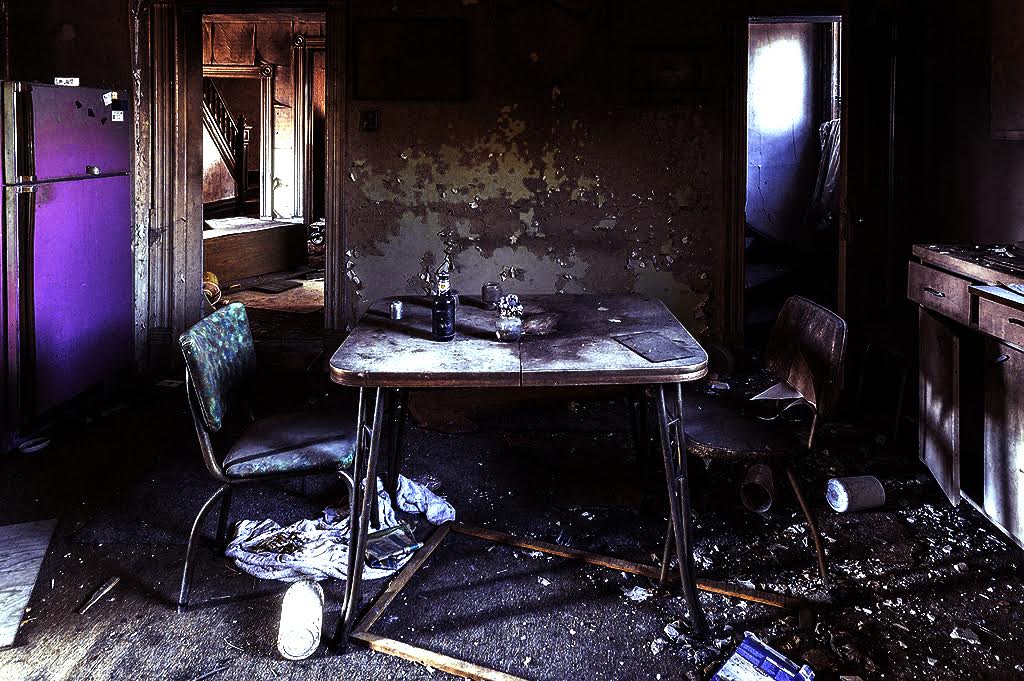

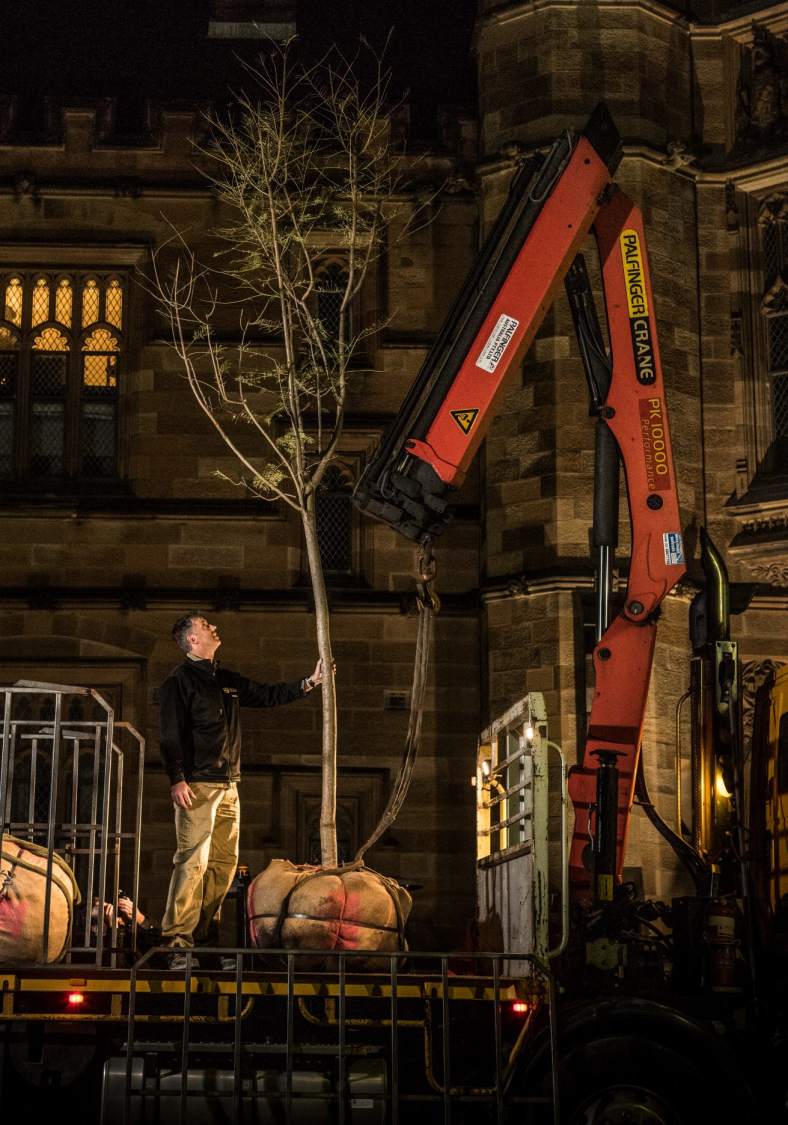
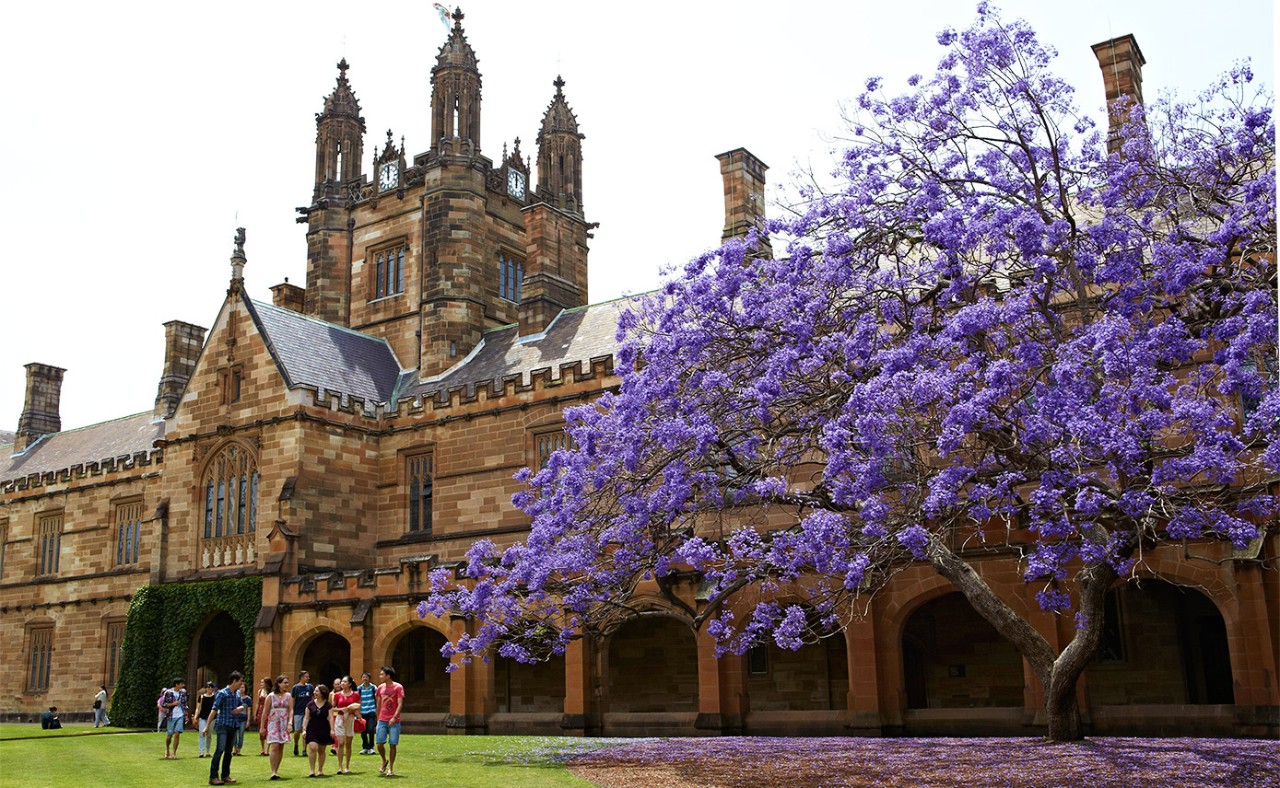


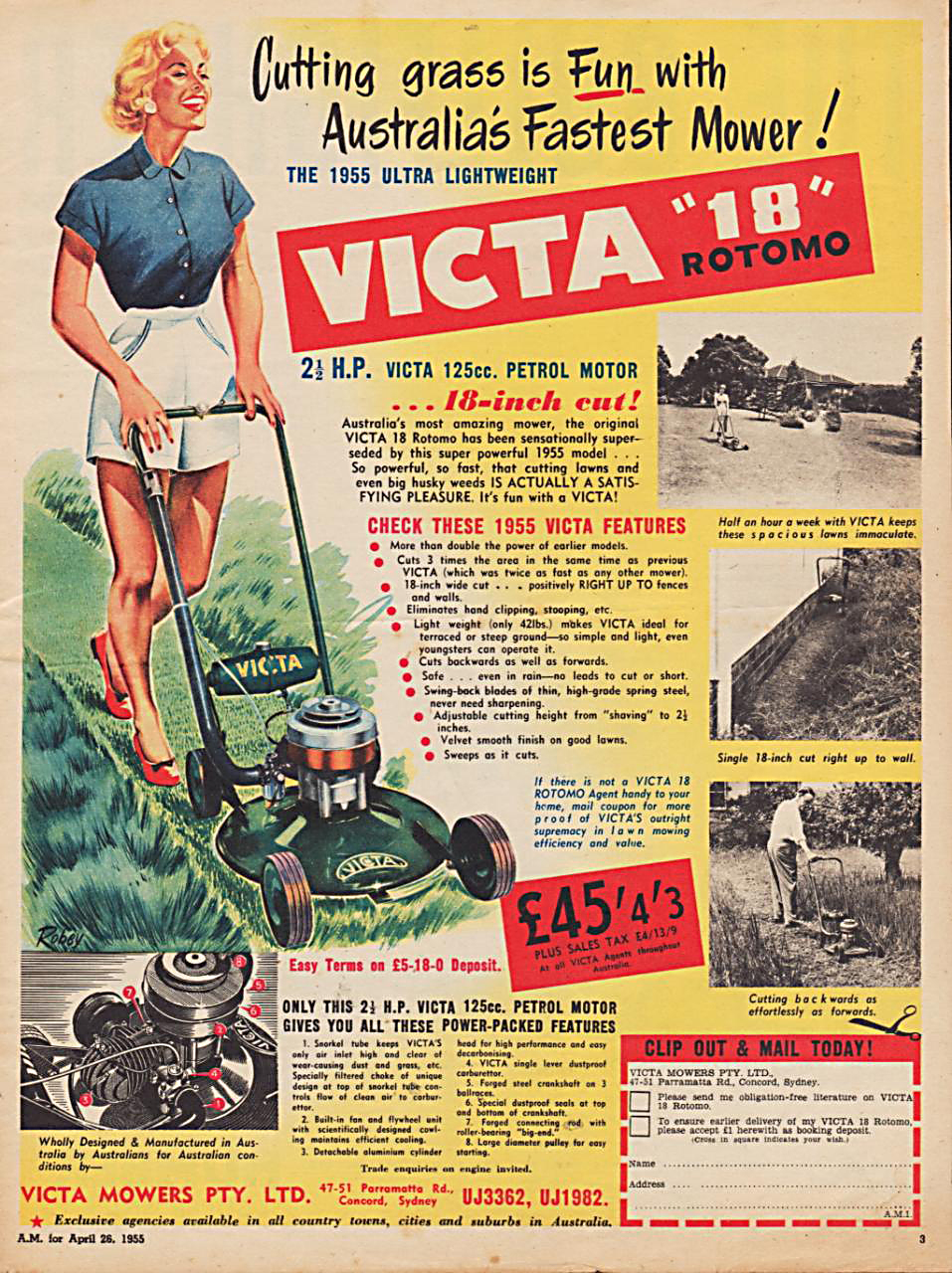

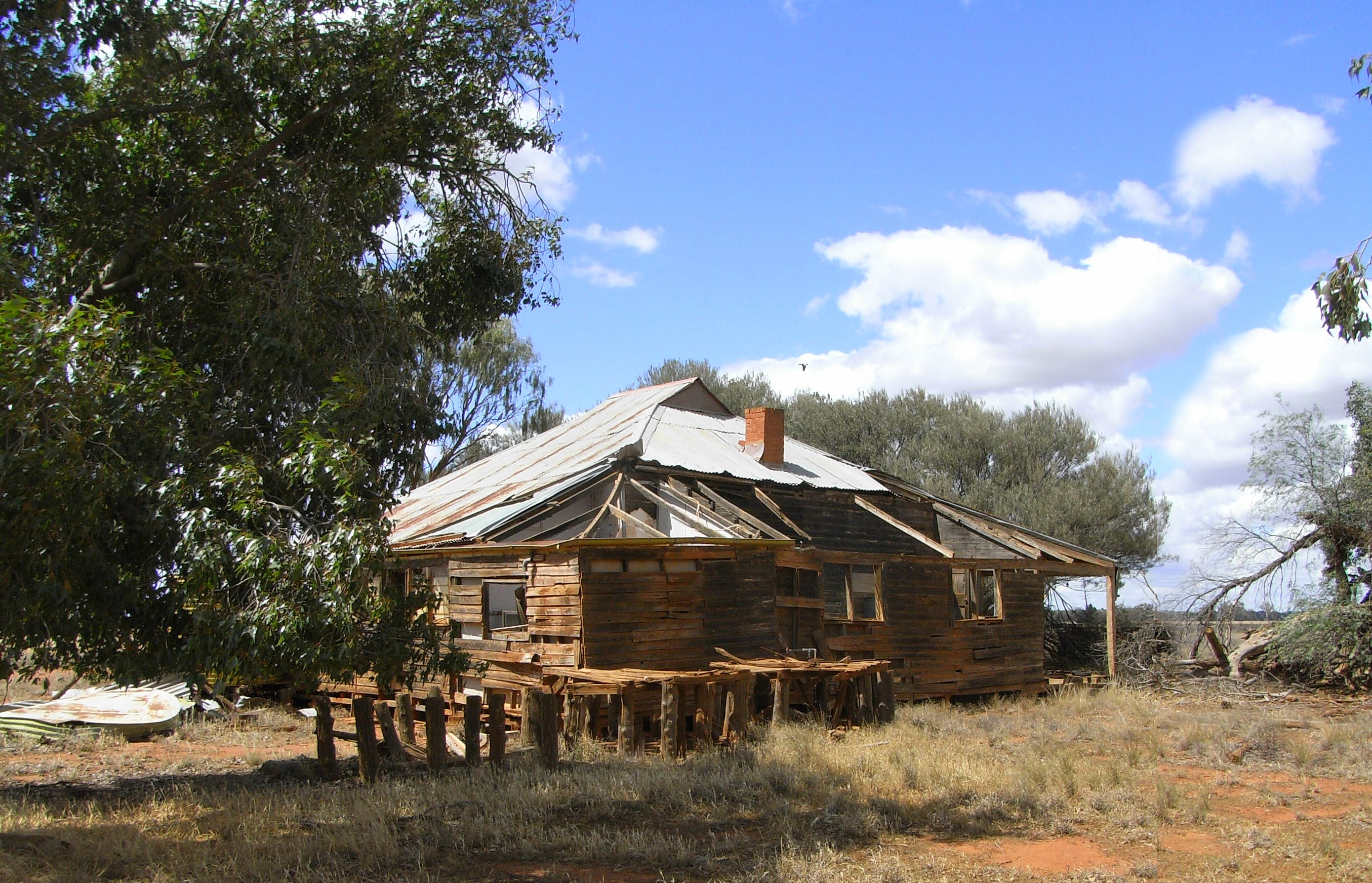
 Window Dresser's Arms, Pig & Whistle