• The Pig’s Arms
  • About
  • The Dump

Window Dresser's Arms, Pig & Whistle

~ The Home Pub of the Famous Pink Drinks and Trotter's Ale

Window Dresser's Arms, Pig & Whistle

Tag Archives: sheep

David Astle on the Woolly Problem

21 Monday Sep 2015

Posted by Therese Trouserzoff in Uncategorized

≈ 7 Comments

Tags

Goats, Savid Astle, sheep

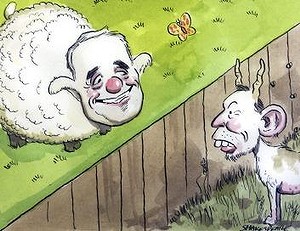
Cartoon by John Shakespeare

Cartoon by John Shakespeare

Mike Jones was flummoxed. All his life he’d used the expression, presuming everyone knew the idiom. Maybe that was true until last week, when Mike’s utterance was met by a circle of blank faces.

Admittedly, most faces in the meeting were Asiatic, which possibly betrayed a cultural gap. Yet surely the universe was wise to the analogy: to separate the sheep from the goats? Not this time round clearly. The questions only snowballed – why sheep? What do goats symbolise? Which flock is bad, and which is good? Besides, aren’t sheep and goats companion animals?

“I was stumped,” confessed Mike. “I had a good sense of the meaning, but when asked – well…” That’s where things turned woolly. After the confab, the bloke went Googling in vain. He tried Wikipedia – nada. Even the Collins definition – to pick out the superior members – left the matter debatable.

Hence the email I received, and the consequent digging I’ve been doing, burrowing into the Bible like a cattle tick. Matthew 25:23 is the phrase’s source, “And before Him shall be gathered all nations: and He shall separate one from another, as a shepherd divideth his sheep from his goats.”

The translation belongs to the King James Version, dated 1611. As the excerpt stands, the Lord is earmarking one species for the kingdom’s inheritance, while the other half can baste in eternal flames. Yet curiously, readers can only infer the blessed to be ovine, and the damnable as caprine, since neither flock is spelt out.

Smart money prefers the sheep. After all, the faithful flock is a persistent trope, while goats were “scaped” back in Exodus, the blame-bearers sent to the wilderness. Or so runs the logic, a theory built on sand and stereotype.

David Crystal, the mercurial British linguist, divines the expression, and 256 others we’ve gained from the King James Bible. In his 2010 book, Begat, Crystal sifted the scriptures to isolate such classics as born-again, two-edged sword and bite the dust.

This last relic hails from Psalm 72, though the King James text asserted “his enemies shall lick the dust”. While the Wycliffe Bible of 1395 preferred “her tongue passed in earth”. Then again, Homer’s Iliad predates both tomes by a good millennium, claiming one gored Trojan “bites the bloody sand”.

Typical muddle, according to Crystal, whose job it was to separate the trailblazer from the sheep, so to speak. A second challenge was parsing the Bible’s nuance. If sheep and goats weren’t troublesome enough, then try casting your bread upon the waters.

Ecclesiastes is the genesis. Somehow the phrase can mean anything from living lavishly to spreading knowledge. Most dictionaries plump for “doing good without expecting gratitude”, but that’s hardly consensus. Fact being, nobody “knows for certain” (a phrase debuting in 1 Kings 2:37), the idiom “a law unto itself” (Romans 2:14).

Phrase-wise, headline writers owe one big debt to the Bible. The Gospels alone have delivered first stones and crosses to bear. Though the handiest idiom must be a sign of the times (Matthew 16), which tabloids have reshaped into Whine of the Times, Swine of the Times and even Strine of the Times, for an article on how we speak as a nation.

But let’s return to sheep and goats, since the phrase resounded this month. If it wasn’t Mike’s plea, then it was our erstwhile PM seeking to triage Syrian refugees. Mr Abbott’s reckoner was Christian versus non-Christian, just as the figurative shepherd had his own crook as yardstick.

The irony is rich. In a twilight bid to win hearts and minds (Philippians 4:7), Abbott moved to split the hordes into savable and shunned. With one small hitch. Observers are still trying to puzzle out which mob – the Christian imports, the Muslim outcasts, or perhaps their actual dividers – embody the ultimate baddies deserving of damnation. As the prophet Jeremiah reminded us, “Be afraid, be horribly afraid”.

David Astle’s Riddledom is published by Allen & Unwin at $29.99.

davidastle.com

Read more: http://www.smh.com.au/entertainment/books/david-astle-on-the-woolly-problem-of-separating-sheep-from-goats-20150915-gjlxpo.html#ixzz3mLskgzM2
Follow us: @smh on Twitter | sydneymorningherald on Facebook

Australia moving forward (kicking and screaming)

04 Wednesday May 2011

Posted by gerard oosterman in Gerard Oosterman

≈ 81 Comments

Tags

Australia, CO2, Fed3eration, handpiece, maritime, Queensland, shearing, sheep

Having experienced the last few decades living in Australia and overseas one can form an opinion of what some of the differences were.. One difference that sticks out is our love of staying put, resist change. Australia is many things but it will never get accused of being at forefront of progress, rearing to try out new things, seek change, make things work better. It is true that we do advance in certain areas but often behind many others having done and proven it first. We are somewhat scared of testing the water.

It doesn’t matter what is proposed, our immediate reaction are howls of protests and rejection no matter what the merit, no matter what the proposal. It is part of who we are; fear of change is deeply embedded in our national psyche, none more so than with the latest outcry and the political tsunamis over the proposal to charge for CO2 emissions. 

It started with Federation, a bit before my time, when Australia would only consider a form of unity away from Britain, if independence was promised to each state. Australia today is a federation of States whereby each state still has many of its own laws and regulation differentiating from each other. Commit a crime and you still have to be extradited from the state where one has escaped to. As is still the norm today, Queensland then did not want to change too rapidly and become part of Federation, preferred to remain a British colony for a while longer. The struggle for Federation went on for a number of years. Even though Australia finally became ‘Australia’, it still took another 26 years for the Australian parliament to meet and hold its first sitting in its own Parliament building in Canberra 1927.

http://www.kidcyber.com.au/topics/federation.htm

We now jump over the next sixty years or so to the next hurdle, the acceptance of a decimal system. My god, this was heresy. What? Change from our beloved Pound of Twenty shillings and one shilling containing 12 pennies to a foreign currency? The sixpence, the Zac and Bob, the quid, the guinea, give all that up?  Even then, we could not bring ourselves to giving this new decimal currency an Australian name; (austral, merino and royal.) preferred instead the Yankee Doodle name of “Dollar.”  It felt safer and the US was our protector.

Then, in the 1980’s Australia was struck down by the wider-comb sheep shearing equipment dispute. It occupied the Arbitration Commission for over four years. It was a fight to the death between the National Farmers Federation with new ideas of how Australian society should be organized and The Australian Workers Union… Shearing sheds were subject to arson, burnt to the ground amongst shouts of ‘scabs and mongrels’. Even worse was that the wider combs had been introduced by New Zealand. The indignity of it all was all too much. It was however a huge shift into modernity in its final acceptance of the wider and more economical shearing hand-piece from a traditional staid rural society. The sheep kept their calm through-out.

http://www.shearingworld.com/Information/widecombs2.htm

The next bit of progress to oppose was the containerization of our wharves. Boy oh boy, I remember it well. This was going to be the death knell of all employment on the wharves. The picket lines were stretched between Darling Harbour and Botany Bay. Stevedoring was finished, doom and gloom would spread and we would all end up queuing at soup kitchens. It didn’t matter that containerization had been effectively introduced in many countries. It did not matter what took a month to turn around in Darling Harbour took a day around the wharves in Rotterdam. By hook and by crook, this progress had to be stopped in the bud. It took many legal battles and endless compensations to the workers and their unions to finally get it accepted. Harold Holt called the whole lot ‘red commies’.

The latest revolution to jar our conscience to an extreme edginess is the proposal to introduce carbon trading or taxing. It’s on par with having similar percentages of pro and against as that old smelly herring of becoming a ‘republic’. Having our own head of state just doesn’t seem to cut it here.

The primitive fear of change is well known by savvy politicians and exploited to the maximum by all parties. The ‘children overboard’ resplendent with ’armadas and hordes’ of boat people would invade our shores, corrupt Australia with foreign gangs raping our mothers and daughters and ripping off our generous welfare to boot. It is almost daily fare in our media.

With taxing carbon polluters, fear against change is again being exploited. “We all have to pay and become poorer”. “We are being led by lying Prime ministers”. “It will cause massive unemployment”. “The climate is not changing”. “The big miners will take our resources and go overseas”.”Industry will go overseas”. Our harvests will fail. Kids will run amok.

Nothing is surer that we will finally end up with some kind of carbon trading or carbon taxing but not before we have steadfastly refusedto accept it as much and as long as possible. We’ll object, protest, linger and point finger. Our beloved motto, ‘don’t fix if it isn’t broke’ will raise its ugly head again and again.  “It’s all the fault of leftist latte sippers”. Kicking and screaming we will finally get it. In the meantime the world has moved forward again. Again we will waste years, battle on and play catch-up.

This is Australia.

Live Sheep Export: Cruel, Ruining Local Industry and Exporting Jobs – Reuben Brand’s Update

07 Wednesday Jul 2010

Posted by Therese Trouserzoff in Reuben Brand

≈ 18 Comments

Tags

Abattoir job losses, Australia, Live Sheep Export, Middle East, sheep

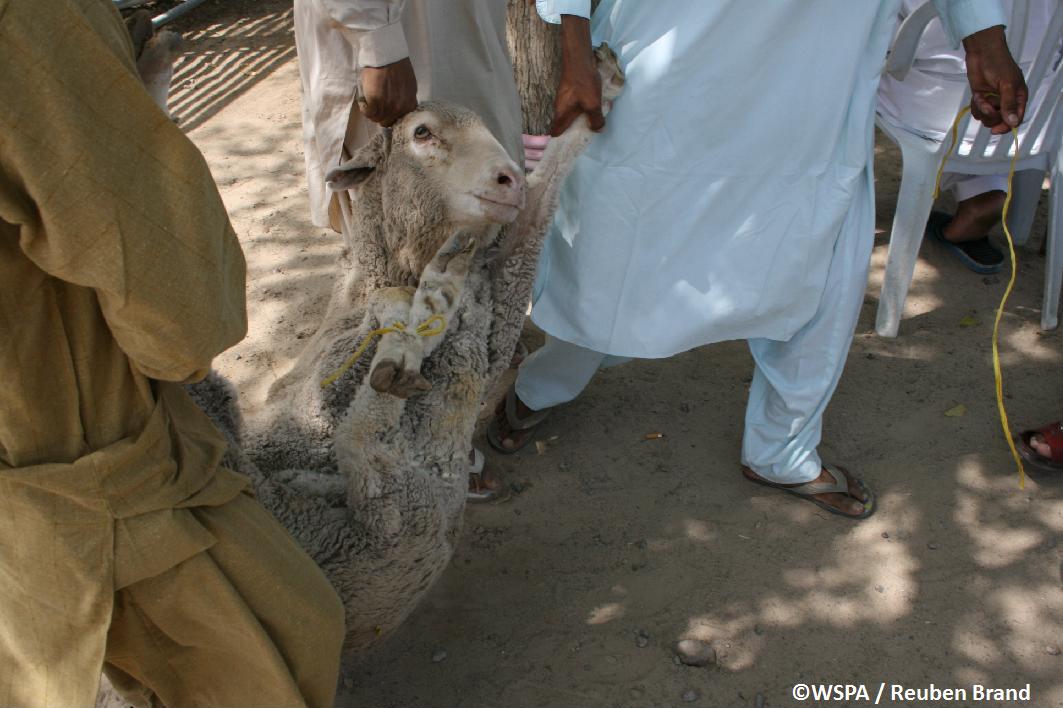
Sheep transport - Dubai

By Reuben Brand

Live export is not only cruelly exporting Australian animals; it is crippling local industry and exporting our jobs. Writes Reuben Brand

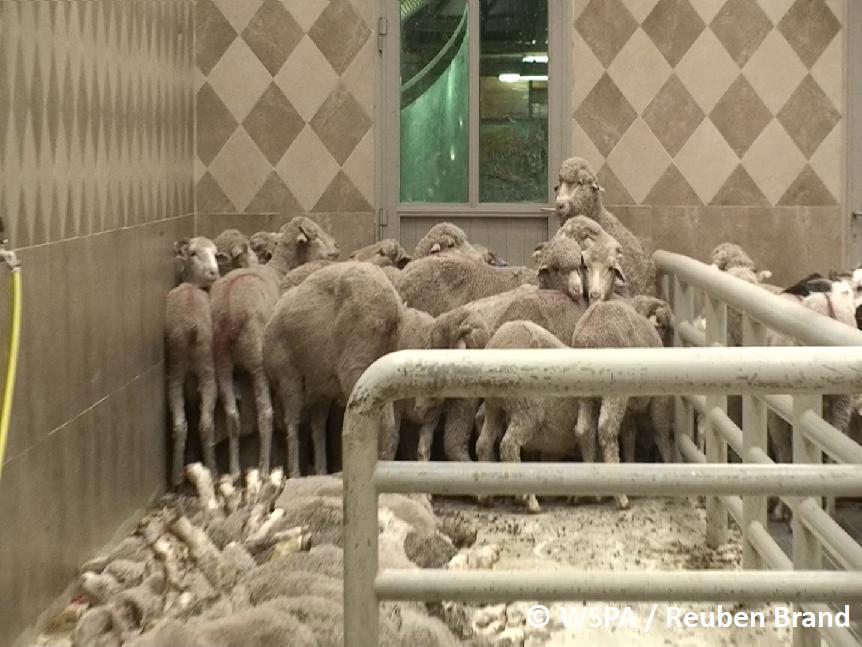
After conducting numerous investigations at livestock markets and abattoirs throughout the Middle East, I returned to Australia with hours of footage and hundreds of photographs that document the inhumane treatment these animals endure at the receiving end of the live export trade.

These investigations were launched by Sydney Lord Mayor Clover Moore during a forum at Parliament House in Sydney, where I spoke alongside representatives from the World Society for the Protection of Animals (WSPA) and the Australasian Meat Industry Employees Union (AMIEU).

Since my return I have been working closely with local meat processors and Australian meat workers who are now doing it tough due to the fact that there is simply not enough livestock to support local industry because they are all being shipped offshore.

The myths about why live export is important are many; the most common are as follows:

Myth: “Many people do not have the luxury of home refrigeration, and supermarkets are often inaccessible and unaffordable to those living in regional villages.”

Fact: Australia predominately exports to the Gulf region which, despite industry claims, is a very prosperous region for obvious reasons. Oil. The idea of “a lack of refrigeration” is not only an extremely ignorant and un-researched claim, but it is highly culturally offensive. People in the Middle East are not Bedouins living in tents, during my time living in the region I saw more luxury vehicles and high-rises than I see in Sydney or any other “developed” country. Supermarkets are very plentiful and very accessible, all of which stock a huge variety of chilled meat – with Australian chilled meat as the cheapest and most sort after of all.

Did I mention that Dubai has air-conditioned public bus stops and indoor ski slopes? But apparently no one has a fridge. Go figure.

Myth: “The supply of live animals is also important for religious and cultural reasons.”

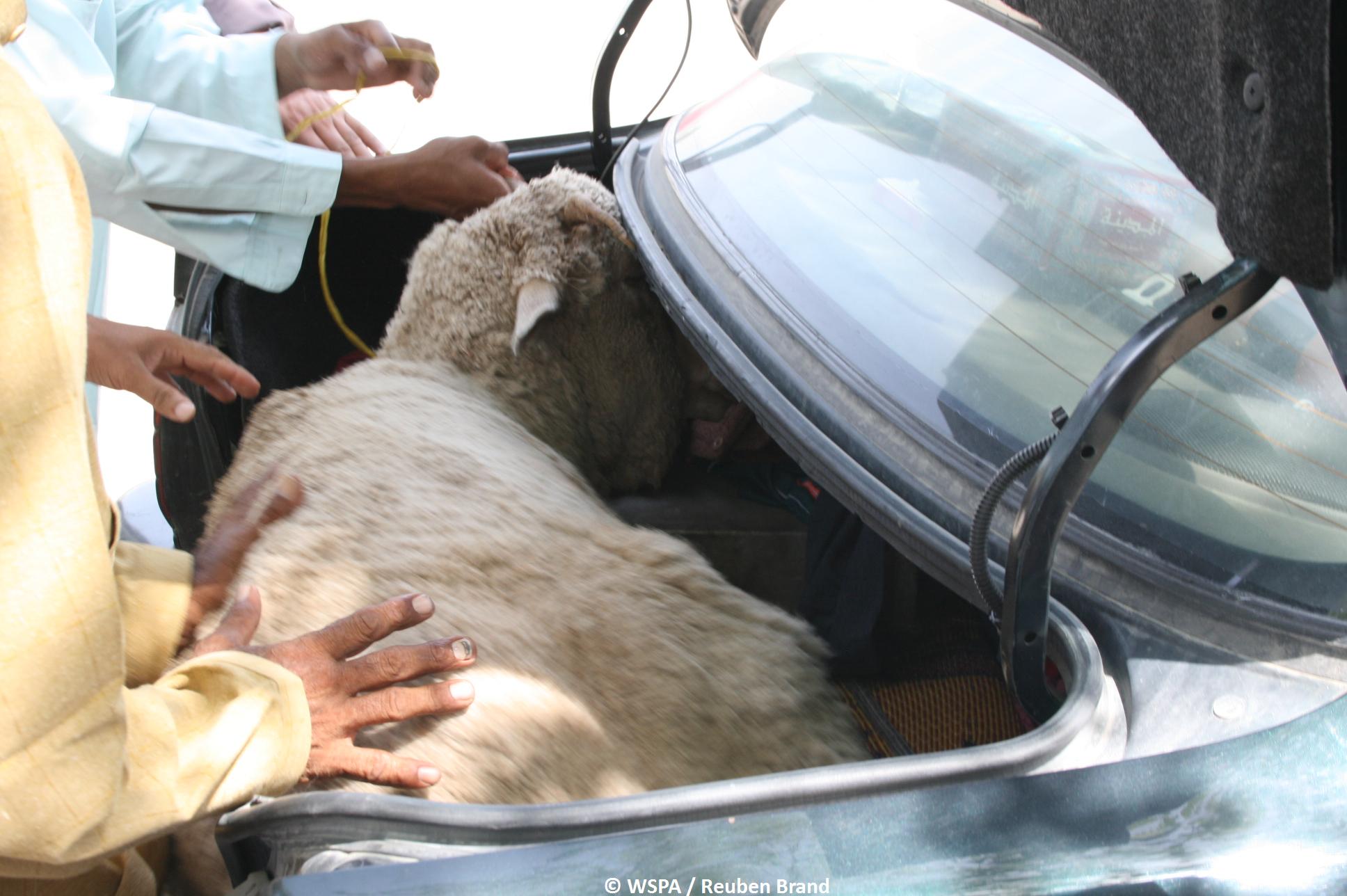
Live sheep in a car boot - Dubai

Fact: Yes, there are religious celebrations that require live animals – only two times a year.  Eid al Fitr, which marks the end of Ramadan and Eid al Adha, that marks the end of the pilgrimage to Mecca. Only twice a year – but we continue to send live animals 365 days a year.

I spoke to one of the young migrant workers at a livestock market in the region who told me he does not get paid by the local livestock company for his services. Rather, they give him a small amount of food and let him sleep in the holding pens with the animals. He has a Diploma of Associate Engineering and this is what he gets. This kind of cheap labour comes at a very high price and is all the more reason for Australia put an end to a trade that treats both humans and animals so appallingly.

The solid fact of the matter is that the live export trade is exporting Australian jobs (to countries that in some cases don’t even pay their employees) and is crippling our meat processing industry.

During a recent trip to Townsville and Dinmore in Queensland, I interviewed meat workers who are now either unemployed or have had their shifts cut right back and are trying to survive on government handouts.

In Townsville I watched as truck after truck, loaded with cattle, drove straight past the local abattoir. One local meat worker, who is now unemployed, told me that the export vessel docked in the harbour was not only exporting cattle, it was exporting the jobs of approximately 250 people who had just been stood down.

“Nobody is working today and yet there is a boat with thousands of cattle leaving. Thousands! You know, that’s a whole months’ worth of work for us,” she said.

According to Grant Courtney, President of the AMIEU, 40,000 people have lost their jobs and 150 processing plants have been shut down due to the live export trade – over 700 of these job losses have happened in the past six months alone.

“I can’t understand why the Government is sticking its head in the sand when thousands of Australian jobs are being lost due to this trade,” he said.

Another man I spoke to who lost his job at the local abattoir is now struggling just to keep his family afloat. His fiancé, who is also pregnant, has now had to go back into the workforce to try to support their growing family.

With no money for food or bills, no fuel in the car, debt collectors breathing down his neck and relying on donations to survive, life is becoming increasingly tough he bravely told me.

“Lately it’s been getting pretty bad… we’ve even had to go down to the local community centre and grab food vouchers… You start to appreciate things like that when people donate food and money vouchers so you can live.”

Shift cut backs and job losses at the processing plant in Dinmore now have workers pondering the future of the Australian meat processing industry. As one woman told me, if the Dinmore plant is suffering, which is one of the biggest in Australia, then she can’t see hope for the survival of any of the smaller ones.

“Every boat of cattle that leave this county, leave the Australian worker and I know what it feels like without work…it’s no good saying that the live cattle export doesn’t contribute, it certainly does. Because it’s just got worse and worse,” she said.

With a daughter who has a terminal illness and needs a surgery that could save her life, this woman courageously sat and gave a first-hand account of how the live export trade is affecting her life and many others who are now in the same boat.

Andrew Martell, a sheep farmer from central Western NSW, attended the live export forum at Parliament House last month and made some points during Q and A time – he also told the room that he receives the same amount of money for his sheep regardless whether he sells them to exporters or local industry.

Kuwait abattoir - 2009

So why on Earth would you want to send sheep offshore to be slaughtered and transported inhumanely when you could have it all done here and create much needed jobs in the process?

It is an absurd idea to think that all people in the Middle East buy their daily meat from a wet market – can you imagine how long it would take just to buy a single steak? Local supermarkets and butcher shops operate on a cuts and carcass trade where the outcome for the consumer would remain the same with a chilled meat trade.

Independent research, conducted by ACIL Tasman, shows that a sheep processed domestically is worth 20 per cent more to the Australian economy than one exported live.

According to the Australian live export industry this trade contributes $1.8 billion to the economy, so by using their own figures, if we phase out the live export trade and implement a chilled meat trade for export we could have an industry that injects $2.16 billion into our economy. Not to mention the huge impact it will have on Australian jobs.

A chilled meat trade is not only a sustainable alternative but is also extremely lucrative for all involved, be it farmer, processor or meat worker.

To view a video of Reuben’s investigation in the Middle East please click here

To view interviews of meat workers please click here

Reuben Brand is a freelance journalist who has worked extensively in the Middle East. For more information please visit his website at: www.reubenbrand.com

Belly Dancing and other related Activities

19 Friday Mar 2010

Posted by gerard oosterman in Helvi Oosterman

≈ 14 Comments

Tags

bellydancing, holidays, sheep

By Helvi Oosterman

Our little cottage, or maybe I should call it a shack, is usually let to the nicest possible people. They rent it because they like the idea of staying  in somewhere old and charming; somewhat sloping floors, aged newspaper/wallpaper  still visible here and there and of course the slow combustion fire place and stacks of books and CD’s on the shelves …

Now all the lettings are done through internet, via e-mails rather than telephone.  At times those calls made it very hard to stay civil and to agree that the customer is always right. There was this loud and opiniated American woman who demanded to know how old the bed linen was. I patiently explained that we had only been in operation about two weeks, so sheets and towels were only fourteen days old. Next she wanted to find out the standard of the general cleanliness in the cottage. I don’t know what she expected me to say; maybe she was eager to know what time I had vacuumed the place, and what cleaning products I used in the bathroom.

“Your question is rather ambiguous as my standards of cleanliness might be a lot higher than yours”, I replied and quickly added that I didn’t like her style of questioning and that I was not going send any requested pamphlets to her either.  Huh, I got out that in one piece, thank god; she most likely would have sued us if she found a dog hair on the veranda cushions!

Another interesting call came from a young mum of twins; she enquired after possible horse riding places nearby.  At time the insurance costs for that kind of activity had sky-rocketed; many horse owners had also stopped the practice. I passed the news to her and she seemed most disappointed and that made me ask her how old her twins were.  “They will be two next month.” I did not say anything after that.

Still, horse riding is something that people like to do in the country; it was just the age of the boys that threw me. I can relate to this eagerness to get the kids into activities as it is what these modern mums do. I was flabbergasted when another lady asked me what was there to do for her husband who was supposedly easily bored. I felt like saying; “Join the club; I have one of those as well. I usually do a spot of belly dancing at nine after the kids have gone to bed.” 

Instead I sweetly rattled on about cycling, hill climbing, and swimming, boule playing or maybe just reading in front of the fire…

The next enquire came from this very nice Chinese girl who wanted to know what kind of animals we had on the farm.  I proudly listed the alpacas and their cute off spring, then the chickens, ducks, peacocks and what the kids seem to like best:  our three toddler friendly dogs. “What about sheep”, she asked. “Next door neighbour has thousands of them, just behind the nearest fence”, was my curt reply. 

She rang at least two more times, still asking about the sheep. Finally I couldn’t help it any longer and I had to ask:”Lee, what is it that you want do with those sheep, practice some shearing or what? “

She couldn’t stop laughing and when she came with her kids, all they wanted to do was to play with our lovely dogs…

Patrons Posts

  • The Question-Crafting Compass November 15, 2025
  • The Dreaming Machine November 10, 2025
  • Reflections on Intelligence — Human and Artificial October 26, 2025
  • Ikigai III May 17, 2025
  • Ikugai May 9, 2025
  • Coalition to Rebate All the Daylight Saved April 1, 2025
  • Out of the Mouths of Superheroes March 15, 2025
  • Post COVID Cooking February 7, 2025
  • What’s Goin’ On ? January 21, 2025

We've been hit...

  • 713,915 times

Blogroll

  • atomou the Greek philosopher and the ancient Greek stage
  • Crikey
  • Gerard & Helvi Oosterman
  • Hello World Walk along with Me
  • Hungs World
  • Lehan Winifred Ramsay
  • Neville Cole
  • Politics 101
  • Sandshoe
  • the political sword

We've been hit...

  • 713,915 times

Patrons Posts

  • The Question-Crafting Compass November 15, 2025
  • The Dreaming Machine November 10, 2025
  • Reflections on Intelligence — Human and Artificial October 26, 2025
  • Ikigai III May 17, 2025
  • Ikugai May 9, 2025
  • Coalition to Rebate All the Daylight Saved April 1, 2025
  • Out of the Mouths of Superheroes March 15, 2025
  • Post COVID Cooking February 7, 2025
  • What’s Goin’ On ? January 21, 2025

Enter your email address to subscribe to this blog and receive notifications of new posts by email.

Join 373 other subscribers

Rooms athe Pigs Arms

The Old Stuff

  • RSS - Posts
  • RSS - Comments

Enter your email address to subscribe to this blog and receive notifications of new posts by email.

Join 373 other subscribers

Archives

Website Powered by WordPress.com.

  • Subscribe Subscribed
    • Window Dresser's Arms, Pig & Whistle
    • Join 279 other subscribers
    • Already have a WordPress.com account? Log in now.
    • Window Dresser's Arms, Pig & Whistle
    • Subscribe Subscribed
    • Sign up
    • Log in
    • Report this content
    • View site in Reader
    • Manage subscriptions
    • Collapse this bar
 

Loading Comments...