Tags
Story by Sandshoe
I am deeply moved by the dedication of the Japanese teacher filmed in the documentary ‘Inside Hana’s Suitcase’, who wrote a letter to the Holocaust Museum asking for a loan item for a class project. Hana’s suitcase was sent from Auschwitz, off the top of a display of innumerable suitcases supplied to children in the Holocaust of Hitler’s Germany.
The school children with the help of the teacher create a museum in their classroom beginning with what they find is in the suitcase. They assemble a history of Hana as far as it can be.
It is a story of motivation, co-operation, process and construction.
I decide I want to contribute to the story, of war and research the experience of someone who may have no-one else to honour their story.
My personal inspiration to accomplish this resolve begins with detail my father recorded in a document he sent to me 30 years ago. In a list of genealogical notations (#1 – #15) intended to be read alongside a family tree of his paternal lineage, he scribed as follows:
(#5) on death of father, John (and William) were admitted to the Caledonian Orphanage maintained by regiment: Both became long-service army bandsmen, John as drummer, for 21 years, in 92nd Regiment Gordon Highlanders in Aberdeen, was personal signal drummer to Lord Roberts on active service in Middle East, married an Aberdeen girl, had no children, adopted a boy, son of a sergeant in the regiment: served as verger in Anglican Church in King Street, Aberdeen
(#6) became clarinetist, served 22 years, in Grenadier Guards Band: married, no issue
(#5) and (#6) inclusive refer to my paternal great-grandfather’s siblings, his brothers John and William Wilson.
I felt I knew Great-grandfather George Wilson, retired sea captain and Harbour Master of Dundee, passably well, innocent of my naivety thought I had the measure of the man from stories told me by my father who travelled by train to spend school holidays in Dundee with his Wilson grandparents c.1909-c.1918. My father recounted that home in Aberdeen he spent every moment he could on the wharves, looking out, yearning to run away to sea. His grandfather was (#3) ‘when his father died too old for admission to regimental orphanage; went to London as a draper’s apprentice; briefly, then went to sea; served many years in sail as first mate with captain’s certificate; went ashore to college and qualified to command in steam’.
To potentially represent him there were on face value 9 children inclusive of two sets of twins and their families in turn.
I embarked on researching why, when their father died, my g-grandparent’s brothers (#5) John and (#6) William were placed in an orphanage.
Had their mother contracted and died of smallpox as their father (#1) did according to my father’s notation ‘at Castle Hill barracks, Edinburgh circa 1856 while regiment was preparing to embark for Crimea’?
I found record of the death from smallpox in June, 1856 of the boys’ father, 37 years old, married, Private John Wilson of 92nd Foot (the 92nd Regiment of Foot, the Gordon Highlanders). His burial site is the Canongate graveyard at Edinburgh Castle.
My great-grandfather’s brother John was 2 years old at the time of the death of their father. The birth of John is the first evidence I have of his mother whose name I know from my father’s notation of (#2), Isabella Birse.
I meanwhile fail to find record of the birth of the younger brother William who is either unborn or no older than 15 months at the time of the death of his father in 1856.
I turn my attention to researching ‘the Caledonian Orphanage’, the ‘Caledonian Asylum’, ‘the Royal Caledonian School’, the ‘Cally’ as it is called. A view of the census records of the inmates shows children are listed as Scholars. I may find them yet, but my initial gut response to this public record is that these were the lost boys and they were stolen for indoctrination into military service.
Inmates were aged between 7 and 14.
My second thought immerses me in anxious reflection on the welfare of Isabella, the boys’ mother. Did she ever see the children again? I feel her suddenly close, the mother of my father’s beloved grandfather, even though she was born in 1819. Maybe she dies a childless mother. I am overcome with distraught anxiety, search for her in a frenzy.
I find her, the widow, Isabella Wilson nee Birse, living in her later years in the family home in Dundee of her first born son, George, my father’s grandfather, the residence where my father subsequently visited his grandparents from Aberdeen in his school holidays. I find John, her second son, married, living with his wife and an adopted son, a short walk away, which is after his discharge from his regiment, regardless 21 years military service and separation from his mother as a young child. I note John’s signature is ‘Informant’ on Isabella’s death record. The place of death is a hospice close to the address of his brother George and his own residence.
Still I cannot imagine what the years were like for Isabella after the death of her husband John with the responsibility of the two children, John and William who were babies, her oldest child apprenticed in London. I don’t know if Isabella saw the youngest, William ever again after he was admitted entrance to the ‘Cally’, or even for how long after the death of her husband she was able to maintain the charge of the children and could meet the responsibility.
For now as it is not yet researched, we can believe only because my father provided information that is proving to be remarkably accurate, William like his brother John had a distinguished career as a military musician. Was it as event filled? How did these soldiers fare? What did they survive? I send to the Gordon Highlanders Museum in Aberdeen for information about John, When John joined the 92nd, he was promptly sent overseas and the regiment was away for years. He was in Afghanistan and India and South Africa: was awarded the Afghan Star which was recognition of the famed march to Kandahar, and the Afghanistan War Medal with 3 clasps – Charasia, Kabul and Kandahar. When he left military service John was only a man in his 30s.
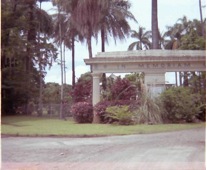
Mulgrave Sugar Mill, Gordonvale, QLD. Photo by Sandshoe
It is the 25th day of April, Anzac`Day. I write thinking on my own experience of war that I know of at first hand, contemporary wars of media and guided attack missiles, how will I finish this essay. With a flourish or a whimper. I turn desultory pages in my mind, the boys of the family marching in front of me out of my mother’s family about one of whom it is known he lied about his age to get accepted into military service in the First World War and he was wounded. He was wounded again (I think again). I remember him as a loving and gentle gentleman. My sister all those years ago won the prize for an essay that was the annual competition, What Anzac Day Means to Me. My older brother I learn from a Trove search had won in his year the same essay competition. I think I relearn that. I think I wanted to win the same essay competition. We marched. I marched, young and soon without them, fearful because I was younger by far and my siblings had left our country town in the Far North of Queensland to follow dreams, higher education, to make their way. One thing leads to another. The heat of the sun exemplifies Anzac Day, the raucous retort of the 21-gun salute, my white dress, blue beret, the badge of a Pathfinder, the later years of a Brownie and a Girl Guide of the Scouting Association, the toggle, the brown beret, blue slouch hat.
I am opposed to children being sent to war at a distance, disengaged from their families, not only because of the inhumanity of the gesture but because the effect is generational. The psychology of forebearance of loss is a learned response. It translates to emotional loss, physically violent loss, the loss of possessions, home and family. It tolerates significant onslaught on dignity, raises the pain threshold beyond potential endurance. Coming to understand I am from a military family in the sense everything I have learned as a child from my father is an acculturation in militarism and discipline, I propose it is the death of my antecedent, John Wilson in Edinburgh Castle 156 years ago that has lent me every appearance of the courage I have been told I exhibit, which is tolerance of grief and dislocation whereas change is requisite.
When we laud the traditional concept of courage, equally, by inference holding up for social example a soldier particularly because he has successfully applied for enlistment regardless under-age we might be best advised to recognize a problem of the administration of the law. For successive years the debate raged in the House of Commons, result of a continuously thwarted attempt to introduce an Amendment of s. 76 of Army Act as follows; I quote from Hansard (HC Deb 17 April 1928 vol 216 cc97-113]:
§ “In Section seventy-six of the Army Act (which relates to the limit of original enlistment), after the word ‘person,’ where that word first occurs, there shall be inserted the words ‘of not less than eighteen years of age,’ and after the word ‘may,’ where that word first occurs, there shall be inserted the words ‘upon production of his birth certificate.'”
I beg to move, “That the Clause be read a Second time.”
The substance of the Clause, if not its actual terms, has been moved now for several years. Hitherto the Government have refused to concede the request contained in it, and if to-night there is nothing original in the Clause or in the speeches supporting it, I hope there will be something original in the Government’s reply, and that it will be affirmative rather than negative. The request in the Clause is a very sane, sensible and reasonable one and, on grounds of principle or expediency, there is no real answer to the case. We are simply asking that the procedure governing entrance into the Army shall be brought into line with that governing entrance into any business house or bank, the teaching profession, the Civil Service, the Inns of Court and all professions. I have never been accused of being unduly biased on the side of the defence forces of the country, but I recognise that, under existing conditions, a defence force is necessary and, in view of that, I see no reason why the calling of a soldier should not be as honourable as any other professions. Yet, if the answer of the Minister last year to this request is to be taken seriously, he hardly accepts that view. He gave two reasons for refusing this request. The first was that it was necessary to take recruits under 18 to maintain the band. That is rather a paltry excuse for embarking on so serious a procedure. The other reason he gave was that, if a birth certificate were demanded from the new recruit, it would hinder recruiting. I admit there may be occasions where its production might give certain private domestic information which the applicant would prefer to keep private. That argument, if it be an argument at all, would apply not only to the Army but to every other calling and profession.
I ask the Minister of War whether he would be in favour of exempting applicants for the Civil Service, the teaching profession, the Inns of Court, or a business house from producing their birth certificates, because, if there be an argument against the production of birth certificates on enlistment, there is a far greater argument for exempting those entering the Civil Service from producing their birth certificates than there is for exempting those entering the Army under 18 from doing so. In the first place, the entrant to the Civil Service or a profession has a certain degree of freedom. If he dislikes it, he can retire from it, but the boy under 18 who joins the Army has mortgaged his liberty and freedom for many years ahead and has really affected his whole future life. (HC Deb 17 April 1928 vol 216 cc97-
Kandahar, 1879 by Henry Dupray
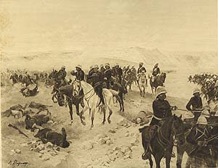
http://www.military-art.com/mall/more.php?ProdID=5462
92nd Highlanders at the Battle of Kandahar by Richard Caton Woodville

http://www.military-art.com/mall/more.php?ProdID=5462
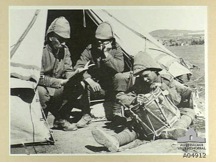
The English drummer boy’s letter (1901).
 Window Dresser's Arms, Pig & Whistle
“Shoe, I was reflecting on the issue of the damage inflicted on our youth by the trauma of war and as I said in “Eric Herring”, he came back a different man. Here’s a piece I found after a visit to New Matilda – reading Zoe Krupka’s article on how evil humans can be – and how we surprise ourselves by our capacity for cruelty. Zoe posted this one – a commentary on the psychological aftermath of the Black Saturday fires …… http://www.theage.com.au/victoria/black-saturday-caused-increase-in-domestic-violence-research-finds-20120123-1qe13.html
LikeLike
‘SHOE: Thanks for your reply. Oops re me placing it in the wrong column. And, as I’ve said to you before, you write like a dream. However, we have different perspectives about war. “”. The heat of the sun exemplifies Anzac Day”” Certainly this comes across as a panegyric rather than a condemnation of war.
It is the nature of young men to volunteer for the lice, dismemberment, squalor and death encountered in war. However, nothing can excuse successive Australian governments who seek to shore up alliances by offering up the lives of Australian youth.
I stand by my original comment.
Cheers V
LikeLike
Venise, it’s a dream. You have come to our place.
I am in this instance reflecting on my childish experience of Anzac Day, relfecting on what I knew when I was engaged in it, which was when I was a child. I marched following family, knew nothing, in fact fainted in that sun in tropical North Queensland. It is poorly written. I don’t agree that we have a different perpsective about war.
I am opposed to the sending of children to war, I am by definition opposed to the indoctrination of …the toggle, brown beret, blue slouch hat…a child marching in an Anzac Day parade not aware of what it is she is representing.
It is poorly written Venise and I am indebted to you for your observations especially that they are worded strongly and well.
LikeLike
Sandshoe, I’ve read through this a couple of times, and, like a roast dinner, won’t be fully digested until chopped up, and made into tomorrow’s sandwiches (but I will chop it up, and make stock from the bone).
LikeLike
Okey dokey, whatever your preferred seasoning is too, Big M. 🙂
LikeLike
Interesting stuff, Sandshoe, I’ll have to read it again tomorrow…
Do you watch those Where Do I Come From shows on SBS, some of them are very good, very emotional, and full of surprises.
LikeLike
Helvityni, thank you for having a go at this article.
I have watched those shows until I had to go online and track down episodes I missed. I enjoyed them so much.
Eccentric thing I remember, Helvi, in one of those sorts of programmes, not necessarily that same, a UK based one … a young woman taken to an old chapel and it was described her relative was a verger, she and the historian with her were standing in front of the pulpit area, and she asked where the relative was buried, the answer was to effect ”Under you feet’. He was under the flagstones where she had been lead to stand. Myself, I would not like that shock. She was shocked. I swear all the blood drained out of her face. 🙂
LikeLike
What an impressive article Shoe! What a bonus for you to have all those details from the past. I wish I knew more about mine. Wars are terrible and seemingly unavoidable. When will they ever learn, sung by Marlene Dietrich still seems to sum it up. Sag mir wo die Blumen sind?
Thank you for your excellent reportage and history.
LikeLike
Gerard, I wonder that I wrote this article so quickly. I consider it is good, the information there is in it and that it leads outside of personal history. I have attempted to shock recognition at its end by the use of illustration that the little boys like John the drummer boy were exposed to scenes of the most violent carnage or their aftermath. John was 25 by the time of Kandahar but a veteran of campaigns since he was 14, heavy tack.
I would include more hooks to lead from one section of the thought process involved here to the next. Rewrite.
Thank you, Gez. I appreciate the enthusiasm of your feedback and Helvi’s. It inspires me to want to write better and reveal ideas more frequently, have courage.
LikeLike