• The Pig’s Arms
  • About
  • The Dump

Window Dresser's Arms, Pig & Whistle

~ The Home Pub of the Famous Pink Drinks and Trotter's Ale

Window Dresser's Arms, Pig & Whistle

Category Archives: Lehan Winifred Ramsay

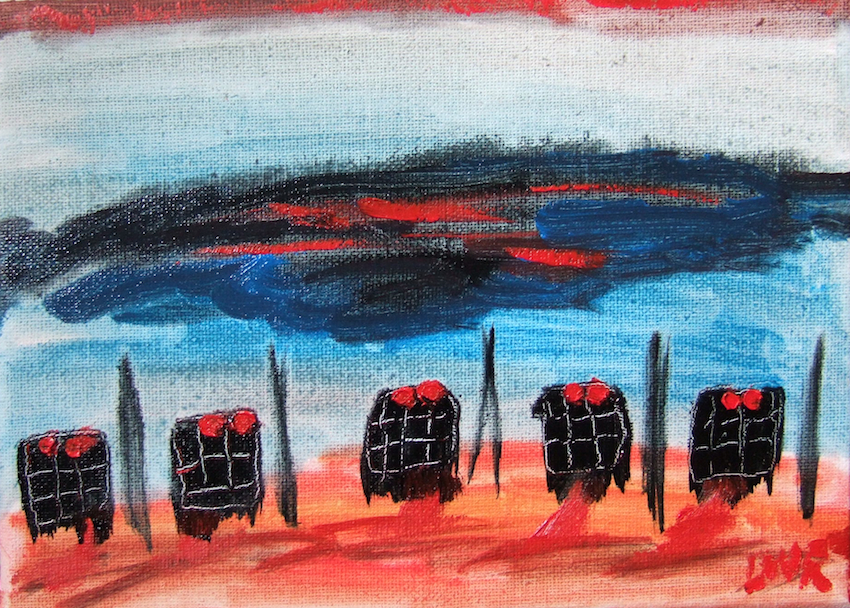
COG

11 Monday Jul 2011

Posted by Therese Trouserzoff in Lehan Winifred Ramsay

≈ 52 Comments

COG

The Pig’s Arms warmly welcomes the return of Lehan Winifred Ramsay

At first in my dreams I found all the people and all the moments that I had lost, and I felt despair. But they came back night after night, each plot new and yet connected to the others. I realized that all these people and moments were now mine forever, and were performing only for me. They can never do better or worse than they have already done, but they are forced to stay with me in these dreams. And I can move on.

Y

10 Friday Jun 2011

Posted by Therese Trouserzoff in Lehan Winifred Ramsay

≈ 4 Comments

Tags

Roo

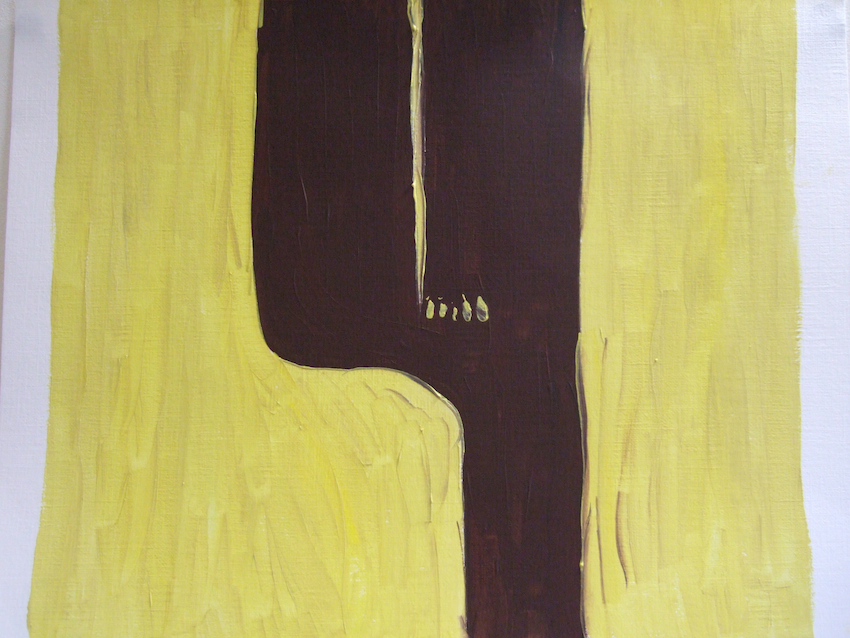
The Y

Painting and Story by Lehan Winifred Ramsay

Lehan saw Roo in the paddock, went up for some advice.

I close my eyes, she said, and I see this Y. Here, I painted it. Now I can’t stop thinking. Why, why, why.

You missed the L, said Roo.

L? said Lehan.

Not Why, said Roo. While.

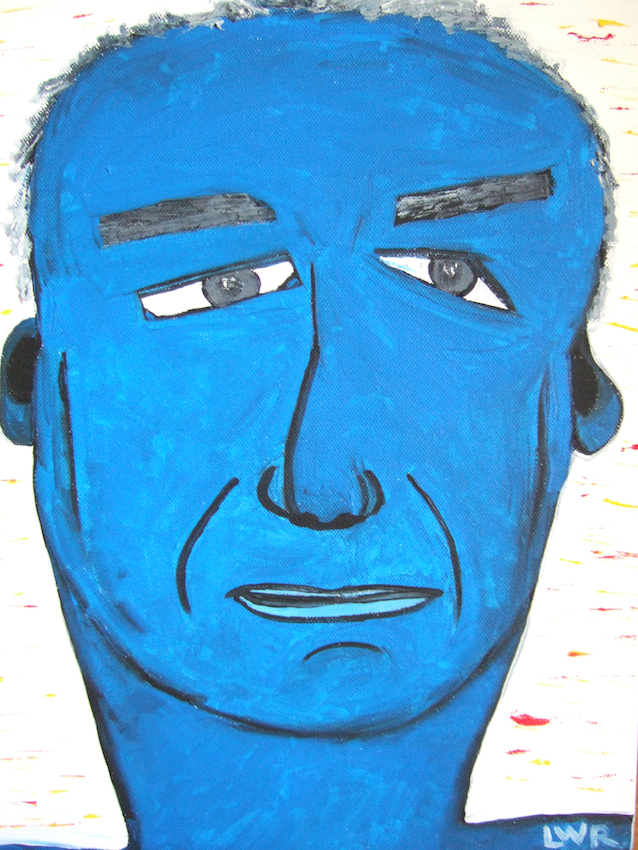
Blue Man

23 Monday May 2011

Posted by Therese Trouserzoff in Lehan Winifred Ramsay

≈ 14 Comments

Tags

Blue Man, Painting

Painting and Story by Lehan Winifred Ramsay

Blue Man wakes up in a sudden clenching sweat. Sleep comes only after a long wait, it stays only a short time but during this time it binds him tightly. Sleep begins and ends with a dream; tight clear dreams of impossible possibilities. Blue man waits for the dawn to break, wishing that the night would start again, bring again the possibility that sleep will come.

Each impossible possibility sets off another round of self-deflection. Each deflection strips away another layer of I-didn’t-realize-things-were. The dawn skies fill with squarking birds.

Roo

06 Friday May 2011

Posted by Therese Trouserzoff in Lehan Winifred Ramsay

≈ 14 Comments

Roo

Painting and story by Lehan Winifred Ramsay

Roo jumps the fence, lands in a completely different paddock. Can’t jump back cause of the way the trees have grown around the fence. Maybe if he went way up the hill to the other side of the scrub he could find a way back. He’s not really sure though if it’s really that he liked the other paddock better or that this paddock is just not what he’s used to. He jumped across without thinking about it too much. It was the only way he could get himself to jump, was to not think too much. The minute he landed he did think. Oh no. This was a mistake. I want to go back.

But Roo knows that back is not a solution. Back is a problem. There are a lot of things that make back a bad idea. Back to the other paddock says; not enough grass, not enough roos like himself, and that bitter wind that blows in from the north. So there’s here that doesn’t feel right, and back there that wasn’t right either.

There’s not much that can be done. Sure he could run back now. And he is a bit tempted. But this might be a good paddock, better than the other one. Leaving now would make it impossible to know. Leaving now isn’t smart. There isn’t anything smart that can be done to make things easier here either. Nothing but taking one little step and then another and another. The occasional hop.

Roo thinks back to his meeting with those Pigs people. T’was them who told me about this paddock, he thought. Made it sound a bit worth giving a try. They should all be around here somewhere. Something about a second birthday.

Leaving Shoes

20 Wednesday Apr 2011

Posted by Therese Trouserzoff in Lehan Winifred Ramsay

≈ 31 Comments

Tags

Leaving, SHoes

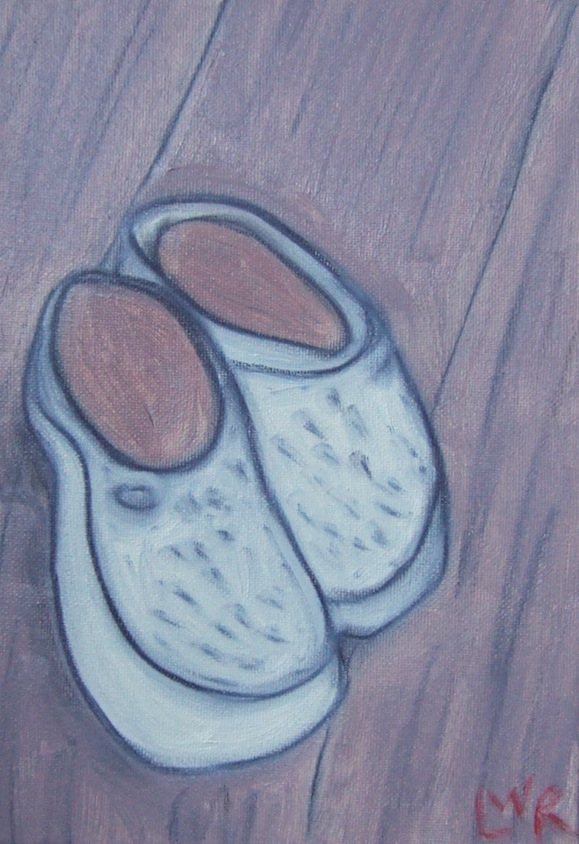
Leaving Shoes

Editor’s note:

Apparently Foodge’s message was a bit too garbled….. here’s the cat properly out of the bag ….

Painting and Story by Lehan Winifred Ramsay

This is the story of a kingdom far, far away. Where the old men divided up the goodies of the land and held on to them, refusing to let them make things better for everybody. Today I am thinking that it’s a country that people grow old too fast in, and so cannot think of how to make a better place.

Really, this is a story of my leaving. To anyone who ever asked me why I stayed, I always told them that it was because every day of my life here there had been something new. But I got tired of struggling. Some dust must have entered my eye, and I could no longer see new things, but old and tired things.

This is not the story that I put a bright and excited face on returning to Australia. This is a story where I tell it how I feel it. It was cold, and things felt never-endingly grim. All around me seemed to be people who were only just managing, dragging too many set ways along with them. Even the people with a bit of spirit seemed only lightly alive, and I felt squashed down under all of them.

There was something enchanting in my eyes for a long time, and then some dust got in. And I got tired, so I am leaving, and I am a little afraid of my future. I made some kind of dream for myself, this house and those animals, but in the end it was only me, and too heavy for me, and I have to let it go. Not knowing if I will ever have a chance to make it again.

Everyone needs some kinds of tokens for taking a big step don’t they? Mine are a pair of cheap shoes, ivory coloured, made of light rubber. They won’t last me for very long, and they will pick up a lot of dirt, but they are a pleasure to walk in. If ever I wanted a business to succeed, it would be selling these shoes. Who could not love them? I’m not going to start a business though, I think I must be a bad businessperson, I couldn’t make my school succeed. So these shoes and I are going to walk out the door of Japan on April 30, leaving behind the dream house that I made, the animals that were my family, and some kind of enchantment that after 20 years, one day wore too thin to keep me following.

Systems Trouble

15 Friday Apr 2011

Posted by Therese Trouserzoff in Lehan Winifred Ramsay

≈ 25 Comments

Tags

Chernobyl, Fukishima, Systems

Maybe Nothing

Painting and Story by Lehan Winifred Ramsay

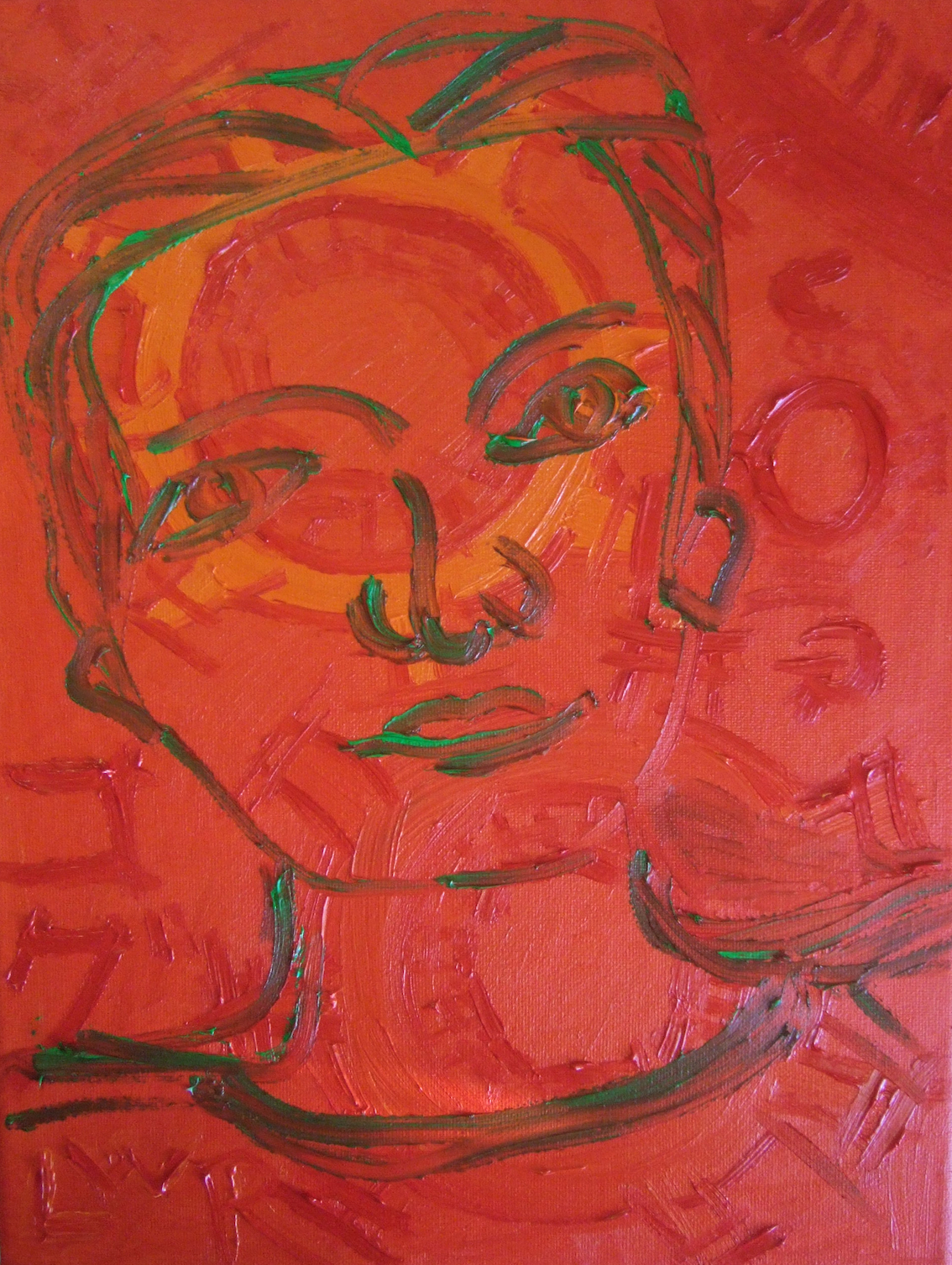
Sometimes we lose sight of what a system is, drawn into some kind of mystical enlargement of the concept. System engineer, systems analyst, computer system. A system is just a reusable format after all. We make a system for preparing our lunch, a system for figuring out what to wear to work. Systems have become a specialization, even the foundation of a career. We can take a three year course on systems. Nobody in that course is going to say: we are teaching you how to make a reusable format.

There is no refuting that systems are important. We put layers and layers of new experience over our lives. But we still need all the basics, and a dependable understanding of systems is going to help us to navigate all of that information. There is no doubt that the rise of systems goes hand-in-hand with the rise of complexity.

The nuclear power plant in Fukushima, Japan is an interesting problem to consider in regards to systems trouble. Systems were put in place that seemed to be good, and those systems worked without major trouble for a long time. The problem that emerged – an oversize tsunami – was not one that could have been foreseen. Modelling had been done, estimates had been made,  nobody expected the problem to be as large as it was; an earthquake compounded with the lifting of the sea bed. Now we know that we must build to withstand an event far more extraordinary than had been factored in. But that is not enough. Now that a serious event has occurred, all kinds of small errors in managing such a problem – such a system – are compounding and growing. There are fundamental flaws in the design of the system itself.

I want to reconsider the system. To consider the ways in which our systems cause us to lose our consciousness of what we do and fall into default. It’s fine to have a system for preparing your lunch. You just have to remember that your options are not limited to what you make. They also include what you don’t make but may one day have no alternative but to make. Likewise you need to remember that your options for what to wear to work may also be helped along by adding another element now and then. And that at some point those new elements are going to shift your wardrobe into something completely different. In the case of the nuclear power plant, people prepared for a particular size of disaster, they prepared for forty years. Over that forty years, though, as nothing as large as their planned disaster happened, no doubt they began to forget that things could actually be worse than that.

We lose sight of systems by taking them for granted. You’re looking for a new outcome. You use an old form. What you need this form to do is different from what you needed in the past, but you figure you can just work that in later. We make up forms as a kind of shorthand system, and then because they’re convenient we stick with them. Forms, though, make an idea rigid; the form is what makes the shape. If we continue to reuse the same form over and over when our aims have changed we run the risk of having the form define what we do. It’s important to regularly go back to very basic working systems and take a look at what those core elements mean. The nuclear power plant was built to withstand a certain level of disaster. But forty years of use meant that that level may well have decreased without anyone being the wiser. New concrete, pipes, joints and old ones do not have the same ability to endure stress.

Systems develop flaws through repeated use, and often those flaws are not noticed. Not noticed by the people who use them anyway. Other people might notice but think that they are seeing mistakes by people. But often it isn’t a mistake of the moment but a mistake from deep in the system. And often those flaws come out when something big happens. It’s not until the nuclear power plants in Japan are abruptly shut down by tsunami that the company understands fully what happens when they shut down abruptly, and at that time any simple flaws will be in full view.

When we lose sight of systems, they start to take us where we don’t want to go. There was some anger that the TEPCO power company had submitted a plan to the government to expand their plant. The submission was written before the earthquake and submitted without adjustment after the earthquake. It’s interesting to note that without this disaster, this aging plant may have grown even more dangerous in the future. Over the years there has been some serious opposition to nuclear power in Japan. But up until now the positive aspect of ample home-grown energy has outweighed the possible risks to people’s health.

Now we have the system clearly in our sights. We can see that it contains multiple flaws and errors, oversights, inadequacies. More than that, we can see that should a problem occur, we with our global connection all stand to be affected by it. Isn’t nuclear power a little dangerous to be staking our futures on? I hope to see some positive outcomes from a little more scrutiny of where this technology is taking us. Perhaps Japan could not afford in the past to invest heavily in developing alternative technologies. I can’t see now that it will have a choice.

Sometimes we lose sight of what a system is, drawn into some kind of mythical enlargement of the concept. Isn’t that what we did with nuclear energy? Baffled by the science of it, we felt unable to have a judgement. The science may be complicated, but the solution to the problem of a faulty nuclear reactor is not. There is radioactive material, and despite a half a century of messing around with it, we have not worked out how to make it safe. There is no great advance on the Three Mile Island accident, no great advance on Chernobyl. The only solution the scientists seem to come up with is to contain it. I say: this is systems trouble.

Sugar

10 Sunday Apr 2011

Posted by Therese Trouserzoff in Lehan Winifred Ramsay

≈ 14 Comments

Tags

Dog, Standard Poodle, Sugar

Sugar

Painting and Story by Lehan Winifred Ramsay

I gave away my beautiful dog, that I had loved for a year, cared for and struggled with for a year. I took phone calls and answered questions, I invited people here, I sat with them while they struggled with his size, I sighed after each phone call, I worried and looked at him and felt great sadness. Please let it be over soon, I thought.

A man came with his two sons, and he liked him. I don’t know what kind of a life he will have, I hope he can have fun with more people around him. I helped take him to the car, and when they drove off I watched his head bouncing around in the back seat. He looked so cute. I had never seen him look so cute.

I wish I didn’t have to let him go. He was the dog I wanted. He was even the dog I wanted to become like. Always straining to go faster, always interested in everything.

I am trying to pretend that he is like a child who has grown up. He has his own life now, he is going out in the world. But really, I will never see him again. So I say goodbye to Sugar.

The Radishes

07 Thursday Apr 2011

Posted by Therese Trouserzoff in Lehan Winifred Ramsay

≈ 8 Comments

Tags

Hakodate, Radishes

Radishes

Photograph and Story by Lehan Winifred Ramsay

This house was just across the road from the park, and I used walk past it all the time. I say I used to because this week when I walked my dog there it had been demolished.

I used to think that houses like this were the spirit of my neighbourhood. It looked like such a lovely house, and there were chickens, you could hear them in the mornings. Not only was it a breath of old Hakodate, but it had a garden, there were always delicious looking things growing there in the summer. Here, they are hanging out their daikon radishes to dry in late autumn, in preparation for pickling.

It was a fine old wooden house with a verandah and glass doors along one side, looking out onto that fine garden, and at the front was a sturdy stone fence and solid gates. Just up the road from the post office. The post office is a new building built to look a little antiquey. Soon it will be the most authentic old building in this neighbourhood.

The Neighbourhood Association.

06 Wednesday Apr 2011

Posted by Therese Trouserzoff in Lehan Winifred Ramsay

≈ 18 Comments

Tags

Aoyagi, Neighbourhood Association


Story and Photographs by Lehan Ramsay

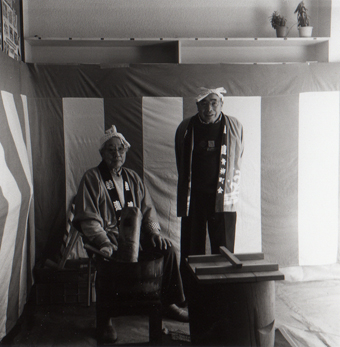
This is the local Neighbouhood Association. They have a nice hall around the corner. People who around live here pay a few dollars each month. They come and collect the money in April. They do a lot, the Neighbourhood Association. They arrange for people to plant flowers and maintain them. They distribute bags for picking up garbage on the street. They keep a makeshift shed for people to take their recyclables, they make a little money off it. Once I asked for paper for my wood stove, and a few days later was told by my neighbour that I shouldn’t do that.

They have a bazaar once a year, and sell old things for a dollar or less, and they take a trip to a hot spring some time in the autumn. A newsletter goes around once a month, and you stamp the bottom of the front page to show that you’ve read it. Usually it has information about free medical checks, or some information for what to do in a particular situation.

Once I went to the annual meeting and was greeted warmly. I was planning to go to the next one, but my neighbour fell out with them and stopped telling me about things. My neighbour was organizing the bazaar and was quite involved. But the manager of the centre decided that he couldn’t work with her, and after some time she quit. When the next bazaar was coming up I went to volunteer again. Some time after my neighbour came to tell me that I was not required to volunteer, as she was no longer working for it. I came to understand that I had been grouped. It angered me that I wasn’t accepted as a volunteer, and I went there and shouted at them. That was very shocking to them. So now they simply ignore me.

This is an area where the young people have largely moved out, leaving retirees, and I am the youngest retiree. There are schools around; the elementary school is across the road. Why then do I so rarely see children? No children, no young people in the Neighbourhood Association.

The Neighbourhood Association has been a small peripheral part of my life here. I don’t think I’ve done a very good job of fitting in with it. It makes me feel old and a little unnecessary. It’s one part of Japan that has helped things stick together well. But it didn’t keep up with the times. Now more and more people live in apartment blocks and don’t bother to pay their monthly fees, don’t go to the bazaar, don’t help to plant the flowers. All that is left to the old people. The old people a little younger than those old people, in their sixties or early seventies, like to keep to themselves too.

These photos were taken at the annual rice cake (mochi) pounding party a few years ago.

Broken Monitors

03 Sunday Apr 2011

Posted by Therese Trouserzoff in Lehan Winifred Ramsay

≈ 19 Comments

Tags

Broken Monitors

Broken Monitors

Painting and story by Lehan Winifred Ramsay

There can be a time when what’s going on in the world does not match up with what is going on in your head. It is a time of broken monitors. There is a discrepancy, it is disturbing. Automatic functions get a bit haywire. Maybe sleeping, or remembering the things you have to do. Or even eating. Maybe those automatic functions though automatic were not steady and systematic. Maybe they were a bit erratic. Now they’re truly erratic. Each time one of those comes unstuck it bounces around disturbing the others until most of your basic functions start to interfere with the smoothness of your daily life.

You could call that the broken monitor. But not a monitor like a computer has. A monitor like a classroom has. The one who looks after the milk, or the books. That monitor is refusing to do it’s job. You never realized what a job it was either. Life becomes a struggle.

← Older posts
Newer posts →

Patrons Posts

  • The Question-Crafting Compass November 15, 2025
  • The Dreaming Machine November 10, 2025
  • Reflections on Intelligence — Human and Artificial October 26, 2025
  • Ikigai III May 17, 2025
  • Ikugai May 9, 2025
  • Coalition to Rebate All the Daylight Saved April 1, 2025
  • Out of the Mouths of Superheroes March 15, 2025
  • Post COVID Cooking February 7, 2025
  • What’s Goin’ On ? January 21, 2025

We've been hit...

  • 713,958 times

Blogroll

  • atomou the Greek philosopher and the ancient Greek stage
  • Crikey
  • Gerard & Helvi Oosterman
  • Hello World Walk along with Me
  • Hungs World
  • Lehan Winifred Ramsay
  • Neville Cole
  • Politics 101
  • Sandshoe
  • the political sword

We've been hit...

  • 713,958 times

Patrons Posts

  • The Question-Crafting Compass November 15, 2025
  • The Dreaming Machine November 10, 2025
  • Reflections on Intelligence — Human and Artificial October 26, 2025
  • Ikigai III May 17, 2025
  • Ikugai May 9, 2025
  • Coalition to Rebate All the Daylight Saved April 1, 2025
  • Out of the Mouths of Superheroes March 15, 2025
  • Post COVID Cooking February 7, 2025
  • What’s Goin’ On ? January 21, 2025

Enter your email address to subscribe to this blog and receive notifications of new posts by email.

Join 373 other subscribers

Rooms athe Pigs Arms

The Old Stuff

  • RSS - Posts
  • RSS - Comments

Enter your email address to subscribe to this blog and receive notifications of new posts by email.

Join 373 other subscribers

Archives

Website Powered by WordPress.com.

  • Subscribe Subscribed
    • Window Dresser's Arms, Pig & Whistle
    • Join 279 other subscribers
    • Already have a WordPress.com account? Log in now.
    • Window Dresser's Arms, Pig & Whistle
    • Subscribe Subscribed
    • Sign up
    • Log in
    • Report this content
    • View site in Reader
    • Manage subscriptions
    • Collapse this bar
 

Loading Comments...