• The Pig’s Arms
  • About
  • The Dump

Window Dresser's Arms, Pig & Whistle

~ The Home Pub of the Famous Pink Drinks and Trotter's Ale

Window Dresser's Arms, Pig & Whistle

Category Archives: Sandshoe

A Covenant of Salt – An Apologia in reply to Psalm 151

07 Tuesday Feb 2012

Posted by Therese Trouserzoff in Sandshoe, Warrigal Mirriyuula

≈ 23 Comments

Tags

Apologia, Poo Kangaroo, Psalm 151

Temporary toilet while the Mondrian Brothers retiled the Pig's Arms Loos

Apologia by Sandshoe.  Pictures by Sandshoe and Warrigal Mirriyuula.

Granny made a patty cake (it was exceptional), Merv knocked off an extra meat tray (from the pub over the road).

And who wanted to crank up the barbecue? Nick the old butcher. No-one underestimate Nick.

It was he who sent the text message, the one that said ‘HAPPY AUSTRALIA DAY, CHEAP SHEEP’. Sweet talk he can. Useful bloke to have on your side.

That was him who sent his ‘little’ brother to get the Hell’s Angles and poured oil on the burning chops that time (turned them into fffizzlers).

I went out to meet the head serang. He swore Nick was the devil.

But I turned the tables. Invited everyone to the barbecue on condition Nick supplied plenty of salt. He used it with a heavy hand (that’ll be a round of pink drinks).

It was a diabolical mistake to use the Pig's Legs Waxing and Beauty Salon loo,

2011 Bumper Christmas Edition – The BUNGALOW

24 Saturday Dec 2011

Posted by Therese Trouserzoff in Sandshoe

≈ 33 Comments

Tags

Bungalow

The boys making a hundred.

By Sandshoe

Yellow flowers fallen off the overhanging branches of the cassia tree crumpled and stained the grassed public footpath. Parrots chattered among twists of juvenile cassia pods and grass seeds. A barbed-wire fence gloried a bed of marigolds.

A bunya pine littered needles and bark. An iron gate rusted and weathered to a mottled dark iron-red.

Salmon-pink, yellow, orange, orange-red and dusk-red single gerberas bloomed in narrow garden beds on each side of the front path. Mould flourished on the cement in pancake and starburst shapes. Tree roots cracked the cement open and the tree was cut down with an axe. Bird guano spackled the tree stump.

Hippeastrum displayed their red- and white-streaked blooms in garden beds on each side of the front steps. Crotons grew flame-like in summer. Caladium splashed purple-pink and dark green and olive dandled at pink, chard green and purple-red coleus.  The thin lobes of the spider lily flowers drifted one way and another in the patch of spider lily at the eastern corner of the front garden bed. At the end of a day the lobes furled and the tips of the lobe touched.  In the morning the lobes abandoned their cluster and drifted again.

The bungalow faced north. Red-brown leaves papered a row of straggling shrubs on its western side. Dirt prevailed where lower leaves and tassel-like flowers brushed at the ground and a remnant of yard lawn. A sometime pumpkin vine grew among weeds on the border of a neighbouring spare allotment, a bush lemon and an unproductive orange as a companion planting. Two pawpaw trees yielded their common fruit there in spite of a tatter of torn leaves and stripped branches.

A poinciana tree in the far front corner of the spare allotment threw its blossoms into the air against its massive trunk, the blues of tropical skies and their rain clouds, dank nights, a scrabble of weeds, molasses grass along a railway line and its barbed wire fence, the council verges, roads, bitumen, sand and gravel. The flowers washed in a downpour into a storm water drain on the opposite side of the adjacent side street.

Christmas Bush on the eastern side of the property bore brackets of pink blossoms. An adjacent cultivation of allamanda on the otherwise bare barbed-wire fence promised its yellow flowers for childish necklaces.  An ungated opening in the fence revealed empty bolt holes in grey weathered posts. Vehicular access gates lent opened into the back yard.

In the back corner–against the back fence–a garage constructed of sheets of corrugated iron nailed and bolted onto heavy wooden frames lacked only a cross on its peaked roof to resemble a church. A mango tree tree next to it shed its flowers and did not fruit. Another mango loomed giantlike in the back yard and was laden in season.

A bungalow on high stilts on the other side of a laneway exposed its under things. No other mango tree in the vicinity was so prominent, exposed as the mango in the corner of that backyard apposite to the corrugated iron garage. The neighbouring backyard was flat and open behind the bungalow at the forefront of its block. Frank.

Wire clotheslines strung between extreme wind- and rain-weathered grey posts in the backyards of the properties propped on wooden support props.

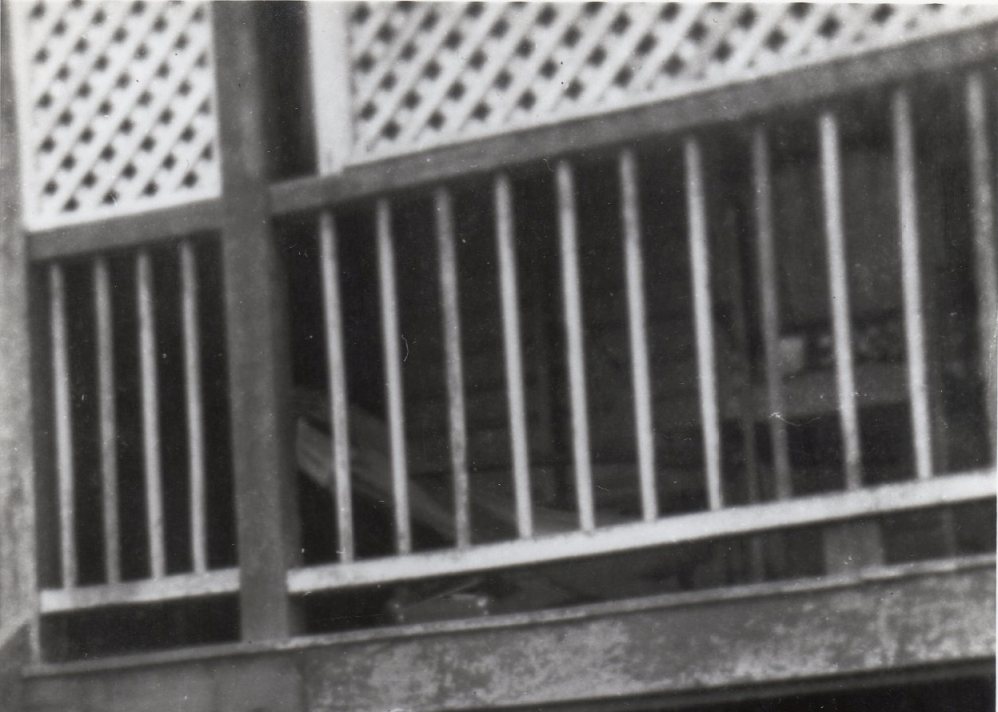
I have described the setting of the home I grew up in, it long gone from a prime location at one end of a service laneway that runs through town congruent to the back of main street commercial properties and a spill of private homes. Tour bus drivers turned off at our end onto a football-field dimension verge so tourists could gawk  in safety and comfort; our spread of a low set timber bungalow painted pale pastel green in paradise, its squared verandah posts supporting a pyramid roof, its façade a series of framed lattice screens supported by railings and subordinate barricades of vertical wooden rungs, its framed panel central front door made distinctive by a proud carved wood cornice operating as a drip cap above an oval grey-smoke glass inset in an oval frame. It must have been photographed by a thousand Box Brownies.

My childhood is the colour of  rich, sweet mango flesh.  Jumping, running, twirling in my imagination until I fall over in a tangle of grass and limbs, I see the green rush and the tilting ground rock.  I am in a convulsive upheaval that leaves me sprawled and helpless, feeling queasy in a delicious rotting lawn of mango flesh.

The kitchen is an abstract geometry of background light. Long. An obscure surface. Emotions attach to shapes and the forms of past experience. The scratched edges of a painted wooden table and the intervention of a corner of an orange- and green-check seersucker table cloth. The dark enclosure under a kitchen dresser. Wooden chair legs stand alone against a pattern of yellow and black-squares on a stretch of linoleum.

The kitchen was at the back of the house. Outside the window over the kitchen sink–at the western end of the kitchen –an erratic shrub rustled chocolate-red and amber-red leaves and sticky flowers like a lone ranger. It applied resinous trace on the outside paintwork around the window and the window pane. A leatherhead sat amidst the leaves and flowers in the frame of the window.

Adjacent to the kitchen sink natural light slanted through a door onto the side verandah, shaped the cast off images and changing shadows on the verandah floor of lattice work and railings, vertical rungs and leaves and branches.

Step through the door with me. Come. We can follow in our imaginations the side verandah around onto the front verandah.

The foliage visible through the lower verandah rungs and lattice work of the side verandah is rust-red and red and brown and cream in sunshine. The galvanised iron roof and beam and support timbers emanate a sound. On our right the internal verandah walls of the bungalow are protected by overlapping vertical boards painted a pale hue titled Plum. Two sets of Single French doors with top and bottom rails and glass panels open onto the side verandah.

Here, past the second set, we turn right onto the front verandah. You will see on our left ahead the back of the front door with the oval glass inset I described and opposite it–on our right–an internal front door.

Please come in. Go in. Don’t be shy. It is my home. Walk straight in ahead of me.

We are in a breezeway. The ceilings are high. Stop right where we are both inside the front door. See open to us on our right and to our right behind us, a snug and comfortable appointment of living room chairs with broad arms and furniture–a radiogram against the wall in the corner, to our right backed against a drape a lounge chair, behind us against the front wall the 3-seater couch of the lounge suite, in the corner behind us to our right a bookcase with distinctive framed cut glass panel doors and–against the wall to the right of a doorway facing us–a stylish piano with sheet music and a metronome on top of it. A print–in a black frame–of a pencil and charcoal portrait of a collie sketched on grey paper hangs above a lounge chair immediately to the right of the doorway.

On our left on a wall is a porcelain wall vase decorated with a fine glaze and a florid orange and pastel blue swirl, next on our left is a door into a master bedroom and–in a plain gilt frame–a print of a Venetian canal at sunset.

The tongue and groove timber wall cladding of the living room is painted a pale shade barely discernible as green and in the middle of the living area a congoleum square–a ‘rug’–gives a rich depth of olive greens and orange and black and grey.

Any visible floor boards are painted a deep charcoal in places showing wear.

A linoleum runner strewn with a pattern of stylised cream daisies bordered by entwined olive green loops inside black tracks is common to the living room and the susequent room. We walk into the next room. Please see––to our left––a set of 6 wing-backed dining chairs, two pushed in either side and one at each end of a glass-topped dining table–its length at a right angle to us–and against the far wall facing our entrance from the living room a sideboard with on it crystal ware, a ringer telephone, a fob watch on a display stand, a portrait of an aged gentleman with beautiful eyes, a moustache, beard and smile lines. He has on a medium weight dark suit coat over a white shirt, the collar of which is a little large in its circumference and his tie is knotted with a comfortable, broad flourish.

A stylish wooden serving trolley beside the dining room sideboard––the length of the trolley parked against the wall facing us––is referred to in the family as a dumb waiter. A bone handled cutlery service is kept in a rectangular and flat veneered box on the tray top and various items of convenience on a lower tray.

A cross hatch pattern on linoleum on the body of the dining room floor is itself barely discernible almost obscured by furniture, chosen for a subtle effect and separated from the linoleum breezeway runner by a narrow margin of charcoal painted timber floor boards.

A door in a wall to our right leads off the dining room into a second bedroom. Please for now follow the linoleum runner with me to its conclusion past the end of the service trolley and step through into the kitchen.

We are in the kitchen again although at the eastern end of it. We are looking at the back door and four steps down to a smooth cement floor slab, bare impacted ground and the edge of a lawn. An ice chest to our left is positioned against the end wall of the kitchen to allow enough dimension we can easily open the door out towards us over the suprising black and yellow squares of the linoleum. Adjacent to the back of the ice chest an ancient edge of original linoleum at a dim boxroom doorway meets the new linoleum patterned with yellow and black squares. The back door opens into the kitchen to a position adjacent to the boxroom doorway.

Not a lot of light comes through the back door because of the pitch of the external roof over the external back verandah at the bottom of the stairs. A small aperture of open glass louvres half way down the length of the kitchen–in the back wall–allows in indirect light for the reason of the pitch of the roof over the back wall and external verandah. The frame of the window over the kitchen sink–at the other end of the kitchen–and the door onto the side verandah –adjacent to the kitchen sink–are full of light.

Let us retrace our steps however and look more at the interior of this family home and its decorative detail. If we step back into the dining room for example, see to your right hand side–beyond the length of the dining room table–a set of the Single French doors with top and bottom rails and glass panels open into an enclosed sleepout and a pair of stylish green and black patterned cotton curtains frame them.

On your left hand side, see through the door leading into the room I referred to as the second bedroom. We see the first of the French doors that open onto the side verandah.

Among miscellany–on a cotton embroidered linen cloth and reflected in the mirror of a dressing table/wardrobe angled across the left opposite corner of the bedroom is a pearlescent pink and black shining plastic Cadbury’s chocolate box–a treasure chest–emptied of its chocolates. The item houses satin and organza hair bows and a bluebird brooch in an original plastic box.

The bedroom is painted a pale pink and the chenille bedspread smoothed flat on a three-quarter size single bed on the right hand side of the room–its headboard facing us–is rose. A white cotton mosquitot net overhanging it on a round of loir cane suspended from the ceiling is tied in a knot out of way of its area of extension over the mattress it will be tucked under at night to exclude mosquitoes. The pattern on a covering of charcoal- and light grey carpet on the floor is freshly opened red, yellow, blue and pink roses interspersed with grey and white half concentric and intersecting lines.

Continuing on our way to retrace our steps to the front verandah please stop with me and admire on our left in the living room a pair of closed cotton drapes–a brilliant floral design–extending the available wall space. In front of them is a lounge chair and behind them is the second set of French doors that open onto the side verandah. We notice the detail of a Chinese ginger jar with its classic swirled pastel patterning on a white background and between figures of people. The ginger jar is on the top of the bookcase to our right in the far corner. Alongside it is a silver framed photograph of a group of people who appear to be dressed in the business clothing of the cities. A tattered pawpaw leaf in the photograph –behind the group–appears like a standard on the other side of a fence, a flag on relative high on a windless day.

We hesitate because we see the tip of an ivory horn mounted in a slot on a wooden base board––embellished with two pieces of ivory as wings––ornaments an occasional table.

We had to pick up the ivory bird and one of the wings slides out of the slot in the horn its tab has never properly fitted into so, like everybody before us in history, we take it in turns to––with difficulty––unhook the second wing from the body of the bird, examine the parts and reassemble them to make a bird. The wings are curious to the touch and the curve in each is different and seductive. The ivory is almost translucent.

A grey tone studio photograph on the radiogram is a half-profile portrait of a handsome 40-something man in collar-and-tie.

Glance to our right through the door leading off the living room into the small master bedroom. The walls are a bare cream. A double bed is made with a pure white cotton sheet stretched securely across its dimension and tucked in. A bolster is cased in a pure white cotton cover. A white cotton mosquito net is fitted on an attached wooden frame on the head of the bed and obscured behind its folds a significant sash window extends low against the back of a plain curved bedhead. The outlook of the sash window is onto the eastern end of the front verandah.

Were I permitted to lead you in to show you the architecture of the bungalow, you cannot walk straight across my parents’ bedroom to––the same––Single French doors with top and bottom rails and glass panels we can see open into another room. We have to walk around the end of the double bed and carefully by turning sideways past the corner of a dressing table.

The dressing table is positioned across the far right hand corner of the room. The veneer of the dressing table is precisely attached and its handles are delicate plastic items bound with brass lashing. A plastic plaque coated in a high-gloss clear resin with Rudyard Kipling’s poem ‘If’ printed on it sits in a sunken centre of the dressing table and alongside it a small box of sentiment finished in a light veneer. Alongside again but elevated––above a door closed on a storage cupboard –on the left hand side of the dressing table is a handsome black and white photograph in a plain silver frame of a man and a woman and four children arranged in a seated and crouched group around a seated baby; alongside on the other side, above a door closed on a storage cupboard on the right hand side is a grey-tone photographic studio portrait––in a plain silver frame––of an aged woman in a plain straw dress hat. The woman has a thin face, shining eyes. A collar and a small portion of the bust area of her shoulders reveal the fabric of her costume is pale––perhaps grey. She is dressed in a formal day frock.

Embroidered table linen with crocheted edges and crocheted table squares protect the walnut veneer of the table top from being scratched. Boxes stacked on the floor under the sunken centre of the dressing table advantage the vertical column of available space. Plastic red roses in a large crystal vase lying on the floor behind the shoe boxes are twisted together by their green stems. The floor covering we can see is an accomodating carpet square swirled with a pattern of orange and green abstract flowers on an amber background.

The room through the French doors––next––may have been a nursery. Linen is kept in it, a miscellany of boxes and a plump cream china rabbit with a broken ear. The inside of the rabbit is hollow. The inner surfaces of the rabbit’s ears are painted a roseate colour that is worn or the application is splattered and imperfect. Facing us an orange and green leadlight fronted dark stained linen press––possibly made of tropical timber––is the distinctive piece of furniture in that simple room that houses as well a burnished pine two door tallboy cupboard backed against the wall to the left of the doorway.

The walls are painted–barely cream. A worn and nondescript length of ageing linoleum runner partially covers the distance from one corner to a next and the boards of the floor are painted blue and worn. On the floor is a stack of National Geographic magazines angled forward next to the right hand corner––as we are facing it––of the linen press between two casement windows against the external wall.

The room is well illuminated by natural light. The casement windows have no curtains. They outlook onto the Christmas bush, side lawn, fence, allamanda, ungated pedestrian opening, laneway, the western side wall of the neighbouring bungalow and the row under it of tin caps on elevated stumps blackened with creosote.

Imagine.  See to your right from where you were standing looking out one of the casement windows another door and it leads into the room I defined as an enclosed sleepout, alternatively accessible from the dining room through French doors.

The enclosed sleepout is pale green. Its furniture is robust and simple, two single plain beds with white cotton mosquito nets dangling over them off rounds of loir cane, a chest of drawers in a dressing table with an upper––mezzanine––table and mirror in an dominant carved heading and a lowboy cupboard.

Two casement windows open onto the same outlook as the linen room and one at its far end–a constituent of the back wall of the house–onto a length of rain water pipe slung between a downpipe and a circular corrugated iron tank off the back corner of the house.

The casement windows enabled a potential buffer of airiness between the extreme elements of a North Queensland summer, particularly its sunrise and the part of the internal wall––common to the sleepout––that was the blind wall opposite the box room door. The wall shared by the box room and the dining room––that the dining room sideboard was backed against and the wooden service trolley was parked alongside––was blind. Only a discrete window in the boxroom’s southern wall–a constituent of the back wall of the house–allowed a miser’s entrance of natural light in there.

Shelves in the boxroom held some pantry items. The usual reference to the room was pantry and so it was a pantry, yet I withheld the use of the term until the layout of the house was described to avoid confusion.

I digress. We have imagined ourselves into the enclosed sleep-out and now we understand the inter-relationship of the rooms might exit through the doors into the dining room and––taking care not to catch our clothing on the dining room chairs as we find our way past them and the dining table––find our way easily now back through the living room next onto the front verandah.
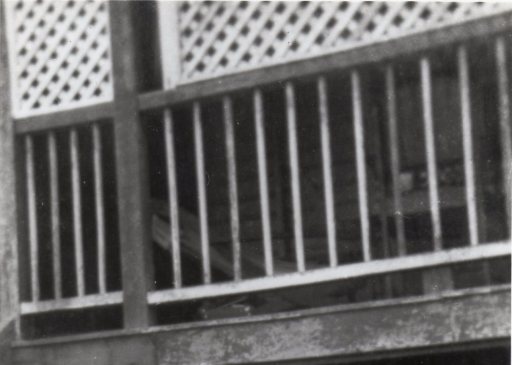
A partial view of the lattice screening and the vertical rungs

A wall of lattice to the right of the internal front door––looking to the eastern end of the verandah––extends from the front verandah’s façade of lattice work and subordinate railing and rungs to join a a door in a frame adjoining the internal front verandah wall––making a bedroom at the end of the verandah and sometime cubby house when emptied of its furniture. A white cotton mosquito net hangs over a frame attached to a single bed to our left. The bed is positioned against the façade of the bungalow. A blind made of lashed strips of bamboo cane has been suspended against the façade for privacy.

The headboard of the bed faces the internal lattice wall and leaves scant space between the end of the bed and the lattice.

A large cupboard in the room leaves scant space between it and the bed––or the door or the wall opposite the door––backed against the part of the internal front verandah wall that is blind and common to the room on its other side where the china rabbit lives.

Behind the cupboard pinned to a board is a reconnaisance map showing topographical detail, an unloaded rifle sits in the space beside the cupboard and external wall and a khaki army greatcoat hangs beside the doorway on a hook attached to the internal lattice wall. A leather case with in it a pair of binoculars hangs from a hook attached to the internal wall adjacent to the door into the room. Beside the bed on a fruit box covered with a linen cloth––pushed firmly against the external wall––is a time piece in a close-fitting soft leather case and a khaki cloth hat. The floor is bare floor boards other than for a sturdy brown rectangular mat. A Women’s Weekly magazine lies on the mat rolled open at an instalment of a serial and a copy of Mad magazine has slipped under the bed visible below the edge of a grey army blanket that is the bed cover.

Canvas on a deckchair in the front verandah corner made by the internal lattice wall and the front verandah façade fades over bare timber boards. A cross swivel extension on long pins on each of the arms of the chair has worn a scraped semi-cirlce of paint. An upright gramophone cupboard with a winder handle protruding out of its side is a dowager adjacent to the sash window of the master bedroom. Its veneer is dull and flecked by wear and design.

On the other side of the internal front door are two cane chairs and a low round wooden table that has a lower level shelf between outer curved pillars. The surface is painted pink and has a superficial black coating. I smear the material to show it makes a black smudge that transfers to the skin of my finger and indicate to strands of curled ash.

The sugar mill no longer exudes in the same malicious way the evening’s burn-off of mill bagasse out of its chimney in the crushing season.

The side verandah is furnished with a single bed against the wall under an overhead light bulb. Like all the lighting, the bulb is protected by a conical shade and  the arrangement is without ornament.

An ironing board is set up on the side verandah–a temporary arrangement–at the internal corner of the front verandah to advantage a verandah breeze and access to a power point.

Cotton sheets–boiled and blue-bagged, washed, wrung and slung over the wire clothesline to dry on such a pleasant day as I am imagining have been taken off the line, folded and persuaded into rolls along with personal clothing including small items of linen and towels bundled in pillow cases. The washing–as it was still referred to–doused with water sprinkled and flicked over the articles and bundles is orderly in bundles on the ironing board. It is left to stand ready for ironing–a status referred to as ‘damped down’.

The laundry is set up under the boxroom window if you would like to imagine it–on a open cement porch–a set of stone tubs, a blue and yellow baked enamelled ringer washing machine and an electric copper accessible immediate to the four back steps. The bathroom is to our right–at the far western end of the porch –past the landing.

The landing was the redundant floor of the stove recess built as an original box extension onto the back of such a bungalow to lessen the heat a home in a tropical climate would otherwise be subjected to from a working wood stove fully encapsulated in a kitchen. The entrance of the recess had been walled, ­the small set of louvres inset in the wall and the recess wall on its eastern side and the back of the recess removed when the wood stove was replaced with a free standing electric stove positioned against the opposite internal kitchen wall. A small wooden table opposite the kitchen stove sits against the wall under the small set of louvres as a preparation table for cooking.

The remaining side wall of the recess was the upper portion of the wall of the attached bathroom originally serviced at the back of the house with hot water run out of an attached jacket on the wood stove, whereas the shower ran only cold water. Such was contemporaneity and its inconvenience in this respect a ‘bird bath’was usual.

A bather stood in an iron claw-foot bath tub to have the bath–facing a shallow baked enamel bowl on a pine board straddled across the end of the bath tub. Water boiled in a saucepan on the stove and mixed with cold tap water in the bowl was poured over the body with a small jug to make a discrete lather with soap and out of the bowl over the body to finish with ‘a rinse’.

The tub was positioned lengthwise along the wall to the right of the door into the bathroom––closest to the external wall opposite the doorway––and the shower rose over that end. A toilet was installed in the far left hand corner from the doorway–against the back wall–at a right angle to the tub. Inset in the wall opposite the doorway the lower half of the glass of a large sash window was painted to prevent a view into the bathroom from the side corner of the house. A  rectangular cement septic tank dank with traces of fertile mould on its pocked surface was obvious partially above ground at the junction of the back wall and the eastern side wall.

The prolific character of moulds on the surface of the cement tank was encouraged by the surround of the shrubs on the eastern wall outside the kitchen window retarding air flow and the productivity of the mango tree in the backyard that shed mangoes. Flying fox dropped mangoes that were half eaten and the fruit cascaded down the grooves of the iron roof onto the tank.

Members of the family and visitors threw mangoes from the laneway side of the backyard towards a waste heap of mangoes rotting on the other. The smell of the surrounding area returns to my mind as a pleasant stench.

A study of the bungalow allows for an increased apreciation of simplicity in architecture and its visual strength. The four central rooms––living room, dining room and two bedrooms––are not large like the grand rooms of some mansion-dimension Queensland bungalows. The interest lies in the useful dimension of the front and side verandahs–naming the room off the master bedroom and the enclosed sleep-out off the dining room as components of an enclosed verandah and the boxroom/pantry and the kitchen as the enclosed back verandah

The social experience of housing determines the expectations that govern the rest of a child’s life. I have often reflected I grew up on a verandah. So much more to considering housing and writing a description of a domestic home of familiarity is not an easy writing sampler. I hope you have enjoyed the tour enough to finish with me. Thank you.

Experience in a Limbo Haze

28 Wednesday Sep 2011

Posted by Therese Trouserzoff in Sandshoe

≈ 17 Comments

Sunbird

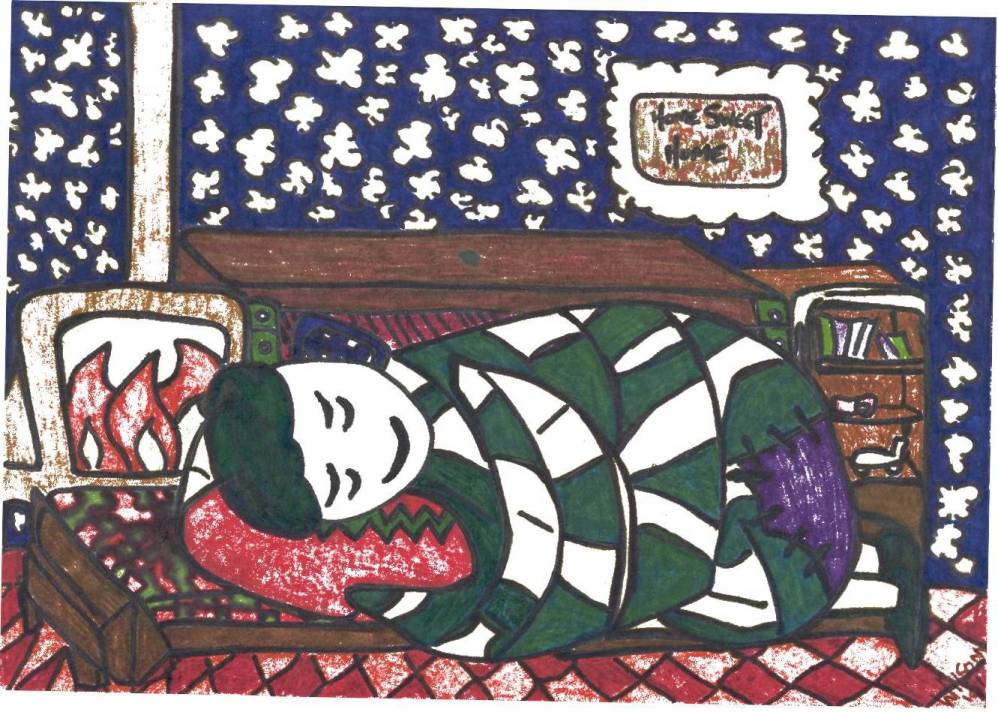
Story and Artwork by Sandshoe

The 75 cents woman lent me 75 cents one afternoon when she thought I needed to be offered a loan and I agreed after consideration she was sincere, earnest, could top up my change that added up to $1.75 and make it $2.50.  She told me I could buy a meal.  I agreed to be nice, although in truth I needed the meal.  She gave me directions.  That’s not why I call her the 75cents woman.  That’s a bit of a story.

When I saw her as I anticipated a few days later and was listening to her as I always did my best to although what she had to talk about was almost always about her property and bored me, she became more agitated than she usually is.  Her topic was not her property and the problems of owning it, but about a close female friend of hers who drove off leaving her owed several hundred dollars and as far as she was concerned, as she was saying, an explanation of why the almost overnight disappearance.  The more agitated the woman got as the story developed the more I felt insecure about owing her 75 cents even though I was on my way to the bank to get it anyway, but felt obliged to defer to listen to her story when suddenly she said between thin lips stretched tight as the thread of a sewing needle between two fingers snapping it taut to verify its strength that she really would appreciate it if I returned the money.

I know.  It seems ridiculous I did not have 75 cents in my pocket.

It usually would be alright if it was not just that people were, well, doing what they are doing and she really needed the money.  It would be different I agreed if people were not doing what they were doing and of course I would give her the money as soon as I was back from the bank where I had to go. My wording was nice I thought and meant to not place any sense of duress on her that I was going only to the bank for 75cents.

She thanked me with a reference of repeated conciliation that if it was not for what people were doing to her she would not be in the least concerned about the 75 cents. It was just that she would appreciate having the money returned to her because she was so short that week and she wasn’t going to be taken for a fool any longer. She should learn (I agreed with her) in the same way she intimated I would by asking me the emphatic question did I think she would ever learn.  I hesitated to rush out of the door and leave her alone given her need to talk to someone so I repeated for her greater sense of security my own reference that I supposed she would learn.  She would have to learn she agreed vehemently otherwise who knows what might happen to her if she didn’t and I suggested I would be soon back with the 75 cents.  Which I was.  Not far and the bank had its full staff on counter duty so every cage was operational.

I counted it out.

The carpet in the main bedroom of one of the houses had to be replaced which meant she had no money she told me as I set the final five on the top of the silver stack. No good I said with a tone of expressive sympathy. The tenant just left like that. She had a run of bad luck with tenants I observed.  I thanked my lucky star silently I was not a tenant, but chance to speak by way of reply allowed me chance to thank her for being patient while I got the money from the bank, although I assured her I understood she needed a rest and I was not an inconvenience.  She said she had finished most of what she had to do.  She enjoyed dropping in to sit and read the paper.  Not in any hurry she reiterated her feet were so sore.  Pages of the news paper were fluttered and flapped and flustered.  It hardly feels like 7 years I’ve been coming here she stated as pages spun over and tangled and rolled onto each other like happy bear cubs tumbling which looked curious I considered later.  How long have you been coming here she asked.  She paused turning pages to lavishly moisten the thumb and finger she was using by licking each  to better toss pages apart from the other when they entwined.

I watched out of a sense of helpless awe as insidious as watching a train wreck spread people flat on the ground and out of windows. Is it long she asked indicating at my silence as distraction she could not entertain.  It’s a while I ventured turning my back on the image of the saliva and climbed away from the wreck to mental ground that allowed feigned indifference to what was happening to the newspaper rise like a pure white cloud above a gently steaming train.  The last thing I wanted to do was antagonize her given I could see the dimension of her suffering was greater than usual.  Have you got the telephone directory she suddenly asked and looked up.  No, I said, nettled by her looking directly at me where I was sitting in a blue chair with my arms resting on its puffy arm rests.  No, I repeated and stood up to look and walk around the chair and through the requisite door to secure the telephone directory from beside the telephone on the desk in the adjoining room.  It’s here I said as I returned and thrust the large book forward at arms length by way of indicating I had fetched it to be helpful.  She took it and screwed up her eyes and her nose as she set to finding a telephone number by holding the book up to the light at an angle and her head on an acute angle.  I sat down.  Got it. Aah, I have to ring them.

The emphasis on them was italic as it always was in reference to the people or the firm or that lot she would ring. She dropped the book she had doubled almost in two to a dangling arms length by her side as she stood to her feet with a struggle of hip and buttocks and stalked in her usual manner at this time of the afternoon towards the room behind me where the telephone was and the telephone book had been.

Damn she said, returning, I can’t ring them now.  That would not be wise.  I need your help.  What could I do I wondered out loud.  You could remind me in half and hour to ring these people I have to ring because they will not be in now and I won’t remember when they are. It had not occurred. I  conceded that someone would have to remind her.  Did she have a mobile telephone.  She could set the alarm to a low volume ringtone and vibrate.  Hoh, she snorted, that’s no good and resumed her position flicking the curling pages of the newspaper.

“I’ll forget what I set it for,” she said and laughed the whinnying kind of laugh that people do when the muscles of their vocal chords have almost nearly contracted to occlude sound.  It was a wheeze followed by a giggle that stretched to a tee hee like a tee pee. It was a cone of sound that stopped at a high volume and rang like a monotonous ringtone.

The next morning I gave a lesson on email to a woman.  I was tired and her laugh was like a shaft of wood in a broken horse cart.  It snapped off even as she framed it and she smiled instead like a pixie with bright eyes and a silver fringe of straight hair like a cat walk model’s.  The light spackle of dotted freckles gives her an appearance like a loved child’s toy.  She lost her own child in an adoption bungle when he was born and she was too young to resist authority so authority she has no respect for.  She writes letters about social policy and politicians and street louts and wild families.  It is hard to laugh in the face of such adversity and myself I chuckle as much as I can.  When we left to go our respective ways, I take trouble as usual to steer my way past the coffee table corner before I am asked to tutor its worried business woman who never arrives with a biro of her own to use and is always filled with feelings of dread…

The numerologist was at the bus stop with his worldly shopping bags and bags of books, but not so laden to not seem freer in his concerns and with his replies than might be expected on a hot day.  He seems to swing with the bags as if his fragile torso cannot resist the motion once that has begun.  He is a repatriate who lived in India he has told me and wishes to translate and publish the Adelaide telephone directories as volumes of numerological significance and similarly, a key of a town street map and its addresses where he lived in India.  We part at the street corner after a short walk of ritual when we disembark from our bus journey to the outer suburbs.

How to Cook Rice ‘Shoe-Style

17 Friday Jun 2011

Posted by Therese Trouserzoff in Sandshoe

≈ 31 Comments

Tags

Cooking; rice, recipe

For Julian.

Recipe and Photos by Sandshoe.

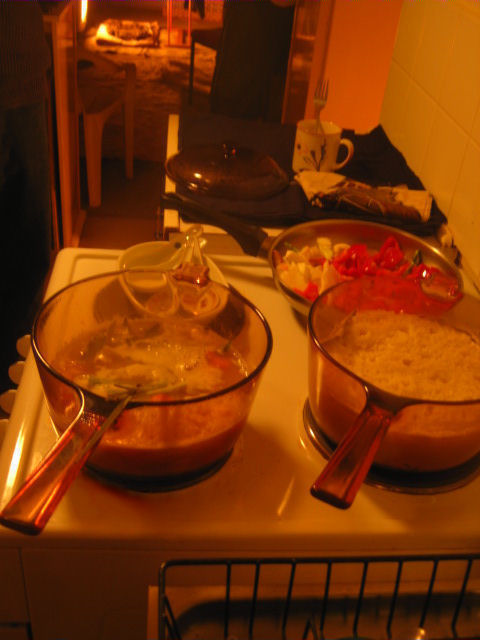
I wash rice first before cooking it. I swirl it in enough cold water to cover it, usually in the saucepan I am going to cook it in, and just incline the saucepan so most of the water drains and trickles out of the rice.

No drama and sparing with the water.

I add cold water and bring it to the boil on the stove element or a gas flame at high heat.

Leave the heat on high and boil the rice until the water has almost all evaporated and holes appear in the rice. Turn your heat down to the lowest possible, which is easy with a gas flame and if cooking on a wood stove or slow combustion just move the saucepan to the coolest part of the stove top.

If you only have solid elements as I do, that retain heat, you will simply turn off the element as soon as you see the holes begin to form. Best timing is just before (you will learn when just as a lover learns the skill of loving.)

Set a lid on the saucepan to finish with a tea towel under the lid to create a tight seal for 20 minutes.

The first time I ever cooked this, its original recipe, I followed the instructions by scientific measure. The saucepan was a specific volume or depth or something, the rice was weighed or spooned into a chef’s measuring cup, and the cold water was a precise amount in relation to the number of cups of rice. That’s alright if you have a choice of saucepans and a measure cup.

Your rice will vary between sticky and dry and fluffy until you establish the proportions yourself of rice and water depending on what sort of rice you use, the dimensions of the saucepan you have or can choose, your source of heat but importantly, ‘the feel’ you develop for cooking rice this way. As well, the recipe was for Basmati rice. You can make a particularly light and dry dish of rice by this method if you use Basmati.

I prefer brown rice for its nutty flavour and beautiful colour.

See the holes appearing in the rice

I use a lot of water to start with. Brown rice is better for being boiled a little longer, but whatever sort of rice I use, I’m watching from time to time for the holes to appear.

You find you have a saucepan full of froth and cannot see and fear you are burning the rice?

You might burn the rice.

More likely you will see the froth suddenly disappear if you are courageous.

You will see your rice has holes appearing on its surface. Otherwise if the anxiety is too much, slide the saucepan sideways to reduce the amount of heat at its base and voila, the froth subsides and you will see the rice is glistening and appears sticky. Cook it a matter of seconds longer on high heat and proceed to finish it as I have described, 20 minutes, tightly covered, on the lowest heat possible.

Experience teaches. I don’t always jam the lid tight on the saucepan by using a tea towel. It depends.

The rice is the nicest and sweetest when its base is a pleasant amber colour or mottled with a golden look contrasting with the luscious grains of the main body of the rice, yet every time rice is cooked by this method, central to its mystery and delight is its flavour is subtly different. John Downes refers to the crunchy rice at its base as a complete food or wording to the effect. He describes it-and who knows but it’s a nice idea-as both the yin and the yang (Natural Tucker-Traditional Eastern and Wholefood Cooking for Australians. pub. 1978).

The process of the cooking once daunting and fearful even is a living friend with characteristics I know as well as I do any. I can hear what stage the rice is at. What I put in, that I do not detract from, is evident in the quality of the dish. I don’t tamper with the rice and water as it is coming to the boil or stir it and upset its natural evolution. I don’t add water or drain any off before cooking is finished. I am patient and watchful.

I read the original recipe that inspired this plain method of cooking rice in Elizabeth David (Spices, Salt and Aromatics in the English Kitchen. pub. 1970). It was elaborate and required me to first brown some ingredients I do not completely recall and spices. In the years since of cooking and through the natural adaptation of recipes I once followed to their letter I have followed this method sometimes but create my own blends and you can add in the style of Miss David eg a bay leaf to the water or a flake or more of a cinnamon stick, some celery leaf perhaps.

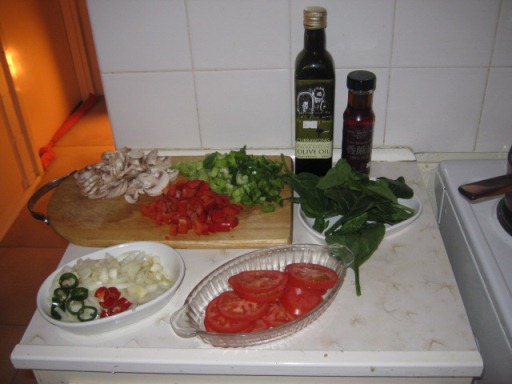
In readiness to prepare a simple vegatble side dish... not leaving the board overhanging a bench!

I like the presentation of food as an art form. An aspect of watching television chefs I really do not enjoy is their abandon handling food to the purpose of decoration and that has put me off enjoying dining in restaurants, or ‘eating out’ as we call it. It alienates me to see these highly trained and professional people even licking their fingers as they demonstrate their skill.

When you are serving your creations, if you have splashed a little on the side of your plate (on a rare occasion) wipe it clean with a small and freshly clean muslin square cloth you keep for the purpose. I like the cheerful red and check ones I keep a supply of in my tea towel drawer.

Decorate your meal using the food to speak for itself and set it down gently on its serving plate with love for what you have made and kind respect for yourself.

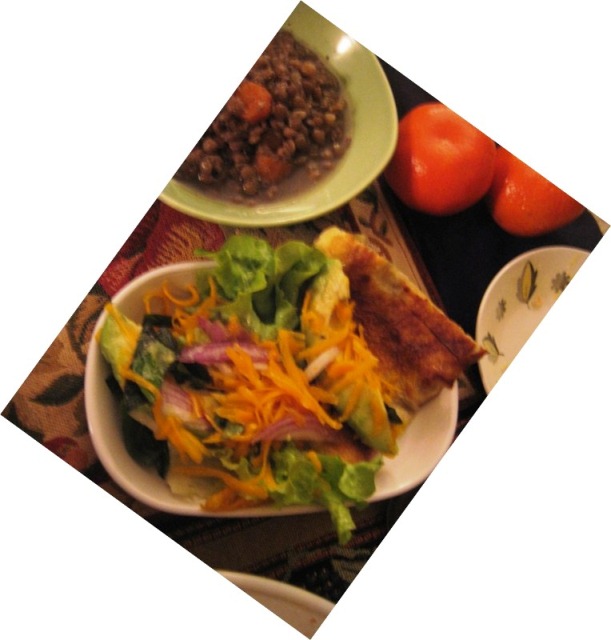
Serve the rice with a variety of dishes as you choose, especially including leafy green vegetables. A favourite of mine is plain lentils with if anything added to their cooking a little diced carrot for its sweet and nutty flavour.

Image of cookbook: http://www.leurabooks.com.au/?page=shop/flypage&product_id=80152

Sweet Impact

10 Friday Jun 2011

Posted by Therese Trouserzoff in Sandshoe

≈ 15 Comments

Tags

Sweet Impact

Graphic by Sandshoe

May Sweet Impact reproduce well for its display in honour of Warrigal Mirriyuula’s Happy Hour.

Titled on a later Macintosh and signed, and printed on a mottled grey paper, I created Sweet Impact in its original form on a white background using a Clarisworks programme that was provided with a Mac LC II. I bought the Mac LC II in 1992 for word processing.

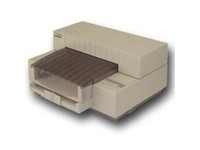
A Hewlett Packard printer supplied with the Mac produced a high quality graphic (pictured) that charmed me and won my interest in computagraphic still art. Some of the prints I made took as long as 20 minutes to print a copy.

I used a combination of a draw function and a colour fill function enhanced using a gradients feature to swirl colour in increasing and decreasing depths of shade and the limitation is regards reproduction of any one design the programme retained no memory of what functions were used, what steps make up the designs, no artist’s notebook. It was not conceivable to stop and record each step manually because I experienced the passion of colour and its manipulation so intensely it was impossible to break from the creative process.

I hope, Warrigal Mirriyuula whose writing and art I admire so much, you enjoy Sweet Impact.

Image of Printer sourced at: http://hpinkcartridgescheap.com/hp-inkjet-printer-history/

Image of the Mac LC II sourced at:  http://myoldmac.net/SELL/Macintosh-LC-II.htm

Reference to a history of Clarisworks: http://groups.csail.mit.edu/mac/users/bob/clarisworks.php

The Wedding Party: Baxter, October 2004.

24 Tuesday May 2011

Posted by Therese Trouserzoff in Sandshoe

≈ 9 Comments

Tags

Baxter Detention Centre, The Visitor

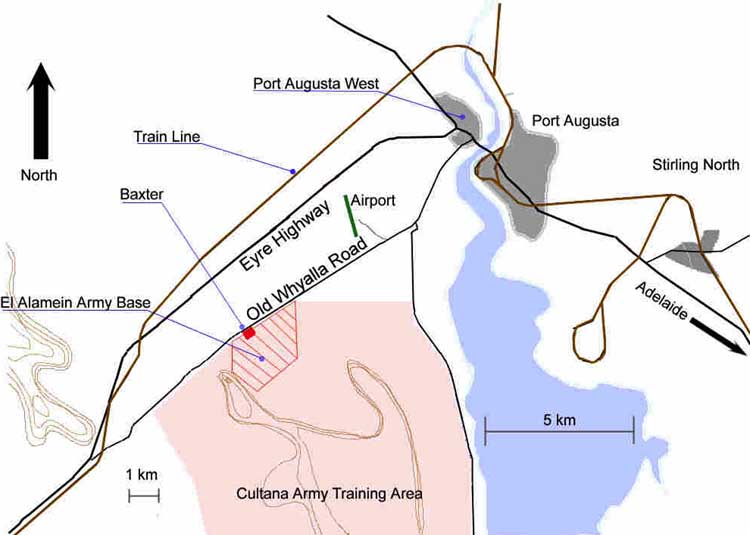
Map of the site of the now closed Baxter Detention Centre...detainees were moved to other locations.

By Sandshoe.

Baxter sprawls on a plain of searing heat. Nothing stirs in sight of the novitiates getting out of their vehicles. The travellers scan the dirt around their transports they stay close to at first because the impact of it seeming they are the only people in this place confuses them. Some are hesitant in their cars. Behind the heavy gate and fences ahead of them, imposing blank walls are clear evidence there is choice and choicelessness in coming to this place.

Guarded in this detention centre are women and men whose lives are forever compromised by incarceration profiled as ‘not punishment’.

Grit that is a fine gravel and a scuff of red sand trace a narrow concrete path. Cardboard cartons of apples and salad vegetables are unloaded out of vehicles and carried into the shade of a fledgling tree. They are set on the ground in the red sand and dirt. Around them, plastic containers of dessert sweets, cream puffs and flat breads with accompaniment savouries, pickles and spreads are balanced besides lavender sprigs in a large basket surrounded by a pink, purple and white satin ribbon bow – and 25 kilos of bananas packed in newspaper in banana boxes. A box of white disposable plates, plastic bags of disposable forks (no knives), spoons and cups are rested on the top of the boxes of bananas and alongside a large cake box, a box of programs bound with ties of gold, pink, apricot, blue and cream satin ribbon. There is a bag of lemons and a weighty one of sweet jujubes and apricot delights. Large bottles of lemonade, fruit juices and chilled spring water are hefted along a further path on instruction from the bride. She indicates to waiting bystanders to bring the items in the shade of the tree along the same path to where she begins to build a second stack adjacent to a barred gate in the outer perimeter fence until nothing is left in the shade of the tree and the new stack is a stark sunlit clutter.

The stack will be returned to and its family of boxes and paraphernalia carried further again after the the visitors announce themselves and the formalities of signing in are concluded at Reception.

Advice they are to deviate (backwards) to a reception building set in bush obscurity at the entry way to the car park inspires a series of manoeuvres between the gathered guests. Each consults another to verify the instruction.

The area inside the small building through a glass sliding door is reminiscent of a temporary office for road workers alongside an isolated road in rural Australia. It becomes crowded and its atmosphere tense as the wedding party becomes a composite and knowing organism expressive of fearful need. The guests shuffle and startle.

A flare of agitation feels as might the tip of the blade of a serrated knife to the heart.

A guest is challenged her name is not on the list of visitors who are the invitees. She is the bridesmaid in a princess line maroon satin under-dress and voile overhangs her shoulders to an elegant full length. The tips of her flat black slippers show daintily from under the hem of her garment as she stands in grievous anticipation of being refused entry to her place of honour. The uniformed officer on duty is barely patient. She has to telephone repeatedly to senior officers that the bridesmaid does not have photo ID.

Everyone in the room is struggling. The guests other than the frozen bridesmaid cope with their survival tasks to secure their own entry and clear the confined space in close jostle, transferring forbidden valuables such as mobile phones, wallets, sunglasses and car keys into lockers they secure with keys on metal rings with blue metal tags that are circular and stamped with the number of their locker.

Guest who have filled out their names, addresses, telephone numbers, occupations and reasons for visiting on duplicate forms, and signed their accceptance of responsibility for their own entry are checked against a list as bone fide visitors whose names and details have been provided to the administration of the Centre-Baxter as it is called on the street-the week before. Some guests will say weeks later when interviewed each is asked in turn to extend their right arm so that a red plastic band can be attached with a number written on it in heavy black pen. Others will only say their fist is stamped with a number and some the stamp is invisible.

People who do not have pockets ask people they have never seen before to accept their locker key for safe keeping and begin a passover of emblematic trust. The bridesmaid is allowed entry.

The guests retrace their steps to the food, soft drink refreshments, juice, cartons of water and paraphenalia left in the stack by the barred gate where another duty officer looks through from its other side until the entire party is grouped to enter. The gate opens into a narrow cage set over a two person-wide path that is the cage floor and leads around 10 metres in length to a heavy metal door that is painted green and has the words printed in red on a large sign on it-WARNING DOOR OPENS OUTWARD.

Five of the wedding guests at a time will be allowed through the door to be searched, but not until the attendees are secured in the cage and the gate closed and barred behind them. One door or gate will not open if another is opened. The processing of the bridesmaid and consideration of her entry has taken long enough that the heat of the fierce sun burning down on the first guests assembled waiting for the cage gate to be opened has clearly taken its toll and there is no canopy to retreat beneath.

Sweat is soaking skins that prickle in wedding finery. The floor of the cage is an elevation of concrete on the red dirt around it.

Shepherded into the cage, each guest bends to grasp as many as they can carry of the boxes and other items from the stack at the entrance. The outer barred metal gate closes behind the last and the officer assigned to guide and lock the visitors in the cage disappears with the first group of five admitted through the heavy metal door to the next stage of their processing.

Through the bars of the cage and another perimeter of fencing, a path to an entrance door in the wall of the detention centre is discernible. It leads across a stretch of moatlike and sparsely vegetated dirt. That ground is almost bare. Motion detectors track any human presence and the two perimeter fences are electrified.

As each group of five is ushered out of the caged queue, its participants bend to lift and carry their share of the load forward. The cage is exposed to the sun’s full beat on its bars as the sun climbs towards noon. Guests disguise their anxious fear with talk they are pleased they have worn clothing no heavier than they have on. Mary, Margaret, Margaret, and Maryanne are identified getting to know who is who in the crush. A young woman in a light pink cotton shirt and fawn slacks rocks a routinely admired baby in a pusher. The handsome Persian father coochies the baby to smile.

The sense of the sun’s oppression blends in a gathering haze with the factor of their caged imprisonment as the guests succumb to a quiet preservation of their strength to endure the heat and their containment. Beside the cage, the mechanism of the entry gate for a vehicle accessing the compound begins to grind with a lurching sound of sliding metal joints that are parting.

Higher than can be imagined a towering gate glides ungraciously open to a sickening event that is its ultimate clang and the vehicle accelerates slowly through its giant maw. The slow grind of metal reverses the gate against the expanse it has opened until that eventual status is returned to closed and secure.

Time passes. No one is left in the cage. The final group of would-be celebrants is directed through the green metal door. They find there is a holding chamber beyond the inner cage door large enough for no more than one or two people to move comfortably through it and an access blank cream metal door. The clutter of individuals filing through the door looks towards instruction what to do next. Two men in uniforms flank an x-ray machine monitoring an erratic flow of boxes and wedding items. Guests are directed to place miscellany out of their pockets onto the black surface of the conveyor belt rolling behind its flapping rubber curtain.

The bridesmaid is among the last applicants. She has been rejected. She was not supplied with an ID number, a correspondent number that is recorded on a log sheet, along with the locker key in another column and in respective others, full names and signatures. The bridesmaid is told to stand and wait. She does until the other members of the group are processed by abandonment of their property onto the conveyor belt and each on command steps through a security screen in a neighbouring cubicle. A guard waves a metal detector the full length of their body and advises his colleagues he is finished.

The responsible guard will come and return with the bridesmaid to the reception building proximate to the car park, back through the cream door, holding chamber, green door, the cage, its outer barred door and across the distance to the office in the patch of scrubby bush that flowers as if by bitter brandishment. She is either not pleased with her employment, is contemptuous of the visitors or fails to disguise contempt for herself for having neglected protocol. She beseeches the bridesmaid to hurry. The door to be opened into the cage to begin the journey back cannot be opened if any successive door is open. The last of the guests to be processed has been ushered to wait in front of another door of heavy metal. Another cage imprisons another concrete path. At the end is another barred metal gate.

After clearance by walkie-talkie that the bridesmaid has been escorted the complete return journey, the guard directs the visitors to follow him through the door and along the path. The guard unarms the barred gate. The celebrants are directed to take the path alone across the spread of daunting open ground exposed to their uninterrupted view as a barren moat. The visitors say nothing a guard can hear that communicates the current of ill-ease gathering its momentum and shoaling against bars and souls locked in these premises in this red semi-desert.  Any recall of the presence of the wild beauty of natural attraction and the tourist mecca of the coast where they had camped the night before and watched the fishing boats sail into the evening light is a cloy of consciousness that struggles in the disorienting heat to make geography, patterning, natural botany, fauna meld to fit the knowledge of cruel experience.

There is nothing we can know from a briefing or written text that properly prepares us for any circumstance until we experience its sounds, the nature of its silence and appearance.

The smells are harder to define. The guests’ bodies are secreting adrenalin, the hand maiden of fear and their armpits course in sweat and blend the assortment of perfumes in the confine of the holding chamber and small room they are directed into through the door in the wall.

Two guards are their receptionists, a makeshift theft of any last expectation of niceties. The list that without the bridesmaid’s name on it has isolated her is checked in replica.

The community room visible through a wall of observation glass is peopled by detainees and guests who are under surveillance like reality television at a wedding party. On the wall at the far end of the room is a banner of felicitation heralding the names in English of the groom and his bride:

H A P P Y  W E D D I N G

The faces of the people in the room are turning as word spreads the last arrivals are visible through the glass. In the beaming face of the groom among his friends is the warmth of hospitality of a man at ease with his companions and visitors he is greeting. The bride is talking to a shining gentleman in a stand-out gold thread matinee jacket, the Master of Ceremony, whose face is grave. He is regarding his duties according to the bride’s advice and reassurance.

Mild applause sets up at the last arrivals being sighted, They manipulate their share of boxes and bags into a holding chamber and out through a second. The last almost of the guests are delivered safe and the bridesmaid in the chaperone of an isolated guard has returned the trek.

The bridesmaid is a competent interviewer. On the walk she has negotiated a conversation with her escort. The guard has ‘just started’. She is ‘a country girl’ she replied to the bridesmaid’s cunning enquiry of where she is from. From a local farm, her parents urged her when they learned of the employment opportunity to apply for position at the facility. After a long period of unemployment after finishing school, she regards herself as ‘doing something’ for her country, the bridesmaid tells her [the bridesmaid’s] mother who is one of the wedding party. The guard’s brothers are on the farm and she did not want to stay there herself, neither was encouraged. Times are hard in the drought.

The wedding programmes are distributed. Printed on a decorated utilitarian dark cream paper, they are distinguished by a fine quality white striped paper dust cover that has no printing or illustration. The stripe on the cover has a pleasant raised texture to feel and look at. Inside on the first page is the simple announcement of the marriage of the couple who are Baha’i followers, the date and a stylised rose illustration. Beside two entwined miniature roses at the bottom of the page is a quote selected by the designer from the writing of the Baha’i leader and philosopher, Baha’u’llah.

O, friend! In the garden of thy heart, plant nought but the rose of love, and from the nightingale of affection and desire loosen not thy hold.

The guests seat. The Master of Ceremony indicates to the program and delivers the opening address in English. The groom reads the prayer in the Persian language of Farsi. The young son of the bride reads a prayer in Farsi and its translation in English includes:

I will no longer be sorrowful and grieved.

I’ll be a happy and joyful human being.

O, God I will no longer be full of anxiety nor will I let trouble harrass me.

The Baha’i Marriage Tablet, the writing of the philosopher Abdul Ba’ha is read by a stalwart Australian friend of the bride who has travelled with the group of social workers to attend the wedding. The reading is in the style of a moral teaching of considerable beauty unlike any experience of a Christian marriage. The principles of loyalty, jealousy, seeking counsel, fellowship and amity are introduced, and aspiration to spiritual thought, extension to others through hospitality and nourishment, by example and through a union of harmony and rapture:

Walk in the eternal rose garden of love. Bathe in the shining rays of the sun of love. Be firm and steadfast in the path of love. Perfume your nostrils with the fragrance from the flowers of love. Attune your ears to the soul enhancing melodies of love.

Baha’i marriage is defined for the couple in a reading from the writing of the same author. The selected reader is another Australian friend of the bride who is as pretty as a rose herself:

Their purpose may be this: to become loving companions and comrades and at one with each other for time and eternity.

The marriage celebrant conducts the marriage and the celebrant statement is reproduced on the second to last page of the programme for guests who wish to follow. It is a simple presentation that adds the Baha’i wedding vow places their God in the very most centre of the couple’s relationship:

That by his Bounty your marriage will become “a fortress of wellbeing”.

The bridesmaid reads a prayer in English that is a reaffirmation of the belief in God and supplication that through that wise watch and intervention the couple will enjoy harmony and unity:

Confirm them in Thy servitude and assist them in Thy service.

The bride and groom exchange gifts and each speaks to the assembly of guests in turn on invitation extended them by the Master of Ceremony. Each expresses their love for their spouse and their appreciation and love for their family in Iran and guests. The guests are thanked for their support and attendance and invited to join the bride and groom at the wedding reception, to partake of food and the refreshing drinks the bride and guests who have travelled to the Centre have carried with them the length of their journeys.

Each of the pages of the programme is illustrated with a small single rose and decorative leaf printed in blacks and greys and repeated in descending, although irregular sequences alongside the paragraphs of text. The same rose designed into a frieze illustrates the top of the first of a series of blank pages included at the end of the programme to encourage the guests and residents to write their impressions or add a personal reminiscence in the form of prose or a poem.

*****

About three months ago when I moved out of the city to live in rural South Australia, among my papers I came across most of this foregoing text written on the blank pages of such a wedding programme.

I was the designer commissioned by a bride-to-be to produce the programme (the booklet) and I began by researching Baha’i wedding customs. I searched for sample booklets and was loaned a selection. I shopped for paper for the programmes to offer the bride her choice, conceived and accomplished the layout, graphic illustration and delivered the printed copies bound in craft ribbon tied through two eyelet holes into twisted and curled bows.

In time presenting to me in these past three months, I have been editing and rewriting The Wedding Party. Progress has been slow. Other commitments and distractions intervene.

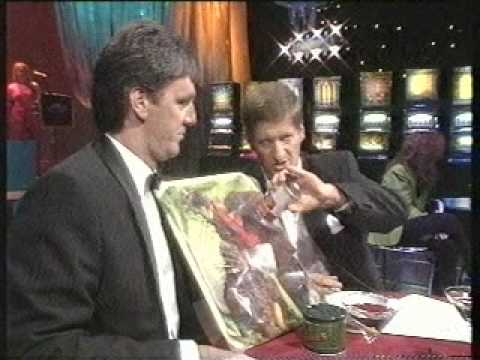
Richard Jenkins in 'The Visitor'

Until last week when I was inspired to finish The Wedding Party …I happened in my local library on a DVD of ‘The Visitor’, a movie about such a person as I whose placement in a situation they cannot anticipate leads to a life changing experience and more out of it from which they cannot return in the special sense of learning and loss, happiness and grief, love gained and compromised love. Richard Jenkins whose role as the lead male seems in retrospect a wonderful prop around which Richard himself knowingly allows the story to affect, entrap, engage and change him has my undying admiration. The actor who supports him, the female lead Hiam Abbas is talented and beautiful.

And Haaz Sleiman in his role of Tariq, an illegal immigrant, brought me to believe in the closeness of the shared experience of the street, he as Tariq so believably a model of an idealistic streetie I spent time busking with on the streets of Auckland simply because of his creative talent as a singer-songwriter.

So too I have been inspired by Danai Jekesai Gurira in the role of the brilliantly fearful, literally startling girlfriend of Tariq who Richard Jenkins as Walter Vale, college professor, eventually visits in a detention centre and there is the nub, Richard Jenkin’s riveting performance of a climactic speech.

I have worked since on ‘The Wedding Party’ to present it because ‘The Visitor’ is an ultimate inspiration combined with Australia’s shameful continuing abrogation of responsibility to its past and this current disgrace is sickening … of making treaty to trade humans for humans with Malaysia where detention on the strength of belief a crime has been committed or will be committed is allowed without charge or trial and breaches of civil rights include flogging and caning.

Had the wedding programmes served in 2004 no purpose other than the paper on which where I could find no other I scrawled ‘The Wedding Party’ in rough draft I am content my story is told as a contribution. I wrote it in the early hours of a sleepless night in a share accommodation traveller’s house in Port Augusta, South Australia-having attended such a wedding.

Image Source Page: http://www.mediasearch.com.au/film/filmreviews/thevisitor-filmreview

A Pig Psalm of Dave*

14 Saturday May 2011

Posted by Therese Trouserzoff in Pig Psalms, Sandshoe

≈ 44 Comments

Tags

Pig Psalm

An Apologia after the Psalm 141
Oink for Deliverance from the Wicked


by Sandshoe.

Dinkum, mate, I have to ask; get a wriggle on; (reprise) it’s as if he’s deaf, believe me.

I’m not just a bad smell; my uplifted hands an evening sacrifice; (reprise) many’s the pink drink I’ve raised pissed iss all lies!

Muzzle me, mate; I’m the fat lady who sings.

You allowed my thoughts incline to pies, yield to any sign; the McDonalds’ even where I thrice once bought an apple pie.

Yeah, over the back fence where I lived in Melbourne, next to Balwyn’s library; (reprise) yeah, that opposite that 24-hour superette.

I pledge I’ll not dine again on Maccas as long as I exercise free will; (reprise) Old McDonald’d be spittin’ chips if he knew what they did to his song.

Strike me pink; that is a given; let them tick me off; o, so pouring oil on a lit wick.

All this I shall not refuse, yet donkeys bray despite their trials.

When the fast foods oleaginous are overthrown, all will hear my brayers and laugh along.

All will cook by the Pigs Arm’s cooks’ book; o, readers, send your recipes in.

As when a bull looks at a butcher, so their choice cuts will be strewn at the mouth of Sheol; (aside) o, typo in the name of Shoe, oops.

You need be on your best, matey, cobber; this pub is my local; please, please don’t eat the daisies; (reprise) please.

I’m not paranoid, but seriously I’m thinking Security.

Let each be hoist on their own petard, while I run all the way home whee whee whee.

*disclaimer: not piglet Dave a.k.a. Astyages, troubadour to the Pig’s Arms.

http://www.thesacredheart.com/psalm/psalm141.htm

Reflections On a Pond.

06 Friday May 2011

Posted by Therese Trouserzoff in Sandshoe

≈ 22 Comments

Tags

Leaf Fall, Reflections

Leaf Fall

Painting and story by Sandshoe.

There is an unearthly silence in the park as I look across to the kiosk, although the through traffic is visible in the proximity created by the the sweep of the drive past two and one-storey homes planned as residential accommodation for The Games. Ambling lovers, photographers and students appear deaf anyway to the sudden protest of cars braking to avoid the ducks crossing, lost in a world far removed from the built-up environ of this suburb … yes, perhaps they are locals and even longing as I did for the especial comfort of the quiet of a back street avenue and a home with a sweep of untidy rooms for its residents and occasional visitors.

Where I stayed there was a white shag pile carpet in the front living room that looked out on the promenade and path across the park.

This is the suburb of some dreams and some earthly disasters where I spent a summer like water, the houses in an arc of a bright sun splattering window glare and the humdrum; it was hot and drought. Water restrictions were unheard of and water splashed in a reticulated circuit out of green cloth shade enclaves of hanging plants and jangling banboo. Sturt Desert Pea was coaxed to take root in front gardens bordering lawn that was cherished to grow table napkin fashion amidst cement driveways and pebble paths. Some homes sprouted shrubbery. It graced their no-fence look fencing and plonked itself in the middle of nooks set in a red brick wall. A brush gate for a moment swung open on its hinge. I saw a small dog run through it.

In the dark of night cars came and parked. People got out of them and talked. No-one lingered. Cars went and more cars came.

I really am contributing by finishing my writing of this piece, this late Friday afternoon, to the celebration of the 2nd birthday of the Pig’s Arms. Beginning to write, I felt an inspiration of passion to tell readers something of an experience of suburbia I had one year where I was holed up some days on end working on the layout and preparation for publishing of a community anthology. The days were stinking hot and dry. I was on a deadline. My entertainment to stretch my legs was to walk the distance around a pond over the road, past cars parked no further distance from the front door of the home address than the width of a normal curved no-exit turn around at the end of suburban street. The wisdom of the planners was to create a parking bay allowing cars to come and go as cars do at a tourist venue.

Sometimes I heard words spoken by passengers alighting from their vehicles or as they tarried beside their opened car boots to take out picnic blankets and baskets, sketching tablets and chairs, unfolding children’s push chairs. I tuned out. No, sometimes I reflected on the tone of the voices. I will never understand why people buy their homes in the sort of enclave created by noise indifferent suburban planners.

Readers, just as perhaps you suppose by reading on you will find the answer why (if you have not guessed) there was an unearthly silence in the park, described in my opening of this essay and that regardless followed by evidence of noise a-plenty, likely you suppose I will tie everything up pretty well nicely before I get to the end, weave the threads of the story, snip them somewhere, so there is no fray.

Too tidy. This is what I want to say, really.

Happy birthday, Pig’s Arms. May we enjoy the fortune for many birthdays to come of the venue and its patrons, which is its companionship and the sharing of our written word, our experience, our imagination and ourselves. Well done, Mike Jones. Thank you for The Arms.

The Bottle-O

01 Sunday May 2011

Posted by Therese Trouserzoff in Sandshoe

≈ 28 Comments

Tags

Bottle-O

Untitled

Story and Artwork by Sandshoe.

The bottle-o speaks severely with himself; the sunshine on the surface of the restored although stagnant creek is so silver, and among the leaves and creaking branches of the gum trees gold, it obscures an afternoon caterwaul of birds on wing above them.

The bottle-o is farming the industrial bin behind the bakery. The Morning Loaf recycles nothing. The giant bin against the back wall fills each week, left open, and dominates a carpark that is its vicinity, the picnic tables over the commemorative bridge, and the tourist attraction of a gaol converted to a men’s toilet.

There is the street between us. Emptied of commerce and the cars of recreational travellers strolling its pavement bakery-side in the direction of, and from their cappuccinos and chocolates, foccacias toasted sandwiches, and ‘antiques for sale’. Biscuits. Even the sales agents have given it a rest.

“I’ll tell you what I’ll do for you,” and “I can’t understand that, but here is what I’ll do. For you.” That was on Friday – another entrepreneurial shouter on the pavement at the bakery’s door.

That big old sun came up a particular morning glowing orange through the trees and John Shaw Nielsen’s imagery from The Orange Tree slid to mind as if into a projector as I walked out of the side door of the garage from looking around, attempting to see sense among abandoned once-treasures of owners, tenants, and lodgers-their remnants just a couple of empty suitcases. My attention caught by the orange burst, in the excitement of the delight I remember for the first time I am in Shaw Nielsen country. He lived in the South East and I feel his orange tree to my very bones. I regarded the rising sun with a feeling of watching living sculpture where all around is stilled.

The bottle-o has been practising his profession for 30 years. He loves bottles with a passion. He liked the water bottles I have run across the road eagerly with to offer him when we first met. He has been spoken to improperly in front of me. We were standing beside the car park bin sharing reminiscence about the Keep South Australia Beautiful campaign (KESAB). I had run across the road with two small bottles and a flavoured milk carton. An occasion to greet my newly met friend as much to contribute to the collection. His face suffused with the rush of the blood of embarrassment I wonder as all the more hurtful because he was conversing with me when he was chastised for ‘still doing that’, as if he exercising a nervous habit of degradation. The young thing drove off in her powerful vehicle. He pushed his wheelbarrow up the street and I still want to disappear up the street in the same direction and never come back other than to the Orange Tree.

Pig’s Psalm 1: 41 – The Meat Tray Way

07 Thursday Apr 2011

Posted by Therese Trouserzoff in Pig Psalms, Sandshoe

≈ 11 Comments

Tags

humour, Pig's Psalm

Dodgy types going down the Meat Tray Way.....

By Sandshoe

Blessed is the one

who does not walk in mud with the weather or begrudge the weight of the Pigs Arm’s take

or sit in the stall with mockers

[mocking piglets’ passing]

But who oinks hard at the jokes of The Big Pig and who meditates on the slough day and night.

That piglet is like the mud laid down by streams of water, which yields its mud in season and whose hock does not wither —

whatever they do prospers.

Not so non-virtuals!

They are like straw

that the fox [it is written huffing and puffing] blows away.

Thus the non-virtual will not stand in judgment, nor stragglers into this assembly of our piglets.

For The Boss watches over the way of the piglets, but the way of the bad pig leads to the meat tray.

Apologies:

Psalm 1: (New International Version, 2010) BOOK I Psalms 1:41

← Older posts
Newer posts →

Patrons Posts

  • The Question-Crafting Compass November 15, 2025
  • The Dreaming Machine November 10, 2025
  • Reflections on Intelligence — Human and Artificial October 26, 2025
  • Ikigai III May 17, 2025
  • Ikugai May 9, 2025
  • Coalition to Rebate All the Daylight Saved April 1, 2025
  • Out of the Mouths of Superheroes March 15, 2025
  • Post COVID Cooking February 7, 2025
  • What’s Goin’ On ? January 21, 2025

We've been hit...

  • 734,534 times

Blogroll

  • atomou the Greek philosopher and the ancient Greek stage
  • Crikey
  • Gerard & Helvi Oosterman
  • Hello World Walk along with Me
  • Hungs World
  • Lehan Winifred Ramsay
  • Neville Cole
  • Politics 101
  • Sandshoe
  • the political sword

We've been hit...

  • 734,534 times

Patrons Posts

  • The Question-Crafting Compass November 15, 2025
  • The Dreaming Machine November 10, 2025
  • Reflections on Intelligence — Human and Artificial October 26, 2025
  • Ikigai III May 17, 2025
  • Ikugai May 9, 2025
  • Coalition to Rebate All the Daylight Saved April 1, 2025
  • Out of the Mouths of Superheroes March 15, 2025
  • Post COVID Cooking February 7, 2025
  • What’s Goin’ On ? January 21, 2025

Enter your email address to subscribe to this blog and receive notifications of new posts by email.

Join 374 other subscribers

Rooms athe Pigs Arms

The Old Stuff

  • RSS - Posts
  • RSS - Comments

Enter your email address to subscribe to this blog and receive notifications of new posts by email.

Join 374 other subscribers

Archives

Website Powered by WordPress.com.

  • Subscribe Subscribed
    • Window Dresser's Arms, Pig & Whistle
    • Join 280 other subscribers
    • Already have a WordPress.com account? Log in now.
    • Window Dresser's Arms, Pig & Whistle
    • Subscribe Subscribed
    • Sign up
    • Log in
    • Report this content
    • View site in Reader
    • Manage subscriptions
    • Collapse this bar
 

Loading Comments...