• The Pig’s Arms
  • About
  • The Dump

Window Dresser's Arms, Pig & Whistle

~ The Home Pub of the Famous Pink Drinks and Trotter's Ale

Window Dresser's Arms, Pig & Whistle

Category Archives: Warrigal Mirriyuula

The Return of The Ghost Dog

05 Saturday Jan 2013

Posted by Therese Trouserzoff in Warrigal Mirriyuula

≈ 7 Comments

Tags

Baiame, Warrigal Mirriyuula, Wiradjuri

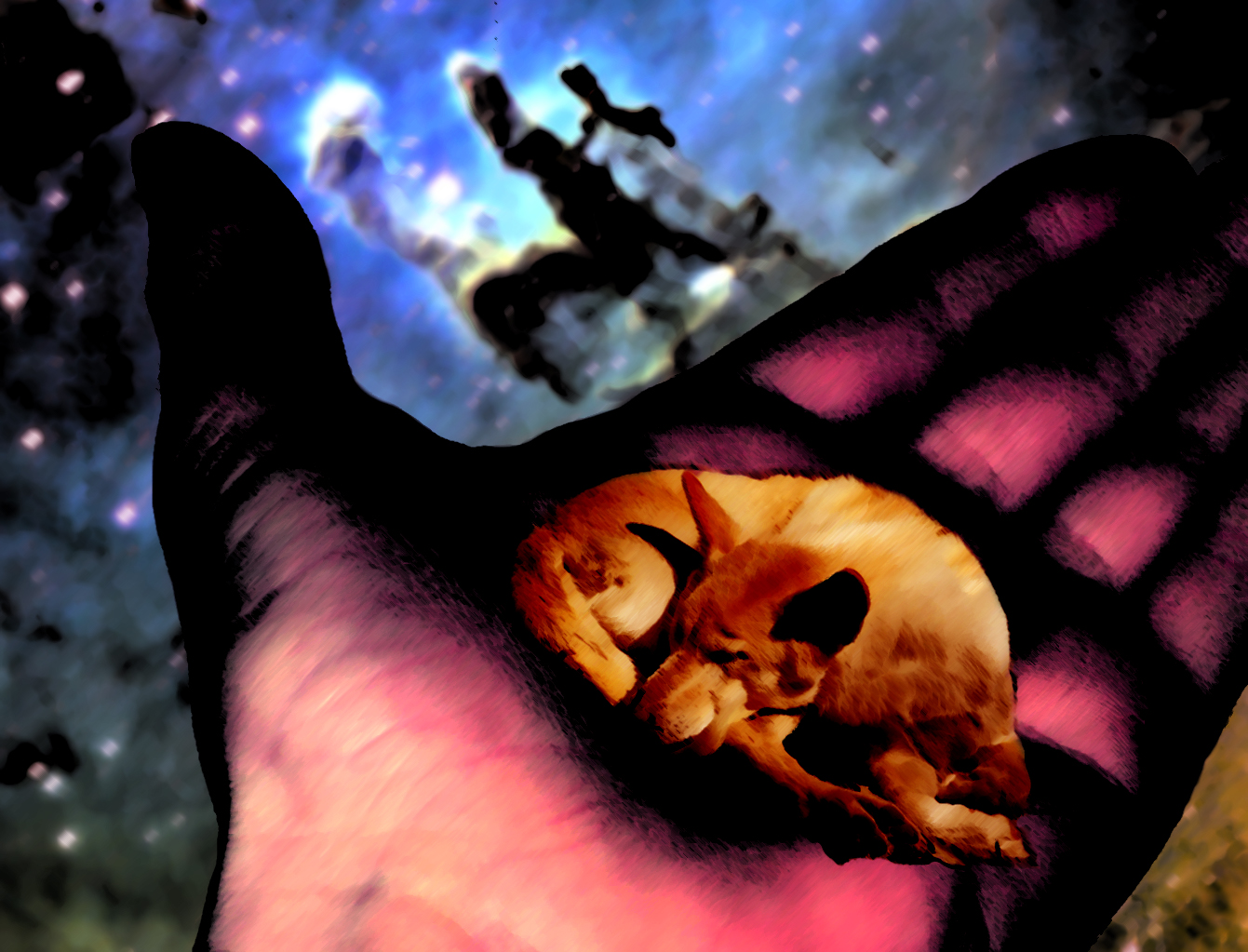
Baiame Redraws the Map of Mirriyuula's Heart

Baiame Redraws the Map of Mirriyuula’s Heart

Story and Digital Cosmics by Warrigal Mirriyuula

In the Dreaming, before time, before space, before country and the people, the great creator spirit Baiame awakes and begins to move through the impenetrable blackness to the place of purpose.

While all places are just potential harmonies in the songs of the great creation plan, he knows when he has arrived. This is the place. Baiame opens his powerful hand revealing Gan, the Creator Snake.

Gan, being both design and cause, knowing too purpose and moment, slides smoothly into the darkness as all creation quickens and the cosmos explodes into its endless flight through space. Galaxies, stars and planets, the constellations of the lore and all the spirits of all the creatures that will ever live, awaken at the dawn of creation and are witness to the raising of the mountains and the flowing of the rivers onto the extended plains.

Yirri the sun, and Giwang the moon, rise for the first time over Nguurumbang, the home of the people. Gilgie the yabby, spirit of the bilabang finds a sunken hollow log and watches Marrkara, the Yellow Belly, his coeval in the bilabang, swimming back and forth.

All of the animal spirits: Guulang the wombat in his hole, Mabi the quoll hunting in the trees, Barrandhang the koala snoozing as always, Wambuuwayn the grey kangaroo proud in the new grass, and Yuugi the dingo, all come into being and follow the lore of creation.

In this moment of no time all the other spirits of earth awaken, including Guudhamang the snake neck turtle and Mirriyuula the ghost dog.

Time begins to flow inexorably for the people, the Wirrayjuurraay, the people who say “wirray” for “no”. They live a life of the lore and in time come to cover a great area encompassing the rolling slopes and plains, the river floodplains and marshes and dry flat ground all the way from the mountains to Barkindji country on Barka, the great river.

But the passage of time is not for the great spirits of the earth. Time is for mortal men.

For Mirriyuula there is only forever.

Time passes, the people grow strong.

Mirriyuula has taken the form of a Bageeyn, a wise and powerful manipulator of the creation energies. He is master of the land and sky and has the power to shapeshift, assuming the form of anything imaginable; but here in his cave high in the Bethungra hills Mirriyuula the Bageeyn has grown old and lonely and despairs of ever being able to pass on the powerful knowledge and wisdom he has amassed. He formulates a desperate plan. He will kidnap a suitable boy and invest in him all that he knows of the lore, creation and his own very particular abilities.

On the appointed night Mirriyuula assumes the shape of a great striped dog, fearsome of fang and fleet of foot.

Bounding powerfully through a sleeping camp he picks up the boy he hopes to train and leaps beyond the fire’s light. The camp is in uproar and a brave friend of the stolen boy, grabbing a burning brand from a dying fire, chases after Mirriyuula and his struggling charge. He throws the brand. It hits Mirriyuula on the head and sets fire to his possum skin headband, the flames blinding him.

Mirriyuula, frustrated, angry and raging in great pain, drops the boy and flies off, unable to continue with the kidnapping. He knows he has broken the lore and there will be consequences, but for now he must salve his wounds and coax his sight back. Assuming the Bageeyn form, he sits waiting by his fire at the mouth of the cave in the hills.

As expected Mirriyuula the Bageeyn is summoned before a Council of the Elders to explain himself. The elders, very wise themselves, can understand the yearning need Mirriyuula has for an apprentice but they are equally aware that kidnapping, no matter the circumstances, is a heinous crime against the lore and Mirriyuula must be banished to the underland for his transgression.

However, in their wisdom they acknowledge the greatness Mirriyuula once gathered around himself and, as a concession to this greatness and Mirriyuula’s special status as an earth creation being, they allow that Mirriyuula may choose one night each year in which he will be allowed to seek and take an apprentice if he can.

Of course Mirriyuula chose the longest night of the year. And every year thereafter, on that longest night, Mirriyuula rises up from the underland to search again.

As midwinter approaches each year the adults and older children prepare for what they know will come. Younger children are ushered into the gunyahs. The Mirriyuula story is told again and they are warned that silence is their only hope to avoid the jaws of the fearsome ghost dog. Mirriyuula can’t tolerate fire so great piles of wood are collected at every gunyah and the campfires are stoked to a fierce spitting blaze.

As the evening of the longest night falls, the mournful call of Guuribang, the Stone Curlew, floats out over the marshes. The children in the gunyahs shiver in fear but they remain quiet. They know the curlew can’t be trusted. Even the elders don’t know if the curlew’s call is a warning to the people or whether it is a clarion call to the great ghost dog, Mirriyuula, who even now must be readying himself for the night ahead.

Nearly all the animals have abandoned the area. In her tree hollow Bubuk the owl alone has stayed. She sharpens her beak and talons for she knows she has a role to play on this longest of nights and she will play that role as she has always done.

The spectacle commences with an onrush of the harbingers of the mayhem to come. Ngarradan, the bat spirit and his army of black leathery winged night fliers swarm from every hollow tree and cave. More bats than there are stars in the sky, in a great rolling curtain of darkness. Bubuk throws herself up into the night sky to do battle with the forces of darkness. She fights bravely, her skill on the wing bringing down many of Ngarradan’s minions; but in the end there are simply too many of the darkling bats and she is overcome and withdraws. She has battled for time, precious time; and in that she has won. She has taken up time that Mirriyuula needs to complete his search.

Without Bubuk to cull their numbers the bats blot out the whole sky and the last fugitive silver beams from Giwang are obliterated. Inevitably, the deepest of all that is dark flows down on the land. It is the inky darkness that the ghost dog Mirriyuula needs.

Across Nguurumbang there is total, impenetrable black and only the crackle and hiss, the explosive pops and snaps of the protective fires can be heard, but so deep is the brutal gloom that even the campfire light is absorbed.

Suddenly the horizon blazes up into a bright, blinding light that resolves itself into the two burning, flame bright eyes of the ghost dog Mirriyuula, come again and at last.

The Ghost Dog looms up from the underland, ominous and inimical. His ears are pricked for the faintest heartbeat, his eyes burn holes through the blackness, his great head is lowered, swinging from side to side, he sniffs out the land, quickly flying to any spot where his senses tell him he may be successful. He prowls the camps, growling, his incendiary eyes seeking his apprentice. The children huddle together, cowering in the gunyahs while the adults stoke the protective fires to an implacable blaze.

Guudhamang the snake neck turtle spirit, giver of life and protector of the people in Muttama country, knows from his dreaming that he has a destiny and that should Mirriyuula turn up in one of the camps under his protection he will have to take physical form for a final battle to the death with Mirriyuula. But not on this night.

An aching, anguished cry of frustration rends the air as the first faint intimations of the dawn slip over the horizon. In moments Yirri has washed the land with light and the great ghost dog Mirriyuula, thwarted and again without his apprentice; being unable, like all ghosts, to stand the sunlight; fades back into the underland. His faint last howls lost in the bright trilling, cawing, warbling, whistling birdsong of a new dawn.

In all the camps there is great joy. The longest night has come and gone. Now the weather will warm and the days grow longer and the children will be safe and grow strong in the light.

–oo0oo–

Deep in the underland time and space are irrelevant but Mirriyuula, serving out his punishment, senses a shift. A ripple moves through the underland. A wave of change is coming in, combing to the break.

At first it’s just an uncertain warming sensation, then a lofting sense of building potential, the electric buzz of crackling black fire, then the tumbling chaos of the shockwave!

Instantly Mirriyuula finds himself back where it started all those eons ago. He senses Gan slinking smoothly through the darkness to enfold him; then just as suddenly and inexplicably he is again with Baiame, resting in that formidable and wondrous hand.

At once Mirriyuula is taken into the heart of creation and without words, without ceremony, Baiame redraws the map of Mirriyuula’s spirit. Mirriyuula apprehends his past life in a greater context and understands completely the hubris of that attempted kidnapping all those years ago, the endless similarity of the punishment days of forever, the frustration that has thwarted his true potential. He would cry out at the futility and waste except that he finds in that same moment that he has forgiven himself. Even for creation beings self-knowledge and self-forgiveness are the first steps to redemption and rehabilitation.

Mirriyuula now understands how entirely changed he has become and senses that his life will be very different from now.

“A life you shall certainly have Mirriyuula. For though you transgressed the lore, you have always stayed true to the dreaming and the dreaming is in trouble.”

The portent of Baiame’s words, not so much heard as experienced directly in both Mirriyuula’s mind and in his spirit, lands like a blow and roars through his being. He is to be freed! At another time he might have exalted at such news, filled with pride, but he can find nothing but thanksgiving in his heart.

Baiame continues; “The people are broken, the lore is lost and forgotten, irreparable, and Nguurumbang has been pillaged by the ghosts from across the sea.”

Mirriyuula’s eyes well with tears and his new heart, so suddenly full of love is now laid low with loss. How can this have happened? Why did it have to happen?

“The human mind is a fallible thing, uncertain of where its best interests lie. Humans lack the long view and in satisfying their petty desires they have lost the balance and brought themselves low. They are not “as I made them”, for that was never the purpose. I gave them only a beginning. They are as they have made themselves and their very continued existence is in their own hands.”

While these words were incising on Mirriyuula’s consciousness, his mind’s eye was torn open and filled with bitter visions of all the mistakes, grand and petty, all the infidelities and broken promises, the wanton stupidity and outright evil of humankind. He saw the spoiled lands and poisoned rivers; the filthy gritty air and the oceans become great sumps for the waste and detritus of profligate humankind. He thought his heart might break, such sustaining beauty worn down to a toxic, all consuming hallucination.

Mirriyuula imagined the sorrow might crush him; so much pain, so much indescribable horror; and he imagined that his life, this new life that Baiame would release him to, might be just as bleak, just as blighted as that non life, that living death he had known for uncountable years in the underland.

“I know your question and the answer is as it has always been. A choice between being and nothingness, but the freedom of being is in knowing the limits of that freedom. They have chosen for themselves as they were meant to do, as you did Mirriyuula. But I fear they have exceeded those limits and they may so devastate the very thing that nurtures them that they may never be able to come to a real understanding of who they are.”

“For you Mirriyuula, true self knowledge will come from service and companionship. Let go of your fear Mirriyuula and see your true path. You will exercise your significant abilities in the service of the people. I am sending you back to Nguurumbang and from there you will know the way.”

With these words settling in his consciousness Mirriyuula found himself once more enfolded in the generative heart of Gan. He fell into a deep sleep.

–oo0oo–

Jimmy Pike dozed easily by his campfire, the charcoal and bits of stick crackling quietly, accompanied by Jimmy’s slumbering snores and the breeze whispering through the Casuarinas.

The last golden rays of the sun broke through the trees, gently crossing Jimmy’s closed eyes in soft beams of saffron brilliance. He awoke from a deep dream resonant with now fleeting meaning. He was feeling better than he had in a long while. Life on the long paddock was hard and it got no easier as he grew older.

He dragged his cracked and hardened hands across his dark leathery face and scratched at his grizzled grey stubble.

“Time for a billy, I reckon,” Jimmy grabbed his battered and blackened old billy and wandered down to the creek.

Pulling the full billy from the stream Jimmy stood up, straightening his back with an old man’s groan. He looked as if for the first time along this beautiful stretch of Muttama Creek, the pebbles and sandbar on the turn, the Casuarinas leaning lazily over the stream, their needles piled in soft brown mounds at their feet. Jimmy sighed at the beauty and walked back up the bank.

Throwing a bit of tea in the boiling billy, Jimmy reckoned he better get his swag out and rig some cover a bit further up the bank. It might rain and the creek could swell.

He’d finished his tea and was getting his gear together when he noticed the dog for the first time, about a half a mile down stream and just coming along at a loping trot. By the time Jimmy rigged his cover, set his new fire and was going to get a light from the dying embers of the old one, the dog had arrived and was just sitting on the sand and pebbles by the old fire watching Jimmy with an intelligent look, his head inclined to one side. He looked like he had some dingo in him and looking closer Jimmy imagined he might have had all sorts in him. No collar.

Was he hungry? Did he just want the warmth and companionship of the fire? He’d apparently brought a few more sticks. Jimmy noted the slobber on the bits sitting at the dog’s feet.

“Funny dog”, Jimmy thought.

“Well, you’re a good mate. Bringin’ y’ own wood f’ the fire.” Jimmy picked up the sticks. The dog didn’t move. It just kept a close eye on Jimmy and when Jimmy had thrown the few sticks on the fire, the dog came up the bank and sat across from him while Jimmy got the fire ready to cook some tucker. The dog, still with that look, the head still to one side, just watched Jimmy.

“Ya hungry dhirribang?” He might have said “old man”, but the half remembered family word came to his lips. The dog looked healthy enough, well fed by the look of him. Looking again, Jimmy noticed that the dog was in fact very powerfully built, much bigger than a dingo. His head and muzzle looked more like a shepherd, and he had stripes. Jimmy couldn’t remember if he’d ever seen a striped dog before.

“So, where ya comin’ from?” Jimmy asked, “Ya welcome to share a rabbit wi’ me. Snared ‘em ‘is arvo, coupla does, no disease, should be good eatin’.”

The dog stood and shook himself out, trotted over to where the two skinned and gutted rabbit carcases were stretching on some old fence wire stuck in the sand. The dog took both stretchers in his mouth and trotted back to Jimmy and dropped one on the grass at his feet. He paused as if waiting for Jimmy’s permission. Jimmy was fascinated by this odd dog.

“G’ on then dhirribang. That one’s yours.”

To Jimmy’s astonishment the dog violently shook the stretcher, separating the wire and the rabbit; the wire falling to the ground as the carcase flipped and landed securely between the dog’s sharp white teeth. In a few crunching chomps, the whole thing disappeared, whereupon the dog simply settled down by the fire licking his lips and grooming. Jimmy shook his head in bemused wonder.

Sorting his rabbit out onto an makeshift spit, Jimmy heaped the coals into a glowing pile to slow roast the thing. He wandered off down to the creek and filled his billy again. Looking back up the bank Jimmy saw that the dog hadn’t moved but his eyes never seemed to leave Jimmy. Whenever he looked, the dog was looking back.

As Jimmy sucked the last of the goodness off a thighbone, the declining light of the day had faded to that final penumbral gloaming. The new full moon was out early, silver in the darkening sky. Curlews nesting on a pebbled terrace above the creek began their mournful calling. The dog was instantly alert, his ears pricked, a low grumbling growl emanating from his powerful chest. He stood, ran a few short stiff steps in the direction of the Curlew calls and barked twice; two very loud and authoritative ‘woofs”, growled again and, as he returned to the fire, the Curlews silent, Jimmy would have sworn that the dog made a distinct “hurrumph!”

“Well I’ll be blowed!” Jimmy exclaimed, looking in open amazement and some perplexity at his new companion. “I never known anythin’ shut Curlews up like that!” The dog, settling down again by the fire, made a noise that once again Jimmy would have sworn was a dismissive “hmph”. As if to say, “…bloody Curlews!” Well Jimmy didn’t like Curlews either; he couldn’t really remember why, he just didn’t.

He lay out his swag, wondering about the dog. He was happy for the company. It wasn’t often that Jimmy kept company and he thought for a moment that there was something about the dog, something different.

Lying down he pulled his harmonica out of his pocket, slapped it against his palm a few times to knock out the sand and dust, then, as if finally deciding what he might play, he put the thing to his mouth and blew a quiet haunting melody full of contemplative loneliness and introspection.

The reedy sound hung over the darkening waters of the creek. The dog was settled but from time to time moved a little, seeking that final comfort. As Jimmy played the dog sounded, in his sleep, to be humming a kind of low resonant droning harmony and Jimmy thought again, ”I’ll be blowed!”

Nearly falling asleep on his elbow, Jimmy put his harmonica in his swag then rolled over and in no time was fast asleep.

The peaceful creek babbled through the night as the moon rode it’s appointed path, the snoring of the man and the dog occasionally broken by the night call of a Bubuk, “whoohoo”, “whoohoo”, as she hunted the woodland to feed her nestlings.

Tomorrow would be another day. The last conscious thought Jimmy had that night was to hope that the dog would still be there in the morning.

–oo0oo–

Deep in the night such dreams as Jimmy had never had, visited a vision on him that was both searing and salving in its revelation.

Jimmy was a young man again, but no young man he had ever been. He stood naked but for a handsome possum cloak. His chest bore the keloid scarring of initiation, his body straight and strong, his long wiry hair and full beard bristling black, his bright, penetrating eyes a lighter brown than the rich dark earthen brown of his skin and his mind was clear and alive to the world around him.

In a wave of knowing the names of things came to him; their relationships and meanings were opened to him and his own dreaming became a powerful reality; and all in the old language, the true language of Jimmy’s people. He understood it all, though he had never before known more than a few words, a few phrases of Wiradjuri. At once the lore that Jimmy had only rarely heard spoken of when he was a boy became a palpable body of truth, a spiritual ontology for sustaining the people and achieving transformation; and Jimmy understood then that the loss of language, the glory of any people and foundation of their culture was perhaps the saddest loss of all.

Jimmy knew he was dreaming, and he knew too that this young man was himself. Yet he was separate, set apart, and Jimmy was just his witness. It was a curious dream, filling Jimmy with both apprehension and hope.

The young man looked across the landscape and Jimmy saw through his eyes the unspoiled country and clear life giving creeks and rivers. He saw the animals and birds, the grasses, herbs shrubs and trees and knew their names, their places and their songs. He saw his people, the Wiradjuri, following the lore and leading a happy life all across Nguurumbang.

This was the young man’s country, Jimmy’s country; his home, he thought with a powerful rush of recognition and identification; though it was no home he’d ever seen before. This was Nguurumbang before it became the whitefellas’ New South Wales. This was Nguurumbang before the whitefellas had even come, before they carved up the land for their mutton and beef invasion, before they’d dammed the streams and stripped the trees from the landscape, before Yurinigh, Windradyne and a host of others including the sadly misguided Jimmy Governor, had given everything to hold onto what was left. It was before the killings that began to break and fragment the people, before the ironically named Protector of Aborigines had begun taking the children from their families; dissolving the future and breaking the last chance for the people to remain proudly themselves. The whitefellas had done all this in almost perfect ignorance of the damage they were doing. They just didn’t know and their certainty of the moral force and superiority of their culture and praxis was laughable in the face of millennia of the lore of the Wiradjuri.

Jimmy began to understand the unending shame, the corrosive self doubt of responsibility denied that had plagued the whitefellas in their relations with the Wiradjuri ever since. In the long years of wearing colonial attrition the whitefellas had been broken too, and when it seemed over, when there were no longer all that many blackfellas around, the whitefellas told themselves they’d won, and swapped heroic narratives of how they’d wrested the harsh unproductive land from the idle hands of filthy murderous savages.

It was all lies to cover their guilt, and you can’t build anything on a lie. It will always come back to shame you. This was stolen land and the wealth wrung from it, no matter the hard work and good intentions of those early colonists, was smeared with blood and washed in tears, both black and white.

Yet, in the end, many of the old whitefellas had still wished the few blackfellas that seemed to be left would just go away, disappear, die off. They were a pest, a constant admonishment, a reminder to the whitefellas of their ignorance, their wanton violence and the wilful self-serving stupidity of assimilation without reconciliation.

In his bedroll, still deep in the dream, his eyes darting under his closed lids, Jimmy was overcome with a sadness born of this loss, this tearing down of eons of learning and understanding; realising in his sleep that this had happened to him too.

He remembered the gabas coming to his family’s simple weatherboard cottage on the creek flats a few miles from Cootamundra. His dad had been gone for months, working with the cattle on a place out near Bourke and his mum had been alone when they came for Jimmy and his little sister. They’d grabbed them both but Jimmy had wriggled away, kicked one of the whitefellas on the shin and run off into the bush. His little sister wasn’t so lucky. They held onto her, telling his mother it was for her own good as they tried to tear the crying child from her arms.

Jimmy watched with frightened incomprehension from his cover in the scrub. When the gabas had gone away in their dusty black car he had tried to comfort his mother but she was inconsolable. For weeks she had wandered listlessly about the place crying. Soon after that he’d been sent to live with an aunty out near Brewarrina. His mum thought he would be safer there. She died the next winter of pneumonia and a broken heart and Jimmy had never seen his father or his sister again.

Jimmy was alone and in time his loneliness had become his companion. He’d lived apart, a wandering witness, keeping himself to himself. He stopped thinking about himself as a blackfella. It was too painful sometimes. He became a hard worker, admired for his quiet nature and sobriety by the white folk he worked for, but he’d never had a friend, someone who understood him, who he was. The lesson Jimmy had learned on that fateful day had set the mold for the rest of his life. Work hard, be a friend to all, but trust in no one but yourself. His long solitary life had been the price he paid.

Tears began to flow from Jimmy’s sleeping eyes and in the silver blue moonlight all the night animals of the woodland began to gather around Jimmy’s bedroll on the creek bank.

In the dream the young man was gladdened to see gathering around a host of the Wiradjuri; the old people from before, strong and proud; as well as those left to make their way in the modern white world. They were all looking at the young man and through his eyes Jimmy felt their hopeful gaze on him.

In an instant of transformation Jimmy became the young man, no longer separate, no longer just a witness. These were his eyes gazing at his people. He was a Wiradjuri man, he had his names, not just his whitefella name, but all his names; his skin name from his mother, his public and private ceremonial names, and through his names he knew his place and understood his obligations. At last and for the first time Jimmy’s world made sense to him.

An old man in a battered but beautiful possum cloak and a charred headband stepped out from the host and laid a gentle hand on Jimmy’s shoulder.

“You are changed and made ready and soon you will wake.” He squeezed Jimmy’s shoulder and smiled impishly. “It’ll be hard work.”

Jimmy’s face broke into a broad smile, he was used to hard work. The old man just nodded and smiled to himself, shaking his head as if to say, “you’ll soon find out.” He turned and walked back into the host of gathered Wiradjuri.

Sensing the passing of the moment they all turned toward their own country and, with smiles and waves, began to move away as Jimmy stood in quiet contemplation of all he had learned in the dream. In time he grew tired and thought to lie down and have a little sleep.

The dawn chorus greeted the new day as Jimmy woke on the creek bank. The dog too was awake, alert to Jimmy’s every move, already eager to get on. At the water’s edge a snake neck turtle was taking the final steps back to its liquid domain; its head craned around to look back up the bank at Jimmy and the dog.

“Guudhamang!” Jimmy shouted, recognising his spirit animal as the turtle slipped below the water.

“An’ I know you too dhirribang,” he said, looking at the dog with a knowing smile. “C’ on Old Man. We got work t’ do.”

The dog barked excitedly as Jimmy broke camp. In a short while Jimmy and the Old Man had set off along Muttama Creek towards Cootamundra.

Jimmy’s head was so full of new knowledge and bursting with such ideas and plans that he hadn’t noticed his hands. They were the strong hands of a young man. Uncertain, Jimmy reached inside his shirt and ran his hand over the scars on his chest.

“Well I’ll be blowed!” Jimmy exclaimed.

The dog just barked and ran on while Jimmy began to think about how he might bring everything he now knew of the language, of country and the lore, back to the Wiradjuri; how he might help the whitefellas heal themselves and the land, become true brothers to the Wiradjuri.

It’d be hard work, but they’d get it done, him and the Old Man; and he now knew he had all the time in the world to do it.

But first, if he could, he was going to find his sister.

Family Favourites at the Pig’s Arms Part 1

30 Sunday Dec 2012

Posted by Therese Trouserzoff in Algernon, Bands at the Pig's Arms, Entertainment Upstairs, Warrigal Mirriyuula

≈ 16 Comments

Tags

Blondie, Blue Oyster Cult, Buena Vista Social Club, Diana Krall, elvis presley, Graham Parker and the Rumour, Jean Sibelius, Julie London, Katie Melua, Midnight Oil, Mungo Jerry, Phoebe Snow, Shocking Blue, Sir John Betjamin, the Bee Gees, The Drifters

algy pigs fam fav 1

Playlist Compiled by Algernon and Warrigal Mirriyuula

I’ve been spending some time trawling through the archives looking at older lists. I’ve compiled a lists of the favourites being those which had the most comments. There were many so over the next weeks and months I’ll bundle them up so they can be enjoyed again

http://www.youtube.com/watch?v=pJVlrhWaZhA&feature=fvwrel

Graham Parker & The Rumour – Don’t Ask Me Questions

http://www.youtube.com/watch?v=fNBh73L88r0

Late Flowering Lust -Sir John Betjeman

http://www.youtube.com/watch?v=Yr8xDSPjII8

Diana Krall – The Look Of Love

http://www.youtube.com/watch?v=Fgwr3wrenkQ

Jean Sibelius – Finlandia

http://www.youtube.com/watch?v=d4dbvMgJMno

Blue Oyster Cult – The Last Days Of May

http://www.youtube.com/watch?v=tnFfKbxIHD0

The Buena Vista Social Club – Chan Chan

http://www.youtube.com/watch?feature=player_embedded&v=7OxTVxGhHFM

Phoebe Snow – Poetry Man

http://www.youtube.com/watch?feature=player_embedded&v=rH73D8KAgpM

Julie London – Two Sleepy People

http://www.youtube.com/watch?v=j3FQwovIJw0

Wedding Cake Island – Midnight oil

http://www.youtube.com/watch?v=EPEqRMVnZNU

Under the Boardwalk – The Drifters

http://www.youtube.com/watch?v=aa911_8TP2s

Heart of Glass – Blondie

http://www.youtube.com/watch?v=8LhkyyCvUHk

Venus – Shocking Blue

http://www.youtube.com/watch?v=uPuKoqu6kMk

Viva Las Vegas – Elvis Presley

http://www.youtube.com/watch?v=Mc5oqjFsT5g

Massachusetts – The Bee Gees

http://www.youtube.com/watch?v=eHQG6-DojVw

Nine Million bicycles – Katie Melua

http://www.youtube.com/watch?v=FlZ7x9u9wLY

Summertime – The Troggs

http://www.youtube.com/watch?v=wvUQcnfwUUM

In the summertime – Mungo Jerry


Diving on the Flight Deck – the Director’s Cut

30 Sunday Dec 2012

Posted by Therese Trouserzoff in Warrigal Mirriyuula

≈ 5 Comments

Tags

Global Warming, rising sea levels

Water Music at the Sydney Opera House

Water Music at the Sydney Opera House

http://www.abc.net.au/stateline/nsw/content/2004/s1156736.htm

Story and Digital Mischief by Warrigal Mirriyuula

Benny sat down on the crumbling edge of the warm rust stained concrete, the high tide lapping below his flippered feet. It was a beautiful sunny day again and Benny closed his eyes and lifted his face to the light.

“Visibility should be fantastic,” he sang out over his shoulder, the sunlight boiling red through his closed lids.

Dropping his head, he spat into the visor of his diving mask and rubbed the spit around the glass. Ensuring the straps didn’t twist, he put the mask on, checked the seal, connected the air supply and tested the flapper valves just to be sure. He looked at his watch. It was 11:30AM; the sun, almost overhead, would light the depths of the lagoon beautifully.  He needed about two hours, he reckoned.

“Hey Fish, ya right, tied off?” Benny shouted over his shoulder, waiting just long enough to hear, “Yeah, off ya go.”

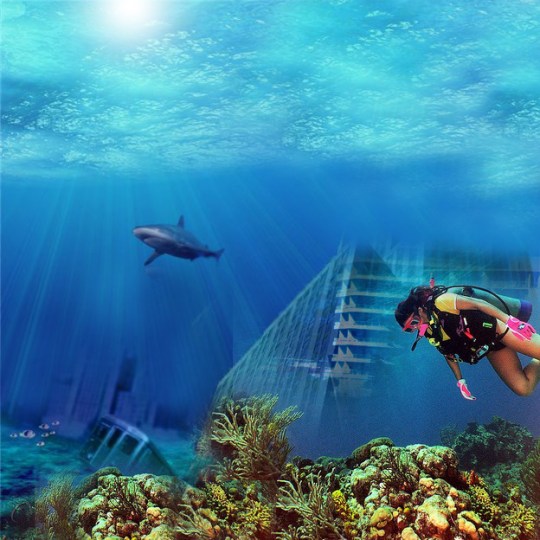
waz diving-on-the-flight-deckBenny slipped into the water, sorted out his line, then with a pike and a kick, set off down the concrete face of the wall as Fish began to turn the wheel on the air pump.

Like it’s highrise neighbours on this section of what had been Pittwater Road, The Flight Deck, once a landmark Collaroy beachside apartment tower, had been demolished down to the fifth floor when volcanism in the west Antarctic rift had destabilised the overlying ice. The sudden spike in atmospheric CO2 had put paid to any further debate about the climate when the Greenland and West Antarctic ice had let go completely and sea level rose nearly twenty metres in just a couple of decades.

When the high tide had regularly begun washing at the foundations of the buildings, they were abandoned and unceremoniously snapped off; the rubble pushed over the seaward side to create a breakwater to hold back the worst tidal and storm surges that now came regularly from early spring.

The government project had been part of a last ditch attempt to geo engineer a solution for Sydney to rising sea levels. It had never been finished. Over time, first the money, then the will began to run out. Eventually the collapse of the supporting supply chain meant that even the decision to cease work became moot. Several breakwaters had been achieved on some of the northern beaches but the huge sea gates across Sydney Heads were abandoned at a stage that left only two vast, complex, towering blocks of concrete anchored in the very sandstone of the heads themselves. No doubt they’d still be there when the sandstone had all been erroded back to sand.

Here on the landside of Collaroy Lagoon, the protected conditions meant the water was calm. Benny figured he might be able to find a way down into the old foyer.  He’d heard stories from other divers about the demolished and partially submerged tower. He wanted to salvage the chunky ceramic wings that had greeted tenants and their guests in the main lift lobby.

As he descended the water was wonderfully clear, almost as if it wasn’t there at all; as though it were perhaps a heavier kind of air that Benny was flying through. He felt perfectly at home underwater. Benny pulled up, taking a pause for a look around.

Visibility was almost unlimited. Through a large school of dashing Yellowfin juveniles he could see all the way to the bottom, mottled and moving in the dancing beams of submarine sunlight. He kicked off again and stroked his way deeper. A little way off he could make out the dissolving stumps of the Norfolk Pines that had surrounded the car park and just beyond that, showing through the accumulating bottom debris, he could make out the surface and line markings on Pittwater Road. Commuter traffic was low today, Benny mused darkly; and he thought again, as he often did, of those lost and wasted years Poppy had told him about. When people had endlessly argued about climate change but never seemed to do anything about it.

“Change is what happens in life.” Benny mentally confirmed as he swam deeper. “Trying to hold anything in place is a waste of energy.”

Well it had all changed now and Benny didn’t really mind. He’d read books, seen pictures, and sure enough it all looked wonderful, but it was all gone now. You can’t miss what you’ve never had. Better to “go with the flow”. It was an expression that Fish used. Benny liked it. It suited his feeling for life. It had an economy that Benny often thought profound.

This period of fast dynamic change was all Benny had ever known and he loved diving on the old beach side apartment blocks. Stripped of all their re-useable materials they had become high-rise concrete reefs, home to dazzling darting fish and the Bronze Reefers; a pretty little shark that had come inshore from the open ocean and downsized in response to rising sea temperatures. Benny had tried to befriend a pack on his last dive on the Flight Deck and received a nasty bight for his troubles. They were smaller than their forebears but no less aggressive. A few stitches had put that right and today he had Fish’s home brewed shark repellent. They wouldn’t want a second bight. The stuff smelled just awful.

Benny pulled up a few metres from the bottom. All around him in the dappled half-light swam fish of every conceivable colour. On the bottom crabs crawled and various brachiopods where beginning a tenuous tenancy on any clear piece of concrete; there was algae everywhere, sponges and soft corals, and the plant life was a riot of forms and functions. Perhaps this was the beginning of a new speciation as old habitats were abandoned and the littoral zone moved onshore. This new territory was the prize for those creatures that could make the best, most efficient use of the resources this fresh environment contained. “Precious”, Benny thought as he swam off toward the gloom of the old lobby.

They were the first of the new wave. It might take another million years before this incipient speciation replaced all the benthic and pelagic animals and plants that had been lost in the last few decades.  Reef corals were going well though. Benny had dived on the submerged spine of Long Reef and was surprised at how much new coral growth there was in these warming waters. Benny had seen pictures of The Great Barrier Reef, but it was long gone; dissolved away as ocean temperatures and acidity increased, leaving a sun bleached skeleton, battered and broken by the cyclones of summer and then finally submerged as the sea rose. These isolated little southerly coral colonies basking in the warm shallows promised a big future if they could just hang on and sea level didn’t rise or fall too much for a while.

Benny checked his watch. Ten minutes.

He gave his line the double tug that alerted Fish that he was entering the Flight Deck’s lobby. He switched on his lamp and immediately the dimensionless dark filled with colour and movement. Thrown into stark relief by the hard blue white light, brightly coloured fish danced with their black, hard-edged shadows, flitting across the walls of the submerged foyer.

Making sure not to snag his air line, Benny made his way into the black of the lift lobby, his lamp revealing the chunky silver and red ceramic wings he’d come for; a dream of flight, of the freedom of the air, now lost and forgotten to a new dark watery reality. In the bright lamplight the vitreous surface of the tiles showed little wear or corruption for their years under water; a quick thrill rilled through Benny’s body. The wings looked great, better than he had expected.

Very little light penetrated here so the wings were free of any sort of  life, excepting a pair of ghostly white Sea Pens. “Precious” popped again like a bubble in Benny’s consciousness. He’d leave that tile in place.

Taking out the mallet and chisel, he began to prise the tiles from their wall one by one and place them in the bubble bag. It was slow, hard work and required a certain determination, given that underwater everything needs twice the energy and yet still happens as if in slow motion. A blow which might fell an ox on land, impacted with little more than a soft thud in twenty metres of water. Benny soldiered on and at last got the final tile off the wall.

Dragging the heavy bag full of tiles behind him, he exited the foyer, fully inflated the bubble bag and watched as it and its cargo ascended through the dancing light to the sparkling surface. Doing his best porpoise impression Benny followed.

As he surfaced he took off his mask and disconnected the air-line, Fish wound it in. Benny tied a line onto the floating bubble and in two strokes he was against the wall again. The tide was on the ebb and the water level was lower than when he had begun his dive. He slipped his flippers and slung them and his mask up on the deck. Gripping the end of an exposed piece of rebar he pulled himself up onto the slab that had once been the floor of a luxury apartment on the fifth level of the iconic building; the ghosts of hostesses past, and their guests, enjoying the sun and sea view. Now carpetless bare concrete, the floor slab was just part of the walk along the top of the breakwater these days. Benny pulled the bubble bag in and Fish helped him haul it up onto the deck. Dumping his weights, Benny lay down on the hot concrete, enjoying the sun as it tightened his skin with a thin salt rime.

Having deflated the bubble bag and sorted the salvaged tiles out to dry in the sun, Fish came over to Danny with a loaf of rough bread and some cheese for their lunch. It was hard work down there and Benny was ravenous.

They sat together talking quietly and tearing lumps off the bread and cheese and washing it all down with a pull on Fish’s home-distilled vodka.

That ex-military canteen seemed part of Fish and sometimes he resorted to it too often. A lot of older people tended to drink too much, or smoke too much ganga, and Fish was older than Benny by many years. They were the best of friends though, “family” since Benny’s parents died.

His Mum and Dad had lost their lives like so many others, in the fires that had raged out from the ravines and ridges of the Hawkesbury and consumed much of the leafy northern bushland suburbs in 2094. It had been a bad year for fires all over the country. The drought had been too long already and the bush was just waiting for a spark. Much of Sydney’s suburbs, all those quarter acre blocks with tidy town house duplexes, burned, and burned and burned that dreadful summer.

They had been sad days; so much loss and devastation that many of the survivors, having already endured years of turmoil and change, simply walked away, abandoning the coastal city. For a while it was common to see the main roads over the mountains to the west filled with family groups, neighbours, even groups of strangers come together for the journey, their goods and possessions heaped on an array of human and animals drawn conveyances, trekking over The Blue Mountains, hoping the future they would build in the bush might spare them the unrelenting change going on all around Australia’s seaboard. Benny had been one of those survivors, just a little boy of six, alone, until Fish had finally found him again in a children’s transit camp.

Benny remembered Poppy years ago telling Fish and his Dad that this world, the one after global warming, would be a world non-one had ever seen before. Benny was just a little boy then. He didn’t really understand what Poppy meant. How could they have not seen the world they lived in? Now that Benny was himself a man, that figure of speech seemed to hold a greater truth.

Older people had lost their book of rules. It had been made irrelevant, redundant, and obsolete. The old ways were meaningless in the face of all the change; and Benny thought that these older people, the ones still invested in that old past paradigm, they were the ones for whom this new reality was the hardest to accept, to live in.

All the “just in time” convenience, the conspicuous consumption of the late industrial age with its attendant noise and pollution, violence and inequity, as well as all its triumph and grandeur, had been burned down, broken up and washed away in the global tumult that had begun in the Twenty Fifties with the failure of the northern monsoon. Millions had starved. By the Twenty Eighties wars over water and agricultural resources, famine and disease had taken their toll and the global human population had collapsed. It seemed for a time that the human hegemony over planet Earth might be in peril as first international trade and then even contact fell away.

In Australia the population had fallen from over 30 million to something below ten, though nobody had any real clue. There hadn’t been a census for decades.

It was all before Benny was born and he had no real idea how it had all played out. Fish was deeply reluctant to remember. He seemed, like many other older people, ashamed of the past and his role in its collapse. Benny had grown up in the shadow of that shame and the pain and dislocation left in the wake of the collapse of global society. He often thought that for the older people, the survivors, this world, today’s world must be a constant admonishment, a life sentence at hard labour in a world they had made.

Fish was old school and kept faith with that past by collecting examples of all its now pointless, broken and unworkable technologies.

“What for, mate?” Benny had asked when Fish had turned up late one afternoon brandishing a disabled leaf blower, once the pride of some long gone suburban gardener.

“It’s a petrol one. Even if you could get it to turn over, where are ya gonna get the petrol?”

“Ya never know mate. Ya jus’ never know.” was all Fish had said as he rubbed the grime off the Briggs and Stratton logo, a wistful and distant smile on his face.

“But mate, it’s never gonna be the same again; there’s no clock to wind back. It just doesn’t work that way.” Benny couldn’t understand why Fish just didn’t see it. He continued to cling to a truth that had almost completely lost its meaning.

Well Benny wasn’t fussed, and even lent a hand when Fish went out hunting for some piece of early twenty first century kit. Fish had a huge collection that filled the rank grass at the rear of his shack over the back of the lagoon. He had tonnes of it and Benny had been there one day when Fish had been offered good exchange for the metalliferous junk; as scrap to be melted and remade into more practical, more relevant goods; but Fish had turned the offer down, muttering about entropy.

He vowed it was to be his retirement project to get it all working again. Benny had to laugh at that. Fish must have been sixty, if he was a day. When was this fabled retirement to be? What was “retirement” anyway? People used to retire to do the things that Benny and Fish now knew as every day life. Growing a few vegetables and fruit trees, keeping chooks, a few pigs and a cow, fishing, and fossicking for bits and pieces of useful salvage that they could Exchange – like the wings; but he wouldn’t be exchanging them. They would look great above the new fireplace he had built over the summer.

Benny was happy with his life as a “Changer”. He liked the coast, enjoyed the maritime weather and he found the constant change exciting. He knew that it could be easier inland, on The Grid, but that had its obligations too. He was still young and for the time being he was happy to be his own man, responsible only to those around him, Fish and the small community that lived on the lagoon. He could always choose to go over the mountains and get Online, join the Rebuild, but from the reports that came back over to the coast with the occasional returnee, the Rebuild seemed to be going well without him. Maybe in time, maybe if he wanted a family, the decision didn’t seem important at the moment.

Fish was now sitting on the edge of the concrete scaling his catch, the airpump and its lines all packed up. Fish was obviously quietly proud of how well the pump had worked and it occurred to Benny that the device was another example of Fish’s endless mechanical ingenuity. Fish had gotten sick of having to turn the pump continuously, so he’d modified the thing to include a pressurised air tank and flow regulator that controlled the release of air to Benny on the bottom and, importantly for Fish, allowed him to spend his time fishing, with only the occasional turn on the pump to restore pressure in the tank,. It was what Fish did best; knock up a machine in the morning, go fishing in the afternoon; and today, while Benny was salvaging the wings, Fish had pulled a bounty, a veritable piscatorial cornucopia from the lagoon and all for the price of a little ingenuity, perseverance and some salvaged bits and pieces.

“Yep, it’s a different world alright,” said Benny.

“The fishin’s much better,” replied Fish as he hacked the head off a big Leatherjacket.

That wasn’t all that was better these days. People were better Benny figured. The gradual decline of global humanity had touched everyone alive and as a result co-operation, compassion and empathy had once again risen as the primary drivers in human interaction. People looked after one another better, seemed less concerned with having things, less focussed on themselves, and Benny was certain in his heart that this time, his time, was a better time, or at least could be a better time than either Fish or his Dad, or even Poppy had lived through.

Fish wiped the blood and muck of his scaling knife and slipped it back into the sheath on his belt. He wrapped the partially prepared fish and put them on the cart. Benny loaded the tiles and their gear and then, having harnessed up, they set off together at a trot for the land end of the breakwater, falling into the rhythm of one of Fish’s old army chants.

“I don’t know but I been told.

Once ‘pon a time use’ t’ be cold.

I look around, don’t see no snow.

Them old blokes just don’t know.”

They laughed easily together and brightened the pace as the westering sun and the gentle sea breezes promised another balmy evening. Tonight they’d feast on the fish that Fish had caught while Benny was diving on The Flight Deck.

Pig’s Arms Bumper Christmas Edition 2012 – Diving on The Flight Deck

25 Tuesday Dec 2012

Posted by Therese Trouserzoff in The Public Bar, The Sports Bar, Warrigal Mirriyuula

≈ 19 Comments

http://www.abc.net.au/stateline/nsw/content/2004/s1156736.htm

Diving on the Flight Deck

Diving on the Flight Deck

Story and Graphic by Warrigal Mirryuula

Benny sat down on the crumbling edge of the warm concrete, the water lapping at his flippered feet.  It was a beautiful sunny day again and visibility below should be fantastic.

He spat into his visor and rubbed the spit around the glass.  Ensuring the strap didn’t twist, he put the visor on and having connected the air supply, took a few deep breaths just to be sure. He checked his watch, 11:30AM, air gauge was hard up on “FULL”, he’d have about two hours.

“Hey “Fish”, ya right, tied off?”, Benny shouted over his shoulder, waiting just long enough to hear “Yeah, off ya go.” before slipping into the water, sorting out his line and then with a pike and a kick, set off down the concrete face of the wall.

Like it’s neighbours on this section of Pittwater Road, The Flight Deck too had been demolished down to the fifth floor when the Greenland and West Antarctic ice had let go and sea level rose several metres in just a few years.  Snapped off like old teeth and the rubble dropped over the seaward side to create a breakwater to hold back the worst tidal and storm surges that now came regularly in early spring.

Here on the land side, the lagoon like conditions meant the water was much calmer.  Benny figured he might be able to find a way down into the old foyer.  He’d heard stories about the now demolished and partially submerged tower. He wanted to salvage the great tiled wings that had greeted tenants and their guests in the main lift lobby.

As he’d suspected the water was clear and visibility was almost unlimited.  He could see all the way to the bottom. As he stroked and kicked his way deeper he thought of those lost and wasted years Poppy had told him about.  When people had endlessly argued about climate change but never seemed to do anything about it. “Change is what happens in life.” Benny mused.  Trying to hold anything in place was a waste of energy.  Well it had all changed now and Benny didn’t really mind.  It was all he’d ever known and he loved diving on the old beach side apartment blocks.  Stripped of all their re-useable materials they had become high-rise concrete reefs, home to dazzling darting fish and the little Bronze Reefers.  A pretty little shark that had come in from the open ocean and downsized in response to rising sea temperatures, Benny had tried to befriend a pack on his last dive on the Flight Deck and received a nasty bite for his troubles.  They were smaller than their forebears but no less aggressive.  A few stitches had put that right and today he had his mesh gloves. They weren’t going to get a second bite.

Benny pulled up a few metres from the bottom. All around him in the dappled half-light swam fish of every conceivable colour, various brachiopods where beginning a tenuous tenancy on any clear piece of concrete and the plant life was a riot of forms and functions.  Perhaps this was the beginning of a new speciation as niches were abandoned to those that could make better and more efficient use of the resources they contained.  “Precious”, Benny thought as he swam toward the gloom of the old lobby.  They were the first of the new wave.  It might take another million years before this incipient speciation replaced all the benthic animals and plants that had been lost in the last few decades.  Corals were going gangbusters though, as Benny’s dive on the submerged spine of Long Reef had revealed. The Great Barrier Reef, (Benny had only ever seen pictures), was long gone; a bleached skeleton battered and broken by the cyclones of summer. These southerly little isolated coral colonies basking in the warm shallows promised a big future if they could just hang on and sea level didn’t rise or fall too much for a while.

Benny checked his watch. Ten minutes.

He gave his line the double tug that alerted Fish that he was entering the Flight Deck’s lobby.  He switched on his lamp and immediately everything was thrown into stark relief by the hard blue white light. Brightly coloured fish danced with their black, hard edged shadows, flitting across the walls of the submerged foyer.  Making sure not to snag his line, Benny made his way into the black of the lift lobby, his lamp revealing the chunky sixties ceramic wings he’d come for; a dream of flight, of the freedom of the air, now lost and forgotten to a new watery reality.  In the bright lamp light the blue vitreous surface of the tiles showed little wear or corruption for their years under water.  As no light penetrated here, the wings were also free of pelagic life excepting a pair of ghostly white sea combs.  Benny would leave that tile in place.  “Precious” popped like a bubble in Benny’s consciousness again.

Taking out the mallet and chisel he began to prise the tiles from their wall one by one and place them in the bubble bag. It was slow, hard work and required a certain determination given that underwater everything happens as if in slow motion.  A blow which might fell an ox on land, impacted with little more than a soft thud in twenty metres of water.  Benny soldiered on and, with about ten minutes air left, exited the foyer, fully inflated the bubble bag and watched as it and its cargo ascended through the dancing light to the sparkling surface.  Doing his best dolphin impression Benny followed.

As he surfaced he saw Fish hauling the bubble bag in. Two strokes and Benny was against the wall again.  He slipped his flippers and slung them up onto the deck.  Gripping the end of an exposed piece of rebar he pulled himself up onto the slab that had once been the floor of a luxury apartment on the fifth floor of the iconic building; the ghosts of hostesses past and their guests enjoying the sea view.  The floor was now just part of the walk along the top of the breakwater. Getting out of his tanks Benny lay down on the hot concrete, enjoying the sun as it tightened his skin with a thin salt rime.

Having landed the bubble bag and sorted the salvaged tiles out to dry in the sun, Fish came over to Benny with a loaf of rough bread and some cheese for their lunch. Benny was ravenous.

They sat together quietly tearing lumps off the bread and cheese and yaffling it all down with a pull on Fish’s home brewed shine. That ex-military canteen seemed part of Fish and sometimes he resorted to it too often.  Fish was older than Benny by many years but they were the best of friends, almost family since Benny’s dad had died fighting the fires up in the mountains.  Benny remembered Poppy telling Fish and his dad that this world, the one after global warming, would be a world non-one had ever seen before. Benny was just a little boy then.  He didn’t really understand what Poppy meant.  Now that Benny was himself a man, that figure of speech seemed to hold a greater truth.  Kuhn had said something about scientists that used different paradigms literally living in different worlds; and Benny thought, not for the first time, that these older people, the ones still invested in that old past paradigm, they were the ones for whom this new reality was the hardest to accept.  Fish kept faith with that past by collecting examples of all its now pointless, broken and unworkable technologies.

“What for, mate? Benny had asked when Fish had turned up late one afternoon brandishing a disabled leaf blower that had once been the pride of some long gone suburban gardener.  “It’s a petrol one.  Even if you could get it to turn over, where are ya gonna get the petrol?”

“Ya never know mate.  Ya just never know.” was all Fish had said as he rubbed the grime off the Briggs and Stratton logo with something of a wistful and distant smile on his face.

Well Benny wasn’t fussed, and even lent a hand when Fish went out hunting for some piece of early twenty first century kit to add to the huge collection that now filled the rank grass at the rear of Fish’s shack over the back of the lagoon. He had tons of it and he vowed it was to be his retirement project to get it all working again. Benny had to laugh at that. Fish must be sixty if he’s a day.  When was this fabled retirement to be?  What was “retirement” anyway?  People used to retire to do the things that Benny thought of as every day life.  Growing a few veggies, keeping chooks, a few pigs and a cow. Fossicking for bits and pieces of useful salvage. Like the wings, which would look great above the new fireplace he had built over the summer.

“Yep, it’s a different world alright.” thought Benny; but he was certain in his heart that this time, his time, was a better time, or at least, could be a better time than either Fish and his Dad, or even Poppy had lived through.

Benny helped Fish load the tiles and the gear onto their cart and then, having harnessed up, they set of together at a trot for the land end of the breakwater. Tonight they’d feast on the fish that Fish had caught while Benny was diving on The Flight Deck.

Digital mischief also by …..    Warrigal Mirryuula

first published by the Pig’s Arms in July 2009, but cellared for your appreciation.

Fat and Happy

28 Wednesday Nov 2012

Posted by Therese Trouserzoff in Warrigal Mirriyuula

≈ 50 Comments

Tags

Beyond Blue, Depression, fat, FTO gene, genes, happy, Obesity

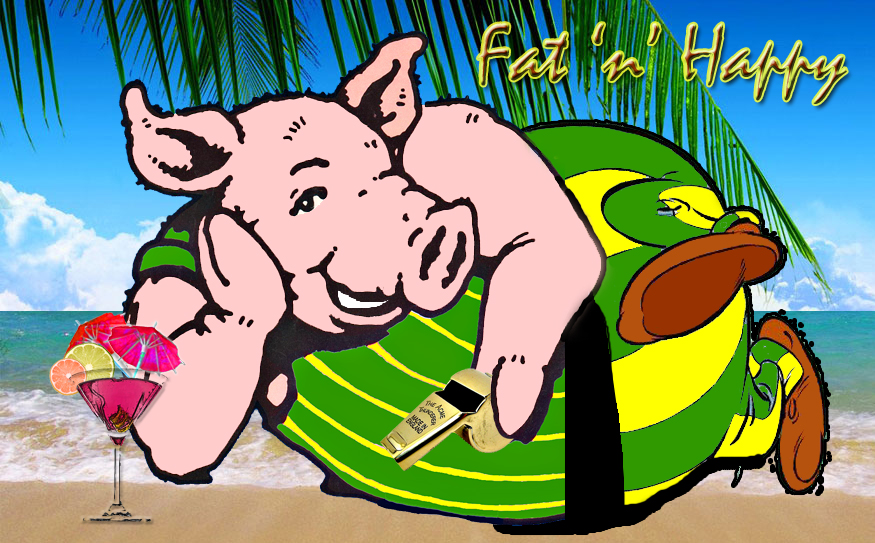
The Pig’s Arms Mascot, Mr Fat and Happy

Visual Mischief and Editing by Warrigal Mirriyuula

Fat And Happy

Genetic Challenge to the Common Perception of A Link Between Depression and Obesity

Ever wondered why some of your friends are happier than others? Ever wondered whether there might be a genetic basis for their happiness? Got any fat friends? Do they seem happier than your thin friends?

These and similar questions occurred to researchers at McMaster University in Canada. They’ve discovered genetic evidence relating to why some people are happier than others, and they found it in an unusual place; the fat mass and obesity-associated protein also known as alpha-ketoglutarate-dependent dioxygenase, or the FTO gene

This gene, which substantially controls and contributes to obesity, has the serendipitous effect of also contributing to an eight percent reduction in the risk of serious depression. So this “fat” gene is also a “happy” gene.

The research appears in a study recently published in the journal Molecular Psychiatry. The paper was produced by senior author David Meyre, associate professor in clinical epidemiology and biostatistics at the Michael G. DeGroote School of Medicine and a Canada Research Chair in genetic epidemiology; first author Dr. Zena Samaan, assistant professor, Department of Psychiatry and Behavioural Neurosciences, and members of the Population Health Research Institute of McMaster University and Hamilton Health Sciences.

“The difference of eight per cent is modest and it won’t make a big difference in the day-to-day care of patients,” Meyre said. “But, we have discovered a novel molecular basis for depression.”

Previous studies have shown a statistical correlation suggesting a forty percent genetic component to depression but so far there has been little success in actually identifying the genes involved. Researchers have been “surprisingly unsuccessful” in this search and produced no convincing evidence so far, Samaan said.

The McMaster discovery challenges the common perception of a reciprocal link between depression and obesity: That obese people become depressed because of their appearance and social and economic discrimination; depressed individuals may lead less active lifestyles and change eating habits to cope with depression that causes them to become obese.

“We set out to follow a different path, starting from the hypothesis that both depression and obesity deal with brain activity. We hypothesized that obesity genes may be linked to depression,” Meyre said.

The McMaster researchers investigated the genetic and psychiatric status of patients enrolled in the EpiDREAM study led by the Population Health Research Institute, which analysed 17,200 DNA samples from participants in 21 countries.

In these patients, they found the previously identified obesity predisposing genetic variant in FTO was associated with an eight per cent reduction in the risk of depression. They confirmed this finding by analysing the genetic status of patients in three additional large international studies.

Meyre said the fact the obesity gene’s same protective trend on depression was found in four different studies supports their conclusion. It is the “first evidence” that an FTO obesity gene is associated with protection against major depression, independent of its effect on body mass index, he said.

Now a word of caution from your correspondent; this discovery and its implications do not, I repeat DO NOT mean that if you’re unhappy it makes sense to get on the blower and order up ten family buckets of KFC. That will just make you fat.

Happy is a different state of mind altogether.

For help with depression contact “Beyondblue”:

 http://www.beyondblue.org.au/index.aspx?

Story Source: The above story is edited from materials provided by McMaster University

Journal Reference:

1. Z Samaan, S Anand, X Zhang, D Desai, M Rivera, G Pare, L Thabane, C Xie, H Gerstein, J C Engert, I Craig, S Cohen-Woods, V Mohan, R Diaz, X Wang, L Liu, T Corre, M Preisig, Z Kutalik, S Bergmann, P Vollenweider, G Waeber, S Yusuf, D Meyre. The protective effect of the obesity-associated rs9939609 A variant in fat mass- and obesity-associated gene on depression. Molecular Psychiatry, 2012; DOI: 10.1038/mp.2012.160

Disclaimer: This article is not intended to provide medical advice, diagnosis or treatment. Views expressed here are opinion only.

Keywords: McMaster University, D Meyre, Z Samaan, FTO gene, obesity and depression, happy gene

Bricks Over Broadway

15 Thursday Nov 2012

Posted by Therese Trouserzoff in Warrigal Mirriyuula

≈ 13 Comments

Tags

Architecture, Barangaroo, Brickfield Hill, bricks, Broadway, Gehry, Sydney, Ultimo, UTS

Triple Fronted Double Brick with Picture Window

Story by Warrigal Mirriyuula

You could say that Australians are known for their love of bricks and mortar. Indeed if we had a national building the way we have national birds, animals, flowers and the like, it would almost have to be a “triple fronted double brick with picture window”. We can argue about tiles or iron.

Indeed, the manifest for first fleet transport Scarborough sets out 5,000 bricks and molds to make more. No building tools though, which is an odd oversight on the part of the expedition quartermasters in England.

It was high summer when they landed. Stinking hot or thundering rain; a typical January. So no surprise that shortly after the Royal Marines barked at the convicts, to “get them tents up sharpish!”, Philip and the senior members of the colonial establishment noted that they better find a good source of brick making clay or the colony would be under canvas until such time as they’d determined which timbers where workable, or they’d imported a boatload of stone masons.

Given that even Philip would be under canvas, albeit a swanky prefab job costing well over a hundred quid back in blighty, and that this canvas didn’t fair all that well against the summer storms, there was something of an imperative in the search for suitable clay. Besides, building in brick would give this antipodean adventure a permanence it would otherwise lack.

The first suitable clay was found in what is now Sydney’s Chinatown and very soon several brick making enterprises where established in the area exploiting a resource that would eventually stretch from Elizabeth Street to Cockle Bay,  Liverpool Street to Campbell Street.

The boss brickmaker was a convict called James Bloodworth and he’s come down to us as the chap that first recognised the potential value of the many clay lenses in what was to become known as Brickfield Hill. This area was to remain the centre for clay quarrying and brickmaking until the 1840’s when the expansion of Sydney to the south meant that the almost exhausted resource was abandoned to the developing city and brick making moved to other areas, including St Peters where the remains of the brickmaking enterprise are still visible today.

1802 French Map of the Brickfield Hill Area

Note the two “Briqueteries” down by the stream. Also worth noting is the inclusion by the cartographer of the broken sandstone slope adjacent to the stream. These rough outcrops of weathered sandstone would have been common through out what is now the CBD. The road through the centre became George Street turning into Broadway. The area top centre is now the location of The Sydney Entertainment Centre.

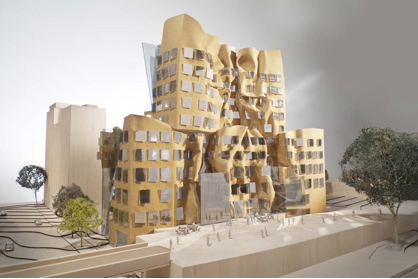
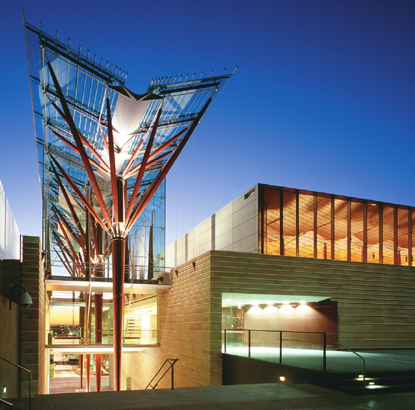
Snap forward two hundred years and we find bricks again being used to construct one of the most interesting buildings going up anywhere in the world, The Chau Chak Wing Building at The University of Technology, designed by Frank Gehry.

The Chau Chak Wing Building (East Elevation)

With a budget of over $150million this striking building will take bricklayers to the very limits of their talent and experience. That folded façade, inspired Gehry says by the folds in the drapery of classical Greek statues, will be entirely composed of laid bricks and the building will have a view of what was the first source of brickmaking clay in the early colony.

A few hundred metres uphill to the south, on Broadway, a vast collection of old brick buildings has been removed to make way for another startling building.

This has gone.

The Old Kent Brewery on Broadway

This is coming.

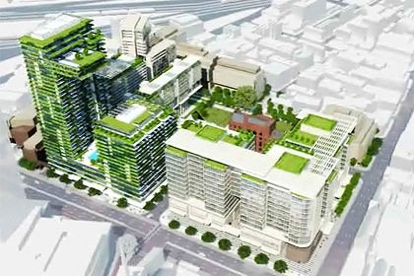
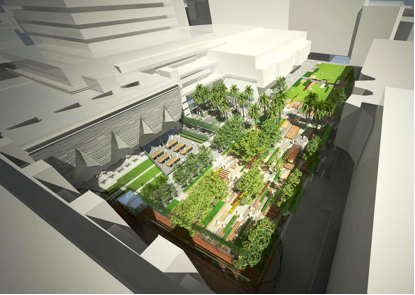
One. Central Park, Sydney – Visualisation of Entire Site 

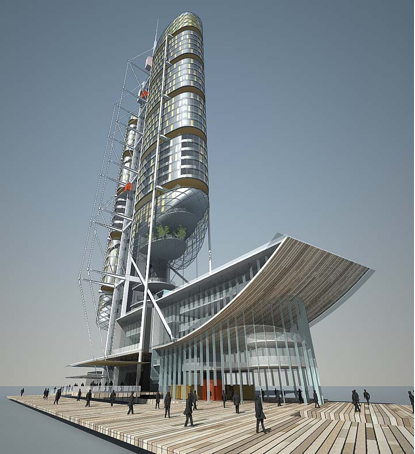
This building will give an entirely new meaning to “green building”.

One, Central Park showing cantilevered “Heliostat”.

Yes that is “a hovering cantilever” that will contain 24 very ritzy penthouses for the very wealthiest tenants.

What’s more, there’s this from the developers website:

“Here too, is a jettying heliostat – a beguiling assemblage of motorized mirrors that captures sunlight and directs its rays down onto Central Park’s gardens year round. After dark, the cantilevering structure (a favoured Nouvel architectural device) is the canvas for leading light artist Yann Kersalé’s LED art installation that carves a shimmering firework of movement in the sky and brings a new architectural shape to One Central Park by starlight.”

I kid you not. That’s what it says. I particularly like “jettying”, I assume from the verb “to jetty”.

There is so much innovation, so many new ideas, new techniques and technologies in this building that I still haven’t had a chance to go through it all. Suffice it to say that it will be one of the most energy efficient and sustainable residential buildings in Sydney; and for mine, the hanging gardens, which are an integral part of the water capture and reuse system, promise a building that will turn its back on concrete, glass and steel and present itself to Broadway as a giant vertical garden, a modern day Babylon on Broadway.

And across Broadway, UTS isn’t sitting on its hands either.

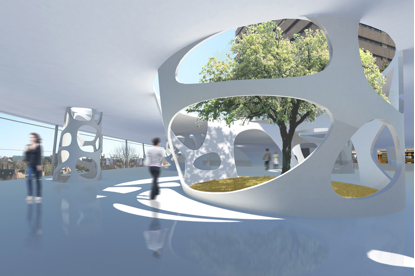
The UTS tower* and podium are also slated for change.

UTS podium development visualisation. exterior above, interior below

At the moment only the podium is in design phase. The tower redesign will probably have to wait for braver souls to green light Chris Bosse’s radical reskinning of the UTS tower, perhaps the most depressing and intimidating building ever devised for the toture of students. (Did you know that the original design brief for the tower demanded that there be no spaces where students could congregate in large numbers. It was 1968 and the French students where tearing up the cobblestones. Local educators didn’t want to take the chance.)

An active skin from Chris Bosse of LAVA

The skin generates electricity, captures water, moderates insolation and most importantly, entirely covers that grotesque ‘turd’ of a tower.

Talk about “building an education revolution; UTS will spend over a billion dollars in the next few years building in the Ultimo campus precinct, including the upgrade of open spaces where students will be encouraged to congregate.

Alumni Green UTS visualisation.

 Somehow this bosky park doesn’t look the part as the location for a student revolution.

Adjacent to the Green will be the new Science Building designed by Durbach Block Jaggers and BVN Architecture.

And if that isn’t exciting enough for you, just down Broadway work is well progressed on the ITE Building which will house what UTS hopes will become an international centre for excellence in Information Technology and Engineering.

ITE Building on Broadway

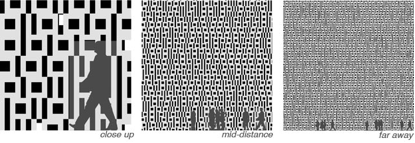
This “5 Star” green rated building will also have an active skin which the designers believe will deliver a 10 to 15% operational energy saving on its own. Oh, did I mention that the skin is laser cut with this really cool “binary” pattern? It is!

The “Binary” pattern of the ITE skin.

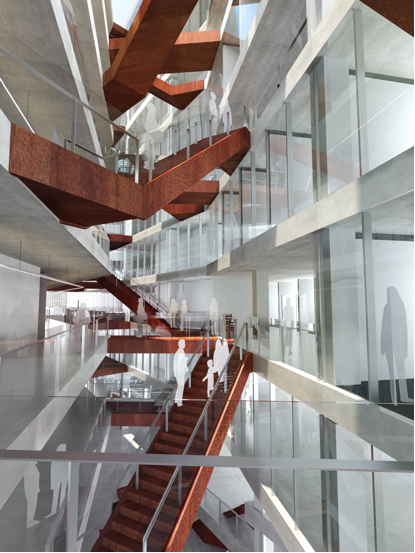
The interior is just as mind blowing.

Interior visualisation, ITE Building at UTS.

Puts me in mind of that other great educational institution, Hogwarts, and all those moving stair cases.

There’s new student housing and a host of other building going on at UTS all slated for occupation between the end of this year and 2015. This program and others funded both publicly and privately will turn the top of Broadway into what one architectural pundit called, (Hyperbole Warning!), a “mecca”, a kind of stations of the cross for architectural innovation nerds.

It may not reach such exaltation but it won’t be for lack of trying.

If we add to the already mentioned building sites, the Ultimo Pedestrian Network or UPN, (You must watch the embedded video here, http://www.aspect.net.au/wps/wcm/connect/web/w/spotlight/featured+projects/upn) , which will join the UTS campus with the Gehry building and points north to the Powerhouse Museum, including all the plans the state government has for the Entertainment Centre, The Exhibition Centre and Darling Harbour proper, and then throw in Barangaroo you begin to see a huge urban area in the throws of vigorous reinvention.

Barangaroo South Hotel Concept

 Unfortunately we won’t see this one. It’s already been shelved in favour of “The Packer Plan”. I guess that’s a plan for Jamie’s retirement fund, or O’Farrell’s perhaps.

By 2020 there will be no doubt but that UTS will have stamped its presence all over the top end of Broadway and in time this will lead to redevelopment of the entire area as clinics, labs, and associated businesses snap up remaining real estate to get themselves closer to the “glow” of the campus.

High density, low to medium rise apartments will become more common and the rows of remaining terraces will become gentrified, their values exploding as academics, staff and students look for somewhere nearby to live.

No longer the suburb that dare not say its name, Ultimo will have become hip, progressive, with innovation at every turn. The “shock of the new” will have become commonplace as Ultimoans wonder why the rest of Sydney are still catching up to the twenty first century

But in amongst all this twenty first century building will remain some of the most beautiful brick buildings in Sydney, other brick piles will be adaptively reused, while others are demolished and their bricks recycled.

The humble brick was there at the beginning of the colony and is still with us at the cutting edge of architecture. You could say that the brick has been “a brick” down the years and there’s no end in sight to its utility.

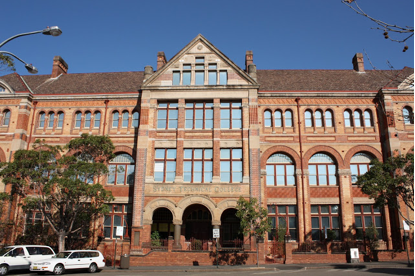
Sydney Technical College, Ultimo.

Bricks as a proud and permanent statement of the value of learning.

The Quay Apartments, Chinatown.

Bricks as valued heritage adaptively reused as anchoring feature of these new upscale apartments. That brick façade was once The Sydney No. 2 Poultry Market.

Bricks and lace, Ultimo.

The ubiquitous terrace survives into another century.

http://penultimo.tumblr.com/  This site is wonderful and rewards a wander through its many pages, including pictures of nearly every brick building in Ultimo, old and new, ugly and beautiful.

* Editor’s note:  I so wanted to describe the current UTS Tower – wherein I once did a course on Assembler Programming – as “Plug Ugly”, but I didn’t think the term was strong enough.  Nor was “nuclear-proof”.

Colleges Of The Damned

05 Monday Nov 2012

Posted by Therese Trouserzoff in Warrigal Mirriyuula

≈ 22 Comments

Tags

initiation, misogyny, murder, rape, St John's, Sydney Unibversity Colleges

St John’s College, University of Sydney

Story by Warrigal Mirriyuula

St John’s College is sinking in sin.

Sydney University is Australia’s first and therefore oldest university, having been founded in 1850. In the years that followed various residential colleges were established, usually under the auspices of religious organisations and committees of the faithful, to provide term accommodation for the men, and for a long time they were overwhelmingly men, attending the University.

St Paul’s 1856  St John’s 1858 St Andrew’s 1867 Women’s College 1894 Wesley 1917 Sancta Sophia 1925

These colleges today are fond of their traditions and like colleges the world over there are many traditions that have survived from the very earliest days of college life, and each year as the calendar rolls around they are trotted out to the general amusement of students and the public. Many of these traditions involve dressing up, or down, as the case may be; throwing things, usually harmless and contributory to general mirth and merriment. There is quite often a certain amount of petty theft, criminal damage and other transgressions including being drunk and disorderly. Needless to say that many of these pranks, antics and muckings about include the consumption of copious quantities of alcohol, and more lately, drugs of various kinds. All of which is routinely forgiven in the spirit of good clean, drunken fun.

It’s hardly surprising when you think about it. Here are hundreds of kids, still children really, who none the less are feeling their oats for the first time, let off the leash yet still somehow protected, not really in the great world just yet. It’s a kind of socio-cultural neoteny. They’re grown to maturity but not yet really adults. If the truth be told, the colleges are not constitutionally set up to encourage students to grow into and accept their inevitable adulthood. The colleges would rather they stayed somewhat immature, cosseted, more readily accepting of the college rules and regulations, not to mention traditions.

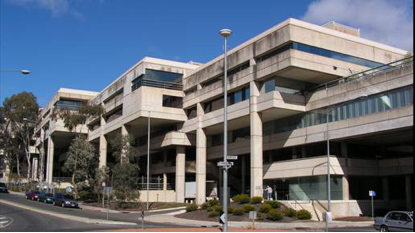
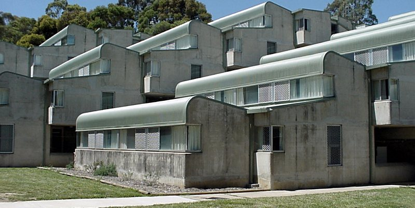
I myself became an initiate to some of these traditions when I unsuspectingly chose Sydney University over The ANU and accepted an offer to attend St Paul’s College on the Newtown side of the University campus. I made my choice on the basis of architecture. The ANU college was a concrete box while St Paul’s had intimations of a deeper history and a bijou collection of colonial neo gothic architecture that, surrounded by gardens and bed plantings, remains charming today. Doc Evatt was one alumnus I was particularly proud to be following in the footsteps of.

Appearances however can be deceiving. Within a few weeks of my settling in at St Paul’s I was initiated as a college “man” in one of the most childish pranks I’ve ever been the target of. The overture to this puerile tour de force was a hammering on my door at about three in the morning. Half asleep and suspecting murder, or a fire at least, I opened the door in my underwear, to be inundated with several gallons of iced water. “Blackbagged” and bound hand and foot, I was dragged away to the showers where I was interrogated for about half an hour while more cold water was dumped on me. A kind of early, unpractised waterboarding.

The main questions seemed to be where my father had been educated, what he did for a living and which school I had attended. My answers didn’t impress them much, being composed mainly of very earthy assertions about their various provenances, their tenuous connection with accepted social norms. My sporting prowess seemed important to them though. Sadly I hadn’t much to speak of in that area either. I was incensed, in a rage, and flung myself and abuse at them as often as I could; which was essentially in the moments between buckets of water being tossed at my face. There was a certain amount of towel flicking, pushing, shoving and holding me in difficult positions, all the while I’m having difficulty breathing inside the bag.

They must have got bored with me. Who knows why, perhaps it was just time to move on to the next unsuspecting fresher. Just as quickly as they had taken me, they left me shivering on the tiled floor. I never found out who they were.

I managed to get myself untied, had the longest hot shower and thought to go back to bed. While my interrogation had been proceeding others had completely trashed my room. No real damage, just a huge mess. I didn’t report the incident because by the end of breakfast the next morning it had been made clear to me that to do so would be viewed as “unmanly”, “unsporting”, not a good start to my college life.

In the next few months I got used to excessive drinking leading to excessive behaviour. There were nights when my Lower Arnott Wing corridor was awash with beer and broken glass. On one occasion a medical student from Smithfield down with the flu and needing the loo, stumbled from his room into the darkened corridor, slipped and fell into the broken glass. Someone had removed the fuse for the lights. He needed several stitches to his hands and backside.

I learned there had been a rape on the Paul’s oval the year before after a particularly heavy post Rawson Cup do. I saw naked young women being chased through the college late at night on more than one occasion. What was that about?

My favourite Paul’s story though is the one about the son of a senior politician. This fellow had been resident at the college for many years, a perennial student. He had good rooms in the old part of the college, all neo gothic arches, leadlight and worked stone. He was eccentric, connected and a very bright guy, but he had never grown up.

He had a collection of militaria including a cavalry officers dress sabre. One night a fresher on phone duty in the Blackett wing vestibule rushed to the eccentric’s rooms with a message. I was not there so cannot say what transpired next, and there are various versions, but somehow the eccentric took it into his head to thrust the sabre through the door timber and into the abdomen of the fresher. It was a grievous wound and took a long time to heal. Long enough for the college, the eccentric and his family, the victim and his family, plus a bevy of lawyers to work out just how much money it would take to keep the whole thing schtum.

They worked it out. Not a word ever appeared to my recollection and the eccentric stayed on at Paul’s for a few years more.

Not me. I was out of there at the end of first term. Moved into a little terrace on Wilson St. Got to sleep all night through.

That was years ago now and my departure apparently did nothing to moderate the dysfunctional culture at St Paul’s. In 2009 some college “men” decided they’d post a Facebook page encouraging and inciting rape. http://www.crikey.com.au/topic/st-pauls-college/  And there are a million stories, as they say.

But nothing at Paul’s then or now looks as wrong as the shenanigans going on at St John’s College lately, http://www.smh.com.au/nsw/culture-of-anarchy-at-a-college-in-crisis-20121103-28qvh.html

At Paul’s it really was a minority who engaged in this kind of thing and they were for the most part ex students of the GPS schools; a thoroughly bad lot in my opinion. At John’s however, it looks like the bad blood has infected the entire college.

Big Ears The Mad Monk is a popular alumnus of John’s and appears regularly at college functions. It’s not too long a bow to suggest that his style, his bad behaviour, is seen by The Johnsmen, for that’s what they call themselves, as both license and encouragement in their despicable world view. That college women would acquiesce in these abhorrent displays of misogyny and thuggish behaviour just beggars the mind. For young women to so want to be accepted into a group that gives them the epithet “JETS”, (Just Excuse The Slag), seems to suggest something wrong with the self esteem young catholic women acquire in their schooling, not to mention the almost total insensitivity bred into the boys involved. For as I said before, that’s what they are. Boys and girls playing at being adults in an environment that encourages their sense of exceptional entitlement, that biases and irreversibly corrupts their sexual politics. It’s not just current students that are involved. At both John’s and Paul’s ex alumni are implicated, proving that the damage done seems to last well beyond college. These people are otherwise respected adult members of society.

Try and find a copy of the wonderful Lindsay Anderson movie “if” or perhaps Peter Medak’s “The Ruling Class” for insights here. Themes in “Lord Of The Flies” also spring to mind.

The problem of student behaviour at John’s is like an advanced and deadly cancer. Ignored and undiagnosed for far too long, it is now systematically taking over the body it has invaded and there can be only one solution. Cut it out and hope that what’s left of the body can survive.

I somehow think that John’s won’t have the stomach for the kind of radical but life saving surgery the college needs and the idea that Pell will provide any meaningful answer just sounds silly, doesn’t it? After all he’s done so well with priestly pederasty, and his commitment to women’s issues is widely known.

A Whited Sepulchre

01 Thursday Nov 2012

Posted by Therese Trouserzoff in Warrigal Mirriyuula

≈ 25 Comments

Tags

Architecture, ASIO Headquarters, Australian Academy of Science, Curtin School Of Medical Research, Heart Of Darkness, James Weirick, John Andrews, Joseph Conrad, Lyons Architects, Richard Francis-Jones, Scientia Building, The Cameron Offices, Walter Burley-Griffin, Whited Sepulchre

Scientia Building UNSW

Story  by Warrigal Mirriyuula

A few years ago I attended an architecture conference at UNSW. It was being held in “The Scientia Building”, a striking building from Richard Francis-Jones that manages to appear much bigger than it is in both concrete and abstract ways.

But that’s not what I want to talk about, as interesting as that building is and the conference was.

What I want to tug on your coat about is some reflections on some comments made at that conference by James Weirick. The venerable James is a world authority on Walter Burley-Griffin and his remarkable wife Marion Mahony

He said that Canberra was a failed vision if WBG’s original plan was the benchmark. He regretted this, saying that Canberra had “become a whited sepulchre”, that it was now “a place where ideas came to die”.  A resonating metaphor for fans of Conrad’s “The Heart Of Darkness” and a cynical analysis certainly, but they were the Howard years after all.

Weirick’s comment was in the context of a critique of the then current level of “planning” in Canberra and what he suggested was a deleterious impact on the quality of the built environment in our nation’s capital. The comment hardly raised an eyebrow. Indeed I’d say that most there that day probably agreed. But then you’ll always get takers when you offer a chance for one architect to critique the work of another.

So if no less august a body than the membership of the Royal Australian Institute of Architects is of the consensus that Canberra is a failed attempt at expressing nationhood then who am I to say they are wrong.

Then, a few months ago, the actor Guy Pearce weighed in to the debate on Craig Ferguson’s Late Show, suggesting that there was “a lot wrong with Canberra.” Well of course he was pilloried by the opinionati back home, and the local blog responses soon turned up to the usual “hysterical PLUS” setting with Pearce being slagged off left, right and centre. It wasn’t long before his freely offered opinion was being described as, (ssshiivverr), unAustralian. Pearce spent several days apologising.

And in that last I find something deeply disturbing.

Why shouldn’t Pearce say what’s on his mind with respect to our nation’s capital?

Well it may be all of a piece with the other major problem we have in Canberra. The place is swarming with, absolutely pullulating with politicians and their attendent creatures. They infest the restaurants, besmirch the footpaths and stuff the hotels, not to mention worrying the sex workers something fierce. And to what end? Good government? (Pshaw!!!)

It seems that at the same time as our ability to critique the actions and policies of the political caste and their unholy coven of sectionally interested campaign contributors, media advisers, spin doctors and lobbyists is being comprehensively compromised by the actions of human dross like Murdoch, and even our much vaunted national broadcaster has decided, for reasons never actually placed in the public domain, that partisan stupidity sells better than considered and probative comment; we are being asked to constrain our personal opinions as to whether or not Canberra is actually a city of any note at all.

Is it unAustralian to have an opinion that isn’t set in stone by one or some combination of media proprietors? If we don’t gulp down the constantly regurgitated cant of the political parties, are we necessarily plotting the downfall of Australia? What is wrong with having a negative opinion towards the place where those elected to the great privilege of representing their electorates go to avoid any responsibility to those constituents? Why is it that once in Canberra, policy and promises can be massaged almost into non-existence by the weasel speaking words of the “inner ring”?

Canberra bashing has been a national sport since the day they announced the willow choked, swampy valley of the Molongolo would one day be a bright and shining beacon of antipodean democracy, let alone a showcase of the new Australian vernacular architecture. In it’s more than 100 years of existence Canberra has managed to miss both those trains, again and again and again.

So here’s another piece of Canberra bashing, proudly presented in the “unAustralian” tone of the deeply disappointed and disillusioned.

The place is little more than a dull dormitory for public servants and political hacks. Since WBG’s departure the built environment of our national capital has become a hotch potch of bad planning, incompetent competition winners and half arsed attempts at “saying something” architecturally. Which is not to say that that there aren’t gems to be found. They’re just far fewer and farther between that the Canberra Tourist Bureau would have you believe.

Seriously, if it weren’t for both Parliament Houses, The National Gallery and Library, and the exciting and sometimes bizarre National Museum, which are for the most part worthy examples of the architecture of their time, you wouldn’t be caught dead in the place. I also particularly like the Carillon, and I suppose if I’m honest, there are other examples of interesting architecture dotted here and there, but few of them rise to the level of type specimens for an Australian vernacular architecture.

Why did the promise of such gems as the 1950’s Academy of Science fail to materialise? This Chesley Bonestell-esque futurist dream was the first building anywhere I ever noticed for itself. At that time, if I thought about it at all, I would have seen an exciting and innovative future for both Canberra and Australia.

Australian Academy of Science

So what’s up with the built environment in Canberra?

As an example of the twist Canberra is in architecturally I offer the brouhaha over the demolition of a building in Belconnen. You’d have thought someone had suggested tearing down St Pauls Cathedral.

Instead of letting the ugly decaying pile be pulled down, the cognoscenti, including the RAIA it has to be said, got all hot under the collar over plans to deconstruct the Cameron Offices. A 1970’s study in brutalist beauty, if such expression isn’t actually an oxymoron.

The Cameron Offices, Belconnen

In its last days before the ball and chain, when hysteria was the common modality on both sides of the argument, the building had come through time to look like nothing so much as one of those commercial shop/factory unit developments in say Mascot. The sort of place you might turn up at to buy and fit a car music system, or buy some cane furniture.

It may have been considered ground breaking when John Andrews designed the place nearly forty years ago, indeed several commentators said so at the time; but riddled with concrete cancer and described by those that had to work there as “cold and unfriendly”, it was just like a sepulchre; a concrete grey, rust stained sepulchre; and housing, as it did, the offices of The Prime Minister and Cabinet it richly earned my own nomination as one of the many whited sepulchres that dot the Canberra landscape.

These buildings represent the graves of good architecture. Strangled in the planning process and boxed by constant political interference, these dead monuments to committee based planning dot the capital landscape like great beached whales, putrefying in the hot Australian sun. Many are post Corbusier brutalist exercises in concrete display but lack Corbusier’s design finesse.

The education sector has had to bear a disproportionate amount of this stuff. Look at the Canberra School of Music, which seems somehow to entirely dispel the notion of harmony, unless Daryl Jackson and Evan Walker’s design was meant to look like an intimidating industrial laundry.

The Canberra School of Music Building

The University of Canberra’s student accom is much the same. John Andrews again managed to make “home” look like an industrial pig farm.

UC Student Accommodation

Sorry John; I loved it then, and I still find it fascinating, but these days I just can’t see humans living there.

Brutalism is going through a reassessment at the moment. Many still like it, some even have a kind of nostalgia for these buildings, and I don’t want to suggest that the architects I’ve named aren’t up to snuff. This is all just my opinion, and everyone’s got one of those.

But there may be change in the wind. At last there may be some quality in the built environment of the educational sector in Canberra.

With the opening of the John Curtin School of Medical Research at ANU, we see a striking and adventurous design by Lyons architects that somehow survived the planning process.

John Curtin School Of Medical Research

However, lest you think this “spring” heralds better days ahead for building in Canberra, I offer the cautionary tale of another building that appeared to have gotten over the planning hurdles only to stagger after construction began. ASIO’s new headquarters, currently being built down by Lake Burley-Griffin, is another “Francis-Jones Morehen Thorp” design. (Richard Francis-Jones really packs an awful lot of design punch for a little bloke!)

New ASIO Headquarters

There’s been nothing but trouble since they turned the first sod. If it’s not budget problems it’s trespassing teenagers seriously injuring themselves “site-seeing”, or glass falling off the facade endangering workers, or perhaps more embarrassing for Richard and his associates, Romaldo Giurgola, formerly part of the practice that became Francis-Jones Morehen Thorp, has come out strongly against his former partners and the design of the building citing no less an authority than Burley-Griffin himself. Like I said, you’ll always get takers for one architect to critique another.

“Canberra residents and the Burley Griffin society believe the building will be a, “barbed wire city in the heart of Canberra”. ACT senator Gary Humphries is also against the design: “I just can’t see that this is going to be compatible with the concept of what was designed by Burley Griffin and which has recently been reinforced with the Griffith Legacy concept which has been affirmed by the National Capital Authority.”

On his website , Humphries calls for a two storey reduction as the building is over-sized for its context. “I am deeply concerned that the size of the building will interrupt the vista from the War Memorial through to the Parliamentary Triangle… It would create a wall-like effect along Constitution Avenue, separating the area to its north from the lake precinct.”

The honourable Senator from the ACT may have a point but you’d think things like overall height would have been worked out already, but then this is Canberra and you never have to go far to find a shitfight.

So I guess while the powers that be continue to wrangle, we can all continue our love/hate relationship with Canberra, its politicians and its built environment for some time to come. I wonder what James Weirick thinks of this latest design brouhaha. Perhaps he can’t say for fear that ASIO might come knocking.

Keywords: Architecture, Walter Burley-Griffin, Scientia Building, Richard Francis-Jones, James Weirick, John Andrews, Joseph Conrad, Heart Of Darkness, Whited Sepulchre, The Cameron Offices, Australian Academy of Science, ASIO Headquarters, Curtin School Of Medical Research, Lyons Architects.

A Crumbling Kingdom (Alan Jonesss)

02 Tuesday Oct 2012

Posted by gerard oosterman in Politics in the Pig's Arms, Warrigal Mirriyuula

≈ 18 Comments

Tags

Alan Jones

Digital Mischief by Warrigal Mirriyuula

Kingdom crumbling as Jones loses fear factor

  • by: David Penberthy
  • From:The Daily Telegraph
  • October 02, 201212:00AM

THE motto by which Alan Jones lives his life is unravelling. The qualities he trades on – blind loyalty, fear and commercial power – no longer function.

Towards the end of his life he is flailing about like some deposed Eastern European dictator, demanding respect and fairness when he has displayed little, claiming victimhood when he has engaged in an act of victimisation which even by his standards sets an abysmal new low.

I have had a few private dinners over the years with the Sydney broadcaster. It is a rite of passage when you edit a newspaper in Sydney, as I did, to pay homage to the man and bask dutifully in his perceived greatness.

I’ve been on his show several times and 2GB hundreds of times. I’ve been to his apartment in the “Toaster” building, where his servant prepared chicken and celery sandwiches with the crusts cut off, and served Irish Breakfast Tea in the finest Wedgewood china.

Jones’ mantra in his personal dealings is “pick and stick”. It is both a promise and a demand of unwavering loyalty, by which those in his circle pledge to stick by each other through controversy and scandal. Jones is an inveterate letter writer and will put pen to paper to upbraid those he perceives as disloyal or disrespectful. He would probably regard a column such as this as fitting that category. So be it.

His comments about Julia Gillard’s late father were a disgrace. His subsequent apology was pathetic. Anyone with a pinch of decency should now be prepared to man up, as Jones laughably declared at the start of Sunday’s press conference, and tell Jones where he can stick his pick and stick.

In order to understand Jones you first have to recognise that he is defined by a deep-seated siege mentality, where life is regarded as a permanent ideological war and those around him are drawn up on the lists he assembles in his mind of friends and foes. The contradiction of Jones, who has no real personal life at all, is that when he is not broadcasting he busies himself with generous acts for put-upon individuals and families, doing unpaid charity work, writing letters to ministers on behalf of people who are illiterate or uneducated.

This kindly work fuels his sense of indignation when he is at the centre of scandal.

What he has never been able to recognise is that the kindly nature of his private work is often eclipsed by the sometimes desperately unkind or unpleasant nature of his public conduct.

At every controversial juncture in his career Jones has acted as if he is the victim of a conspiracy.

In his public life Jones instinctively regards any attack on him not as the result of his own wrongdoing, but the small-minded hatefulness of his persecutors.

This was the case with the cash-for-comment episode, a dictionary definition scandal, in which Jones and 2GB were paid large sums of money by the Australian Banking Association to go easy on the major banks. It is hard to imagine a greater betrayal of the people who live on what Jones and his former stablemate John Laws liked to call “Struggle Street” than parroting praise for the banks to a working-class and pensioner audience.

Yet Jones never grasped the moral bankruptcy of his conduct, regarding his pursuit by ACMA as an appalling example of the tall poppy syndrome.

This typical sense of persecution underscored Sunday’s press conference, at which Jones breezed over his apology to launch a fresh attack on the government of Ju-Liar, as he likes to call her.

Laughably, he took aim at News Limited for having the audacity to report his speech – as if it is the media’s job to ignore one of the most powerful people in Australia make the most appalling remarks in front of our next generation of political leaders and current members of the parliament.

As a result of the Gillard remarks, Jones has found himself with few friends. Many of those who are in the pick-and-stick club, who in the past would habitually declare that their friend had been fitted up or taken out of context, have unequivocally declared his comments a disgrace.

Jones has historically cowed politicians into appearing on his show. While Jones is Australia’s archest conservative he does not as a matter of course go after all Labor MPs. Some, such as Bob Carr when he was NSW premier, managed to get an often favourable run by paying homage to Jones and stroking his ego.

Conversely, others were bludgeoned into appearing after sustained on-air attacks, only to relent for an interview where the shellacking was even worse.

It has now dawned on politicians of the centre and the left that they should no longer worry about their Jones strategy. It has taken a long time for this penny to drop. The reality has always been that Jones’ audience does not comprise many swinging voters. He is preaching to the angry and the converted, many of whom keep listening to 2GB because they are too frail to get off the sofa to change the dial.

As the Kyle Sandilands sagas have demonstrated, the only currency which radio networks understand is the advertising dollar, and it is here where the ramifications from his remarks could be most acute.

Six big advertisers have confirmed they will not advertise on his show, some have said they will boycott the entire network, and more will surely follow.

Jones, who is fond of talking of himself in the third person, lashed out at the Twitter campaign for an advertising boycott, and talked about how horrible it was (and it is) that some have wished his cancer to return.

“This is the best way to neutralise and silence Alan Jones. They use this as an excuse to silence Alan Jones,” he said.

It’s almost as bad as saying a woman’s father died of shame over their daughter. This is karma writ large. Alan Jones is getting everything he deserves.

A MATCH.COM APOLOGY

27 Friday Jul 2012

Posted by Therese Trouserzoff in Neville Cole, Warrigal Mirriyuula

≈ 6 Comments

Tags

Match.com


Poem by Neville Cole, Digital Wizardry by Warrigal Mirriyuula

I’m sorry for lying about my height

I know adding three inches was simply not right

I’m sorry for saying that I was divorced

I’ll be signing the papers in due course

I’m sorry for pretending I was much younger

Posting all those old photos was a major blunder

I’m sorry I no longer have that much hair

But honestly most women don’t seem to care

And maybe I don’t exercise 5 days a week

I hardly would say I’m a big, fat freak

Still, I hate to imagine what you must think of me

Don’t you see my profile is what I would like to be?

All I did was try to be someone I knew

Who would stand a chance with a girl like you

Having said that, are you really just a social drinker

Who says “no way” to smoking and is a spiritual thinker?

Because I couldn’t help notice how you slammed down the booze

And slurred “get me another” as you kicked off your shoes

In retrospect it wasn’t the perfect first date

Kissing your feet at the bar was a big mistake

I’ve sure learned my lesson. It won’t happen again

Is there even a chance you could still be a friend?

From now on I will follow all the old dating courtesies

Oh, and I’m sorry about giving you genital herpes.

← Older posts
Newer posts →

Patrons Posts

  • The Question-Crafting Compass November 15, 2025
  • The Dreaming Machine November 10, 2025
  • Reflections on Intelligence — Human and Artificial October 26, 2025
  • Ikigai III May 17, 2025
  • Ikugai May 9, 2025
  • Coalition to Rebate All the Daylight Saved April 1, 2025
  • Out of the Mouths of Superheroes March 15, 2025
  • Post COVID Cooking February 7, 2025
  • What’s Goin’ On ? January 21, 2025

We've been hit...

  • 733,062 times

Blogroll

  • atomou the Greek philosopher and the ancient Greek stage
  • Crikey
  • Gerard & Helvi Oosterman
  • Hello World Walk along with Me
  • Hungs World
  • Lehan Winifred Ramsay
  • Neville Cole
  • Politics 101
  • Sandshoe
  • the political sword

We've been hit...

  • 733,062 times

Patrons Posts

  • The Question-Crafting Compass November 15, 2025
  • The Dreaming Machine November 10, 2025
  • Reflections on Intelligence — Human and Artificial October 26, 2025
  • Ikigai III May 17, 2025
  • Ikugai May 9, 2025
  • Coalition to Rebate All the Daylight Saved April 1, 2025
  • Out of the Mouths of Superheroes March 15, 2025
  • Post COVID Cooking February 7, 2025
  • What’s Goin’ On ? January 21, 2025

Enter your email address to subscribe to this blog and receive notifications of new posts by email.

Join 374 other subscribers

Rooms athe Pigs Arms

The Old Stuff

  • RSS - Posts
  • RSS - Comments

Enter your email address to subscribe to this blog and receive notifications of new posts by email.

Join 374 other subscribers

Archives

Website Powered by WordPress.com.

  • Subscribe Subscribed
    • Window Dresser's Arms, Pig & Whistle
    • Join 280 other subscribers
    • Already have a WordPress.com account? Log in now.
    • Window Dresser's Arms, Pig & Whistle
    • Subscribe Subscribed
    • Sign up
    • Log in
    • Report this content
    • View site in Reader
    • Manage subscriptions
    • Collapse this bar
 

Loading Comments...