• The Pig’s Arms
  • About
  • The Dump

Window Dresser's Arms, Pig & Whistle

~ The Home Pub of the Famous Pink Drinks and Trotter's Ale

Window Dresser's Arms, Pig & Whistle

Tag Archives: Anzac

We Will Remember [redacted]

25 Thursday Apr 2013

Posted by Therese Trouserzoff in Emmjay

≈ 5 Comments

Tags

Afghanistan, Anzac, diggers, post traumatic stress, war injuries

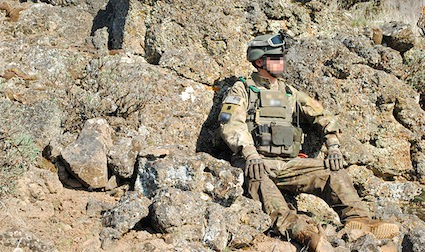
pixellated Soldier2

Story by Emmjay

Our traditional view of the valiant digger is certainly that of a noble self-effacing hero.  A ragtag larrikin in a pair of over-sized shorts and massive boots with a slouch hat and a rollie cigarette dangling precariously from his lip.  This improbable warrior has more than likely just put his life on the line for his mates and overcome enormous odds to defeat a far more numerous foe through rat like ingenuity and courage, a single shot .303 rifle, a cup of tea and a yard of number 8 fencing wire.

We will remember him.  He was our Dad or Grandad, uncle or brother.  He has lived through unimaginable horror and he carried his burden silently.  Only his immediate family know the price he paid for his service to God and country.  The same price they continue to pay long after the bullets have stopped flying.

But that was yesterday and the image of our digger today is more like the bloke in the picture above.  He is anonymous in life and almost invisible.  He is a highly-trained and well-equipped (we are told).  He – and of course nowadays also she – is a professional killer.  We see him visited by our Prime Ministers and Ministers of Defence and pixellated out on our flat screen TVs – particularly when he is an elite Special Services assassin.

That is, until he has the misfortune of being killed by a gang of ragtag vagabond insurgents in filthy scraps.  Killed with improvised explosive devices – not ultra high tech clean weapons, but stuff that they cobbled together through rat-like cunning and ingenuity from explosives they stole or bought from our allies.  We don’t call these men our enemies because we cannot discern them from the people we are calling our allies.

We call them insurgents.  And when our diggers kill them, we show them not in flag-draped coffins flown home for honourable burials with pomp and ceremony and eulogies from prominent politicians.  We show them dead in a dusty ditch with blood and flies.  No noble warriors there.  Not family men leaving widows and children to fend for themselves until they grow into the next generation of “allies”.  Insurgents.

But there are two more diggers that we never seem to see these days.  One is new.  The other is as old as time itself.

Recently the Americans created and awarded a new kind of medal to some specialist military personnel – are they really what one might call “soldiers” ?  These good men and women visit death and destruction on our mutual enemies by sitting at computer screens somewhere far removed from the battlefield – and fly drone (unmanned) aircraft allegedly capable of  assassinating only the most important enemy leaders.  We call them precision-strikes because there’s never any unintended damage or death.  We would call that “collateral damage” – in the unlikely event that it was ever to occur.

No smell of high explosives.  No dust and blood for these high tech warriors.  No service in hostile foreign lands far from loved ones deep in harm’s way.  No personal risk beyond a slight case of RSI.  These heroes are putting their carpal tunnels on the line for God and country.  Let’s give them medals.

The timeless image of our forgotten digger is the man who was badly wounded but who lived.  This bloke is an embarrassment.  Well, he must be, because we treat him like he doesn’t exist.  Especially if his wounds are psychological.

He’s one we will do our best to forget.

We know exactly how many diggers have been killed in Afghanistan.  We get updates moments after the event – who, when, where.  But the digger who is wounded is a fast fading statistic at best; more likely a report written in invisible digital ink.

There’s not a lot of military glory in mental health disability, is there.

Our military commanders insist we have no endemic mental health problems with our returned soldiers.  So it’s no surprise that we seem incapable of making sure that there is first rate psychological support for the man or woman who has gone through hell and come back worst for wear.  Because he or she is a phantom.

It’s up to him or her to suppress the anguish and recurrent horror.  And it’s up to their family to shoulder on their own the endless burden of service to country .

The family certainly won’t forget.

But our politicians and bureaucrats will do their darndest to make it as difficult as possible for returned service men and women to receive proper care.  Deny, obfuscate, red tape, red tape, red tape. Disgraceful.

And we as Australians have got to do a lot better than this.
We Will Remember Eric Herring

23 Monday Apr 2012

Posted by Therese Trouserzoff in Emmjay

≈ 14 Comments

Tags

AIF, Anzac, Eric Herring, FLERS, Somme, Villers-Bretonneux, WWI

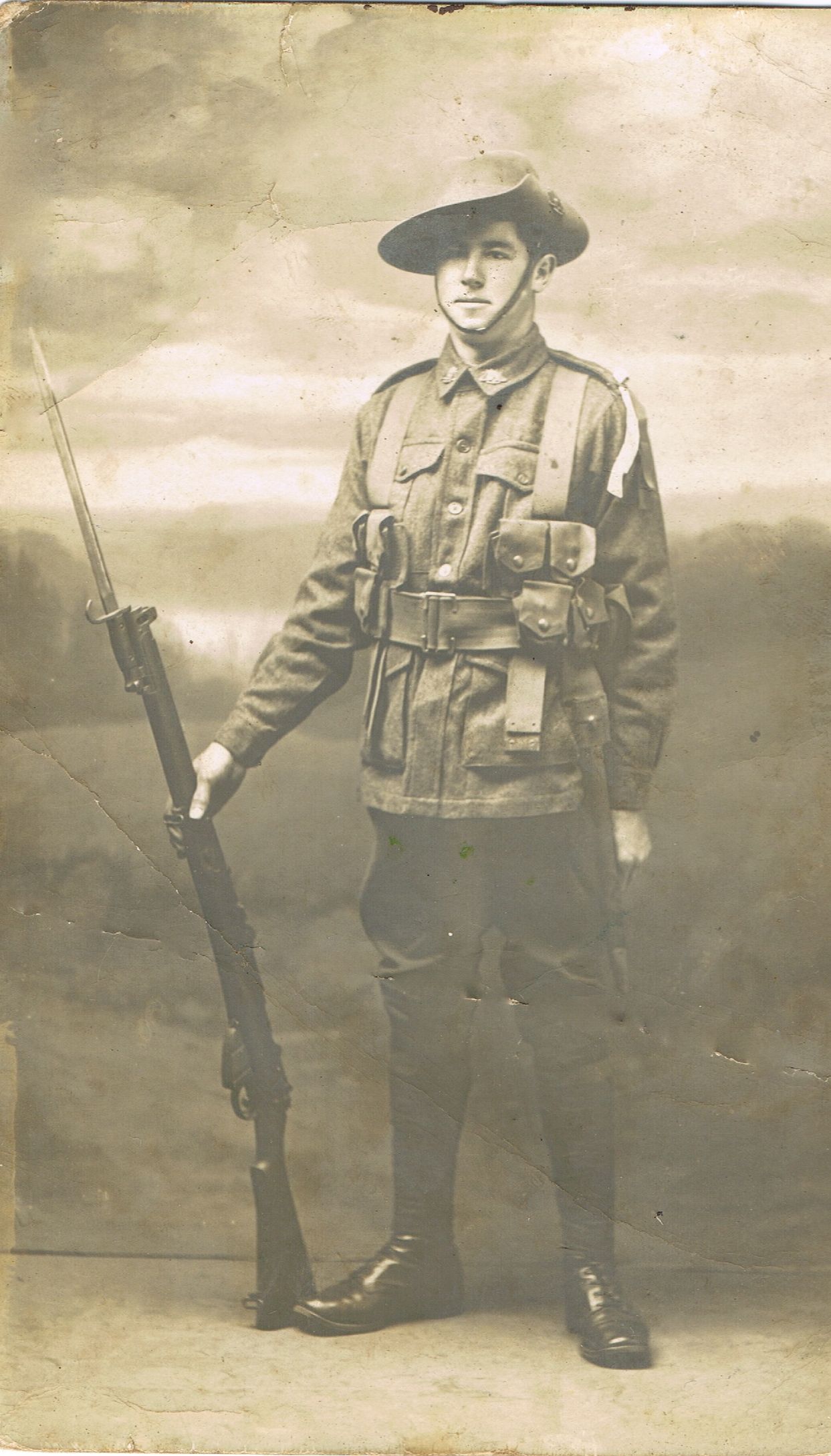
Eric Herring, c 1915 age 18.

On this ANZAC Day, I will remember our grandfather Eric Herring, 5th Division Artillery , 13th Field Artillery Brigade, 113th Field Artillery (Howitzer) Battery howitzers.

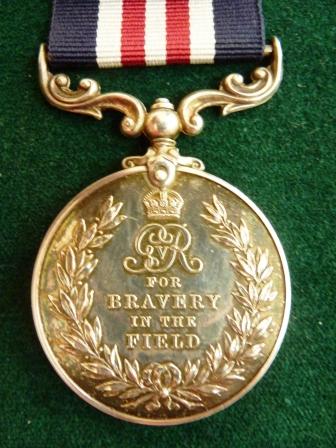
He was a man I never met.  He served at the Somme in WWI and was awarded the Military Medal for bravery.

Military Medal for Bravery (example only)

The action was at FLERS (north east of Amiens).  He was awarded the medal for going out and repairing the communication lines under fire, several times.  His division commander made the award recommendation at the end of February, 1917.

Many of my generation grew up in suburbs with street names like Amiens, and Poziers, names that seemed strange and unfamiliar but which, like the ANZAC memorials in every Australian town had a resonance for us.

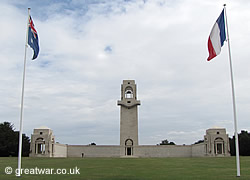
FM and I (and five other Aussies in a minibus led by a wonderful Frenchman formerly from Togo, West Africa – a walking encyclopaedia more than the match with the one of our number who is a history teacher) visited the Somme Battlefields around Amiens where the ANZACS and Canadians saw most of the action on the Western Front.  We visited some of the many immaculately-kept Adelaide and other cemeteries around Villers-Bretonneux – the first town liberated by the ANZACS

TO THE GLORY OF GOD AND IN MEMORY OF THE AUSTRALIAN FORCE IN FRANCE AND FLANDERS 1916-1918 AND OF ELEVEN THOUSAND WHO FELL IN FRANCE AND HAVE NO KNOWN GRAVE.

This memorial has some 73,000 names but most of the unknown ANZAC casualties lie in cemeteries the responsibility of the Commonwealth War Graves Commission.  We also visited the WWI museum at Peronne, one of the last remaining trench sites – maintained and revered by the Canadians whose young men fought there with success and distinction and one of the remaining giant craters

Lochnagar Crater from the air - is about 100m across and 30m deep.

The Somme – named for the main river winding through the region was cold, wet  and windy in this late Spring of 2012.  Not uncommon weather.  The conditions reminded us of how harsh those winters in the sea of mud and frozen trenches would have been for the Diggers and the Tommies – as well as for their foes.

The Somme is in the northern Picardy region of France a couple of hundred kilometres from the Belgian border.  It is mainly flat country with a few low hills and ridges that the Germans had the forethought to occupy first and which gave them tremendous tactical advantage.

Like it was for so many other ANZAC boys, it was tough for Eric Herring.  He enlisted at 18 in the Australian Imperial Forces.  His enlistment papers show his next of kin as his uncle.  His unit landed first in North Africa where he spent time in hospital overcoming a chest infection, then he sailed on to Marseilles and travelled the length of France to Picardy where the ANZACs and other empire countries – Northern Ireland, Canada, South Africa and India were under the command ultimately of the British under (the strongly criticised and hotly debated leadership of) Field Marshall Haig.

It is true that there are Allied forces and German war grave cemeteries dotted all throughout the Somme and other WWI theatres of war in France.

Australian Memorial le Hamel

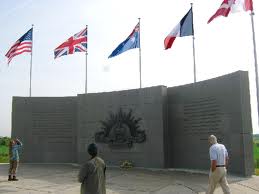
In the Memorial to the 1st Division AIF near le Hamel (a tiny village) had two pieces of information that particularly struck me.

Baron von Richthofen

The first was the story of the downing of the most successful air ace of WWI – the infamous Baron von Richthofen – the Red Baron, named for the confronting colour of his Fokker triplane.  There is strong contention over the kill today between Canadian claims that he was shot down by one of two Canadian fliers in hot pursuit and the Australian machine gunners on the ground who are recorded as having opened fire on him as he flew overhead.  They were part of the 5th AIF Division – the same division as the one to which gunner Eric Herring belonged.

The second is a quotation recorded in bronze from the French Prime Minister Clemenceau after the ANZACs, led by General Sir John Monash delivered an exemplary victory at le Hamel in 1918.

Clemenceau said “When the Australians came to France, the French people expected a great deal of you, but we did not know that from the very beginning you would astonish the whole continent”.

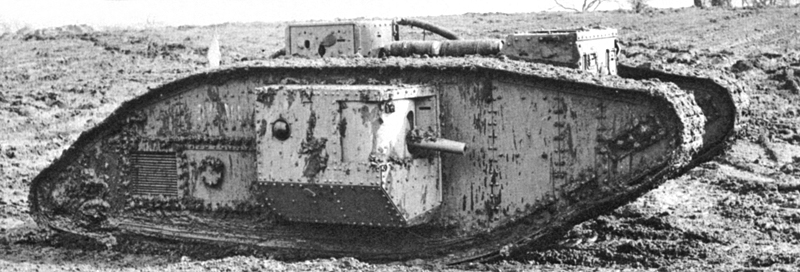
The autumn and winter of 1916 was a severe one for trench warfare.  Eric Herring’s record shows that he was sent to England for a spell to recover from frostbite and trench foot.  It was also a time that would see the seeds of a major breakthrough in the way the war was being conducted –the first use of tanks, by the British and allied forces – at FLERS through September.

British_Mark_V_(male)_tank

While the tanks would prove pivotal in ANZAC and British tactics in 1918 (much accredited to Sir John Monash), their first use showed more promise than initial success.  They were difficult to drive, not very reliable and crews were inadequately trained according to Trevor Pigeon[1].  However the tanks proved that they were capable of charging over and through the German barbed wire and trenches and breaking the enemy lines.  And when ANZAC troops under Monash integrated the use of tanks with preparatory artillery bombardment – carefully co-ordinated to roll forward in front of the tanks, with the infantry following behind – using the protection of the tanks and the enemy chaos caused by the bombardment, the combination of tactics was decisive in the 1918 victories.

Our guide stressed that the battle lines were in a constant state of flux throughout the battles of the Somme and the 1916 ANZAC victories were eclipsed by the German attacks that were stopped in 1918 some 65 kilometres west of the 1916 positions.

We have quite a lot more research to do and there are many as yet unanswered questions about Eric Herring’s war.  The documents – many war histories for ANZAC Divisions are digitised and available for research through the Australian War Memorial and War Archives, but they are sometimes very difficult to read with feint and elaborate handwriting on fragile, sometimes smudged pages.  We have something of a lack of clarity over unit numbers and the differences between Divisions and sub-units.

We are sure that he was a gunner and that he was awarded the Military Medal for bravery at FLERS, but at this stage, we haven’t made the connection between his AIF unit and FLERS – the battles there were predominantly fought by British 41st Division soldiers and New Zealand ANZACS in 1916.

It’s wonderful that he was one of the WWI ANZAC survivors but one of the sad things for me is that our grandfather was, like so many returning soldiers, not the same person who left Australia in early 1916.  The family photographs and my Mom’s old stories suggest that he had problems with the drink when he came home and as the Nation as well as individuals fell under the Depression of the 1930s, he struggled to adequately provide for his family.

Our Nan divorced him and he died when I was a child – a man I never met, but will not forget.


[1] Pigeon, Trevor, “Fleurs and Guudecourt, Somme”, Pen and Sword Books Limited, Yorkshire, 2002.

Tom R.I.P (Amongst the bleached Bones of the inebriates at Orange. NSW)

22 Saturday Oct 2011

Posted by gerard oosterman in Gerard Oosterman

≈ 109 Comments

Tags

Aboriginal, alcoholism, Anzac, Geoffrey Gurrumul Yunupingu, Herne Bay, inebriate, Korea, Korean War, Land Grant, Orange, Pink Floyd, Sydney, Wiragjuri

(A story; some fiction, some not. Tom and the many mothers are still everywhere.)

Tom, who was black and a returned soldier from the Korean War, used to live with his mother in Orange. He never did get into a decent working live and his request for a land grant was knocked back, as were all other requests from aboriginals in those post Korean War days. Tom could not even get a beer in a pub at that time. He fought as good if not better than most in Korea. He was fearless and when shot in the leg he hobbled on regardless for the next couple of days. Someone finally got him into a hospital. It left him with a gammy leg, a permanent limp.

When he applied for the soldier land grant he was told by the clerk,” bugger off,” “not for you Abos, mate.” Some of his white mates were given the VC’s for less fighting than some of those black ones. Even though Tom could not get into the pub, he managed to get into the grog quite well. He never figured out the one about the land grant refusal, somehow always thought he was part of the land before white men. It did not make much sense, but then again, so much did not make sense. Black fellas got killed in the war more than Australians, yet they were never rewarded for bravery. They weren’t even citizens.  That’s why Tom also did not get a pension. He  never understood the problem, no matter how often he asked himself or others.

His mum kept telling him “keep your nose clean, stay away from grog.” He only kept the first part but loved those brooding dark long- necks. Over time they rewarded him more than anything, even though it was of short duration. Each bottle set up the need for the next one. Tom drifted off to Sydney, camping along Salt Pan Creek at Herne Bay. He used to do short spurts of work, became an itinerant rabbito. In the evening he joined his mob on the creek, stewed up the left- over rabbits with pumpkins. The grog was also part of his mob. Many were returned soldiers but never shared in the spirit of Anzac, not a single medal. There was just this wrong kind of spirit; better than nothing at times.

Tom just idled along but somehow never got the thing about the returned soldier’s Land Grant out of his head. He would have liked to have been able to raise horses on the couple of hundred acres that so many white soldiers got after the return from Korea. Not being a citizen was a puzzle that never got solved, especially not when his days became more and more endured in an alcoholic daze. He used to pinch his arm, “yes, I am a person and am alive”, “how come I am not a citizen.” “What’s a citizen?” Apparently, anyone but a black fella.

He went back to Orange and lived with his mother who put up with his now deeply entrenched need for grog. He would be charged over and over again with drunken behaviour, disorderly behaviour, pissing up against the rosemary at the Town’s returned soldier’s memorial with the bronze inscribed names of so many brave but white souls.  White souls, the lot of them, and all dead but still regarded true citizens. All their wives and mothers were receiving pensions.

Tom’s mother was just scraping by with the help of uncles and aunties and assorted relatives, all without pensions. “We are from the Wiradjuri people; we lived here well before any white man.”  “Your grandmother use to grow seeds around here and we were the first gardeners,” she told Tom.

The coppers got fed up with Tom. It was too much. The Order was read out by the Magistrate; “Pursuant to Section of the Act, I am satisfied that Tom is an Inebriate within the meaning of the 1912 Act and hereby Order the Inebriate to be placed in a licensed institute for the remainder of his life”, or, till he is deemed cured. The chief constable with a grin on his face led Tom downstairs to his fate. Tom mused on the stairs down; am I now a citizen?

Tom was taken to the inebriate section of the mental hospital in Orange where he spent the rest of his life. He wasn’t even told of his mother’s death. In 1968 he finally became an Australian citizen and had his pension regularly paid out to the Institute. Tom did not get better nor did he ever find out why he was not a citizen before 1968. Over thirty percent of the inmates were aboriginals. Tom died in 1974.

Keywords: Orange, Korean War, Aboriginal, Korea, Sydney, Herne Bay, Anzac, Land Grant, alcoholism, Wiragjuri, inebriate

Patrons Posts

  • The Question-Crafting Compass November 15, 2025
  • The Dreaming Machine November 10, 2025
  • Reflections on Intelligence — Human and Artificial October 26, 2025
  • Ikigai III May 17, 2025
  • Ikugai May 9, 2025
  • Coalition to Rebate All the Daylight Saved April 1, 2025
  • Out of the Mouths of Superheroes March 15, 2025
  • Post COVID Cooking February 7, 2025
  • What’s Goin’ On ? January 21, 2025

We've been hit...

  • 713,895 times

Blogroll

  • atomou the Greek philosopher and the ancient Greek stage
  • Crikey
  • Gerard & Helvi Oosterman
  • Hello World Walk along with Me
  • Hungs World
  • Lehan Winifred Ramsay
  • Neville Cole
  • Politics 101
  • Sandshoe
  • the political sword

We've been hit...

  • 713,895 times

Patrons Posts

  • The Question-Crafting Compass November 15, 2025
  • The Dreaming Machine November 10, 2025
  • Reflections on Intelligence — Human and Artificial October 26, 2025
  • Ikigai III May 17, 2025
  • Ikugai May 9, 2025
  • Coalition to Rebate All the Daylight Saved April 1, 2025
  • Out of the Mouths of Superheroes March 15, 2025
  • Post COVID Cooking February 7, 2025
  • What’s Goin’ On ? January 21, 2025

Enter your email address to subscribe to this blog and receive notifications of new posts by email.

Join 373 other subscribers

Rooms athe Pigs Arms

The Old Stuff

  • RSS - Posts
  • RSS - Comments

Enter your email address to subscribe to this blog and receive notifications of new posts by email.

Join 373 other subscribers

Archives

Website Powered by WordPress.com.

  • Subscribe Subscribed
    • Window Dresser's Arms, Pig & Whistle
    • Join 279 other subscribers
    • Already have a WordPress.com account? Log in now.
    • Window Dresser's Arms, Pig & Whistle
    • Subscribe Subscribed
    • Sign up
    • Log in
    • Report this content
    • View site in Reader
    • Manage subscriptions
    • Collapse this bar
 

Loading Comments...