

Story by Emmjay
The fact that Indonesia has a multitude – literally thousands – of inhabited islands in the archipelago is often lost on we of the big island. And I’m betting that by extension we fail to recognise Indonesia as the great seafaring nation that she is. Our media seem to suggest that our maritime neighbour is characterised by unsavory people smugglers trafficking death and misery in rotten leaky sinkers.
The truth is that brave Indonesian (often Sulawesi) sailors have been plying a vigorous trade amongst islands in their archipelago and throughout south east Asia since well before the Indian hindus, then their Moghul conquerors, followed by the Portuguese, British and Dutch muscled in.
And like the fleets of the ancient Mediterranean, the Indonesian ships were – and still are – crafted from the iron wood trees of rapidly disappearing forests. Indonesian flagged ships come in all shapes and sizes, but the fleet of island trading wooden ships and boats these days come in two main forms. One is a variation on the Chinese Junk – efficient, spacious and with a low draft (but you’d be struggling to suggest the cargo versions have beautiful lines) and the other – in this story – is about a stalwart of their island trade – the Pinisiq.
Perhaps you might like to have a birds-eye view of one of Tony Abbott and Scott Morrison’s soon-to-be purchases.
This one carries mainly bagged cement and is loaded by 8 sinewy crewmen who weigh only a few kilos more than the bags of cement they stack in the hold.

Unbelievably harsh conditions – heat and dust and hard work stacking cement bags in the hold – view from the wheelhouse
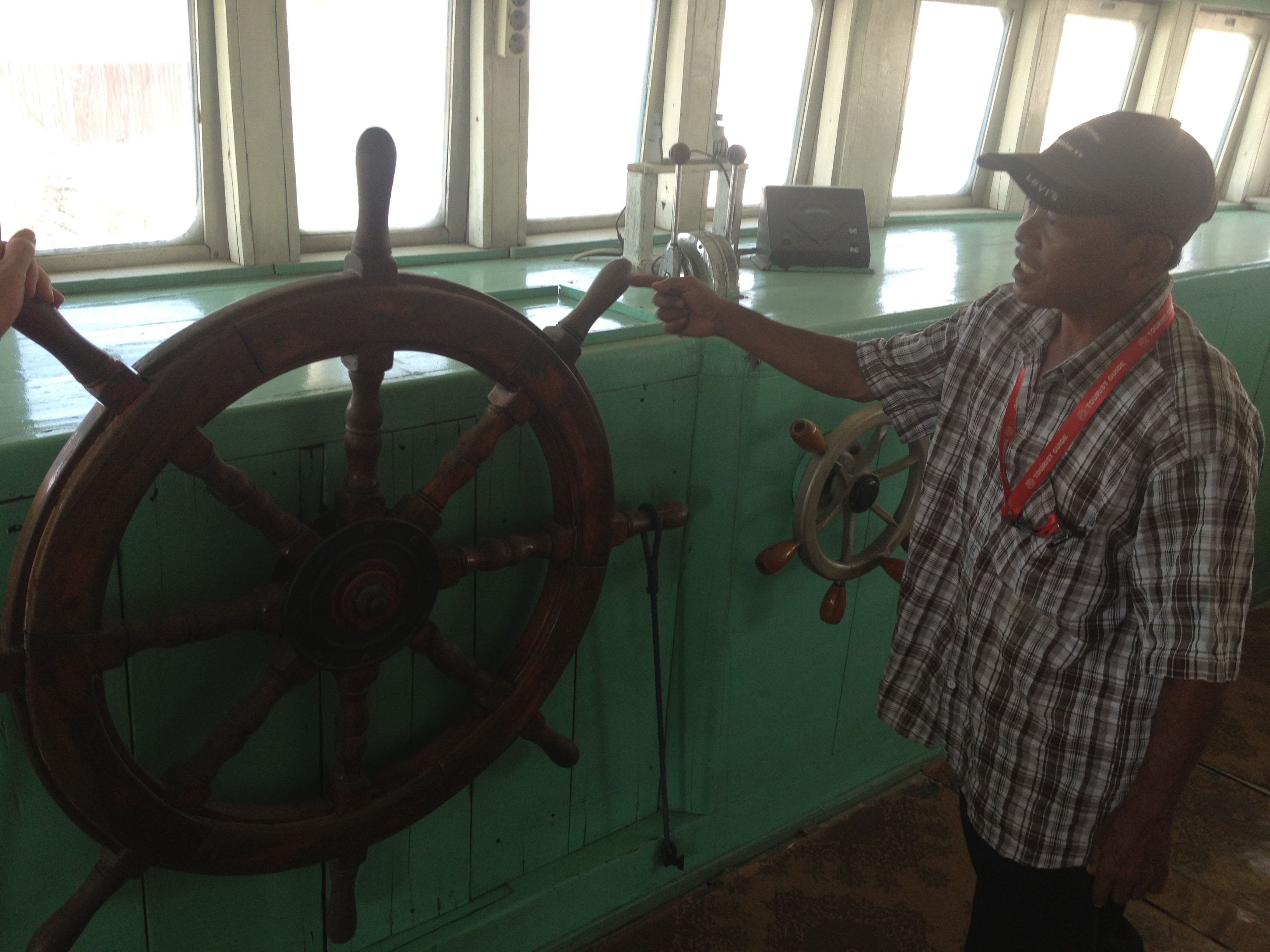
Our host – the big wheel is a relic of the sailing past – the tiny wheel to the right steers the now diesel- powered boat.
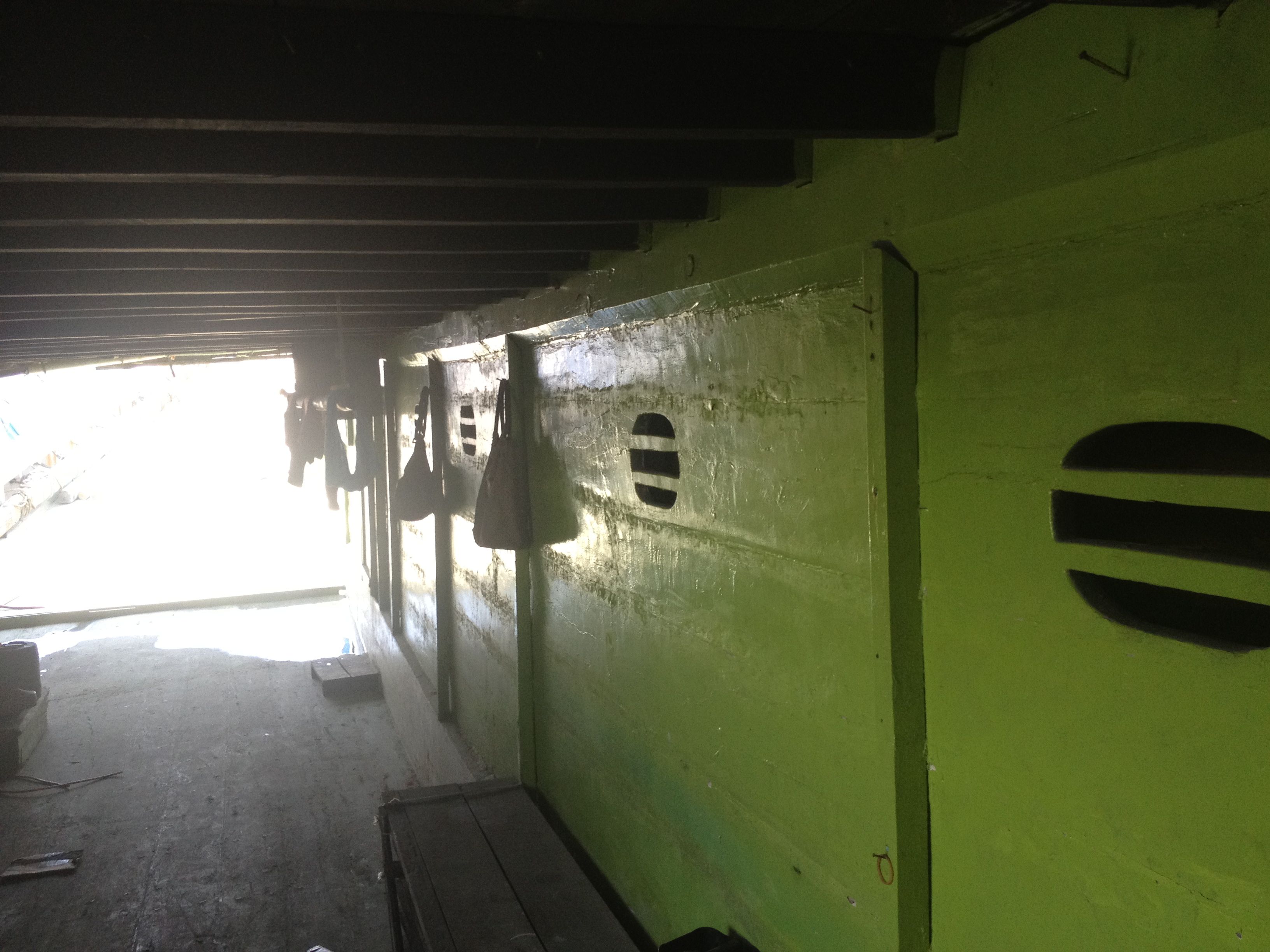
View along the main deck from the stern – next to the crew’s quarters
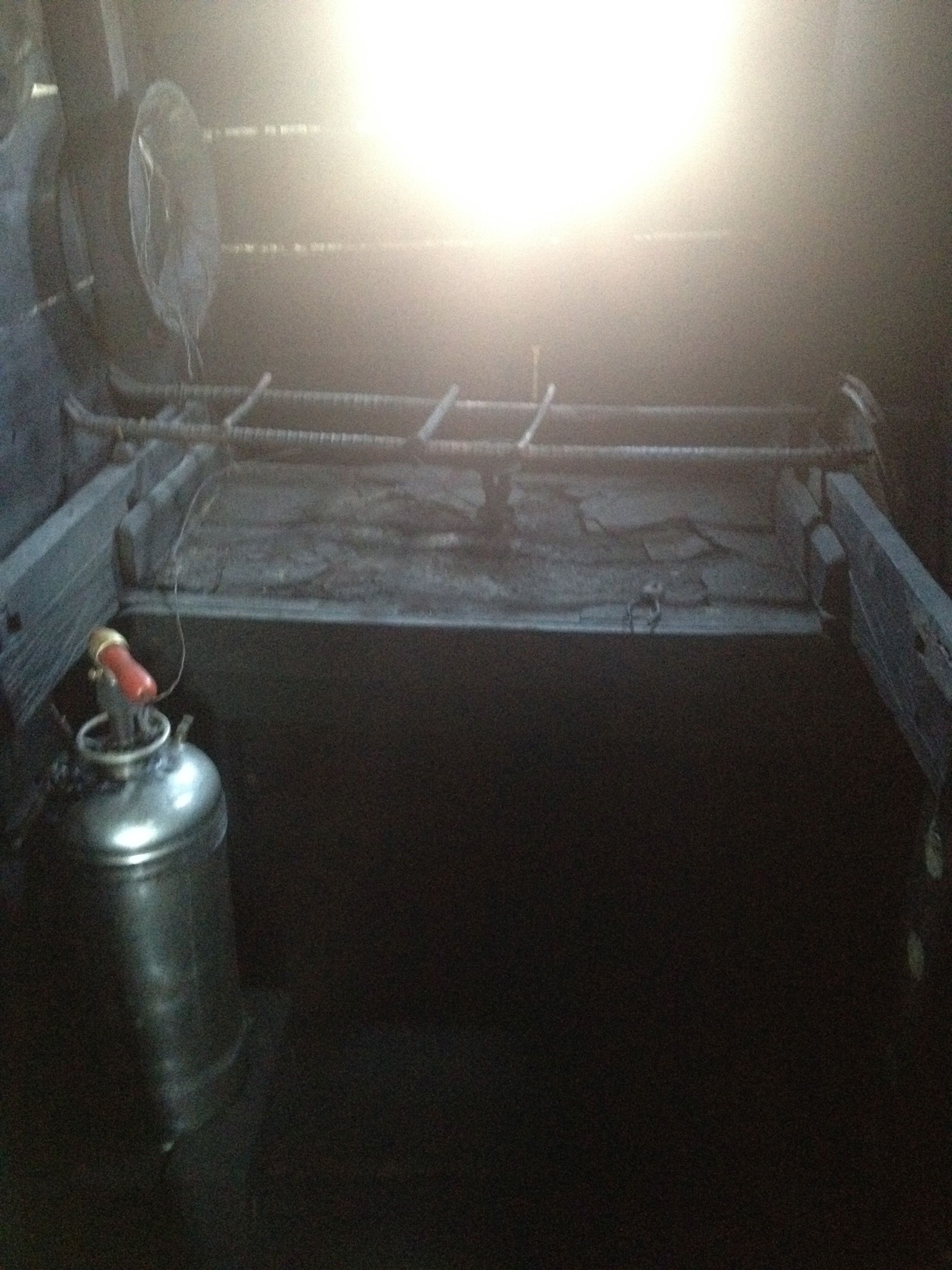
The galley. Serving a ships complement of nine. There was another badly fire damaged Pinisiq being repaired further along the quay. The propane cylinder had exploded and killed the cook. The crew went hungry for a week and the boat has been unseaworthy for a month after limping back to Jakarta.
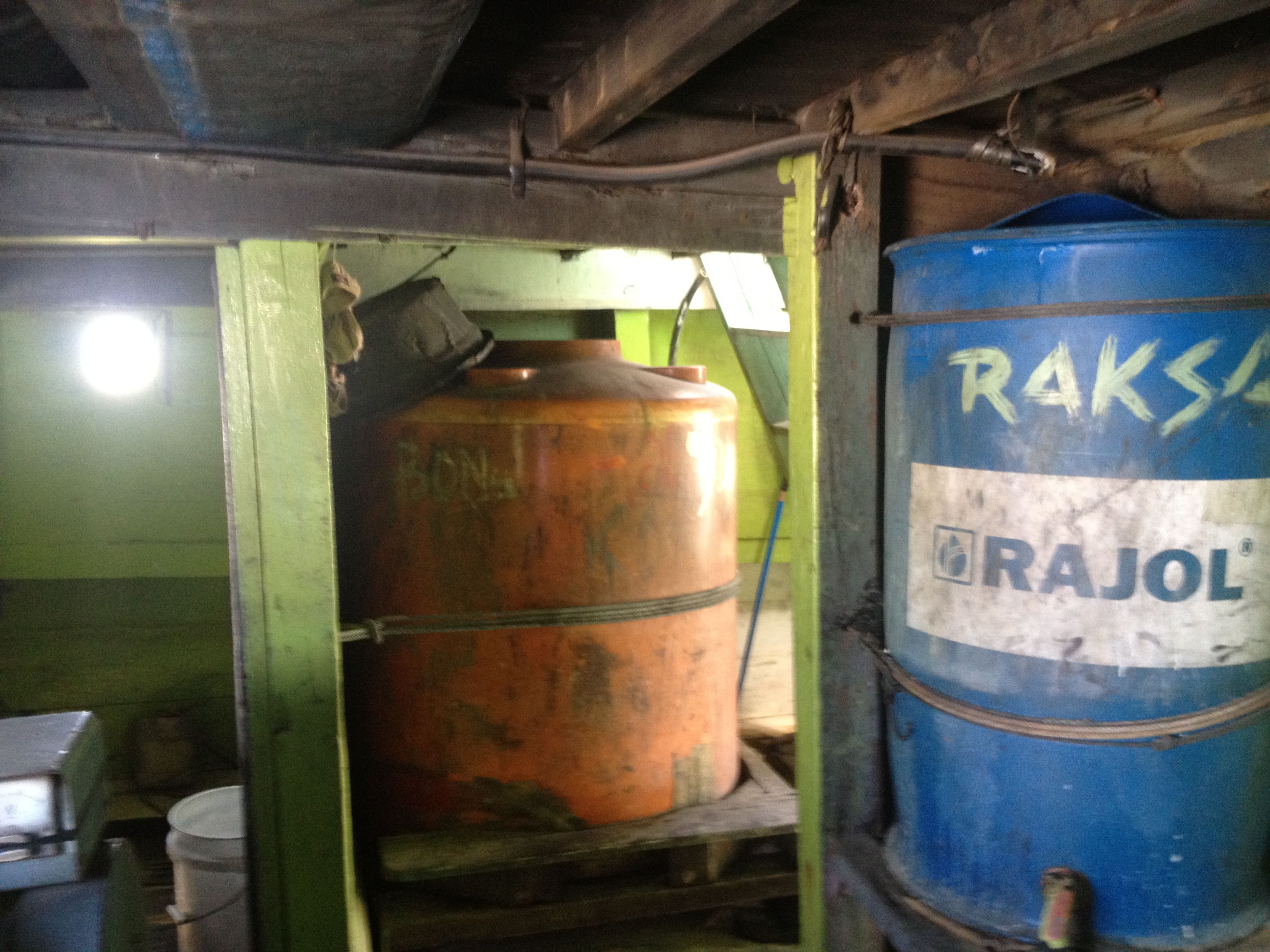
The “fresh” water supply – filled from a hose when in port. When at sea, the sailors rely on rainwater collected from the roof and channelled into these poly tanks.
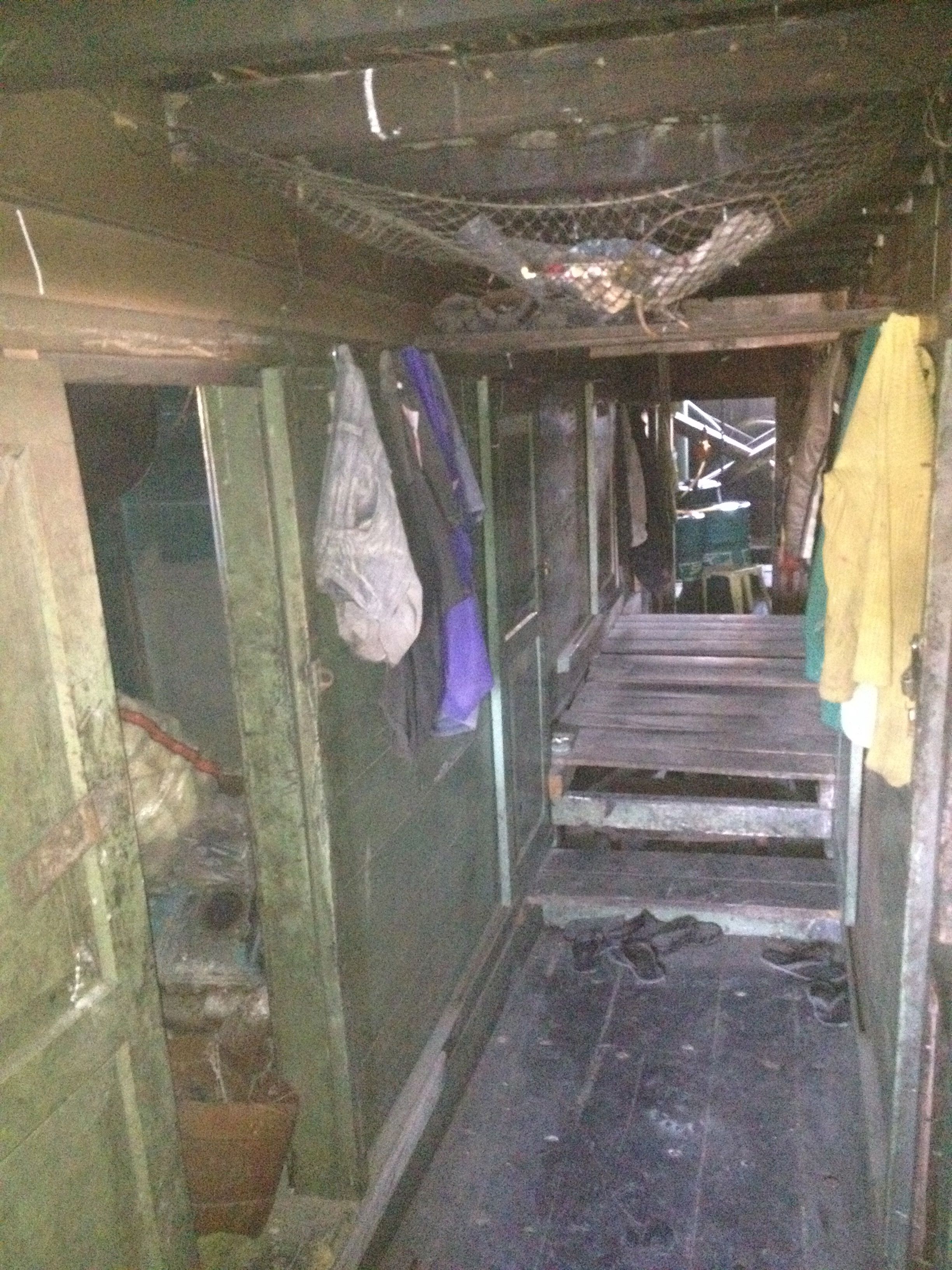
Crew’s sleeping quarters. This was pitch dark – in the middle of the day and the camera insisted on using its flash to get the shot. Note the cement dust everywhere.
I asked our host how much one of these boats might cost Tony and Scott (Ship Chandlers to the Asylum-seeker Classes)- and the answer was “About 5 billion rupiah (about A$500,000). The boat is totally hand-made and plying its trade through the archipelago feeds up to nine families of hard working sailors.
Considering this boat is a lot bigger than the fishing boats that come to Christmas Island – carrying scores of people for days on end, imagine carrying five or ten times the number of people. Enough water ? No scope for cooked food. Sea sickness and one toilet perched off the portside stern – a sea-going version of the long drop. All on a boat less than half this size.

Renovated Batavia Maritime Museum – date above the door says 1719 – or nearly 70 years before Cook discovered our island..
 Window Dresser's Arms, Pig & Whistle