
Tags
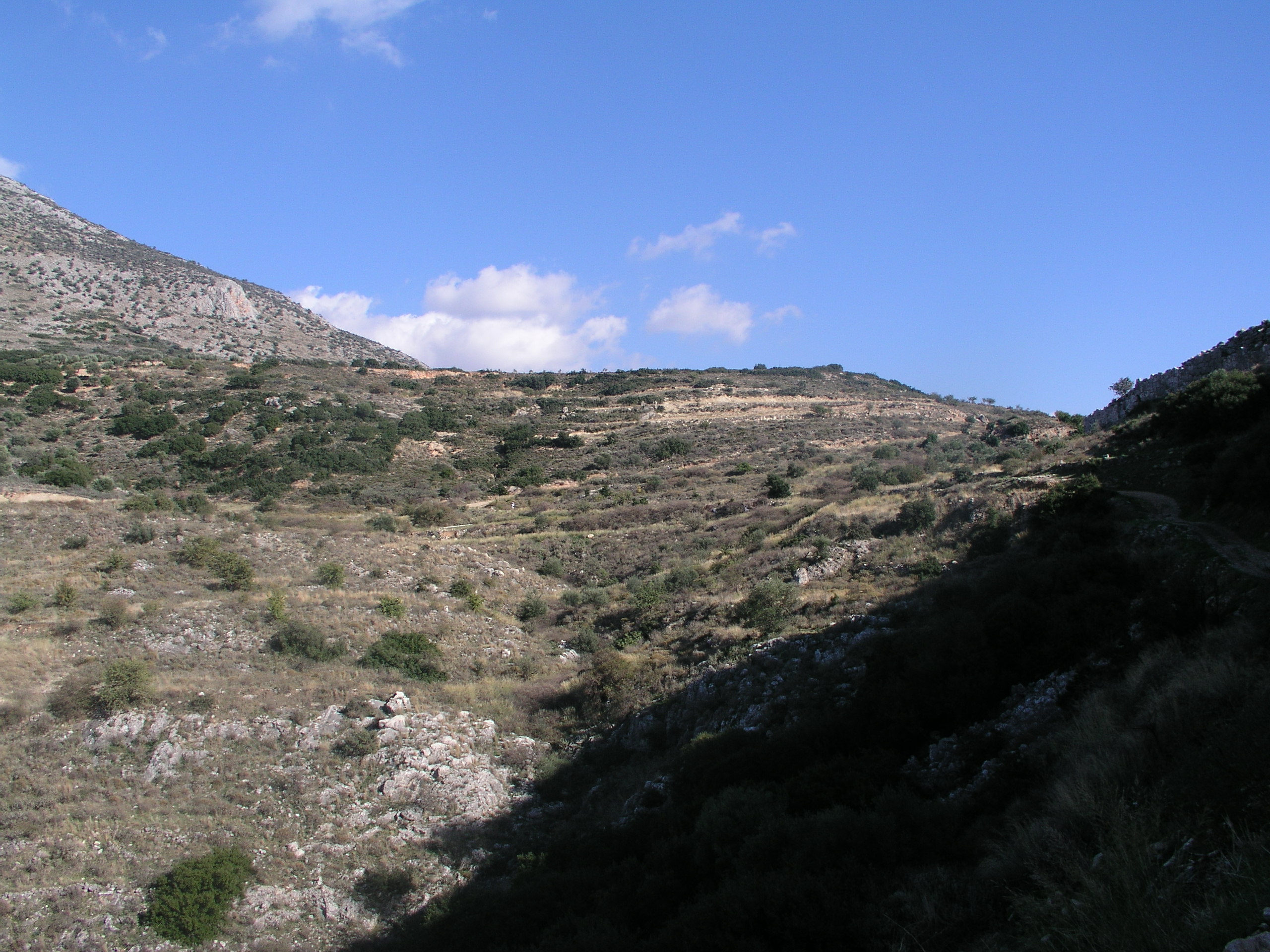
from The Fiesta of Men by Mark O’Connor (pub Hale and Iremonger, 1983)
The goat-summers are over, the eternal noons
Virgil, Theocritus and Horace wove
into a timeless myth. You cannot find
those heat-hushed slopes, where goat-herds
whittling notes from reeds (while willow
twigs are thick with drinking bees) observe
the rank male-smelling beards at work for ever,
rasping the scented broom and heather.
Three thousand years have almost seen the end.
Infertile soil has nothing left to give.
But still they lick, those rough-tongued flocks
whose mouth’s the busy grave down which
whole hillsides pass. They gnaw the thornbush
from the cliff and chew the mossy clay
like dough. The Nymphs are Nereids now,
washed down by floods to roll
in the gasping sea; their fern-green haunts
a sunstruck canyon where cicadas
die of heat.
Yet olive and eucalypt stalk the stone redoubt
with tough guerilla troops in neutral green, will tread
the rock to pebbles, loess, marl and make
anew the chalk infertile soil.
I found this book of Mark O’Connor’s poems in Berkelouws while FM and I waited for a glass of red and a cheese platter to emerge. Wine bar bookshop. Perfect.
I encountered Mark – although he would not remember – in the mid 1970s – another denizen of Forest Lodge near Sydney Uni and a habituee of the Forest Loge pub – otherwise known to us as the Forrie Lorrie – a fore-runner of the Pig’s Arms. I used to share a house with Phil B in Annandale. He was a mate of the Mark O’Connor and another great poet (now late) John Forbes.
Looking back – how lucky were we to be able to share a schooner and occasionally hang with people who would later write poems like these two. And then I was reflecting on how we as callow youth so often do not realise important treasures in our world until later – with hindsight – after they’ve moved on.
Thank goodness for the printed word.
 Window Dresser's Arms, Pig & Whistle
ato,I have not read Kate Granville latest book, but Andrew Riemer wasn’t very happy with it. I know her from our Balmain days, a very nice woman married to Bruce Petty, the well known cartoonist. I have read some of her earlier books though.Just a bit of trivia for you 🙂 In those Balmain was full notable folk, they were not called celebreties then…
LikeLike
ato, you must also know that onre of your ‘favourite’ books The Slap has been made into TV series, for ABC as a matter of fact…
LikeLike
Did I mention the fact that I just couldn’t read pst the very few first pages, H?
Heley (the one in Japan) read the full thing and din’t mind it but she’s young and not yet so crustily demanding of writers and artists. I will probably watch the movie though, particularly since it’s on the ABbloodyC and free of ads.
I truly like this book. About half way still but she has a good story to tell and the talent to say it well. Highly evocative imagery, strong descriptions of feelings, a vocab that can take you up and down the ages… it’s good stuff.
Just finished Malalai Joya’s book and I also recommend it very highly, not only for historical and social reasons (re afgahnistan) but because, she, too has a mighty story to tell and she, too has the right qualifications to tell it. It’s certainly a good reference work when one wishes to look up figures involved in the ugly goings on over there.
I also liked Anna Funder’s “All that I am” but her “Stasiland” left me high and dry about quarter the way through.
One of these days I’m going to get to finish Euripides!!!!
LikeLike
ato, I can’t be bothered with Stasiland, but I am interested in her latest…
LikeLike
Helvi, don’t forget to remind gerard, to give me a call. I wanted him to explain his no-deterrent deterrent.
LikeLike
H, Funder’s “All that I am” is sort of similar (so far as themes, issues and didactics are concerned) but I think much better written. I won’t let any cats out of any bags…
LikeLike
Please, please, stop all this reading. You’ll never find out anything.☻
Go up the pub and talk to mercenaries; marine biologists; career crims; horticulturists; single mum traffic wardens; lazybones; fabric designers; mistresses; airline pilots; sacked psychiatrists and failed poets. That’s where you get life’s info.
LikeLike
Laddi, you’ve walked into this so cop it sweet:
If you are a sample of the product that comes out of the no-reading-pub-going factory, then, no thanks. I’ll go on reading and avoiding pubs… present pub excepted.
LikeLike
Fair criticism (if’n you think so). however I do read but not at the exclusion of ‘real life’.
Sometimes I meet people that have read a lot, but remind me of captured damsels, who’ve been locked in a room with only 3tv channels. I don’t actually mean you, or Helvi of course. My comment was sarcasm: throw away type–and of course being English I refrain absolutely from insulting you. We can’t do that on the right. We are tender, loving and thoughtful . Full of compassion and “love” ♥ That’s something that you “could” learn 😉
LikeLike
Does anyone know what use the Moroccans would make of this… “pure?”
LikeLike
5 minutes in google, But Don’t Ask Me Anything Else:
The pure collected is used by leather-dressers and tanners, and more especially by those engaged in the manufacture of morocco and kid leather, from the skins of old and young goats… Pure is also used by tanners, as is pigeon’s dung, for the tanning of the thinner kinds of leather.
From:
“London labour and the London poor” Page 142
http://books.google.co.uk/books?id=Q4oBAAAAQAAJ&pg=PA145&dq=%22pure+collector%22+henry+mayhew#v=onepage&q=occu&f=false
Goats seem to be the recurring theme!
LikeLike
Shit, Voice! You’re some researcher, mate!
What did you put in your google? “Shit in moroccan…?”
Fascinating though. I’ll have to get to read the article on the pure (what an odd word!) a bit later.
But, shit, thanks very much, mate! I was walking around all day thinking about mashed potatoes.
LikeLike
Hi Emmjay, sorry to be contentious, but Iv’e read this 3 times now. I’ve tried to like it–mainly for your sake. However I can’t; it’s dull and contrived. The only decent word being, ‘eternal’.
I must be missing something, but at the risk of copping ire from you, or atomou, I have to confess to finding it clumsy, even allowing for artistic licence and intentional quasi malapropisms/spoonerisms. A bit dirgy, I thought. A plod through some nouns.
But I stand to be told off 🙂
LikeLike
I suppose you do stand to be called to point out a quasi malapropism/spoonerism. So?
LikeLike
Going for more horse-shit. Be back in a trice. Well two hundred trices maybe. I’m in a dough-like dream. I’ve got dough on my brain.
Virgil papadopolis, is coming too.
LikeLike
Yes, dough-brain. (I mean that in the sense that Tom Oakley uses the word in Goodnight Mister Tom, a children’s novel set in the English countryside during WWII. He uses it to address his evacuee Will after Will has just said something dopey.)
FYI, the consistency of mossy clay is quite peculiarly like that of dough. To my chagrin I know this first-hand, having just scraped some of the stuff off the surface when I planted some buffalo runners into it.
LikeLike
Oh, so you wrote it? .. And you chew it like dough ? I’d rather chew moss than dough.. However each to his own.
Or, did he mean to write: They gnaw the thornbush
from the cliff and chew the mossy, dough-like clay.
But in any case it doesn’t work for me. I don’t like clunky things that I can see.
These messages worked well for Bob Dylan, because 1st & foremost he was an ‘artist’; able to express himself and able to put his messages into the work. Same with wotsisname Cohen.
It can work the other way around, but in general; butchers may wax lyrical about meat, but may not write good meat poetry. Architects are not necessarily the most gifted authors, or arbiters of edifice-al poetry.
I note that he is working on a translation of Shakespeare, changing the words to, fit his own perception and he is also the editor of ‘two centuries of Australian poems’! TWO centuries? Just how long have you guys had sheep; a sunburnt land and gum trees 😉 Are you obsessed with ruminants?
LikeLike
Yes, I wrote all of Mark O’Connor’s poems just after I wrote all of Shakespeare’s plays.
The stuff works between your fingers like dough. Why do I know this? I tired to crumble the dug up clay around the roots of the buffalo runners. A thin layer of mossy clay just peeled off. Presumably the goats chew moss because there’s not much else about and some clay peels off when they go for the moss.
Not my idea of beautiful countryside. But the pictures of the villages by the sea always look beautiful. Never been there.
LikeLike
But you’re entitled to your opinion. For (as Shakespeare will have said after having been translated into proper Australian English) there is nothing either grouse or
crook, but thinking makes it so.
LikeLike
BUT, what I want to know is, who chews dough?
It’s like saying chewing like Polar-bears fur?
As to an Australian translating Shakespeare to English, isn’t that a bit like an New Zealander translating Maori to Dutch?
LikeLike
Actually that’s not as good analogy. Imagine an Englishman trying to translate Australian to English. Loud guffaw! Well it’s not possible.
LikeLike
Then again, who swallows dough whole?
I’ll settle for an Englishman who can translate “quasi malapropisms/spoonerisms” into English.
LikeLike
OK. Well of course quasi, is a bit of a cop out. An each way bet, if’n youse like. One can obviously cover ones arse by using it. In this case I meant partial, also partially. Two different things.
So his malapropisms aren’t strict (textbook) examples of malapropisms, but are however, what I consider inappropriate. We’ve mentioned (mould old* ) dough and you referred to the texture. I agree about the texture, but one wouldn’t be able to compare it in a ‘chewing’ sense, because it’s unlikely that any reader would know the flavour, or texture in the mouth. In on’s fingers, yes!
Also what are the eternal noons?
But, to be honest, I am not educated enough to dissect poetry. For instance Emmay and T2, have written about timing, syntax, stanzas and metrical form. That’s all Dutch to me. I’m just a metaphor and two assonance man me’self.
Art is in the eye of the beholder. And I am stuck in a love of old stanzas and myopic sentiment.
So really, I was just up for a discussion. That’s all. And you came along. How was it? Was it as good as was for me? Shall we do it again?
T2 song that he promoted .
LikeLike
Yes I knew all that VL. 🙂 I must have been enough in the mood for a dispute to run with it.
Now. Do you really not eat dough or was that just for argument’s sake? Back in the days when I used to make pastry for things such as quiche and pies, I always ate the leftover bits of dough or gave them to the kids. Seldom cook dessert these days; I find it easier to to eat no dessert than to limit myself to a single serving.
LikeLike
Just came back from the show. Must away with the dogs. but NO, I don’t recommend eating uncooked dough. It’s indigestible. A bit like raw potatoes. Once it’s cooked it’s not dough of course. The stomach can’t (or finds it hard to) digests the starch, from memory..
LikeLike
That was my point. None knows what dough tastes like. Unless’n they’ve put it in their gob by mistake.
LikeLike
Well, sorry to raise your ire, old lad but every pastry cook knows what uncooked dough tastes like. I certainly do and I’ve never made it to pastry cook status.
A cook often tastes the dough as he gets it together -to check the effects his ingredients have upon the mix, particularly if s/he’s trying a new recipe or one that s/he has just dreamt up. Too much vanilla? ouzo, cherry, cinnamon, sugar, paraguayan papaya?
One might not eat great chunks of it but one does, nevertheless, eat some…
And I remember, as a child in the greek village, standing next to the black goats and the white chickens and the red wheelbarrow (I’m alluding to W.C.Williams here)… when mother used to make the dough for the week’s bread, she’d give me a bit of it to taste. She’d sprinkle a bit of sugar on it first and then ask if I approved.
It might well be indigestible as a huge lump, but as a titty bit, it was very nice!
LikeLike
You are referring to cake ‘mix’, or more technically, ‘batter’.
Maybe you call it dough in Melbourne. I’ve never visited 🙂
LikeLike
Quasi dough maybe 😉
Perhaps your Mum disliked you. Perhaps you were a precocious little brat and she wanted to give you tummy ache 😉
LikeLike
Quasi’moudough?
LikeLike
I think that deserves a gold star with chevrons Voice ☼»»»
LikeLike
Seconded. With fleur-de-lis
LikeLike
Not for spelling, she don’t! It’s Quasimodo… oh, I see… mou… you do that voodoo you do so voodooishly!
Bugger!
LikeLike
It was about time we sent an Aussie over there to teach them how to poetise proper!
LikeLike
A man and his goat should be extremely happy Voice, is this what you are sayin?
LikeLike
Hey! Don’t try to hang your goat allusions on me!
LikeLike
Well, a goat lives down the backyard. It doesn’t complain and eats everything provided. Pretty good qualities 🙂
LikeLike
Plus it can fertilise the soil, simply admirable
LikeLike
Damn! Those goat-herds are just like the police: you can never find one when you want one!
Lovely poem, though…
😉
LikeLike
Love the poem, Emms. I can see most of the icons he’s painted and the sentence,
You cannot find
those heat-hushed slopes, where goat-herds
whittling notes from reeds (while willow
twigs are thick with drinking bees) observe
the rank male-smelling beards at work for ever,
rasping the scented broom and heather.
Apart from being damned near divine, it unleashes all sorts of delightful memories in my head.
Just one tiny thing: the apostrophe here should be:
“whose mouth’s the busy grave down which”
Unless I am misreading the line.
But yes, a good poet can do wonders for one’s soul and it looks like Mark is a great one.
LikeLike
Shit! John Forbes is dead? Bloody hell, when did that happen?
He was only a young pup!
He, I and people like Thomas Kenneally, Vincent Buckley, Bruce Dawe, Judy Rodriguez and a whole lot more were included in a publication by Outrider (later bought by Penguin) called Australian Writing, 1988. (Penguin renamed it, Australian Writing Now)
I can see his three poems, starting from page 295: Death, an Ode, Egyptian Reggae and The Promissory Note. His “Death” begins with this brilliant evocation:
Death, you’re more successful than America,
even if we don’t choose to join you, we do.
Excellent stuff.
Do you know more about him, Emms? The book says he was born in 1950. Melbourne boy, like me.
I’m feeling quite sad, now!
LikeLike
John Forbes died in 1998 age 47. I think he had a heart attack, ‘Mou. I bought a third edition of his Collected Poems – (Brandl & Schlesinger, 2004) ISBN 1 876040 27 0. It has an introduction by Gig Ryan – who says he met Forbes in 1978. I can beat that. I met Forbes in 1973. That was the year I failed the first subject in my entire life – actually 4/8 subjects. So it was a promising if slow start to a late adolescent life of sex, drugs and rock and roll. Co-incidence ? I doubt it !
Forbes’ work was great. I have a limited home-produced pamphlet based around his love of the TV series “Hawaii 5-0”. I’ll hunt it down and republish a few of those little beauties. He loved the beach, sand, sea and surf. And Resche’s Pilsener. Didn’t we all ?
LikeLike
The apostrophe bothered me a tiny bit, too, ‘Mou. But it’s there alrighty. Faithfully copied by YT.
LikeLike
Thanks, Emms. Please DO publish more of Forbes’ poems.
The date I have in mind would be somewhere around ’85 when he and I and a few others read some of our poetry in a bookshop in the city. Can’t remember the name of the book shop, nor the street. but it was in some lane and upstairs.
Can’t remember how we got there -who had collected us- but we had all won some lit prize or other.
Anyhoooo, 47 is damned young age for a heart attack, so he must have been a “good” man, since only the good die young. Quite sad!
The apostrophe reminds me of the “correction” the edidors of Outrider did to my poem as well. There it is for all eternity (in my dreams!) and for all the world to see (I’m not deluded!) that my verse said, “One man-god sprawled into her mouth” (Cassandra’s) whereas, in fact, I had written, “One man-god spawled into her mouth”. “Spawled,” not “sprawled,” “spat” not “spread” because that’s what Apollo did to Cassandra: spit in her mouth and made all her utterances confused and unclear… I won’t go on with the myth here but “spawled” is a perfectly good old English word, which might not be in the effluent of today’s speech but which is explained at length in the OD. Got me highly irritated…
Anyhooo, thanks ‘gain.
LikeLike
I was never a callow youth. I went to all the museums and all the pubs. By the way Greek bus drivers are mad.
LikeLike
Greek drivers are ALL mad, Vivie!
They’re somewhat tempered here by the aussie road rules but in Greece, as the Greeks say, “lunacy does not go to (ie, live in) the mountains.” It lives behind the wheel.
My relos, normally very sedate and circumspect people, kept loading me up in their cars -all brilliant new peugeots and audis which gave one the idea that the trip would be just as sedate as the driver but the bloody moment the switched the engine on, horns would sprout out of the sides of their heads and they’d turn into road thugs. This includes my lovely female cousins, a GP, a dentist, a scientist, as well as all my male cousins and aunts and uncles. The transformation was totally astonishing. They’d spin about a;ll over the place, too their horn like there’s no tomorrow, swear breathtakingly at the other drivers for totally no reason at all, disregard all the directions of the traffic cop, forget about the lights, see if they could fly over cliffs, park wherever there was a hair’s breadth…
I had my heart in my mouth at all times I was a passenger -and I didn’t dare do any driving myself!
Taxis, busses, they’re all the same. Just as well the trains are stuck on rails!
LikeLike
That sums it up pretty well. Also, all mad in the former republic of Yugoslavia – all the more insane as so many roads were still cobbled stone.
But all the while, I was the driver. When I saw a bus looming in the rear view I just held very tight to the steering wheel and hoped that all would be well. My so called map reader cousin took us on a bum steer and we wound up at the end of a road going nowhere but there was still one house and out came three (3) Greek nuns who hitched a ride with us. I could hardly believe it. My poor little car with three (3) big fat Greek nuns squished into the back seat with huge bags of god knows what in their laps.
LikeLike
Sounds like quite an adventure Vivienne; I’ve always been a great believer in taking the ‘scenic route’; it’s always much more interesting…
If all the roads were cobbled stone, perhaps insanity is a prerequisite in order to qualify for a driving license?
😉
LikeLike
And talking of cobbled stone roads, here’s a bit from Kate Grenville’s latest book, “The Secret River” -which I thoroughly recommend. The time is 1777, the place is Southwark, London. I had never come across the word “pure” used in this paradoxical way. (no it’s not a quasi malapropism, laddie!
“Then it was lean times for the Thornhills. At five, William was old enough to go with Pa round the streets at dawn with a stick and a sack, gathering the pure for the morocco works. Pa carried the sack, young William was the one with the stick. Pa walked ahead, spotting the dark curl of a dog turd from his greater height. If none could be found, then there was nothing but brown water as a belly-filler. But when Pa saw one, it was the boy’s job to push it into the sack with the stick, trying not to breathe in the stink. The worst was when the dogs chose the cobbles at Tyer’s Gate with the wide gaps between, so the stuff dropped into the gaps and he had to gouge at it with the stick, or even with his fingernails while Pa stood coughing and pointing.
A full sack of pure was worth ninepence at the morocco yard. He had never asked what they used it for, only felt he would rather die than go on scraping the stuff off the cobbles of Southwark.”
LikeLike