
Tags
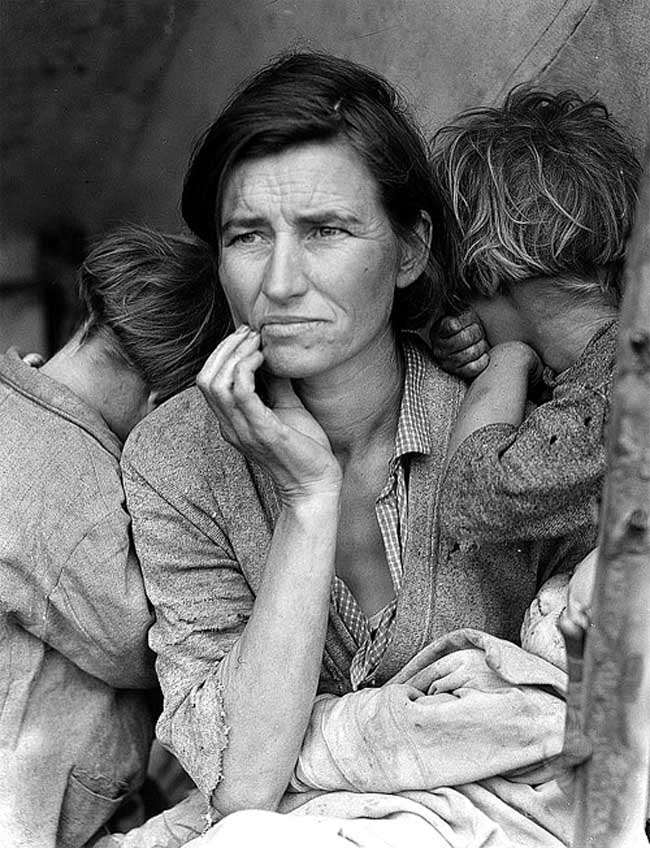
When I was but a lad, it occurred to me that my Mom and her Mum (my Nan) used to spend a lot of their time worrying about just about, well, everything.
They seemed agitated and having not a lot of fun. Money was tight. Their husbands were unreliable and prone to drinking the small amount of cash that by some miracle filtered through the universe to our family.
These were women of the war and inter-war years, of the depression, of the post-war boom that carried the wealth that seemed to elude them nicely.
They wore cotton printed dresses, drank tea and got down to sharing some rather serious worry.
This went on for years.
Worry ranged from imminent financial doom, the travails of bowling club politics (she said this…. and then I said …. and she said …….) to seeing life as a precarious lurching from one medical condition to another. There were women’s issues, one gathers – a mystery to me to this day. And there was a myriad of other actual, imagined or looming corporeal disasters that were expected to yield to the might of modern medicine. Defeating polio was the triumph. Lesser terrors were a walk in the park.
But the unifying theme was worry itself.
It took me some time to start to think about what worry actually was and once I had started to ponder this valley of shadows, with the unbridled optimism of youth, I started to question the point of bothering to worry – in the face of so many actual and potential disasters – about which, the harbouring and nurturing of anguished concern would do absolutely nothing.
Hardly any point as far as I could / can see to worrying – as a futile act that merely immerses one in spirit-sapping decay.
Worse, I think was the realisation that so much previous worry had been about events that never materialised. Worse than futile.
I did discuss these views with Mum – who could see the rational argument that worry was a waste of time and energy – time and energy that would be put to better use by actually doing something. If money was a concern (as it was), perhaps getting a job in the post-war boom of the late 50s and 60s was a very workable and eminently sensible alternative to worrying about poverty. Yep, she could see the sense in that, but it took her until I was nine to act on the issue.
Well, it was really the issue that she had to find some economic base in contemplating divorce from a man who in all probability might have been bipolar, but who had the more socially acceptable excuse of being merely a weekend drunk. The tipping point was when he made a silencer for his .22 and pointed the gun at her. My uncle – who had a car, showed up in a hurry, exchanged some stern words with Dad (I could just about hear the shouting from my temporary safe haven at the neighbours’ place). Uncle removed the bolt from the gun and took it with him – for safe-keeping. He was a wonderful bloke, my uncle. Calm, collected, generous, funny – and a real man’s man. He solved most of our extended family’s worries and stayed friends with everybody.
But Mum didn’t have to worry for much longer – about Dad, anyway. She got a job, secured some independence from him and we were ready to hit the road when Dad was diagnosed with Type II diabetes. He was in hospital for weeks while they stabilised him and sorted out his insulin regime.
Off the grog, and with his diabetes under control, he became something like the man that Mom had married. And for ten years they enjoyed some kind of reconciliation and gentle poverty together. Mom worried about his meals – and the timing and I guess she got her revenge in a very subtle way – she bored him to death with his diet.
But to return to the point – worry. What actually IS worry ?
One can rationalise it as a build-up of anxiety – perhaps based on powerlessness in the face of adversity – real, impending or even just imagined adversity. And one can see, I guess that it’s pointless and counterproductive for good health and well-being, but it seems nearly impossible to not worry to some extent at least.
What parent has never lain awake waiting for their teenager to return from the party where we know there will be risks of alcohol and other drug abuse, of non-consenting sex and other violence ? What parent has ever felt worry-free when their children first took the keys of the car on their own ? What parent ever went worry-free when it was one of their own children going off to war – or on a rather more positive part of life – giving birth to the first grandchild ?
So what is to be done about worrying ?
Nothing, mate. She’ll be right ? I wish !
Next Instalment – Doing Something Positive – Mindfulness
 Window Dresser's Arms, Pig & Whistle
There’s nothing to worry about except worry itself!
Don’t stress the worry; worry the stress!
LikeLike
Nice pensive photo. Well the woman is pensive, that’s what I mean.
Chemical imbalance can cause worry, as, equally it can cause unbridled optimism: euphoria.
It’s easy to say (the song): why worry, be happy. But just sometimes, real physical problems cause depression as do relationships .
Most stories, films books ect are about relationships, angst, remorse, yearning (for Monica, or Nigella’s) and rejection.
LikeLike
Sort of photo, that Annie Leibovitz, might have taken
LikeLike
VL, I too put my money on Leibovitz….
LikeLike
Dust bowl America, maybe, the photo. Perhaps I’ve seen this in a Life or a Time magazine. But brought to ‘life’ coupled with your informational story, emmjay and that is magnificent.
LikeLike
Thank you for you kind words, ‘Shoe.
LikeLike
Beautiful photo !
LikeLike
Agree, H. I’ll have to chase the photographer’s details. Captured the mood well, didn’t she.
LikeLike
Ah worry; what would we do without it? Wonderfully insightful Emm. Most worries are useless and never eventuate or are easily surmountable. It is a kind of addiction, perhaps related to much earlier times when we took on adult (parental) worries before our times and before we grew up old enough into understanding worries.’ “We wanted to help our parents out” but were too young in carrying the bucket.
A kind of anxiety about the future of things, running ahead of reality but always fearful of that which is yet to happen.
It is a worry but luckily I found the perfect partner who laughs a lot and seems to put all worries into a perspective or back in the sandpit of trivialities.
LikeLike
I can empathise, Gerard, I started out in life as a morose child, of worrying parents. I used to worry about what would happen if I were lost, with amnesia. Would someone find me and loook after me? Would they call the police? Or, would they be murdering paedos (a girl at my school was abducted by one of these, way back in the 60’s)?
Dad worried so much his hair went grey overnight. Now I worry about things. Having had a stroke, I worry that I may end up like Alan Bond, replying, ‘I forget’ to every question.
What if something happens to Mrs M, I’d have to lose ten kilos and wax my back, just to pull a bird.
The whole damned thing’s got me worried.
LikeLike
Your post made me chuckle, Big M…have a nice holiday…or is it work?
Milo(Angus) will pull you a bird, Gez loves his morning walks
LikeLike
Thanks, Helvi, I can see Gez strolling the streets of Bowral, like Tin Tin with Sno…I mean, Milo at his side!
LikeLike
My man worries all the time, about this about that, trivia or big things, it’s always there…
He worries about Hung’s health and about Lehan in Japan. I have girlfriends who ask me: can Gerard worry about me as well. I tell them do not worry, he does. He asks me:hey H have rang Francine lately…?
The good thing is that I can be worry free, and sleep well at night…I leave it all to him.
Good article, Emmjay, very good indeed, honest and brave.
LikeLike
Yes, I worry about Gerard’s health, are the tissues thick enough, are the girls buxom enough? Well someone’s gotta do it?
LikeLike
The tissues are triple ply and I tuck them into my top pyjama pocket before I go to sleep. Anything else Hung? KY perhaps?
The girls are now in short shorts and many have big legs that would look better in skirts or jeans. That doesn’t worry me though.
LikeLike
Who cares about their shorts Gez, it’s the other bit that worries me 🙂
LikeLike
Same here Helvi. I used to tell my daughters not to worry because Dad does enough of that for the entire family (and the neighbourhood).
LikeLike
Worrying is great, I worry all the time, like when will Steely Dan put out a new album, is this a fart, will I wake up in the morning and what’s for tea? My parents worried but Dad was a master at giving nothing away, an honest and intelligent man that drank 3 times per year he was the ultimate in playing a dead bat, gave us all strength to get up the next day and get on with it, a quality that Tutu has as well.
LikeLike
Maybe he was her father too?
LikeLike
Cheeky monkey
LikeLike
Well my dad was a pom, and Tutu was half a pom, does that help? 🙂
LikeLike
You said that Hung.
LikeLike
Sorry Algy, Dad was such a good guy, I wish I could talk to him now as he was so intelligent, I miss him even though we didn’t get along
LikeLike
Must be in the genes then Hung.
LikeLike