Playlist by Algernon
http://www.youtube.com/watch?v=_lGaIwh58t0
The Doors – LA Woman
http://www.youtube.com/watch?v=Fi1sBwV1-tU
Dark side of the Moon – Pink Floyd
09 Friday Aug 2013
Posted in Algernon, Entertainment Upstairs
Playlist by Algernon
http://www.youtube.com/watch?v=_lGaIwh58t0
The Doors – LA Woman
http://www.youtube.com/watch?v=Fi1sBwV1-tU
Dark side of the Moon – Pink Floyd
09 Friday Aug 2013
Posted in Emmjay, Politics in the Pig's Arms
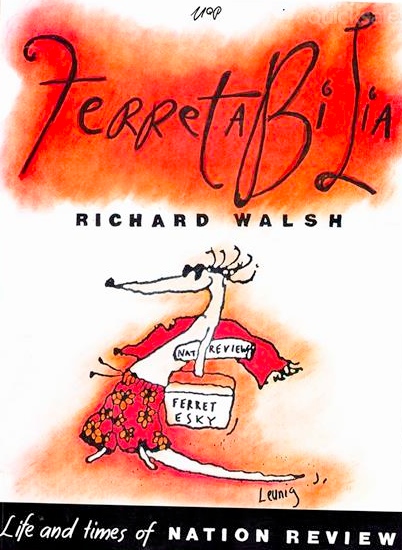
In the late 1960s and throughout the 1970s, I was fond of reading the weekly newspaper The Nation Review. There were many top shelf contributors including luminaries of the times like Germaine Greer, Phillip Adams, John Hepworth, Morris Lurie, Bob Ellis and the redoubtable cartoonists of the day, Michael Leunig and Patrick Cook. Richard Walsh wrote a paperback coffee table book about the Nation Review and charted its course through to its demise in 1983 (thanks Wikipedia). Walsh’s book was called “Ferretabilia” – maybe a copy or two left at Leura Books – because Nation Review as Wiki says “styled itself as ‘Lean and Nosey – like a ferret’
I always enjoyed Mungo MacCallum’s pieces and I was reminded of this in today’s book purchase at random – from Berkelouw’s in Newtown – called “Punch and Judy” – referring (too kindly in my view) to the state of the recent and current political canvas.
In this book, Mungo shows us that he’s lost none of his sharp, perceptive and dry wit since those Nation Review days. He borrows the definition of “Punch and Judy” from Eric Partridge’s Dictionary of Slang and Unconventional English (“a deception, an unbelievable story”) and dedicates the book to his old friend Graham Freudenberg (Gough Whitlam’s speech writer), referring to the old days when politics was “important, passionate and fun”.
And it occurred to me that he’s summed up nicely the current political malaise in just a handful of words -it certainly isn’t like the old days – politics nowadays have become trivial, deeply disrespectful, cynical and dire.
Richard Walsh said that the Nation Review folded because the readership had moved on and that many people amongst the paper’s left-leaning readership had become – by 1983 – disenchanted with politics – not least because of an abiding sense of unassuaged outrage at the Dismissal, but also because of the ridiculous caravan of buffoons the Labor party had foisted on the Australian citizenry, the decent bloke but unelectable leadership of Bill Hayden (who was as charismatic as his batting counterpart in cricket – Bill Lawry, otherwise referred to as ‘ a corpse with pads’) and the apparent contentment voters seemed to feel under Malcolm Fraser’s prime minister-ship. Until Bob Hawke broke the national political slumber party and set the Labor record by winning four elections on the trot.
That may have been true, but I recall the 1980s as a decade of working my bum off, making a quid, buying a house and raising a pair of baby Emmlets. I let my membership of the Labor party lapse because other, more personal things intervened. I left – as they say – “for family reasons”.
Meanwhile in another universe, John Hewson, like Tony Abbott more recently, managed to lose the unlosable election – to the much disliked, but enormously talented and consummate politician, Paul Keating (whose Dad, incidentally played bowls with my Dad on the odd occasion).
Tony Abbott, similarly lost the unlosable election to the much disliked Julia Gillard – who proved to be not so much ‘consummate’ as she was ‘consumed’. Although nobody can take away from her triumph – the NDIS – or the poisoned chalice of being Australia’s first female prime minister.
Mungo MacCallum’s book is about the 2010 election, but so much of his picture remains as fresh as the day he painted it. The political landscape seems to have changed so little, notwithstanding the last election result being the first minority government since World War II.
Both parties struggle to be more popular under their respective leaders, abandoning the fundamental principles that should be their raison d’etre. How can voters of conservative or progressive persuasions deal with the unashamed bastardry of the asylum seeker issue, the poll-driven gutlessness or straight out incompetence of the mining super tax, the on and off and on carbon tax (which surely has to be one of the daftest responses to the seemingly deniable climate change disaster) ?
Is it any wonder under the current major parties and their dropkick leaders that we are facing an impossible choice – a brown turd government or a black turd government ? Is it any wonder that the outcome is more likely to be determined by redneck idiots believing a massively lethal and self-interested, even evil media ? Is it any wonder than the youth vote – that could have the power to turn this election into something that might arouse some passion and idealistic fervour – could not give a tinker’s cuss ?
I have to admit that I felt – and still feel that John Howard was a disgrace to his high office – and that a man who, riding on the coat tails of such an unworthy dill as George W Bush, took Australia into not one, but two completely unjustifiable bloody and disastrous conflicts. And I was proud that Australians told Howard and his cronies how lowly we regarded them, when they tossed him out of his own electorate and the Libnats out of government.
We didn’t throw him out for this reason. We threw him out mainly because of his shitty, demonstrably unfair and un-Australian industrial relations policies – rightly hammered in a wonderfully effective campaign run by the unions – before the same unions’ leaders went on to show an undisguised propensity to spend their member’s union dues in brothels.
Instead of the Rodent, we went on blind trust with a dork who magically appeared out of the Queensland wilderness and turned into some kind of administrative mandarin-speaking autocratic brown nose.
But perhaps the most telling observation offered by Mungo MacCallum was the poisonous internal shitfighting of both the major parties. The NSW Labor corruption managed to eclipse the incompetence of the far right Labor in NSW and Queensland that, thanks to the media, well and truly (and perhaps rightly so) overshadowed the recriminations within the Liberals – Abbott turning on the NSW Liberal far right religious power-broker David Clark who Abbott saw as stacking the NSW party with dud candidates and thereby ensuring the loss of the unlosable election. If this is not a classic case of the pot calling the kettle black, I’ll be damned.
And let’s not forget the Abbot – Turnbull leadership debacle, which, had the one vote majority gone to Turnbull instead of Abbott, could have seen the biggest landslide in Australian political history instead of this tensely poised struggle between two idealistically barren drop kicks.
This time the choice for voters is different. Through both the main parties’ barren policies and their cynical power-hungry amoral machinations, they have set in stone the abject poverty of the two-party system. They have shown us that both the Labor and the Liberal parties have become corrupt and despicable beyond belief.
This time Australia really needs to throw out not only the Government – but also the Opposition. And unless we let the two main parties go, a double double dissolution is impossible to achieve.
I have said in a previous article (OK, I admit that it was clichéd) that Australians will get the government we deserve, regardless of the outcome. If our elections continue to be won by manipulating the media, by convincing rednecks and bogan half-wits with no moral compass to vote (even against their own personal interests) for policies (like boat arrivals) that are unimportant in the bigger scheme of things, and ignore issues that DO matter – like climate change, education, employment and the environment, the world will see another prime example of the ugly side of western democracy – government of the unworthy, for the unworthy, by the unworthy.
05 Monday Aug 2013
Posted in Algernon, Entertainment Upstairs
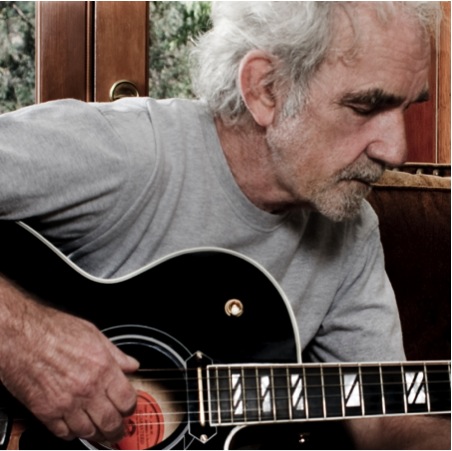
Playlist by Algernon
As many of us know JJ Cale died last weekend, I thought I might just present two albums from the 1970’s as a tribute.
https://www.youtube.com/watch?v=L9pS_cc_qJI
Naturally
https://www.youtube.com/watch?v=lvyLJdTPNWM
Troubadour
05 Monday Aug 2013
Posted in Uncategorized
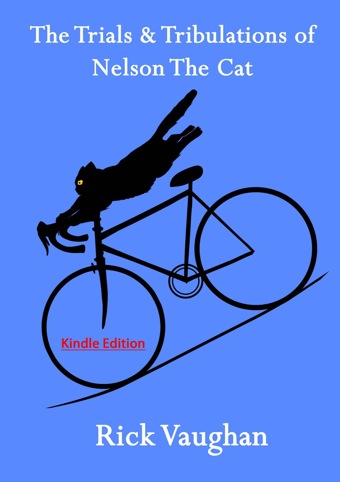
Friends of the Pig’s Arms might recognise a familiar furry face – Nelson the Cat.
Ricardo has hit the big time with his recount of Nelson’s adventures – you can catch the Kindle version over here, pick up a copy – maybe a friendly review, perhaps ? …….
Trials and Tribulations of Nelson the Cat
29 Monday Jul 2013
Posted in Emmjay, Politics in the Pig's Arms
Story by Emmjay
Mr D’arcy wore the concern of a man in denial on his face like a poodle suppressing a fart on the steps of Parliament. This was his moment. His unlosable election strung out in front of him like a python with an impossibly large pig stuck in its gullet. Despite his profound ignorance, his minders regularly had recourse to remind him that unless he continued to shut the fuck up, more people than they, would know the depth of his incapacity. So D’arcy had good cause to worry, because if he actually failed to swallow the pig, there was a cadre of mining magnates who would drive one so far up him his eyes would water.
D’arcy knew he had the stuff of a lesser man and that the electorate saw him as unworthy of a position of great office; not worthy of the front bench in the Leichhardt Wanderers change room, let alone the front bench of the government. An inquiring mind might have asked its owner why it was that such a statesman as he, was so loathed by the population that they would prefer to vote for a complete dickwad like Mr Bumble.
But it was precisely because D’arcy lacked an inquiring mind that he was oblivious to the fact that even the reddest necks in the borough were convinced that he was a not only a fraud, but undoubtedly a blue ribbon shithead. But to be fair, his party was a legendary band of criminals, dunces and pants-wetters who believed implicitly in their divine right to rule, and D’arcy believed in his diviner right to rule them and by extension, to rule the whole borough – and nothing but the borough, so help him God.
And he was convinced that he had that special relationship with the deity that would see him triumph by sheer dint of persistence. His was a God who took no prisoners, who brooked no backchat from soft-cock do-gooders, who set women in their place – swooning in crinolines with the kind of amnesia that women D’arcy had shagged or king hit or both (not necessarily in that order) could reasonably expect to experience.
If D’arcy had had a clue, he would have known that not a single person on his own back bench would pee on him if he caught fire – which, according to the bulletin posted in the men’s toilet and the long train of various “hear, hears”, was quite a popular aspiration.
In truth he was massively unpopular. But that wasn’t why he wore his worried look. D’arcy hadn’t punched a grogan in almost three weeks. He had forgotten the number immediately after 1. And strain as well he might, he could not, in effect, give a shit, any more than he could articulate a policy.
The pressure was on. He had to table a policy and liberate a brown trout (not necessarily in that order either). He was stuck. D’arcy decided to consult his numbers man. “I’m having trouble getting past one, Mr Ham”, he said.
Ham, a rotund barrel of a man had given up wearing the traditional pinstripe of a true numbers man because the stripes staunchly refused to run in parallel, giving him the look of a three dimensional model of a landless planet. He was a man well endowed in latitude, but longitude, like pinstripes, was not his strong suit.
“I’d give prune juice a run” said Mr Ham, with the knowing wink of a man rich in the experience of being up that particular creek. D’arcy took him at his word and dispatched Miss Mirrorball to fetch for him a gallon of the finest prune juice, sparing no horse and at great haste.
Miss Mirrorball returned the very next day, breathless, with a flagon of vintage prune juice. D’arcy, as was his usual state, was in no mood for pleasantries. He took the vessel, thanklessly from Miss M and allowing no time for savoring the fine vintage, he downed the gallon without drawing breath. Moments passed.
D’arcy’s colour reddened. His front bench looked on expectantly and the Shadow Minister for death stares broke cover first. “Anything developing, Darse ?” she inquired.
“Geeeeeezzzzzzuuuussss!” shouted D’arcy and sped off in the direction of the porcelain plateau. A few more moments passed.
D’arcy staggered out of the disabled convenience door, looking haggard and wan. He paused, steadying himself and adjusting his trakky dax. “It nearly killed” me he said. I felt this blinding pain and in a flash, there it was, staring up at me, steaming, defiant, a fully-formed policy in the shape of Mr Morrison.
Ham pushed his way into the cubicle and stared downer, he squirted some Pyne O’clean into the bowl and pressed the flush and returned to the front bench.
“Impressed, Ham ?” said D’arcy.
“No, the paperwork wasn’t right. I had to turn that one around and send it back, D’arcy.”
26 Friday Jul 2013
Posted in Algernon, Entertainment Upstairs
Playlist by Algernon
http://www.youtube.com/watch?v=S7cbkxn4G8U
Treaty – Yothu Yindi
http://www.youtube.com/watch?v=CG-CNqOhO2c
Djapana – Yothu Yindi
http://www.youtube.com/watch?v=XZ-hbpWlXNQ
Tribal Voice – Yothu Yindi
http://www.youtube.com/watch?v=O7TWJMO4k3k
Timeless Land – Yothu Yindi
http://www.youtube.com/watch?v=x8-YMpYbRqY
Wiyathul – Geoffrey Gurrumul Yunupingu
http://www.youtube.com/watch?v=i-i0FQBbO8E
Djarimirri – Geoffrey Gurrumul Yunupingu
http://www.youtube.com/watch?v=MKC-Jd7KN64
Bapa – Geoffrey Gurrumul Yunupingu
http://www.youtube.com/watch?v=WhgDqY7_RGs
Gopuru – Geoffrey Gurrumul Yunupingu
http://www.youtube.com/watch?v=LerRV-CGeFU
Before too long – Paul Kelly
http://www.youtube.com/watch?v=6_ndC07C2qw
From Little things big things grow – Paul Kelly
http://www.youtube.com/watch?v=pWhj4sVeVD0
Dumb things – Paul Kelly and the coloured girls
http://www.youtube.com/watch?v=iXBGr-U5PIs
Rally round the drum – Paul Kelly
http://www.youtube.com/watch?v=ejorQVy3m8E
Beds are Burning – Midnight Oil
http://www.youtube.com/watch?v=Ofrqm6-LCqs
Blue Sky Mining – Midnight Oil
https://www.youtube.com/watch?v=2m3oYeVYdvg
Truganini – Midnight Oil
https://www.youtube.com/watch?v=CSybR_k_Ouo
The Dead Heart – Midnight Oil
23 Tuesday Jul 2013
Posted in Susan Merrell
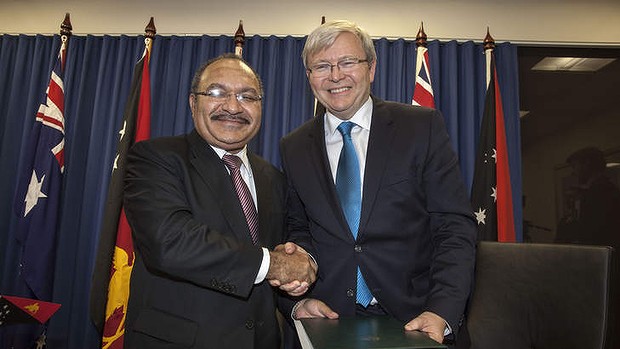
By Susan Merrell
And he sold our reputation, On the proceeds he will dine, In a land of golden plenty… Where just the dregs are mine.(With apologies to) Idris Davies
The bilateral PNG solution to Australia’s refugee problem is wrong on so many levels but I am going to address just one:
…from the point of view of Papua New Guinea
It is already well recognised that the agreement is a cynical and expensive exercise at vote grabbing by the desperate leader of an ailing Labor Party whose wresting of power from Julia Gillard at the eleventh hour requires him to pull a rabbit out of a hat.
And does Rudd care about the consequences for anyone other than himself, first, – the Labor Party, second – and Australia, third? I doubt it.
There are more people to consider: like the refugees (who have many people advocating, quite rightly, for them including the UN).
Then there’s PNG.
Here we have a nation battling to achieve modernity: struggling with the concept of democracy where pulling together over 800 discrete tribes into a nation is proving a challenge. Here’s a nation that achieved independence only 37 short years ago – some have mooted it was premature. Poverty is rife, as is governmental and institutional corruption.
The tortured transition to modernity combined with abject poverty and lack of government services has produced profound social problems, not least of which is violence against women. Indeed PNG is a recognised producer of refugees – most of them women fleeing domestic violence.
Add to that law and order problems and a population that have embraced a form of punitive and retributive Christianity that sees homosexuality and adultery still on the statute books and a population generally intolerant of religious difference.
Under the circumstances, it is a society hardly likely to take kindly to the special privileges that will be afforded refugees through Australian money – a better life than they could ever hope for. Can you blame them?
The main problem is not logistical, it’s ideological.
If you are going to say to the abused spouse that if he wishes to pursue Cinderella, he will be forced to marry the ugly sister – how must that make the sister feel?
PNGeans are not comfortable with the role of ugly sister, and neither they should be.
The whole idea of using the threat of living in PNG to deter refugees is repugnant. PNG is a nation struggling to maintain national pride through all of their profound problems, not helped when even the ‘touchy, feely’ Green Senator Milne, insensitively stated that Rudd’s solution surpassed even Abbott’s in cruelty to refugees.
When international headlines have labelled PNG as ‘Hell’, a ‘shithole’ and other equally pejorative terms, how does PNG maintain a vestige of national pride?
The cartoonist, Larry Pickering postulated that:
The only cost to O’Neill is that his country will now be known as a worse hell-hole than the world’s worst hell-holes.
It’s a price far too high!
In a land of poverty and strife where just existing is often difficult, O’Neill has sold cheaply one of the few things that PNGeans have to embrace and hold dear – their pride.
Gary Juffa, a new breed of Member of Parliament who is fiercely patriotic and who sits on the middle benches (ie neither government nor opposition) wrote:
…Australia is sending them [refugees] to a nation that is a developing nation with many issues of its own to contend with…in the international landscape, PNG is painted as a horrible place, IT IS NOT! I am saddened that my home is being used to deter people, scaremongering as it were…I welcome those who need help but what if they do not want “OUR” help? No body wants a hostile guest…
Introducing: Papua New Guinea’s number 1 citizen and signatory to the agreement
Independence in PNG brought into prominence an echelon of society that is venal, corrupt – and ruthlessly so. This stratum is the highest in the land. It is well understood in PNG that the only way to riches is through becoming a Member of Parliament where one can put one’s snout in the lucrative corruption trough. It is why there were close to 3000 candidates contesting 111 seats in the last election.
At the very highest of this echelon is the man who, last week, sold the reputation of PNG for ‘cargo’ (a concept well entrenched in PNG tradition): to achieve that which venal governments should easily have achieved long ago had they not stolen government funds:
He is Peter O’Neill, the Prime Minister of Papua New Guinea.
In the early ‘noughties’ O’Neill was embroiled and implicated in a corruption scandal that saw millions of dollars disappear from the coffers of the National Provident Fund.
Although he was named in the Commission of Inquiry (along with others,) no one was ever convicted of any offence – which is par for the course in PNG. Corruption is a low-risk business. O’Neill’s case did not even reach the courts but was dismissed through lack of evidence – evidence that was clearly extant during the Inquiry.
With half the annual budget regularly going missing to corruption, who knows how much of Rudd’s blood money will even reach its PNG target. The Australian Prime Minister’s desperation is making O’Neill’s negotiations like shooting fish in a barrel.
The agreement promises that PNG will have more control over aid monies, for instance, something for which O’Neill has been agitating since his inception as Prime Minister. That notwithstanding, the very reason that Australia stopped contributing aid to the general national budget was to give the politicians and public servants less control and thus to stop funds disappearing into well lined pockets.
A national disgrace
No nation can thrive without national pride.
Without national pride to cement civil society, Papua New Guinea’s problems are just poised to worsen.
When Kevin Rudd positioned PNG as the proverbial repulsive ugly sister, for the Prime Minister of Papua New Guinea to have, smilingly, agreed is nothing short of treason.
O’Neill should be in the business of nation building not nation (and soul) destroying.
Seven million Papua New Guineans are struggling to maintain their national pride against great social and economic odds. Take away pride and you take away the last vestiges of hope. How dare this Prime Minister?
This Judas got his 30 pieces of silver.
23 Tuesday Jul 2013
Posted in Poets Corner
Tags
22 Monday Jul 2013
Posted in Sandshoe
Story and Reading by Christina Binning Wilson
That asylum seekers are being sent to Papua New Guinea is outrageous outcome and destination. I wonder what outcome can be expected for Papua New Guinea. My heart bleeds.
The election is not only about boats, a flogged horse is still a horse of course, but education, electricity prices, energy use, environment, digital security, broadband and so on e.g. the dole that is starvation, homelessness, risk orientation, policy as similarly cruel and callous and retrogressive. It is about gender and how that is acknowledged. The election is about policy development and every other aspect of the administration. It is about parliamentary processes more than it has ever been, about who is rooting for who-how-whoever you are regardless whether you know the aforementioned poem ‘The Second Coming’ by Yeats* and whether we get it from Malcolm’s reading.
It might have a bearing. I don’t want any hope of Malcolm Turnbull becoming PM and think there is even less real chance.
My reading of The Second Coming
*http://www.youtube.com/watch?v=237u6dTr6s0
What justifies Malcolm’s isolation, seeking to bond a pod, a cast at a podcast, of a concept that all the men in Coriolanus are very unattractive and we can suppose he means not very nice?
One of the important (all Shakespeare’s characters are important) characters of the male gender is, in fact, a baby, Coriolanus’ infant son and for all we know from Malcolm’s description he is not there. True, who said anything about the baby, about fair (or inclusion). True, it looks as if the kid does not have much hope surrounded by (ipso facto) these less than even half OK fellers (yuk! boy germs).
Playing a contemporary gallery. Nothing is more attractive to men and perhaps women an adviser said than a man who decries the behaviour of men.
Yet, the play has a significant component of domestic drama that is explicit and implicit. No reference to the plight of the war hero on a domestic and political and social front after returning home when the battle is won (I recall at University we thrashed the discussion about the feelings of our own soldiers and especially the effects on them of the cold shoulder they received). Yes, there are riots going down that are pretty severe because Rome in my own recall had emptied its coffers. The proletariat by whom he once was hailed as hero are laid low result of their starvation diets and bearing their fardels (can’t remember where that is, but didn’t forget).
Move in closer. A keynote speech is delivered by a woman in ‘Coriolanus’. Not a mention of it.
20 years ago, and it is 20 years on, I wrote the poem ‘Coriolanus’, considering what I witnessed in my life experience to the event of the 1987 financial collapse. What I felt. I would write a series of poems reflecting not the chronology, stories or a specific representation of characters, but a thought image about human behaviour that was direct result of thinking about loved Shakespearian images … where on my psychological map had I arrived.
Coriolanus *
Pulling the wings off butterflies
I am disappointed;
But I must persist.
Watching the butterflies
I am singing
Clear
Loud.
This is a song.
This is the recall.
Savagery has a gossamer thread.
I must paint it.
* cf the play by William Shakespeare; Coriolanus’ son is being reared by his paternal grandmother while the General is at war and [I made the error it was the grandmother] she is recounting watching the boy chase a butterfly, ‘mammocking’ them. She proclaims her grandson, with pride, his father’s son.
‘Coriolanus’ to me -not Shakespeare’s play, but my poem in this reference – is a signifier, a meditation, as much as a diary note. I wrote it equally as proof of my mind map and marker, of an interest in human behaviour and determination.
It was a friend visiting the family, Valeria, who declared (without reproof) the definitive speech revealing the child’s upbringing.
Malcolm has completely removed friendship from the play. I think it is difficult to have a lack of it without its important presence. Coriolanus has a friend who tries on the streets among the people to get information and mediate on his behalf. Not an unattractive trait. Menenius counsels the proletariat to fear what the power of the administrators can do and employs words of tact by way of contrast to Coriolanus displaying apparently insolent behaviour towards his countrymen in the opening scene. The setting is laid out for us to see civil unrest when the army of Volscians bent on invasion reaches Rome. The economy is already on shaky ground. Coriolanus is sent to engage the Volscians and defeat them.
We however are privy to detail of relationships that are rich between the soldiers of the army, and senators, patricians, between women and men, not one dimensional (whenever to anybody’s knowledge was Shakespeare one-dimensional) including inference again Coriolanus commands respect in banter and joking that is not malevolent. He has purpose, is pumped for war with a band of brothers. When he returns, anxious for his standing, he meets even with protestations in his defence of proletariat who declare him virtuous, worthy of honour and reward. Nothing is black and white regards all men being ‘unattractive’ implied as no other as Malcolm proselytises. Nobody’s descriptive powers could be stripped further from the pages of Coriolanus by Malcolm. A crafted thoroughfare of bustling activity, demonstrations, controversy, trouble; opinion and diversity are deleted from viewpoint by Malcolm’s implication not a man was worth a pinch of salt. Apparently clever remarks at the forum tick boxes. Might we be able to not titter, but instead rise to our feet discarding falsely shallow repartee and point to the emperors?
In Act 3 Volumina and her daughter Virgilia, Coriolanus’ wife, mother of the child are at home in surrounds we soon realise are opulent and comfortable. The signifier is the grouping; the play is a psychological drama about a man of standing because of his military skills and prowess, raised by a mother who values the characteristics of stoic forebearance and a war mongerer and companioned by a compliant wife; the crucial keynote speech is not the death speech by Coriolanus, but the attention the visitor, Valeria draws to the child and the child’s behaviour. Equally important is Shakespeare presents to us Coriolanus’ mother, Volumina discussing the mental state of separation from him with her worried daughter-in-law; her preoccupation is pride in his position as a war hero and the child’s mother’s concern for his safe return, but more questioning the mother’s viewpoint.
We are shown powerfully the generational and societal influences making the boy as it made the man.
Valeria, discussed at length in High School that she could be dispensed with out of the plot (I recall) bulks up numbers visiting Volumina, the mother and Virgilia, the wife with purpose in my view of stage presentation and story, to show the influences surrounding the mother of the baby, Virgilia, dominated by Volumina, their female grouping, their pasttimes not for trivia, not intended for deletion, but the scene is dark predicating the hopelessness of Virgilia’s position whatever it was she may have wanted for herself and her child … even trivial expectations to leave aside work (needlework) displayed by their visitor (the noblewoman, Valeria) of Virgilia, but she begs she will not leave her post loyally waiting for Coriolanus, her husband.
Heed Valeria, her excitement and pride in the destructive future she envisages in store for the small child.
VALERIA
O’ my word, the father’s son: I’ll swear,’tis a
very pretty boy. O’ my troth, I looked upon him o’
Wednesday half an hour together: has such a
confirmed countenance. I saw him run after a gilded
butterfly: and when he caught it, he let it go
again; and after it again; and over and over he
comes, and again; catched it again; or whether his
fall enraged him, or how ’twas, he did so set his
teeth and tear it; O, I warrant it, how he mammocked
it!
Text of Coriolanus
* http://www.opensourceshakespeare.org/views/plays/playmenu.php?WorkID=coriolanus
22 Monday Jul 2013
Posted in Sandshoe
Story and Artwork by Sandshoe
When Experience in a Limbo Haze* appeared in this august blog, some of the flattering words used in comments were “rambling” “layered” “amble” “frolic” and “amusing”. I referred at its end to the numerologist. Big M commented he looked forward to another instalment so where we pick up the story…
The numerologist was at the bus stop with his worldly shopping bags and bags of books, but not so laden to not seem freer in his concerns and with his replies than might be expected on a hot day. He seems to swing with the bags as if his fragile torso cannot resist the motion once that has begun. He is a repatriate who lived in India he has told me and wishes to translate and publish the Adelaide telephone directories as volumes of numerological significance and similarly, a key of a town street map and its addresses where he lived in India. We part at the street corner after a short walk of ritual when we disembark from our bus journey to the outer suburbs.
I did become dangerously involved. That seemed inevitable with great clutched handfuls of sentences tugging it appeared in his breast as well as mine (overlooking numbers). We shared the newspaper and documents when we met at the stop and rode the bus together like the aged social gypsy renegades we knew we appeared in our mis-shapen skins weathered by lives lived in the open. One thing was neither of us had the tell-tale evidence of excessive alcohol use so many did we greeted in that poor place and we trudged with our distinctive canvas bags and our exposed feet in sandals to catch the bus with the regularity of children going to school
When we walked together past the pub one day, patrons pointed as well as waved kindly acknowledgment. A cascade of the results of spiritual abuse showed in our eyes. Yet nobody could look keener about destination. Our eyes stayed averted from the entrance platform’s quashed blackened blobs of chewing gum extruded and spat out of the mouths of travellers and passers-by in some year past and added to, some of the originators I reckoned likely statistically missing from official summations about suburban population and housing growth. Deceased. Moved away. No longer travelling by public transport through the Transit Station.
He, Amin, travelled into the city where he would sit in ‘the cafe’ with the people who went into the city to sit with him there and I to ‘the centre’ where I could sit with the local people who came to that place to sit with me there so here was common interest. People heard us. People travelled to hear us.
Whenever I recall he bought me a pen I remember I hate it that Parker changed their pens to a universal filler and the pen is redundant. That’s the sort of thing the modern world does.
He began to give me photocopies then of articles about women writers like Kate Chopin.
“Here” he said with the greatest of urgency reaching into a calico bag of the many slung in one hand for the purpose of setting the other hand free, “I got this for you.”
Wads of sheaves of paper perfectly marked according to their page numbers and with a bibliographic reference on the final page were thrust into my hands with the expressionistic gesture of a friend. I barely knew him. I gave him a copy of Wordsworths text on the imagination. He mildly scampered on the spot in the process of transfer to me in return of one by Frances Power Cobbe and that was possibly frustration looking back with the hindsight of my own ageing at myself and the tableau we made. There was about him a contradiction posed by a sense of tranquility overlaid on urgency much was to be done. The planes juxtaposed uncomfortably. My movements were rapid and patience I knew I had in bucketfuls. Closer scutiny showed our detail
Page borders of newspapers he picked up from bus and train seats were filled with finely written numbers from which lines were drawn to circled words.
He may have thought he found an ally. He said he needed one and smiled a non-threatening smile of peaceful unity, however shocking whatever he had to say. He was converting every text as far as every text could be into numerological translation and rather like I imagine a one-person Gutenberg Project volunteer who believes without them we cannot convert to digital translation all the books in the English language and lives bent on seclusion to the purpose hurried. Nobody would casually know a sideways stoic’s shuffle to catch a bus laden with the weights of bags filled with books and documents on one hand and groceries on the other as languorous pendulum (sometimes to the ground) could be hury.
Numerological translation cannot seem on inspection like anybody bearing its responsibilities can be hurried. Ahmin to the eye of a passer-by performed every life movement with the same grace and at the same pace. I knew him just that much more.
In his residential unit’s living room Ahmin stacked freshly bought books higher in numerically marked and ordered cardboard boxes. Newspapers made a raised border around the empty inner floor of the one private room of the flat whereas he slept on the floor of his kitchen on a mat alongside a modest collection of personal survival items. Random numbers apparently were signifiers he searched for and between different pages in different books by different authors he understood their universal meaning.
He was a teacher. Being one grew out of circumstance that embarrassed Ahmin. Where he lived in India people came to ask for his teachings even though he declared he had none. He humbly waved his hand towards himself in slight reference and said because of the way he looked. Numerology was a by-product. He was informed by the philosophical search for the numbers of the universe. His face suffused with a tender-pink flush. All that was left was for someone to copy the key he had written on the cover of each newspaper and book and do the calculations.
He gathered the universe. The work would require a scribe to complete when he was gone. He uttered ‘gone’ as if the inevitability was an ascension of no return
I knew he believed he had been a presence for years before his choosing his place of maternity and birth.
I knew the contradiction. Tears and years before when I was a neighbour in a community where I shared mugs of tea and coffee at kitchen tables with visitors and vice versa I might otherwise have forgotten in some part were ever equally part of my life with its own different signifiers (however many since proven false) I was informed by a woman her unborn had searched for her and chose her. She was special and her picky child was an old soul.
He was moody and agitated over a cup of tea he had made, having made one for me with apologies he had no milk, but that you didn’t rightfully drink tea with milk and slumped. He sat on the floor in the way of someone long accustomed to living on linoleum and others sat in chairs that in his home he had especially collected for them from the sides of roads, outside houses, from friends’ verandahs and their rubbish collections.
We shared an understanding of rubbish collection. Collecting useful rubbish suited our mutual ends I can see in the retrospect of continuing experience (of rubbish) and acknowledging the expensive garnishee of philosophy behind our non-contributory gestures to economic pedals we did not want to push for them to go round and drive the industrial Big Wheel. Our educations had cost us dearly, mine in the corridors of uncertain power where the work was mundane in a position as an middle manager and his in the slums of India he had been discarded out of eventually and sent home. We ought to have developed into the greatest of friends. We were equally marginalised. We equally claimed we had no answers. We were searchers
We equally stood to gain from having an ally.
He bought me a cup. I could write he brought me a cup or gave me, but that would take from the meaning of the stated relationship between the cup handed to me and a cup he bought for himself I assume out of sentiment from the same shop display and batch order. I see the cups in an aisle. Two for $2.00. Two for four. Two, anyway, selected together.
“I bought a cup and I bought one for you too. They’re the same.”
The cup, a slender mug, had the word ‘COFFEE’ stencilled into its decoration and did not match in my thinking the persona of the gift giver. I understood the pen. My response to the cup remains an awkward misfit to the meaning of gift. I said pragmatically ‘Thank you’ and stood up from the round table in the living room end of the unit’s kitchen utility and living area where I eventually hosted meetings shared with a select group of aged writers and walked with it past the overhang of kitchen display joinery to the sink at the kitchen utility end where I washed it and returned with it. I filled it with coffee from the freshly assembled pyrex jug of the brew that inspired when I had placed it on the table the transfer to me of the gift. I continued backwards and forwards for the relief of movement it gave me as I had begun getting cups from the collection I had previously assembled from where I could buy them for little expenditure. I poured an allocation of coffee into each. The writers sat uncharacteristically silent and watched me.
I think they were admiring not critical. They had the giving to me of the gift to reflect on and maybe, as I had adopted for focus, its design and decoration. I wonder can compressing so much information show what happened detail by detail and result of the later experience of time
Thinking on the gift I remembered in a reflective moment I had an ageing ghetto blaster with an adequate radio that could replace a radio Ahmin had announced in a tone of despair was broken. The radio plays on ABC Radio National were his greatest source of solace and the classical music programs. We were able to talk a little about classical music. I carried the machine up the hill to where he lived and we transferred the wire aerial he had attached to the defunct and abandoned radio he had listened to for the previous 15 years since his return from India he told me as we set up the replacement. He felt the loss of the radio keenly. He converted the sense of loss to an adoration of joy at the first utterance of sound when we had completed the installation. We sat round the ghetto blaster (as much as any two people can sit round anything on a chair and linoleum) and lent forward in silent appreciation of radio. We unusually were able to listen to a performance of Rachmaninoff’s Prelude in C-sharp Minor played by Rachmaninoff himself. He made at its end tea as he often did on a spirit stove.
Ahmin held his head and grimaced in the middle of one meeting. He insisted he felt no pain, but that the sensation was terrible and he rocked holding his head. I gestured to the other writers they stand and each took their coffee and gathered on the lawn at the back door. I imagined the residents of the neighbouring units alarmed by an aged coven of strangers. I was able to move the table out of the range of the rocking man whose appearance was ashen
Nothing would pacify him. Nothing would alleviate the symptoms other than he would be better for the company. He stroked his lobes with his lengthy bony fingers. No, he refused an ambulance. I reconvened the meeting. Would it be better I asked if he saw a conventional doctor. He vouchsafed he saw a Chinese herbalist and the compound he was taking had little effect on the condition he exposed for the first time. For months he suffered these sensations in his head and he craned his neck with his eyes closed indicative of anxiety and now a sense of betrayal. I was reminded how deeply he had appeared hurt when he reflected he was deported from India as an overstayer after residence there for approaching 40 years.
Is the viewpoint a glimpse of the vivid complexity of a wildflower placed under a book for preservation? How can we understand something anew we did not ever completely know. I may have been collecting perfect specimens. I believed I had damaged one if not more than Ahmin. Ahmin was distraught. I suggested strongly he attend at the hospital. He was more like a wilted hothouse bloom that ought to have shed pure light for its adoration. He finally told me. He had a problem once with a doctor that was one of the main reasons he had gone to India when he was a young man to escape the society of who he was raised and where he was raised, certainly from his transfer to a position as a clerk (yet he hadn’t minded his job as a clerk, he had said). His delivery of his compelling news was simple and directed. He had vowed he would die never having attended at another office of a doctor trained in Western medicine. I was only silent considering the issue insofar as it affected my vulnerable status as hostess and responsible for the group first. He never meant to stay in India. That was what happened. He returned once and left feelings of discomfort again.
He subsided meekly with his hands with their long fingernails clasped in his lap. I knew the pose and saw it more and more frequently as the weeks went on alternating with head shaking and declamation against his needing the attention of a doctor if anybody shared their inevitable thought. His slender frame seemed to have shrunk inside his simple cotton trousers and the shirts he wore with plain collarless round necks hung loose, crumpled where their opening was buttoned in an attempt when the air was chill to stave off that influence. We met on the bus. He wore a light cardigan now that was grey and hung neatly on his bowed shoulders. I asked him his destination. He had a small calico bag slung over one shoulder and none of the usual paraphenalia of books and documents he travelled with to my knowledge in any direction.
Ahmin had a sister. He was on his way to stay with her. I knew of her and met her one summer on a train journey between the suburb I was staying at for a holiday and another I was visiting. The University where Ahmin was sometimes a guest speaker was closed on a holiday break that time and he was taking his sister with him to a celebratory meeting of the Society for Krishna Consciousness. She was a surprising woman with an open charm and countenance. We are only people when the day moves its round for wherever we seek our knowledge and our ambitions, pretensions. I was pleased he was in family charge and ill at ease and uncomfortable seeing him this time, alone on his journey and frailer than he had ever looked. I said I was pleased he was welcomed into the home of his loving sister for his soujourn. Would he stay long.
He had sold and given away all his belongings. He looked downcast. He was going to live with her and her husband. I felt the sense of betrayal again and as I had so many times in associations with confidantes who I disappointed. I knew that my urging Ahmin to go to the hospital to seek medical advice was the undoing of his trust. He had told me he would never be released and shrunk from me in fear. Here when we met again he looked at me with the caution of a man who supposed I would betray him eventually. We greeted each other, mutually cautious and both curious and farewelled each other with a sense of gentle wistfulness. Where was the other going we had both asked. I was visiting my daughter. Her garden was thriving and she and I had long agreed I would visit her and select some cuttings for my newly struck herb garden.
I fulfilled long anticipated travel plans the next spring and left my unit in the care of my daughter with instructions for her knowledge of who might visit me, who was friend and our relationship. Ahmin did not visit and he had not left a forwarding address so that when I returned in the middle of the intense heat of summer when the Adelaide plains turn harsh and brown I felt among a listed review of my contacts and friends a strong pang of loss to consider he was gone from the place he lived and where for my part was pleasure in the simple experience we had shared cups of tea. I hoped we might meet at a central point of engagement or on a journey on a bus or a train, but we never have.
https://pigsarms.com.au/2011/09/28/experience-in-a-limbo-haze/