• The Pig’s Arms
  • About
  • The Dump

Window Dresser's Arms, Pig & Whistle

~ The Home Pub of the Famous Pink Drinks and Trotter's Ale

Window Dresser's Arms, Pig & Whistle

Category Archives: Warrigal Mirriyuula

The Adventures of Mongrel & the Runt

The Milthorpe Murphy Marathon

10 Saturday Mar 2018

Posted by Therese Trouserzoff in Warrigal Mirriyuula

≈ 7 Comments

Tags

Milthorp, Molong

Grand Western Lodge in Millthorpe (c) David Roma

Grand Western Lodge, Milthorp

Epic and Photograph by Warrigal Mirriyuula

It was an August Sunday that began as winter Sundays often did in Molong. The watery sun rose over the shoulder of Mount Canobolas, racing down the western flank and across the orchards and morning paddocks, setting the frost asparkle and chasing the wispy mists from the hollows and shadows. Clear blue sky with a few high thin clouds, it looked like it was going to be a glorious day.

A little after the sun had bathed all Molong in its Sunday beneficence the church bells began ringing. Across Molong chimneys issuing that thicker smoke confirmed the stuffing of kitchen fireboxes; that tea, and toast, and pots of porridge were being prepared.

But there was one kitchen, on Shields Lane, that had been warming up since well before sunrise. In that kitchen Porky, Algy and Harry had feasted on a big breakfast of porridge, sausages, eggs and fried tomatoes, doorstep slabs of toast and butter, thickly covered with Beryl’s dark marmalade, and all washed down with buckets of sweet black tea. This was a big breakfast for Porky’s big day and the whole household including Mongrel and The Runt were focussed on the task at hand, and not a day too soon. All three men were heartily sick and tired of spuds at every meal. Even Mongrel and The Runt had turned their noses up at more chips, more mash.

The last training bag of King Edwards had finally been abandoned, left slumped in the corner of the garden shed. Harry thought he might dig them in and wait for spring to bring a bumper crop of spuds, and they’d fix some nitrogen in the vegie garden too; but that was for later. Today was Porky’s day. The future of that last bag of training spuds was deferred, waiting on the fortunes of another bag of spuds currently sitting in Milthorpe with Porky’s name on it.

Porky had been working towards this day for months now. Right from the time he heard it first mentioned in the bar at The Freemasons. That mention, of course, orbiting around the opportunity for a punt. To carry a hundred weight bag of spuds for a mile, let alone run the distance. Well, that was ripe for plunge.

But for Porky it had come to represent something else; a right of passage, a way that he might shuck off Fairbridge using the only things Fairbridge had ever given him; his bodily strength and his strength of character.

To run a respectable race and not come last had been his original goal, but with Tommy Molloy lately assuming the role of athlete trainer and advisor, his aspirations had grown a little. He didn’t really think he could win but he might be able to place.

Porky was determined to make a good show of his appearance or go down in the attempt: and in that way that Fairbridge boys can be, when they’d no-one else to rely on but themselves, he was certain he had it in him. He just needed to find it and get it going.

As the church bells were ringing Harry, Porky and The Runt, Algy and Mongrel jumped into Harry’s little Anglia van and, with Tommy Molloy riding point on his Matchless, set off for Milthorpe; the dogs hanging their heads out the passenger window, their ears twitching and there tongues and jowls flapping.

It seemed that half of Molong had made the 30 odd mile trip to Milthorpe for this quintessentially country contest. Indeed the little village of Milthorpe had swollen to four or five times its weekday size. The streets were full of visitors, and though the pubs were closed they were still doing a roaring trade for “legitimate travellers”, discretely of course.

All the shops, ordinarily shut on a Sunday, were bannered and bunted, there were potato pictures all over the place and a gay air of carnival filled the town. There was even going to be a ball and a fashion parade in the evening, put on by the local CWA, where local beauties would disport themselves down an improvised catwalk in The Amusu Theatre wearing clothing fashioned from hessian spud bags.

Before that shindig though the day included many other potato related events including the “Tug O’Spuds”, a tug of war contest broken down into age and weight divisions for boys, girls, teens and men and women. There was a peeling competition, a spud throwing competition and various pick up and carry a spud contests all leading up to the big event, The Milthorpe Murphy Marathon mid afternoon.

Down at the Redmond Oval finishing line the bunting was flapping fit to bust, bar-b-ques were sizzling and all the kids had gathered for their events. It was bedlam in the marshaling area.

The Tannoys barked out a call for all contestants competing in the tug’o’spuds finals to gather in the marshaling area. Young George Cassimatty got his Molong Under Twelve’s Tuggers, “The MUTT’s”, together in the corner of the dressing sheds for a pre pull pep talk.

“We got a strategy we practiced,” George said earnestly looking at each boy on the team, “and we gotta stick with it. So don’t forget, it’s all on Paul.” Young Paul Cassimatty smiled shyly at the team. For once he was enjoying the celebrity his size was bringing him. George continued, “If Paul goes down we lose; but if we can keep him tipped back on his feet and we all pull together we got a good chance of beatin’ The Warriors.”

It seemed simple enough.

The Wolaroi Warriors were the team to beat. A private school team from Orange, their under twelves, dressed in new blue track suits, with white piping and their names on the back, had blitzed the knockout. The team had some very big islander boys with muscles on their muscles and it was clear they meant business. The seeding in their age division meant that The Mutts and The Warriors had yet to face off on the field of battle.

With the rules limiting total team weight, the inclusion of George’s younger brother Paul as Anchor Man, who at only ten still topped out at just over twelve stone himself, meant that the rest of the team had to be all muscle and sinew.

George reckoned he was pretty tough himself and he had picked the strongest, toughest under twelves he could find; an odd bunch of big shouldered. thick legged solid farmer’s sons. Looking a bit untidy if not scruffy, the team’s appearance was made somewhat absurd by the fact that the new MUTT’s “blueys” the boys all wore courtesy of Mrs Cassimatty were “one large size fits all”. Which meant Paul’s was stretched almost to splitting, while on the rest of the team they flapped in the breeze. The boys didn’t care. This was the big day. If they won no-one would even notice their oversized blueys.

When it came to the actual contest the two teams were almost perfectly matched and from get go the rope crept first one way then the other as the teams fell back and pulled for all they were worth. There were some slips and recoveries, strategy and tactics out the window as the imperative of moving the tape on the rope became all the two teams were focussed on. The big islander boys on the Warriors did their damnedest to pull the Mutts in but every time they seemed about to pull the Mutts over, the Mutts would find that extra bit, legs pumping in unison like a train, George shouting at the team like a demon demanding his due.

At ten minutes the marshals began to discuss amongst themselves the possibility of calling a draw, there being no clear superiority of strength shown by either team.

A crowd had been drawn in by the commentator excitedly calling every move of the tape and a group of Molong teens had gathered and begun shouting “Mutts, Mutts Mutts!” while others amongst them were just barking like dogs. Mongrel and the Runt joining in as Harry and Algy joined the crowd to cheer on the plucky boys.

Those fans of the Warriors that had gathered were more restrained, “Oh, good show Warriors! Good show!” They simply couldn’t believe that their team might be bested by a scruffy bunch of public school boys in home made singlets who’d had to borrow their tugging boots from the local CMF.

It seemed like they’d been pulling for hours and young George Cassimatty knew that the team was fading. He could feel the loss of power through the rope. If they didn’t pull these Warriors over soon they’d lose.

George shouted “Drop!” and the team, without losing grip or diminishing their pull, all eased down such that their boots dug in, their legs extended to the front while they leant all the way back. “Train!”

The Mutts went into automatic; a synchronised pull and fall with a quick step to pull back on the rope. The Warriors just leaning back trying to absorb the bursts of energy in the Mutt’s tactic. It took a huge effort to stage each tug and George felt like they might only have a dozen of these staged pulls in them. He began to count them off. By number 8 it was working, by ten a Warrior had fallen and it was all over on the twelfth pull, the Warriors co-ordination just falling apart and the Mutts dragging the tape on the rope well over the line.

No sooner did the whistle blow than both teams just collapsed where they were in heaving, gasping, sweaty heaps. They’d been pulling for almost fifteen minutes and they were all completely exhausted. The crowd, now grown to quite a number, cheered madly, whistling and hooting like this was a major sporting final.

Young George Cassimatty rolled slowly over the grass to his brother Paul lying spread eagle on his back, his face beetroot red from the exertion; “We beat ’em mate, we beat ’em!”

“Yeah, we did…”, Paul gasped with a huge grin, before rolling over and throwing up. He really had given it everything and George had never been prouder of his little brother.

In the shade of a tree over by the oval fence a keen observer of the post tug celebrations would have noted Jack Hornby discretely but happily receiving a wad of folded fivers from a man in  “plus fours” and a tweed jacket.  That wad of fivers wouldn’t be paying the Wolaroi fees this term.

As ever, Jack Hornby from The Freemasons had made the journey to Milthorpe for the usual reasons. It was whispered in the back bar at The Grand Western Lodge, The Commercial and Railway Hotels in Milthorpe that there was going to be a heavy plunge of late betting on one of the big McClelland brothers from Spring Hill. The brothers were odds on anyway, but you know how punters get when they think they sniff a winning dividend and Jack was just there for his cut.

The McClellands had pioneered spud farming on the rich basalt soils of the area. The brothers had been humping spuds since they were just tackers so the smart money was already heavily backing the three huge brothers for the win and places. The brothers were all built like brick outhouses but young Dick was the biggest of them. He stood six foot four and had once lifted a Massey Ferguson off the trapped operator after it’d rolled on a slope. A happy, hard working bloke; Dick McClelland would give you the shirt of his back and then buy you a beer to seal the deal.

The Tannoys announced a break in the proceedings at Redmond Oval and called for all Marathon entrants to assemble in Station Place for final checks before the race.

Tommy and Porky were already there trying to deal with Porky’s pre race nerves. Tommy Molloy was really getting into his role as trainer and athlete advisor. Porky couldn’t care less what Tommy was getting out of this adventure but Tommy’s constantly whispered encouragement and conspiratorially whispering  “Champ” in his ear while he massaged Doc’s secret embrocation into Porky’s neck and shoulders; well it did seem to be doing some kind of trick. Porky had it in his mind to win and Tommy’s conspiratorial whisperings where no small part of that idea.

After all the final checks the contestants were assembled outside the railway station on Station Place. This was it, Porky thought licking his lips . It was time to piss or get off the pot.

Tommy held Porky’s bag by the stitches so he wouldn’t get in the way of Porky’s pick up by the “ears” of the bag. They’d practiced this so often now that it was second nature to them both.

“Gentlemen,” the starter’s stentorian voice intoned as he looked down the line. All the competitors’ eyes turned to him. The crowd near the line was pushing back just a little to give the runners a bit more spread. “…you may grab your bags.”

The runners did as instructed and for a fleeting moment Tommy and Porky’s eyes met. They questioned their practiced pick up technique as they spied the various grips the others applied to their bags. Tommy saw the relaxed look of anticipation on the faces of the three McClelland brothers and thought he had to put a spoke in those wheels.

“We’ll go with what we know.” Tommy whispered to Porky, who was nodding and licking his lips. “You can win this Champ. Believe it and it’ll happen. These big blokes’ll run outa steam, see if they don’t. They gotta haul that fat with ‘em too remember.”

Tommy then cheekily looked over at big Dick McClelland, blew him a kiss and winked at him, then turned to give Porky a very serious look. Porky’s face screwed into a huge grin. He figured he was in with a chance. Just how big a chance he’d know soon enough.

Dick McClelland had been feeling relaxed, ready, taking it all in his stride until just a moment ago. Now he’d come over all queer, or maybe that was the other bloke. Dick wasn’t sure. He’d met Porky at registration and liked Porky’s pluck. He figured the stripling didn’t stand a chance against him and his brothers, but what a heart he must have. Dick liked blokes with heart; but that Porky’s bagman; he was just queer; blowing a bloke a bloody kiss. What was the bugger up to? It took him a moment to get his concentration back on the starter, every now and then taking another quick glance at Tommy; but Tommy was busy whispering narratives of triumph into Porky’s ear

The starter had them now, all lined up on Station Place, the crowd descending into a murmuring hush. The scrutineers quickly shuffled up the line of starters; just to be sure no one was cheating. Apparently satisfied, they turned their back to the crowd near the starting line, and with arms out, backed them off just that bit more. A clear start was imperative when you had a man with a hundredweight of spuds pushing like the devil to get ahead.

The scrutineers nodded to the starter in turn, and the starter raised his gun.

“Gentlemen, let’s have a good clean race, and may the best man win!”

The starter took one last quick glance along the starting line. There were no over eager feet edging across the yellow paint. He looked up Station Place. It was all clear and the crowd, formerly buzzing with anticipation, now fell absolutely silent. With his eye on the line of competitors, the starter paused briefly for effect, then squeezed the trigger. The starting shot shattered the air with a crack that echoed up the street.

As the reverberation of the starters gun died away the runners tightened their grips and hefted their bags up onto their shoulders; and with a communal grunt of exertion took off up the low rise to Elliot Street.

Simultaneously the Tannoys mounted on the telegraph poles commenced barking an incomprehensible commentary, each horn seeming to argue with all the others and the lot drowned out by the cheering of the crowd.

The runners’ exertions brought an immediate thick sheen of sweat to their faces and shoulders as they tried to build up speed and get into their stride.  The whooping and cheering crowd fell in behind the competitors and followed them up the street shouting encouragement and advice to their favourites. Kids on bicycles kept up with the front runners, barracking and shouting for all they were worth.

Predictably it was the McClelland brothers who were away best. All three of them, their bags held high on the shoulder, the sinews in their muscled arms and thick necks straining with the load, held the front running while a small group of hopefuls including Porky did their best to catch them up. The rest of the field strung out down Elliot Street as the McClellands approached the corner into Victoria Street.

Porky had got a clean start and got his bag up and himself moving all in one smooth movement. The months lumping bags of spuds around Molong were paying off.

As Porky rounded the corner of Elliot Street the spuds shifting inside the bag unbalanced him and wrong-footed his stride. He almost toppled sideways but recovered well, if inelegantly, and found the slight downhill slope to his advantage as he pushed himself to top speed, making his way around the outside of the trailing group until he saw clear air between him and the big McClelland brothers, now a good fifty yards ahead and going strong. Urging one another to greater efforts for further family glory, the three brothers looked unbeatable as they grunted up the Victoria Street Hill.

By the time Porky had turned into Victoria Tommy Molloy and The Runt had caught up with him and were egging him on from the sidelines. “Do it for Fairbridge!”, young Molloy shouted at Porky, “Run son, run!” The Runt barking and running alongside Porky.

“Bugger.., bloody.., Fairbridge!” was all Porky could breathlessly respond between footfalls, his face, neck and shoulders a cascade of dripping sweat; his eyes never leaving the McClellands ahead.

The McClellands, meanwhile, had fallen into single file with big Dick at the front followed by Jack and the eldest brother Eddie bringing up the rear. It looked for all the world as if they couldn’t be beaten. The three brothers seemed like a single machine, three freight wagons in train, their stride a vision of commensurate locomotion, their feet pushing off and falling together, the bags moving in unison like a camel with three humps. It was like that for the best part of the half a mile past the Great Western, down Montgomery Street, round on Blake and then the last uphill run before the long slope down to Redmond Oval; it remained the McClellands, daylight, then Porky just managing to keep ahead of the rest of the pack.

These were the hard yards for all the competitors and Porky’s lungs felt raw as he gulped in huge lmouthfuls of air, every muscle screaming to keep the hundredweight bag of spuds across his shoulders and his legs pumping to carry it and him just that bit closer to catching up with the McClelland potato train chugging along remorselessly ahead of him down the long slope to Redmond Oval.

Then Porky noticed that Eddy was faltering. He was falling behind, just a bit and from Porky’s view he seemed to be in trouble. He stumbled and almost lost his footing but he recovered awkwardly and soldiered on, though now he was a good fifteen yards behind his brothers. who took an occasional concerned backward glance for Eddie.

A few more paces and it became apparent that there was something definitely wrong with Eddie. He broke pace and sort of toppled to the side of the street, dropping his bag and falling to the ground grabbing at his ankle, his face contorted in pain.

Porky was never one to let a bloke in trouble face it on his own.

“You right mate? Porky asked breathlessly as he came along towards Eddie, who was now rolling on his bum, looking at the sky, while his hands held his injured leg. “Ya need a hand?”

“Done me ankle..” Eddie winced, “…but you get on. Give them brothers o’mine someone to worry about.”

Porky just nodded and pushed himself on. He’d slowed just a little and the bag of spuds now felt like a mountain across his tiring shoulders. His legs feeling like two logs, it was all he could do to keep them going. He had fallen well behind slowing up for Eddie McClelland and the pack had gained on him, now just a few yards away.

The crowd had noticed Porky’s concern for his competitor and cheered him loudly as he took off after the younger brothers. Being a good sport the equivalent of being a winner in the bush ethos, one punter shouting “Go, you skinny thing! Go!”, another offering, “Its like watchin’ a speedin’ spud on a toothpick!”

Well, that was all Porky needed. He had no clue were the extra came from but it came just in time. Without losing stride he bounced the spuds to a slightly better position across his shoulders, locked his lower abdominals and willing his legs to do his bidding, pushed himself as he had never done before.

Porky never took his eyes off the the two McClellands until they crossed the finish line at Redmond Oval, by which time he had gained enough on them to not only come a very respectable third, but to become the subject of a great deal of debate. Particularly amongst those that had taken a losing flutter on the outcome.

In the immediate aftermath of the marathon a consensus had formed amongst those that had taken the outsider bet on the stripling from Molong, that had he not slowed down to offer help to Eddie McClelland, the gain he made on the other brothers in the final stages of the marathon might have been enough, had he achieved that pace without the slowing, well, to have come home a winner.

It was a convoluted argument and that guaranteed that it would have a life of its own as everybody talked and argued about the marathon and its outcome into the afternoon and evening. Punters might have lost their bet on Porky but to them he was a champion.

Porky was still a bit delirious from the exertion of the race when Tommy Molloy found him lying back against his bag of spuds in the marshals area behind the finish line. The Runt sat between Porky’s spread legs grooming himself, guarding Porky. Tommy Molloy brought a wet towel with ice rolled into it and he wrapped Porky’s head to cool him off, then began rubbing more of Doc’s special embrocation into Porky’s shoulders, and then his legs, all the while keeping up a soothing banter about real champions, and sportsmanship, and doing the best you could, and maybe that best was better than you thought, and how he was really the winner; according to certain persons Tommy wouldn’t name.

Porky didn’t care. He just wanted to breathe, and enjoy the warming of Doc’s special embrocation in his poor tied muscles. When he did speak it was only to pour scorn on any idea that big Dick McClelland didn’t win fair and square, with his brother Jack a pace or two behind.

“You’re a bloody hero. That’s all there is to it, and you’ll have to get used to it.” Tommy said with conviction as he adjusted Porky’s ice turban. The Runt was still getting used to Tommy and watched him closely with a cynical eye.

Big Dick McClleland was approaching them. Still red and gasping himself, he none the less managed a great big wide eyed grin.

“Maaate, that was unbelievable! Third, mate! Jesus! Look at you compared to some o’ these blokes. Bloody outstanding!” There was no insult intended. It was just how Dick saw it. “Had to come over and say congratulations, we’ll have to have a few beers after. Eddie said to say thanks. He’s got a badly twisted ankle. Lucky bastard’ll be on his arse for a week. You shouldn’a slowed down though, you might have caught us.”

“No real chance of that Dicky” Porky shook his head, “You blokes were like a train. Pity about Eddie though. Ya coulda had a family trifecta.”

“Nah, don’ worry about it. Its not important, just a bit’o fun.” Dick said squatting down with Porky; Tommy Molloy noting the huge difference in bulk between them. “No one’s ever called me Dicky before,” Dick furrowed his brow, then relaxed, “but I don’t mind it. Gotta kinda skip in it. Yeah, Dicky.” Dick was nodding vigorously. “But only you, alright? I dunno if I could take the brothers calling me Dicky.”

Then, noticing The Runt. “Hey Titch.” Dick said, as he reached out a gave the Runt a scratch under the chin, which astoundingly the Runt allowed. He even seemed to enjoy it. “What a good little soldier, yes you are, a good little soldier.”

“He must like you.” Tommy said somewhat sourly, having never been able to get a hand on the Runt himself.

Dick McClelland looked up at Tommy and fixed him with a hard look.

“What was that bullshit at the start? Blowin’ me a bloody kiss and a wink.”

“Just a bit of friendly psy-ops against the opposition. Didn’t work did it? There was that wicked Molloy grin again.

“No it bloodywell didn’t ya queer cove,” Dick said emphatically, “but ya must have somethin’ to get this beanpole into third, so I s’pose you can join us for a beer.” Dick continued to look at Tommy, “Bloody ratbag!”

Dick’s assessment of Tommy made Porky laugh but it was more than Porky’s tortured lungs could stand and the laughing turned to coughing and hacking, which eventually produced a huge bolus of phlegm that Porky was trying to hold in his mouth while he looked around for some discrete place to expectorate.

He took the towel off his head spat into a corner, wadded the muck and tucked the towel under the edge of the spud bag. “Sorry, but I’m absolutely rooted.” Porky said looking a little sheepish.

“Course you are. Effort like that’d put the biggest bloke on notice,” Dick said reaching down to help Porky up. “Come on son lets get some water into you, you must be dehydrated after all that.”

“I think I’ll just lie here a bit longer, I’m finished.”

I’ll go and get ya some water then. Back in a minute” Dick trotted over a to table loaded with water bottles and grabbed one as Algy, Mongrel and Harry made their way through the mass of abandoned spud bags, recovering runners, trainers and marshals.

When Mongrel saw Porky and the Runt he loped over and gave Porky a bit of a sniff, the pong of Doc’s embrocation causing him to sneeze violently. Mongrel then licked Porky’s face as Porky ruffled the top of his head. The Runt wasn’t going to miss out on all this good feeling and he clambered up Porky’s chest and began licking too, causing Porky to topple sideways off the spuds, the three of them becoming a ball of exhausted man and excited dogs rolling on the grass. Dick returned, offering Harry his hand.

“G’day, Dick McClelland. You gotta real hero here.” Dick said shaking Harry’s hand and giving the water to Porky.

“Harry McCafferty. Yes, it seems we have.” Harry said proudly, shaking Dick’s hand.

“Yes, there’ll be fellows who’ll think less of themselves that they weren’t here today. Algy Hampton” Algy proffered his hand, hoping that he’d managed to paraphrase Shakespeare without sounding too posh.

“Good t’meet ya, mate.” Dick generously enclosing Algy’s mitt with both hands and giving it a good country shake.

Porky just gratefully, greedily, guzzled the whole bottle of water.

The rest of the day fell into a round of congratulations and back slapping, beer drinking and swapping yarns of Marathons past and yet to be run. As the day began to wain the boys had fallen in with a couple of local girls who were involved in the fashion parade to be put on in the Amusu later that evening. From that nascent association a plot was hatched for a special item to be presented as the finale of the fashion parade.

Later as the evening progressed, the crowd in the Amusu, having sat through the hessian fashion parade where surprised to hear the announcement of an additional “special item” for the finale.

There was some general hubbub as movement in the curtain suggested some sort of unseen activity on the stage. The lights went down and two lines of girls dressed in skimpy hessian outfits lined up on either side of the catwalk. There was a full blackout with follow spot on the curtain.

From the radiogram backstage The Chordettes burst into “Mr Sandman”, the opening figure of the quartet harmonising like bells establishing a leitmotif that prefigured the madness to come.

The girls lined up on the catwalk began to strut their stuff as though they were The Milthorpe Rockettes, a few high kicks causing a scramble amongst those in the front rows as they hurriedly got out of the way of those wide swinging legs, but it was Porky and Dick’s night.

Dick and Porky half fell through the hessian curtain into the spotlight, spilling their pint pots over each other and the giggling girls assembled around them. Smiling sheepishly at the audience they turned to each other and gave one another the nod.The boys, each with a fat spud to chew raw, wandered off down the catwalk like a couple of old time boulevardiers, winking lasciviously at the women in the audience and pinching the bottoms of the girls in the chorus, chomping on their spuds and toasting one another with their beer. Dick was a big bloke in all respects while Porky looked like Jack Spratt beside him. It was an absurd sight.

When the song reached its chorus with the Chordettes harmonising like bells, the boys bent over and turned their bums to the audience and slapped them in time, singing out loudly “Bum, bum, bum, bum, bum, bum!”

The crowd didn’t quite know what to make of this spectacle. Should they laugh at these champions or should they be appalled? In the end, as is so often the case, they did both, the men laughing at the boys antics while the women, strenuously deploring the “bum” chorus, were laughing too but with looks of shocked horror every time the boys slapped out the rude bits.

The song played through to the mounting hilarity of the crowd and the big finish saw the two girls of earlier acquaintance jump into the arms of Porky and Dick, arms thrown wide and legs kicking. The boys then, planting a big kiss on their partners, spun the girls around and carried them off the stage while the girls of the chorus took the bow, encouraged by the clapping and whistling from the audience, all of whom had finally decided that the “bum” chorus was just a bit of fun really, and it was hilarious.

Backstage the boys had fallen together, slapping one another’s backs and hanging off each other, laughing like the good times were here to stay, the girls giggling and some of them rubbing their bottoms where the boys had applied a little too much pinch.

The boys finally got themselves together and stood facing each other, hands on one another’s shoulders. It was a moment when each of them in their own way acknowledged that this day had been important, not just for the win and place, but for the friendship found, the likeness of mind, something shared.

The moment passed and the boys separated looking a little embarrassed.

“Mates?” said Dick quietly.

“Yeah, mates” replied Porky

“That was a bloody fine effort. You can be proud of today.”

“You too.”

“Ah well, I dunno, really…., Its not rocket science is it, carryin’ a bag of spuds”

“Lets go and get a beer.” Porky said, giving Dick a manly slap on the back.

“Yeah, that sounds like a plan.” Dick said, happy that the awkward soppy moment had passed.

And so they did, several in fact, and not one of them required the boys to reach into their own pockets. It seemed every one wanted to stand the stripling a beer, and Dick, well he was the champion of the day.

Harry, never having been much of a drinker, was sober enough to drive and finally tumbled the Molong contingent back into the Anglia van sometime toward midnight. Tommy was on duty in the morning and had already gone home on his bike much earlier, so it was just the little black Anglia winding its way through the late winter night back to Molong.

By the time Harry was driving up Summer Street in Orange, the stars peaking down between the shops, Algy and Porky were snoring slumberously, the dogs too. The gentle rhythm of the snores occasionally broken by the sound and following stink of a fart. Beer always gave Porky gas but Harry didn’t mind. He was so proud, almost like a father.

Finally pulling up outside the house on Shields Lane, the five of them got out, Porky unsteady on his feet singing “You say poe-tato, I say Potarto…” He’d had a lot to drink and was quite drunk but Algy and Harry got him inside and, stripped down to his Y fronts, tossed him in bed. Algy following him soon after.

Harry refreshed the dogs water bowl and gave them each a pat as they settled into the big wicker basket by the fire place. The two of them snuggled up together as always.

“Mates. What would we do without mates?” Harry wondered, looking at the dogs and reviewing the day.

Harry turned off the light and went to bed himself.


Bess Stafford Investigates – 2

04 Sunday Mar 2018

Posted by Therese Trouserzoff in Warrigal Mirriyuula

≈ 3 Comments

Tags

Bess Stafford

OLYMPUS DIGITAL CAMERA

Story by Warrigal Mirriyuula


Zero Sum

02 An Open Investigation (2019)

It had been a long, hot, 5 hour drive out from Wellington as Bess Stafford finally nosed the  Landcruiser into a parking spot outside the Bourke Police Station. She threw it out of gear, pulled the handbrake and killed the engine.

The sudden, simultaneous silence of the diesel, the air-conditioning and Patsy Cline’s “Walkin’ After Midnight” on the audio system, felt more a palpable presence, than a sudden absence. The early afternoon heat immediately began to broil the interior of the truck.

Bess took up the song under her breath, “I go out walking after midnight”, undid her seatbelt and gathered up her phone and hat. “I’m always walking, after midnight, searching for you”. She looked at the thick old manila and paper file sitting on the passenger seat, decided she didn’t need it and just gave it a pat as if to say, “I won’t be long”. She opened the door and stepped out into the hard light.

The heat was like a smack in the face. She pushed her phone into the thigh pocket of her trousers, adjusted her aviator style sunglasses and pushed her Akubra onto her head, tugging the front brim down low.

The heat was intense, the display in the truck had said 45; hot, even for Bourke. The air was incredibly dry, Bess ceased singing as she looked about, up and down the main thoroughfare. Her drill cotton shirt began to cling as the sweat started to run on her body.

There was no-one out on the street. Not a bird in the sky, not even the occasional dog bark. Even the insects were quiet. It was too bloody hot!

A few hundred metres down a B Double cattle truck rumbled through an intersection kicking up a low, translucent cloud of dust in its wake. The heavy growl of the engine, the spit and hiss of the air brakes died away and the dust just hung in the hot still air, suspended in the heat plume rising off the tar. The street went quiet again, the silence seeming to intensify the heat.

Bess walked over to the station and under the low verandah that surrounded the old colonial building. Glad to be back in the shade, even after so short an exposure to the early afternoon sun, she pushed through the heavy single government-green wooden door into the reception area. The high ceilinged, cool interior exerted a quick chill on Bess. She smiled and shivered delightedly as she took off her hat and wiped her brow and the interior band of the hat with an old hankie she kept wadded in a pocket for just this purpose.

It was quiet inside the station too. The whir of a ceiling fan and the occasional crackle and unintelligible bit of yak on the LAC frequency in the com.’s room off a corridor to the side was all that disturbed the peace and quiet of the station interior.

A ruddy faced young constable with a fresh haircut was behind the counter sorting a sheaf of papers into some kind of order. He held the sheets like a hand of oversized cards and deftly pulled a page out and inserted it higher in the order. The tip of his tongue was just visible between his lips.

He noticed Bess and hurriedly, self consciously, put the papers down and ran his left hand over his hair. He smiled his best public service smile.

“Yes missus, what can we do for ya t’day?”

Bess removed her sunglasses, “That’s Detective Superintendent “Missus” to you young constable,” Bess smiled as she flipped her warrant card at the young officer.

The young constable leaned over to take a look at the card and badge. “Yes Ma’am, sorry Ma’am”, the now straightened junior replied, “What can I do for you? Who do you want to see?”, he asked hurriedly, now at attention.

“This your first posting?” Bess asked fondly. She had a soft spot for embryo coppers and smiled warmly at the young bloke, “You can relax. I’m just here as a courtesy. I’m passing through to a place over the river. An old open case and I thought, before my retirement, I might just give the whole thing the once over again, you know, just in case.” Bess’ eyes brightened and focused on the constable’s face.

“You weren’t born round here were you?” she asked him directly, “You might be able to help with some background.” There was a little hope in the question but these days young constables were placed all over.

“Nah, I grew up round Hexham just out’a Newcastle.” The young constable visibly relaxed and leant on the counter, “You’re right, this is my first posting.” He smiled back.

“Well good luck to you Constable Hourigan.” offered Bess generously, spying the young man’s light blue name badge. “Keep it tidy, play a straight bat and you’ll do alright;” Bess smiled again, “but as I said this is just a courtesy to say I’m in the area and I might like to drop in some time in the next few days to go through your intelligence files and old case notes.”

O’ yeah,” he nodded, “well that shouldn’ be a problem.”

“If you could let the Boss know I’m about. I’m not sure where I’ll be staying but I’ll call once I’ve booked in and let you know. In the meantime here’s my card with my mobile and email details.” Bess had opened her wallet and taken out a standard police card. She handed it over as she flipped and clipped her wallet and stuffed it back in the right rear pocket of her worn desert camo trousers.

“Righto. No worries.” The constable looked at the card. Except for the details it was the same as the ones in his own wallet.

“I’ll let the Super know when he gets back in later. He’s down at the town hall with some councillors. We’ve had some trouble lately with bloody kids going joy riding and then torching the stolen ride. Its a real bastard, if you’ll excuse my French.” The young constable was trying to give the impression that he was intimately involved with the matter. “We’ve had three of them so far.” he said shaking his head.

“Bloody kids, eh?” Bess said shaking her head too. “Not a lot else for them to do, I suppose. Well I’m sure you’ll sort it out in the end,” Bess offered indulgently, “but right now I have to get on, so I’ll say hoo-roo until next time.” Bess gave the young bloke her best smile, turned and walked out the door.

The sudden heat felt like a pressing iron, as she stepped out again into the hard hot light. Pulling her brim down and pushing her sunglasses up her nose, she walked over to the Landcruiser, got in and lit it up, pushing the AC to maximum.

“…I walk for miles along the highway, Well, that’s just my way”, Patsy sang as Bess reversed out, and headed down Oxley Street, turning right on Sturt and driving through to the old Bourke Dock on The Darling.

Back inside the station young Hourigan entered Bess’ visit in the log and put her card front and centre on the counter so he could pass it over to the Super immediately he returned. He didn’t go back to sorting the papers. Instead he thought about Detective Superintendent Stafford and her brief visit.

She was an odd stick, he thought. She said she was nearing retirement but she looked quite vigorous. She was short, only about 165cm, and had a little barrel of a body, big arms and thick legs, big bum and bust. “Solid”, was how young Hourigan thought of her, “but nice with it.”, he added in his mind. She had a thick head of unruly salt and pepper curls, cut short and allowed its own way; and really bright green eyes. When she smiled her chubby cheeks dimpled.

She’d been dressed for Bourke he noted. All hardwearing practical fabrics, strong boots, good hat, and it all looked like it had a working life before the visit. He’d noted that her watch had one of those old fashioned bands that included a leather cover for the watch face. Hourigan’s grand dad had one like that.

But it wasn’t what Bess looked like that fascinated him, it was that he’d felt she was special in some way he couldn’t put his finger on. Like that smile hid some kind of knowing that he was yet to understand.

It had been a very brief visit and she’d been nice enough, she hadn’t really pulled rank on him, she seemed to understand who and what he was. She’d known he was new. That could’ve been just sharp observation or maybe it was the way he’d reacted when she’d pulled her warrant card. For a moment he felt like an arse, and then he thought that she wouldn’t have seen it that way. In the end he just stopped at the fact that the brief encounter had lifted his spirits. He felt good and she’d smiled so nicely.

He went back to sorting the papers and didn’t think of Bess again until the Super came through the door about an hour later.

When young Hourigan handed over the card and gave a brief report of the visit, the Superintendent took one look and stopped, still, staring at the name on the card. Slowly a vague smile began to form at the corners of his mouth as he just looked at the card.

“Bess Stafford, ay? Well I’ll be buggered. I wonder what she wants.” he muttered, scratching his sunburned chin as his smile broadened to light up his entire face. He looked at the younger policeman. “You’ve never heard of D.Supt. Stafford have ya Bob?” The Super had never used Hourigan’s first name, let alone the familiar diminutive.

“No sir.”

Young Hourigan could see that even though his commanding officer hadn’t been about for the visit, just the mention of D.Supt. Stafford had a similar effect on the Boss as her visit had on him.

“You’ve been in the presence of greatness, young Bob, You’ll never forget her.” the Super said, then drawing his breath in and looking at the young Constable. “She’s one of the best investigators I’ve ever met and I don’t know of any better when it comes to interview technique. Mind like a steel trap, that woman.”

The Super warmed to his theme and drew in to lean in on the counter with the young constable before continuing in an almost conspiratorial tone.

“I saw a video once of her interviewing a Serbian war criminal. It had the transcript running over the picture at the bottom, you know, like the news.”

She was on secondment to the International Warcrimes Tribunal in the Hague. She got a complete confession from this evil bastard; entirely against his will. It was breathtaking to watch. She remained completely calm throughout, but pushing his buttons mercilessly, smiling that smile of hers all the while. The rage in him as he admitted his crimes to her was unbelievable. It cost him every time he uttered a word, and when she finally broke him and he let it all go, I swear, if he wasn’t restrained he’d have killed her with his bare hands, and all the while he’s spitting and shouting chapter and verse as though his crimes were actually grand final wins. He was a bad bugger.

Well Bess, she just sat back out of the range of most of the flying spit, an impassive, smiling face, a quiet reasoning voice occasionally prompting him to greater revelations of his bastardry. When he’d finished threatening and raging at Bess he just sat there, shackled in that sad little cell with a look of triumph, like he ruled the world; only realising as Bess got up to leave, that he’s just confessed to multiple rapes and mass murder!”

“For Christ’s sake Bob, she speaks fluent Serbian! I can’t even remember my school boy French!”

“Wow….” slowly, was all young Hourigan could muster.

The super looked at the card again, and again shook his head slowly. “I don’t know how she did it.” A look of uncertainty flitted across the Super’s face but then, just disappeared.

“She’s got a fabulous smile though, hasn’t she?. Did she give you one of her smiles?” the Super asked, still looking at the card. He didn’t wait for the answer. He just wandered down the corridor to his office, went in and closed the door, leaving young Bob Hourigan to wonder just what it was, apart from speaking Serbian, that constituted the “greatness” that the Super had alluded to.

He sat down behind the reception desk and Googled “Detective Superintendent Elizabeth Ruth Stafford” on the station computer. She’d had a storied career apparently and after futzing through the results, catching a paragraph here, an image there, he finally settled on a YouTube ENG video of Bess back when she was a Sergeant.

She had been involved in the search for a child missing for several days in rugged terrain. The video showed the parents, and Bess dressed much the same as she had been earlier, with the little boy on her knee clinging to her as if she were life itself, Bess telling the assembled media pack that apart from being very hungry and sporting some bruises and scratches, the little bloke was as right as rain.

“Aren’t you little mate?” she’d asked the boy, who smiled a huge smile and hugged Bess even harder. Bess had then looked directly into the lens of the camera and smiled too.

It was a great smile. Young Bob Hourigan hit pause and “full screened” the image, pushing himself back on his chair, he raised his hands up behind his head, laced his fingers and leant all the way back, his eyes never leaving that smile.

Bess was down at the river. It was a few degrees cooler by the water. The Darling was its usual sluggish low muddy self. A bit of good rain in southern Queensland a month ago had sent a of pulse of water flowing down the course, but as Bess stood at the rail of the old Bourke Dock she could see that the water today was now barely up to where the thick wooden piles drove into the dry bank just above the low water level.

She made her way down to the slack brown water by way of the stairs under the dock. With water levels in the river so unreliable the dock had been built with several landings at different levels that made it possible for passengers to get on and off the river steamers no matter the level of the river.

Down by the water Bess sat down on one of the worn wooden steps, pulled out her phone and went to the folder of case notes and images. She slowly swiped through, pausing on some, passing through others, trying to let her imagination take up the mental slack and begin to focus.

Bess had picked up the case when the body of the an unidentified “academic” had vanished from its locked cooler at the morgue, leaving no evidence that it had ever been there. The stainless steel of the tray was absolutely clean, not a trace of the frozen body that had been lying there for years.

She noted again as she had so many times since she’d been engaged in this investigation, that the face of “Eric Hansen”, a Bourke local who died over fifty years ago and her reason for being in Bourke, was just like the face of the dead man at Sydney University; biometrics confirmed through a friend in the AFP; though showing the wear of thirty odd years of additional life in the relentless arid environs of Bourke.

Problem was, Hansen 01 had been dead over forty years before the putative Hansen 02 had shuffled off his mortal in the stacks of Fisher Library, and then had the temerity to disappear completely from the morgue a few years later. It was all very confusing and not a little contradictory.

That curious alphanumeric string was the ticket to the two Hansens connection. At first impossible to decipher without a “key”, it was now revealed as a publicly available Geohash of a location which turned out to be Hansen’s abandoned place over the river from Bourke. That had led to the State Archives and the file on the earlier death in that location. Which facts were interesting in themselves in that the Geohash system had not been released for public use until 2008, fully two years after the discovery of the Library body. Maybe that body had known the young Brazilian Geohash inventor Gustavo Niemeyer, Bess had thought.

She’d contacted Niemeyer in Brazil and he had very graciously thanked her for the fascinating contact. He’d never been involved in a police investigation, but his response to the mortuary portraits Bess had emailed was “No, I don’t know this man, and I’ve asked amongst colleagues that worked with me in developing the Geohash system and none of them remember an Australian being in touch prior to release.”

Then there was the assumed date at the end of the string. A geohash doesn’t have or need a date, usually.

So how did the dead man know about Geohash and be able to provide the location of a spot several kilometres outside of Bourke a few years before that system was even available? And the date, or assumed date, would have been 13 years in the future at the time the unknown man inscribed it on the pad found with the body at the scene. What could a future date mean to a dead man?

There were too many impossibles and precious few probables and the whole process had taxed the oft repeated investigative maxim, keep an open mind and follow the evidence. Problem here was, as Bess thought on the crazy and the curious, the evidence was leading her to cloud cuckoo land. Not a place Bess had ever felt comfortable in, though she had to admit, she’d been there often enough in her peripatetic career.

Bess continued to swipe through the gallery until she came upon the historical images she’d gathered at the State Library from the late 19th century and early 20th century when the Port of Bourke was one of the busiest ports in Australia. She wanted the images for backgrounding, to get the feel of the place.

As she interrogated the images she found herself mentally “falling” into them, their irresolved, grainy, black and white transmuting to the blown out light and sun bleached colours of reality in early Bourke. Bess relaxed and let her imagination expand.

Soon she was seeing the old time paddle-steamers and barges tied up at the dock and along the river bank. All shallow draft vessels, their broad flat decks piled high with bales of wool and corded wood for the boilers. The wharf labourers shouting to one another as the steam cranes lifted bales of wool, farm machinery, even horses and other live stock, onto or off the craft moored at the dock. In Bess imagination the dock was a maelstrom of noisy activity and from out of the dust and smoke walked a tall thin man, a “roll your own” hanging from his lip. The man stopped and looked directly at her. She noted a look of anticipation, and maybe, just a hint of trepidation.

Bess snapped back to the now. Had she just seen the face of Hansen, the man, in life? Was that him? It couldn’t be. It was just her imagination playing tricks in the heat; but the figment had looked directly at her, in her own imaginings. What was her unconscious trying to say? Bess let that question hang for the moment. Her unconscious had a way of revealing itself according to its own imperatives. Sometimes Bess even thought that below her conscious life there was another life playing out by a completely different set of rules.

Bess climbed back up the stairs and walked back to the Landcruiser. She’d check into the Riverside just up the road. She liked its old Bourke feel and all that beeswaxed woodwork she’d seen on the internet.

After checking in she had taken a shower and put on some fresh clothes before ordering sandwiches and a pot of tea. “Real leaf tea please, brewed in a pot with boiling water, and can you bring me lots of biscuits. I love biscuits”

She called the station to let them know she had checked in and she had another brief chat with Constable Hourigan. Young people always opened up to Bess and she enjoyed their youth and enthusiasm, their innocence and ernest commitment. They had yet to see what she had, do what she had, and dealt with the personal consequences.

They’d spent a few pleasant minutes chatting about his experience at the training college in Goulburn. He’d asked her what she was after, but she had deflected that line of questioning, not really being able to say just how she had arrived in Bourke for fear of being thought soft. Her reasons were compelling to her but she wasn’t sure she could explain that reasoning without it sounding like a science fiction fantasy. She’d cut the conversation short as she realised just how much revision and reading she had to do before tonights exploratory excursion.

By the time the tea and sandwiches arrived she had opened the old manilla file and spread its contents across the floor. She ate one of the sandwich quarters whole and then grabbed another. She was quite hungry. She poured herself a black tea and sipped the tea and chewed on the sandwiches as she stood in the middle of the spread documents, slowly turning to take in the material arrayed about her.

In Bess’ mind these original and photocopied documents, images, handwritten notes, scraps and bits and pieces of “evidence” all represented data points in a developing cloud of points from which she hoped would emerge a discernible pattern or picture. The problem with this case, or rather these cases, was that there were precious few reliable data points to map. As she had pondered on the matter her mind had thrown up all sorts of speculative points, possible points yet to be observed, confirmed, but which had a persuasive resonance that found a mesmeric harmony with the real, but that didn’t make them real. Bess had to admit this wasn’t like any other case she had ever had to work on and she further realised, now she was in Bourke, she was in for both the penny and the pound. The problem had her by the mind and it wasn’t letting go.

Bess Stafford Investigates

02 Friday Mar 2018

Posted by Therese Trouserzoff in Warrigal Mirriyuula

≈ 3 Comments

Tags

Bess Stafford

Unsub in the morgue

Story by Warrigal Mirriyuula

Zero Sum

01 A Confounding Death and an Impossible Disappearance (2006 and 2009.

The note found at the scene simply read, “It wouldn’t have been any good.”, under which was an alphanumeric string of 9 characters, a hyphen, and then five more characters, “r4xw28n6w-15f19”, all written in a clear blue biro hand with minimal embellishment in the middle of the top page of a plain A4 paper pad. There was no explanation as to what “it” may have been, or why “it” wouldn’t have been “any good”, or what the alphanumeric string signified.

There had been no doubt that the body found slumped over a desk in the stacks of Fisher Library at Sydney University was dead; though it looked as if in life it had just put it’s head down for a quick nap. Perhaps “lifeless” would have been a more accurate descriptor.

In time the Coroners Report read, “Cause of Death: Undetermined” and that seemed to be an end to it. There’d been no missing person fitting the corpse’s description, no one had claimed the body and there had been no identifying documents, not even a tag or brand on any of the clothes; which were all clean, of good quality if somewhat rural in style, and had been brought to that comfortable softness that characterises well worn favourite clothes.

The wallet had no driver’s license, credit cards, membership or security cards, no health-fund or Medicare card, in fact no cards, not even a Fisher Library card; which alone begged many unanswerable questions. It was empty except for a fat wad of cash, almost $2,000, all in crisp new non sequential 50’s and 100’s, but chasing that trail also led nowhere. The notes had been distributed to ATM’s all over the country and there was no telling how they had all ended up in the same wallet having apparently not suffered any visible wear and tear.

There were no marks on the body suggesting violence or some final paroxysm or fit. Indeed the body seemed to be that of a tall lean, unusually healthy late middle-aged man. The toxicologist found nothing out of the ordinary and, also unusually for a person of an age finally agreed as “early to mid sixties”, there was no trace of the usual drugs often found in such investigations. No statins for cholesterol, no agonists or antagonists for various problems associated with senescence, no mood modifiers, nothing, not even aspirin. Traces of THC were found but it was impossible to say how it had been taken. Besides, it couldn’t have contributed in any way to the death.

The contents of the gut indicated that the man had last ingested porridge, orange juice, tea and a piece of vegemite toast. A modest breakfast, but apparently no lunch or dinner.

In the end no cause of death could be determined. Privately the pathologist had admitted to colleagues that the body was a mystery. It had simply stopped, all systems simply shut down and the body heat fading to room temperature, but there was none of the usual indicators of sudden death. Indeed, if not for the palpable fact of the body’s lifelessness, it seemed that if some animating force could be applied in some way, the body would wake up, perhaps shake its sleepy head and get back to its calculations.

The note made no sense without context, but if it hadn’t been for that cryptic missive there’d have been no speculation about suicide at all, and being unable to determine the identity of the body meant that it was impossible to pursue that line of enquiry in any event. Suicide was possible but it would take further evidence as to how the body had self terminated to support that proposition, and that evidence was completely lacking.

Besides, was the note a suicide note? It seemed a little ambiguous. The alphanumeric string was worked on by cryptographers but to no avail. They just couldn’t crack it, though they assured the investigators that if they had the “key” they’d have it deciphered in no time.

The pens and pad on the desk were common brands you could buy at the Co-Op or The Union, and while a few of the librarians said that they recognised the man, none of them had seen him on the day he was found in the alcove. None of them knew his name or what he had been doing in the stacks. He’d been coming to the library for a few weeks, regularly at 10 AM each morning, and always occupied the same alcove on level six, head down over the books or working assiduously, manipulating data on a laptop.

That laptop had been of great interest to the forensic IT people until it was determined that there was something about the way the operating system and the internal programming worked that just produced nonsense when the device’s higher functions were accessed by the investigators. That operating system, they said, was similar to Linux, but that it did things that Linux couldn’t do, and they were sorry, but they couldn’t work out how. Their investigations had to stop when the device finally ceased working altogether after they’d opened it up to try and get a look at the motherboard. There was no brand on the laptop, nor on any of the internal components. The spooks at ASIO and The ONA were contacted, but while they were more than happy for a copy of the data stored on the laptop to come to them, they uncharacteristically claimed unequivocally that the dead man was not one of theirs, nor did they have anything that might add to the investigation. None the less they did demand that the laptop be forwarded to them immediately the police investigation of the device was concluded. They had sent an agent to personally accompany the device to their Canberra lab where the device dissolved into the miasma that is “national security”. Shhhh…, not a word.

The files cached in the memory indicated that the man had been working on calculations to do with gravity waves and dark energy in the Zero Point Field, but some of the mathematics and many of the algorithms were entirely novel. It wasn’t that they were wrong, it was that no-one the police or coroners investigator had contacted for an insight into the work could provide anything other than a shrug and the suggestion that the work was obviously brilliant but unfortunately incomprehensible beyond a certain point in the calculations. Curiously, when the body was discovered there had also been an old, well worn bamboo slide rule in the body’s left hand, the cursor marking a solution for which the problem remained a complete mystery.

As time passed and the investigation ground down for want of good information; the body went from being that mystery, to a conundrum, and finally a simple curiosity. As no one had come forward to claim the body and it had remained unidentified and the cause of death remained unknown; the body went into refrigerated storage and there it stayed, waiting on further information before its final disposition could be determined.

After almost twelve months of fruitless investigation everyone involved in the matter had moved on to other more pressing and tractable problems and the death in the alcove on Fisher level 6 slipped from memory.

That was until a graduate student working late in the stacks one night had been disturbed by a lone voice in a nearby alcove remonstrating with itself over a number problem. The student had been researching an academic paper she was to present at a conference on Jane Austen so the mathematical mumblings from the other alcove made no sense to her literary sensibilities, but it was disturbing to her concentration so she determined to say a word or two to her noisy neighbour.

When she looked all the alcoves were empty. She looked again at the next alcove on each side. Still nothing, in fact she determined that she was the only person on level six as far as she could tell.

The experience was a little unnerving and had put an end to her study. As she left the library she stopped at the front desk and told the sole librarian on late shift what she thought had happened. As she told the story to an obviously bored student librarian, a security guard, who had up to this point been watching his favourite cop drama on a nearby portable TV, his big booted feet up on the desk, eating from a Chinese takeaway container, put down his food and turned to look at the student.

“Alcove 4 on level six did you say?” He fixed her with his best narrow eyed, rent-a-cop stare.

Somewhat surprised by the man’s intervention in the conversation, her reply, “ er, yes…”, was as uncertain as the guard seemed cryptically interested.

Not taking his eyes off her and obviously looking for a reaction, he said, “That’s were that guy died a few years ago. I don’t think they ever worked out how or why.”

“Oh…, well then…,” was all the academic offered.

A little disgruntled that the mystery of the thing seemed to have failed to light the literary academic’s imagination, the guard’s face briefly assumed a caste of disappointment and he reluctantly decided, “Well, I better go and take a look then I s’pose.”

He brushed some crumbs and scraps of noodle off his shirt, swung his legs down and got up out of the chair, leaving the cop drama to play out unwatched.

Making great show of adjusting the various tools on his utility belt; his few symbols of empowerment; twirling, then pushing his heavy MagLite into its ring holster and adjusting his radio, he set off across the lobby to the lifts.

Level 6 was silent and the air still, filled with the faint smell of slowly decaying paper and old ideas slumping into a forgotten superannuation. The guard moved down the aisles checking all the alcoves, leaving 4 till the last.

When he finally turned into number 4 he was surprised to be confronted by a man hurriedly exiting the alcove, his arms full of paper files. They crashed together and the files went everywhere. Both stooping to pick up the scattered papers, their heads cracked together in a continuing comedy of collision.

The man, rubbing his head with one hand was sweeping up his papers with wide swings of his other arm, muttering annoyedly about “being late” and gathering the scattered papers to his chest while the guard picked up the outliers.

Over in the lift lobby a bell rang indicating the arrival of a lift on L6. The guard pivoted to the lobby, absently handing the papers he’d collected to the man now behind him. The lift doors opened but no-one alighted. After a moment the bell rang again and the doors closed. The level display indicated that the lift was returning to the ground floor The guard turned to comment to the man expecting him to still be gathering the scattered papers.

The aisle was entirely empty; no man, no scattered files, nothing.

The guard, his mind spinning in place wondering where the man had disappeared to, extended himself cautiously up to his full height, hitched his utility belt for courage and hesitantly entered the alcove. It too was entirely empty, except for the faint whiff of something just managing to hang in the air; not smoke, nothing to really get your nose into, just a burnt, composty smell that seemed to fade as he sniffed for it, to be overlain once more with the musty fragrance of old books.

The guard was not a man of great imagination and he soon exhausted the possible answers as to where the disappearing academic had gone, and he was definitely gone. A quick further check showed that L6 was unoccupied. He’d thrown a “hoy” into the fire-stairs. There was no reply. He laughed nervously and shook his head. The bloke must have found some other way out, maybe…

In the lift on the way back to the ground floor the guard determined that he wasn’t about to put himself on offer for the ridicule of his workmates. Disappearing academics in the stacks would make him a joke. He would say nothing, and it wouldn’t be entered in the night’s Incident Log.

When the bell rang and the lift doors opened on the main lobby he strode confidently out of the lift, across the floor and took up his former position, feet up on the desk, Chinese food, now cold, back on his paunch. The Austen academic had gone. The junior librarian was playing a game on his phone and barely noticed the guard’s return.

The guard re-committed himself to shovelling the cold food into his mouth, “Nuf’thin…’ere.”, he finally said over his shoulder to the librarian, the words finding their way around a mouthful of cold Hokkien noodles and fried rice.

The librarian, who had never been interested anyway, grunted; a minimalist, non-committal response. They both relaxed with their seperate entertainments and their seperate thoughts, and again the matter of alcove 4 on level 6 just slipped back into the mist of library memory.

That night, at the morgue across Parramatta Road from the Uni, something related but totally unprecedented had happened. A body in cold storage had disappeared from its assigned space in the locked long term cooler. Those bodies were only checked once a month and the last check had only been three days ago.

Caution ! Virulent Political Pathogen

25 Monday Dec 2017

Posted by Therese Trouserzoff in Warrigal Mirriyuula

≈ 2 Comments

Tags

Duttonis pestis

Dutton sp. and variants Final-1

Digital Mischief by Warrigal Mirriyuula

Pig-Tel Pet’s Newest Innovation – the Spiraliser ….

22 Wednesday Nov 2017

Posted by Therese Trouserzoff in Emmjay, Pig-Tel Products, Warrigal Mirriyuula

≈ 15 Comments


Spiralised Cat

Digital Mischief by Warrigal Mirriyuula

Pig=Tel’s cheeky new collaboration with Cat-sidermy extends the life of your pussie – just when you thought it was ready to become a pyjama bag or a new clutch of merkins (Merv – is that what they mean by Cougars ?”) – along comes the new highly-sprung Russian Blue from the makers at Pig-Tel – Cat-sidermy.

Next year Pig-Tel will be releasing the latest model – the Chinese Red (aka the Ming Spring)  and the jazz variant the “Mingus Springus”.

It’ll sell out fast so get your hors d’ouvres in early and secure your Pig-Tel Spiraliser.  Seventy-five easy monthly payments of $213.  Installation not included, but the guys who assemble Ikea will literally cut you a hot deal.  All it takes is an allen key (and a scalpel and a few litres of Hungcorp preservative)

See more of the great range of Pig-Tel products at the Pig’s Arms – Pig-Tel – a holy owned subsidiary of the Church of St Generic Brands – Cayman Is.

What Dinosaur is That ?

15 Wednesday Nov 2017

Posted by Therese Trouserzoff in Warrigal Mirriyuula

≈ 6 Comments

Tags

Cory Bernardi, Dinosaurs of the Libnat Right, George Christensen

What Dinosaur is That PA copy

Digital Mischief from Warrigal Mirriyuula

Image

WARRIGAL IS BACK !

21 Saturday Jan 2017

Tags

Donald Trump, Fascism, Political Effluent

trumps-new-smallgoods-brand

Posted by Therese Trouserzoff | Filed under Warrigal Mirriyuula

≈ 10 Comments

The World That Barnet Built

01 Tuesday Apr 2014

Posted by Therese Trouserzoff in Warrigal Mirriyuula

≈ 32 Comments

Tags

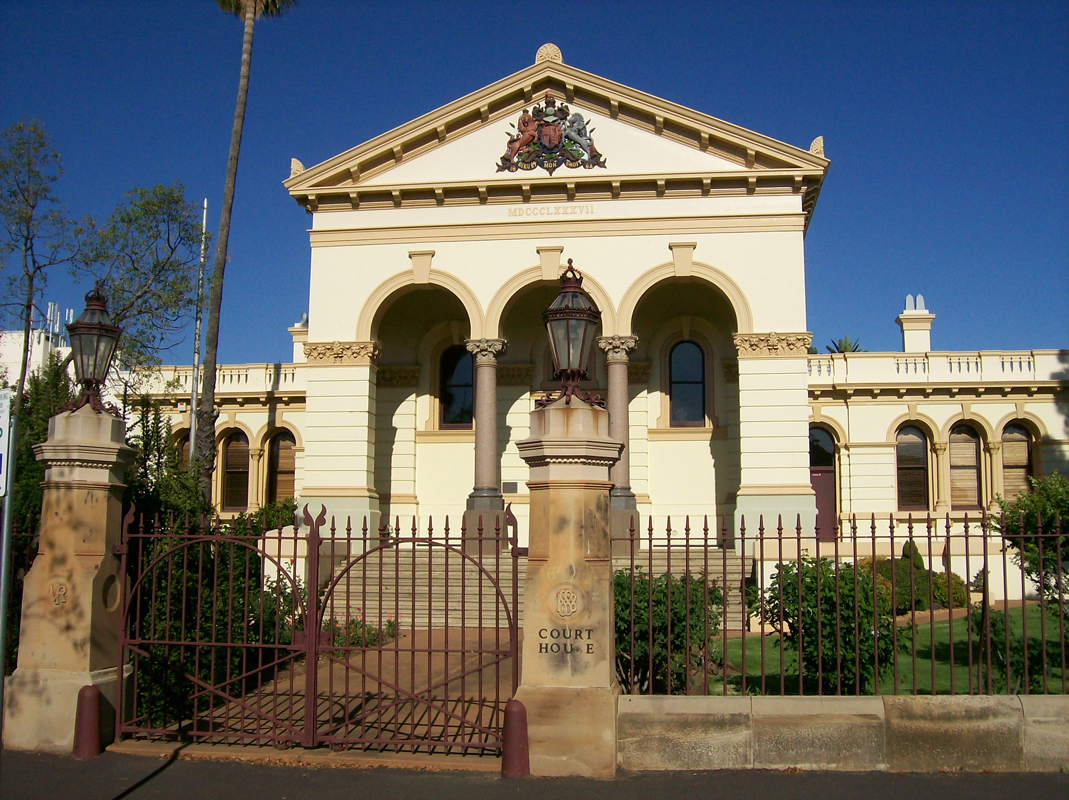
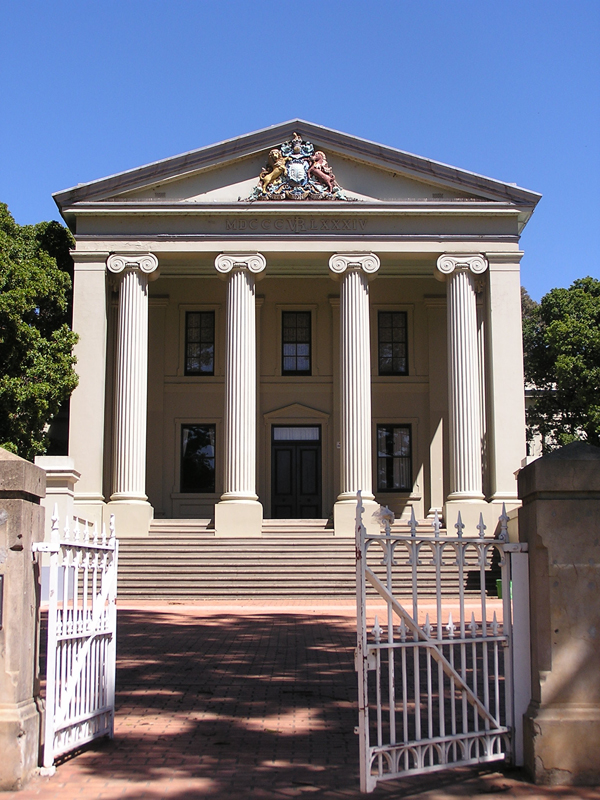
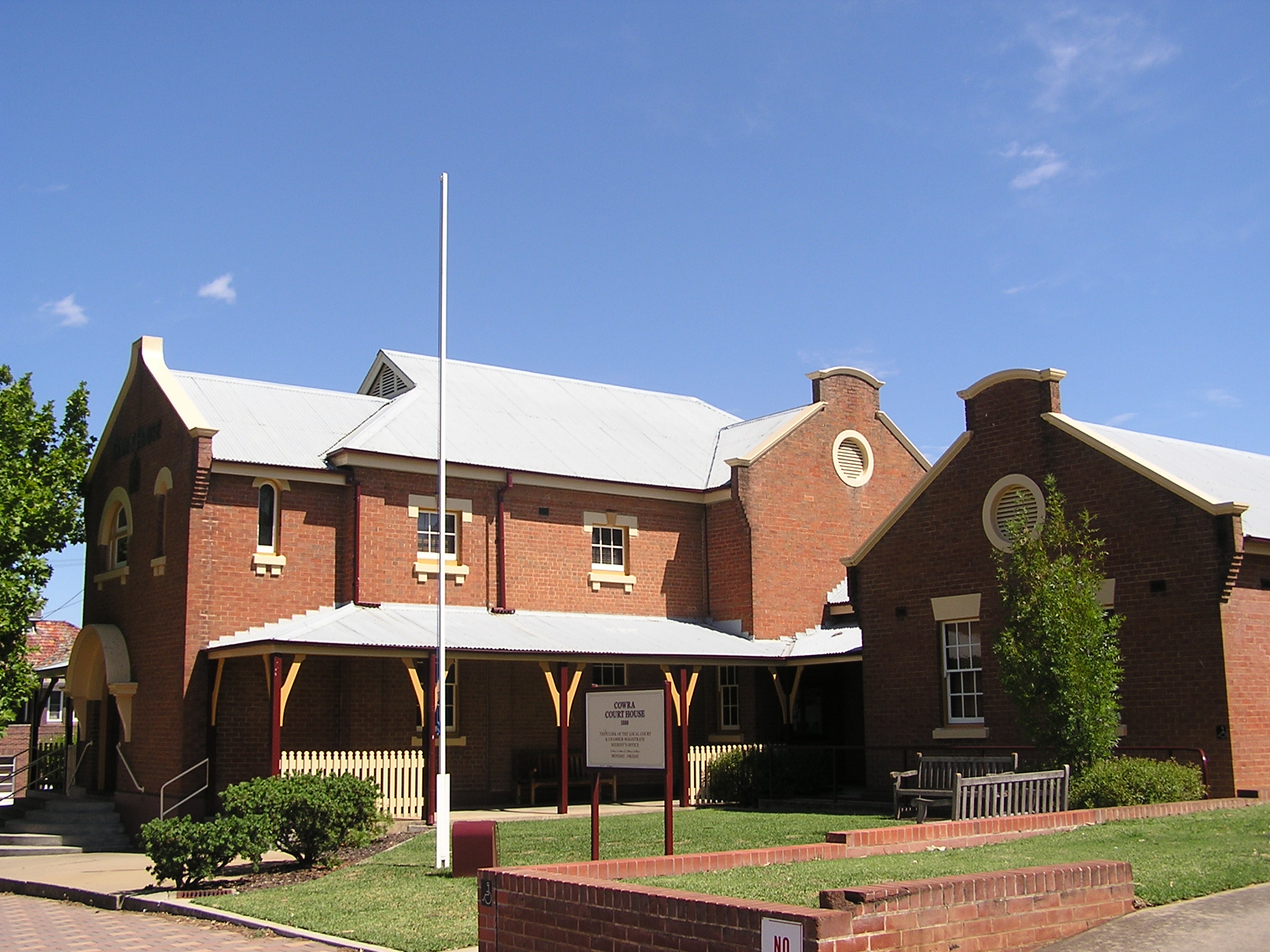
architect, Bathurst Court House, Bathurst Gaol, Carcoar Court House, Cowra Court House, Dubbo Court House, Forbes Court House, Forbes Post and Telegraph Office, Forbes Town Hall, James Barnett, Molong Court House, Orange Court House, Orange Post and Lands Office, St Paul the Apostle Church Carcoar, Young Court House

James Barnett, 1888

James Barnet, 1888

This photograph is for study purposes only

 Story and Photographs by Warrigal Mirriyuula

In December 1854 James Barnet, a native Scot from Arbroath, landed in Sydney and set himself up as a builder in Glebe. The business prospered and within 11 years he had succeeded his mentor Edmund Blacket as Colonial Architect. He was 37 years old and in the next 25 years he achieved more than he might ever have imagined.

Some of his achievements made a lasting impression on me as I wondered, as boys will, about why it was that the Orange Courthouse looked so much a courthouse. I knew nothing of Barnet then, but this local, familiar building always caught my eye. It remains today my favourite Barnet Courthouse. The Classical design is so balanced, so well resolved. The masses and proportions in a near perfect harmony that even Pericles would admire.

Orange Court House (c) Central Western D aily - w1200_h678_fmax

 Orange Court House, 1883. Architect James Barnet

 As I grew up I began to recognise buildings through out the Central West of NSW that seemed to be related in some way. They were often public buildings like town halls, post and telegraph offices and court houses and they began to define something in my mind; the notion of Victorian Civic Pride; the idea that for a young nation to aspire to credibility amongst the great nations of the world it needed the underpinnings of the rule of law, democratic action and communications. It needed to display the high regard it held for these things, these institutions of state legitimacy, and so within a few decades of the first settlement of the lands west of the divide, these buildings began popping up everywhere. The curious thing is that many of them were built when there was little else surrounding them. Many of the towns and villages they served had yet to develop what we might now recognise as a civic centre. These buildings stood for a time alone, like the recently arrived aliens they were, surrounded by mud or dust, slab cut huts, corrugated iron and cheap bricks, representing the hope for a future that had yet to come into being.

Orange PO and Lands Office Orange Post & Lands Office, James Barnet 1885. This stuccoed brick PO still stands as handsome as ever, however more recent street plantings have almost completely obscured the entire building with foliage.

 It was many years later that I finally learned that the buildings that caught my eye, made me wonder, where all designed by the one architect, James Johnstone Barnet; and it was one of his earlier buildings that had started the whole thing off.

MolongCourtHouse-(c)Pedro23-Fotki

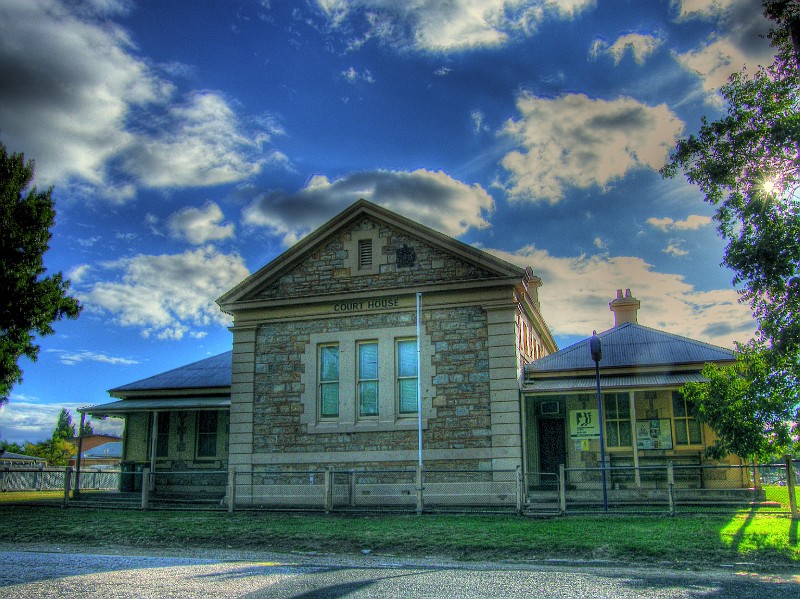
Molong Court House (Now the Molong Police Station). James Barnet 1862

The Molong Courthouse, designed by Barnet prior to his elevation to Colonial Architect, is a modest building lacking any complex embellishment save a simple Classical pediment and vent and cornices on the chimneys. It is built from local limestone rubble masonry with dressed or rendered quoins, door and window frames, yet when it first opened for business in 1862 it would have been the most imposing building in Molong. It was still imposing the morning Dad had to drop in there when I was a little tacker. I think I might have sat on that form on the verandah while Dad entered inside. Whatever was going on in there was a deep mystery to me but, given the building, it had to be important and sitting on that form was not dissimilar to waiting outside the Principal’s office at school. Originally it was surrounded by a white picket fence.

The Molong Court House wasn’t alone in staking claim to a future grandeur not yet in evidence. There was another set of these bijou masterpieces in Carcoar, just a few miles away; though Carcoar, like Molong, never did grow in the way it was thought it might. The railway eventually followed a different line and Carcoar fell from second biggest town west of the mountains after Bathurst, to a village of just over 200 people today. Well worth visiting still, if just for the colonial era architecture and a particularly fine Devonshire Tea at the café across the street from the courthouse.

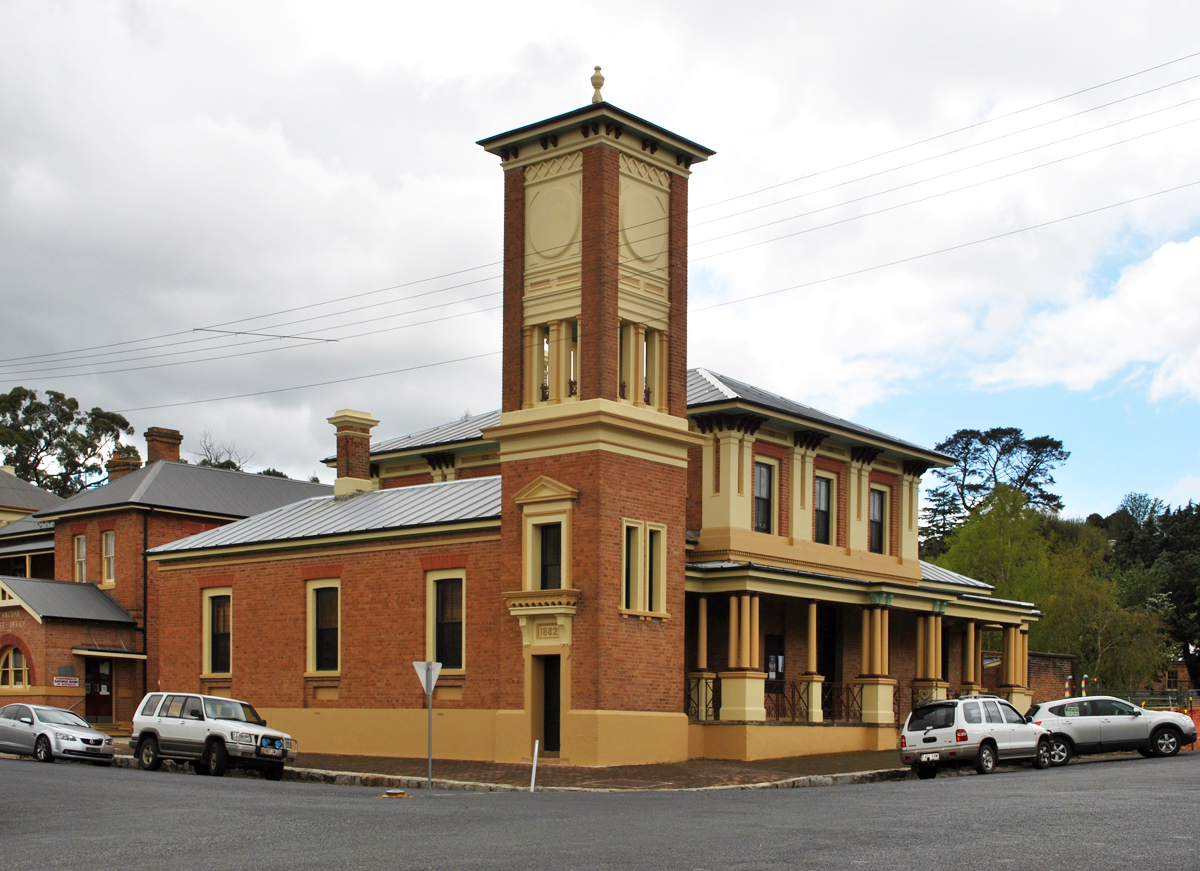
The Carcoar courthouse with its clockless clock tower displays the balance that so characterises Barnet’s best work. Once again he employs the Italianate. The tower is so relaxed in the composition of masses that the absence of a clock seems almost appropriate, literally imbuing the building with a timeless quality. I suppose the clock was going to be installed later, but that later never came.

Carcoar_Court_House_001 corrected Carcoar Court House, James Barnet 1882

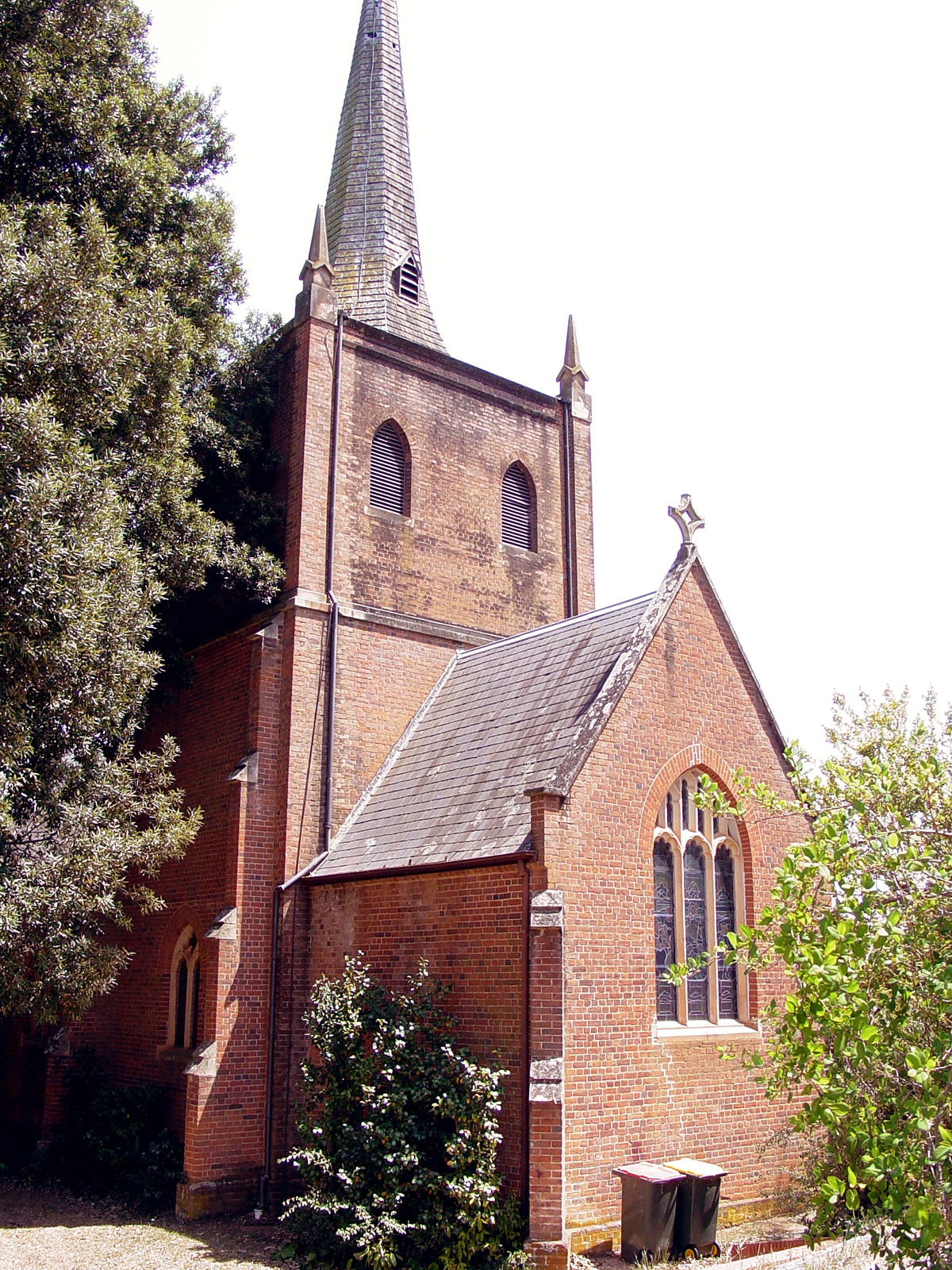
 It’s of interest to note that this Italianate Barnet courthouse replaced a smaller, much simpler Neo Gothic courthouse dating from1842. Carcoar is further architecturally interesting in that it has another building that, along with Barnet’s courthouse, illustrates a stylistic transition from the Neo Gothic to The Italianate, and the type examples are by succeeding Colonial Architects, Edmund Blacket and James Barnet.

AUS, NSW, Carcoar, St Paul the Apostle 4St Paul The Apostle, Carcoar, designed by Barnet’s mentor and predecessor Edmund Blacket, displays the neo gothic that so identified Blacket’s best work, including the main quadrangle at Sydney University. (I’d have probably moved the post modern wheelie bins before taking the shot.)

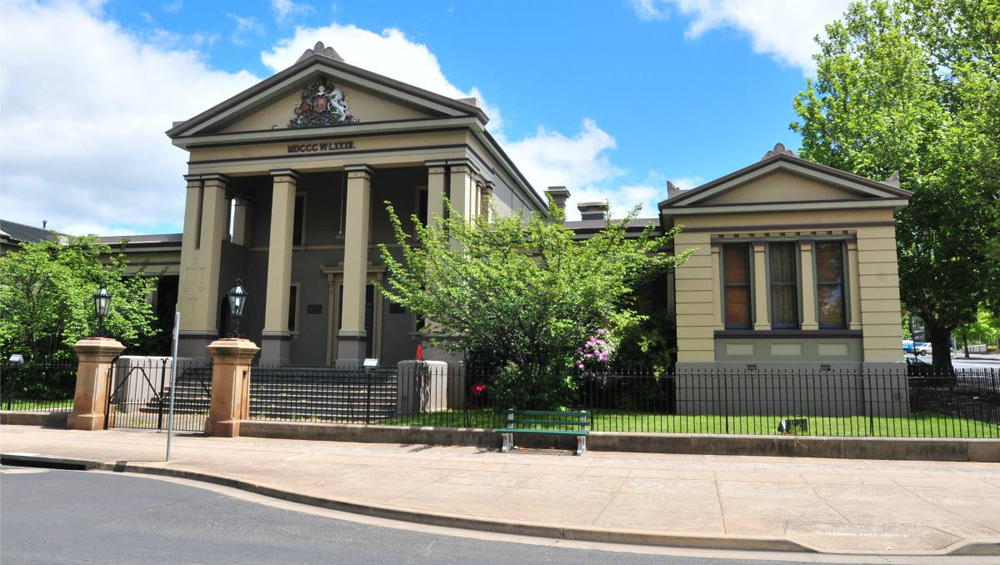
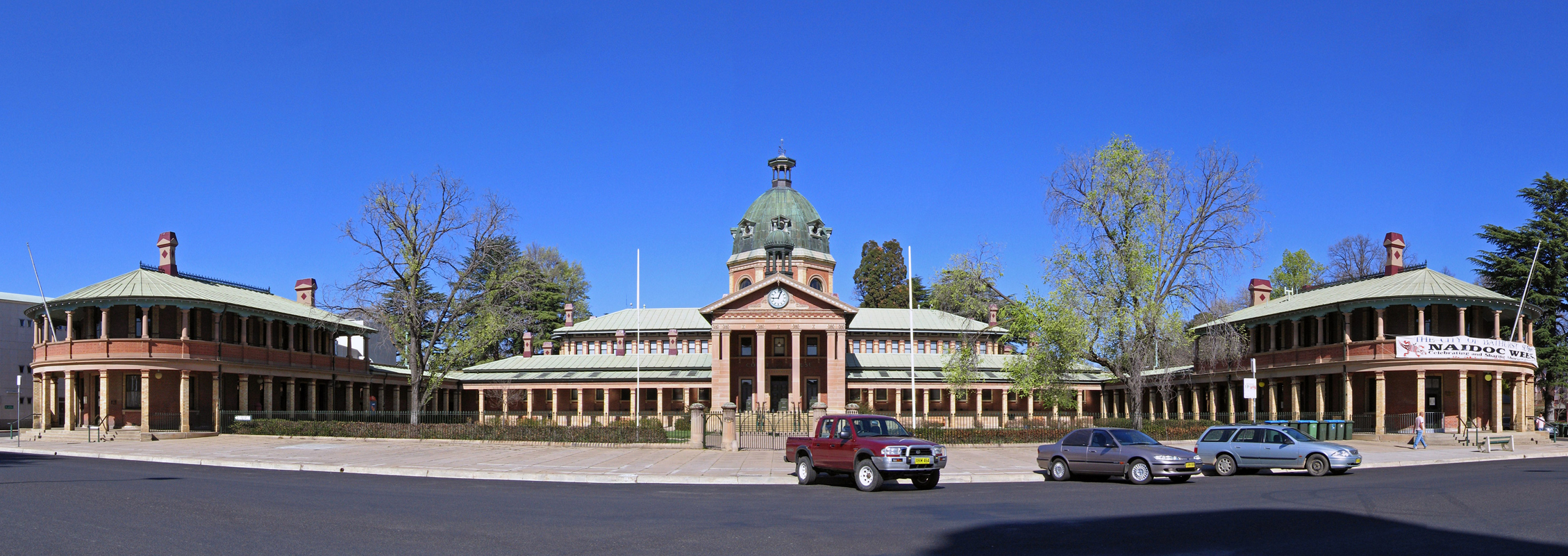
But getting back to Barnet, perhaps the finest example and most complete exposition of his Italianate design palette when it came to country courthouses is the magnificent Bathurst Court House complex, a tour de force opened a few years prior to the Orange Court House.

Bathurst-Courthouse-Pano-2

Bathurst Court House, 1880 by James Barnet

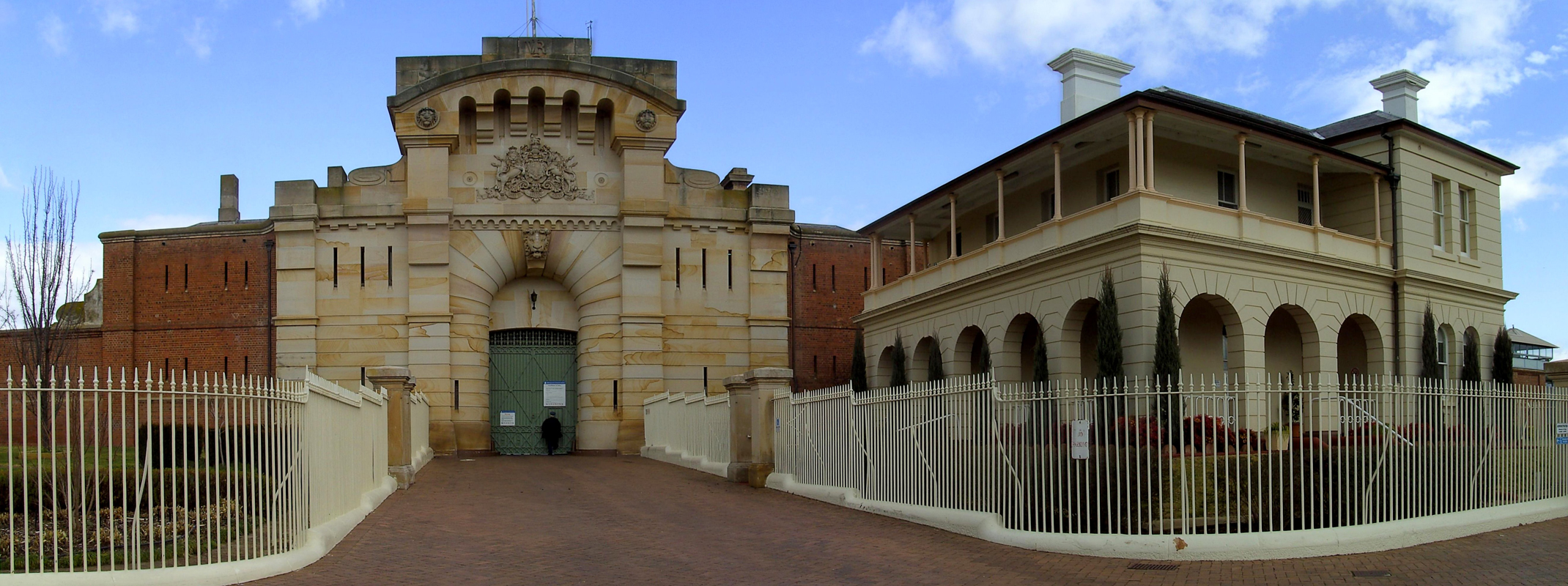
Bathurst also has a fine example of Barnet’s contribution to the other side of the law. The imposing portal to Bathurst Gaol is every inch the intimidating gateway to a world wherein all hope must be given up.

Bathurst Gaol

The Main Portal and Deputy Governor’s Residence, now the administration building, Bathurst Gaol, James Barnett 1888

Architects describe this portal as an excellent example of the Victorian Mannerist, though I particularly like its lack of manners. It’s an unashamedly intimidating bully, sure of its power to suppress and punish miscreants. The slits cut into the sandstone masonry façade suggest unseen armed guards might protect the portal and that even venturing up that short road without legitimate purpose might end very badly indeed. As ever the Imperial Lion snarls atop the gate, a key firmly between its fierce teeth: Subtext: The Victorians didn’t like crooks and punishment was meant to be just that, unrelentingly punishing.

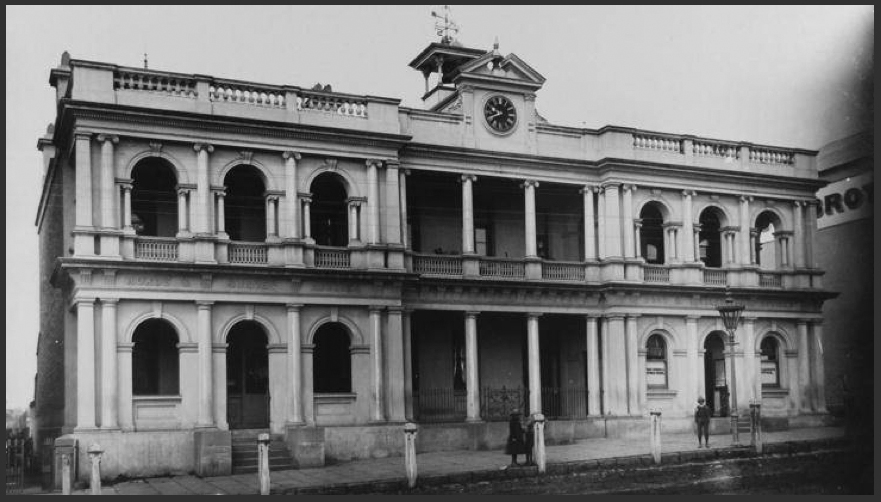
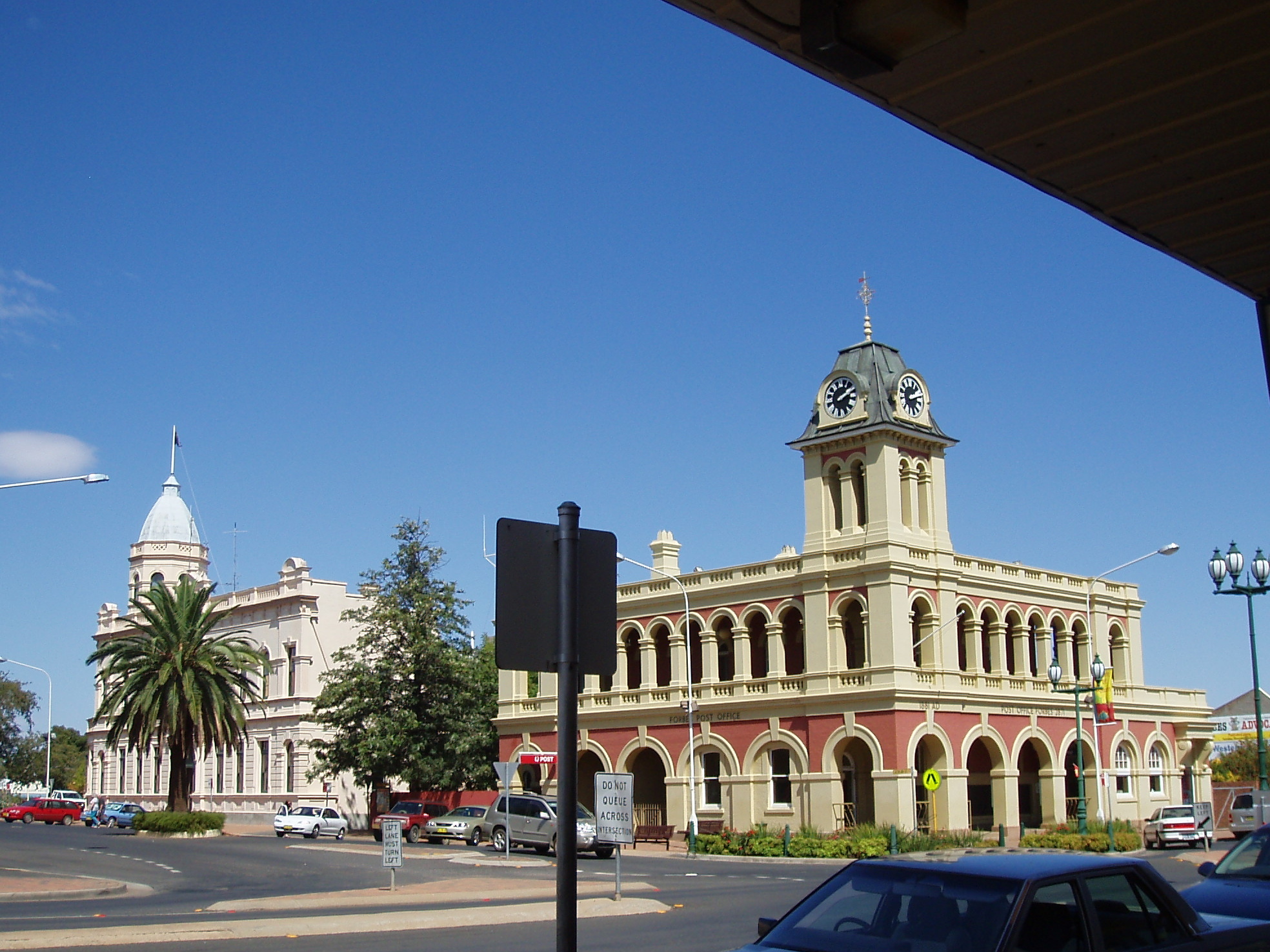
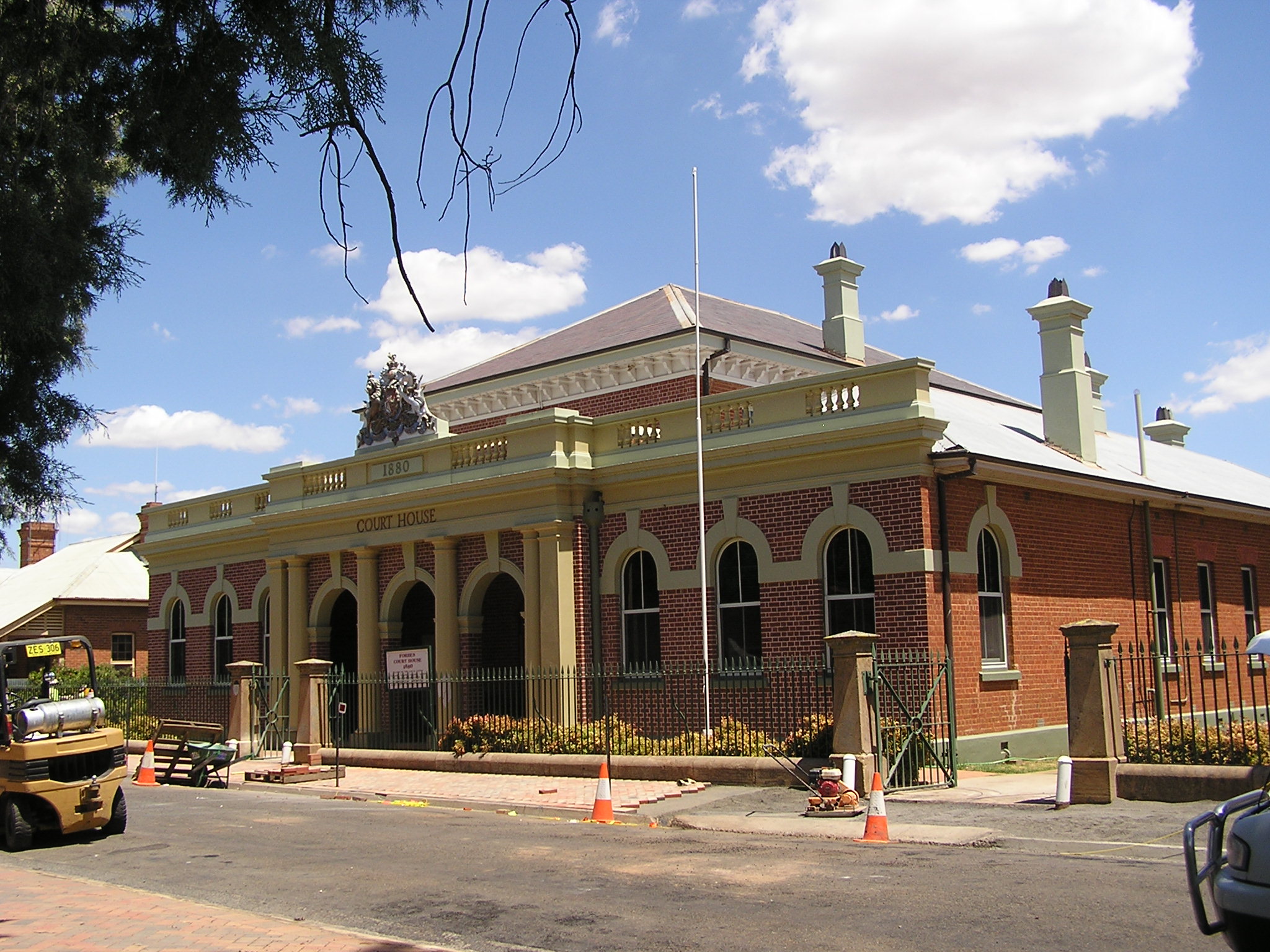
These Barnet buildings are all over NSW and to the west of Orange, the early gold town of Forbes celebrated its prosperity with a very fine Barnet collection including both a handsome Post Office and a more modest Courthouse that successfully suggests that justice may after all be measured in the more democratic aspirations of the common people and not be the exclusive domain of the wealthy and connected.

 OLYMPUS DIGITAL CAMERAForbes Town Hall on the left, (George McKinnon 1890-1) and The Post and Telegraph Office on the right (James Barnet 1881). Note the acknowledgement between the buildings which both look out to a park surrounded by many fine buildings creating a substantial and attractive civic precinct, which includes another Barnet courthouse.

I first noticed these buildings back in the sixties when I attended a brass band competition in the Forbes Town Hall. I recall standing in the park and admiring them, though at that time they were all in a state of resigned dilapidation, peeling paint, cracked and missing stucco, and it seemed they might all disappear for lack of appreciation. Happily since then they have all been lavished with unstinting restorations, which as you can see from the image below continues to this day.

OLYMPUS DIGITAL CAMERA

 Forbes Court House James Barnet 1880

The lack of ostentation and the simplicity of composition are the Forbes courthouse’s most attractive qualities and it is still used as a courthouse today.

Over the years I’ve travelled extensively throughout country NSW and found Barnet buildings in many villages, towns and cities but it’s the buildings shown here that I’ve come to see as part of me, a sense of having grown up watched over by these buildings, and they have contributed in no small part to my sense of belonging to the country, the bush.

For most of us the built environment is just the backdrop to our everyday lives, a stage on which we play out our hopes and frustrations, but these buildings have an almost metaphysical presence for me. They were the courthouses where injustices were, and are still, made right, the town halls where we decided as a community which of our aspirations we would follow, the post offices where we communicated with loved ones across the country or even across the seas. For me they are mixed metaphors; at once the anchors that held us in place and also the wings on which we flew, and thus they have become elements in my “Spirit of Place”, my sense of belonging and identity. There can be no greater accolade for an architect.

Dubbo_CourthouseDubbo Courthouse, James Barnet 1887 and still used as a courthouse today.


OLYMPUS DIGITAL CAMERAYoung Courthouse, James Barnet 1886 This High Victorian Classical building is now a school assembly hall, so no doubt Barnet still has the power to mould the young mind.

Cowra Court House

Cowra Court House

Cowra Courthouse, James Barnet 1880 with extensions and renovations by Barnet’s successor, Government Architect Walter Liberty Vernon 1909.

Given Vernon’s overlaid renovations this does not look so much a Barnet courthouse but it still displays that simple balance of masses that Vernon’s additions and Federation/Anglo Dutch/Arts and Crafts decoration could not disguise. Indeed I suspect that Vernon knew a good thing when he saw it and his additions acknowledge the best of the earlier Barnet building.

Given Vernon’s overlaid renovations this does not look so much a Barnet courthouse but it still displays that simple balance of masses that Vernon’s additions and Federation/Anglo Dutch/Arts and Crafts decoration could not disguise. Indeed I suspect that Vernon knew a good thing when he saw it and his additions acknowledge the best of the earlier Barnet building.

While Barnet designed many more buildings, over 600 in fact, including 130 courthouses, and many of his buildings display an impressive magnificence, including my favourite pile of Pyrmont sandstone, the resplendent Renaissance revival Lands Office on Bridge Street in Sydney, it has always been his country buildings that have captured me and I’m particularly fond of his country courthouses. They may not be his most difficult or most impressive work but to my mind they are his most human, creating a levelling link between these rough hewn early settlements with their hope for a bigger future, and the great world beyond; in essence providing a solid and enduring symbol of the unity and common purpose shared by all of the people of the colony and it may not be too long a bow to suggest that the operation of these buildings, their success as social machines through time, contributed in no small way to Federation and the dawning of Australian nationhood.

Post Script

A little Googling will turn up all manner of Barnet results and it’s surprising how prolific he was. The above examples of his work are just a taste. His buildings are literally everywhere. Goulburn particularly has a number of very fine Barnet buildings, as well as others by Colonial and Government Architects Blacket, Vernon and Lewis, but I’ve not included them here because I didn’t become familiar with them until much later. They were not part of my boyhood scene. Indeed Goulburn deserves a piece all to itself , which I may get round to when time permits.

I Remember, I Remember

23 Thursday Jan 2014

Posted by Therese Trouserzoff in Warrigal Mirriyuula

≈ 42 Comments

Tags

Ageing brains, Memory, Warrigal Mirriyuula

Yikes

Story and Digital Mischief by Warrigal Mirriyuula.

As we grow older we have the opportunity to witness and ponder the shifts and changes in the world around us. To note what used to be called the “passing parade”; to see first our children and then our grandchildren grow up, as we too grow, travelling our various life and career paths.

This is such a commonplace experience and our musings such an ineluctable outcome thereof that it’s usually put down to the “human condition”, what Sartre called the existential dilemma. It all boils down to “how do we feel, how should we think, how should we act”?

Another commonplace is the notion that as we age our cognitive abilities wane. We take longer to recall memories accurately and can’t program the DVD, we misname people and endure what is often professionally described as “age appropriate” memory loss.

But is this slow decline into la la land real?

Not according to new research led by Dr. Michael Ramscar of Tübingen University. He and his colleagues’ recently published work in Journal Topics in Cognitive Science seems to put the lie to established ideas about older brains and declining cognitive acuity.

The team discovered that most standard cognitive measures, which date back to the early twentieth century, are flawed. “The human brain works slower in old age,” says Ramscar, “but only because we have stored more information over time.”

One of the things that stood out for me was that they discovered this new truth by teaching computers to “read books”. The books were a proxy for reality. What was “read” simulating the experiences of a life-time. The reading computers were then interrogated and tested for recall and comprehension.

When the computer was only allowed to read a small amount, subsequent cognitive test results were the equivalent of a young adult, but when the computer had accumulated the equivalent of a lifetimes reading over decades the cognitive test results looked like those of an older person. The computer was slower, not because its processing capacity had declined but because its data base had increased substantially and all that extra data, read life experience, took longer to process.

Technology now allows researchers to make quantitative estimates of the number of words an adult can be expected to learn across a lifetime, enabling the Tübingen team to separate the challenge that increasing knowledge poses to memory from the actual performance of memory itself.

“Imagine someone who knows two people’s birthdays and can recall them almost perfectly. Would you really want to say that person has a better memory than a person who knows the birthdays of 2000 people, but can ‘only’ match the right person to the right birthday nine times out of ten?” asks Ramscar.

The answer appears to be “no.” When Ramscar’s team trained their computer models on huge linguistic datasets, they found that standardized vocabulary tests, which are used to take account of the growth of knowledge in studies of aging, massively underestimate the size of adult vocabularies. It takes computers longer to search databases of words as their sizes grow, which is hardly surprising but may have important implications for our understanding of age-related slowdowns. The researchers found that to get their computers to replicate human performance in word recognition tests across adulthood, they had to keep their capacities the same. “Forget about forgetting,” explained Tübingen researcher Peter Hendrix, “if I wanted to get the computer to look like an older adult, I had to keep all the words it learned in memory and let them compete for attention.”

The research shows that studies of the problems older people have with recalling names suffer from a similar blind spot: there is a far greater variety of given names today than there were two generations ago. This cultural shift toward greater name diversity means the number of different names anyone learns over their lifetime has increased dramatically. The work shows how this makes locating a name in memory far harder than it used to be. Even for computers.

Ramscar and his colleagues’ work provides more than an explanation of why, in the light of all the extra information they have to process, we might expect older brains to seem slower and more forgetful than younger brains. Their work also shows how changes in test performance that have been taken as evidence for declining cognitive abilities in fact demonstrates older adults’ greater mastery of the knowledge they have acquired.

Take “paired-associate learning,” a commonly used cognitive test that involves learning to connect words like “up” to “down” or “necktie” to “cracker” in memory. Using Big Data sets to quantify how often different words appear together in English, the Tuebingen team show that younger adults do better when asked to learn to pair “up” with “down” than “necktie” and “cracker” because “up” and “down” appear in close proximity to one another more frequently. However, whereas older adults also understand which words don’t usually go together, young adults notice this less. When the researchers examined performance on this test across a range of word pairs that go together more and less in English, they found older adult’s scores to be far more closely attuned to the actual information in hundreds of millions of words of English than their younger counterparts.

As Prof. Harald Baayen, who heads the Alexander von Humboldt Quantitative Linguistics research group where the work was carried out puts it, “If you think linguistic skill involves something like being able to choose one word given another, younger adults seem to do better in this task. But, of course, proper understanding of language involves more than this. You have also to not put plausible but wrong pairs of words together. The fact that older adults find nonsense pairs—but not connected pairs—harder to learn than young adults simply demonstrates older adults’ much better understanding of language. They have to make more of an effort to learn unrelated word pairs because, unlike the youngsters, they know a lot about which words don’t belong together.”

The Tübingen researchers concluded that we need different tests for the cognitive abilities of older people—taking into account the nature and amount of information our brains process.

“The brains of older people do not get weak,” says Michael Ramscar. “On the contrary, they simply know more.”

A lot more!

Note: I took my title from the Thomas Hood Poem of the same name. My father used to regularly recite the poem when the issue of memory and remembering came up. Over time the portion quoted was reduced to the first four lines.

For me, now, it’s the last four lines that truly illuminate our subject here.

Source:

The above story is based on materials provided by Universitaet Tübingen and Science Daily.

Journal Reference:

Michael Ramscar, Peter Hendrix, Cyrus Shaoul, Petar Milin, Harald Baayen. The Myth of Cognitive Decline: Non-Linear Dynamics of Lifelong Learning. Topics in Cognitive Science, 2014; DOI: 10.1111/tops.12078

Shivers – It’s New Year’s Eve

31 Tuesday Dec 2013

Posted by Therese Trouserzoff in Warrigal Mirriyuula

≈ 68 Comments

Tags

Warrigal Mirriyuula

Shivers

New Years Eve Playlist (and digital mischief) from Warrigal Mirriyuula

You’re sitting there happily listening to music, perhaps a favourite track or piece you like, and on cue you shiver, delightfully, or pensively, at that same spot in that same way.

What is that?

I don’t have a clue but the following article offered some insight.

www.cogsci.ucsd.edu/~creel/COGS160/…/GreweChillPhys07.pdf

The following tracks make me shiver all over the place. I wonder; do any of them affect you in the same way?

http://www.youtube.com/watch?v=kutbRyAG0Lw

“Don’t Let The Sun Catch You Crying”, Jerry & The Pacemakers

or alternatively

http://www.youtube.com/watch?v=Ozrf-dMdWdw

“Don’t Let The Sun Catch You Crying”, Gloria Estefan with a little help from Eric Satie

http://www.youtube.com/watch?v=ZGORPUzLxtU

“Midnight Cowboy, Main Theme”, John Barry

http://www.youtube.com/watch?v=jTbX2LYZx2A

“Meeting Across The River”, Bruce Springsteen

http://www.youtube.com/watch?v=GlRQjzltaMQ

“The Way It Is”, Bruce Hornsby and The Range

http://www.youtube.com/watch?v=bDRbF80NKDU

“Rainy Night In Georgia”, Brook Benton

http://www.youtube.com/watch?v=n_Lh4MFiw08

“Neither One of Us” Gladys Knight & The Pips

http://www.youtube.com/watch?v=kZ6Tp-nna9I

“Walk Away” Matt Munro

http://www.youtube.com/watch?v=Ew-5rO8b67I

“Tammy”, Debbie Reynolds

http://www.youtube.com/watch?v=ZDeTu6rpN-4

“Sierra” Boz Scaggs

http://www.youtube.com/watch?v=tWc5kD6Fa_c

“Everyone’s Gone To The Moon”, Jonathan King

http://www.youtube.com/watch?v=Odl3jCbVAic

“Ghost Writer” Garland Jeffries

http://www.youtube.com/watch?v=c7sXslD8lac

“I Can’t Find The Time” Hootie & The Blowfish

http://www.youtube.com/watch?v=Q05wB6F1UMk

“Hasten Down The Wind” Warren Zevon

http://www.youtube.com/watch?v=HKLnmMacEB4

“The Game Of Love”, Michelle Branch and Carlos Santana

http://www.youtube.com/watch?v=hwCWCJLm6M0

“Lucky Man”, Emerson Lake & Palmer

http://www.youtube.com/watch?v=CXoGlk4-T-o

“Lalena” Deep Purple

http://www.youtube.com/watch?v=hWUJGPBmiLE

“Walk Away Renee” The Four Tops

http://www.youtube.com/watch?v=6HjCbKnzDzQ

“Tell It Like It Is”, Aaron Neville, Greg Allman and Bonnie Raitt

http://www.youtube.com/watch?v=N4lb6fMVu6Q

“The World I Used To Know”, Glen Campbell

http://www.youtube.com/watch?v=RIunm_XxH_I

“Goin’ Back”, Dusty Springfield

http://www.youtube.com/watch?v=X5uxQElYu68

“Life In A Northern Town”, Dream Academy

http://www.youtube.com/watch?v=yIDLdgeP9Bw

“Tar and Cement” Verdelle Smith

http://www.youtube.com/watch?v=tIdIqbv7SPo

“Ain’t No Sunshine”, Bill Withers

http://www.youtube.com/watch?v=EvDxSW8mzvU

“Driving Home For Christmas” Chris Rea (Christmas having come and gone, this is simply my favourite Christmas song. I know its not much of a song really but there’s something about it that just gives me the shivers.)

http://www.youtube.com/watch?v=4MfDmu5WB_0

“A Fool Such As I”, Raul Malo (Just this particular performance. I don’t know….?)


← Older posts
Newer posts →

Patrons Posts

  • The Question-Crafting Compass November 15, 2025
  • The Dreaming Machine November 10, 2025
  • Reflections on Intelligence — Human and Artificial October 26, 2025
  • Ikigai III May 17, 2025
  • Ikugai May 9, 2025
  • Coalition to Rebate All the Daylight Saved April 1, 2025
  • Out of the Mouths of Superheroes March 15, 2025
  • Post COVID Cooking February 7, 2025
  • What’s Goin’ On ? January 21, 2025

We've been hit...

  • 733,000 times

Blogroll

  • atomou the Greek philosopher and the ancient Greek stage
  • Crikey
  • Gerard & Helvi Oosterman
  • Hello World Walk along with Me
  • Hungs World
  • Lehan Winifred Ramsay
  • Neville Cole
  • Politics 101
  • Sandshoe
  • the political sword

We've been hit...

  • 733,000 times

Patrons Posts

  • The Question-Crafting Compass November 15, 2025
  • The Dreaming Machine November 10, 2025
  • Reflections on Intelligence — Human and Artificial October 26, 2025
  • Ikigai III May 17, 2025
  • Ikugai May 9, 2025
  • Coalition to Rebate All the Daylight Saved April 1, 2025
  • Out of the Mouths of Superheroes March 15, 2025
  • Post COVID Cooking February 7, 2025
  • What’s Goin’ On ? January 21, 2025

Enter your email address to subscribe to this blog and receive notifications of new posts by email.

Join 374 other subscribers

Rooms athe Pigs Arms

The Old Stuff

  • RSS - Posts
  • RSS - Comments

Enter your email address to subscribe to this blog and receive notifications of new posts by email.

Join 374 other subscribers

Archives

Website Powered by WordPress.com.

  • Subscribe Subscribed
    • Window Dresser's Arms, Pig & Whistle
    • Join 280 other subscribers
    • Already have a WordPress.com account? Log in now.
    • Window Dresser's Arms, Pig & Whistle
    • Subscribe Subscribed
    • Sign up
    • Log in
    • Report this content
    • View site in Reader
    • Manage subscriptions
    • Collapse this bar
 

Loading Comments...