• The Pig’s Arms
  • About
  • The Dump

Window Dresser's Arms, Pig & Whistle

~ The Home Pub of the Famous Pink Drinks and Trotter's Ale

Window Dresser's Arms, Pig & Whistle

Tag Archives: homelessness

The Sociology of A Place To Call Home Part 16

30 Saturday Dec 2017

Posted by Mark in Sandshoe

≈ 10 Comments

Tags

Christina Binning Wilson, homelessness


The Sociology of A Place To Call Home Part 16
by Sandshoe

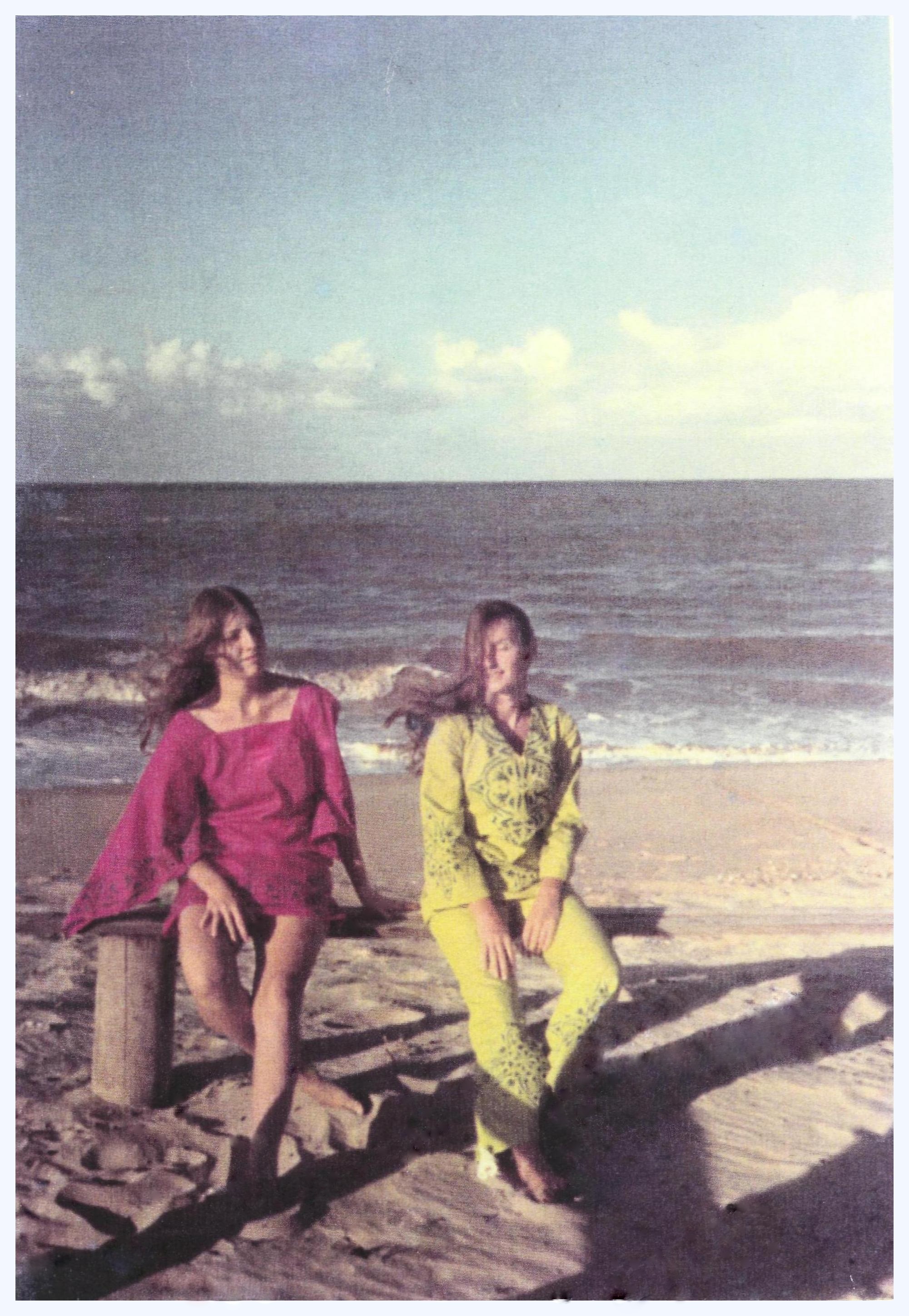
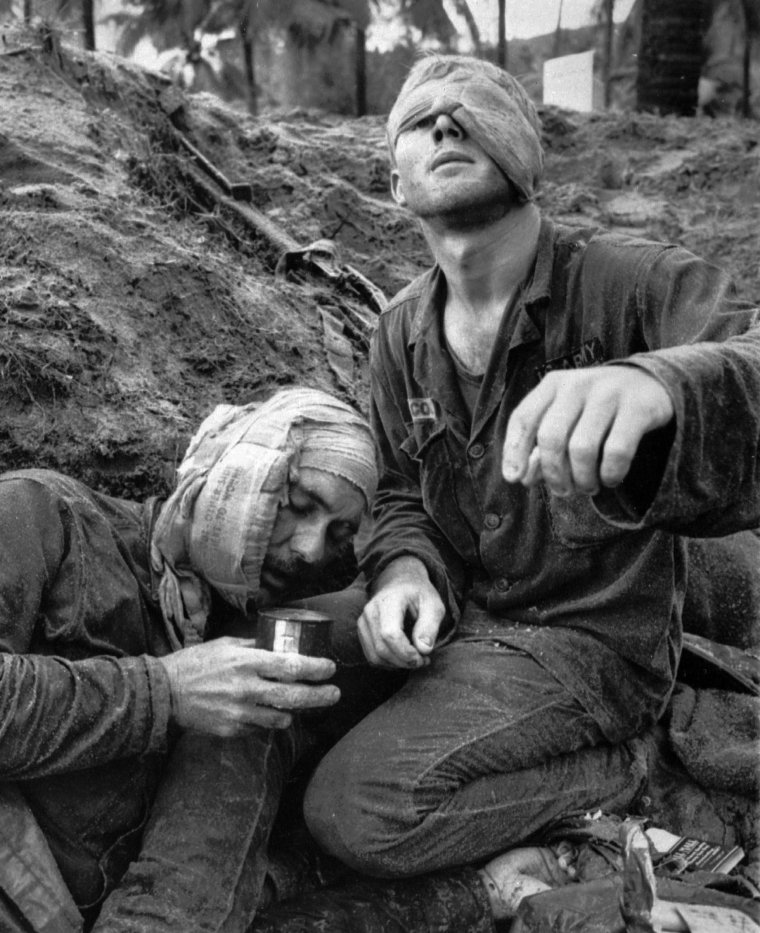
The tolerance and creativity of the community on the beach arose out of the empathy travellers feel for like-minded travellers. ‘We’ included domestic refugees seeking other than disposession, happier environments than those that were once home by geographic placement, birth allotment, associations and at odds with conservatism by lifestyle, cast against a background burden of war. R&R deserters found their way to that harbourage. The community knew trauma and acknowledged trauma. The growth of community represented the growth of voice, individual resistence and collective will, a youth movement certainly as more youth gathered and swelled the numbers, but more, a local and universal movement of people of all ages and background that was growing.

The weight given the inference that all resisters were opposed to the welfare of homecoming soldiers is a sad outcome of the Vietnam War. Between ourselves our individual stories struck chords that revealed a common awareness of justice and

War, what is it good for

injustice, but never the pillory of individuals. Nobody either mistreated anybody who expressed a different viewpoint from the mainstream of the beach community opposed to continuing involvement in the Vietnam War.

Instead I reflect on the potential waste of people everywhere who make creative community. attract the best of virtuousity and not to neglect the worst of vice in all its guises. Vice is usury. I have not included in this account the sheerly fantastic of which I know only half stories, of empire builders. The originals of us were innocent of criminal activity albeit cognisant of agency amid the dangers of handing anybody over to authorities, their potential undoing on political grounds, as scapegoats, as undocumented, as simply set up by powerful individual others and the implementation of the Mental Health Act among the possibilities.

We became canny because we ourselves were in danger.

‘Hippies vs Hairies: the early Australian counter-culture in Kuranda North Queensland’, entered in 2013 as an Honours thesis at James Cook University by Rohan Lloyd deserves accolades particularly for his choosing community as a pivotal identifier of history. Rohan describes the beach community as a forerunner of the contemporary

Karunda Hotel

community of Kuranda, which is where this juncture of my attempt to describe the sociology of housing experience leads to. I had written this text in first draft as well before I found and read Rohan’s thesis, all the more interesting from my viewpoint because I am invested in inderstanding the meaning of community. Many different ideological stems and sources however can be traced to Kuranda including Kuranda had a pre-history of ‘alternate’ settlement by individuals and groups.

The beach community, too, found its place in social history because of an enclave of residents tolerant of difference. Holloways Beach that I have not previously identified so as to depersonalise it I read many years ago in popular news media was a gathering place of ‘widgies’ and ‘bodgies’ previous to the Vietnam War-era of ‘hippies’. The same article suggested as well the pre-condition existed that I am calling tolerance of difference (I cannot remember what the article called it) because Holloways Beach was the home of crocodile shooters attributed as ‘community’ and that their origins were European (true). Kuranda albeit identifiable as containing an ‘alternate’ culture or counter-culture is as complex as the beach community was.

Rohan further draws inference in effect the beach community was a hippy community that lost its essence in Kuranda by virtue of ideological conflicts driven by stress

Rohan Lloyd

between attitudes inherent in ‘commune’ and the drive of individualism.

Social movements are complex. Individual and collective experience gained in a period of persecution and resistance has a heart beat. As invisible or seemingly extinguished as a community driver may seem assessed neighbour to neighbour or in members of a once common group divided by circumstances as international refugees are, a common knowledge of a greater reason for living than self drives the same core individuals’ actions and reactions in their respective spheres of influence. What happened on the beach created common considerations that were short term and longer at the point when the beach community was called ‘finished’. Its participants engaged some only solutions that were common including that locations other than Kuranda were eventual destinations whether on the basis of individual choice of environment or presentation of seized opportunities.

The significant factor in the sociology of the beach community was, however that among its members were key enablers of creative conversation for its own sake. The art of conversation created community. The prevalent external factors of disposession

Conversation, I thought you said conversion

and persecution provoked intense discussion of common meaning, of ideology but strategy and migration exactly as villagers of far longer heritage have been documented as doing in the face of threat, settling even in entirety most certainly in a district in another country because of common weal. I lived in Adelaide in a suburb that was home to the inhabitants of a near entire migratory Greek village (I learned from its researcher).

Safety not ideological consideration was paramount.

The local Council would in fact soon exclude the campers on the beach from paying fees by non-acceptance. By that virtue that the campers did not pay fees, they had no voice in Council and behind closed doors repealed was the long held right of campers to the esplanade roadside/beach front strip. Announced was the establishing of a caravan park and camp ground at the farther end of the beach considered uninhabitable for its infestations of sandflies that proliferated where they were protected from the wind blowing freely at the deposed camper’s end. Developers and affiliated interests waiting in the wings stood to make immediate profit through sub-division. Without the least consideration of an innovative approach to its community and inclusion, towards only its dislocation as happens more generally everywhere in phases termed local development, the Council went for the quick buck. Notices of eviction were served.

I stood on the beach on the final day with perhaps two others and the couple whose day-to-day living space in an army disposal tent had evolved into a gathering place, a

Nice tent

first aid station, a design studio, ours the last shared moment of witness to history that on its surface was gone, the beach left so tidied there appeared to have never been a community.

The landlord of the property my partner and I lived in had in the same time period decided to sell the beachfront cottage. He offered my partner and I first option to buy. We were not able to buy and would soon be looking ourselves for a new place to call home.

to be continued…
Christina Binning Wilson

Hmm, Aussies, always pissing themselves.

The Sociology of A Place To Call Home Part 15

22 Friday Dec 2017

Posted by Mark in Sandshoe

≈ 8 Comments

Tags

Cairns, Christina Binning Wilson, homelessness

Picture of a bikie minus the bikie


The Sociology of A Place To Call Home Part 15
by Sandshoe

Still on the beach with the beach community…

A southern based bikie gang arrived one week-end and endeared themselves that they respectfully asked what could they do to help the community. To suggestion they help pick up weekend townies’ litter that otherwise would discredit the campers, they as respectfully patrolled litterers.

The female partner of the couple whose army disposals tent was meeting place was a

Aren’t nurses wonderful people

specialist nurse. She achieved a senior position at a very young age. She and I strolled along the beach and shared why we had left our professional positions and training. Her decision too she arrived at on grounds of protest and concern about the status of her profession and working conditions.

The economy of the local store at the curve of the road onto the beach boomed. The dramatic influx of domestic and international travellers brought new influences to bear on local food supply. Wholemeal and grain bread was near unheard of. My German friend I had campaigned with to alert the business world to the travesty of the seizing of the painting and the subsequent court case asked in a stentorian voice in a busy Cairns City central bakery to buy a loaf of bread. Once served, he stepped back from the counter, pushed the loaf down to its smallest possible size with two hands, rolled it into a ball he stuffed into a pocket of his khaki trousers, uttered the historic guttural statement, “It’s rubbish” and walked out. Not something I would think to do, but there again I was not yearning for a stout heavy grain loaf of bread and a beer garden.

“We are going to the pub”, R. announced one day when my partner obliged him we would be transport and helping hands on one of our friend’s wheel-dealer runs. We had arrived at a location on the Atherton Tableland. “No,” he announced firmly when we arrived. My partner and I had started towards the lounge.

On his insistence we were there to exercise it transpired the right legally awarded women in that year (1970) to drink in a hotel bar, the three of us walked in the street entrance of the pub’s front bar.

I was short of 21. The legal age was not dropped to 18 until 1974. None of us gave it a thought. My age was not challenged. I might have been however the first femme in the bar. The entire attention of the patrons was rivetted on us. The silence was

The Cans Hotel

audible. Served, the three of us awkwardly sat on the bar stools available to sit one next to the other. We sipped on our beers. R. said abruptly, “Come on. I can’t stand it.” His voice was so replete with quiet determination to leave, my partner and I stood and followed him as he walked out. We were all glad to exit. We left three beers unfinished on the bar counter top.

Yet R. favoured the look of an Australian worker in khaki work shirt and trousers and work boots. His headwear was always a battered Australian bushman’s felt hat. Nothing to see there. Perhaps my partner’s abundance of over the shoulder curls was not so usual in a country pub in 1970.

The diversity of stories shared grew in kind. The community’s members and local residents were swept up in experience that evolved out of their neighbourly relationships, become actors in real life dramas as moving as any we find where humans group; great love was seen to be found, love triangles were absorbed, trysts negotiated, international intelligence agency (not too intelligent) revealed, a history of individuals who shed their anxieties, abandoned their worldly goods, collected new accoutrements. The red double decker London bus conversion that was a mobile home and mechanics workshop double parked.

The stories of the double decker bus and our new friend’s varied fortunes are legend. News was an ice cream shop was opening in Cairns. The double decker was driven to town for the clamouring purchase of different flavours of icecream in cones for a busload.

Pizza enhancer

A report in the local newspaper, The Cairns Post, cited the bus driver who picked up schoolchildren in the morning as noting ‘they’ were all still in the same place when he returned in the afternoon. ‘They’ hadn’t moved from where ‘they’ waited for mangos or coconuts to fall into their hands to feed ‘them’. Other reports fabricated or interpreted people smoking roll-your-own tobacco were smoking drugs. I recall someone’s voice enquiring ‘What’s marijuana?’

We read standing in a group, craning our necks to see the one newspaper, that we were hippies.

“Hippies!”

I remained alcohol and drug free with exception I once experimented in the period, on my request supervised and ingested a small number, perhaps three, of the psychadelic mushroom, ‘the blue meanie’. I lay on my back in the grass of the back yard and my neighbour looked over the fence and laughed as I laughed. I found a fascination in the shapes of clouds that seemed to speed from one composition to the next. In the cottage bedroom blemishes in old paint on the walls assumed crocodile-like skin patterns that made me laugh for the absurdity. I lay on the floor to look at the ceiling. I was entirely engaged in the moment and realised I was lying on the floor gurgling in delight. My only further memory of it is that I sobered. The interesting thought occurred to me I had regressed. I do further believe that regardless happy chance I stumbled on recall of the baby within.

Such an outcome would not be everybody’s experience or mind construct. As result of

Hmm, these mushrooms are magic

observation and over the course of my life hearing of the experience of others my viewpoint is the ingestion of psychadelic mushrooms or any other common hallucinogenic is potentially dangerous.

If I was not habitually sober and drug free I would not have enjoyed the ease and depth of of relationship I did with the key members of the community who were as well habitually sober. Discussion increasingly turned to how and where to buy land.

Someone’s idea to buy a block of land as a collective we would manage as a camping ground appealed to the group. We would provide harbour to anybody in immediate need of safety from persecution.

Our land scouts brought back stories of being apprehended by police personnel and harrassment. One real estate office telephoned the police and when the two men emerged from the office after making their enquiries they found the street barricaded at both ends by police cars. They were arrested on suggestion of vagrancy and spent the night in jail. In the pocket of one was a list of all the names of the people keen to contribute money, thought to be their list customers and they drug dealers. We, instead, early identified key identities in the real estate industry we thought suspect of collusion with authorities, of rigging land values, and bidding up land auctions.

Meanwhile, the observation thought newsprint worthy that the “hippies” when the bus driver drove past were always in the same place hoping for coconuts and mangoes to

A couple of hippies

fall into their hands held the smallest grain of truth.

The couple who had established the army disposals tent as living space … that the surround of became a gathering place … were establishing a screen print design clothing business. The bus driver’s return journey coincided with afternoon tea.

A resident supplied the assistance of his premises for manging the screens and printing. Among the women of the community were experienced industrial machinists. Bikinis were stock-in-trade. Men’s and women’s shirts and women’s dresses were added. I enquired of interest in a line of children’s clothing. I drafted small girls’ sundresses and supplied the front panel for printing with a design I was asked to first approve or reject. The printed panel was returned to me for assembly.
An order came in from a local flag shop. I sewed small marine flags when they were printed.

Another of the community adept with a movie camera assembled a technical team and a movie was made intended for commercial promotion.

to be continued…
Christina Binning Wilson

Is that dress ready Shoe, tides comin’ in

The Sociology of A Place To Call Home Part 14

14 Thursday Dec 2017

Posted by Mark in Sandshoe

≈ 12 Comments

Tags

Art, Christina Binning Wilson, homelessness


Me? Offensive? You must be joking.

The Sociology of A Place To Call Home Part 14
by Sandshoe

The writer apologises for the delay in presenting Part 14. Here provided is a link for readers to the previous Part 13.

The Sociology of A Place To Call Home Part 13

The accused had purchased the painting from the artist, the same one-time friend of my brother and a local resident. The artist was fearful, especially concerned he may become the next target of police attention and potential vandalism.

I had known of the artist’s intention to the painting. I critiqued it for him as he asked of me when it was completed. I thought the work was excellent, regardless a departure. The artist was a landscape painter. He did win a major award with a

Sorry, I don’t do nudes

beautiful seated female nude. This instead was of a female nude lying across a bed on her back and her head hanging back over the bed edge at the forefront of the painting; a figure barely more than a semblance visible in a doorway at some distance from the main subject I knew was female. I am unsure in recall if that could be easily determined.

I have not viewed the painting for now 47 years so I do question my memory of the exact detail , but the colour gradation and palette; however perhaps a third of the height of the canvas was painted in an almost monochromatic dark charcoal-hue other than for an implication of a source of light behind the figure in the doorway. The nude lying on the bed was a work of realism in the style of the artist’s landscape paintings. I knew he sought a Renaissance depth and perspective. Nothing is revealed of the personality of the room neither its contents. A seeming dispersal of light coated the tones of the skin. I do not remember a racial description. The hair colour was I believe dark. The artist moved about a middle third of the painting out of the dark of distance to an effect of depth beyond the bed.

My admiration of the painting remains the sense of still moment.

The painting was seized by police who searched the accused’s small wooden boat in the belief they would find drugs. They had exhibited as was anticipated of their raids little discriminatory care of his belongings. They produced no search warrant, Not finding drugs of any description and perhaps foreseeing the need to establish an alibi for their behaviour in full view on a public beach, the police alleged they were walking

Hand over your money, um paintings

not far from the water’s edge past the location of an open boat parked stern to bow facing the esplanade road. They saw the painting. They were confronted and offended.

Thus the truth was eliminated that they had pulled the accused’s belongings every which way out of a meagre forward cabin where the painting was lodged for its protection from salt encrustation and sand in a surround of clothing.

The accused was seriously frightened. The thought alone of a conviction on a charge of anything terrified anybody were they vulnerable and exposed to what was potential of being continuingly apprehended by members of the Queensland Police Force, but the accused was from the UK, not an Australian resident or citizen. Serious consequences were potential affect on his future if judgement was pronounced in favour of the prosecution, to only be deported to the UK with a highlight of a criminal prosecution for obscenity.

The criminals must have been laughing as the saying goes. Some years later, 30 years ago now the Fitzgerald Enquiry in Queensland established irrefutable proof of the long-term involvement of key figures at the highest levels of government and policing in corruption and their financing through protection rackets, gambling and prostitution.

Meanwhile, back at the beach community, resourceful individuals put their heads together as is the wont of people of integrity where community and its reputation is at stake and kin fearful of corrupt administrative governance at every level, its members living with a siege mindset, their homes in danger of ransack.

A local lawyer was engaged whose reputation met the requisite critera that his genuine interest was the accused’s welfare and social justice.

What were the qualifications of the arresting officer to establish an artwork is obscene, offensive and to whom is it offensive if so and why.

I witnessed my first life demonstration of the practical use of mathematics and

An innumerate

experienced the wonder. For anyone to see into the boat’s interior from where the police alleged they had and were concerned for the public, minors for starters were ruled out beyond reasonable doubt by trigonometry. A passer-by needed to be 12 feet tall (3.6m).

Nothing would ever cause the accused in the circumstances to even smile we were to realise. My heart went out to him as result of my assuredly announcing by way of pure instinct the next stumbling block the police would meet with was no professional artist leastwise in the immediate district would witness the painting was obscene per se. The police would present in court without that evidence. He abjectly anxious announced to me I was to remember his entire future was at stake.

The feeling of sorrowful guilt that I failed when he needed comfort to assist his anxiety has never left me, remembered of course because I nevertheless learned a valuable life lesson about the relativity of perspective.

In place of others who chose to not be recognised for fear of immediate reprisals, I attended in clothes I hoped again rendered me conservative and unrecognisable. My responsibility was to deliver my court report back to the beach community without

Shoe goes to court in disguise

being apprehended and charged on any pretence. The community’s members anticipated retaliation for what was assumed an inevitable outcome the case would be thrown out of court.

The courtroom was packed. A hotch potch of business suits and brilliantly coloured and sequinned gowns worn by people I had never in my life seen and hair styles that were glorious, dreads and shining, gleaming, beaded, braided filled the gallery standing room only and and my memory for this life time. Permission for observers to stand respectfully was further granted. Where everybody came from I do not know.

The magistrate doused periodic outbursts of guffaws. He warned contempt of court. The court fell quiet. The trigonometry was presented with grave attention to its detail by diagrammatic representation.

The accused described himself as being on holiday from the UK where he was a merchant seaman by profession. The accused made the revelation he was a former student of art at a UK art collegeof reasonable renown. The police prosecution persevered that the depiction of nudity in a public place was offensive where passers-by did not expect to view nudity; however declared the painting in the same breath as obscene. The reason was advanced that the painting showed an obscene relationship.

No apprehending police officer in their right mind would consider in my cautious viewpoint presenting themselves alone in a public courtroom as witnesses of their own assessment of an artwork. They did. Advice on the grape vine was they had tried to

A rough sketch

engage at least one local artist so what I had surmised proved true. The police officers attested when asked to having no training in art. The magistrate enquired of the arresting officer what Michaelangelo’s sculpture of David meant to him in the scheme of things. He drew an entire blank. The confused officer had no idea what that was.

The accused cross questioned by the magistrate what was the meaning to the accused of the painting advised he intended to take the painting with him on his return to the UK as a memento of his holiday in Australia. Why did he buy this painting? He bought it as a study in ochres. What did he consider was the relationship between the figures in the painting? He had not considered the subject matter of there being two figures in the painting. His interest was technical. He repeated he valued the painting as a study in ochres

The magistrate advised the accused that he, the magistrate supposed the accused would not display the painting in, say the front window of, say a department store in the main street of Cairns and the accused agreed; if the accused had not, the magistrate could not find the painting was displayed in a public place and neither intention. The accused was exonerated of the charge and free to leave the court.

I interpreted the magistrate’s inclusion of definition of a public place achieved the unexpected clarity of a finding opposed by inference to the controversial seizing of art work by the Queensland police out of display in a public art gallery and equally to its

The Magistrate

being potentially seized out of a private home or display in a private art collection. The court’s packed gallery of observers were cognisant to restrain their exuberance until they exited the court room.

In the evening I recited the court case near word for word to an assembled group sitting cross legged on the floor at my feet. My capacity with memory had been well identified as a skill of no small function. The charming detail remains in memory that the next day the accused was no longer burdened with anxiety when I commented to him that the police as I presupposed appeared no doubt perforce without an expert art witness. He asked to my surprise and in wonder how did I know.

I did not know. I interpreted the status of the intelligence and experience of the police purely on the trigonometry presented to me by the mathematicians. My immediate thought had been that if they had not thought of the detail they could not view the interior of the boat from where they had claimed the painting was visible to the public, they would have likely given little or no consideration to how difficult the next step would be of enticing a local art specialist to testify the painting was obscene.

Why did I presuppose the responsible police officers could not forward themselves as sufficient and suitable witnesses?

Perhaps it did take a local and former Queensland University student who was a victim of the Queensland Government’s Education Department to hazard an informed guess what the educational status was of the Queensland Police in 1970.

No maths. No art. No deductive reasoning. No common weal.

to be continued…
Christina Binning Wilson

Pleece HQ

The Sociology of A Place To Call Home Part 5

01 Friday Sep 2017

Posted by Mark in Sandshoe

≈ 12 Comments

Tags

Christina Binning Wilson, home, homelessness, rental

Geeps I’m hungry


The Sociology of A Place To Call Home Part 5

by Sandshoe (Honshades)

A home is more than a house.

Rogernomics is the economic rationalist theory and policy named for the Minister of Finance, Roger Douglas. Not everybody shares my view Rogernomics created a tidal wave of poverty and displacement of people who were the most vulnerable from their homes.With them went their poor neighbourhoods where the living was already straitened by low incomes and welfare payments. Reports of penury affecting the isolated and vulnerable Maori communities in the north of the North Island escalated rapidly into tragic reports of dire and deadly consequences. Health and medical practices and small stores closed their doors.

One of the greatest impacts on New Zealand was the removal of protectionism core to New Zealand’s being able to sustain its manufacturing industry that otherwise could only be destroyed

Yeah, vote labour

by flooding an economy with goods made in labour markets where wages were a relative pittance. Destroyed they were. The significant clothing industry that provided New Zealand considerable prestige went offshore. Economists will point to the reduction in the national debt and alternative industry growth.

The finance market was deregulated. The New Zealand dollar was floated. Australian money did not convert as a given as ours had with, untold here, more New Zealand dollars than Australian. I cannot believe when I reflect on it the percentage in my memory is real, formerly ours to pocket. Newspaper reports lauded the growth of the finance industry and its heroes who were the infamous yuppies. New Zealand was the first stock market in the world to open and, I was to later learn at first hand, did breathing an optimism not shared by sceptics.

A country is more than the sum of its economic parts.

Health care costs soared in the 80s when a user-pays principle was introduced and again the qualitative line between health and illness that includes the concept of health care and a government that is humane crumbled. I was hard hit by it. My closest neighborhood friend has told me in very recent years when I

It’s my neighborhood and I’ll cry if I want to

returned to New Zealand for a visit I disappeared from her ken. I had no concept I did desperate in the ensuing struggle for an income and a living becoming sparer and sparer as inflation as well that soared in the 70s drove prices for utilities through the roof, add the sale of public sector facilities and add the impact of GST.

On the most immediate plane of my concerns, I wanted to return myself and the children to Australia. Every advisor demanded I follow through and remove us but without providing proper advice. My self confidence was critically low so I was unsure how to. My husband’s distress without a question was manifest in regard to separation. I faced as well the double standard of discrimination that the lawyer who was responsible for managing the detail of our buying the house automatically absorbed him as a client to manage the detail of the sale of the house and as well the intimate details of his separation. I telephoned the lawyer, which was one of my first renewed moves to establish dignity. He who had been such a gentleman I admired was no longer the man I had thought so very highly of when we met. He persisted in his attempt to reject me and my call. I persisted that the complexity was I faced potential dealings with his office result of the issue of the ownership and sale of the house. In an impassioned frame of mind, I assured him his excluding me from his office because he had blatantly absorbed my husband’s take on the issue of our separation as if it was a verifiable fact in law and moral fact did not change the blatant discrepancy. I had been denied equity and ease of access to that office. I blurted to him I was devastated by the way I was received on the phone and how highly I had thought of him.

That changed nothing in his demeanor. I drew a breath and provided a rapid fire and unmistakable true-heart account of the way I was living from the date of my announcing I was

Hubby

separating from my hubby who I tried to live with for a period from the date of my announcing I was separating from him. The quality of life for six weeks and content of what was said to me regardless I met it with the patience of a martyr was killing me by rising degrees. That the cost of the kitchen was a factor was wrecking in its effect on me. I was to look at the hinges of the cupboard doors that they were displaced and going to fall off. Look at them. Look at them. The finish in the kitchen was abysmal. I was a joke. When his colleagues asked him how my writing was coming on, he said he cringed … cringed he repeated … in embarrassment.

I had an affair during my visit in Australia that was not the reason for the end of our marriage, but a symptom. In retrospect I cannot imagine any other outcome. The subject of it was an occasional reference of my husband’s instead focussed on reciting every evening on his return from work a litany of crimes I committed that were specious relative to the value I

Shoe goes the leather look

invested into our lives. Nothing I had ever been or done that was successful was attributable to me, but to him. I was nothing he raged without him.

Some of the consequence of separation of our marriage arrangement was catastrophic on him I was left in no doubt. In the same period I learned as much as anybody could about the mental ill health of domestic violence. I secured insights into my own behaviour towards his compromised position with a large family of children in previous years and to my confusion were not referred to, my heart breaking as his rancor grew, I processed, increasing attempt to exercise tolerance of his distress. I internalised and thought.

I stayed far beyond my use-by date and withhold details I believe it is unlikely he has repeated in another relationship, more especially his circumstances changed. His new partner was a medical professional and advanced her qualifications becoming highly qualified. I wrote a letter to him before our separation when he traveled away for a conference and the reason he did not acknowledge it he told me was it was boring. I have no doubt an account of weeding an entire property in preparation for his return and I imagined enjoyment is boring by comparison with in future inhabiting a medical professional’s ideal world in companionship with a medical professional earning an income before having two more children.

The lawyer was quiet at the other end of the phone. He was listening and taking on board the desperate current then circumstance. I blamed nobody. I was telling the story. I arrived at the final word and broke down in a wave of exhaustion and

Shoes Cricket XI

traumatised tears. I rarely cry until I sob. Another irony of my experience was the lawyer’s response likely saved me from what surely was imminent collapse, my life. His tone of voice was unmistakably kind and accepting of me, the human. He soothed me out of a deep font of sincerity he was sorry to learn of the family’s troubles. He thanked me for telephoning. He said quietly that if I was able to make myself a cup of tea and sit down with it, he agreed I was on sure ground I saw potential it was an issue of equity. I knew it likely he would advise my husband at least continuing managing the details of other than the sale of the house for both of us on an equal footing was a conflict of interest. I recall my husband coming home and the expression on his face. He asked had I spoken with the lawyer. I cannot recall if I admitted I had, but believed I would have simply said yes. I was thankful I had to deal with not the least further inference of recrimination he had to establish a relationship with a different lawyer’s office.

The first property I rented suitable to house 5 children was hard to find and grotesquely expensive. Electricity costs were soaring due to the removal of subsidies. The policy plan of Rogernomics was a thesis most regrettably, even as government corporations

Me and Shoe

were privatised, that trucked in all the implementations of change and the dismantling of what was a functional social welfare state.

Combine the increasing difficulties I did not foresee with the discrimination I experienced in an age no-one spoke of domestic violence least named it.

Before I left the marital property with the children the first time, the children and I went to see a medical professional who became agitated when the children and I were grouped in his surgery where I described the acute level of distress the family was suffering. As a consequence I developed a terror of medical presentation for any reason when he looked at me entirely confused and rejected my being there by the pronouncement I recognise in light of experience as shocked confusion, “What if your husband comes to see me and tells me a different story.”

I was too intimidated to pronounce the error what did it matter if my husband attended and told him a different story. Were that to eventuate, it was a medical practitioner well advised he was obliged to treat a family in a circumstance of serious breakdown with a raft of social problems including penury it had added to the woes of travail for a country in deepening crisis. The same

The hospital staff

diversionary outcome was a later result of attending to a hospital having persuaded one of the older children she attend with me willing to describe a drug and alcohol problem. The attending practitioner’s eyes blazed as he drew his enormous frame and bulk up to judicial height over her to chastise we could not have you young people behaving like this.

I had gone in the period of separation with the children to a women’s shelter so crowded we lay across beds to sleep to fit all the women and children escaping domestic violence rising as the disease it is does in any circumstance of mental health distress, no one can tell me not exponentially in circumstances of the deepest poverty and mental deprivation. Passing a mirror I saw a skeletal frame and a woman with eyes that were so large I saw they were paralysed in a stare of fear. I had not recognised myself.

I sat down in my first ever group of women sharing their experiences as functioning barely as anything but unpaid domestics and by chance I was seated at the furthest end of a

The women’s group

semi-circle from where the first woman introduced herself and a sense of her despair.

Out of a direct quote from online: in 1984 20,000 women and children in New Zealand sought help from one of…34 refuges.

Each woman in the circle where I was no longer alone in 1986 told a story of living with a sense of extreme deprivation because of the poverty of her home and its cultural or religious mores or because of fatigue, social pressures, isolation. I was normalised. I was safe. Only in a much later retrospect did I recognise I felt safe for the racial diversity and that a larger number were Polynesian women who were immigrants. When it came to my turn, the facilitator announced to me by way of opening my presentation that of course, I was married to —— and I would not understand the experiences of the women who spoke before me, that for example I lived in comfort. I quietly described myself without rancor including the wind howling through the gaps in the structure of the house on the side of a hill and my isolation as a migrant woman with a large family, the hours I had worked, what I had invested and learned. That a social worker could deliver and direct such a crude assumption by way of a summary judgement at anyone who was a client they did not know but who looked as broken as I did would only defeat me still if I was not the experienced ageing woman I now am.

The effect however was I found myself painfully shy with the women on an individual basis. I was relieved for myself as equally for the children my husband’s lawyer persuaded mine

I like sausages…

my husband would leave what was still at that difficult stage of the issue of housing the marital home so I could remove the children from the shelter and live in the house alone with them. My husband’s anxiety communicated through the lawyers was fear for the children they would be exposed to and contract any one of a multiplicity of childhood contagions that incidence of was rising in New Zealand at an alarming rate, especially the result of overcrowded housing.

The first property I rented suitable to house 5 children was hard to find and grotesquely expensive. Electricity costs were soaring due to the removal of subsidies. The policy plan of Rogernomics was a thesis most regrettably, even as government corporations were privatised, that trucked in all the implementations of change and the dismantling of what was a functional social welfare state.

The social welfare system shut down and excluded me because I had said I intended to return to live in Australia. I was refused an income as a supporting mother of five children. The Australian government at its inner city office refused me consideration citing the New Zealand Government responsible

A girl from NZ

as long as I was resident in New Zealand. My status as the wife of a professional whose place of employment had paid all the expenses of family relocation to New Zealand and it appeared on paper generous support on entry attracted to me discrimination. For many months I went by way of a lone and long bus journey into the city to stand in an unemployment cue to secure a government payment of the dole it was deemed by the New Zealand government I was allowed.

I witnessed violent and desperate scenes in the Department of Social Welfare result of people suffering blatant hunger they described in dramatic outbursts of anger. I recall myself angry and frustrated, hungry and deriding the behaviour of a counter clerk rejecting my attempt at application, telling me to come back in a following week to apply again for payment. You stood

The Far Queue

in a queue until you were issued a number and called and processed. You were issued a cheque you took to a designated bank and cashed so nothing was convenient and you carried money you had to guard with your life. A woman whose obscure original nationality confused me she was employed in the position she was while I begged for considerations for the children like clockwork was eventually assigned to me as a case manager. Her sense of superiority frustrated me like a sword. I had to endure her as one might a blank wall until I realised her name was perfect for caricature, For the only time in my life I have I took to addressing her by the caricature, hesitating, and correcting myself before I proceeded with my repeated application.

I attended her office and asked for a Statutory Declaration form. I announced I had come to advise I did not intend to return to Australia. She snapped, “You can’t do that!” “I retorted I just had and for her to now provide me a Stat Dec.

However, I was not awarded a Supporting Mother’s payment for a very long further time. Among other experiences that were rough particularly on the children I received a letter in due course telling me that when my youngest turned 5 years of age I was obliged to find employment. I was back otherwsie on the dole.

The children emerging from the shelter and post-experience of unhappy parents had to be persuaded to go back to school. The education system was suffering increasing stress that was critical for impoverished sole parents struggling with high costs of living and children run amok who were poorly supervised. I

Soul food

was struggling with behaviour I found intolerable my husband brought with him into my life from erratic time to time and a legal set of commitments that were harrowing. I found myself increasingly better educated in ways I had not foreseen and one of those was I witnessed work done by sophisticated practitioners of the law that was terrible, cunning, mediocre, good, excellent and incomparable.

I began to seek every avenue in which I could be a client of any department to observe and learn the skills of presentation and negotiation through lived experience. I sought groups and associations where I could witness family interventions. I read books on the ills that beset us. I was developing advanced knowledge of crisis management. The tertiary studies I had done had provided me opportunity to understand the lived experience of being hurled into the formalities of separation when children are involved.

I began to understand and find myself. I held considerably higher qualifications as result of education and experience than the situation I was described by. When I changed my own lawyer I had the unusual experience of seeing in one office a group of lawyers swell in size keen to try to establish between

You have the right to be guilty

themselves in discussion and argument I could attend their offices as a client whereas they identified my husband had been for a short while a client. I would normally be excluded. Their eventual decision they could not offer me a place provided me a growth of self worth especially witness to the sincerity of their apology and regret. That I was sought for my skills in presentation and I have no doubt dignity restored me that I was confident to direct and beg the office of the lawyers I finally settled with to agree in accordance to whatever path would effect a final financial separation as stress free and immediate as possible.

They agreed without protest I would pay for items however trivial or menial in their perception a listed expectation was, that meant tools of domestic use I had bought in opportunity shops at retail value, half a sewing machine that was second hand and years old that was valued by my husband’s lawyers at the highest potential retail value, the children’s beds that were given to us when we were first in New Zealand out of a discarded pile leaning up against the external wall of an auction room.

I slept on a blanket on a floor and became accustomed to it.

Housing was the primary issue and establishing a normalcy.

Normalcy was a struggle and I made innumerable mistakes I would not repeat. I was started on a learning curve.

I was appointed to my first full-time position in 1987 at the age of 37. Irony it was 1987 and I stepped after a few months in my first position into the high powered and stressful world of the deregulated finance industry. I found myself capable and equal to the demands of work in both high powered environments. The market was volatile and unstable where added to my responsibilities was a client base that was substantial and vulnerable. Having studied Economics at High School stood me

East West High School

in stead for the study I had to accomplish next. My knowledge of human behaviour was a factor in market analysis that was confident. I was considering scheduling to sit broker exams.

We were especially a family unaccustomed to my long absences from home. I was working critically long hours. Home circumstances were chaotic. One night walking to the bus through deserted city streets I realised the children were neglected and my health was deteriorating. I volunteered the care of the two younger and small children to their father.

In the interim I fell into rent dispute with the landlord of the second rental property I moved the family too that was Local Council housing.

My subsequent experience was of a roller coaster as the finance industry bucked and bolted and crashed before the end of the year even as the daily paper I had worked for dismantled its manual methods of production and discarded staff in favour of the innovation of digital technology.

Choosing to illustrate families break down and that their circumstances unstable to begin with are circumscribed by the quality and affordability of their housing I have found the chronology out of sync in places and gaps in the story that is personal history only because there is an emotional enormity attached to the task of recreating a period of social history as lived experience.

Choosing to include insight into the end of my marriage is a result of the work of Rosie Batty, champion and advocate of the imperative we attend to domestic violence in whatever form it evidences in Australia.

In 1987 I joined the ranks of homeless.

To finish Part 4, I quote from online New Zealand History (Nga korera ipurangi o Aotearoa) out of a chapter titled ‘The 80s’ and as well some contemporary figures on housing in New Zealand.

By the end of the decade there was a net annual outflow of more than 30,000 with nearly 60% of all Kiwis moving overseas, included many young Māori, heading for Australia.

It is thought in New Zealand today there are 24,000 homeless in Auckland. In 2016 the population of Auckland was 33.4% of New Zealand’s population. Auckland is the destination of local migrants and incoming. Regards a demographic of population density, understand 70% of Auckland is rural and 90% of Aucklanders are urbanites. Population density is 1,210 people per square kilometre.

The rise of rents in particularly Auckland since 2013 where it was said in a news item recently the base rents start around $500 … and I have said of my experience in 1986 rents were astronomic … suggests the number of homeless in New Zealand must be on a dramatic rise well in excess of the statistic in 2013 (published 2017) 1 in 100 New Zealanders was homeless.

to be continued…

Christina Binning Wilson

My hero


The Sociology of A Place To Call Home Part 4

31 Thursday Aug 2017

Posted by Mark in Sandshoe

≈ 12 Comments

Tags

Christina Binning Wilson, home, homelessness, rental

Where ever I lay my hat that’s my home


The Sociology of A Place To Call Home Part 4

by Sandshoe (Honshades)

In 1984, 15,771 persons whose last country of residence was Australia migrated to New Zealand. 14,097 persons went to Australia. Gain to New Zealand: 1,604.

In 1985, 12,537 persons resident in Australia migrated to New Zealand, 3, 234 less than in 1984. 21,964 persons went from New Zealand to Australia. Loss from New Zealand: 9,427

Statistics can be made to say and do anything they say. Tell them to bark and they roll over. I don’t think so when they are blatant..

In 1986, 22,578 more people left New Zealand and went to Australia than moved to New Zealand from Australia.

The drain of residents from New Zealand because they went to Australia was a blow-out.

I did not know those statistics in 1984, 1985 and 1986 that were the first three years I lived in New Zealand. I do know the white colonialist factor.

The elephant is in the room. I am harsh and believe me, I love this country with

Country passion

passion because sometimes, we end up loving the place where we have experienced hell.

Where a predominance of migrants into a local environment are not English speaking or are a race and colour other than white, a white female migrant is overlooked by a white administration if she succumbs by virtue of the same experience to unattended ills or is subject to deprivation and abuse. A society that is breaking down isolates a migrant white woman as surely as any other.

I just yearned at community events and picnic places for our family to belong to large and boisterous groupings of Pacific Island migrants. With the emotional problems of an isolated woman who was a migrant with a large family of children and no immediate family to seek haven, of course I identified with migrants with large families.

I felt little shared identity with loose groupings of white New Zealanders at that time. I heard their accent as gutting. The national newsreader pronounced days of the

Tell me why I hate Mondee

week as Mondee, Tuesdee etc. I misunderstood in face-to-face transactions the simplest words.

How long is a piece of string.

The reception party we were told to anticipate was long in the making. When it was we drove to a remote location I viewed over violent tree tops buffeted by a gale and nothing else in sight. A sign on the door of its bach warning to not steal or take our things they mean a lot to us transfixed me. I felt overwhelmed. I had never seen a sign like it on a door of housing that is a home. I looked to incoming new staff members who were like us finding their feet. I asked the wife of a recently arrived professional who had a job in his same department or building how it had come about and she replied ‘Nepotism’.

A blusterer of a huge man asked me where I was standing alone at a buffet table what it was like where I came from and I would not be used to the rain. I said thinking to please that where I am from it’s very wet so I’m used to rain, I like rain. He chortled, snorted, abrasive, “No, it’s NOT. Australia’s a dry country!”

No matter perhaps he considered himself a statistical genius and humorist. No matter his judgement how to behave towards a pleasant woman might have been affected by alcohol. The impact was crushing isolation in that space. He delivered his retort and stalked away.

Robin the Hood

In a round robin of what everybody did conducted in a circle on the brilliant green lawn, I was the one guest without professional employment outside the home. There was an awkward silence that caught me off guard and maybe it was mine.

Guests were introduced by description of what institution they worked for and the hostess was confused how to introduce me. I was relieved to see one of the identifiable good guys I had previously met. She took me under wing I rarely left from under. We were ushered by the hostess to be seated beside a picture window, which was now I realised the bach seemed to be built on an edge of a cliff top albeit that may have been illusion. I hate heights. The room spun as I sat down and refused an attempt by the husband of the hostess to force me to stand up and sit at the window to see the

Our hostess for the evening

beautiful view. Yes, lovely view I said from where I was and wrote a short story about it later in which I announced my hypocrisy complete.

The view was bleak and of waves as violent as the trees in the valley smashing against a point as if it the long tongue of a living beast. A violent sea was spraying into the air.

Children rolled on a section of dark green lawn that had a steep incline and my children fitted in. That could have been enough.

My thoughts instead were meshing with the complexities of racial distress experienced by one of the central characters in the novel, Light in August by William Faulkner. I read Light in August when I was at High School and Joe Christmas, an orphan was born with white skin in the Deep South of the American States, but believes he has black African forebears. He fitted nowhere as a result of his identity he imagined otherwise he had none seeking black associations that rejected his cloy and maladjusted in white association.

I witness I saw evidence of racism in spades where we lived in our suburb.

Most distressing it was common to hear young white men call out abuse directed at aging Polynesian women driving small sedans laden with produce from the markets. I knew racist Australia. My growth to understanding this new racism caused me feelings of the greatest rage and shame. I have experienced now widely the primary trait of a white male anywhere who is a bully to repeatedly round on lone women and cause harm by whatever means they can capitalise.

As devastating, white and black kids spat globules of mucous onto streets and pavements. When later the older two children began to hawk with gusto onto street

A Hawks fan looking at his latest HIV test

pavements out walking with friends they made who hawked too, my skin crawled.

I was suffering catastrophe is the best word.

In the day to day management of the family I was a key to provision. I knocked on neighbour’s doors to introduce myself where I saw a vegetable garden in a back yard. The supplement was necessity to a diet of rice, potatoes and as many varieties of bread that can be imagined as I was proficient at baking bread. My husband’s income status was a junior ladder rung. We had not expected it. He relied on verbal discussion. He was now promised he would advance when he had completed a year’s Diploma in the area of Community Health.

I was incredulous. I understood why he gave not a thought his level of income would not be on a higher rung.

His projected Diploma he knew nothing of previous to signing his contract of employment complemented six years of medical study, two further as an intern of which one was spent in his city’s hospital and the second in a markedly different city, a further few intensive months as a locum public hospital Registrar in a remote location and the only medical professional for miles around, one year of specialty in a public hospital to get experience with anesthetics regard to children and his intention

Yes, it’s simple tooth extraction

was to stand him in stead in remote locations, followed by a protracted Ph. D. He had been a supervisor of Masters students, an invitee to present a paper to an international conference in Edinburgh, Scotland and as well presented papers variously at conferences in Australia. As well as his Ph.D he had studies in statistics through successive units in economic statistics. His extra curricular activity included a position years long as an activist lobbying the Australian government to take a role encouraging smoking cessation. He was a locum doctor the duration of the length of his Ph. D. He had experience of day locums in their surgeries for general practitioners in need of a stand-in.

All of the foregoing has to suggest something to an administrative body before it transports a family of seven from one country to the other on the basis of a verbal discussion at a conference in Sydney when it was said there was not much time given to it.

I condemn the areas of usury by which research scientists are exploited. I understand the usury as lived experience.

I was alarmed in advance. Before we left Australia I received a letter of welcome that was an invitation to join the staff wives club. I did not identify as a feminist per se regardless my feelings of shock were immediate and I threw the letter down, murmured what sort of place is this I am going to?

In the study of the geography of health, place and space it is said: we are where we live. Emphasis for the purpose of establishing a health research plan is removed from what we eat. We eat, instead where we are. The factors considered are as examples

2,4,6,8 tuck in don’t wait

food transport to place, what are the food miles to place, where is our housing in the place, what sort of facilities and utilities do we have in our homes specific to place, who else is dependent on that place and how many, so on limitless including the topography of place. I would add only we are who we can be where we are.

Disconcerting that when we mooted going to New Zealand, we had options, other places to consider, Hong Kong, Los Angeles, a potential was the UK, another was to change course albeit that was not a seriously considered option. Our plans included I had, unabashed expected I was the centre of attention to further my qualifications to a level commensurate with the number of children in the family, my years, my need to make social contribution, well educated, entirely over dependence on one income, entirely over not having one.

Personal complications set in not least of which were trenchant post-traumatic stress and emotional issues that were an onslaught. My husband and I who with our family of children had suffered some of the loveliest moments when we met and shared them with three children and then five separated in circumstances that were ghoulish.

I initiated our separation in 1986 on my return from travel to Australia where I assisted my aged father to dismantle his sister’s estate. Grieving the death of my Aunt as an added burden, I felt the loss keenly. Reflecting back on her, I had resolved

Uncle Aunty

in the time since moving to New Zealand to spend some dedicated time with her that as a consequence never had. I had wanted to confess myself needing her guidance in view of her 30 year career as a Classics mistress in a private girl’s college.

Her name was the same as mine and she never married. My name was everywhere as I moved in that home of her lifetime lived in Australia. She migrated to Australia with her parents and siblings after her graduation in 1922 from Aberdeen University so held in the house was almost 60 years of her history and extraordinary forethought. She had one drawer for example that was a mindful museum of the history of stockings. She left a complete record of lived experience. No-one had the least idea. I, only, knew the real value of what was lost because the contents of the house were distributed and sold and the property sold, tried to intervene but likely too meek and mild.

My husband and I sold our house on the hill in New Zealand next, the day it was opened for inspection on basis of the kitchen. We had installed a new kitchen. I designed it with the help of a tradesman and worked on it through nights, finishing and preparing surfaces for painting, painting with the tradesman the next day, keeping a roller constantly wet, switching between loading the roller and layering paint to a standard equal to the facilities and design. The parents of the young single man who bought the house asked to visit immediately to see the kitchen. He was a tradesman.

His mother announced to me with a laugh”He’s got a better kitchen that I do.”

I have seen what was my kitchen again when I travelled back to New Zealand 35 years after returning to live in Australia. The same owner, now family with grown

Well who could resist this cook

children, owns it. The kitchen is the same kitchen to its last detail except from in memory a new stove. I have not since seen a durable and smart kitchen like it.

The cost of the kitchen was something else. Remembering the house sold on the day it went on the market we nevertheless recovered the money we paid for the property and raised for improvements inclusive work on the laundry to make it good and waterproof.

I set about finding a rental property for myself and five children. Rents were astronomic. GST was introduced in 1986 at the rate of almost 20%.

1984 however, two years before, is crucial that marked the inception of the brutal period of reform referred to in New Zealand’s economic history as Rogernomics.

to be continued…

Christina Binning Wilson


This is serious Mark…


The Sociology of A Place To Call Home Part 3

29 Tuesday Aug 2017

Posted by Mark in Sandshoe

≈ 16 Comments

Tags

Christina Binning Wilson, home, homelessness

I love my home…


The Sociology of A Place To Call Home Part 3

by Sandshoe (Honshades)

The house we bought at the end of the month after we arrived in New Zealand was a weatherboard bungalow on a hillside. The hill fell away beneath it to a steep incline to the street. The partly dugout basement was dirt. The back of the bungalow sat snug at ground level. The front was supported by high stilts

The Hills are alive with the sound of music

boxed in by vertical sheeting painted an olive green. The sheeting had seen better days in places. The main bedroom protruded on the left hand side of the bungalow past a front door that was inaccessible from its verandah. That section of the verandah had been turned into a sleep-out boxed in with fibro walls.

The style of the front wall and windows of the main bedroom was oriel and projected further ahead of a line of sight along the edge of a front verandah. The right hand front of the property

Gib and Angler hang out on the verandah

featured another oriel wall and its windows set in low overlook onto the verandah right hand ‘corner’ and a set of concrete ‘front’ steps seen better days.
The result was eccentric. The frontage of the bungalow was full frontal onto its street and the oriel window and ‘front’ steps faced a street on the right hand side of the property. The bungalow featured forward with its promnent main bedroom and towards the corner of the property as well. The build was on a corner of a road intersection.

Each of the roads was a hill so the fall of the roads below was dramatic.

The base of the ‘front’ concrete steps was a small distance from the side boundary line and elevation fall to the street pavement below it. The fronage and verandah was provided no privacy. Further up the hill there was a gate between the side of the bungalow and the start of a paling fence that followed the entire boundary line to the back fence.

The front verandah at the top of the steps merged with a side verandah to an entrance door into a living room.

The bungalow was a prominent monolith prone to mould with

Two balls are better than iron

scraps of iron lace between verandah posts and no railing on the verandah

Two men with a small excavator removed an amount of dirt from the back yard sufficient to create a flat front yard behind a log retaining wall. We planted grass seed. Every few minutes I ran down a central hallway and yelled out the high-in-the-sky window of the sleep-out scarecrowing away birds after seed.

The distance from our new housing to inner city Auckland was a stretch by car or by bus. My husband’s employment was based in the inner city. We settled in a fashion into 9 to 5. Up to now we had never been 9 to 5, but neither was I as isolated.

I attached in the early days to the literature of New Zealand writers. In the State library later I found descriptions of traditional Maori tribal history and musical instruments drawn in beautiful detail. I early learned not to enquire of newly met acquaintances about Maori culture by way of making

Bloody nice legs

conversation. I was frequently met with suspicion and paranoia embroidered with criticism of Australian racism. A newly met and dearly loved neighbour who herself was Maori snapped when I asked what traditional food Maoris eat “The same as everybody else.”

New Zealand’s education system that separated children from Primary School school for two years preparatory to High School made for different and entire sets of uniforms for two years during which a child might have a growth spurt and require another. The older three children … the younger two under school age … were at the same school in Australia in class rooms in a continuous sequence. The third oldest was now at a Primary School and the two girls at Intermediate in a different direction. With small resources educating five children so we stayed on the right side of our legal obligations … and the children had been out of school with us travelling for an extended time before we left Australia … their schooling took on a nightmare-ish quality I likely derived out of culture shock and alienation.

In the early days one of the children placed a homework

I just love homework

exercise in front of me they had copied from a blackboard. I read that Australian convicts when they were freed were “quite well looked after”, provisioned as they set out yet struggled to manage their selections and their crops failed. Reason was they were from the city and did not know anything about farming. I am unsure the descriptors I wrote in a especially worded kindly I thought note to the teacher about the conditions leading to overcrowded jails and boating convicts to Australia would stand up to my scrutiny now. The detail of the treatise is neither here nor there. If ever I made a victim of a child I did the unsuspecting student who carried the note to school to give to the teacher. My daughter was called out of the classroom and stood to be told to give her a mother a message. The message was verbal. Her teacher as long her mother did not tell her teacher how to run the teacher’s classroom would not tell her mother how to run her house. No

My teacher told me to never trust teachers

child or adult without the mindset could imagine it to make it up. Somewhere at this point although I had not fully arrived, I began to consider the children could sink or swim.

The third youngest never brought home homework from Primary School. The parent-teacher interview at the end of the first term was a shocker. The teacher brimmed with indignation when I enquired why my son had no homework, perhaps it was school policy. He frothed that it was there if he wanted to take it. He set a box out with exercises in it without fail for the children to select homework. He never he stated with an air of rancour directed at my son takes any. I blurted that if he wanted homework done, I had never heard anything as ridiculous and that he give it to the child. The next idiocy I learned from my son at Primary School. The children took turn about to help the teacher in the early morning as road crossing monitor. He rose at the crack of dawn excited and scrubbed up to have his turn for a week. The following week was the same. The next week began the same pattern. I asked him why someone else was not monitor. It transpired no-one else wanted to and as he liked doing it he volunteered. I silently considered day in and out over my dead body.

Smaller issues than the care of the children and their education were starting to break me.

The Principal at the High School when the two girls moved on

My principal had no principles

from Intermediate … and by then I was a single parent and had moved with the children to a rental housing …I first spoke to when he telephoned me at my, by then, workplace. He was almost incoherent. The second girl I realised as he described what the matter was had pulled a variation of a prank she accomplished in her early years at Primary School when she persuaded a set of twins to dress in the other’s clothes and sit in the other’s place in their classroom. That had been a source of mirth. Not this time that she had dressed two girls external to the school in purloined school uniforms to smuggle them onto the school grounds. The garbled description I was provided was the Principal looked out a window and saw a scene inspired by its circulating to other students that a lark was in the air, whereupon they rushed to surround the two girls and a crowd gathered and more, laughing and chattering. The Principal must have seen it as a class action style gathering against him potential, a riot in the grounds and ran downstairs and out onto the grounds … beyond my understanding … at the group that melted. My daughter had turned to see him charging at her and turned on her heel in terror at the sight of him bearing down on her and ran. By some means he knew she was the ring leader or assumed so. She did not stop. When I identified out of his garble she had left the school grounds I asked the Principal

I’m a psycho and don’t known why I’m in this story

where did she go did he know and he so enraged could still barely speak how enraged was he. He was not the least concerned where she went to. I quietly excused myself from the phone, left my workplace as a result to set out to find her. I found her at home where she bolted. Her description of him running at her was fearsome.

She left school shortly after. For some reason a number of male police called at the house and she was home. She had allowed them entry that they requested. She phoned me at work, described what happened. She had not been arrested, but was worrying the police would return and she would be. The situation she briefly described sounded as worrying. I left work and went home. She had been accused of stealing. A parcel of underwear I had bought the day before for myself with her help was lying on a bed still with labels attached. One of the

Hello, hello, hello what is going on ear

policemen had opened it and took out the garments. Each was held up towards her in succession and the items handed each to the next. She was goaded that to effect she had stolen them. She said they were her mother’s and she and I had gone shopping the day before. The goading was protracted and the handling …and what sounded like fondling … of the underwear. She was threatened their return to arrest her and they left. The station desk clerk saw me come in his station’s door no mistaking that I was lit-fused. I asked to see who was in charge. I delivered my story of what I had been told happened and my expectations in one managed breath and left to go home to my daughter.

Meanwhile … still back in the house on the hill as a complete family unit as we were when we arrived in New Zealand …. my other half came home with Prime Minister”Piggy” Muldoon’s classic he heard recited in his staff room that the numbers of Kiwis leaving New Zealand to live in Australia effectively raised the IQ of both countries. I said no statesman would say it. Not only did he, but years later I reflected on it reading a

A 19th century paper

nineteenth century paper on immigration to New Zealand. Its rationale considering policy approach to ‘imbeciles’ as immigrants, say the offspring of immigrants, was the country’s intelligence would fall whereas the level of the intelligence of the country migrated from would rise. Takeaway thought: beware emigration agents from other countries bearing boatloads of ‘imbeciles’.

One of the children sat down and cried … and we all cried … that a child had asked her at school why pigeons flew upside down over Australia and that the answer was it’s not worth shitting on. My overall impression was Australian were disliked. The notion Australians and Kiwis jibe at each other in characteristic displays of good-natured rivalry took a back seat.

One thing was for sure. I wondered what manipulations to the detriment of the population of New Zealand were puppeteered out of sight by powerful interests on both sides of the Ditch as I learned the Tasman Sea was referred to. We watched closely the television coverage of the New Zealand general election held in 1984 when PM Muldoon’s National Party lost and a Labour Party win made David Lange PM. In Australia the previous year we had watched as closely the defeat of the Malcolm Fraser led Liberal Party by the Bob Hawke phenomenon and Labor Party. The campaigns looked identical we thought, sounds, colours, style of speechs, slogans, huzzahs.

I was becoming kiwi-ised for all the stress. Aspects of the features of New Zealand and its people were permeating my awareness of where I was living. I thought them charming and even entrancing. I thought in it I picked up on short-sighted intransigence on the part of Australian Government to co-operate with a scheme the New Zealand Government advanced to boost tourism through-flow to Australia from Asia. My now late brother who was a public relations consultant based in Sydney and formerly finance journalist visited me briefly by coincidence. He declared he was on holiday. One day before he left to return to Australia he attended meetings in Auckland and pleased with the outcome he shared a detail of a projected

Fish and chips, every mans dream

reorganisation of a major New Zealand industry that was an icon. My take on it was of far reaching change to the look of the brand. I guessed at rather than knew the intimate detail, but I felt a searing pang of disillusion that was loyal to New Zealand. I had long established a belief in conservative change that was incremental if change was progressive and requisite. I saw the population of New Zealand and the country as too small and vulnerable to withstand catastrophic identity change as large as the one I thought I foresaw by instinct.

The social human animal absorbs the elements of its environment by powerful instincts when it is blind. A newly orchestrated and large scale drama was unfolding around me I knew only from its consequences of lived experience.

We speak next of melting pots and sequence that may seem like string. We touch on Rogernomics.

to be continued…

Christina Binning Wilson


Mark graduates from nursing school

The Sociology of A Place To Call Home Part 1

19 Saturday Aug 2017

Posted by Mark in Sandshoe

≈ 21 Comments

Tags

Christina Binning Wilson, homelessness, rental

Hi honey, I’m home…


The Sociology of A Place To Call Home Part 1

by Sandshoe (Honshades)

I began writing this essay considering the issues raised by Tent City in Martin Place in Sydney.

I noted on the Mayor of Sydney’s website there are 60,000 on the public housing waiting list in NSW. That is around three times the number in SA reflecting a larger population pretty well.

There are 105, 200 plus people homeless in Australia. 24,000 are said to be homeless in Melbourne alone. Homeless sleeping rough in inner city Adelaide is up 44 percent from last year. 20,000 plus is well more than that now surely as a figure for Queensland (2014 latest) and similarly 10,000 in West Australia. The categories by age are frightening, the old, the young, the disabled, mentally ill and just plain broke. They need services, meals, supplies of blankets, nothing more urgent than a roof overhead that offers a sense of home.

There are the boarders, rooming house lodgers, people sleeping motels, on living room

So park the car

couches. There is the population that has no choice as well but to rent, but wants security of tenure hoped for by home ownership and regard themselves as homeless. About 30% of housing in Australia is rental property. The Australian rental market is not the greatest. Renting imposes short term housing solutions on many who yearn to buy their own home. A common experience is of a battle ground.

One of the outcomes of having to move house repeatedly is stigma that is a close associate of prejudice and its poster child, discrimination. It evidences in ways beyond imagining. My experience as a renter who has lived in maybe a hundred different rental properties and housing includes a medical professional, a young doctor, at a surgery immediately above my then new workplace … local to my new rental address … tell me to stop doctor shopping.

Well and good if nothing ever happened again as bizarre as this was relative to my conservative history of medical presentation. Renters I know from years of experience walk a rocky road accessing housing and related services that have to be re-established each time they move houses, districts and, sometimes, towns and countries.

A segment of the population does not want to own a home because they cannot forsee meeting rates and maintenace costs, cannot perform essential maintenance themselves or do not want to be tied to a location view employment prospects, access visiting rights with children and so on. Rental is my mindset. My thinking about renting as a choice different from intention to own a home has progressively led me to consider the difficulties of the rental market as incitement to protest and revolution.

Wouldn’t it be nice

In whatever frame and howsoever revolution is visualised, middle- and low- income earners and those on less than the average wage logically cannot do anything else but oppose the levers driving land prices and home ownership costs upward to dangerous and dizzy height. Little people by which I mean compromised by unbridled capitalism are the bodies left behind in a debris of failed housing projects, compromised tradespersons, investment strategies gone maliciously wrong, of course mum and dad investors and so on, among them renters.

So many grubs with grubbers and so little time for everyday people who will not live fantastically long and healthy lives as a direct result of their straitened existences.

Housing policy that fails to spell out people need a roof overhead sounds paradoxical, but I believe we find that is so evaluating our everyday experiences, our friends’, families’, our struggles to keep a roof overhead as well as pay utilities, feed and clothe ourselves, access education and training, organise and attend social get togethers, go on holiday, keep our kids in the manner we would prefer them to some small degree or larger be accustomed, not to forget so many of us never see our kids of whatever age as we go round on the hurdy gurdy. Everyday people live a much-of-a-muchness hand-to-mouth existence that varies only by a few degrees house to house, suburb to suburb, town to town.

Neighbour to the next neighbouring house and further, if we are ourselves not poor by official definition or measured by relativity in a culture of haves and have-nots, we are in some way poor as a result of our personal circumstances, how many people we

Home is where the heart is

provide for, charities we feel an obligation to support, sports and service clubs we give to and on it goes, hobbies, obsessions, conditioning and addictions included as we are only human that we seek the readies to pay for our Achilles heels too.

No question we are vulnerable. Unsure if there are more recent figures but I make it the Australian median weekly income is $662.00. Median rent is $335.00. To spell it out median rent is looking towards 50% of median income. Median household mortgage repayments (monthly) are $1,755 and not to neglect figuring in rates, rubbish, roof repairs and there is everything else.

20% of the population has an income less than $650. To spell it out median rent is more than 50% of median income.

Look at Newstart Allowance that I call the dole (unemployment) in disguise. Consider the ramifications for housing that 75% or so of recipients are single.

The base rate is $535.60 that increases to $579.30 for 60 year olds and over. Median rent is way over income and if the recipient owns their home they receive no assistance to maintain it. If the recipient is a renter they receive a payment of $132.20 maximum in rent assistance per fortnight. Consider median rent is $335.00 a week so a renter paying it has to find $538.00 a fortnight.

Do not go past go. On paper leastwise a Newstart Allowance recipient who is not a home owner is not housed. This is not a housing policy. All the rhetoric in the world and documents that detail allotments of health and transport services to suburban and regional and rural populations cannot change the undeniable.

If a single recipient of a Newstart Allowance owns a well furnished mortgage free brand new home with solar panels on their new roof overhead and new water tanks in

Sister Yvonne comes home

their back yard holding sufficient rainwater to see them through a year, they can breathe relatively easy they only have to secure everything else they need to eat and sleep well out of a payment of $267.50 a week. Best they own a brand new car that is under guarantee so they can shop around for food bargains and bulk buy ‘cupboard’ milk to pay for car registration, licence renewal, ambulance cover, houshold insurance, the rates and phone, internet and for clothing.

‘Of all households’, 36% of homeowners have a mortgage. Only 31% do not.

30% rent. Give or take a few percent here and there and there. The Great Australian Dream in its parallel universe for all that it is everyday unattainable in its form of ownership of a house that is a home with a yard, outlook and a barbecue with at least a blow-up paddle pool stored in the garage for the kids pulses yet like a power house … incredibly… even children witnessed by me first when I met High School sweethearts some years ago now who had a savings account for when they married and purchased a house, actualised The Dream.

What if this driver I visualise as so powerful, The Great Australian Dream for one when its actualisation is impossible needs a shake up to let some of our national psyche down off a hook it’s dangles from, helpless, frustrated, non-reactive, complacent even when a dream regardless it will not materialise engenders hope.

I was a home owner when I heard a University lecturer expound the premise in 1980 that rental housing is a potential choice not a default position and home ownership not all its cracked up to be. Until then I had never thought about rental from the viewpoint of choice.

How did I? To illustrate a thought process I need to provide a backdrop of personal experience.

Two years earlier I had moved with three young children from Queensland to live in Adelaide in South Australia with a partner. I was awarded a generous allotment of University of Adelaide subjects as representative of subjects I had completed at the

Queenslanders

University of Queensland in Brisbane stretched over the years 1968, 1969 and 1974. By 1980 I was 30 with three young children and a classic sandstone home in a state of disrepair, a relationship to match.

I undertook to graduate to establish employment and sufficient income asap to relieve my husband-to-be and step-father to the three children of the load he was carrying as primary provider. I wanted to graduate certainly before my ageing parents did not see it through to know I had, but as well to help provide shelter, food, clothing etc for a projected larger family of children in the future.

Having completed two full time subjects in History at the U of A, I had achieved equivalence of one Major (three years study in the one discipline). To graduate now I had sufficient Minor subjects. I needed one other Major in a different discipline, I needed to choose one only further full-time subject from either the Politics Department or English Department given the U of A had awarded me equvalence of two years full-time study in each.

Politics seemed to offer a wider field of opportunity and the subject ‘Sociology of Power’ lept off the Handbook page.

I wanted to define myself as having power and understanding power. An interest in a career in Local Government rekindled especially grown originally out of ‘dropping-out’ from the Queensland Department of Education into the social tumult of the counter-culture in the 1960s. Skirmishes with local coucils and local Progress Committees was par for the course for alternates building home made houses.

I was surprised the class ‘Sociology of Power’ attracted only a handful of students. I had thought it so interesting a concept I presupposed a lecture theatre or auditorium. Classes were delivered in the intimacy of staff offices. Especially my outlook was introspective. I did not worry at any topic and draw attention. My no-frills kick-off position undertaking to pass the one subject was to graduate. I was compromised by fatigue and the demands of a domestic household.

Professor now, Jim Kemeny, grabbed my attention however when he presented the consideration that rental housing is a potential choice. He outlined what I heard as an

Fuck off Hung TISM

idealistic in part and ideological alternative dream of a rental housing sector of tenants and landlords bound by law and common respect for the other’s purpose and relationship to housing.

We each become sophisticated in our lives in one detail or other, usually in the most unexpected ways whereas my experience had been naive in this respect, dependant and certainly powerless in regard to bigger decisions of quality of lifestyle and domestic arrangement. That the Great Australian Dream had holes in it and neither did I dream it, but complied with it escaping persecution of one variety or another, had never crossed my mind. The presentation was a housing policy set in an understanding of diverse housing needs and expectations. This was a discussion about housing policy that dealt with considerations of financing, relativity and a practical analysis of what a Dream means, who its players are and their stakes, tenancy law, contemporary shortfalls in the law, a projected future in which tenants had maximum opportunity to participate in housing policy with non-intrusive real estate agents, that they would hold rights that are the proper rights of tenants investing in being housed in a maintained home, not begrudging paying rent, enjoying diminshed friction that was otherwise rife between landlords and agents and tenants. More Australians would settle in rental if the relationships between landlords and their agents and tenants were well legislated to establish equity and pride in tenancy, that the relationships were valued. If the Great Australian Dream was not the dominant driver of the housing market, born out of a cult of individualism and desire for a higher and higher standard of living, for freedom from tenant-landlord relationships, instead more people would opt to rent but be happy, to achieve the goals of their day-to day pursuits without housing stress.

to be continued…

Christina Binning Wilson

This is my home

Image

Gladys Solves Homelessness 2

18 Friday Aug 2017

Tags

homelessness

IMG_1687

Posted by Therese Trouserzoff | Filed under Emmjay

≈ 1 Comment

Gladys Solves Homelessness

16 Wednesday Aug 2017

Posted by Therese Trouserzoff in Emmjay, Politics in the Pig's Arms

≈ 8 Comments

Tags

Gladys B and the Pigs, homelessness, NSW Premier

IMG_1683

They paved paradise and put up a parking lot..

Residentless

11 Sunday May 2014

Posted by Therese Trouserzoff in Emmjay

≈ 11 Comments

Tags

homelessness, residentlessness

IMG_1335Story and Photograph by Therese Trouserzoff

In Inner West Cyberia, dwell hipsters and basket weavers.

But there are also many people doing it tough, struggling with a substance abuse problem, mental illness, begging outside the small local supermarket.  And there are many people around this fair land sleeping rough with no home or place to call their own.

So it’s with some concern that we see this house, four up the road from Cambria.  This place has been empty for at least eight years.  A few years ago there was a small flurry of activity when (what appeared to be) the owners put a bit of paint on the outside and pulled out all the weeds in the front yard.

But still the place went unoccupied.  That is, it went unoccupied until some ghostly types made entry and sheltered there sans power and water for a few weeks.  I never saw an actual person moving about the property, but there was the occasional light low down casting a glow on the windows at the back of the place – visable from the back lane.

IMG_1336

Then the owners hunted the squatters out and put the nice shiny new padlock on the front gate.

That was at least a couple of years ago.

Apart from the fact that land and houses cost a small fortune around here (a renovated semi quite like this freestanding Victorian place sold for $1.24M two years ago) and that only a mad person would leave such a valuable asset sitting unused and racking up costs (as well as decaying to no good purpose), it strikes me as just plainly morally reprehensible to have unused housing of a modest type, vacant for years while people are forced to live on the street.

I read somewhere that it is usual for maybe 2-3% of houses and flats to be vacant at any one time, but I wonder what proportions of these places are vacant for years on end.

Our local council should triple or quadruple the rates and charge the owners of vacant but habitable properties for routine maintenance and pest control.  And remind them, as absent landlords, that they have an obligation to our society to live in the place or rent it out – or even provide free accommodation to a relative, for example.  But council should send the message loudly and clearly that if the owners aren’t prepared to maintain the house and have someone live in the place, they MUST sell it.

The other positive outcome might be that more properties come on to the market and take some of the upward price pressure off – for purchasers and renters alike.

Homelessness and residentlessness – two sides of the same coin.


Patrons Posts

  • The Question-Crafting Compass November 15, 2025
  • The Dreaming Machine November 10, 2025
  • Reflections on Intelligence — Human and Artificial October 26, 2025
  • Ikigai III May 17, 2025
  • Ikugai May 9, 2025
  • Coalition to Rebate All the Daylight Saved April 1, 2025
  • Out of the Mouths of Superheroes March 15, 2025
  • Post COVID Cooking February 7, 2025
  • What’s Goin’ On ? January 21, 2025

We've been hit...

  • 713,779 times

Blogroll

  • atomou the Greek philosopher and the ancient Greek stage
  • Crikey
  • Gerard & Helvi Oosterman
  • Hello World Walk along with Me
  • Hungs World
  • Lehan Winifred Ramsay
  • Neville Cole
  • Politics 101
  • Sandshoe
  • the political sword

We've been hit...

  • 713,779 times

Patrons Posts

  • The Question-Crafting Compass November 15, 2025
  • The Dreaming Machine November 10, 2025
  • Reflections on Intelligence — Human and Artificial October 26, 2025
  • Ikigai III May 17, 2025
  • Ikugai May 9, 2025
  • Coalition to Rebate All the Daylight Saved April 1, 2025
  • Out of the Mouths of Superheroes March 15, 2025
  • Post COVID Cooking February 7, 2025
  • What’s Goin’ On ? January 21, 2025

Enter your email address to subscribe to this blog and receive notifications of new posts by email.

Join 373 other subscribers

Rooms athe Pigs Arms

The Old Stuff

  • RSS - Posts
  • RSS - Comments

Enter your email address to subscribe to this blog and receive notifications of new posts by email.

Join 373 other subscribers

Archives

Website Powered by WordPress.com.

  • Subscribe Subscribed
    • Window Dresser's Arms, Pig & Whistle
    • Join 279 other subscribers
    • Already have a WordPress.com account? Log in now.
    • Window Dresser's Arms, Pig & Whistle
    • Subscribe Subscribed
    • Sign up
    • Log in
    • Report this content
    • View site in Reader
    • Manage subscriptions
    • Collapse this bar
 

Loading Comments...