• The Pig’s Arms
  • About
  • The Dump

Window Dresser's Arms, Pig & Whistle

~ The Home Pub of the Famous Pink Drinks and Trotter's Ale

Window Dresser's Arms, Pig & Whistle

Tag Archives: Nigeria

Just Drive, Godwin…

05 Wednesday Oct 2016

Posted by Therese Trouserzoff in Gregor Stronach

≈ 1 Comment

Tags

Coffee, Gregor Stronach, Nigeria

4898511312_541ca9717a_b-630x372

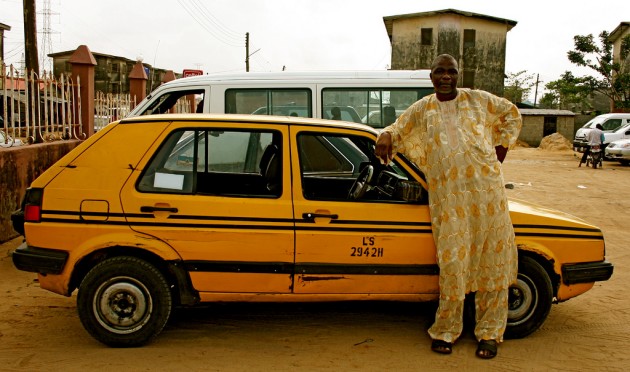
Gregor, roasted, grounds to a halt

Leaving Lagos is like Leaving Las Vegas – interminably long, difficult to experience and by about 20 minutes in, one is left with a profound desire to kill Nicholas Cage and get everything over and done with, but without the sustained horror of watching Elisbath Shue be brutally assaulted via the “tradesman’s entrance” by a college football player, whose name was probably Chad.

But once we had hit the open road, I felt that I could relax, and begin some more background research with Ajagbe’s assistance. I began by asking about Nigeria’s ongoing passion for coffee.

“Oh, yes sir! Nigerians are very much learning to love coffee!” he enthused. “Two entrepreneurs from Lagos have started their own coffee chain, and according to their press releases, they will soon be the Starbucks of Africa! I have been to one of their three shops in Lagos. Neo Café is the best coffee in the whole of Africa!”

He paused.

“Except for Kenya… their coffee is amazing.”

I interrupted his misguided tirade.

“No, no… I want to know about the rich traditional heritage that Nigeria has for growing coffee beans,” I demanded. “I have travelled all this way to find the most exclusive coffee bean in the world, and I want to know its history.”

“Sir… I believe there is something that you must understand,” he replied. “Yes, there is coffee grown in Nigeria. And yes, the UN says that Nigeria is the ninth-largest producer of coffee beans in the world. However, that’s not entirely true. In fact, according to a report from the Nigerian Federal Government, Nigeria has not produced a single coffee bean since 2013. That is why it is so highly prized… because, according to the government, it doesn’t exist – which means no one can export it, which means no one can buy it, which means no one can drink it.”

My heart sank. Quickly revisiting my research on my laptop, I double-checked the Wikipedia links that I had bookmarked for offline viewing. Sure enough, the UN’s assertions about Nigeria turned out to be entirely untrue.

Nigeria is listed as only the 40th-largest coffee-producing nation in the world. And, upon that Wikipedia page, the link that should lead to the entry outlining “Coffee Production in Nigeria” is an ominous red – and the URL confirms that “The Page Does Not Exist.”

Panic set in. Had I been hoodwinked? Sent on a wild goose chase by the anonymous bearded hipsters that haunt my favourite café, Flicking the Bean, which is centrally located on the bustling inner-city shopping, dining and entertainment precinct of Newtown and offers an extensive all-day breakfast menu coupled with friendly service and very reasonable prices, considering all of their food is organic and they don’t charge extra for gluten free?

Worse still, was I currently in a vehicle, headed for the far-flung Sambisa Forest, in search of a coffee plantation that was even more of a phantom than my ability to pay for my incredibly luxurious flight from Sydney to Lagos in the First Class cabin of Emirates airlines, where no request is too difficult for the staff and the dining options make a prolonged and steadfast mockery of every stand-up comedy gag about airline food ever made by the likes of Jerry Seinfeld, who could afford to fly First Class on Emirates but doesn’t because it would completely ruin his ‘what is the ‘dee-yul’… with the peanuts… on airplanes’ jokes?

I needed to think. And I think best when I am asleep – so I took a leaf from every other car-bound person in Nigeria, pretended to be stuck in traffic, closed my eyes and drifted off…

Final Destination

When I opened my eyes, I was greeted by the grinning visage of Godwin, who chirpily announced that we had arrived in Sambisa Forest, where – he assured me – we would find the only viable coffee plantation in Nigeria.

It was owned, Ajagbe went on to explain, by a local warlord whose affiliation with a local jihadist group was a source of only minor concern. This region was “comparatively safe”, Ajagbe said.

“Define ‘comparatively’,” I said.

“Okay… compared to… say… trying to survive on the surface of Venus, this region is considered ‘safe’,” he said.

The Russians have sent more than a dozen probes to the surface of Venus. None of them lasted more than an hour in temperatures that hover around 426 degrees Celsius, coupled with an atmospheric pressure that beats even the depths of the Mariana Trench and incessant showers of almost pure sulphuric acid.

Needless to say, I wasn’t convinced – but I was impressed by Ajagbe’s knowledge of the nearest planet in the solar system to earth. The infomercials I’ve seen must be working – and eating bibles must actually help people learn.

Godwin drove us to our accommodation, a former hunting lodge on the boundary of what is now the Chad Basin National Park, a former safari venue for wealthy Americans with more bullets than empathy, and people called Chad who like to hurt things that they will never, ever have a chance to understand, because they are all Neanderthals with nothing but sexual conquest at any cost on their mind.

Sorry.

These days, according to the literature I found in the reception area of the lodge, the hunting of animals has stopped entirely, and “the only kind of shooting allowed here is with a camera!”

The unmistakable crackle of small arms fire in the near-distance belied that particular claim – and each burst of fire was greeted with the now-familiar cry of “Happy Thursday!”, accompanied by the kind of increasingly guilty looks usually worn by those who know that they’re lying, know that they’ve been found out, but have decided to persist with the ruse on the off chance that the person they are lying to might have a stroke and forget everything that has happened in the past 14 days.

The lodge was, to be kind, a complete shambles. We were met at what passed for a reception area by a surly chap in military greens, brandishing a Soviet-era AK-47 – arguably the most menacing welcome to a hotel that I had received since I attempted to check in at the Rynek Główny hotel in Krakow without offering the requisite bottle of imported vodka to grease the wheels of arranging a room.

For a barely sub-Saharan area, this reception was confusingly frosty.

I found my room, let myself in and was horrified at the state of it. The bedclothes were filthy, and bundled at the foot of the bed, where they had clearly been left by the previous tenant – who, if I were a gambling man, I would bet had less than 24 hours to meet with a doctor before what could only be described as “a catastrophic failure of the bowel” occurred and he shat himself to death.

I marched back to reception, and demanded to know why my room was in such a state.

“The maids… they have all been taken,” was the reply.

“By whom, and to where?” I enquired.

“Boko Haram, and to Paradise,” came the response.

“That’s all fine and dandy… but I’ve done my homework on this region,” I shouted. “It was only a few weeks ago that local Governor Kashim Shettima had pledged millions of Nigerian Naira to help fight chronic unemployment. There must be people lined up for miles to come and work here. Where are they?”

“We cannot employ them because they do not have the required level of education,” I was told.

“Again, I’ve done my research… and that makes no sense!” I exclaimed. “Right now, the student to teacher ratio around here is better than most of the developed world! How can education be so poor, when that is the case?”

“… It’s because Boko Haram have abducted all of the students as well.”

Momentarily flummoxed, I bellowed until Godwin arrived. I suggested quite forcefully that it might be time for me to get to this coffee plantation, get my story, and move on. Nigeria, I told Godwin’s crestfallen face, was becoming my own personal Fall of Saigon. I wanted to take what was obviously an ignominious defeat, portray it as a victory, and fly home as soon as humanly possible – just like the American army in 1975.

We needed to move, and move fast. Godwin, myself and the strangely increasingly-distant Ajagbe got back into the car, and drove for an hour into the wilds of Borno State, the most north-eastern province of Nigeria. The principle exports of Borno State are – for those of you playing Trivial Pursuit while reading this story – rubber, and cocoa. Coffee, it would appear, is a long way down the list. In fact, it is so far down the list, that it doesn’t actually appear on the list – a list which includes words like “sorghum” and “yams”, which are clearly made up by someone who enjoys editing Wikipedia pages when they are drunk and lonely.

So you can imagine my surprise when we stopped in a clearing beside an aluminium garden shed, guarded by four young men who fairly bristled with weaponry. A sign above the aluminium shed clearly read “Simbisa Coffee Concern, Est. 1978” – and there was even a picture of a cappuccino.

Tomorrow:  General Hunting

Loving Lagos

03 Monday Oct 2016

Posted by Therese Trouserzoff in Gregor Stronach

≈ 3 Comments

Tags

Gregor Stronach, Lagos, Nigeria


203949276747

Gregor Conrad takes us deeper into the heart of Africa in search of the elusive bean…

The streets of Lagos fairly hummed with activity, as the residents made their way through the day-to-day activities for which Africa is duly famous. Nigeria is among the more developed African nations, but even still I was surprised at the number of locals who had taken to using cars as their chosen mode of transport.

I asked Godwin how far it was to the hotel.

“It is barely 35 kilometres, sir,” he smiled. “It should not take us longer than four or five hours to get there. If we are lucky, we will beat the peak hour traffic.”

As I contemplated getting out and hiring someone to carry my bags for me as I took the quicker option of walking through the oppressive heat of the afternoon, what sounded suspiciously like an explosion erupted nearby.

“Happy Tuesday!” Godwin beamed. “We do love our fireworks!”

The traffic delay became something of a farce within a very short space of time, and we were rapidly surrounded on all sides by other stationary vehicles. It wasn’t long before the driver in the car next to ours switched off his engine, reclined his seat and went to sleep.

“This man here,” Godwin chuckled. “He has the right idea of sleeping. This traffic is truly awful.”

I asked Godwin why the traffic is so bad.

“Ah yes,” he nodded sagely. “It is mostly because a lot of people like to stop their car and go to sleep. In Nigerian custom, it is considered very impolite to interrupt another person’s sleep with your own problems. That is why they are usually left to sleep.”

“But… surely people only sleep when the traffic is as bad as this…”, I opined.

“This is true, sir, yes,” Godwin replied. “They sleep because the traffic is bad, and the traffic is bad because they sleep. Perhaps one day, we will discover a solution to the problem, and then the traffic will not be so bad.”

Taking my cue from Godwin, who was beginning to open up further about his beloved Nigeria, I began to ask about what life was truly like here. As all experienced travellers, such as myself, will attest – the life of a visitor is often vastly different to the life of the locals.

“Oh, Nigeria is a wonderful place,” he said. “There is much to do and see, with many things that are a lot safer than people will tell you. Why, here in Lagos, the many different cultures that make up our people have become a melting pot!”

On that note, Godwin was quite correct. Nigeria, and Lagos in particular, has become something of a poster child for African economic success. The bustling business district has adopted a very African take on the 1980s Wall Street ethos of “Greed is Good” – and the slogan “Get Very Rich” is in the hearts and minds of its many inhabitants.

Such is the extent to which this has been taken to heart, in 2012 Nigeria’s GDP eclipsed that of South Africa, a nation whose economic growth has been faltering since the fall of Apartheid, according to Godwin. He stopped just short of blaming the former all-white leadership for abandoning the people of South Africa under an onslaught of international outrage over apparent institutionalized racism.

Many people see Lagos as the unofficial capital of Nigeria, an easy mistake to make, largely because Lagos was the capital until 1991, when Abuja became the federally mandated capital of the country. Abuja was chosen, I suspect, because it is just shy of 750km from Lagos, meaning insurgents and would-be military dictators would be far more likely to be dissuaded from staging a coup when they faced driving such a distance in appalling traffic.

I asked Godwin about the reports of rampant crime and social dysfunction, the main reason why Nigeria is often seen as a very dangerous country, which drew a hearty laugh from my guide.

“There is no crime problem here, no,” Godwin laughed. “The Nigerian people have been unfairly categorized as criminals all around the world, but it is simply not true.”

It turned out to be an inopportune time for Godwin to be boasting about his countrymen’s sense of civility. Mere seconds after he had sought to rest my mind assured that Nigeria was safe, two young men quickly and expertly relieved Godwin’s vehicle of its headlights as we waited in the traffic. Needless to say, I was shocked.

“Aren’t you going to do anything about that?” I asked.

“There is not much I can do,” Godwin frowned. “It is a shame to see my fellow Nigerians resorting to such petty thievery. It makes me very, very sad… and it will certainly going to make driving home tonight much, much harder than before. We are not easy people to see in the dark.”

At that moment, another loud boom shook the car, this one much closer than before. Glancing out the window, I could see a large plume of dust and smoke curling up from behind a nearby high-rise building.

“Happy Tuesday!” Godwin shouted glumly, as he peered into the rear vision mirror, watching three more enterprising young men removing his brake lights, before escaping into the throng of pedestrians that now moved freely between the stationary vehicles on the road.

“Are all of the young people here thieves?” I asked Godwin politely.

“No, not all,” Godwin smirked sadly. “Most of Nigerians are honest, hard-working people with steady jobs. My brother, for instance, works for one of my country’s thousands of princes, writing letters to ask for assistance in relocating funds that have been wrongly seized by the military during coup season, which runs from March to October every year.”

“But yes, I shall admit, there are many thieves in my country,” Godwin continued despondently, with a sparkle in his eye. “This, you have already seen for yourself. Please, be careful. They are crafty devils, sir, who would steal the milk from your coffee if you give them half a chance.”

The mention of coffee reminded me of what had prompted my journey, and I asked Godwin when we would be travelling north to find the plantation I sought.

“Tomorrow, we will go,” Godwin sulked buoyantly. “If we are to leave early, we will only catch the end of today’s traffic jam, hopefully before tomorrow’s has a chance to catch up.”

“When we do go north, it is vital that you follow my instructions,” he continued. “Here in the city, it is quite safe.”

Another small explosion sounded somewhere far away.

“Happy Tuesday!” Godwin exclaimed solemnly. “But yes, here in the city is safe. Australians are welcomed here, especially journalists. The only thing I must warn you is that you must never, ever reveal to anyone that you are a homosexual. Nigerian people are not at all tolerant of homosexual people.”

“But I am not a homosexual!” I protested.

“That’s the spirit!” Godwin smiled.

Mildly outraged by Godwin’s complete mischaracterization of my impeccable dress sense, we passed the remaining four hours of traffic jam in silence, arriving at my hotel – the Lagos Oriental, on the far side of the Lagos lagoon from the city itself.

Lagos Lagoon gets its name from the Portuguese word for lakes (lagos) – giving the large body of water here the ridiculous translated name of Lakes Lagoon, and cementing forever my long-held belief that the Portuguese should never have been allowed to name anything, ever.

Speaking of names, it was at this point that I pondered the name of my hotel for a short moment, and decided that the irony of latent racism is lost on the relentlessly cheerful Nigerian people. Oriental? Really? It was probably named by the Portuguese as well. And while we’re on the topic, whoever named Niger deserves to be boxed around the ears – and whoever decided to name the nation of Chad after every football-playing date-rapist from Brisbane with a propensity for stealing other people’s wives also deserves a stern talking-to.

Finally, we reached the hotel. Thanking Godwin, I left the car, and was alarmed that someone had managed to steal the front and rear bumpers of the vehicle without me even noticing it was occurring. I remarked on this particular turn of events, eliciting a world-weary shrug of Godwin’s shoulders, and the remark that this would make it much more difficult to survive crashing into the pedestrians who are very hard to see in the dark.

When Godwin popped open the trunk, and I waved to a porter to fetch my luggage and wheel it upon a trolley into the hotel’s beautifully-appointed reception.

The resulting chase on foot was mercifully brief, and the young man in the borrowed porter’s uniform was promptly and severely thrashed by the side of the road by several very enthusiastic passers-by. I trudged back to the hotel through the African dusk, pushing the luggage trolley and glaring at anyone that came within three feet, and eventually made it to the check-in desk.

“I have a room booked here. I was promised the finest suite in the hotel,” I said.

A nearby explosion and gunfire rattled the building, sending a small shower of plaster dust from the ceiling onto the beautifully polished, solid marble counter in front of me. The desk clerk quickly checked a calendar on the desk, before looking up at me and smiling benignly.

“It would seem that our Happy Tuesday celebrations are in full swing!” he said. “Now, if you would be so kind as to provide a credit card.”

And it was there that I cut him off. I had been warned of Nigerian financial scams, and this brazen approach bore all the hallmarks of a sophisticated attempt to raid my bank account while I slept.

“I am afraid I do not possess a credit card,” I said. “I do not believe in attempting to enjoy anything in life that I do not have the means to purchase outright on my own behalf. Besides – I do believe that this room has been arranged by the office of the NTDC – any and all expenses should be directed to them.”

“As you so desire, sir,” the desk clerk responded, a reply as slick and smooth as silk stockings on the legs of a slightly plump young woman named Mary, who wore them as a special treat for me one evening to a midnight screening of Ishtar. I shall never forget the tactile experience of running my fingertips over her knee, the chill of the air conditioning and the overwhelming pungency of popcorn pervading a cinema utterly devoid of patrons, save for Mary and myself. That should have been the night we consummated our passion, but as my knee-rubbing became more pronounced and my intentions more obvious, a sudden sneeze from the projection booth reminded me that we were not, as I had hoped, alone and unobserved.

Mary should have been my first, but I was cruelly denied, and any subsequent chance to spend hour upon hour exploring her exquisite form was also extinguished when I accidentally reversed over her in the driveway of her parents’ home in Chatswood, such was my hurry to get home and relieve myself of the pent-up sexual pressures of 107 minutes of rather vigorous knee-touching. The relationship would probably have ended there, but for the fact that I spent several long, difficult weeks at her bedside in hospital.

At one point, when her surgeons announced that she was near death and had only minutes to live, I proposed and she gave her consent by blinking twice. We were married 15 minutes later by the hospital chaplain. Three days later, she was released from hospital in a full-body plaster cast that restricted movement for her, and access to the parts of her that a husband might otherwise enjoy. Two days later, I returned from work to find that she had been swept off her feet by a hospital orderly called Chad, whose claim to fame was a brief stint in the second reserves for the Brisbane Broncos, until he was let go following a nightclub scandal, a 17 year old girl, and a quantity of sedatives purloined from Chad’s mother’s medicine cabinet.

But I digress.

“Here is your room key, sir,” the desk clerk said. “The dining room is open from 6:00pm – if you would like to dine downstairs, please call down to reception and we will send an armed escort upstairs to guide you to your table.”

“The lift to you your room is on the far side of the lobby, next to the piano,” he continued. “Go up to the ninth floor, turn right and you will find your room at the far end of the hall. Please… enjoy your stay.”

I strode purposefully across the lobby with my bags, following the desk clerk’s directions, and arrived at the lift just in time to see four extremely ambitious young men attempting to steal the piano. As the door to the lift closed, I could see a crowd gathering, getting ready to administer a beating.

“God speed, you plucky young gents,” I said to myself, and the lift lurched spastically, beginning the final stage of my journey to my room.

The room itself was beyond even my wildest expectations. I had been granted the full amenities of the Presidential Suite, which – in the interests of full disclosure – had been paid for by the Nigerian Tourism Development Corporation. The bill for the suite totaled 462,000 Nigerian Naira, per night.

I considered the fact that this was roughly 70 percent of the average Nigerian annual wage, which might sound quite a hefty sum, until one factors in the sheer oppulence this 300-square-metre island of solace, with its sweeping views of Five Cowrie Creek, and features such as the full leather couch, so startlingly red that it resembled a kiss from a high class escort that could comfortably seat seven people.

A king-sized bed awaited me – and I could not help but wonder how many Nigerian princes had slept in this bed before me.

Tomorrow – “North to Destiny”

Barista Wanted… but I’ll settle for a Lawyer.

01 Saturday Oct 2016

Posted by Therese Trouserzoff in Gregor Stronach

≈ 4 Comments

Tags

deepest Africa, Emirates, gourmet, Nicole Kidman, Nigeria, rarest coffee bean

c05a0d21267143-562fe4e4341ae


Inspired by the search for the world’s rarest coffee bean, gourmand and seasoned traveller Gregor Stronach embarks on an epic journey to Africa.


Travellers the world over move from place to place for a variety of reasons, each as personal as the documentation they require to return home.

For some, it’s simply the love of the journey. For others, the destination is the real prize. And then there are people like me, who travel in search of something truly unique – a rare gem that sparkles somewhere on our planet, just waiting to be unearthed.

I take my inspiration to travel from often unlikely sources – and this particular adventure is no different: a simple conversation, overheard at my favourite coffee shop, Flicking the Bean, on Newtown’s bustling King Street, in the inner-west of Sydney.

Two young men – both with beards so mighty and impressive that I was quietly sure they could house a family of four and give shelter from a hurricane – were doing what true lovers of coffee often do. They were discussing the latest beans and brews that they had tried – and were indulging, I must admit, in more than a little bit of showboating and one-upmanship.

My interest was piqued when one of the young men proclaimed that he had tried what many consider to be the Holy Grail of coffee – a bean so rare and rich, that only the very best baristas in the world are ever allowed to attempt to extract its heady crema. A trump card had been played.

“Nigerian coffee. Now that’s a bean worth finding…”

“But it’s impossible…” – which sounded less like a declaration of fact, and more like a challenge to my ears.

Intrigued, I took my stolen advice and decided to make a beeline for the most populous nation in Africa, in search of a coffee bean so rare, not even the government of Nigeria will admit that it exists.

I rang my editor, who was delighted to have found someone prepared to travel to Nigeria. While mumbling something very quietly about it becoming “somewhat dangerous” over the past 12 months, he casually mentioned that a contact at Emirates had been in touch.

The Emirates route from Sydney to Lagos was had apparently dipped somewhat in popularity, and Emirates had offered the chance for a journalist to fly in its luxuriously appointed First Class section. I seized the opportunity, of course.

I’d often wondered what it would be like to fly somewhere while lying down, while being waited on hand and foot by a bevvy of unobtainable dusky-skinned beauties. This was the perfect opportunity to find out.


Flight or Fight

I had been conditioned as to my expectations about the Emirates “world-leading” First Class travel experience by a couple of things. Firstly, there was the media blitz that seemed to have seen every man and his dog that dared to call themselves a “travel writer” invited on board to savour the splendour of their own personal cabin space, while they flew from Sydney to Abu Dhabi, before being put on the next available Qantas plane (economy class) to fly home again.

I, however, had missed out on this apparent bonanza the first time around, and so I was very pleased to have received this chance to completely independently and impartially review this rare and luxurious experience.

The second, and perhaps most intriguing, revelation about what I was to experience once on board arrived via the utterly enormous, and frankly quite confronting, 15-metre billboard inside the overseas passenger terminal at Sydney’s Kingsford Smith airport.

It features the reclining, silk-clad figure of Australia’s Own Nicole Kidman. The photography is clearly meant to suggest that Ms Kidman is cocooned aboard an Emirates jet in a nest of almost intolerable comfort and relaxation, dreaming happily away about the years she spent married to Tom Cruise.

However, the visual effect looks rather more like she has been kidnapped, drugged and unceremoniously left in the cargo space of a well-appointed courier’s van – destination, and destiny, both highly uncertain in nature.

I made my way through to the ultra-exclusive Emirates lounge, where cool jazz wafted gently into the room, and pin-striped men in pin-striped suits sat quietly whispering to their wives and / or mistresses, glancing around quietly to make sure that they were being noticed by every other pin-striped man in the room. I was, it seemed, the only person travelling alone.

There was no overly-loud announcement that our flight was being called. Instead, eye contact was made by a young woman upon whose head was perched a teeny-tiny fez – the kind an organ grinder’s monkey might have worn on the streets of Little Italy in 1880s New York. With the slightest of nods, I was informed that it was time to board the craft.

Once aboard the Airbus A380-800, one of 59 currently flying for Emirates to 35 destinations around the globe, I was immediately struck by the almost-disquieting levels of deference paid by the flight attendants to the passengers. Any and all requests are met with a charming half-smile, a nod and an assurance – spoken, or otherwise – that no request is too difficult, or will be turned down. Indeed, one might be fooled into believing that this is how life is meant to be. And, for those of us for whom this level of luxury is only just out of reach, it would be an easy trap to fall into.

If I’ve learned anything by travelling the world, it is this: Trimmings are just that.. and a lily, once gilded, is still just a flower.

Tomorrow …. Fellow Travellers

Patrons Posts

  • The Question-Crafting Compass November 15, 2025
  • The Dreaming Machine November 10, 2025
  • Reflections on Intelligence — Human and Artificial October 26, 2025
  • Ikigai III May 17, 2025
  • Ikugai May 9, 2025
  • Coalition to Rebate All the Daylight Saved April 1, 2025
  • Out of the Mouths of Superheroes March 15, 2025
  • Post COVID Cooking February 7, 2025
  • What’s Goin’ On ? January 21, 2025

We've been hit...

  • 713,786 times

Blogroll

  • atomou the Greek philosopher and the ancient Greek stage
  • Crikey
  • Gerard & Helvi Oosterman
  • Hello World Walk along with Me
  • Hungs World
  • Lehan Winifred Ramsay
  • Neville Cole
  • Politics 101
  • Sandshoe
  • the political sword

We've been hit...

  • 713,786 times

Patrons Posts

  • The Question-Crafting Compass November 15, 2025
  • The Dreaming Machine November 10, 2025
  • Reflections on Intelligence — Human and Artificial October 26, 2025
  • Ikigai III May 17, 2025
  • Ikugai May 9, 2025
  • Coalition to Rebate All the Daylight Saved April 1, 2025
  • Out of the Mouths of Superheroes March 15, 2025
  • Post COVID Cooking February 7, 2025
  • What’s Goin’ On ? January 21, 2025

Enter your email address to subscribe to this blog and receive notifications of new posts by email.

Join 373 other subscribers

Rooms athe Pigs Arms

The Old Stuff

  • RSS - Posts
  • RSS - Comments

Enter your email address to subscribe to this blog and receive notifications of new posts by email.

Join 373 other subscribers

Archives

Website Powered by WordPress.com.

  • Subscribe Subscribed
    • Window Dresser's Arms, Pig & Whistle
    • Join 279 other subscribers
    • Already have a WordPress.com account? Log in now.
    • Window Dresser's Arms, Pig & Whistle
    • Subscribe Subscribed
    • Sign up
    • Log in
    • Report this content
    • View site in Reader
    • Manage subscriptions
    • Collapse this bar
 

Loading Comments...