
• The Pig’s Arms
  • About
  • The Dump

Window Dresser's Arms, Pig & Whistle

~ The Home Pub of the Famous Pink Drinks and Trotter's Ale

Window Dresser's Arms, Pig & Whistle

Author Archives: Therese Trouserzoff

The Big O Visits Australia – O-mania Rocks Canberra

16 Wednesday Nov 2011

Posted by Therese Trouserzoff in Emmjay

≈ 54 Comments

Tags

humour, obama, the Big O

A Huge wave of excitement washed over the unwashed press gallery. The Big O is in town !

Only the Lonely, Dum Dum Dum Dum-dy doo-wha.

The Pig’s Arms rock critic – with a nose for news – Glen A 20, rang in today with the exciting news that the Big O is in town, scorching rumours that he hasn’t been amongst the quick for years.

Princess PowerFox – the president of Australia is eagerly awaiting her next instructions – after setting up a new US base in Darwin (and raising the hopes of all those US Marines who have grown tired of molesting the women of Okinawa), we look set to be told to export Uranus to Indira – but our correspondent is having a bet that there is no way Pakistan is getting a load because, you know, they’re dodgy and anyway they fix cricket games and that’s not cricket.

Fixing games IS cricket, but getting caught is more like getting caught doing cricket commentary and jumping out of hotel windows because you got very agitated and all those bastards mumbling “kiddie fiddler” can get well and truly sledged up deep middle off.

Let’s hope the PowerFox has more luck with setting up a base for the US Marines than she has had getting up a processing centre for asylum seekers.

Where was I….. oh yes the much delayed and much anticipated drop-by of the Fuhrer of the Free World.   One can only imagine that having stitched up the oil middle east for democracy, the irony sands of the Pilbara and the gassy North West shelf will be the next to be liberated by the sons of Columbus.

From the Halls of Montezuma, to the shores of Tripoli

From the antarctic up to Alice,

We’ll be free, we’ll be free, we’ll be free.

Vivienne’s Dhal – a Special One

13 Sunday Nov 2011

Posted by Therese Trouserzoff in Vivienne

≈ 43 Comments

Tags

Dhal, Recipes

Darker, more lush simulation of Vivienne's dhal

Quantity for a small village –  2 cups of  raw brown/green lentils – but works the same for 1 cup of raw lentils.

Preferably use a large cast iron pot with a lid:

To about one tablespoon of melted ghee add:

  • 1 finely chopped onion
  • 3 finely chopped cloves of garlic (depends on how big they are)
  • 1 square inch chunk of fresh ginger finely chopped

Sauté, but do not brown, then add:

  • 3 teaspoons of ground coriander
  • 1 ½  teaspoons of ground  cumin
  • ¾          “                 turmeric
  • ½         “                  cinnamon
  • ½          “                 cardamom
  • ½           “                chilli powder
  • 1 teaspoons of salt       (all my teaspoons are heaped)

Cook for a minute or two then add two chopped fresh tomatoes (I peeled them), simmer and then add equivalent of one sachet of tomato paste, simmer and stir well then add a cup of water.

Then add the lentils (remember to rinse them first).  You can first cook them separately by boiling and draining.   I add them raw  but make sure you have plenty of time to cook them as this mix is simmered and it takes nearly 3 hours for it to be properly cooked.

Stir and check water level regularly,  adding water each time.  Test taste – it will probably  need a bit more salt.

 Final notes:  all these quantities can be varied a bit.  For instance if you have an abundance of home grown tomatoes add four.  A bit more garlic won’t matter.  It is all a case of near enough is good enough.  This is not a sponge cake !

This should be accompanied by naan or any Indian style bread.

Apologies, Viv…… missing ingredients no longer …..

A Little Bit More Like Everything Else – the Internet Brand

07 Monday Nov 2011

Posted by Therese Trouserzoff in Lehan Winifred Ramsay

≈ 54 Comments

Tags

Art, design

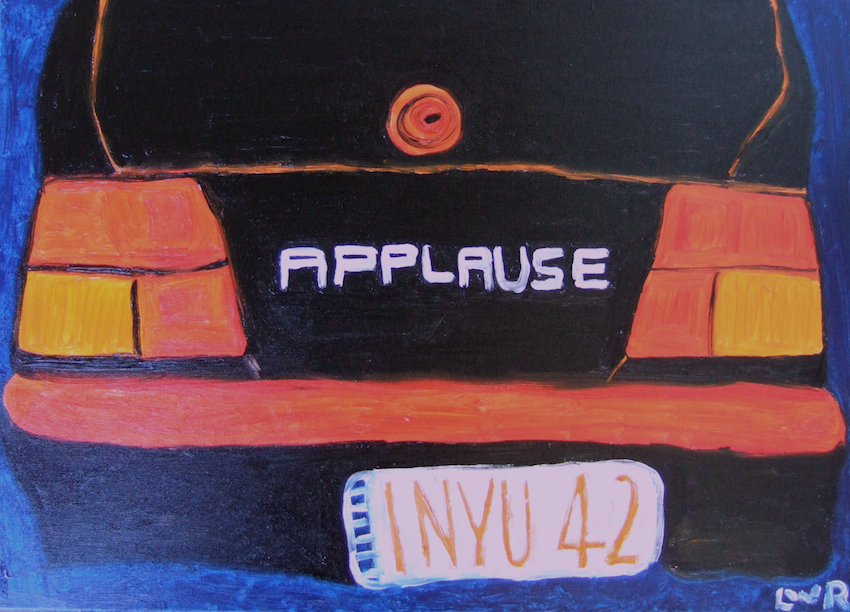
Applause

Story and Painting by Lehan Winifred Ramsay

I’ve seen it before, the early days of a system, when you can see the bare bones, the empty spaces, the potential. A horde of systematic thinkers move in and make order, covering the bare bones with regulations and Best Practice. Even for the people who have seen those bare bones it is difficult to remember where they were and how lovely it was to see them. Our Web has become systematized.

For a while there websites were a little mysterious. Difficult to know how to get the information from them. Difficult to know where to click. Unexpected things would happen. But then, people worked out that people just wanted information; they wanted to know how to most easily navigate the site. Designers backed out of their play and sat down to figure out the most user-friendly paths and formats. Sadly, though, that sensible rule-making phase does not end. People want to know how to make things pay. They work out ways to lead people through the information. People, who by this time have become other things like browsers, viewers, clicks, once educated in how things should be, can no longer see possibilities for how things could be.

I started using the internet about 1996. I used to make art on it. Not put art on it, make art on it. We played with HTML and fiddled with animation. Once things got past the initial black and white, there were no rules for how things should go. I should have known that we would quickly hit satiation of play-time and the rules would set in. Rules for how things should be placed, how things should be read. Rules that dictated what was good design and what was bad.

People worked out how to make things move, using code. Figured out how to put in layers. Perhaps that was the first interesting feature of this medium, that made it different from television, books. There was some very lovely work done. And, of course, people quickly came up with software and we all became animators. Very new kinds of design, quirky and energetic, using the limitations of the medium. The frame of a computer screen, the point of a mouse, the virtual space. With animation came movement. With increases in speed and power came more virtual space.

With more space came photographs, images. Home-made video. Which necessitated more space, and another industry sprang up to find ways to provide it. And another to find ways to use it. Digital cameras, digital video cameras. Design had been focused on text and hyperlinks to connect to other pages. But it moved back somewhat to let in embedded images. A sudden shift back to the media of newspapers and magazines. There is no doubt that the internet has affected the design of newspapers and magazines in positive ways. But I’m not at all sure that the effect of newspapers and magazines connecting to their online components has positively affected the design on the internet.

It’s easy to bemoan the passing of a beginning, it happens all the time. We don’t notice it much once it’s gone. I can’t help but feel, though, that we had great potential to develop new ways of thinking, by developing new ways of reading – and we gave that up for an easier read. I can’t help but feel that rather than giving different things a voice, the internet has caused different things to sound and look more and more like everything else.

You make a template, a format, a style. It makes it easy to keep order, to be a recognizable brand. Like The Drum. But every page starts to look alike. There is no recognizable difference between a story on children and a story on genetically modified wheat, except for the photograph. Which makes the photograph more important than the design in giving information. The design is now about not giving information regarding its contents. The design has now become a background feature, the design has lost its importance and its value. The design now has the same function as the design of a newspaper – simply to hold things together and keep the order the same, so that we can find things easily.

Perhaps its good to have The Drum as a recognizable Brand. But I’m curious about Brands, and the way they have become such an important feature of our information life. It seems to me that at some point in the development of the internet as an information source, that we had the chance to make it a deeply exploratory and meditative source. And instead, we took the other road, and made it a source of quick bites of information. Of which the Brand is the ultimate example. Perhaps, though, the Brand was helped along by that short time (short in the life of information) that we didn’t have space for more than a simple graphic on our web pages. It could be that the evolutionary process of the medium was its own downfall.

I am writing this because I don’t think I’m the only person who misses something that was here and then gone, the great exciting frontier of the World Wide Web. I cannot complain about the web, it has probably helped me more than any other connective device in my life. What it is now is an absolute playground of possibilities. Anything you want to do, it seems, is here or on its way. But what I do miss is the potential for more difference. That seemed to disappear into more of the same and more just like that. I wish that more people would take the time to see the rules and disregard them. But I guess it might simply be too late for that.

There is a time to be new, that time ends and something else gets to be new. In becoming a medium heavy in photographs and videos, the internet is losing the opportunity to be something else. But of course it goes the way of all commerce; the more functions the more money can be charged. That’s probably the simplest answer to why it went that way and not this. I hope that people are able to subvert it, remembering how it was before it became the luxurious RV it is now. I hope that there is still room for piracy.

Foodge – Merv Snap

02 Wednesday Nov 2011

Posted by Therese Trouserzoff in Big M, Foodge Private Dick

≈ 17 Comments

Tags

Foodge, purdy shotgun, steroids

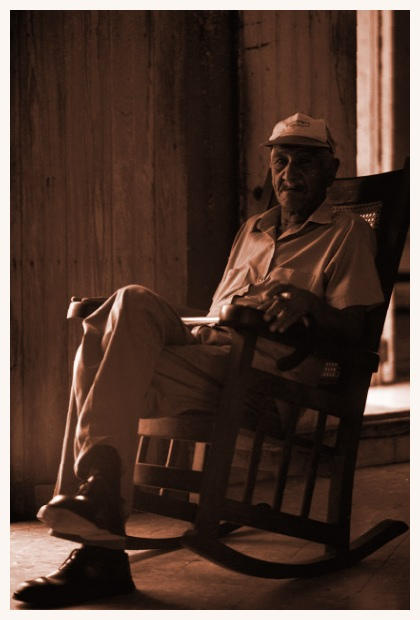
Old Man Sitting in a Rocking Chair By: Marc Desimpelaere (simulated Merv)

Story by Big M.

It was mid-afternoon as Merv sat in his old rocking chair in the midst of the cellar. Merv had that sense of weariness that goes with being a man satisfied with his lot in life. He often slipped down to the cellar to ‘catch up on some paperwork’, which, invariable, resulted in him being woken by his own snoring. The cellar was a comforting place, redolent with scent of roasting barley, from Granny’s oast, as well as that rich, beery smell, that only a publican can love.

It had been quite a productive day, Merv reflected. An early morning boxing session saw Foodge give Wes a clip around the ear, for the first time, plus Merv felt like he was back to his young body building days as he’d dead-lifted close to half a metric ton. Mid-morning he’d driven Janet and the twins to the station to catch the train to her hometown of Lithgow to visit her parents. Hopefully not for too long, as a stay in Lithgow placed one at great risk for exogenous depression.

There’d been a roaring trade at lunchtime. Algernon had brought his mycologist mates from the uni for a beer tasting, which was only terminated by Merv and Wes carrying them out to the Vice-Chancellor’s car, to be driven to the university for some ‘special’ tests.

Merv put his head back, and was just listening to his own regular breathing when he heard a voice from above. “Get outta here you drug pushin’ bastards!” Merv leapt to his feet and bound up the steps three at a time. He rounded the corner to the Gentlemen’s bar to be greeted by the sight of Wes pushing two fat, tattooed, baldy headed bikers through the front door, whilst Hedgie, former NSW Aikido champion, had a third bikie in a painful wrist lock, constantly yelling. “Bloody steroid pushin’ bloody bastards.”

Merv pushed in hard behind Wes to help eject the pair of miscreants, then quickly locked the door before turning to Hedgie. “Mate, you better let go before you end up on assault charges.”

“Assault charges!! Fecking assault charges! I’ll give this baldy headed grub some assault charges.” Hedgie almost effortlessly leaned further into the wristlock, which had the appropriate effect. The bikie screamed, then started whimpering, and then bent at the knees to take the pressure off his wrist. Wes unbolted the door as Hedgie tossed the hapless fellow through the opening whilst taking a loud slap at the bald head.

The three men were trying to take stock of the situation when Merv heard a mechanical ‘click’ from somewhere upstairs. It took him some seconds to register the sound, and then turned, yelling. “No, Granny!!” He lunged up the stairs behind the Gentlemen’s Bar, dashed passed the Nathan Rees Memorial Ballroom, rounded the corner at the Kristina Keneally Memorial Powder room, then out onto the shaky balcony above the Ladies’ Bar.

“Noooo!”

“Bam!”

“Bam!” Granny expertly cracked open the breech of the weapon, ejecting the cartridges onto the floor, and reloading, all the while keeping her eyes on the retreating bikies.

Purdy Impressive

Merv pulled the Purdy from Granny’s gnarled fingers, and unloaded the weapon before stowing it under the ancient park bench that had sat on the balcony for ever (actually, it was only since 1957 when the Angles got onto some ‘special stuff’ purchased from a bloke in a dunny at a pub, all hallucinated, moved a builders scaffold to the front of the Pig’s and placed the park bench in it’s current location). Granny slumped onto the bench, shoulders hunched, bony elbows balanced on knobbly knees, her drawn, wrinkled brown face covered by those long, gnarled fingers.  Merv flopped down next to her.  “Granny, it’s just passed three, there’ll be kiddies comin’ outta school!”

Granny’s bony shoulders started heaving up and down a long time before the sobs came. Then there were tears. Merv was bewildered, as he’d never seen Granny cry, even after a thump to the nose during some over enthusiastic sparing, which left her beak blue, and then green. He put his arm around her. “What’s wrong, love?”

Granny just shook her head like a petulant child, pausing to wipe her eyes on the back of her forearm.

Merv was stumped now, I mean, crying sheilas and all that. The bright sunny balcony suddenly darkened, as if in the umbra of some strange moon. Merv looked up to find Young Wes standing over him, who motioned for Merv to step away. Merv wanted to shake his head and stay, but everything inside him wanted him to get away from crying Granny, or, more to the point, for her to stop crying. Merv nodded weakly. “I’ll…err…go an check the Gentlemen’s Bar.” He quickly extricated himself from the park bench, stooping to pick up the shotty.

Merv had sowed the gun in a locked cupboard upstairs, then went to the bar, pouring himself a double ‘Southern Seas Cognac’ (an oxymoron, surely) and downing it in one gulp, the acrid fluid burning his palate and oesophagus, then giving his stomach an accurate impression of an ulcer. He looked around at the Bowling Ladies, all of them looking a little pale. “Sorry ladies, a sherry or brandy, just to bring some colour back to the gills?”

“Don’t worry about our gills, thanks Merv!” Retorted Beryl. “What about Granny, we can hear the sobs from the Ladies’ Lounge, and you’re down here drinking?”

“Err…ah…um.” Merv rubbed his huge paw over his bristly scalp. “Wes is up there, you know, he’s the one who’s usta workin’ with sheilas.”

Beryl was about to launch into a tirade about Merv’s responsibilities, and what a bastard he was, and leaving a young lad like that to do a grown man’s work, when Granny and Wes appeared at the bottom of the stairs, a box of cartridges in Wes’ hand.  All of the Bowling Ladies rushed to her like a flock of seagulls to a discarded chip (and, yes, like seagulls, some of them only have one leg!). They gathered around her, and then magically whisked her into the Lounge, with Beryl at the rear, still glaring at Merv.  The tension was broken by the arrival of both Detective Inspector O’Hoo, and his partner in crime, I mean, detection, Foodge.  Both men were visibly thinner, tanned and more sprightly. “‘Allo Gents, pints all round?” Stammered Merv nervously. “Business or social call, Detective Inspector?”

“O’Hoo tilted his trilby back, rubbing his face with a handkerchief. “ A mixture of both, really, there’s rumours round the station of shots fired in the main drag. My response was that no one would be silly enough to own a firearm, much less discharge one, round these parts, so I thought I’d come ‘n’ ‘ave a gander.” O’Hoo took a long pull from his glass.

“Foodge nodded sagely.” There were some big Charlies in the street, I reckon a couple backfired. Bad fuel, you know?” To no one in particular.

Charlie

The Bowling Ladies had gone quiet. Beryl piped up. Granny, can you just write in the minutes that the meeting ended…” She paused to look at her watch. “Three twenty seven?” Granny nodded as she scribbled on a sheaf of papers.

O’Hoo looked around. “I reckon you’re right, Foodge, backfirin’ motorbikes.” He was disturbed by the sound of The Muppet’s theme tune. He fished a swish looking mobile out of his pocket. “O’Hoo…yes…yes…bikies…yes…no…OK…thanks.”  Then hung up. “Five blokes on big Charlies were arrested by uniformed pleece, for speeding. Their bikes were searched and all were carrying illegal hannabolic steroids, speed, coke and great wads of cash. They were blabbing on about being beaten up and shot at, silly buggers!” He looked at the bottom of the empty glass. “Anymore beer in that tap?

Cross the Line

31 Monday Oct 2011

Posted by Therese Trouserzoff in Lehan Winifred Ramsay

≈ 6 Comments

Rira

Story and Image by Lehan Winifred Ramsay

A friend said to me: what kind of support is there for young people like us?
We are not young, I replied.

It is easy to fall into the mistake of assuming that change is made by other people. But really we are the ones. The ones to make something change. There are plenty of people older than us and younger than us, it is true. But we don’t know what those people are thinking. They may be thinking the same as we; that there must, or should, be some support for young people like us. Or old people like us.

There are a lot of invisible lines in the world, that we learn that we must not cross. That is often what stops us from protesting or even protecting. It is not our business. It is not our right. It is not our style. It is not our place. Even though they are invisible lines they are as clear to us as the fingers on our hands. Taking a step toward them makes them even more clear. It can be a frightening thing to do.

What you need to remember though is how they look when you have stepped over them to the other side. They look a lot more insubstantial. They look confused, disconcerted, and most of all they look unimportant. Even if you have been punished for crossing the line, the important thing is that you have done it. And you have not died or gone to hell.

Crossing the line can be very frightening. But you need to remember that only part of that menace is what you have actually done. The other part is that you have broken a taboo.
You do need to consider carefully what that taboo is before you decide to take it on. You need to consider the repercussions, the consequences, as far as you know them. You need to try to understand the reason for the taboo, from the point of view of society. And you need to understand your own beliefs. You are going to live with the decision you make.

It might be that in crossing this line, you might lose some friends. You do need to consider this. On the other hand, you might not have as much need for friends; you might find out who amongst your friends are going to stick with you.

Once you have made some investment into a life it can be difficult to take risks that might threaten that investment. So you have started in a job you want to spend a long time in, you want a better job and a better one after that. You want to have a home, you want to get a car, you want a holiday. So you will be careful. You will not speak out, you will not take action, you will not ask for more or less. That is understandable. The problem is that it becomes a habit, and from protecting your investment it can grow. And you begin to limit yourself.

You don’t think so? Find a line and cross it. Try it out. Spend some time learning where you have become overly accustomed to restraint. Take some time to notice how obedient you are. Do you have trouble with your utilities? Do you notice how averse you are to calling them? You get angry and you call the number – and the voice tells you that your call is monitored for “training purposes”. The person you are speaking to is unhelpful. But you are the one who is intimidated. Because you know that this is meant to be frustrating, and you are frustrated.

Try crossing the line. It is your training. Call up every day until you understand how to move from this situation to a better one. Cross that line. Lines don’t always have to be worse, you know.

Try another line. Take more time to get through the checkout at the airport. Linger, luxuriate. Don’t fumble; relax and meander. You obeying all the rules, named and unnamed, has made this system work. You fear the line. Not security. Your good behaviour makes for a good business model.

Sometimes we think that only unorthodox behaviour can be a protest. I don’t think that is correct though. Anyway, crossing the line doesn’t always have to be a protest. It can be a stretch. It can be a shift that gives you a little more room. It can be a life changing realization of just how passive you have become. You might not think that one small rebellion would take you so far. And you may not even want to go as far as you go. But looking back you can hardly regret the experience (the consequences, of course, are a different matter).

Go and see if you can talk to the person that you are sure you are unable to meet. The Prime Minister, and some popstar. Chances are you won’t succeed. Just try it to stretch out your intentions. See who you meet along the way. And try to get whatever message you have to move along the line. You want the world to change? Then try something and see what change is. Because it isn’t other people who change the world.

It’s you who changes the world. And you do that by making a move, and crossing a line. A line that represents something you don’t do, don’t think you can do, are told you can’t do. You cross that line by taking a chance. A chance that it will not work, not be a good thing, not help. Because you want to make a change.

A change is not always found on a line. But often is. It’s a line that is invisible but you know it’s there. That’s why you don’t cross it. To cross it, you have to make a choice, take a chance. You’ll get across it. You will. Or you won’t. Somebody else is not going to do it. That’s not how change works. Why not try yourself.

A Call to Player – Occupy Apple. You. Yes, You.

26 Wednesday Oct 2011

Posted by Therese Trouserzoff in Lehan Winifred Ramsay

≈ 15 Comments

Tags

Apple, Occupy

Europe 04

Story and Photograph by Lehan Winifred Ramsay

Recently a movement called Occupy Wall Street has sprung up, and to the delight of many has captured the attention of the media. The media is happy to find an enclave of potential disruption; it makes it easier to get the lighting sorted and have the journalists standing by. Besides, this Occupy Wall Street enjoys the patronage of many well-to-do celebrities keen to share the spotlight. A cause and a celebrity is an attractive combination for the media.

Occupy Wall Street identifies itself as the 99 percent of the world that is asking the richest 1% – to stop being so greedy. Perhaps to give up a little of its money. Particularly the Bankers of Wall Street, those who receive huge bonuses for their financial management whether it works or not. Occupy Wall Street participants take to patches of city land and camp there. My suggestion here is that Occupy Wall Street participants could do better to find a way to Occupy Apple. And I am asking you – yes you – to do it.

I do not mean that you should take your tent and sleeping bag and move into the Apple shop. Nor that you should fill up the footpaths in front of it. I am suggesting that instead you find a way to nestle inside your Apple Products until there are enough of you, and then send a polite note to the Apple bosses that says hey, we need a little help with a small problem – do you have a minute?

Those Occupying Wall Street – what are they occupying, how are they occupying? Why do we like them so much? They are not asking for anything in particular, they say. Just for the bankers to give up some of their wealth. I like them – they have the springy innocence of Apple products. And they are not causing any trouble – it is the police that are the trouble, it is the governments that are the trouble. They don’t look at the police, don’t look at the government, just carry on being fresh and uncomplicated.

I remember when Apple had some great advertisements using their Think Different slogan, using the pictures of famous people; Gandhi, Mother Theresa. Now we could put Steve Jobs in there; he was world-changing too. I think it is highly possible that he was. Certainly there are people whose lives are better because of his work. Perhaps though he was more of a “working-class” hero; mostly helping people with good lives to live better lives. We should try to Think Different too.

Really poor people don’t usually have mp3 players. Sometimes though they do get to build them. What if you were to ask Apple to add a function to your computing devices that allowed you to meet the people who built them for you. It wouldn’t be so difficult would it? And then, like the tracking that allows you to know where your food sources grew up, you could also know who had built your devices for you, what their names were and what they looked like. That would be one way in which Apple could help.

I am wondering how it would be possible to mimic the behaviour of the Occupy Wall Street action to achieve a similar result. And I am wondering where this behaviour has come from. The first step is to set up a camp in a place that is not Wall Street, but call it Occupy Wall Street. So it is a kind of a virtual occupation. What is the precedent for this?

The second step is to not look at the Government, even though one’s actions are directed at the Government. Then, the peaceful protests change into violent resistance and the government forces are blamed for the violence. That is not so new, we would probably find that this has been tried before.

How could you replicate this in an Occupation of Apple? Perhaps all the apple owners could declare that their purpose, in stocking up on apple products, was actually just to use the product because they liked it. Then, they could reveal that actually it was something else: It was to give Apple the power and the means for implementing a peaceful revolution. And then wait. Wait for the peaceful revolution. And then, in the case that it didn’t come, that Apple didn’t come through, to drop all their products in the bin and encourage another company to fly high.

We should not be giving Apple all of our ideas for what we could do to address inequality in the world. Because that’s what Apple does, that’s what it trades in; ideas. Ideas, brought to life and clothed in the best design there is. If there is an idea out there worth pursuing, Apple will find it for us. And if Apple finds that idea, we can rest assured that Apple will also find a way to make it pay for itself. And we will have a profitable solution to the world’s greatest problem. That’s not something that Wall Street can lay claim to. They didn’t make a profit out of the Global Financial Crisis, did they? Occupy Apple. Because it’s a sure thing.

Question. Question yourself and what your stake in this is. To question your involvement in Apple and to question your own values and your own place in the world and in the problem. We know that Occupying Wall Street places our governments in the firing line, between us and the big corporations. And we know that looking at causes in far off places can take away from our sense of responsibility for what happens here and now; problems connected to us. You may have figured out how to occupy Apple. If you are not sure about what your question to Apple is going to be – for you are likely only to have one chance, one question – take some time to consider it now. Once you get in there, we’ll be counting on you to ask it.

Make a Little Nest in Apple

22 Saturday Oct 2011

Posted by Therese Trouserzoff in Lehan Winifred Ramsay

≈ 48 Comments

Tags

Occupy Apple

Europe 06

Story and Photography by Lehan Winifred Ramsay

I disagree with Occupy Wall Street. It’s irrelevant to talk about the greed of big bankers and corporations. They’re not the only ones who have tipped our world into it’s looming environmental disaster. They are just part of a system of making and selling and buying and throwing away.

I want to propose that we occupy Apple. Especially, those of us who have apple ipods and imacs and iphones. Those of us who have bought into a name and a convenience. I want to suggest that we now turn to Apple and ask it to change. Even whilst feeling the pain of losing Steve Jobs, I want us to ask it to change.

I want us to Occupy Apple. Not by actually going to the Apple Shop and putting up a tent there. But by figuring out a way that we can get the attention of Apple, to ask it to turn its attention, even if for a moment, to our dilemma.

Our dilemma is this. We love our lifestyle. We want it to just keep on getting better and better. We don’t want to give up our conveniences or our tools of work and leisure. But many many more people in the world are wanting a life just like ours. We know that the biggest problem of our life is that it is not sustainable, and that such an increase in people living like us would be catastrophic. But we love it too deeply to change it.

We love Steve Jobs. Because he looks so loveable and he gave us these lovely things, he changed our lives, he made things for us! Not the kind of luxury devices for the wealthy; like sports cars and one-off designer handbags. He made extraordinary devices that we could afford to have. And that changed our lives. Not just by connecting us up in a way that made our world feel like it was the only world, but by bringing well-designed objects into our lives and getting us accustomed to paying more to look better. We love him because he is our style guru, and only a few of his words – think different – when clicked on, bring up a whole manual of style. Life style.

So I want to suggest that we Occupy Apple. That we do it in a loving and sweet way. That we do it in the most endearingly cute and innovative way, in such a way that the person whose idea it is is swept up by the Apple Company. That we who have apple products, and we who simply learned to live with more style but kept our computer know-how and made our own computing products all find a way to make a little nest in Apple and all perch in there together. And once we’re in, we say “Apple, we need your help”.

And the help we need is a bit different from stopping all those Wall Street dudes from getting their big bonuses. The help we need is for us. We need help. We need help to understand that this problem is ours, and understand that no big deals and no big technological breakthroughs and no big laws are going to solve the problem of entire populations living the good life, and other entire populations just wanting to do the same.
I don’t really see that it’s depressing. I think it’s only depressing if you try not to think about it. Once you do think about it, it’s more of an interesting dilemma. I can’t really see how we can resolve it, and my feeling is that we are not going to. That we are more likely to just keep finding ways to do big things in order to avoid looking at the fact that we, that each of us, is the problem.

But I am not overly concerned about this. I think we just need to go to Apple, get inside it somehow, and communicate with it. Apple, we need help. Apple, we have a problem. It might be that Apple is planning a way that we no longer need our computers and our hand held devices. That could be the future. Anyway, if we ask it, perhaps Apple will make that the future and simply work toward it. We really have no idea what Apple wants, what Apple plans for the future. All we know is that when we hold something Apple in our hands, and it is working okay, the battery is full, the operating system, the software, the data, all there, then we feel happy.

I want us to ask Apple for help. I want us to find a way to Occupy Apple, and then find a way to get its attention, and from there, for us to ask Apple for help. Most of us don’t have accounts with those corporations on Wall Street. We don’t have shares, we don’t have funds. We are not Stakeholders. But in Apple we do have a stake. We not only buy from Apple. We like Apple. We trust Apple. And we admire Apple. And so it seems to me the most reasonable action to take, to go to Apple, to Occupy Apple, and to ask Apple for help.
I cannot see how we can solve the problem of our consumption of resources, and how our consumption is depleting the earth. I can, though, see with my own eyes how the depletion of the earth is creating problems. Problems of pollution, and problems of growing piles of garbage, and problems of the seas getting dirty and animals and fish dying. I can see that more people get skin cancers. I can see that in my lifetime winters have gotten warmer and summers are very hot. I have seen countries twice and noticed that the second time they had more shops and cars. I could see that their buildings got sewerage systems, and then nobody noticed the sewerage any more. And I think that might be a problem.

I remember I lived in a coastal town, and in the summer my friends used to go to the cliffs and jump off. They laughed at the locals for not swimming in the sea. The locals laughed at them for not knowing that that’s where their sewerage went. I know that Apple is not in the sewerage business. Anyway, perhaps people have to solve their own sewerage problems. I know that this country has sewerage problems.

Occupying Wall Street is a nice idea. Especially with summer coming, it’s a brilliant opportunity to enjoy a bit of camping in a prime location. But I think it isn’t making us look at the painful truths. Like: our love of what is killing us. So it is my suggestion that some smart young person find a way for us to Occupy Apple.

OccuPod, OccuPad, OccuPhone.

19 Wednesday Oct 2011

Posted by Therese Trouserzoff in Lehan Winifred Ramsay

≈ 42 Comments

Tags

iPad, iPhone, IPod, Occupy Wall St

Lane

Story and Photograph by Lehan Winifred Ramsay

Most of those people who would go to an Occupy Wall Street protest do not have stocks and bonds and huge investments. I don’t think we need to occupy Wall Street. If it’s change we want, I think we need to occupy Apple.

Steve Jobs is gone. I love my apple computer. I love my ipod. I heard that someone bought their son an ipod and then had to buy them a computer to make it work. It really never occurred to me that I needed a computer in order to drive my ipod, because I already had the computer. But I’d have bought it anyway because I like them all. I like the way they look, like the way they feel, and to be honest I like the way they invest you with ignorance about the internal organs of the things. A friend of mine just made a computer, he said it wasn’t difficult, you just work out the things you need and put them together.

No Mac user ever has to be bothered with building their own. You will never need a garage for your mac. At most you will need one white cable that connects your mac to something else. You might be able to borrow that from one of your friends, but it’s good to have your own. It’ll make you feel a little less powerless if something goes wrong.

I think that some of the grumbling is right. Perhaps the Occupy Wall Street Sub Slogan should be GIVE UP YOUR MAC. Give up your ipod. Give up your iphone. Give up your Solar power unit. Give up your external water drive. Sorry, tank. And your speakers. Sorry, sprinklers. Are we really going to admit that we have bought into the habits of the wealthy 1 percent and stand to lose our quiet bystander status by standing up to ourselves?
I want to know why we are selling power generated by solar panels to the electricity companies. Do they really want to buy it? Aren’t they actually in the business of selling electricity? Isn’t there by now some way that we can sort and bundle all the power of our block?

I want to know why turning off lights and unplugging devices has gone out of fashion.

Couldn’t we start a QUIT POKING campaign to get people not to plug in so many things? Shame everyone into giving up the white cables? I want to know why blackouts have gone out of fashion. I want to know why we all blame Kevin and Julia for not finishing the insulation. I want to know why we are such careless people. But I guess I do know.

This problem is so much bigger than we can manage. Even if we do something, chances are the Chinese and Indians and all the other baddies-du-jour will just use up more, and we likely will only achieve a balance. With us getting a little less and them getting a little more. And actually we don’t care to give things up just to share.
If nothing else we could turn around and look at one particular system and its efforts to become energy efficient and thoughtful about their use of the world’s resources. Apple.

Apple is very cutting edge, and in the eulogies for Steve Jobs we heard that Apple products have been designed some years in advance. What is the Future as Apple sees it. And more importantly, is that future changeable? If we, Apple’s Loving Masses, feel that we need to change, become a little more technologically simplified, does Apple have the flexibility to respond, as it always has, with new product?

Are we still going to be following Steve Jobs, is I guess my question. And we have followed him, through expensive bulky packaging and cables that redesign for each product, and recalls that go by word-of-blog. But we should have got the hang of this beauty thing, this design thing, we should just get it by now. We don’t need to be taught any more, and anyway there isn’t a great IT design guru to teach us. We should get it. What is necessary, what isn’t, what constitutes great design as useability and function and what constitutes great design as line shape and colour. And where the vision of the future is, where you can see the next product peeping out. In fact, we should be ready to design our own.

I loved Steve too. And I spent a lot of time reading stuff and watching stuff and thinking stuff, I wanted to learn from him even if I couldn’t meet him in person. Now I think I’m nearly ready to give him up. I went back to the 1984 Apple advertisment, and I watched it until I understood that it was the kind of lame preppy boy dream of a lecture room full of bored computer engineers fantasising about the babe out the window practicing for the sports festival. Would Apple, if we were to ask them, if we were to occupy their thoughts, make for us a new story, a new narrative, in which we were all liberated from Big Business?

I love my computer, but I do not love my own stupidity. Sure I can simply upload from one computer to the next, never having to start again from scratch, and although the computers have been designed to do this, the cost of having your computer fixed often more than purchasing a new one and sucking the brain of the old one – Apple doesn’t really recommend it.

I find Apple to be a great company, I have many positive experiences with both it and its products. I always wonder about organisations that are difficult to criticize, and so when I find one I examine it. I am old enough to have tried to learn some computer programming at school, without the computer, and to have found it unfathomable and discouraging. I am old enough to have studied Typing at school, and to have avoided shorthand. So it could be that my attachment to Apple is gratitude, for sparing me a lot of discomfort. For not having to be ready to pull the computer apart when it didn’t turn on, but to have to rely on a professional.

Most of those people who would go to an Occupy Wall Street protest do not have stocks and bonds and huge investments. I don’t think we need to occupy Wall Street. If it’s change we want, I think we need to occupy Apple.

ARTISTS! Join Up!

17 Monday Oct 2011

Posted by Therese Trouserzoff in Lehan Winifred Ramsay

≈ 37 Comments

Tags

Artists, Lehan Winifred Ramsay, Painting

Rainy Day

Story and Painting by Lehan Winifred Ramsay

I read about a man, an arts administrator, who used to go to art colleges and tell the art students: join the police, join the army, join the public service, because you might change something there. He didn’t mean that art didn’t change things, though it so often fails to. He meant that an artist joining the ranks of the police, the ranks of the army or public sector might make a difference to that institution.

I’ve always thought that was very clever, since I read it wherever I read it. There is something about the way artists think that could be so useful in places like that. Artists think that their souls will be destroyed by going into them, but I think there is nothing like an unappreciated life’s work for soul destruction. The arts don’t have highly paid jobs. A good job in the arts is actually not the arts at all, it’s management, and one of those isn’t going to give you a particularly good wage.

I guess you might say what’s the difference, taking a job in the police force or taking a job as an arts manager. Certainly, if the arts management job allowed you to use your unorthodox thinking skills to make new ideas bloom, that would be good too. But arts management jobs are kind of conservative. I don’t know for sure but I think the police force might be a little more radical than that.

Artists do go into interesting jobs. Usually though they go into them as artists, with one eye on an exhibition. Or they go into them as side-jobs, to provide enough money for art production. But I’m not talking about that. I’m talking about taking hold of that talent you have for thinking about things in a different way; whether unsentimental, or without having to have a positive outcome, or looking into the guts of the thing, or thinking about whether the world really needs it. Taking hold of that kind of thinking, and giving yourself body and soul to a new way of using it.

I think that artists are a bit passive. That is, despite the tendency to flamboyancy or obsessiveness, despite the showmanship, artists are often a bit separate, a bit introspective, a bit outsider. Not really keen on being pushed around, and not keen on being singled out for odd behaviour. Perhaps that passivity is learned, as being different is a hard thing for a kid. Whatever it is, it manifests itself in odd ways, and one of those ways is in avoiding things that they will find difficult. Going into a job in the police force would be difficult. And that’s a good reason not to do it. But think. All the artists we’ve known who’ve had extraordinary talents to make things happen, to bring about change, to transform the way people think. Imagine what they could have managed had they set their minds to changing the police force. That’s why I agree with the man who first wrote about it, whose name I no longer remember from a book I no longer have.

Creative people, if you take a look around their living spaces, often have great practical ideas for ways to improve things. Once their told that they are impractical that idea seems to stay with them – still, a lot of creative people take on practical jobs to support themselves. And that’s great, but it’s not what I mean. I wish more artists would decide to take on an institution, an organisation, a corporation. Not to challenge it. But to make it better.

Maybe it just seems like a waste of time? To spend years of your life doing what ordinary people do, take an ordinary job. But really, no job with you in it would be ordinary. Not if you really cared about it. What’s happening now, with the arts, is that a lot of people spend their time making art objects, art installations, art events, as if that’s going to really make some huge transformation in people’s lives, and it doesn’t. There is so much of it around, so many people solving this output problem in just the same way, that people don’t really take a lot of notice.

Art doesn’t have a new kind of value that it didn’t have in the past. Maybe it has less value, because more people do it and more people own it. But it doesn’t have more value. And art isn’t seen as having a world-changing effect. There is no Nobel Prize for art, though there is for Literature, which could be a part of art.

Join up. Join the police force. I often wonder what this country would be like with a leader who was a trained artist. More than a woman, more than Labour or Liberal, that leader being an artist would make a fundamental difference. Not a flamboyant difference, because the system is in place and that system would rein in flamboyancy. It wouldn’t be Australia Council Funding for All, a Museum in every Shopping Centre. It wouldn’t be like that at all. But I have no idea what it would be, because as far as I know it hasn’t happened. Apparently Hitler was a “failed” artist. Does that account for his overwhelming popularity as a leader? Or for his excess.

I wish that more artists would think: I want to contribute, and this is not the best way to do so. Because I think it isn’t. Being an artist, being creative is not something that puts you on the path toward great leadership and great mentorship. It’s just not. I think we must be doing something wrong, I really do. And although I find immense value in having been an artist throughout my life, I also regret, a little, the things that the role of artist have influenced me not to do. I thought I would be able to do more. And I am hoping that someone one day does. So that more artists join the police force.

Staying Home

13 Thursday Oct 2011

Posted by Therese Trouserzoff in Gregor Stronach

≈ 18 Comments

Tags

Family Holiday

Simulated Family Holiday - 1967 (Gregor was minus 1 year old at the time)

By Gregor Stronach

In my real job, I get to travel. A lot. For some folks, this would be a dream come true, but for me … well, I’ve been likened to a cheap wine – I don’t travel well. It’s a crying shame, I know. I have the world at my feet (or Australia at least) in my current capacity as Travel Editor for Overlander 4WD. Why, dear lord, can’t I travel with any real sense of ability? It shouldn’t be that difficult, surely.

I know a young man who has backpacked through the Gaza Strip, at the height of conflict season (differentiated from the increasingly short ‘tourist season’ by an influx of armed men, tanks and the excitingly named helicopter gunships), on less than seven cents a day. His diary reads like the battalion logbook; ‘Hiked three miles, counted fifteen dead (three friendly, twelve enemy). Dried beef for dinner. Again.’

Even my beautiful partner Renee travels better than I do. She recently dived in the deep end, heading off overseas for the first time ever to backpack around South America for a month. She arrived home tanned, fit and only slightly less wealthy than when she had set out.

But I, on the other hand, have difficulties when I get further than 100km from home. Even a weekend trip to Katoomba is enough to have me packing a good 50kg of clothes, bedding and other sundry accessories into the back of a 4WD, knowing full well that I’m going to spend a minimum of $60 a day that I won’t be able to account for. It’s lunacy.

The problem, I’m sure, stems from the holidays of my childhood. Yes, I know, it’s an ‘easy answer’ to blame one’s parents for an adult’s ills, but I’m positive that this is it. There is no other explanation, except the unacceptable option that I am simply a moron – something I shall steadfastly refuse to admit to the day I die.

Having been dragged around the state as a child with all preparations made for me has spoilt me for traveling. Admittedly, the only other alternative for my parents was to staple a train ticket to my clothes and pack me off somewhere to fend for myself – even in the liberal seventies that would have constituted some form of neglect. So instead we did as most other Australian families did – we piled into the family car, heavily laden with beach towels, surfboards and board games and set off north to find a beach that wasn’t crawling with other tourists, or sharks.

In order to paint a complete picture here, I should probably introduce my family. They’re completely different people now than they were twenty years ago, so I’m sure that they’ll forgive me the inevitable unkindnesses that follow. Although, I will preface the following remarks with a disclaimer – my family members are amongst the friendliest, most lovable people you could ever hope to meet, and I love them all dearly…

I’ll start with my father, a man that I have looked up to my entire life. As a father, a child could ask for no better. But as a traveling companion, he left a little to be desired. When I was a child, my father smoked incessantly. Nowhere was this more apparent than when we were cooped up in a car. Dad, in the nature of Dads everywhere, was of the ‘drive till you drop’ school of holiday-making, which meant that 12-hour stints were the norm and the occasional 14-hour gut-buster was always on the cards. When he wasn’t smoking, he was whistling. Or tapping the steering wheel with his fingers. Or making popping sounds in time with the music that Mum was playing on the stereo. Or any one of a number of equally infuriating things. Four hours in a car with my Dad would have been enough to have Job screaming ‘enough!’ at the Lord Almighty.

My mother was as good a traveling companion as a child could ask for. Readily equipped with all manner of diversions, she dealt with two terminally bored, carsick children with the aplomb one would expect of a career nurse. She provided everything from a running commentary on our surroundings – not a kilometre went by without Mum excitedly remarking “Look at that, kids!” – to oversized Lifesaver lollipops that could be sucked for approximately sixty seconds before they irreversibly adhered to the upholstery, rendering them inedible.

Invariably, I would be too late to see the source of Mum’s excitement as she saw something cool out the window. I was generally either fighting severe nausea or sucking enthusiastically on the toxic markers I had been provided with to do my colouring in. Thinking back on it now, I realise that the two occurrences were probably linked in some fashion – but the marker ink had such an alluring chemical taste.

It was during this time that I was introduced to The Beatles – the perennial car audiotape that we only ever heard Mum play while we were on holidays. It was generally played at a volume sufficient to drown out Dad’s tuneless whistling, saving my sister from an early coronary. My mother was the diplomat at all times, defusing Dad when I vomited in the car and making sure that if I did eventually fall asleep, my sister didn’t quietly place her half-sucked lollipops in my hair.

My sister was, bless her, an ogre to travel with. She suffered from a very short attention span and an even shorter temperamental fuse. The slightest indiscretion from me would be enough to cause a tantrum of near biblical proportions. These tantrums were fierce and unpredictable. It was a running battle between her and Dad, whenever Dad lit a cigarette. Stage coughing would ensue from the rear seat, and was always rewarded by a whitening of Dad’s knuckles as he gripped the steering wheel harder, accelerating gently to have the speed of the vehicle match his mood. My sister is now happily married and living in the United States. I don’t travel anywhere with her anymore.

One episode I remember vividly was the time my family and I were exploring the northwestern regions of New South Wales. We were somewhere near Lightning Ridge, when my sister uttered the phrase that I will never forget.

“I can hear you blinking. Stop it.”

Over the din of the Beatles on the stereo, Dad whistling like a randy Warbler in springtime and the roar of the retreads beneath the car, my sister could hear me blinking.

I tried for about seven or eight minutes not to blink, resorting to actually holding my eyes open with my fingers so that the offending noise wouldn’t set her off. It had been a good three hours since the last violent outburst from her and I could feel it in my bones that the next one was going to be the highlight of the trip. Like an earthquake prone region, the longer she went without turning feral only made the eventual transformation from toothy child to werewolf all the more drastic.

Eventually, for fear of going blind, I blinked. Once. I’m not sure how, but my sister knew and that was it. In a flurry of obscenities (remarkably similar to those heard whenever Dad was cut off in traffic), the tantrum began. Dad was piloting the family car down an arrow-straight section of Outback highway, sitting comfortably on about 130kph, and attempting to hose down the violence in the back seat as only a speeding father knows how. Right hand on the wheel, left hand flailing blindly behind him as he sought to make some sort of physical contact with the pint-sized combatants in the back seat, swearing mightily and promising a swift and grisly death for all involved if it didn’t stop right now.

After a couple of minutes, Dad snapped. With a screech of tyres, he braked suddenly and pulled to the side of the road.

“Get out! Both of you! Out of the car! We’re leaving you here,” he roared.

My sister and I stopped belting each other for a couple of seconds, but we came to the simultaneous realisation that dad was bluffing, and the fists began to fly again. My sister was nine years old, and I was six. She had both a weight and reach advantage over me and wasn’t afraid to use it. I was genuinely fearing for my life until dad got out of the car, opened the door next to me, and dragged my sister and me bodily from the vehicle. Quick as a flash he was back behind the wheel and the car was speeding off in a could of dust.

I stood by the side of what I now know is the Castlereagh Highway, somewhere to the north of Gulargambone. My infantile jaw was sitting heavily on my chest in disbelief and perversely I don’t think I could have blinked if I’d tried, I was so shocked. My sister’s only remark before the waterworks started was simple enough.

“You shouldn’t have blinked.”

My relationship with my sister is excellent now. She lives in the United States with her gun-slinging husband and two kids. It’s far enough away that my little quirks don’t bother her and it means that I’m safe. For the moment, at least.

I hope one day to get better at traveling, but like the old dog faced with the challenge of several new tricks, I’m pretty sure that I will forever be destined to lose my passport, get lost on the way to the airport and discover that the ATMs are all in a foreign language when I arrive at my destination. It could be worse, though. I could still hate my parents for leaving me at the side of a long, dusty highway in Outback New South Wales.

This was first published at  http://rumandmonkey.com/articles/172  some time back in the mists.

← Older posts
Newer posts →

Patrons Posts

  • The Question-Crafting Compass November 15, 2025
  • The Dreaming Machine November 10, 2025
  • Reflections on Intelligence — Human and Artificial October 26, 2025
  • Ikigai III May 17, 2025
  • Ikugai May 9, 2025
  • Coalition to Rebate All the Daylight Saved April 1, 2025
  • Out of the Mouths of Superheroes March 15, 2025
  • Post COVID Cooking February 7, 2025
  • What’s Goin’ On ? January 21, 2025

We've been hit...

  • 791,764 times

Blogroll

  • atomou the Greek philosopher and the ancient Greek stage
  • Crikey
  • Gerard & Helvi Oosterman
  • Hello World Walk along with Me
  • Hungs World
  • Lehan Winifred Ramsay
  • Neville Cole
  • Politics 101
  • Sandshoe
  • the political sword

We've been hit...

  • 791,764 times

Patrons Posts

  • The Question-Crafting Compass November 15, 2025
  • The Dreaming Machine November 10, 2025
  • Reflections on Intelligence — Human and Artificial October 26, 2025
  • Ikigai III May 17, 2025
  • Ikugai May 9, 2025
  • Coalition to Rebate All the Daylight Saved April 1, 2025
  • Out of the Mouths of Superheroes March 15, 2025
  • Post COVID Cooking February 7, 2025
  • What’s Goin’ On ? January 21, 2025

Enter your email address to subscribe to this blog and receive notifications of new posts by email.

Join 374 other subscribers

Rooms athe Pigs Arms

The Old Stuff

  • RSS - Posts
  • RSS - Comments

Enter your email address to subscribe to this blog and receive notifications of new posts by email.

Join 374 other subscribers

Archives

Website Powered by WordPress.com.

  • Subscribe Subscribed
    • Window Dresser's Arms, Pig & Whistle
    • Join 280 other subscribers
    • Already have a WordPress.com account? Log in now.
    • Window Dresser's Arms, Pig & Whistle
    • Subscribe Subscribed
    • Sign up
    • Log in
    • Report this content
    • View site in Reader
    • Manage subscriptions
    • Collapse this bar

Loading Comments...